Home Blog Page 90

Baloch families to protest enforced disappearances by Pak Army on Eid

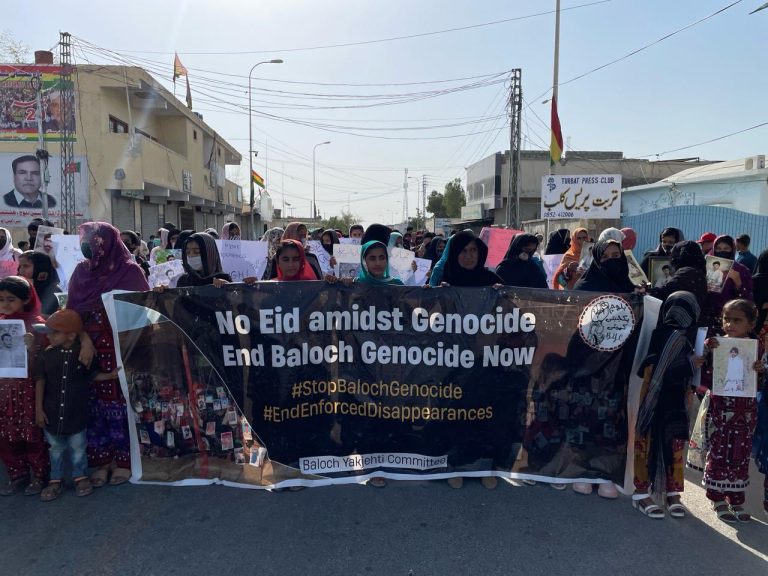
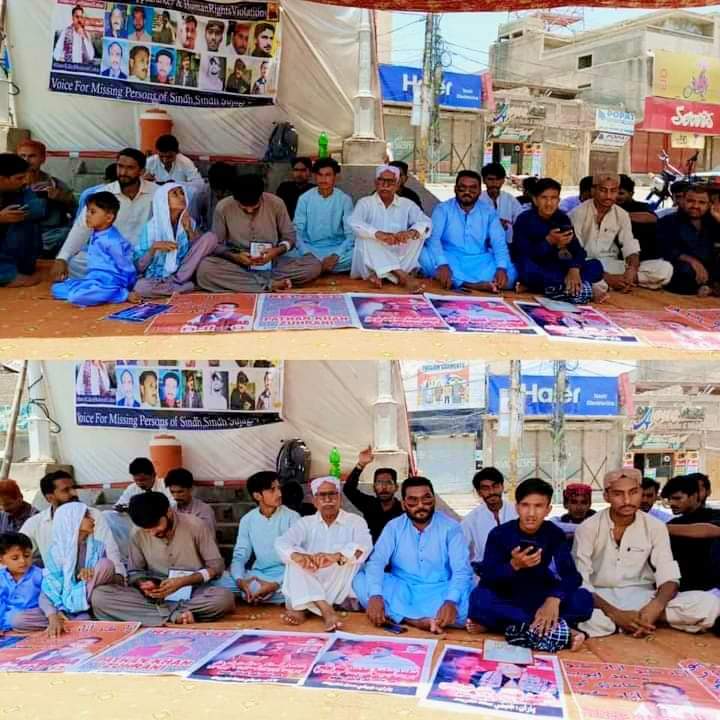
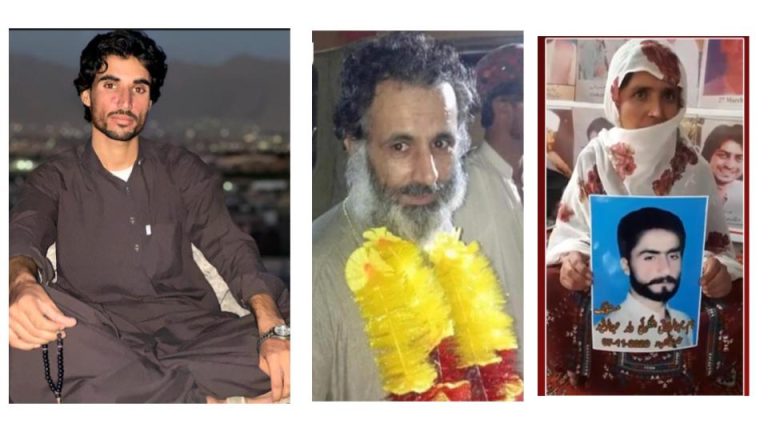
On the occasion of Eid al-Adha, families and supporters of forcibly disappeared Baloch individuals plan to hold a protest sit-in at Shaheed Fayaz Chowk to demand the recovery of their loved ones subjected to enforced disappearances by Pak security forces.

The protesters, including families of missing persons like Muslim Arif, Fatah Miar and Jehanzeb Fazal, are the victims of the Pak Army’s brutal widespread practice of abducting and illegally detaining Baloch activists, students and civilians. This highlights the Army’s brutal suppression of Baloch rights and its campaign of violence against the ethnic Baloch community.

After Eid prayers in the morning, the protesters will stage the sit-in at Shaheed Fayaz Chowk. Later in the evening at 5pm, they plan to march in a rally towards the Press Club to further raise awareness about their cause and missing relatives.

Political parties, human rights groups and the general public have been urged by protest organizers to participate and show solidarity with the families’ struggle against the Pak Army’s human rights abuses through enforced disappearances in occupied Balochistan since 1948.

Pak FC forces torture Chaman protestors in detention

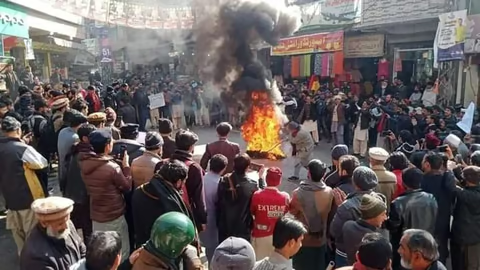
In a fresh development, Chaman sit-in protestors, who were arrested on June 6 are being severely tortured by Pakistan’s paramilitary force, the Frontier Corps (FC), in detention. Reports indicate that the detained individuals were kept handcuffed for days and their eyes were covered.

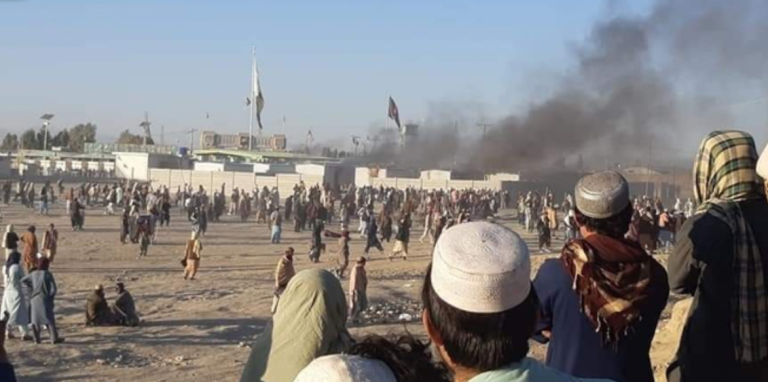
The arrested protestors were detained on June 6 when the Pak Army’s Frontier Corps (FC) opened fire on peaceful demonstrators in Chaman, escalating tensions and transforming the protest against mandatory passports into a broader struggle against oppressive tactics employed by the Pakistani establishment.

Chaman protest

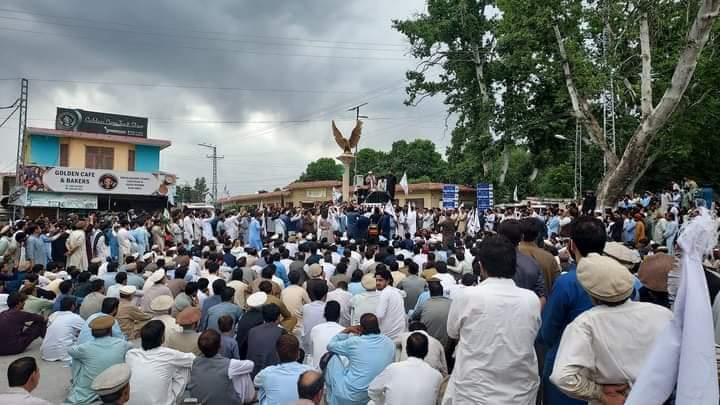
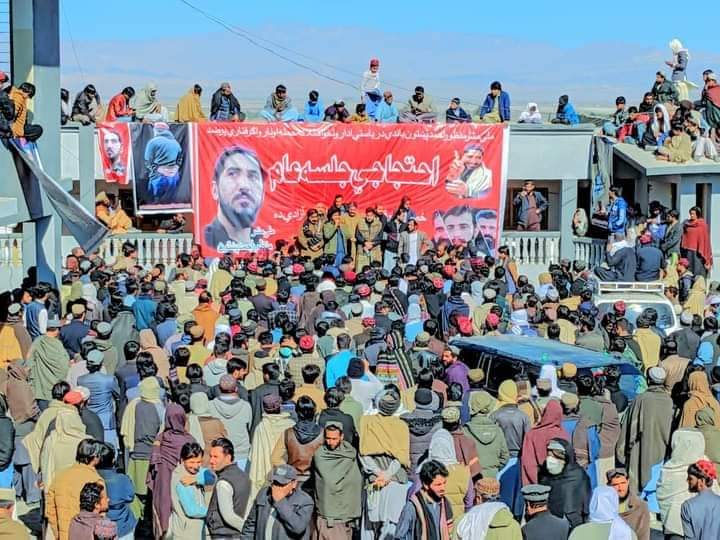
Notably, lakhs of Pashtuns have been protesting on the Chaman border for over eight months. They are protesting against the Pakistani establishment’s imposed one-document regime under which the previously functional Tazkira system has been abolished, making passports mandatory for trade across the Durand Line.

Being the most important crossing on the Durand Line, this Pak-occupied Balochistan crossing has been crucial for local traders who were earlier allowed to cross the border with Tazkira (a paper slip permission). Additionally, there are familial ties between the local communities on both sides of the border. The new one-document regime is disruptive to these familial ties.

Unfortunately, no measures were taken to address these delicate issues. Moreover, a large section of the Pakistan-controlled media has neglected this massive protest for an extended period, seemingly waiting for it to die down. Seeing that not happening, the Pak Army and its FC forces have launched a crackdown on peaceful Pashtun protestors twice. On June 6, they not only killed many Pashtuns but also arrested and disappeared dozens.

The latest reports of torture are a further gruesome act by the Pak Army. It is surprising that a self-proclaimed top military force, which boasts of being a nuclear power but has lost all the wars it has fought, is only effective in torturing the people it controls.

Pashtuns call for a protest rally against target killings on June 22 by Pak Army

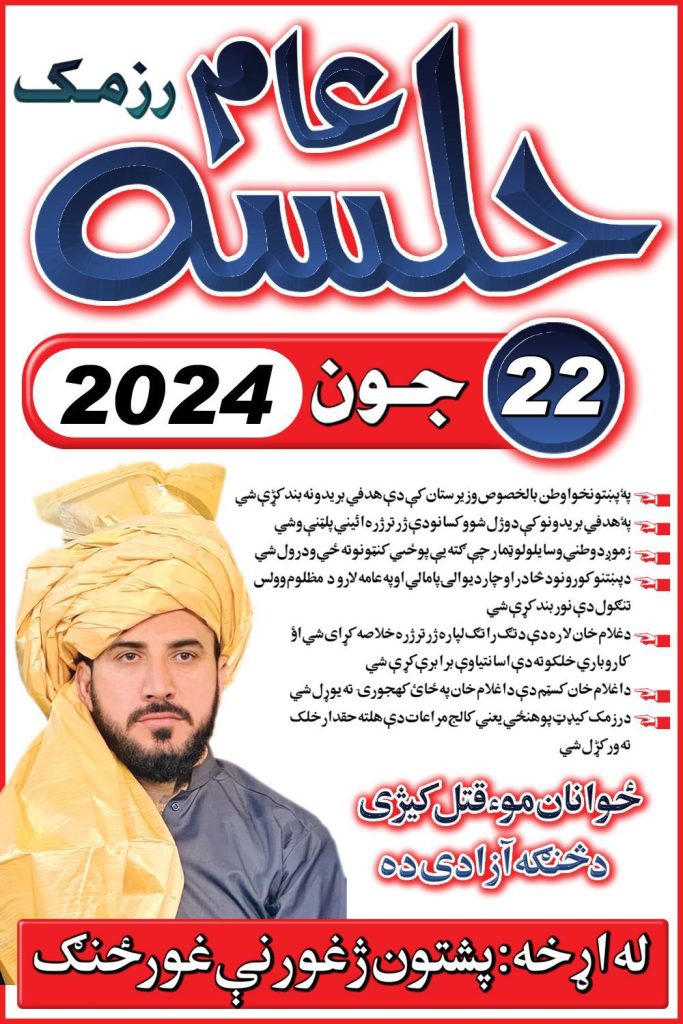
Pashtun Tahafuz Movement (PTM) has called upon Pashtuns and all the oppressed nations under the control of imperial Pakistan to a grand rally against violence in Ramzak area of Waziristan on June 22.

The protest rally is being organised demanding the Pakistan Army to stop attacks on Pashtun homeland, especially Waziristan which has witnessed multiple targeted killings in recent days. PTM is also demanding an investigation into these target killings of Pashtuns.

Moreover, the Pashtun rights organisation has demanded to open the road of Ghulam Khan, thereby facilitating the traders.

Poster of PTM rally (Photo: X)

Notably, Ghulam Khan is a town in Khyber Pakhtunkhwa and is the third most important border crossing after Chaman and Torkham. Like Chaman, Ghulam Khan is also closed over the visa issue.

Meanwhile, the Pashtun organisation has reiterated its call to end the plundering of the native resources by the Pakistan Army. In a poster released by them, PTM said the looters of national wealth, who go to military camps should be stopped.

Earlier on May 23, PTM organised a similar rally in Dhaka city after a series of targetted killings in the region. Over a month has passed since then but the Pak Army has failed to address the concerns of Pashtun community which is facing the wrath of the deadly trend as bodies of the community is dropping on the ground every passing day.

Minor Hindu girl forcibly converted and married to Muslim boy in Sindh

In a distressing incident that underscores the precarious situation of religious minorities in Pakistan, a 13-year-old Hindu girl named Roshni Meghwar from Mirpur Khas, Sindh, was forcibly converted to Islam and married to a Muslim boy. This case highlights the urgent need for greater protection and awareness regarding the safety of minority girls in the region.

Hindus, who once comprised a significant population in Sindh, have been reduced to a vulnerable minority. Hindu girls are prime targets for radical Islamists who abduct them, forcibly convert them, and marry them to their abductors, often men two to three times their age. These victims frequently face sexual violence and coercion. Despite the gravity of the situation, international human rights organizations have largely overlooked their plight. This neglect has led to an irreparable loss for the Hindu community in Sindh.

The abduction and forced conversion of Roshni Meghwar have sparked outrage among the community.

Pakistan mined villages in POGB kills child; injures family

In a tragic incident, a child was killed, and his father and sister were critically injured after an explosion ripped through a meadow in Harghosil village of Pakistan-occupied Gilgit-Baltistan region.

The blast, caused by a landmine or unexploded ordnance, occurred while the family’s cattle were grazing near the Line of Control (LoC) that separates Pakistan and India’s Himalayan territories.

Despite the frequent occurrence of such tragedies, the Pak media remains silent, failing to shed light on the plight of the region’s civilians.

The incident has once again drawn attention to the pressing issue of land mines and unexploded ordnance that litter the LoC, posing a constant threat to the safety and livelihoods of border communities in Pakistan-Occupied Gilgit-Baltistan and Pakistan-Occupied Jammu and Kashmir.

This incident comes at a time when the region grapples with rampant land grabbing by influential mafias, who forcibly or deceitfully seize land from legitimate owners for real estate or monetary gain, subjecting locals to evictions and property loss.

Residents have taken to the streets, protesting the encroachment of their land rights by these powerful groups backed by the cruel Pak Army, but their appeals for justice and intervention have largely fallen on deaf ears.

The testimonies of the protesters highlight the injustice and frustration experienced by local communities, marginalized and denied access to their own lands.

POJK: Protesters demand release of Long March detainees

In Pakistan-occupied Jammu and Kashmir (PoJK), the public protests demanding the release of individuals detained during the long march by Pak security forces have intensified.

In a tumultuous turn of events on May 11, clashes erupted between protesters and Frontier Corps (FC) forces, leaving dozens injured on both sides.

The protests, which began in Pilandri and culminated in Kotli, saw demonstrators marching to demand the release of detainees arrested during the long march.

Earlier in May, FC forces resorted to gunfire, tear gas shelling, and stone pelting to disperse the protesters. In Mirpur, FC personnel disguised in civilian attire incited the mob towards violence, exacerbating the situation.

https://twitter.com/JKMI_Official/status/1801480008654807119

More than 60 Kashmiri protesters were reportedly injured in the clashes. The protests highlight the growing unrest and frustration among the people of PoJK over issues of forced disappearances, baseless cases and the detention of individuals by the occupied authorities.

The escalating tensions in PoJK have drawn international attention to the human rights situation in the region, with concerns being raised over the excessive use of force by Pakistan security forces and the suppression of dissent.

Celebrating Eid lands Ahmadiyyas in detention in Pakistan

Three prominent members of Pakistan’s minority Ahmadiyya community have been detained for one month by the Chakwal district administration to prevent them from performing religious rites during Eid-ul Azha.

The detentions in Chakwal district come just days after two Ahmadis were killed in a targeted attack in Mandi Bahauddin, highlighting the increasing threats faced by the community in Pakistan.

On June 10, Chakwal’s Deputy Commissioner Quratul Ain Malik issued separate detention orders for the three men, all residents of Dulmial village, where a mob had attacked an Ahmadi mosque in 2016, killing two people. The historic nineteenth century mosque remains sealed by authorities. The Ahmadiyya community, a religious minority in Pakistan, frequently faces persecution and discrimination.

Malik cited a police report alleging the three could “deteriorate the law and order situation”, invoking a draconian public order law to justify the detentions, which were recommended by the District Intelligence Committee to “prevent sectarian conflict”.

The detainees were subsequently arrested and sent to Jhelum prison.

Ahmadiyya community

A spokesperson for the Jamaat-e-Ahmadiyya said that the three men were summoned to a meeting with police officials and the assistant commissioner Choa Saidan Shah regarding Eid-ul Azha. During the meeting, which also included complainants opposed to the Ahmadiyya community, the men were pressured not to perform the Qurbani ritual.

They were also harassed and asked to sign a surety bond promising that no Ahmadi in the district would perform Qurbani.

Amnesty International condemned the detentions, calling them a “gross violation of individual rights to liberty and freedom of belief and religion.” The organization highlighted that the detentions occurred shortly after the targeted killing of two Ahmadiyya men in Mandi Bahauddin on June 8.

“Pakistan: The ‘preventive detention’ of three members of the Ahmadiyya community yesterday in Chakwal to stop them from engaging in religious rites during the upcoming Eid al-Adha is a gross violation of individual rights to liberty and freedom of belief and religion,” Amnesty International stated on X.

The detentions have once again drawn attention to the systemic persecution of the Ahmadiyya community in Pakistan, where they face religious discrimination, hate speech, and violence from extremist groups and the Paki establishment.

China court sentences Chinese #MeToo activist Huang to 5 years for subversion

A Chinese court on Friday sentenced leading #MeToo activist Huang Xueqin to five years in prison after finding her guilty of inciting subversion of state power, in a case that has drawn international condemnation over Beijing’s crackdown on dissent.

The Guangzhou People’s Intermediate Court also sentenced labor activist Wang Jianbing to three and a half years on the same charge, according to a campaign group supporting the activists and a copy of the court verdict.

Huang, a 35-year-old independent journalist, plans to appeal the sentence, her supporters said. It remained unclear if Wang, 40, would also file an appeal.

“The sentence was longer than we expected”, said a spokesperson for the Free Huang Xueqin and Wang Jianbing campaign group, who requested anonymity citing safety concerns. “It is completely unnecessary. So we support Huang Xueqin’s intention to appeal”.

Huang and Wang were detained in September 2021 after holding gatherings where they discussed social issues with Chinese youth. Authorities accused them of inciting subversion, a vague charge frequently used to target dissidents.

During their closed-door trial last year, the pair denied any wrongdoing. Ahead of the verdict, the campaign group stated their activism for labor rights and women’s rights should not be criminalized.

There was heavy security around the Guangzhou court on Friday, with police questioning bystanders.

Huang, who covered the #MeToo movement and 2019 Hong Kong anti-government protests, had been scheduled to fly to Britain to begin a master’s degree at the University of Sussex on a British government-funded scholarship before her arrest in 2021. She was previously detained for three months in 2019 over her activism.

The harsh sentences underscore Beijing’s intensifying crackdown on dissent and activism in recent years under President Xi Jinping’s hardline rule.

BYC meeting held in Karachi, Mahrang Baloch elected as central organizer

The Baloch Yakjehti Committee (BYC) held a crucial core committee meeting in Karachi, where it announced the formation of its organizational structure and the first central organizing body. Dr. Mahrang Baloch has been elected as the central organizer, while Lala Wahab Baloch has been appointed as the deputy organizer.

Addressing a press conference at the Karachi Press Club, the committee’s leaders highlighted the group’s long-standing struggle against the Baloch genocide and its efforts to launch an organized political movement in Pak-occupied-Balochistan last year. This movement included a long march from Turbat to Islamabad, a prolonged sit-in after reaching the capital, and a historic public gathering in Quetta upon their return.

Emphasizing their commitment to peaceful resistance, the leaders stated that despite facing threats, harassment, arrests, false cases, and violence, the committee has remained non-violent throughout its struggle. They vowed to continue their organized fight against the Baloch genocide and defend Baloch national rights, rejecting any attempts by the Army to provoke them into violence.

Establishment of Central Organizing Body

During the core committee meeting, the BYC reviewed the political situation in Pak-occupied-Balochistan, the Pak Army’s policy of Baloch genocide, the post-long march situation, the need for political organizations, and the committee’s organizational structure. Consequently, the central organizing body was formed, with Dr. Mah Rang Baloch as the central organizer and Lala Wahab Baloch as the central deputy organizer.

The meeting also approved the organization’s interim constitution and manifesto, and established a central working body comprising various departments. These departments will focus on organizing the movement against the Baloch genocide, mobilizing the Baloch people, creating unity among political and social forces within Baloch society, and organizational matters.

‘Baloch Raji Muchi’ announced

The BYC announced the “Baloch Raji Muchi” (Baloch National Gathering) for July, during which marches from all Baloch areas will converge at a central location. The date and location of the gathering will be announced through the media in the coming days.

The committee informed its activists, supporters, and the Baloch nation about a framework prepared for the preparations of the Baloch Raji Muchi, which will soon be distributed to all organizational activists. Additionally, a booklet regarding the Baloch Raji Muchi has been prepared and will be published soon.

The Baloch nation has been urged to play their role according to their capabilities and join the movement to stop the Baloch genocide and defend Baloch national rights.

Call for Support

The BYC has initiated a formal membership process, and the Baloch nation can contact the committee’s representatives in their respective areas to become members.

The leaders also appealed to the intellectual class of the Baloch nation to fulfill their national responsibilities by supporting the committee’s ongoing movement against the Baloch genocide in every possible way.

The committee emphasized its commitment to informing international human rights organizations and the media about the Army’s violent actions and violations of the constitution and law against their organization, holding the state responsible for any harm caused to their activists, supporters, or companions.

UKPNP condemns abduction of Kashmiri man, Khurshid Ahmed in Rawalpindi

The United Kashmir People’s National Party (UKPNP) has raised alarm over the abduction of a Kashmiri man, Khurshid Ahmed, from Rawalpindi, condemning the enforced disappearance and demanding his immediate release.

Sardar Nasir Aziz Khan, the central spokesperson for the UKPNP, took to X (formerly Twitter) to highlight the case of Khurshid Ahmed, a resident of Neelum district in Pakistan-occupied Jammu and Kashmir.

“Another Kashmiri, Khurshid Ahmed, resident of Neelum, was abducted on June 7 from Rawalpindi, Pakistan by uniformed personnel,” Khan said. “The UKPNP condemns this enforced disappearance & demands his immediate release and justice.”

The incident has drawn attention to the human rights issues plaguing the Pakistan-occupied regions of Jammu and Kashmir (PoJK) and Gilgit-Baltistan, which have been a subject of concern for several years.

Human rights organizations have documented numerous cases of enforced disappearances and arbitrary arrests by Pak Army forces in the occupied territories, often targeting individuals critical of the occupied government’s policies.

Moreover, reports have highlighted restrictions on freedom of expression and press freedom in PoJK and PoGB, with journalists and media outlets facing censorship for reporting on sensitive issues, including human rights violations and political dissent.

Political parties and activists advocating for autonomy in the regions also face repression and persecution by the authorities, with electoral fraud and manipulation to suppress dissenting voices.

There is a lack of effective mechanisms to hold security forces and officials accountable for violations committed against civilians in the occupied territories.

Additionally, land grabbing and exploitation of natural resources in the area is rampant, with local communities marginalized or displaced without adequate compensation or consultation.