Home Blog Page 92

Armed men abduct two Pak Frontier Corps personnel in Turbat

Armed men have abducted two personnel from the Frontier Corps (FC) in the Apsar area of Turbat on Sunday afternoon.

Reportedly, unidentified armed individuals intercepted and kidnapped the two FC officials, taking them away to an undisclosed location.

It is important to note that Baloch freedom organizations are known to operate in the region, although no group has claimed responsibility for this abduction as of yet.

The situation in Pak-occupied-Balochistan has long been a point of concern for human rights organizations. The Pak Army’s response to Baloch community has been heavy-handed, often resulting in human rights abuses. Pak Army is using enforced disappearances and extrajudicial killings to suppress Pak-occupied-Balochistan’s independence movement. 

Students protest over enforced disappearances of Baloch youth by Pak Army

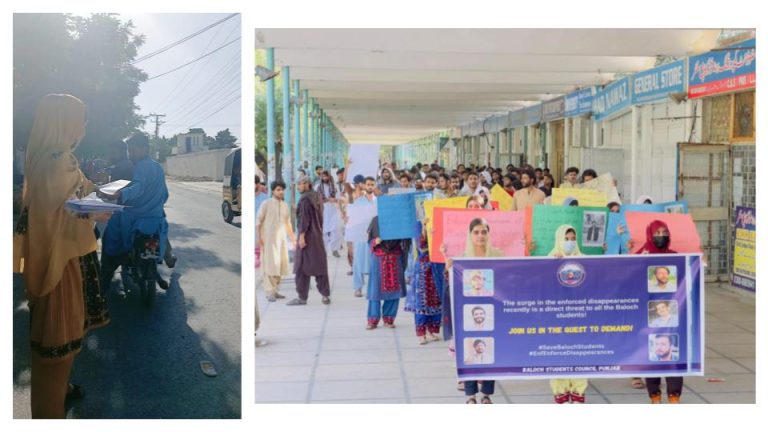
Baloch student organizations across Pakistan are mobilizing to protest the recent surge in enforced disappearances and harassment of Baloch students in various educational institutions.

In Quetta, Pak-occupied-Balochistan, a rally is being organized by the Baloch Students Council to demand the release of Farooq Baloch and Anees Baloch, who have been subjected to enforced disappearances by Pak Army. The protest is scheduled to commence at 4:30 PM on Tuesday from the premises of Balochistan University.

Meanwhile, in Lahore, the Baloch Students Council, Punjab held a protest rally today at Punjab University, raising voices against the enforced disappearances of Baloch students and the profiling and harassment they face in institutions across Punjab and Islamabad.

Adding a digital dimension to the protests, the Baloch Students Councils of Punjab and Islamabad are organizing a Twitter Space discussion titled “Recent Surge in Enforced Disappearances and Profiling/Harassment of Baloch Students.” This online event aims to shed light on the pressing issue and garner broader support.

The enforced disappearances of Baloch students and activists have been a longstanding concern in Pakistan, with human rights organizations repeatedly urging authorities to address the issue and ensure the safety and rights of all citizens.

These planned protests highlight the growing frustration and determination of the Baloch student community to raise awareness about the violations they face by the very authority that is in power. Since, Pak Army occupied Balochistan in 1948, Baloch community is living in nightmare. They are not only subjected to enforced disappearances but also frequent raids, and extra judicial killings.

Pak Army attacks JAAC leaders in Char Biyarh

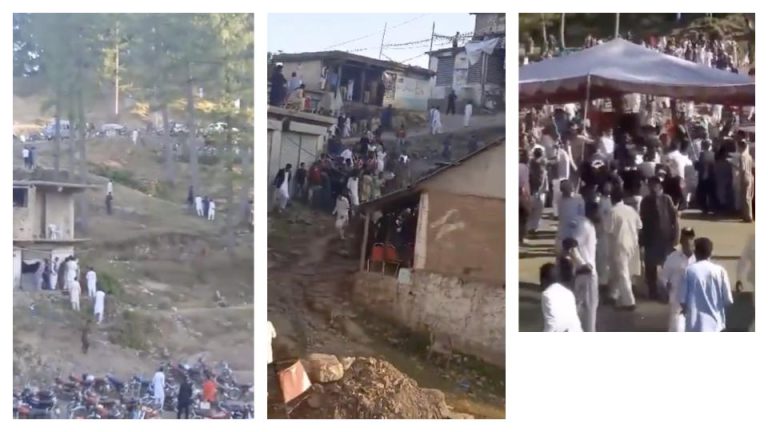
In Pakistan-occupied Jammu & Kashmir (PoJK) the Pak Army launched an attack on leaders of the Joint Awami Action Committee (JAAC) in Char Biyarh area, days after violent clashes between police and rights activists left three people dead.

The attack on JAAC leaders has drawn widespread condemnation, coming amid protests across PoJK over the killing of three Kashmiri youths – Waqar, Chaudhary Zaheer, and Saqib Fayaz – who lost their lives to bullets fired by Frontier Corps (FC) forces during recent demonstrations.

Large protests erupted in the region, with marchers demanding accountability from authorities for the violence against peaceful protesters and the release of incarcerated activists. A wheel-jam and shutter-down strike was also observed across the territory in response to the killings.

The attack on JAAC leaders, coupled with the violence abduction of poet and journalist Ahmad Farhad, has further strained PoJK populace, fueling calls for greater autonomy and an end to the human rights abuses in the region.

Tehreek-e-Labbaik Pakistan seals Ahmadiyya mosque in Karachi

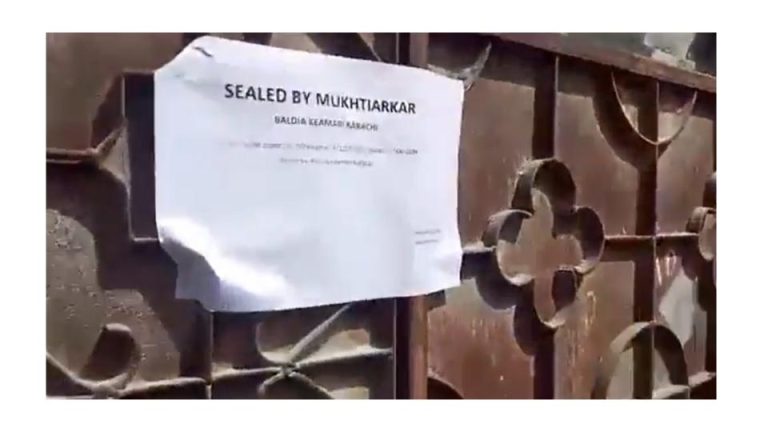
In an unfortunate incident, the Ahmadiyya community’s place of worship in Karachi was sealed at the behest of extremist group Tehreek-e-Labbaik Pakistan (TLP).

The sealing of the Ahmadiyya Jamaat’s place of worship is not an isolated incident; last year, an Ahmadi place of worship was vandalized by a mob in Karachi, with videos showing masked men using sledgehammers to damage the minarets while others shouted slogans.

The Ahmadiyya community faces systematic discrimination and persecution in the country. They were declared non-Muslim by Pakistan’s Parliament in 1974 and banned from calling themselves Muslims a decade later. They are prohibited from preaching and traveling to Saudi Arabia for pilgrimage.

Despite their estimated population of around a million, the Ahmadis, like other minorities in Pakistan, often fall victim to harassment and violence by extremist elements. With notorious Blasphemy law, persecution and strong presence of extremist elements clearly show that Pakistan is hell for minorities.

ISKP ramps up its propaganda against Taliban in new ‘Voice of Khorasan’ magazine

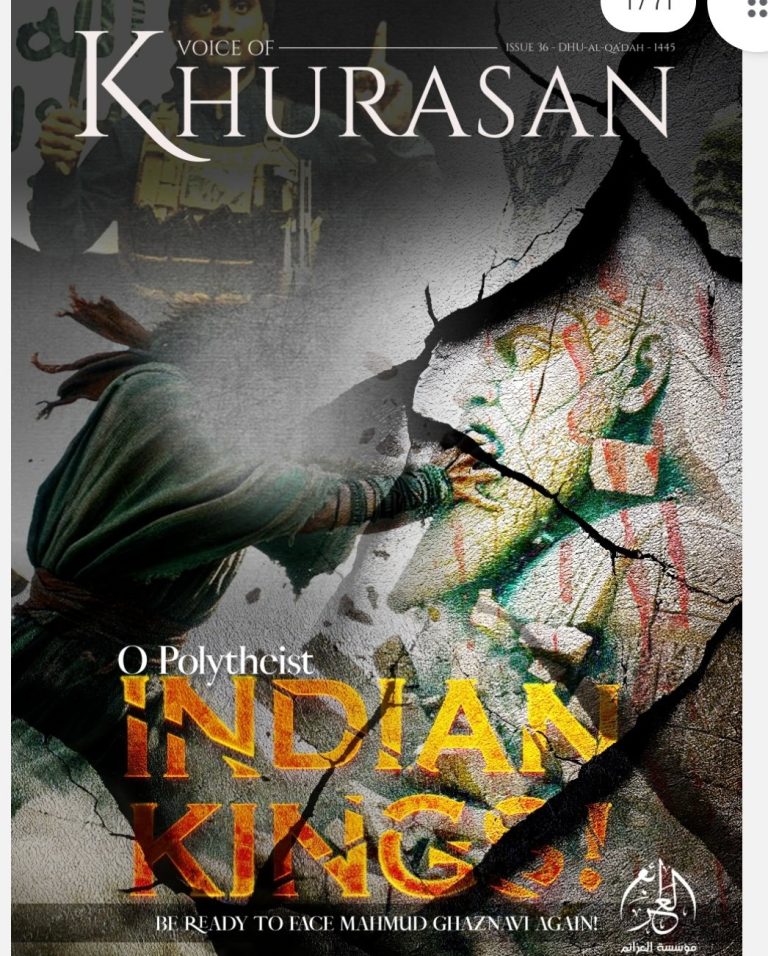
The Islamic State Khorasan Province (ISKP) has intensified its propaganda efforts against the Taliban regime in Afghanistan with the release of the 36th issue of its “Voice of Khorasan” magazine. The latest edition, published by ISKP’s Al Azaim media wing, features a scathing critique of the Afghan Taliban, accusing them of oppressing Muslims and questioning their relations with the international community and the Doha Agreement.

In addition to the condemnation of the Taliban, the magazine takes aim at India, criticizing the country’s system of government, the conditions of Muslims there, and Afghanistan’s relations with India. The publication covers a diverse range of topics, including religious subjects related to Eid ul Adha, calls for donations to support ISKP’s activities, and a discussion on climate change.

Notably, the magazine includes a continuation of a series on online security, providing tactics for cyber security and social media usage aimed at evading detection by authorities. This emphasis on digital strategies highlights ISKP’s recognition of the importance of leveraging online platforms for propaganda and recruitment purposes.

The release of the “Voice of Khorasan” magazine comes amid escalating tensions between ISKP and the Taliban in Afghanistan. Since the Taliban’s takeover in August 2021, ISKP has been actively involved in orchestrating attacks throughout the country, accusing the Taliban regime of being “apostate” and fueling the violent conflict between the two groups.

ISKP’s robust propaganda strategy, as exemplified by the “Voice of Khorasan” magazine, underscores the group’s efforts to delegitimize the Taliban’s ideological legitimacy and its relations with the international community.

Analysts warn that military means alone will not be sufficient to overcome the ideological challenge posed by ISKP in the Afghanistan-Pakistan region. The group’s strong emphasis on propaganda, its ability to leverage social media platforms, and its criticism of the Taliban’s engagement with the international community highlight the need for a comprehensive strategy to counter its narrative and undermine its appeal among potential recruits.

Pak backed terrorists attack pilgrims in J&K’s Reasi, 9 dead & 33 injured

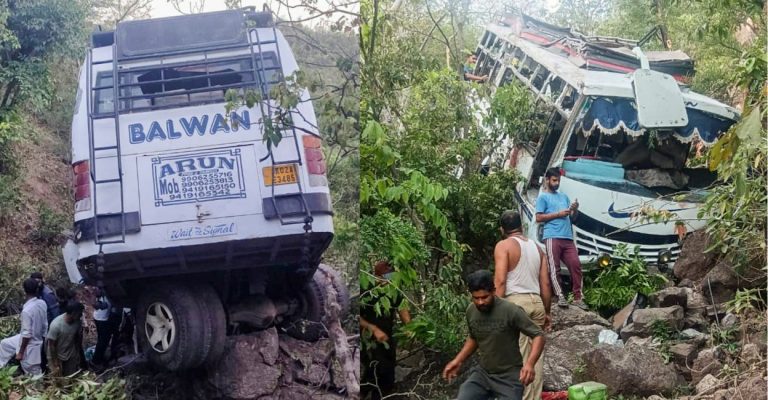
In a horrific act of terror, militants ambushed a bus carrying pilgrims in Jammu and Kashmir’s Reasi district on Sunday, killing at least nine people and injuring 33 others. The attack resulted in the bus plunging into a gorge after the driver lost control due to the firing.

According to Senior Superintendent of Police (SSP) Mohita Sharma, the bus had left Shivpuri and was en route to Katra when militants opened fire, causing the tragic accident. “We received reports that militants were lying in wait, and they fired on the bus. As a result, the driver lost control, and the bus fell into a gorge,” she said.

The rescue operation has been completed, and the injured have been hospitalized. While the identities of the victims are yet to be confirmed, SSP Sharma stated that they are believed to be from Uttar Pradesh and not locals.

Speaking about the security measures in place, the SSP said, “Whenever there’s an incident of militancy, we are on high alert… The Shivpuri shrine had been secured, and in adjoining areas too, we had been conducting area domination activities.”

https://twitter.com/ArjunPMO/status/1799895121540022375?t=IfUxnwv1sWDisTtkMi5n4A&s=08

Local accounts suggest that two masked militants carried out the attack, firing indiscriminately at the bus, hitting the driver and some passengers. While some reports indicate that three passengers died of bullet injuries and the rest in the bus crash, officials stated that the cause of death can only be confirmed after post-mortem examinations.

The victims were on their way to Katra town, which serves as a base camp for pilgrims visiting the revered Mata Vaishno Devi shrine in the Trikuta Hills, after visiting the Shiv Khori shrine near Ransoo.

Union Home Minister Amit Shah has vowed that the culprits of this “dastardly attack” will face the wrath of the law, while Congress leaders Mallikarjun Kharge and Rahul Gandhi have condemned the incident, questioning the government’s claims of bringing peace and normalcy to the region.

The attack in Reasi’s Pouni area, close to the adjoining Rajouri district, is the second such incident targeting pilgrims in the district, following a similar attack in May 2022 that claimed four lives and injured 24.

The Pakistan-backed group, The Resistance Front (TRF), has claimed responsibility for the terror attack. In 2023, India designated The Resistance Front as a terrorist organization.

The group, which was founded in 2019 following the abrogation of Article 370 that granted special status to Jammu and Kashmir, has been involved in numerous terror attacks.

Reportedly, two to three terrorists were involved in the Reasi bus attack, and they are part of the same group responsible for recent attacks in Rajouri and Poonch. The terrorists ambushed the bus while hiding in dense vegetation.

The terrorists were Pakistanis and have been active in the southern Pir Panjal region for the past two years.


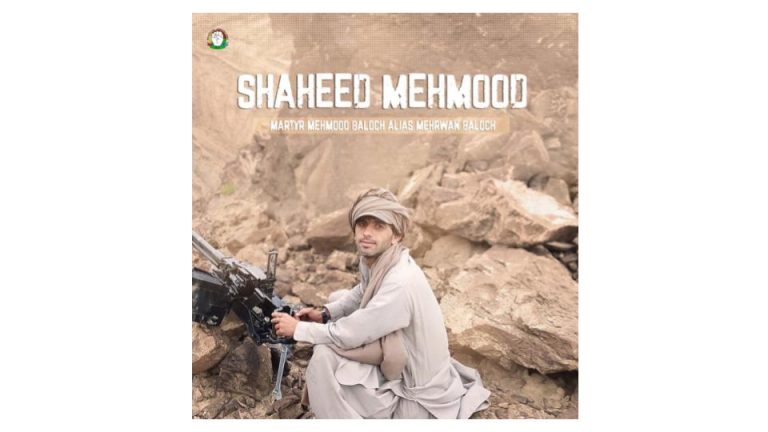
BLF pays tribute to martyr Mehmood Baloch

In a statement released to the media, the spokesperson for the Balochistan Liberation Front (BLF), Major Gwahram Baloch, provided details of a recent clash with Pak Army and paid homage to a fallen freedom fighter.

According to the BLF spokesperson, on the evening of June 7, 2024, around 6 p.m., Baloch freedom fighters were carrying out organizational work at the Marble Cross site in the Turbat Kalatuk area of Kech district when they clashed with operatives of a “death squad” formed by the Pak Army.

The death squad operatives tried to surround the freedom fighters. During the encounter, the freedom fighter Mehmood, also known as Mehrwan, was martyred while bravely fighting to break the Army’s siege. However, his companion managed to escape the siege, displaying “courage, bravery, and excellent guerrilla tactics”. The companion also reportedly took Mehrwan’s weapons and belongings with him.

The BLF spokesperson paid tribute to the martyred Mehmood, describing him as a “brave companion” and a “determined and dedicated freedom fighter.” Mehrwan, the son of Major Mola Bakhsh and a resident of Hasadig Dasht, had been associated with the BLF’s struggle for Pak-occupied-Balochistan’s independence since 2012.

Martyred Mehmood

He set a high example of bravery, courage, and guerrilla warfare skills by fighting shoulder to shoulder with his companions in several important battles against the Army.

The spokesperson said that martyred Mehmood was a close relative of the martyred freedom fighters Nako Issa alias Nako Shera, Samir alias Sogat, Sana alias Sogat, and Jafar alias Sana.

He said that the martyred Mehmood was a kind and compassionate companion and a determined and dedicated freedom fighter. Before the armed struggle, he was associated with the political struggle for Balochistan’s freedom. In 2012, he joined the BLF’s civilian network. From that day until his martyrdom, he remained an active and dedicated freedom fighter on the platform of the Balochistan Liberation Front and joined the caravan of martyrs.

In a stern warning, the BLF spokesperson claimed that all the operatives of the “death squad” have been identified and that they “will soon be brought to their logical conclusion.” The statement further vowed that “national enemies active against the Baloch national freedom movement will not be spared at any cost.”

The BLF spokesperson reiterated the group’s commitment to accomplishing Mehmood’s mission “at all costs” and fulfilling his dream of an independent Balochistan and to “bring the enemy to its logical conclusion.”

Can personlized cancer vaccines usher in a new era of hope for patients

In a groundbreaking development, the National Health Service (NHS) has treated its first patient in England with a personalized mRNA vaccine against bowel cancer. This marks a significant step forward in the fight against cancer, as this cutting-edge technology aims to harness the body’s immune system to prevent the recurrence of the disease.

To gain insights into this pioneering treatment, our special correspondent Sabita Mishra spoke with Dr. Nilanshu Das, a biologist and a researcher from Kolkata who shed light on the potential of these personalized cancer vaccines and how they differ from traditional therapies.

Sabita Mishra: How do personalized mRNA cancer vaccines differ from traditional cancer treatments like chemotherapy or radiation?

Dr. Nilanshu Das : Terminal cancer patients subjected to new clinical trials has been in practice for more than three decades. In the case of Elliot Pfebve (England) for the first time mRNA vaccine targeted against particular cancer-causing mutations has been used. mRNA vaccine is a new technology of vaccine which has been proved to be effective during covid. It is markedly different from the traditional cancer treatment like chemotherapy and radiotherapy as those treatments were generalized and not individual or more precisely, mutation specific. Pharmacogenomics or treatment according to the genetic makeup (mutation profiling) of an individual will be the future treatment modality not only for cancer but also for almost all diseases.

Sabita Mishra: In the Elliot Pfebve case, they used the patient’s tumor to identify specific mutations. How accurately can these mutations be identified, and how does this precision improve treatment?

Dr Nilanshu Das: With present day high fidelity sequencing technique mutations can be detected with 100% accuracy. There is no debate about that. However this does not ensure that precisely knowing few mutations of a particular cancer patient treatment would be absolutely accurate. Onset and progression of cancers are multi factorial and for most of the cancers all the criteria are not well understood. It is rightly said that each cancer is an institution by itself. Of course, efficacy of cancer treatment has improved a lot over last 10 years, but more research is needed to attend precision in cancer treatment.

 Sabita Mishra : How does a patient’s overall immune health affect the potential success of a cancer vaccine?

Dr. Nilanshu Das : Cancer vaccine, like all other vaccines rely on the host (the individual who is suffering from cancer) immune system. It actually acts through the host immunocytes to prevent the disease onset and progression. Thus, a better overall immune health would be helpful for success of any vaccine.

Sabita Mishra : Are there any challenges in scaling up this technology to treat thousands or millions of patients?

Dr. Nilanshu Das: Scaling up of personalized cancer vaccine to reach en mass may face several challenges like any other vaccine. It is true that before any vaccine is launched it goes through several rounds of rigorous clinical trials. Still, there are examples of vaccines proving to be ineffective or having severe side effects in long run. Thus, success of any vaccine is difficult to predict and has to go through the test of time. Scaling up of cancer vaccine is even more challenging because similar cancers may have diverse genetic background, unlike viral and bacterial disease.

Sabita Mishra: Could these vaccines be used preventatively in people with a high genetic risk of certain cancers?

Dr. Nilanshu Das: Preventive cancer vaccines are already in place for cervical cancer and against several viruses that causes cancer. But these are generalized. Identifying individuals with a high genetic risk of a particular cancer requires whole genome DNA sequencing, which is still not in practice in India. Thus, cancer vaccines precisely targeted against patients with particular mutations (rendering them as at high risk for certain cancers) seems quite far-fetched… but not impossible.

With this groundbreaking approach, the future of cancer treatment looks increasingly personalized and targeted, offering hope to countless patients and their families.

PTM protests across south Pakhtunkhwa against Pak Army brutality in Chaman

The Pashtun Tahafuz Movement (PTM) has led successful demonstrations across the south Pakhtunkhwa districts in solidarity with the brutality committed by Pak Army in the ongoing protests in Chaman.

These protests erupted against Pakistan’s sudden enforcement of passport requirements at the Durand Line, causing hardship for Pashtun Afghans and locals with cross-border connections.

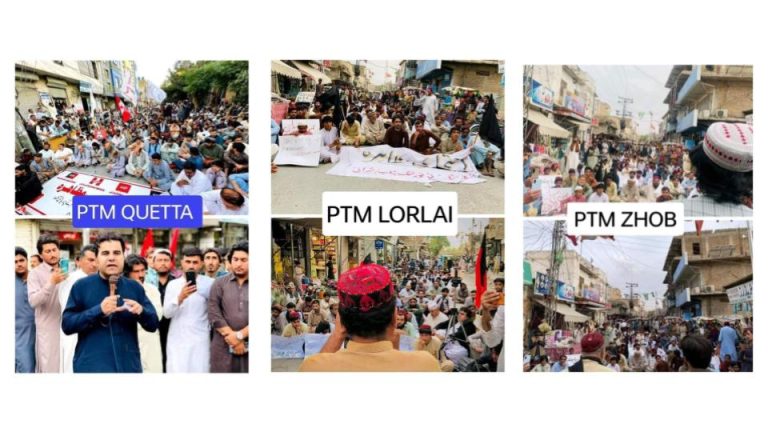
Local Pashtuns, supported by PTM, have been staging sit-ins for seven months, demanding a reversal of the passport policy. PTM’s efforts have resonated across southern Pashtunkhwa, including in Quetta, Lorlai, Zhob, and Pasheen, drawing attention to Chaman’s plight and advocating for justice and accountability.

The Chaman protest, highlighting the struggle against mandatory passports, turned into a violent chaos on June 6 when the Pak Army’s Frontier Corps (FC) opened fired on peaceful protesters.

Even though the protestors maintained nonviolent methods, they were met with excessive force, shedding light on the Pak establishment’s oppressive tactics.

PTM’s commitment to nonviolent resistance and marginalized communities has gained admiration amidst the ongoing struggle for rights and equality in the region.

Pak Army abducts Pashtun rights activist Khan Zeb Mahsud

On June 6, Khan Zeb Mahsud, a PTM activist in Karachi, was abducted by plainclothes personnel and paramilitary Rangers in the Sohrab Goth area of the city. His current whereabouts remain unknown.

Detention and enforced disappearance of members of the Pashtun Tahafuz Movement (PTM) civil rights group by Pak security forces have increased in recent days. Just a week prior, on May 30, PTM’s district coordinator for Killa Saifullah, Fateh Mohammad Kakar, was arrested during a police raid on his home.

The PTM’s activism has triggerred the Pak Army who is committing abduction and extra judicial killing of the dissent voices.

Human rights organizations are calling for investigations into the reported detentions and enforced disappearances, citing concerns over potential human rights violations against the Pashtun minority in the country.