Home Blog Page 94

Gwadar: Gateway for Punjab (Pak)-Chinese settler colonialism in PoB

The recently constructed Gwadar International Airport has raised alarm bells among Baloch nationalists as it has become the latest tool for the Pak Army’s sinister plans of demographic re-engineering in the resource-rich region.

Speaking at a fiery press conference on Wednesday, the central spokesperson of the Baloch Students Organization Azad (BSO-Azad) lambasted the multi-million dollar airport project as a “gateway for Punjabi and Chinese settler colonialism” in Pak-occupied-Balochistan.

“History teaches us that occupying forces always prioritize settlements and plundering the resources of occupied lands in the name of development,” the spokesperson said. “The Pak forces, using Chinese money, are already involved in killing, abducting and looting the Baloch youth. Now this airport lays the ground for an active demographic invasion.”

He warned that the true intention behind the airport was to turn the Baloch into a minority on their own soil by facilitating the influx of settlers from Punjab and China. “This settler project is an existential threat to the Baloch nation. We will resist it by any means necessary,” he declared.

The spokesperson pointed to the glaring injustice that while Gwadar’s local population lacks access to clean water, the Pak and Chinese regimes had jointly pumped in millions to build the airport aimed at serving their colonial objectives.

“If they really cared about the Baloch, they wouldn’t be trampling on our dignity daily. Our mothers and sisters face privacy violations, while our livelihoods from fishing are being robbed,” he said. “But their real motive is to turn our whole geography, especially Gwadar, into a military cantonment under their occupation.”

Gwadar Airport as Tool of Punjabi-Chinese Occupation

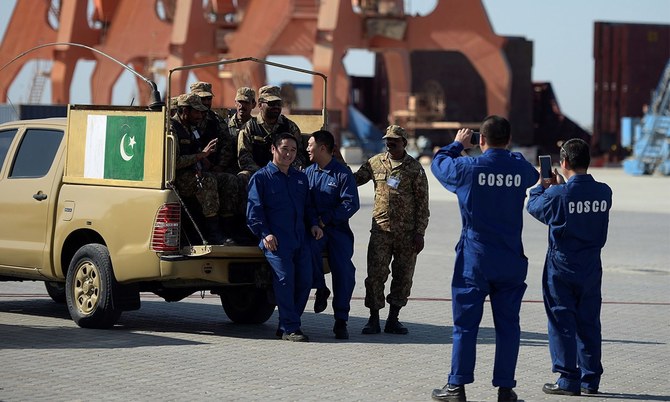
China and Pakistan are actually pursuing a policy to gain complete control over the Baloch geography due to its importance, and they want to turn the Baloch land, especially Gwadar, into their military base. China, which wants to emerge as a rising power against capitalism and investment in the world, on the other hand wants to maintain its military control in occupied areas of Balochistan by using the model of European occupations.

Due to the presence of barely a hundred Chinese in Gwadar, the entire area is under military siege. One can imagine the situation of military occupation when thousands of Chinese come to Gwadar and other parts of Balochistan.

Addressing the Baloch people at the end of the statement, he said that the Army is currently pursuing a policy based on intense warfare and occupation, and its main purpose is to eliminate the Baloch population from Pak-occupied-Balochistan and establish permanent Punjabi and Chinese occupation.

The spokesperson urged the Baloch masses to unite against the “Chinese imperialist designs” and not allow them a chance to gain ground in Balochistan. “Otherwise, the devastation the Chinese can inflict within months is far worse than what the Punjabi occupiers failed to do over 70 years.”

As Pak forces lay siege to Gwadar under the pretext of securing the handful of Chinese personnel already there, the airport looks set to intensify the brutal military occupation if the influx of Chinese settlers is allowed. Baloch resistance appears determined to turn this colonial venture into another festering crisis for Islamabad and Beijing.
Pak Army unleashes brutal force on Pashtun protesters in Chaman

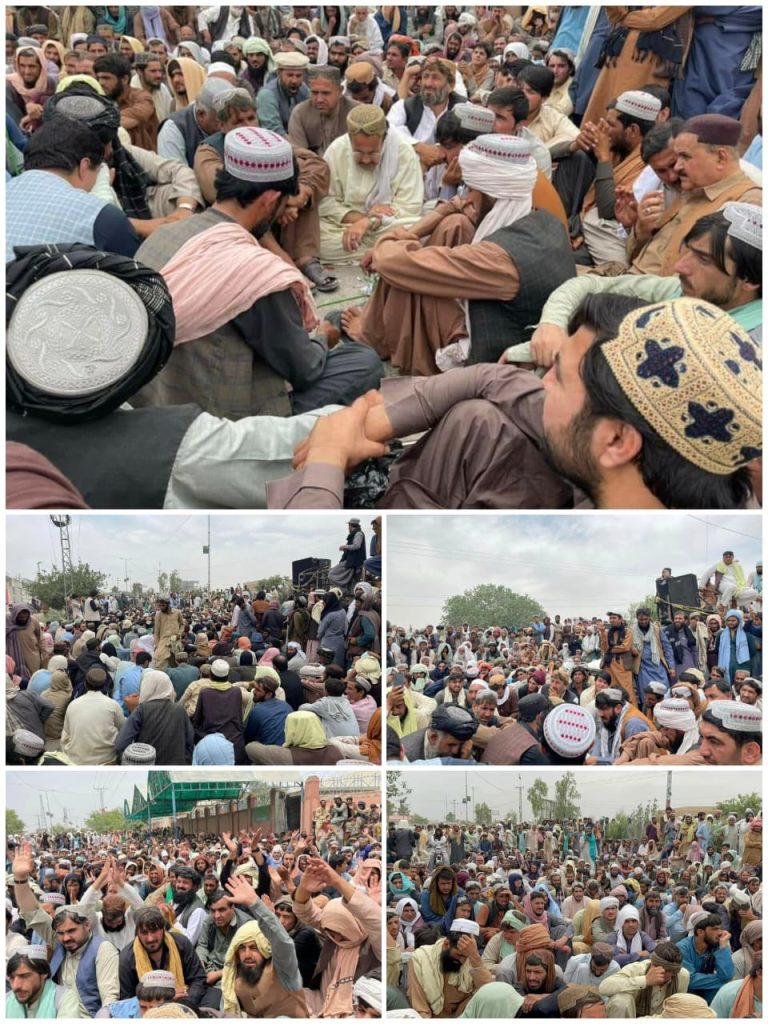
The Pak Army’s notorious Frontier Corps (FC) opened indiscriminate fire on peaceful protesters in Chaman, further exposing the oppressive regime’s iron-fisted approach towards dissent and the blatant disregard for human rights.

The protesters who comprised of locals from the Pashtun community, had been staging a sit-in for the past seven months to voice their opposition to Islamabad’s draconian “one document regime.” This policy, which mandates passports for cross-border travel, has disrupted the age-old familial and trade ties between Pashtuns living on both sides of the contentious Durand Line.

What began as a legitimate expression of grievances against an unjust policy quickly turned into a scene of chaos and violence as the FC forces resorted to excessive force, firing directly at the demonstrators. With stones and empty bottles being met with a hail of bullets from the heavily armed Pak troops.

With mobile networks shut down in a desperate attempt by the occupying forces to suppress the flow of information and stifle voices of dissent. Furthermore, organizers of the sit-in protest were arrested under the guise of negotiations during the night, only for the remaining demonstrators to face a brutal crackdown the following morning.

This latest incident is a stark reminder of the systematic oppression and human rights violations perpetrated by the Pak Army in the regions inhabited by ethnic minorities. The decision to impose the “one document regime” itself was a knee-jerk reaction to strained relations between Islamabad and the Afghan Taliban, yet it is the innocent Pashtun population that bears the brunt of this oppressive policy.

PoJK court rejects bail plea of Ahmed Farhad’s disappearance done by Pak Army

An anti-terrorism court in Pakistan’s illegally occupied Jammu and Kashmir (PoJK) has rejected the bail plea of Ahmed Farhad Shah, a victim of enforced disappearance by the oppressive Pak regime. The court’s decision comes as a slap in the face of human rights and due process, further exposing the brutal tactics employed by Islamabad’s occupying forces to silence dissent in the region.

Shah, who had been forcibly abducted from his residence in Islamabad on May 15, mysteriously resurfaced in the custody of Gujjar Kohala police near the PoJK border with Khyber Pakhtunkhwa on May 29. This appearance, coinciding with an ongoing case for his safe return at the Islamabad High Court (IHC), raised serious concerns about the illegal methods used by Pakistan authorities.

The IHC had taken a firm stance, summoning defense and intelligence secretaries to address the case, underscoring the gravity of the situation. Justice Mohsin Akhtar Kayani framed 12 crucial questions, mostly related to the functions and obligations of Pakistan’s notorious spy agencies, known for their heavy-handed tactics against dissidents.

Initially, the police attempted to conceal the true nature of the case by registering a secretive FIR against 150-200 unidentified “miscreants” for allegedly inciting violence and attacking paramilitary forces during protests organized by the Joint Awami Action Committee (JAAC). However, the truth soon emerged, revealing the regime’s desperate attempts to suppress legitimate political activism.

Shah’s counsel, Karam Dad Khan, vehemently argued that his client was not even a nominated accused in the FIR and had been implicated with malicious intent. He further questioned how Shah could orchestrate protests when he was present in Islamabad, and internet services were restricted in PoJK during the demonstrations.

The prosecution’s claims that Shah shared “factually wrong, provocative, and hate-filled material” on his Facebook account during the protests were swiftly countered, as the opposition council highlighted the regime’s blatant disregard for freedom of expression and dissent.

Despite the overwhelming evidence of injustice, special judge Mahmood Farooq rejected Shah’s bail plea, stating that the content he shared was “hateful, inflammatory, and exaggerated the loss of lives during the protests.” This decision not only ignores the fundamental rights of the accused but also emboldens the oppressive tactics of the Pak Army in PoJK.

The international community must take note and hold Pakistan accountable for its actions, lest more innocent lives are sacrificed at the altar of its oppressive ambitions.

Missing Baloch youth’s family demands recovery, threatens protest in Panjgur

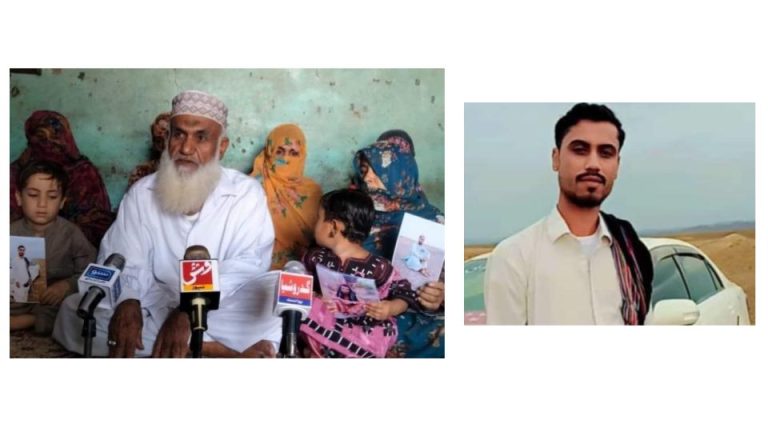
The family of a missing bank security guard from Chitkankoh area of Panjgur has demanded his immediate recovery while calling to stage a sit-in protest if their demands are not met.

Addressing a press conference on Thursday, Haji Khalid, Mohammad Iqbal, Abid Hussain, Rashid Hussain and Sajid Hussain, along with their other family members, stated that 32-year-old Zahid Hussain was a peaceful citizen employed as a security guard at a private bank in the area.

On the evening of May 9th, after finishing his duty at around 6pm, Zahid had reached home when Army personnel in civilian clothes barged into his house and forcibly took him away.

“When we asked who they were and where they were taking Zahid, they said he was being taken to Quetta for interrogation and would be released later,” Haji Khalid said. However, he added that nearly a month has passed and there is still no trace of Zahid nor any information about his whereabouts.

The family made an emotional appeal to the authorities for Zahid’s recovery on humanitarian grounds. “Our small children, elderly parents, and all relatives are going through immense distress and anguish over this. It is a catastrophe for us,” Abid Hussain said.

They appealed to the authorities of Pak-occupied-Balochistan, Inspector General of Police, Commissioner Makran Division, security agencies, and human rights organizations to take notice of the matter and ensure Zahid’s safe recovery. “If he has committed any wrongdoing, he should be presented before a court,” Rashid Hussain demanded.

The family expressed confidence in Zahid’s innocence, saying he was simply discharging his duties as a bank security guard. As a final warning, Sajid Hussain announced that if their demands are not met, they will be forced to stage a sit-in protest at the Deputy Commissioner’s office and on the CPEC route.

Enforced disappearances, extrajudicial killings, torture—these are the tools of a Army failing to suppress the Baloch community since it occupied the region forcefully in 1948.

ISKP assassinates Taliban commander in Afghanistan’s Ghor province

A high-ranking Taliban commander, Mullah Muhammad Hassan, was killed by unknown gunmen in Afghanistan’s western Ghor province on Tuesday. The Islamic State Khorasan Province (ISKP) has claimed responsibility for the assassination.

Hassan, a prominent figure in the Taliban’s regional hierarchy, was ambushed while traveling through the province. Details of the attack remain scarce, but local sources report a swift, targeted operation that left the commander dead and his entourage in disarray.

The ISKP, the Afghan arm of ISIS, quickly took credit for the hit. This bold claim underscores the group’s ongoing challenge to Taliban authority, even as the latter tries to consolidate power nationwide.

Notably, ISKP has been actively involved in orchestrating attacks in Afghanistan. Earlier, ISKP launched an attack on May 20, targeting a bus carrying Taliban members in Kandahar city killing at least four individuals.

It has consistently targeted Afghanistan and has accused the Taliban regime of being apostate, further fueling the violent conflict between the groups.

PoGB residents threaten ‘chakka jam’ over crumbling roads

Anger is mounting in Pakistan-occupied Gilgit-Baltistan (PoGB) as residents grapple with deteriorating infrastructure, particularly the region’s dangerously poor road conditions.

The Awami Action Committee, a local activist group, has taken a stand, lambasting the occupied-Army for its failure to provide basic amenities. Their primary concern is the treacherous state of roadways, especially in the Khanbari area, where they say accidents are a daily risk.

“People carrying wheat sacks could fall into the river any moment,” warns an Awami Action Committee activist. “It’s not just inconvenience; it’s life-threatening. Yet, the local authority’s incompetence and apathy are glaring.”

The situation in Khanbari is particularly grim. A leader from the committee reports, “Transporting one wheat sack costs around 1000 PKR. The Chief Minister’s team visited, but nothing changed. Our people are suffering.”

Now, patience is wearing thin. The committee threatens a ‘Chakka Jam’ strike across Occupied-Gilgit-Baltistan if Khanbari’s road issue isn’t immediately addressed.

This crisis is just the latest in PoGB’s long history of neglect. From poor infrastructure to ignored grievances, residents have been protesting for years. Yet, the administration, a puppet of Pak Army, continues to stifle dissent rather than solve problems.

Baloch missing persons camp marks 14 years 11 months as dead bodies continue to be found

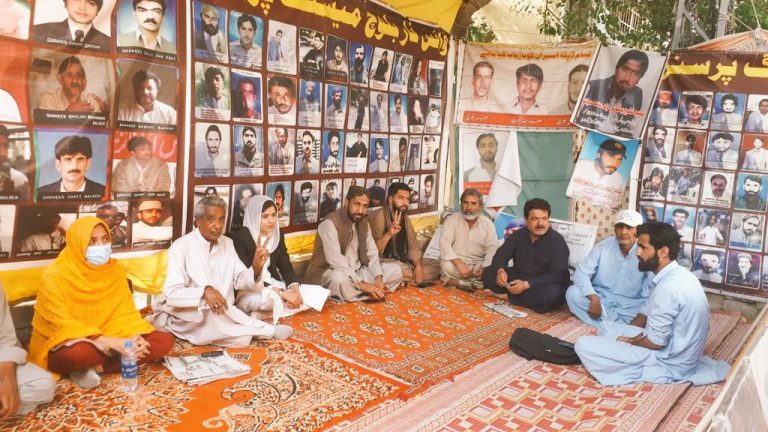
The Voice for Baloch Missing Persons (VBMP) hunger strike camp has reached a grim milestone, marking its 5,469th day of continuous protest. This long-standing demonstration underscores the ongoing human rights crisis in Pak-occupied-Balochistan province, where thousands of individuals have been subjected to enforced disappearances.

On Tuesday, a group of prominent figures visited the camp to express solidarity with the protesters. Among them were Haidar Raisani, organizer of the Baloch Watan Party, Salman Baloch, Abbas Baloch, and several members of the local lawyer fraternity.

Addressing the gathering, Mama Qadir, Vice Chairman of VBMP, criticized “Pakistani imperialism” in the region. “The barbarism and savagery employed against our people must be brought to the world’s attention,” he said. “The silence of the global community on the non-recovery of forcibly disappeared prisoners is tantamount to perpetuating imperialist interests.”

Qadir’s statements come amid a disturbing trend in PoB: the discovery of mutilated bodies of missing persons. “The Army continues to dump the bodies of missing Baloch,” he said, describing it as a “humanitarian atrocity” that distorts the region’s calls for peaceful self-determination.

According to VBMP, over 55,000 Baloch individuals have been forcibly disappeared. This figure would make it one of the most severe cases of enforced disappearances globally. The organization is urging international bodies, including the United Nations and European Union, to intervene.

“We demand that these institutions play their role in recovering our missing people,” Qadir insisted. His appeal reflects growing frustration with international indifference to their plight.

Pakistan is using enforced disappearances and extrajudicial killings to suppress Pak-occupied-Balochistan’s independence movement.

Mama Baloch also criticized certain Baloch figures as “puppets created by colonialism.” According to Qadir, these individuals misrepresent the core issues to international audiences, “seeking maximum rewards from imperialism” at the expense of Baloch national interests.

Despite the grim circumstances, Qadir remains defiant. “History bears witness that national peaceful struggles are not extinguished by imperialist barbarism,” he declared. “They become stronger. And when imperialism ends, its puppets are buried too.”

As the hunger strike enters its fifteenth year, it stands as a testament to the resilience of the Baloch people. However, with bodies still appearing and thousands still missing, the camp also serves as a stark reminder of an unresolved human rights crisis that continues to haunt Pakistan.

Pak Army kidnaps another Baloch youth from Khuzdar

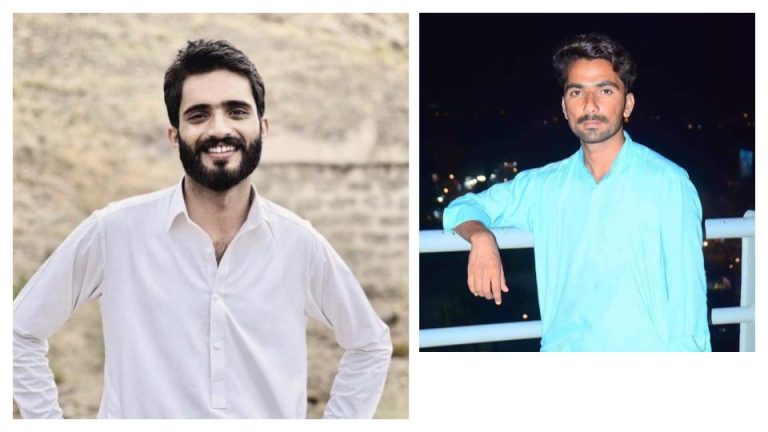
In a disturbing continuation of a long-standing issue, another Baloch student has fallen victim to enforced disappearance in Pak-occupied-Balochistan. Anees Ur Rehman Baloch, a recent Computer Science graduate from Bahauddin Zakaria University (BZU) in Multan, was reportedly taken by armed men on the evening of June 4th from Pubg Hotel in Khuzdar.

Baloch, who also served as the chairman of the Baloch Students Council Multan, is now among the thousands of Baloch individuals whose whereabouts remain unknown after being forcibly taken. His brother, Fakhr Baloch, expressed serious concerns about Anees’s life and safety. “My younger brother was forcibly taken away this evening by unknown armed men,” he said, urging the Khuzdar administration to “immediately ensure the recovery of my brother and register an FIR (First Information Report) of the incident.”

This incident is not isolated but part of a larger, troubling pattern. Human rights violations are intensifying in Pak-occupied-Balochistan, with Baloch students being primary targets. Known for their courage in advocating for their rights, these young activists often find themselves in the crosshairs of Pak Army actions.

The city’s political and public circles have been vocal about the Army, intelligence agencies, and Army-sponsored “death squads” in forced disappearances of Baloch community.

Tragically, Anees Baloch is not the only victim. On May 15th, another Baloch individual, identified as Fahad, son of Dota Bugti, was reportedly abducted by Pak forces from Shah Ali Colony in Sui, Dera Bugti. These incidents paint a grim picture of a region where enforced disappearances have become disturbingly common.

The situation in Pak-occupied-Balochistan, particularly in areas like Khuzdar, has long been a point of concern for human rights organizations. They argue that the Pak Army’s response to Baloch community has been heavy-handed, often resulting in human rights abuses.

As more cases like that of Anees Baloch come to light, the international community’s attention is increasingly drawn to this crisis.

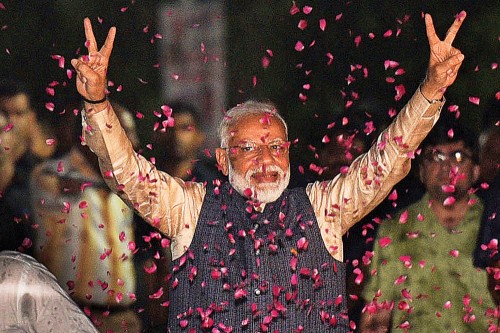
Modi secures another win but BJP suffers unexpected losses

Outcome of 2024 general elections tells us that the idea of politics and democracy is more embedded in Indian social life than the echo chambers of media. Social media not only limits our understanding but hinders any possibility of subtle interconnections between democracy and participation of ordinary people. Any  mystical  account  of a leader that transcends their worldly existence contradicts real life lived challenges of masses in this country who survive in the bare minimum in the 21st century. In other words, consolidation and mobilization of voters in this election was an enigma that was unnoticed by pollsters and mainstream media. As the jury is still out on caste consolidation and combination one thing is clear that much-hyped consolidation of various castes into the Hindutva fold and explanations of it as the domination of Hindutva was nothing but reproduction of the gaze of power that came from a ruling party.

 Special mention of the state of Uttar Pradesh BJP’s big bastion in the last two general elections is a must in this 2024 result as UP has shown that any explanation adopting the macro lens for advancing a macro explanation of politics in UP falls short in taking note of micro political developments which advance a better understanding of politics in UP in particular and India in general.

The result of the 2024 Lok Sabha elections has in a very dominant way proven that the campaign against EVM machines of being tampered and so on by the opposition is merely a desperate attempt by the opposition to malign the ruling government and a way to escape their defeat in the last elections. For example the Indian National Congress had no qualms regarding the EVM in 2004 & 2009 general elections when it rose to victory. However, after 2014 when it’s political fortunes began to descend the Congress levied the EVMs as faulty and that they were tampered.

India and it’s people have stood for democracy, secularism and freedom of speech and expression and that power lies in the janta. Though away from the aspired numbers Prime Minister Narendra Modi thanked the people of the country, for “restoring their faith” in the BJP as the party looks set to form the government at the Centre for a third successive term.

Pak Army raids homes in Sindh; injures several women

Recently, the Deputy Superintendent of Police (DSP) of Golarchi, Pakistan raided a Hindu family’s home in Badin, Sindh. The firing that ensued during the raid resulted in brutally injuring a Hindu woman and her husband was arrested without any legal case against him.

This incident depicts the vulnerability and injustice faced by Hindu minorities in Pakistan. This is not uncommon incident in Pakistan but a daily reminder of the atrocities faced by Hindu minorities in Pakistan.

There are several incidents that have surfaced on atrocities faced by Hindu minorities such as rape, murder, conversion, invasion, cultural suppression etc, which underscores the urgent need for Pakistan to address the systemic discrimination and violence faced by its Hindu minority.

Global attention is urgently needed to shed light on the plight of the Hindu minorities and a concerted efforts is made to hold perpetrators accountable and provide protection and support to those who have been victimized.