Home Blog Page 94

Family of disappeared Baloch youth blocks Khuzdar Highway

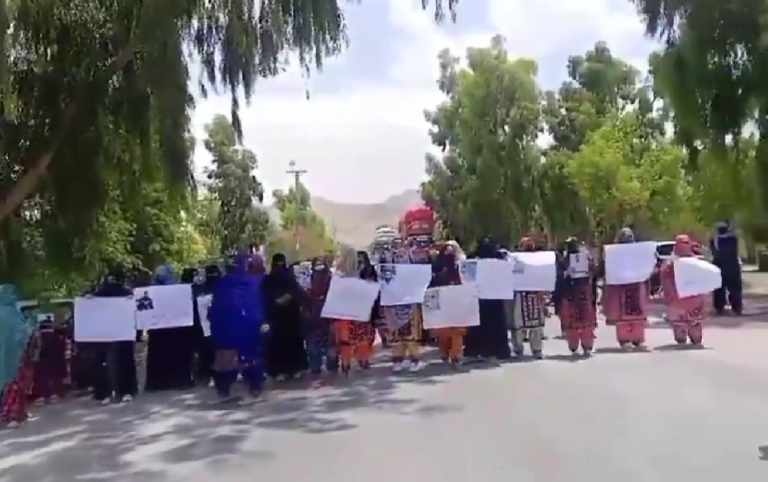
Tensions escalated in Khuzdar after the family and relatives of the missing Baloch youth, Anees Baloch, took to the streets, blocking the main highway in protest against his enforced disappearance.

With banners waving and voices raised, the Baloch family has brought traffic to a standstill calling on authorities to take immediate action to release Anees and ensure his well-being. The Baloch Yakjehti Committee (BYC) has shown its support for the protest and urged people from all walks of life to stand in solidarity with the affected families.

Anees Ur Rehman Baloch, a resident of Khuzdar and a recent computer science graduate from Bahauddin Zakaria University (BZU) in Multan, was reportedly taken by armed personnel on the evening of June 4 from Pubg Hotel in Khuzdar., He was forcibly enforced by the Pak Army in the evening of June 4. He served as the chairman of the Baloch Students Council in Multan and is now among the thousands of enforced disappearance victims.

Enforced disappearances have sadly become a recurring reality in Pak-occupied Balochistan, where individuals like Anees Baloch are arbitrarily taken away without any legal recourse. These incidents shed light on the plight of the Baloch community which faces atrocities at the hands of the Pak Army.

BNM condemns demolition of Syed Zahoor Shah Hashmi library in Sindh as attack Baloch heritage

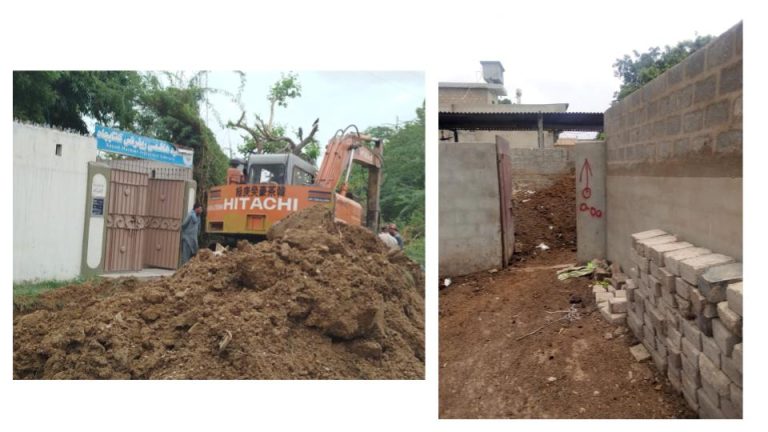
Nationalist leaders have voiced outrage over the Sindh authorities’s decision to demolish the Syed Zahoor Shah Hashmi Reference Library in Karachi, calling it an attack on the cultural heritage of the Baloch people.

The library, named after the renowned Baloch scholar and researcher Syed Zahoor Shah Hashmi, houses thousands of books, manuscripts, and historical documents relating to Baloch history, language, and culture.

In a statement, the central spokesperson for the Baloch National Movement (BNM) said the planned demolition represents “a direct assault on the Baloch national heritage” that should be condemned by all intellectuals.

“This library is not only preserving our scholarly and cultural wealth but is an important center for promoting Baloch civilization,” the spokesperson said. “The hard work of great researchers like Syed Zahoor Shah is enshrined here.”

https://twitter.com/balochyakjehtic/status/1798692920070947165?s=46

The BNM said that the destruction of the library would result in an irreplaceable loss of the Baloch nation’s historical archives and cultural identity. It has appealed to the Sindh government to immediately reverse its decision.

Noting the library also holds significance for the Sindhi people, the group said the foundations contained “the blood of martyr Saba Dashtiari” – likely referencing a Baloch activist killed during the fight.

“The existence of this library is a matter of pride, and protecting it is our collective responsibility as Baloch,” the statement read. “We warn the Sindh authorities against demolishing this heritage.”

Baloch Yakjehti Committee has also expressed its dismay stating the atrocities that Pak Army is committing by demolishing houses and the Sayed Hashumi Reference Library at Gulam Muhammad Goth Malir on the indigenous people of Malir, the Balochi language, and cultural heritage.

The Army is taking steps for constructing Malir Expressway, a road construction project by the Defence Housing Authority, a multi-billion housing scheme to demolish Goth Gulaam Muhammad.

However, the DHA has always been involved in disrupting the ecology of Malir by forcibly vacating many villages in the area. Recently, they have marked several houses and the Sayed Hashumi Reference Library for demolition and deployed heavy machinery to carry out the destruction.

The decades-old library is seen as a symbol of Baloch ethnic pride, memory and more importantly, the ecology that is under distress for a long time. Therefore, the Baloch community should raise their voices against this move and unite for the protection of this heritage.

Kidnapping, rape and forceful conversion of another Hindu girl in Pakistan

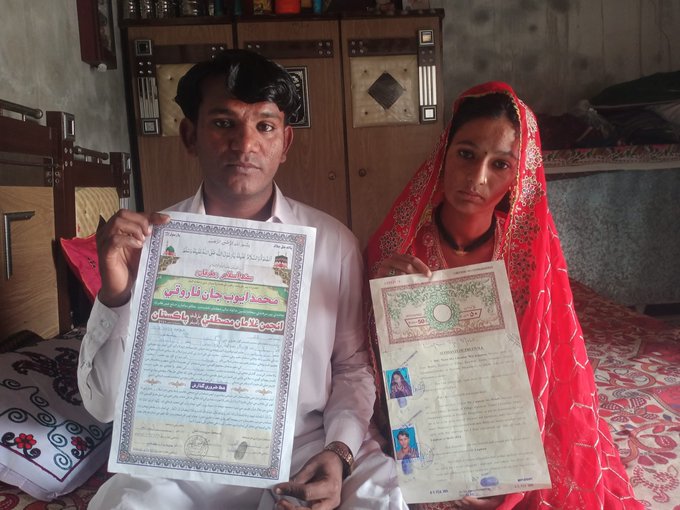
Noori, a minor Hindu girl was not only kidnapped, raped, forcibly converted to Islam but also married off to Muslim men Muhammad Ayub “Peer Ayubjan Sarhandi” and Luqman Mohib Junejo in separate incidents. This practice of “conversion rape” is being used to entrap and exploit Hindu girls.

In Noori’s case, influential Muslim religious leader Sarhandi has abducted, raped and “converted” her through an illegal marriage in the name of Islam. They are committing rape and prostitution in the name of marriage, which shows that religious minorities are not safe in today’s Pakistan.

Just weeks earlier, 17-year-old Shanti Meghwar escaped her captor Muhammad Nazir Ghulam, courageously testifying in court about her kidnapping, forced conversion, and marriage against her will. Her harrowing account laid bare the “weaponization of conversions” targeting Hindu girls from impoverished backgrounds.

Pakistan’s draconian blasphemy laws, which can bring the death penalty for insulting Islam, have been used to persecute minorities or settle personal vendettas. Meanwhile, authorities are turning a blind eye or facilitating such crimes against Hindus.

Pakistan’s treatment of its Hindu minority is described as a “slow-motion ethnic cleansing.” There is a lack of legal safeguards, and laws against forced conversion are routinely blocked by religious hardliners.

Pak Army abducted Dr. Deen Baloch still missing after 14 years

It has been 14 long years since Dr. Deen Muhammad Baloch, a practicing doctor and Baloch political activist, was forcibly disappeared from his workplace at a public hospital in Ornach, Khuzdar. Abducted nearly at midnight on June 28, 2009, his children Sammi and Mehlab have grown up with only a photograph to remember their father by.

Sammi Deen, now a young woman, recalls the solitary memory of her father’s photo as they spent their childhood desperately searching for him across the roads of Pak-occupied-Balochistan. On June 28, 2009, at about 1 a.m., Army personnel in plain clothes broke into the hospital where he was working. They beat, blind-folded, and hand-cuffed him and threw him into a military vehicle and took him away. Since then, nothing is known about his whereabouts.

“We have only his photograph left as a memory”, she says, her voice a portrait of resilience in the face of injustice.

Dr. Baloch was not only a practicing doctor but an active member of the Baloch National Movement (BNM), a pro-independence political party operating in Pakistan’s restive Balochistan province. Several leaders and activists of the party have been abducted and many extra-judicially killed by the Army, including its founder and chairman, Ghulam Mohammad Baloch, secretary general, Dr Mannan Baloch, and information secretary, Razak Sarbazi.

Dr. Baloch’s abduction by Pak security forces is just one of the many cases of enforced disappearances used by the Army to crush the Baloch liberation movement and silence political dissent. His crime was being an educator who worked tirelessly to mobilize his people in their struggle for independence.

The family tried registering a case with the police in Khuzdar and filed a petition in the Pak-occupied-Balochistan High Court but all in vain. Despite several protests and marches, not a trace of Dr Muhammad has been found.

Despite being illegal under international law, Pak forces have subjected countless Baloch civilians and political workers to this cruel practice for over two decades with impunity.

Rights groups have long condemned enforced disappearances as a tool of Army terrorism. According to VBMP, over 80,000 Baloch individuals have been forcibly disappeared since 2001. This figure would make it one of the most severe cases of enforced disappearances globally.

The Baloch Students Organization (BSO) Azad has announced an online campaign from June 8 to amplify victims’ accounts and “expose the criminal nature of the Pak Army and its dehumanizing tactics against the Baloch masses.”

For Sammi and countless other families, the wait for their loved ones remains a torturous existence with no resolution in sight.

As Baloch activists persist in demanding accountability, the world witnesses the heavy toll of Pakistan’s iron-fisted policies in the restive, resource-rich region. For Sammi and Mehlab, however, their father’s enforced disappearance remains an unhealed wound that fuels their generational fight for justice and freedom.

BLF executes two Pak Army spies in separate raids

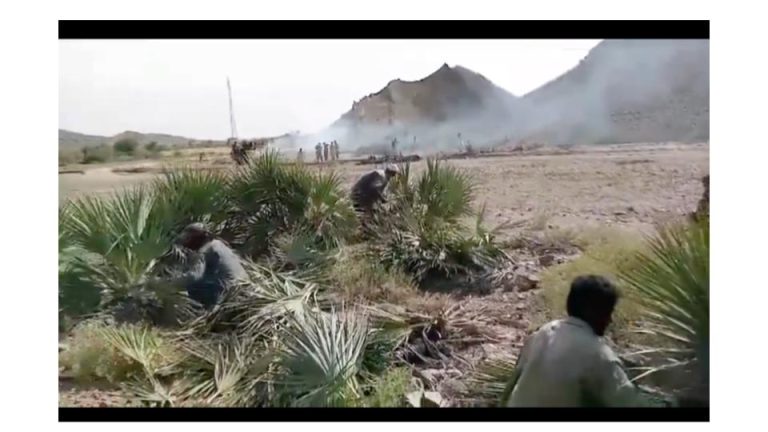
The Balochistan Liberation Front (BLF), a freedom fighter group, has killed two Pak intelligence operatives in separate raids in the restive Pak-occupied-Balochistan province.

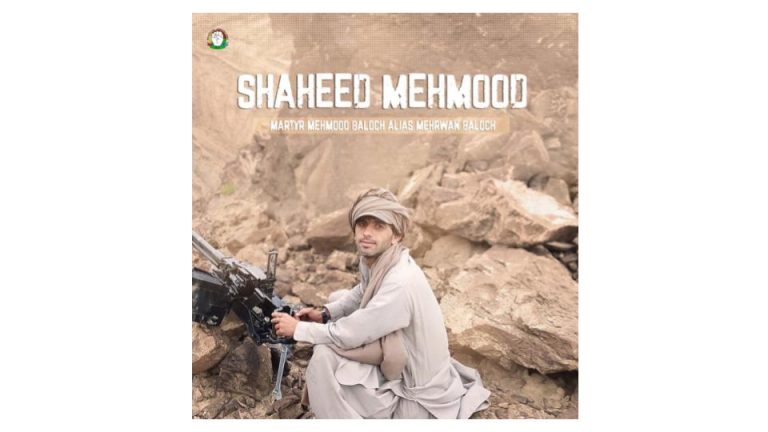
BLF spokesman Major Gwahram Baloch, in a statement issued to the media, said that Baloch freedom fighters killed two operatives of MI and ISI, Hamidullah s/o Akhtar, a resident of Panjgur, in the Qalam Chowk area of Panjgur, and Hamza in the Shoraparu area of Kalat at the place of Dor, and seized their weapons and other equipment.

The spokesman said that a special team was formed to eliminate him, which kept a close watch on the movements of them. On June 4, acting on information, the Baloch freedom fighters carried out an operation and neutralized him.

“This national criminal was an important operative against Baloch freedom fighters and involved in various social evils,” the spokesperson said.

In a second operation on June 5 in Kalat district, the BLF killed Hamza, who worked directly for Habibullah Mardanshahi – the head of a death squad formed by Pakistan’s intelligence agencies. The spokesman accused Hamza of involvement in the killings of other Baloch fighters.

The spokesperson said that the criminal was a direct subordinate of the notorious Zamanali Hyder Mohd Hassani.

He said that he was directly involved in the martyrdom of fellow freedom fighters Shaheed Shams Baloch, Shaheed Dr. Shuaib, and Zafar Baloch, in addition to committing social evils in areas of Kalat and Kharan.

Heinous crimes such as abducting people and handing them over to the Pak Army was also committed by Hamza. Based on solid evidence of his crimes, the Balochistan Liberation Front fighters decided to neutralize him on June 5, and after killing him, the fighters took away his weapons and other equipment.

The spokesman said that the BLF takes responsibility for the killing of them. The statement said that they have been punished for their crimes committed against the Baloch nation. It also warned others to refrain from their criminal activities, otherwise, they too will meet the same fate.

Balochistan, Pakistan’s largest but least populated province, has grappled with a long-running freedom struggle. Various Baloch freedom fighter groups, including the BLF, have waged an armed struggle against the Army, for subjugation of the Baloch people and exploitation of the resource-rich region’s natural resources.

Pak security guard fatally shoots young man for filming TikTok video in Karachi

A young man was fatally shot by a security guard for merely filming a TikTok video. This tragic incident highlights Pakistan’s concerning stance towards its youth and their creative expression.

24-year-old Saad Ahmed was recording a video near Sereena Mobile Mall in Karachi’s Buffer Zone area when he was intercepted by 35-year-old security guard Ahmed Gul. In a shocking display of disproportionate force, Gul opened fire on the young man, ultimately taking his life.

The Senior Superintendent of Police (SSP) Central revealed that the incident occurred within the jurisdiction of the Taimooria police station, and the responsible security guard has been apprehended. However, during initial interrogation, the guard claimed that Saad had made “provocative gestures” towards him while recording the video – a flimsy justification for such a heinous act.

This tragic incident is not an isolated case in Pakistan’s troubling crackdown on youth culture and the popular video-sharing platform TikTok.

Alarmingly, Pakistan’s religious institutions have also joined the assault on creative expression and social media. On December 24, the prominent Jamia Binoria Town religious school in Karachi issued a fatwa (religious decree) declaring the use of TikTok illegal and ‘haram’ (forbidden), terming it the “biggest temptation of the modern era.”

TikTok

The fatwa outlined ten reasons supporting this stance, including condemning the presence of animal photos and videos, which are deemed forbidden in Sharia. It also criticized the creation and dissemination of “obscene videos by women” on the platform, as well as the practice of men and women engaging in dancing and singing, which is viewed as a means of spreading “obscenity and nudity.”

Furthermore, the fatwa accused TikTok of being a platform where scholars and religion are mocked and ridiculed, contributing to moral decay and wasting precious time.

This crackdown on TikTok and creative expression among youth is not limited to religious institutions. The Pakistan Telecommunication Authority has imposed partial bans on the video-sharing app multiple times, citing concerns over indecent or immoral content.

The nation’s youth deserve a nurturing environment that fosters creativity, not one that stifles their voices and aspirations through violence and oppressive decrees.

Gwadar: Gateway for Punjab (Pak)-Chinese settler colonialism in PoB

The recently constructed Gwadar International Airport has raised alarm bells among Baloch nationalists as it has become the latest tool for the Pak Army’s sinister plans of demographic re-engineering in the resource-rich region.

Speaking at a fiery press conference on Wednesday, the central spokesperson of the Baloch Students Organization Azad (BSO-Azad) lambasted the multi-million dollar airport project as a “gateway for Punjabi and Chinese settler colonialism” in Pak-occupied-Balochistan.

“History teaches us that occupying forces always prioritize settlements and plundering the resources of occupied lands in the name of development,” the spokesperson said. “The Pak forces, using Chinese money, are already involved in killing, abducting and looting the Baloch youth. Now this airport lays the ground for an active demographic invasion.”

He warned that the true intention behind the airport was to turn the Baloch into a minority on their own soil by facilitating the influx of settlers from Punjab and China. “This settler project is an existential threat to the Baloch nation. We will resist it by any means necessary,” he declared.

The spokesperson pointed to the glaring injustice that while Gwadar’s local population lacks access to clean water, the Pak and Chinese regimes had jointly pumped in millions to build the airport aimed at serving their colonial objectives.

“If they really cared about the Baloch, they wouldn’t be trampling on our dignity daily. Our mothers and sisters face privacy violations, while our livelihoods from fishing are being robbed,” he said. “But their real motive is to turn our whole geography, especially Gwadar, into a military cantonment under their occupation.”

Gwadar Airport as Tool of Punjabi-Chinese Occupation

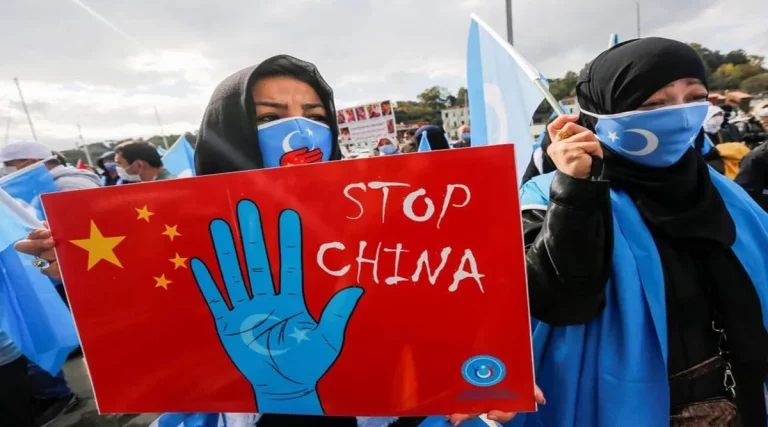
China and Pakistan are actually pursuing a policy to gain complete control over the Baloch geography due to its importance, and they want to turn the Baloch land, especially Gwadar, into their military base. China, which wants to emerge as a rising power against capitalism and investment in the world, on the other hand wants to maintain its military control in occupied areas of Balochistan by using the model of European occupations.

Due to the presence of barely a hundred Chinese in Gwadar, the entire area is under military siege. One can imagine the situation of military occupation when thousands of Chinese come to Gwadar and other parts of Balochistan.

Addressing the Baloch people at the end of the statement, he said that the Army is currently pursuing a policy based on intense warfare and occupation, and its main purpose is to eliminate the Baloch population from Pak-occupied-Balochistan and establish permanent Punjabi and Chinese occupation.

The spokesperson urged the Baloch masses to unite against the “Chinese imperialist designs” and not allow them a chance to gain ground in Balochistan. “Otherwise, the devastation the Chinese can inflict within months is far worse than what the Punjabi occupiers failed to do over 70 years.”

As Pak forces lay siege to Gwadar under the pretext of securing the handful of Chinese personnel already there, the airport looks set to intensify the brutal military occupation if the influx of Chinese settlers is allowed. Baloch resistance appears determined to turn this colonial venture into another festering crisis for Islamabad and Beijing.

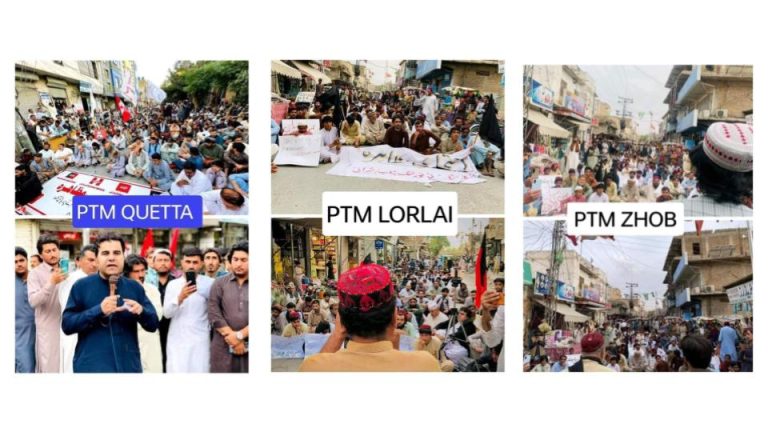
Pak Army unleashes brutal force on Pashtun protesters in Chaman

The Pak Army’s notorious Frontier Corps (FC) opened indiscriminate fire on peaceful protesters in Chaman, further exposing the oppressive regime’s iron-fisted approach towards dissent and the blatant disregard for human rights.

The protesters who comprised of locals from the Pashtun community, had been staging a sit-in for the past seven months to voice their opposition to Islamabad’s draconian “one document regime.” This policy, which mandates passports for cross-border travel, has disrupted the age-old familial and trade ties between Pashtuns living on both sides of the contentious Durand Line.

What began as a legitimate expression of grievances against an unjust policy quickly turned into a scene of chaos and violence as the FC forces resorted to excessive force, firing directly at the demonstrators. With stones and empty bottles being met with a hail of bullets from the heavily armed Pak troops.

With mobile networks shut down in a desperate attempt by the occupying forces to suppress the flow of information and stifle voices of dissent. Furthermore, organizers of the sit-in protest were arrested under the guise of negotiations during the night, only for the remaining demonstrators to face a brutal crackdown the following morning.

This latest incident is a stark reminder of the systematic oppression and human rights violations perpetrated by the Pak Army in the regions inhabited by ethnic minorities. The decision to impose the “one document regime” itself was a knee-jerk reaction to strained relations between Islamabad and the Afghan Taliban, yet it is the innocent Pashtun population that bears the brunt of this oppressive policy.

PoJK court rejects bail plea of Ahmed Farhad’s disappearance done by Pak Army

An anti-terrorism court in Pakistan’s illegally occupied Jammu and Kashmir (PoJK) has rejected the bail plea of Ahmed Farhad Shah, a victim of enforced disappearance by the oppressive Pak regime. The court’s decision comes as a slap in the face of human rights and due process, further exposing the brutal tactics employed by Islamabad’s occupying forces to silence dissent in the region.

Shah, who had been forcibly abducted from his residence in Islamabad on May 15, mysteriously resurfaced in the custody of Gujjar Kohala police near the PoJK border with Khyber Pakhtunkhwa on May 29. This appearance, coinciding with an ongoing case for his safe return at the Islamabad High Court (IHC), raised serious concerns about the illegal methods used by Pakistan authorities.

The IHC had taken a firm stance, summoning defense and intelligence secretaries to address the case, underscoring the gravity of the situation. Justice Mohsin Akhtar Kayani framed 12 crucial questions, mostly related to the functions and obligations of Pakistan’s notorious spy agencies, known for their heavy-handed tactics against dissidents.

Initially, the police attempted to conceal the true nature of the case by registering a secretive FIR against 150-200 unidentified “miscreants” for allegedly inciting violence and attacking paramilitary forces during protests organized by the Joint Awami Action Committee (JAAC). However, the truth soon emerged, revealing the regime’s desperate attempts to suppress legitimate political activism.

Shah’s counsel, Karam Dad Khan, vehemently argued that his client was not even a nominated accused in the FIR and had been implicated with malicious intent. He further questioned how Shah could orchestrate protests when he was present in Islamabad, and internet services were restricted in PoJK during the demonstrations.

The prosecution’s claims that Shah shared “factually wrong, provocative, and hate-filled material” on his Facebook account during the protests were swiftly countered, as the opposition council highlighted the regime’s blatant disregard for freedom of expression and dissent.

Despite the overwhelming evidence of injustice, special judge Mahmood Farooq rejected Shah’s bail plea, stating that the content he shared was “hateful, inflammatory, and exaggerated the loss of lives during the protests.” This decision not only ignores the fundamental rights of the accused but also emboldens the oppressive tactics of the Pak Army in PoJK.

The international community must take note and hold Pakistan accountable for its actions, lest more innocent lives are sacrificed at the altar of its oppressive ambitions.

Missing Baloch youth’s family demands recovery, threatens protest in Panjgur

The family of a missing bank security guard from Chitkankoh area of Panjgur has demanded his immediate recovery while calling to stage a sit-in protest if their demands are not met.

Addressing a press conference on Thursday, Haji Khalid, Mohammad Iqbal, Abid Hussain, Rashid Hussain and Sajid Hussain, along with their other family members, stated that 32-year-old Zahid Hussain was a peaceful citizen employed as a security guard at a private bank in the area.

On the evening of May 9th, after finishing his duty at around 6pm, Zahid had reached home when Army personnel in civilian clothes barged into his house and forcibly took him away.

“When we asked who they were and where they were taking Zahid, they said he was being taken to Quetta for interrogation and would be released later,” Haji Khalid said. However, he added that nearly a month has passed and there is still no trace of Zahid nor any information about his whereabouts.

The family made an emotional appeal to the authorities for Zahid’s recovery on humanitarian grounds. “Our small children, elderly parents, and all relatives are going through immense distress and anguish over this. It is a catastrophe for us,” Abid Hussain said.

They appealed to the authorities of Pak-occupied-Balochistan, Inspector General of Police, Commissioner Makran Division, security agencies, and human rights organizations to take notice of the matter and ensure Zahid’s safe recovery. “If he has committed any wrongdoing, he should be presented before a court,” Rashid Hussain demanded.

The family expressed confidence in Zahid’s innocence, saying he was simply discharging his duties as a bank security guard. As a final warning, Sajid Hussain announced that if their demands are not met, they will be forced to stage a sit-in protest at the Deputy Commissioner’s office and on the CPEC route.

Enforced disappearances, extrajudicial killings, torture—these are the tools of a Army failing to suppress the Baloch community since it occupied the region forcefully in 1948.