Home Blog Page 134

Article 370 Review: Hard hitting must watch political drama

0

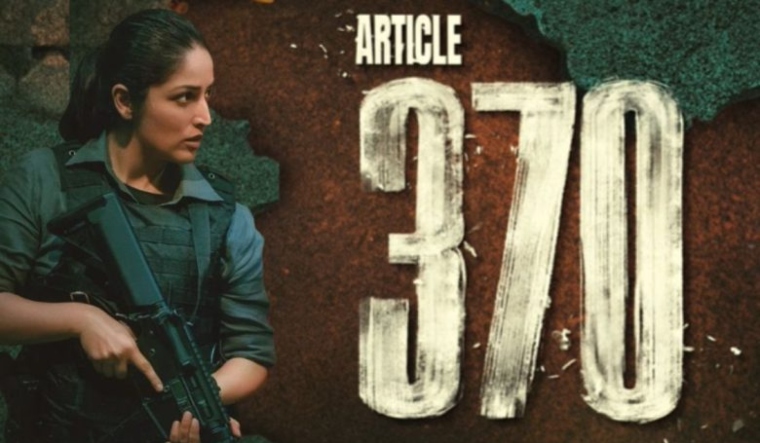
Yami Gautam Dhar and Priya Mani starrer ‘Article 370’ graced the cinema screens on this Friday (23 February). Directed by Aditya Suhas Jambhale, the film emerges as a cinematic masterpiece, enriching the theatrical experience of viewers on National Cinema Day and beyond. Article 370 is a political drama film which is co-produced and co-written by Uri-famed Aditya Dhar, husband of lead actress Yami Gautam. It has a total run-time of 2 hours and 38 minutes and it does justice to its central premise: examining how Article 370 shielded the ‘conflict economy’ in the valley and why it was necessary to abrogate it.

The movie is a riveting tale shown from the perspective of a Kashmiri Pandit ‘girl’ who plays a pivotal role in dealing an impactful blow on the root cause of terrorism and gutting the conflict economy in the valley.

The film covers the meticulous details of episodes that transpired in the valley between 2016 to 2019 leading upto the D-Day, 5 August 2019. For those unversed, on 5th August 2019, Union Home Minister Amit Shah moved to the Rajya Sabha in a stealth secrecy to ‘nullify’ the powers vested in the temporary and transient provisions of the Indian  Constitution, Article 370.

Written by a team comprising Aditya Dhar, Arjun Dhawan and Aditya Suhas Jambhale, the movie has a gripping screenplay with engaging interactions and powerful acting doing the heavy lifting which is equally commended by intermittent ‘heartbeat thumping’ background score and visually stunning gun fight sequences. The banter between arch-nemesis valley politicians and the sharp exchanges between Raj Zutshi (playing a mixed character of Farooq and Omar Abdullah) and Yami Gautam (portraying security officer Zooni Haksar) stand out, to name a few dialogues.

The movie has a stellar ensemble cast complementing each other’s performances, seamlessly appearing as a unified team and delivering picturesque execution. Despite receiving limited screen time, Arun Govil, known for his portrayal of Shri Ram in Ramayan, and senior actor Kiran Karmakar, leave an indelible mark. They depict key political figures PM Narendra Modi and Amit Shah respectively.

.

Further, in a refreshing deviation from Bollywood template, the movie didn’t follow the set pattern of giving a romantic arc to the protagonist or be it to include songs at regular intervals. The movie doesn’t deviate a bit from its central premise – hardships caused by the temporary provision, benefits to vested players primarily separatist leaders, corrupt bureaucrats and valley politicians and planning, strategization and efforts that went into nullifying this constitutional provision.

Furthermore, Article 370 dispels any doubts about the move being a knee-jerk reaction. It seamlessly presents intricate details and constitutional complexities in an uncluttered way, shedding light on the comprehensive actions leading to the abrogation of Article 370 on 5 August 2019 including crackdown on separatist leaders Yaseen Malik and ilk and drying up their funding source.

However, the fact that the film is rich in intricate details and references to real characters, places and events, it could work as a double-edge sword for the film.

While the film’s inclusion of actual references and remarks resonated deeply with dedicated fans, it may land short to captivate those who lack the necessary context. Moreover, it might not fully meet the expectations of action enthusiasts, as it restrains itself from indulging in typical Bollywood tropes such as over-the-top action sequences and clichéd, chest-thumping one-liners. Instead, the film remains focused on its central theme, reinforcing that the abrogation of Article 370 was a constitutional measure, not a military op.

It is a cinematic masterpiece worthy of a theatrical experience particularly in the political drama genre. Just like the way daily ground reports from Kashmir undergo a positive transformation in the movie – from recurrent scenes of violence, hartals, secessionist/seditionist and communal speeches to opening up of equal avenues for SC/ST, women, different sects among Muslim community – real-life Kashmir has ushered in a new era in post-Article 370 valley. The film aptly captures this transformative journey.

Iran launches fresh strikes on militants in Pakistan, kills senior Jaish al-Adl commander

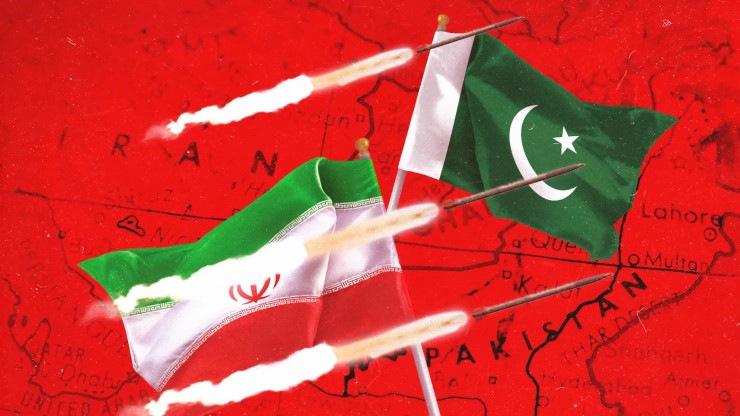
In a recent escalation of tensions, Iranian forces engaged in armed clashes with a militant group, marking a significant development just one month after both nations conducted air strikes on each other. The clash resulted in the killing of senior Jaish al-Adl commander Ismail Shahbakhsh and his associates within Pakistan’s territory.

Jaish al-Adl, designated a “terrorist” organization by Iran, operates as a Sunni terrorist group in the southeastern province of Sistan-Balochistan. The group has a history of launching attacks on Iranian security forces, with a notable incident in December targeting a police station and claiming the lives of 11 police personnel.

Despite recent diplomatic efforts to improve ties, including a joint press conference announcing expanded security cooperation, the latest clash reveals ongoing challenges. The agreement between Pakistan and Iran aimed to address misunderstandings and collaborate in combating terrorism. However, the recent armed confrontation suggests persistent tensions between the two nations.

This development follows a series of missile strikes exchanged in January, where both countries targeted ‘terror units.’ The incidents led to the withdrawal of ambassadors and heightened diplomatic strain. Although ambassadors have since returned to their posts, the recent clash underscores the delicate nature of relations between Iran and Pakistan, necessitating continued efforts towards de-escalation and resolution.

Tibetan monks in occupied Tibet protest against hydropower dam project of China

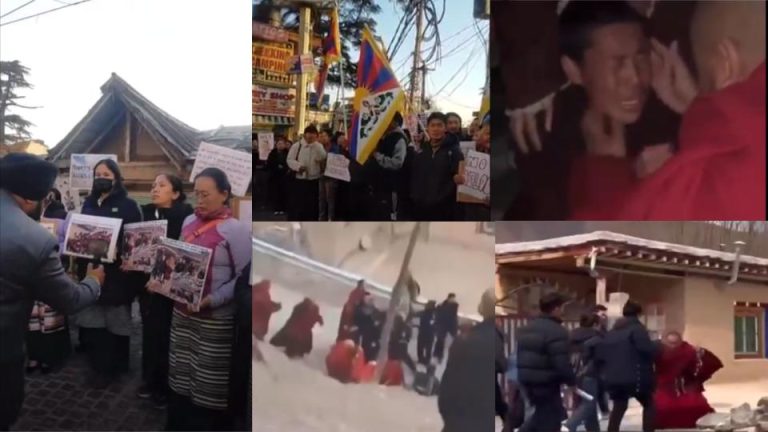
Chinese security forces have detained over 100 Tibetan Buddhist monks and local residents in the southwestern Sichuan province amid escalating protests against the construction of a massive dam. The dam, known as the Gangtuo hydropower station, is set to submerge six Buddhist monasteries and displace two villages.

In a rare display of defiance, residents of Wangbuding township in Dege County, part of the Garze Tibetan Autonomous Prefecture, have been taking to the streets since February 14. Their protest is directed against the construction of the 2,240-megawatt hydropower station on the Drichu River, a tributary of the Yangtze River.

The ongoing protests began on February 14 when at least 300 Tibetans gathered outside the Dege county town hall, openly opposing the dam’s construction despite strict controls on public gatherings and intense surveillance by authorities in Sichuan and Tibet.

Reportedly, the detentions took place in the Kardze Tibetan Autonomous Prefecture in Sichuan, an area densely populated by ethnic Tibetans. Some of the arrested protesters required hospitalization due to the use of force by the police, including water cannons, pepper spray, and tasers.

Videos captured during the protests depict monks pleading with officials not to demolish Yena and Wonto monasteries, both earmarked for destruction as part of the hydropower project. The project, estimated at USD 4.6 billion, is the largest hydropower venture in the upper reaches of the Jinsha River.

Locals are particularly distressed as the dam construction threatens the existence of six monasteries, including the Wonto Monastery, home to ancient murals dating back to the 13th century. China has consistently attempted to erase Tibetan culture and heritage through force, and the construction of this dam is one such move.

The Gangtuo hydropower dam project will not only lead to the displacement of the Upper Wonto and Shipa villages but also result in the destruction of the Yena, Wonto, and Khardho monasteries in Dege county, as well as the Rabten, Gonsar, and Tashi monasteries in Chamdo township.

Wonto Monastery, severely damaged during China’s Cultural Revolution, holds cultural and religious significance, with locals preserving its ancient murals since its rebuilding in 1983.

Despite the ongoing protests, the construction of massive hydropower projects in the Tibet Autonomous Region has intensified in recent years. China is also undertaking the world’s largest hydroelectric dam on the Brahmaputra River in Tibet, close to the Arunachal Pradesh border, raising apprehensions among lower riparian states like India and Bangladesh.

Iraq dilemma: Political stability and future at stake

In between the exchanges of attacks between the Iran backed militias and United States, the biggest consequences have been faced by Iraq. After the Iran-backed militias also referred to as Islamic Resistance, on the pretext of supporting Palestinian cause in Israel-Hamas war, carried out a drone attack on a US base, Tower 22 in Jordan, that caused three fatalities of US soldiers, US reprised with a wave of attacks targeting various locations of the Islamic Resistance in Iraq and Syria. These developments come around a time when Iraq and US are negotiating a pull out of US-led coalition forces from Iraq. The forces stationed since 2014, played a key role in eliminating the IS which occupied a large portion of Iraqi land back then.

US And Iran: A Balance game for Iraq

The recent attacks have augmented the intricacies and made it difficult for Iraq to balance both of its key partners Iran and US, who are themselves the arch-rivals. Although US has, since long, designated the Islamic Resistance and its comprising groups as terrorist organisations, the crusade against the IS somehow put them on the same page in 2014, a situation that is completely different now.

After the US invasion of Iraq in 2003 followed by the regime change, the sectarian representation was thought to be a necessity for the lasting peace and hence Muhasasa1 was preferentially chosen as a form of political system for Iraq. Under this very concept, the ethnic groups were given representation from top to bottom, according to their population and so, being the majority, Shias primarily held the Prime Minister’s post. Considerably, under Saddam Hussain’s Ba’athist regime, Shias and Kurds were oppressed and hence were actually happy with US intervention back then.

The newly formed government, then maintained good ties with the US which provided it the military aid, training and other supports for sustaining a stable state free from the fear of being toppled by the IS again. Meanwhile, Iraq’s relations with Iran, which remained bitter till Saddam Hussain’s regime started to mend gradually as both countries got ruled by the same ethnic groups. This was further strengthened by the existence of PMC (Popular Mobilization Forces).

As mentioned above, the Iran backed militias, Islamic Resistance in Iraq (IRI), were also involved in the struggle against IS. These militias have been the part of Popular Mobilization Force. Later in 2016, the Iraqi government designated the PMF as the ‘independent military formation’ within the Iraqi Armed Forces.

Longstanding animosity between Kataib Hezbollah and US

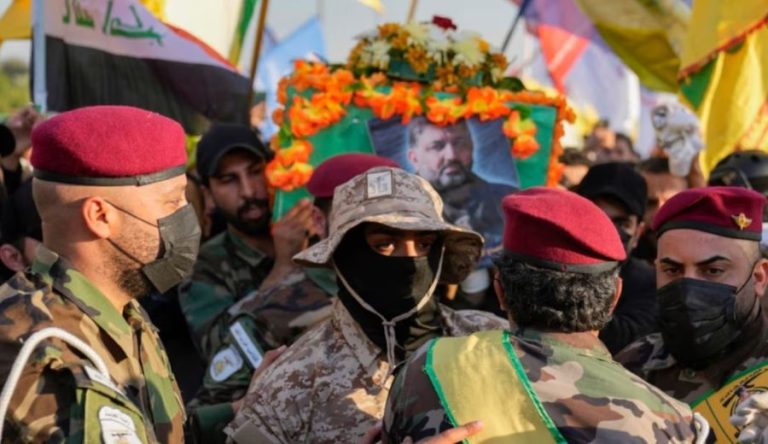
The Islamic Resistance has so far carried out over 170 attacks on US stakes across the middle east since the inception of Israel Hamas war, out of which the Jordan drone strike was the first which caused US the life of its soldiers. Pentagon claimed that the attack was carried out by Kataib Hezbollah, a terrorist organisation under PMF and IRI. 

In the retaliatory attacks by US, a powerful commander of Kataib Hezbollah named Wissam Muhammad Sabir Al-Saadi, was killed. At this point it must be noted that in 2020, when IRGC Gen. Qassem Soleimani was killed in US airstrike in Baghdad, the founder of this Kataib Hezebollah Abu Mahdi al-Muhandis was also killed aside him. So, when US is busy fighting the Houthis at one hand, while draining resources at two fronts, i.e., to Ukraine and Israel, Kataib Hezebollah’s attack seems to be seeking revenge by calculated move to weaken the US in middle east.2

Meanwhile, the apprehensions surround the future of political stability and democracy in Iraq, because the conflict between United States and Iran proxies is more intense on Iraqi soil as stated by foreign minister, Dr Fuad Hussein. During his recent interview, he said, They are not going to solve their problem on Iraqi soil, we paid a very big price.”

Iraq’s reluctance towards Iran-backed militia

Iraq has initiated the negotiations for ousting the US-led coalition forces, calling the stationing of US forces as an “overstay.” Conspicuously, the step comes out of an idea that if US withdraws, things could get better and the hypothesis is, obviously, not hollow as protracted military stationing can result into resentment in the populace and could also destroy the self-sustaining ability of a nation. But fact of the matter is that, may be the violence graph would go low after US-led forces’ evacuation, Iran proxies’ presence will always be a looming challenge for the stability of Iraq. This may be the prudent reason why Iraq wants NATO mission to stay while America led coalition forces to pull out.3

And more concerning in this direction is the difference in Iraqi approach to oust both the foreign actors, i.e., US and Iran backed militias. While Iraq seems determinant to oust the US forces, it’s commitment to deal with Iran-backed militias is quite the opposite despite the foreign minister’s claim that the conditions have changed and now the Iran backed militias are also being challenged.

According to Hussein’s statement, earlier many people didn’t dare to talk about it which was the reality of Iraq, but now they are talking about it. He puts, “People dare to say to those guys, ‘it’s enough’.” As per him the militias have got the message that if they continue, they will push the country into a war that is not Iraq’s.      

This comes about a month after Iran launched second missile attack in Erbil, targeting what it claimed to be a Mossad base. Iraq’s Foreign Minister then expressed resentment and visited Tehran demanding proof and apology4. Evidently, Iraq has contemplated that Iran’s extra influence is hurting their interest, but has not yet contemplated how to deal with those, who it doesn’t control yet they operate on its own soil. This becomes more evident by the statement of Kataib Hezbollah after the Jordan strike. Kataib Hezbollah had announced a halt on attacks on US citing reason that it desire not to “embarrass” the Iraqi government.

More complexities awaits for Iraq

One of the prime reasons for Iraq’s helplessness is the entrenched sectarianism which deepened by the current political system. Muhasasa, no doubt gave representation to each sects namely, Shia, Sunni and Kurds, but the power struggle that began as a result of this process, widened the sectarian gap and thus the political space got filled with leaders with only quality of being a choice of a particular community, rendering Iraq backwards in the field of technology, development among others.

Resultantly, the will power to take firm decisions in national interest has also declined. So, Iraq which seems like lingering in between the power tussle of US and Iran is facing more challenges that would further aggravate and come to the surface after US leaves a vacuum, only to be occupied by Iran backed militias.  

  1. Iraq’s new government and persistence of ‘Muhassesa’, Emirates Policy Center (EPC), https://epc.ae/en/details/brief/iraq-s-new-government-and-the-persistence-of-muhassesa- ↩︎
  2. The Growing Influence of Iranian-Backed Militias in Iraq, The Cipher Brief, https://www.thecipherbrief.com/column_article/the-growing-influence-of-iranian-backed-militias-in-iraq ↩︎
  3. NATO Mission Iraq, NATO, https://www.nato.int/cps/en/natohq/topics_166936.htm#:~:text=NATO%20Mission%20Iraq%20(NMI)%20is,prevent%20the%20return%20of%20ISIS ↩︎
  4. Iran Foreign Minister: We need an apology from Iran and proof about “Mossad base”, The National News, https://www.thenationalnews.com/mena/2024/02/21/iraq-foreign-minister-we-need-an-apology-from-iran-and-proof-about-mossad-base/ ↩︎

British parliamentarian finally addresses Balochistan issue in UK Parliament

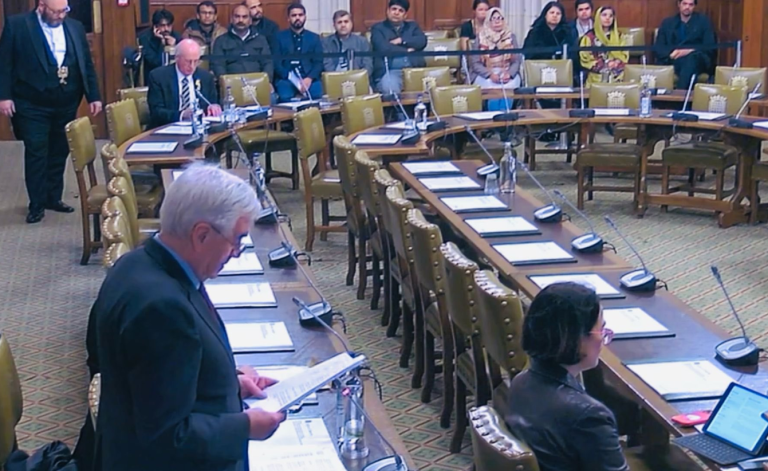
In a recent session at the British Parliament, MP John McDonnell led a discussion on the urgent issue of human rights violations in Pak-occupied Balochistan. The discussion brought attention to the long-standing difficulties faced by the Baloch people, whose voices are often overlooked on the international stage.

Balochistan has seen a turbulent past that includes British rule and subsequently Pakistan’s forceful occupation for looting its vast natural resources including natural gas and minerals. McDonnell first gave essential background information on the Balochistan region, its rich cultural heritage and historical foundations. He pointed out that despite the abundance of resources in the region Balochistan remains one of the poorest areas in the region, indicating the exploitation of these resources by the Pak establishment.

McDonnell emphasized the persistent resistance and repeated insurgencies within Balochistan by the Pak Army. The debate underscored the urgent call for international attention and action to address the ongoing human rights abuse in Pak-occupied Balochistan. The attention by Rt Hon John McDonnell to address the Balochistan issue in the British parliament is highly appreciated by the Baloch National Movement.

China plays tale of hypocrisy at the International Court of Justice

The recent representation of China at the International Court of Justice (ICJ) regarding Israel’s occupation of Palestinian territories has unveiled glaring hypocrisy in its foreign policy. While China is advocating for the justice of Palestinians, Ma Xinmin, China’s foreign ministry legal adviser underscored the grant of “armed struggle” for liberation under international law, it conveniently ignores its own grave human rights violations against the Uyghur population in Xinjiang.  

This stance of China starkly contrasts with its actions in the Xinjiang region where China is accused of committing crimes against humanity and possibly genocide against the Uyghur/Turkic populations. Reportedly, there are details of mass detentions, forced labour, torture, and cultural suppression. Uyghur communities face systematic discrimination for practising their religion and preserving their cultural identity.

While selectively applying international law and championing the right to armed struggle for Palestinians, China denies similar rights to the Uyghur/Turkic people in Xinjiang. China’s stance at the ICJ hearings demonstrates its hypocrisy and highlights the pressing need for an international law and human rights approach based on principles.

Pak establishment falsely implicates Pashtun man for voicing against police harassment

In a stunning development, Momin Khan, the Pashtun man working as property dealer in Qamber recently accused the SHO Rahimabad of harassment during a press conference at the Swat Press Club, is now facing serious charges himself. During the initial conference, Khan, accompanied by his young children, had claimed that the SHO was unnecessarily harassing him due to a land deal with Sajjad Ali. He alleged that the SHO’s actions had made his life miserable.

In a surprising twist, a day after his public plea for justice, Khan now finds himself at the center of a police case. The Rahimabad Police Station has registered a complaint against him, charging him with provisions of drinking alcohol, breaking into an old house, attempting rape, and other offenses. Khan was arrested and reportedly subjected to severe torture throughout the night.

Copy of FIR (Photo: X)

Press Conference that led to Khan’s arrest

During the press conference, Khan had stated, “I have sold 2500 sq. feet of land to Sajjad Ali, who himself is in Malaysia. Due to his brothers, the SHO of Rahimabad Police Station has started harassing me unnecessarily, due to which my life has become miserable.” He went on to express his frustration, threatening to take suicidal measures if the Inspector General of Police (IGP), Deputy Inspector General (DIG), and District Police Officer (DPO) did not provide him with justice.

Khan had further asserted his legitimacy as a property dealer, stating, “I am a property dealer and have a regular license. An inquiry should be held against me, and if any crime is proved, then I could be held accountable.”

The rapid and unexpected turn of events has heightened the complexity of the situation, with both Khan’s initial accusations and the subsequent charges against him raising concerns and generating public interest in the unfolding events. With due consideration, the incident also highlights the precarious condition of Pashtun community who face horrific persecution. Those who utter a word of criticism against Pakistan Army, police or establishment, they are implicated in false charges rendering them imprisoned with torture.

I am not Malala, because I am free & safe in my country India: Kashmiri journalist captivates UK Parliament

Yana Mir, a Kashmiri journalist, captivated the audience at a prestigious event held in the British Parliament building. The gathering, organized by the Jammu Kashmir Study Centre, UK (JKSC), commemorated ‘Sankalp Divas’ (Resolution Day).

During this noteworthy ceremony, Yana Mir was honored with the Diversity Ambassador Award and delivered a powerful keynote address. Notably, she distinguished herself by expressing a resolute stance, stating, “I am not a Malala Yousafzai. Because I am free and I am safe in my country India, in my home in Kashmir which is part of India. I will never have to run away from my home country…” This declaration echoed her sense of security and freedom in her homeland, a sentiment in stark contrast to Malala Yousafzai’s ordeal in Pakistan, where she faced a violent attack by Taliban terrorists for advocating girls’ education.

Kashmiri journalist Yana Mir went on to commend the efforts of the Indian Army for their role in steering youth away from violence and creating opportunities in sports and education. Her words resonated with the audience, highlighting the positive initiatives fostering growth and development in the region.

The ‘Sankalp Diwas’ event in the British Parliament witnessed participants underscoring India’s rightful claim to reclaim the Pakistan-occupied-Jammu and Kashmir (PoJK). The JKSC, host of the program, reported an impressive turnout, with over 100 dignitaries in attendance. Notable guests included members of the UK Parliament such as Bob Blackman, Theresa Villiers, Elliot Colburn, and Virendra Sharma, along with local councillors and community leaders.

Yana Mir’s impassioned speech and the overarching theme of the event reinforced the significance of unity and determination in upholding the rights and aspirations of the people of Jammu and Kashmir.