Home Blog Page 194

‘Open the road to Kargil’, Shia protestors to Paki regime in Pak-occupied Gilgit-Baltistan

With the ongoing escalation in tensions between Shias and Sunnis, people in Pakistan occupied Gilgit-Baltistan have raised their voice to move towards Kargil and a unification with India.

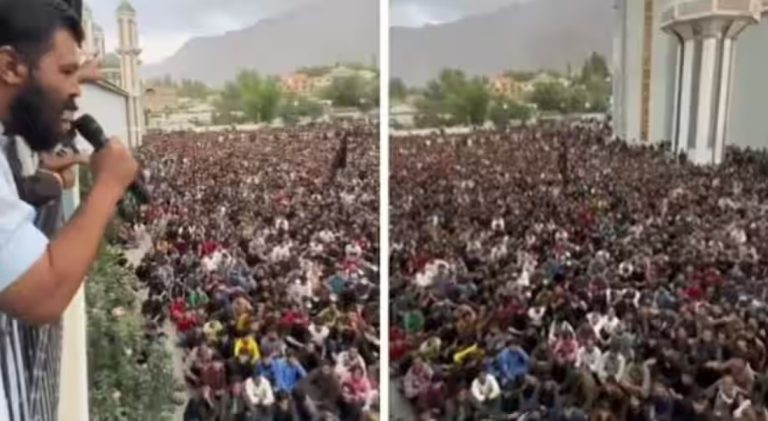
Recently, a Shia cleric was arrested by Pakistan under the charges of blasphemy which led to protests in Skardu. With in no time, the protest spread across entire Pakistan occupied Gilgit-Baltistan (POGB). The ultimate disappointment of the local population reached its zenith and the protestors roared for the unification with India. During the protest, the people of Gilgit Baltistan said that they would not move towards Sindh or Punjab, but they would move towards Kargil- indicating a reunification with India.

In a video from Skardu, a protestor addressing the public said, “Neither we will fear anyone nor bow in front of anyone. If you (Pakistan) try to cross our path, then we will definitely go to Kargil.” He threatened Pakistan by saying that if they tried to arrest their religious leaders, either side will not be able to survive. While saying this he again challenged Pakistan by sating that they will break the barriers and move to Kargil. Meanwhile, thousands of people followed him in sloganeering in favour of moving to Kargil.

Pakistan has illegally occupied Gilgit-Baltistan, and has gone all out to hide the atrocities and subversion that it has perpetuated. To further worsen the situation, it is now using the controversial “Blasphemy” laws to oppress the people. This has aroused resentment in the people of POGB.

Blasphemy- A tool of persecution

Be it Sindh, Balochistan, POGB or POJK, Pakistan with its filthy policies has itself proved that it does not consider these regions as their own territory. One of the significant evidence of it is Pakistan’s attitude towards this region is during the time of hardship. While Islamabad is facing economic upheavals, it has left no stone unturned to shed that load indiscriminately upon the people of POJK and POGB. Whether it is wheat flour or electricity shortage or the lack of development it is POGB and POJK that have suffered the most. Now with the blasphemy “tool” Pakistan is inflicting havoc over the Shia majorities in Gilgit-Baltistan.

Consequently, not only the local civilians but also the government employees including civil servants are turning their back on Pakistan. Having the clear indication of the situation, the occupying government under the direct influence of Pakistan issued an order to initiate the disciplinary procedures against the officials and civil servants involved in aiding the protests against Pakistan and the Army.

As a result, some Police officials and teachers have reportedly been arrested. This has aggravated the situation. Shias have been targeted across Pakistan but in POGB, where they are in majority, such divisive policies of blasphemy have opened the eyes of people. Now they are clearly able to see how the stable Kargil is prospering and the POGB is paying the cost for its illegal occupation and instability. And that is why the calls for merging with India have emerged in POGB.

Sindh: JSFM organizes protest rally on International Day of Victims of Enforced Disappearances

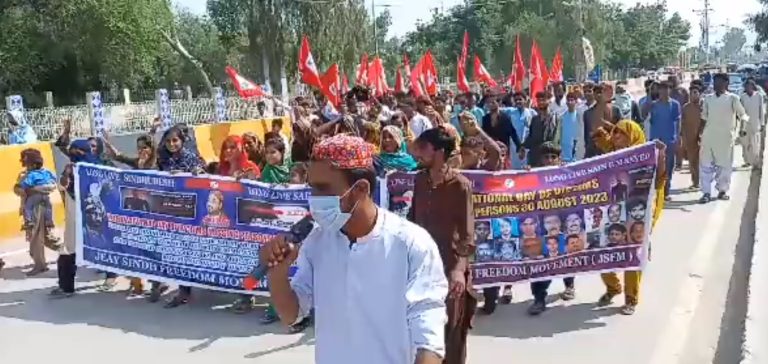
On the International Day Of The Victims Of Enforced Disappearances (30 August), the Jeay Sindh Freedom Movement (JSFM) orchestrated a powerful protest rally at the Sea View Beach Club in Clifton, Karachi, rallying for the safe return of missing nationalist activists from Sindh and Balochistan. Under the guidance of central figure Amar Azadi, the rally aimed to draw attention to the ongoing issue of forced disappearances and state-inflicted torture on activists advocating for regional autonomy.

On August 30, JSFM leaders addressed the media, strongly denouncing the rising incidents of forced disappearances. The leaders asserted that these incidents were not only grave violations of human rights but also indicative of a systematic effort to suppress the legitimate aspirations of people in the Sindh and Balochistan regions. The protest rally sought to shed light on the plight of missing individuals and to demand immediate action for their safe recovery.
Calling for global attention, JSFM leaders appealed to international human rights organizations, including Human Rights Watch, Amnesty International, and the United Nations, to intervene and pressure Pakistani intelligence agencies to take action. Accordingly, the leaders highlighted the significance of international intervention in addressing the pressing issue of enforced disappearances and protecting the rights of those at risk.

Call For Immediate Release Of Victims


In a separate statement, JSFM Chairman Sohail Abro, Vice Chairman Zubair Sindhi, and other leaders condemned the phenomenon of forced disappearances as not only a violation of fundamental human rights but also a form of state-sponsored terrorism. The leaders asserted that these incidents showcased a breach of not only international human rights treaties but also the constitution of Pakistan itself.


The JSFM leaders called for the immediate and unconditional release of missing activists, including Faqir Ijaz Gaho, Sohail Raza Bhatti, Allah Wadhayo Mahar, Naveed Mirani, Aqib Chandio, Naeem Malukani, and Waheed Ghangharu. They stressed that if any activists were implicated in legal matters, they should be presented before national courts in accordance with due process.


At the end, the JSFM leaders announced their determination to expand the scope of their protests. They emphasized their unwavering commitment to achieving justice and securing the safe return of missing activists. The leaders reaffirmed their dedication to utilizing both national and international platforms to draw attention to the dire situation and seek resolution.

The protest rally, organized by the Jeay Sindh Freedom Movement, sent a strong message to the authorities, urging them to address the issue of forced disappearances and uphold the rights and safety of nationalist activists. As the movement gains momentum, it remains to be seen how the government and international community respond to these calls for justice and accountability.

Pakistan police arrest & torture journalist in Khyber-Pakhtunkhwa to suppress dissent

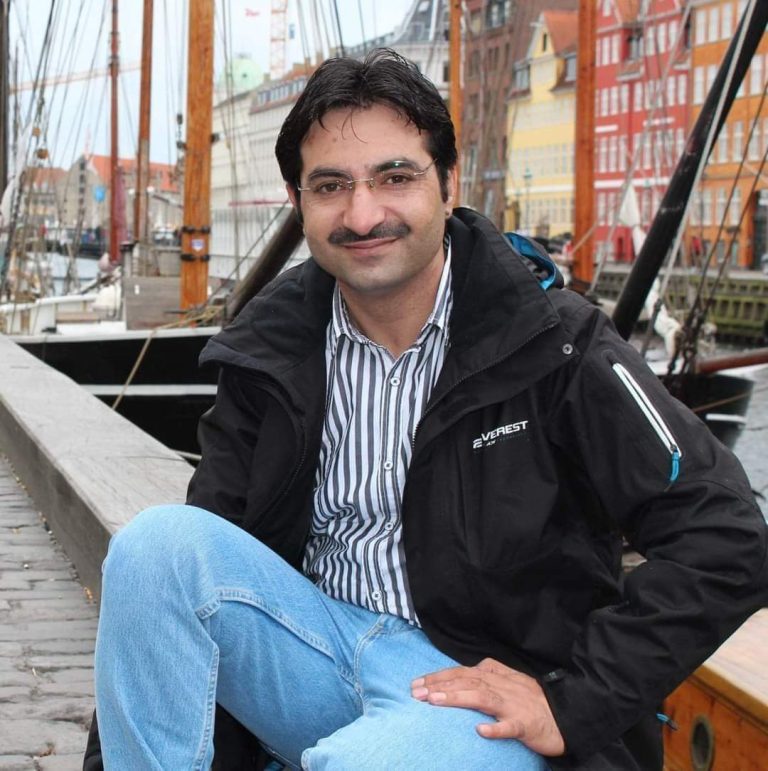
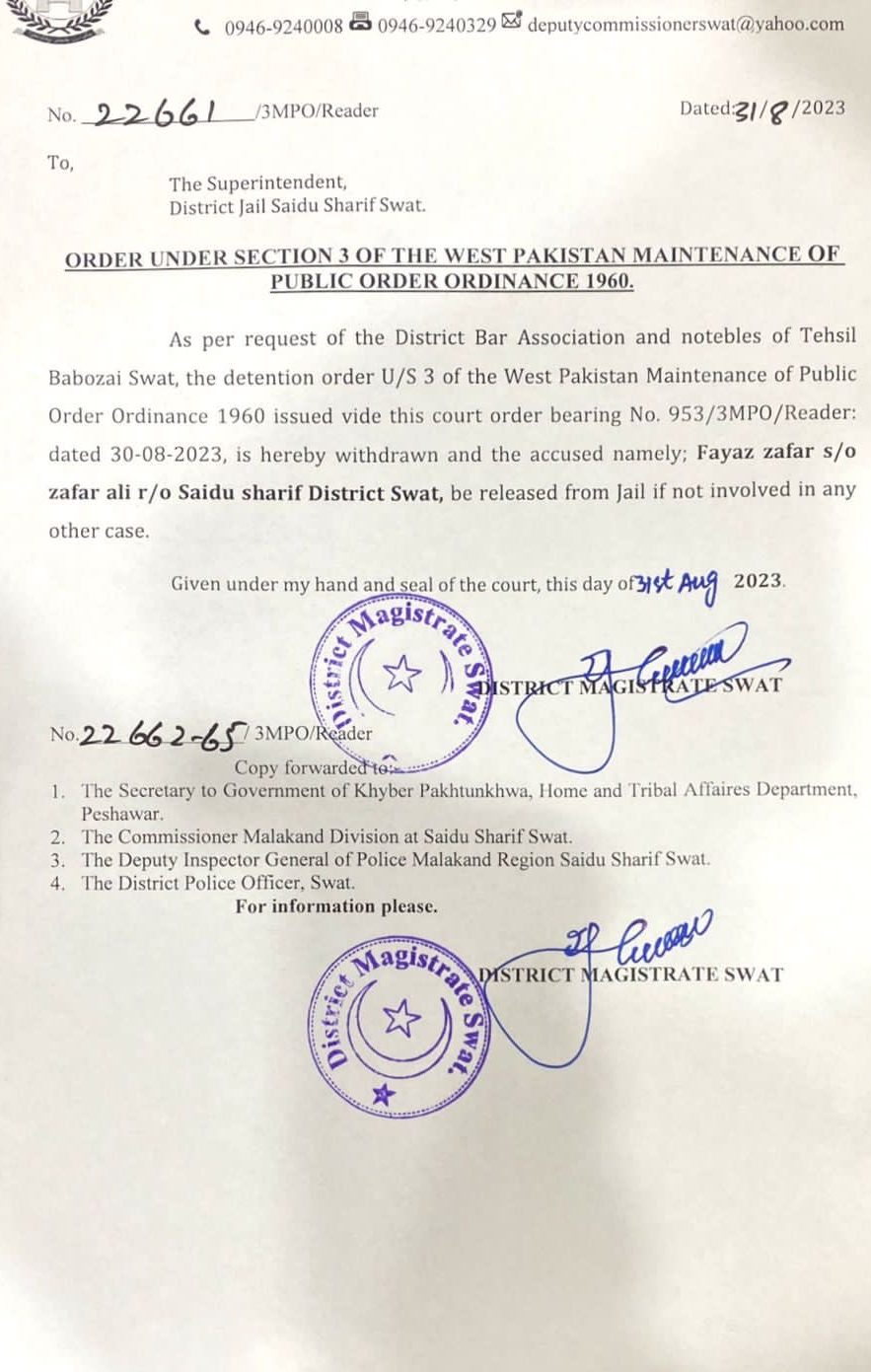
Fayaz Zafar, a senior journalist was arrested and tortured before being released by Pakistan backed Khyber-Pakhtunkhwa Police. He was booked under Section 3 of the MPO provisions.

As per police, he was released on the request of the District Bar Association and the notable tribal leaders of Babozai tribes. Fayaz Zafar, resident of Shaidu Sharif, district Swat, Khyber Pakhtunkhwa was arrested by the Swat Police Department. Fayaz was arrested under the colonial Maintenance of Public Order law. Later, he was transferred from the DC office to Swat Jail. Pakistan detained him on charges of inciting anti-state sentiments.

Release Order Of Fayaz Zafar (Photo: News Intervention)

Physically challenged, Fayaz Zafar was brutally tortured in the Deputy Commissioner’s office before being sent to jail on Wednesday. Fayaz has stated that he is being punished for speaking the truth. He has been vocal against the persecution of people by Pakistan.

Pakistan is employing preventive measures like the Maintenance of Public Order Act 1960 to ruthlessly suppress dissent. Following the PTM rally in Islamabad, the Pakistan Army and its subordinate law enforcement machinery have been actively profiling dissenting voices and utilizing every possible method to quell them.

The arrest of Fayaz Zafar underscores Pakistan’s nervousness and lack of confidence in the people. Additionally, it also raises concern regarding the freedom and security of media in Pakistan. Journalists in Pakistan are under a constant threat from the radicalised elements along with state-sponsored killings. Recently, a journalist named Jan Muhammad Maar was fatally shot to death outside his office in Sindh. The crimes against journalists are on the rise and their brutal treatment by the state machinery is probably the guiding factor for such crimes across Pakistan.

Forced conversions at Sindh dargah raise concerns

Hindu woman and children have been forcefully converted to Islam by an infamous dargah in Sindh.

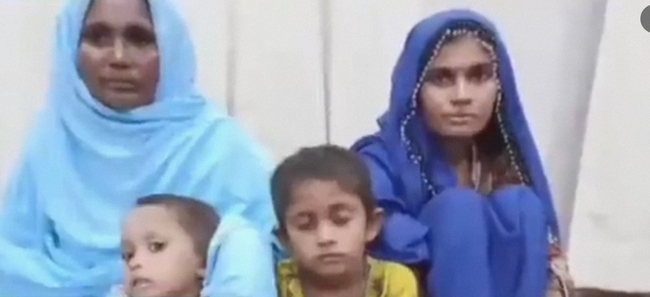
The horrific incident of forced conversion has emerged in Sindh. A Hindu woman named Marvi Marwari has been converted to Islam in Dharki area of Sindh. Along with her a minor girl and two children have also been forced to convert. All of them belonged to Khamiso Rajpar Mehrabpur village and have been converted by Mian Javed Ahmad Qadri. Qadri is the religious head of Bharchundi Dargah in Dharki who is infamous for forced conversions of Hindus in Sindh.

The number of conversion in Bachundi Shareef Dargah is anticipated to be the highest in Sindh. Even in some cases, of enforced abductions, the girls have been converted to Islam and married off to abductors by the same Dargah. Javed Ahmad Qadri also exercises political force against the Hindus and has made dargah a haven for those who perpetuate oppression against Hindus. The prime reason for such acts is the religious fundamentalism. These radical Islamists consider abduction and conversion of minor Hindu girls as a service to Islam. They call Hindus ‘kafirs’ who needed to be either killed or converted.

Reports suggest that between 2014-17 only, Bharchundi Shareef Dargah had converted more than 150 helpless Hindu girls. The conversion outside this time period is way more than anticipated. It is even more disappointing to see that the administration and law and order machinsry has knelt down to such radical Islamist. Instead of taking actions against Qadri, the police and administration helps him in proving that the conversion was through the exercise of personal will. The situation of Hindus especially minor girls is gruesome.

Sunni Paki regime files blasphemy case against Ahl-e-Sunnat scholar Mufti Hanif Qureshi

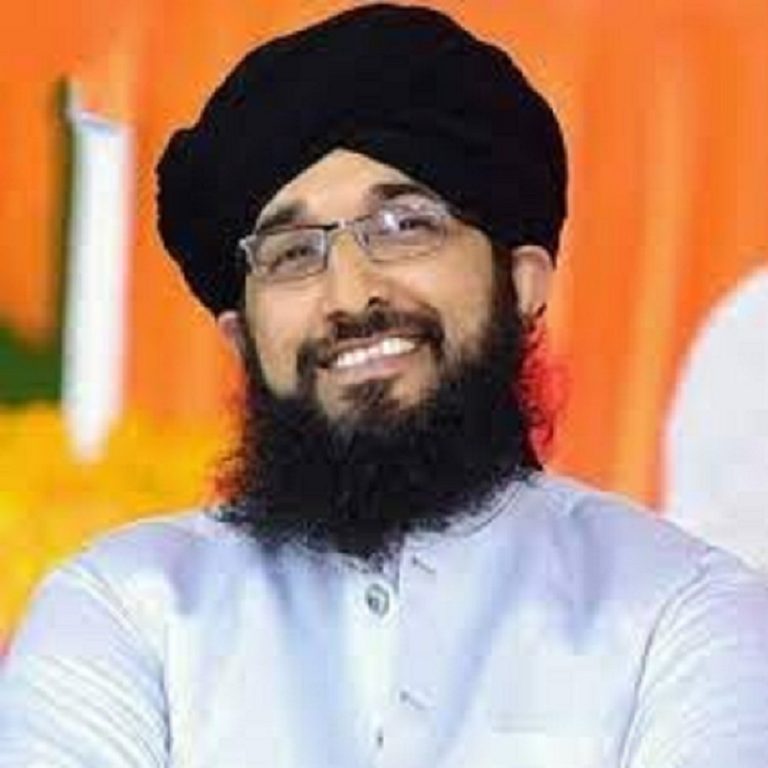
Pakistani regime has filed a blasphemy case against Ahl-e-Sunnat scholar Mufti Hanif Qureshi under a controversial law that has been passed with the sole intention to target Shias. Hafiz Shahid Mehmood filed this defamation FIR of the Sahabah–companions of Prophet Mohammad (PBUH), in Rawalpindi against Mufti Hanif Qureshi, a prominent religious scholar of Ahl-e-Sunnah Barelvi school. It should be noted that Mufti Hanif Qureshi often exposes the enemies of Ahl-al-Bayt in his speeches.

Weeks ago Pakistani Senate had passed the controversial “Criminal Laws (Amendment) Bill 2023” which makes any criticism of Yazid, Aby Sufiyan and Mu’awiya as a criminal offence. Shias see this as a deliberate attempt by Pakistan’s Sunni majority to harass and sideline them and make it difficult to practice their faith.

It should be noted that in the FIR filed against Mufti Hanif Qureshi, the accuser has claimed that he insulted Sahabi Umar bin Abi Waqqas, while in the viral video, Mufti Hanif Qureshi can be seen insulting Yazid and all those involved in the killing of Imam Hussain at the Karbala massacre. Using harsh words, Mufti Hanif Qureshi can be seen as saying “…how can we list the enemies of Ahl-al-Bayt as Sahabi”. Observers say that Maulana Hanif Qureshi actually wanted to mention Umar-Ibn-Saad-Abi-Waqqas along with Yazid, but he mistakenly took the name of Umar Ibn-Abi-Waqqas.

Why implementation of NRC in Manipur can restore peace

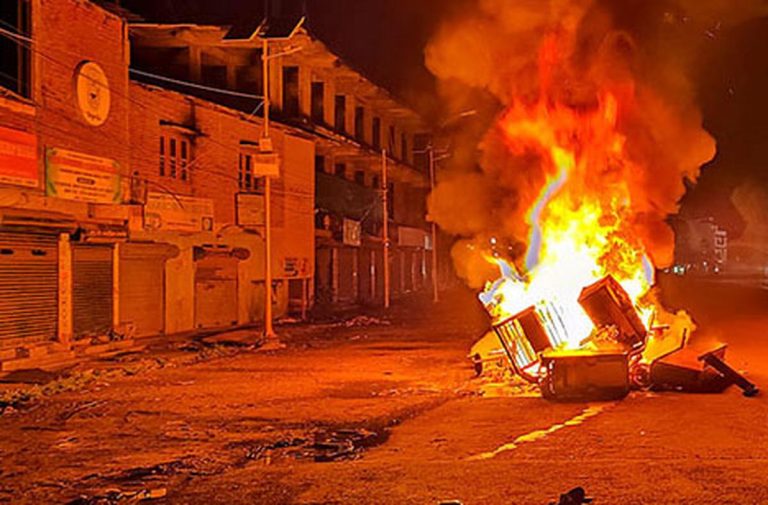
Since the last couple of months Manipur has been in centre stage, a north-eastern state of India embroiled in an ethnic conflict since early May. The conflict has taken place between two dominant groups, the majority Meitei community and the Kuki tribe that is in minority. Tensions have been on the rise between the two communities.The eruption of violence was in protest of the order issued by the Manipur High Court, which directed the state government to include the Meitei community in the Scheduled Tribes list of the Constitution as a “tribe among tribes in Manipur”. However, one needs to ask what are the underlying reasons apart from the court order that left the entire state in ashes ? Can a court order spark so much outrage and ethnic cleansing between communities? It is thus important to know the past to understand the present and devise a way forward.

It is a historical fact that the Kukis were first brought to Manipur by the Britishers to help them like the Gurkhas. Maharaj Gambhir Singh took the help of the British to drive out the Burmese from Manipur in the 1820s. After the Treaty of Yandabo (1826) and successful restoration of Manipur crown the military alliance with the British continued. In between 1834 and 1840 many Kukis were brought in by the British army from Chitagong and Chin hills. This embarked the beginning of Kuki arrival in Manipur. They are referred to as “old Kukis” and they got assimilated in the social milieu and soon became part of Manipur.

Post Independence (1947 onwards)

1947 – 48 India and Burma got emancipated from British Raj respectively. In the late 50s and early 60s under the Military regime of General Ne Win, many Kukis and Zomis fled Burma and entered the fringes of India. They started settling down in the border areas. India was a nascent nation — the borders were porous and nobody bothered so much during those days. Mostly the Kuki-Chin-Zo groups who were inimical to General Ne Win took shelter in Indo-Burma border areas (now parts of Manipur and Mizoram). This is the second wave of the Kukis entering Manipur. Consequently they also became settlers of Manipur.
The Kukis were primarily a semi-nomadic tribe who had been moving from one place to another .They started to settle down properly only a few centuries ago. Their major settlement in Manipur also began only decades ago. The former Member of Parliament (late) R. Suisa from Manipur said that in the 1950s Kukis were given refugee relief allowances in Ukhrul and in other hill areas of Manipur.
When they started dwelling in Manipur, Kukis also introduced their traditional chieftainship, under which the village chief has the power to give land as gift to anybody. In their system chief is the land owner. In 1966 Chieftainship was abolished all over India – surprisingly it continued in Manipur. Another unusual thing the earlier regime did was – 20 households could form a village. Thus, in the hills of Manipur the Kuki villages are mushrooming and expanding at a fast pace – (Naga–Kuki clash of 1990s was mainly because of this issue) – and they are encroaching the “State Reserved Forest areas and Protected Forest areas”.Deforestation and extensive poppy plantation has become a socio-environment menace and i9/t often leads to conflict and administrative inconveniences in the hills.

The third Kuki-Zo wave came in the 1980’s during the pro democracy movement of Aung San Suu kyi ; the then Military Junta Government crushed the pro-democracy politicians and activists . A huge Kuki-Chin activists and leaders along with their followers were taking shelter in Manipur and Mizoram. One of their (Kuki -Chin) MPs namely Thang Lian Pau also came and settled in Churachandpur. I personally met him in those days. As a friendly country and believer in the idea of democracy we extended our assistance to them both openly as well as tacitly. Many of them were absorbed in our society.
But the most dangerous wave, is the arrival of new Kukis who fled Myanmar because of the successive Military Regimes in the last few decades. In the last few years I am told that many Kuki-Chin-Zo groups have entered India in huge numbers. The State of Mizoram is openly saying that they have more than 10,000 such people ; and they are taken care of. However, in Manipur there is no official figure though the number of intruders from Myanmar must be quite large. They are taking shelter in the border districts of Manipur adjoining Myanmar. Identification of these intruders is difficult because they speak more or less the same Kuki-Mizo-Zomi language. These new migrants are dealing with arms and drugs in connivance with the locals; and they also take part part in local politics which is lethal. In the present turmoil, active involvement of these intruders is not ruled out. Perhaps they are directly involved.
The Kuki-Zo militancy became more assertive and aggressive after their conflict with the Nagas in the 90s; they started demanding autonomy or homeland. A tripartite agreement was signed between the the Government of India along with the State government and nearly 21 Kuki–Zo militant groups in 2008 for the suspension of incendiary operation and instead finding a political settlement to the problem.

The intention of this article is not to build a divide amongst the ethnic communities residing in the state of Manipur. Most of the Kukis-Zos in Manipur are Christians.What I am trying to highlight is that the earlier Kukis were docile, friendly and amicable but the later Kukis particularly those who have illegally entered India in the last few years are really aggressive and violent. They must be shunted out without any further delay.
Thus, it is imperative that NRC (base year 1961, The National Register of Citizens) should be implemented in Manipur at the earliest and all the illegal immigrants must be identified and deported at the earliest. Both the Centre and State government must act in tandem and in war footing it must be done. NRC must be implemented in an aggressive way and it will certainly help in restoring normalcy in Manipur to a great extent.
This multi-ethnic state called Manipur (my motherland) with its unique geographical and political entity must be protected at any cost. It is also an ancient civilization which has a history of more than 2000 years old, and it is a continuing civilization – a rear living civilisation which carries a synthesis of native ethnic ethos and magnanimous Vaisnavite culture. For many Manipur has been a Hindu cultural bridge between the Indian Subcontinent and Southeast Asia. Peace must be bestowed at Manipur at the earliest.

On Farooq Abdullah’s ‘prescription’ for resolving the Kashmir issue

0

Indo-Pak Dialogue

While there can be no two views that dialogue is the best way of resolving disputes amicably, there are certain cases that preclude this option, and unfortunately, the issue of Jammu and Kashmir [J&K] happens to be one such example.

For the unversed to suggest that India and Pakistan should resolve the Kashmir logjam through talks is understandable as they may not be fully aware of the complexities of this issue. However, when an old hand like National Conference [NC] president Farooq Abdullah says this [as he recently did], it does sound odd.  

However, while emphasising there’s nothing new in the NC president’s academic observation that “dialogue is the only way to resolve” bilateral issues between India and Pakistan, his view that “Till both the countries do not talk with honesty over the Kashmir issue, all this is a show-off [and] this ‘tamasha’ [spectacle] will go on till then”, does merit dispassionate examination.

‘Honest’ Dialogue?

The NC president has not specified what exactly his “talk with honesty over the Kashmir issue” demand implies. However, since the stated position of New Delhi and Islamabad on Kashmir are completely discordant, it would be fair to assume that at least one side isn’t being honest.  

With the Maharaja of J&K signing the instrument of accession in favour of India, his entire kingdom legally became an integral part of the Indian dominion in 1947.  As such, there’s no ambiguity whatsoever in New Delhi’s contention of J&K being an integral part of India, and its stand enjoys overwhelming acceptance within the international community, stands vindicated. 

Islamabad on the other hand has interpreted an introductory reference in UNSC resolution 47 [of 1948] to claim that J&K is “disputed territory” and by demanding plebiscite in J&K [as mentioned in UN resolution 47] to ascertain whether the people want to join India or Pakistan, has cleverly transformed itself from being the aggressor be becoming a stakeholder in the Kashmir issue.

So, while there’s no need for New Delhi to be dishonest on the issue of Kashmir, unfortunately, the same can’t be said about Islamabad, as is evident from the facts mentioned in the succeeding paragraphs.

‘Disputed Territory’ Façade

It is common knowledge that disputed territory is a piece of real estate whose title [ownership] is not clear since it has more than one claimant. Hence, resolved by a court of law competent to adjudicate on the matter, parties laying claim over such property have no ownership right over the same, and hence can’t dispose-off or give away any portion of the same.

However, this is where Pakistan has scored the first of the many ‘self-goals’ in its Kashmir strategy. In 1963, Pakistan signed the Sino-Pakistan Agreement and ceded approximately 5,300 km2 of J&K territory under its illegal occupation to China. So, by unilaterally transferring land that it claims is ‘disputed’, hasn’t Pakistan junked its own ‘disputed territory’ claim?

Similarly, in 2015, Islamabad approved the China Pakistan Economic Corridor [CPEC] joint venture [JV] that runs through POJK. Now, if J&K is indeed ‘disputed territory’ [as claimed by Pakistan], then how could it enter into a JV even before the ownership of the J & K issue has been resolved. Hence, by this illegal action, hasn’t Islamabad served the coup de grace to its ‘disputed territory’ narrative?

Violation of UN Resolutions

Islamabad never tires of boasting that its stand on Kashmir is ‘principled’ as the same is strictly in accordance with UN resolutions on this issue. While such a claim may sound very impressive, the fact of the matter is that Islamabad is guilty of brazenly violating the same very UN resolutions which it professes to treat as a hallowed article of faith.

UN resolutions on Kashmir called for cessation of hostilities between India and Pakistan and envisaged resolving the Kashmir issue through peaceful means. However, while India honoured these aspects both in letter and spirit, it is Pakistan that has violated UN resolutions by attempting to annex J&K through force-not once but twice!

In 1965, Pakistan Army launched a covert military operation code named ‘Operation Gibraltar’ in J&K. Rawalpindi’s war plan entailed infiltration of armed regulars disguised as ‘razakars’ [civilian volunteers] across the Line of Control [LoC] who by playing the religion card would incite the Muslim majority population in Kashmir Valley to rebel against the government.

Pakistan’s dictator Gen Ayub Khan expected that widespread civil unrest coupled with targeting of Indian army assets and essential government services by Pakistan Army regulars assisted by locals would render India’s position in J&K untenable, forcing the Indian army to vacate this region. However, Pakistan’s grandiose plan suffered a catastrophic failure because the people of Kashmir outrightly rejected the Pakistan Army’s call for ‘jihad’ [Holy war] by refusing to revolt.

In 1999, the Pakistan Army made an attempt to alter the LoC alignment in the Kargil Sector by infiltrating its regulars disguised as Kashmiri ‘mujahideen’ across the LoC and occupying vacant posts. Needless to say, Rawalpindi’s bluff was soon called and due to the Indian army’s ferocious riposte, the intruders were forced to withdraw, leaving behind their dead!

By the blatant use of force in attempting to militarily resolve the Kashmir issue twice, Pakistan has violated the very spirit of UN resolutions on Kashmir, and as such has no right to invoke the same, leave alone demand their implementation. The world is well aware of Pakistan’s proclivity for running with the hare and hunting with the hounds. 

The Plebiscite Farce

Lastly, Pakistan’s demand for holding plebiscite in J&K is indeed laughable, because it is Islamabad that has not only been dragging its feet on this issue but also placing impediments in its implementation. The sequence of preparatory actions to facilitate plebiscite is explicitly mentioned in UNSC resolution 47, and the first step is required to be taken by Pakistan, which is mentioned reproduced below:   

“1. The Government of Pakistan should undertake to use its best endeavours:

(a) To secure the withdrawal from the State of Jammu and Kashmir of tribesmen and Pakistani nationals not normally resident therein who have entered the State for the purpose of fighting, and to prevent any intrusion into the State of such elements and any furnishing of material aid to those fighting in the State;

(b) To make known to all concerned that the measures indicated in this and the following paragraphs provide full freedom to all subjects of the State, regardless of creed, caste, or party, to express their views and to vote on the question of the accession of the State, and that therefore they should co-operate in the maintenance of peace and order.”

So, while Islamabad keeps complaining that UN is not ensuring implementation of UN resolution 47, the fact of the matter is that even after nearly seven and a half decades, Pakistan has not yet complied with the stipulation in this resolution that requires it to “secure the withdrawal from the State of Jammu and Kashmir of tribesmen and Pakistani nationals not normally resident therein…”

Furthermore, Para 7[3] of so called AJ&K Interim Constitution thrust by Islamabad upon the hapless people of Pakistan occupied Jammu and Kashmir [PoJK]  reads “No person or political party in Azad Jammu and Kashmir shall be permitted to propagate against, or take part in activities prejudicial or detrimental to, the ideology of the State’s accession to Pakistan.”

This draconian constitutional clause criminalises freedom of expression as regards questioning “the ideology of the State’s accession to Pakistan.” While when and how did PoJK ‘accede’ to Pakistan remains a mystery, doesn’t this bizarre diktat unashamedly violate the directive in UN resolution 47 that people of PoJK should have “full freedom … to express their views and to vote on the question of the accession of the State”?

So, when Pakistan itself has created a situation that legally prohibits the people of PoJK from freely expressing their views on J&K’s future, with what face is Pakistan accusing the UN or India of dragging their feet on the issue of plebiscite?

Veiling Reality

Islamabad’s main problem is that despite being repeatedly cold shouldered by the international community, it continues to believe that a smokescreen of rhetoric and theatrics can conceal its double speak and contrived Kashmir narrative.

It’s abundantly clear that Pakistan has brazenly violated almost all directives contained in UN resolutions on Kashmir. Right from ceding parts of J&K territory to China, trying to militarily resolve the Kashmir issue in its favour and consistently refusing to fulfil its obligations for facilitating plebiscite as mandated in UN resolutions on Kashmir, Islamabad has done it all!

Hence, it’s not at all surprising that the UN has in no uncertain terms ruled that Kashmir is a bilateral issue between India and Pakistan that requires being mutually resolved bilaterally without any third party intervention. Thus, it’s amply clear that the UN itself is absolutely clear that a UN monitored plebiscite as mentioned in its resolution 47 is no longer relevant.

Conclusion

That Pakistan’s stand on Kashmir lacks sustainability is evident from UNSC’s outright refusal to entertain Islamabad’s puerile request to intervene on the Article 370 abrogation issue.

To make things even more embarrassing for Islamabad, despite the then Pakistan Foreign Minister Shah Mehmood Qureshi’s pompous announcement that “We have decided to take [the] Kashmir case to the International Court of Justice,” but this hasn’t happened till date.

Most importantly, Pakistan Army is guilty of sponsoring terrorism in J&K- a fact admitted by none other than its former Army chief Gen Pervez Musharraf as well as its proxy-in-chief Syed Salahuddin who heads United Jihad Council, an ISI created amalgam of terrorist groups fighting in Kashmir. This clearly indicates that while pledging its commitment towards the peaceful resolution of the Kashmir issue, Pakistan hasn’t given up its covert efforts to resolve this issue by force.

Gen Musharraf has admitted on camera that “Kashmiris who came to Pakistan received hero reception here. We used to train them and support them. We considered them as Mujahideen who will fight with the Indian Army … They were our heroes.” And by accepting that “we are fighting Pakistan’s war in Kashmir,” Salahuddin has explicitly buttressed Gen Musharraf’s revelation.

New Delhi has explicitly expressed its willingness for bilateral dialogue with Islamabad on the Kashmir issue, provided Pakistan ceases sponsoring terrorism in J&K, which is an absolutely reasonable demand. With Pakistan’s absurd precondition demanding reversal of Article 370 abrogation, it’s for the reader to decide which side is being honest on this issue.

So, while the NC president’s plea to “talk with honesty over the Kashmir issue” definitely has a lot of substance, the million dollar question is- can Islamabad afford to do so?

Saira Baloch’s bold move to demand answers from Pak Army for enforced disappearances

In a courageous move, Saira Baloch has organised a three-day symbolic hunger strike camp in front of the Islamabad National Press Club. She has taken a stand to demand answers from the Pakistan Army and seek the recovery of her missing brothers, Rasheed and Asif Baloch. This move aims to shed light on the ongoing human rights violations in Balochistan. This act of bravery has resonated with supporters and families of the missing individuals.

Saira’s nieces, Mahgul and Mahliqa, joined her in a protest demanding the safe return of their missing fathers. The trio sits before the Islamabad press club, advocating for the safe return of their fathers who were forcibly disappeared in August 2018 by the Pakistan Army. This powerful act of solidarity shows the pain and suffering of families of the disappeared.

Adding to the movement, another campaign on Twitter took place on August 29. Its been a decade since Saeed Ahmed, son of Habibullah was forcefully disappeared. Initiatives as such are aimed to draw attention to the violence of Pakistan Army and highlight the pressing issue of missing persons and the need for justice in the terror-inflicted region of Pakistan-occupied-Balochistan.

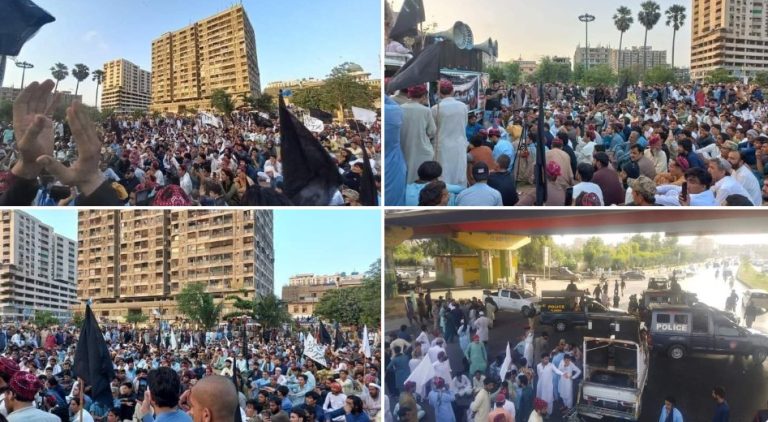
Furthermore, in Karachi, on August 28, the Baloch Yekjeethi Committee (BYC) organised a protest rally to address the wave of abductions of Baloch people across various regions of Pakistan-occupied-Balochistan. The rally saw participation of hundreds, they joined in to condemned the crackdown by Rangers and Police on the families of Baloch missing persons.

Collaborating with the Baloch Solidarity Committee, pamphlets were distributed throughout Shall, urging the public to unite in the protest. The families of the missing individuals, already burdened by their loved ones’ forced disappearances are treated with utmost violence when they try to get answers from the authorities. 

The rising number of cases involving abducted Baloch individuals paints a grim picture of the inhumane conditions endured by the Baloch community in their own homeland. Pakistan, who is crippling with inflation and debt, still hasn’t tried to mend its way. Since, forcefully occupying the region of Balochistan in March 1948, Pakistan Army has committed innumerable atrocities. 

Reports of daily raids on homes, enforced disappearances, staged encounters, target killings, torture, humiliation at checkpoints, and even kidnappings for ransom by criminal elements is the heart-wrenching reality of Pakistan-occupied-Balochistan.

These protests and rallies as such is extremely important to voice their concern. Last year, on August 30th, to mark the International Day of the Victims of Enforced Disappearances, the Human Rights Commission of Pakistan (HRCP) arranged a protest outside the local press club. Many supporters, activists and student groups joined the event to show their support. Following the illegal occupation of Balochistan in March 1948, Balochistan has been fighting the war of its existence. Be it the peaceful way of protests or the armed resistance, against the inhumane authoritarian quasi state of Pakistan, Balochs are fighting an all-front war.
Imran Khan gets relief from Islamabad HC in Toshakhana corruption case

In a significant development, the Islamabad High Court has suspended the conviction and three-year sentence of former Pakistan Prime Minister Imran Khan in the Toshakhana corruption case. The announcement came from a division bench led by Chief Justice Aamir Farooq and Justice Tariq Mehmood Jahangiri, following the reserved verdict.

The legal proceedings took a turn on Monday when the Islamabad High Court reserved its decision on Imran Khan’s plea, where he challenged his conviction related to the Toshakhana corruption case. Notably, the case revolved around accusations that the 70-year-old leader, who transitioned from being a cricketer to a politician and chaired the Pakistan Tehreek-e-Insaf party, unlawfully sold state gifts that were accumulated by him and his family during his tenure from 2018 to 2022.

Earlier, a trial court in Islamabad had found three-year prison term on August 5. Additionally, the verdict had also barred him from participating in politics for five years, effectively preventing him from competing in any upcoming elections.

A year earlier, Imran Khan was ousted from the office of the Prime Minster following the No-Confidence motion against him.

With this recent development, Imran Khan’s legal battle has taken a new direction having a potential to affect the political landscape of Pakistan.

Human Rights lawyer Imaan Mazari re-arrested in Rawalpindi

In a sad turn of events, human rights lawyer Imaan Mazari has been arrested once more outside Adiala Jail in Rawalpindi, just hours after she was granted bail by an Islamabad anti-terrorism court. This painful incident comes after the Islamabad police said she was arrested in connection with a terrorism case registered at Bara Kahu police station.

Imaan Mazari’s and Ali Wazir’s arrest came two days after they courageously joined a protest organized by the Pashtun Tahafuz Movement (PTM), which fights for the rights of ethnic Pashtuns. Under false charges, these leaders were arrested unconstitutionally on 19 & 20 August. The rally was held in the heartland of Islamabad to demand answers from the Pakistan Army about the atrocities committed against Pashtuns. Several cases of enforced disappearances, extra-judicial killings, and restrictions on speech and movement have become a norm in the region.

Therefore, for speaking out against the powerful military establishment at the rally in Islamabad, Mazari was taken into custody. The charges against her included staging a sit-in, resisting, and interfering in state affairs. The Human Rights Commission of Pakistan stood up against Imaan Mazari’s arrest and demanded her immediate release, labeling the actions of Islamabad police as “unacceptable”.

PTM founder and leader Manzoor Pashteen expressed his frustration with the brutality and inhumane nature of Pakistan ‘establishment’. He remarked on Imaan Mazari’s re-arrest, Ali Wazir’s judicial remand, and the detention of eight PTM workers which was increased to more four days, highlighting the contrast with how the situation was handled when, an American, Raymond Davis was involved.

In a tweet, Pashteen said, “In the case of American Raymond Davis, the cowardly general was doing his utmost to secure his release. However, when it involved innocent citizens, he initiated a series of arrests, followed by physical remand and torture.”

Pashteen has raised his voice again and fuelled the people with new energy. He said despite all the means of suppression, the resilience of the Pashtun people shines through. He called out to all the Pashtuns on September 1, in Quetta, Peshawar, Karachi, and beyond to raise their voices. He said, “All will unite to challenge the atrocities inflicted upon them, and now they will be standing up for the pain endured by every Pashtun, including Ali Wazir. This clarion call will inflict a deeper scar on the face of Pakistan Army who thought arresting the leaders will repress the movement.”