Home Blog Page 206

The resurgence of jihad in Kashmir: An unforgiving analysis

Traditional infiltration routes through the Line of Control (LoC) have shifted, with some suggesting the use of alternative routes through the Nepal and Bangladesh borders. This presents a new challenge for security forces in preventing militant infiltration across the LoC.

The traditional routes have been plugged resulting in a sharp decline in infiltration attempts. However, the vulnerable crossing points like Krishna Ghati in the Poonch sector or Machail in the Tangdar sector remain vulnerable. It is along these two or three points that sneaking infiltrators have been liquidated and a large cache of arms has fallen in the hands of Indian security forces and J&K Police.

Among the seized arms and ammunition, many items categorized as the most sophisticated weapons left behind by the fleeing Americans in Afghanistan, have been recovered from the possession of infiltrators shot dead at the border or fleeing back in desperation.

After the departure of the Americans, a huge arsenal of sophisticated weaponry fell into the hands of the Taliban; part of it was siphoned off by the Taliban to prospective buyers from Pakistan. Included among them were the jihadists of JeM, the foremost Pakistani terrorist organization that had established close contacts with the Taliban when the US and NATO forces were fighting them in Afghanistan. According to knowledgeable sources, Masud Azhar, the designated terrorist leader is reported to be sheltered by the Taliban of Afghanistan. It is through this channel that these sophisticated weapons were used by the infiltrating terrorists and finally have been seized from them by the Indian forces.

Contrary to official claims, infiltration has not come down only the tactics of the militants have changed. For more than a year, the ISI has changed the tactics of militancy in Kashmir valley for definite reasons.

Two reasons have been premised. Firstly, after more than three decades of militancy, ISI is now confident that militant cadres of locals, meaning Kashmiri Muslims, have come up to their expectations in terms of training and commitment. The idea of jihad against the infidel (kafir) as a religious duty has taken root in the mindset of Kashmiri Muslim youth. The proof is that now not the children of the poor but of the upper middle class and even those from the creamy layers are willingly offering themselves for recruitment as a jihadist.

The father of Zakir (a captured militant) is a retired engineer from government service. His eldest son is a doctor and his daughter is a professor at the government degree college. Zakir had got an engineering seat in Chandigarh. But he had not completed even one year of engineering when he gave up his studies and joined the ranks of Hizbul Mujahidin. It is a top-class family, fairly rich, educated and well-connected. Yet neither their parents nor relatives dissuaded young Zakir from leaving studies halfway and joining militancy. They lionised him for his dedication to the cause of Islam.

The mindset has become so hard that knowing he will meet his end at the hands of the security forces one day, Zakir has taken the risk of his life on the premise that he is supposed to complete the Islamic mission of spreading the message of Allah coming down through the instrumentality of the Prophet.

Secondly, the ISI has suffered huge losses in terms of trained manpower for Kashmir jihad. It was because of the operation ‘All Out’. One of the important reasons for the depleting number of field commanders, generally from Pakistan or POJK, is that Indian security forces are using highly sophisticated monitoring devices, mostly acquired from Israel, which are highly effective in intercepting the messages exchanged by the militants with their handlers in different parts of Pakistan. Since they chatted in either Urdu or Punjabi, both languages were easy for the Indian security forces to decode. The ISI has lately changed its tactics and while the local militants are well informed of local topography and have over ground as well as underground network, they speak to one another only in Kashmiri. Since the messages exchanged are highly sensitive, Indian security forces have hesitation in asking the Kashmiri police for translating these messages into Hindi or Urdu. Local Muslims are not prepared to assist the security forces because of the fear that their identity getting disclosed and they could become sitting ducks for the bullets of the militants. Security forces are discouraged from recruiting the Kashmiri Pandits for this purpose as well because of the lack of trust in them and the hateful apathy that the authorities harbour against them.  This is one of the reasons why apprehending the militants before they execute an attack or commit a murder has become difficult. Thus, the militants are making full use of smart information technology. Since they operate in small groups, therefore, they suffer minimal loss of manpower in comparison to the security personnel. Recent clashes in Poonch provide a glaring example.

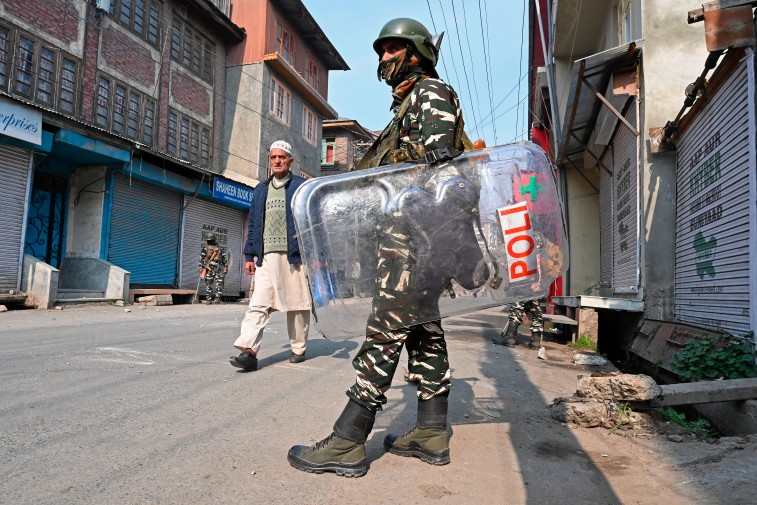
It has to be admitted that almost all people in the valley are the silent cells or over-ground contacts of the militants. The fear of the gun has not gone down rather it has resurfaced.  Anti-India rhetoric has become a common practice in mosques in almost all major towns in north as well as south Kashmir. The maulavis (Muslim preachers) imported from UP, Bihar, MP and other places in the country are receiving salaries from the state exchequer but there is no control over what they preach and whom they preach. There is no accountability. It has been found that they exert a profound influence on the youth because they are gifted with delivering anti-India propaganda lucidly.  Kashmiri over-ground moles are spread out throughout the entire country, particularly in New Delhi, Mumbai and Bengaluru.

There is no need for any inhabitant of the valley to go to a Pakistani seminary (madrasah) to receive indoctrination because the religious institutions apart, every home is an institution where the kids are imparted the Islamic teachings that are highly controversial and misleading according to many religious authorities of Islam. The Crown Prince Salman of Saudi Arabia has rejected tradition (hadith) as controversial owing to the lack of acceptable authentication but quotes from hadith adorn not only the doors of mosques but even street light poles as well.  In every Kashmiri Muslim household, the members of the family rise from bed and go to bed after listening to the vicious anti-India propaganda released from the Pakistani electronic media. There is no control of the government to deny the dissemination of this vicious propaganda. The Kashmiri youth are now convinced beyond an iota of doubt that he or she has to play a role to prove the Quranic statement that Islam is God’s choicest religion and it must prevail over all other religions. Opposing the government for everything and anything is the desk rule principle of the Puritans (al momentum) because in Kashmir, it is not an Islamic government but that of the infidels (kafirs) dispensing justice. 

Several factors, such as the use of smart technology, operations in small groups, and the reinvigoration of sleeper cells and over-ground workers, have boosted the resurgence of militancy in Kashmir.

Official circles find pride in asserting that there is peace in Kashmir. Tactical withdrawal of fighting forces is part of the game they play.  The ground situation in Kashmir is not of silence but of simmering lava.  Silence is generally the precursor of an impending storm. The local political leadership is fuelling the flames of hatred, discord and separation in sugar-coated terminology. Even the best of the laws passed by the Indian parliament, the laws welcomed by the vast numbers of the Muslim population in the rest of the country, are unacceptable to the Kashmiri Muslims. To them nothing but the streams of milk and honey flow in Pakistan because that country is made and created through divine dispensation. 

Kashmir Muslim leadership of all hues has come out against the concept of a uniform civil code. They label it as anti-sharia, and hence, reprehensible. In other words, they want only sharia law to prevail for the Muslim community. Now assuming that the Muslims of the valley would be comfortable with the sharia law, they should stop depositing their money in the banks that are run by non-Muslim staff and governing bodies. They should stop accepting interest on their deposits whether from a nationalised or private bank. They should stop doing business with non-Muslims particularly the kafirs. They should not send their boys and girls to Hindu professional institutions. Properties like land, shops, houses, orchards, etc., which they have purchased from Hindus or Sikhs on throw-away prices are haram (impure} and should be returned forthwith. Mosques raised on lands encroached from temples and Hindu shrines should be declared haram and bulldozed under sharia law.  In short, the Islamic theologians (faqih) and traditionalists (muhaddison) of Kashmir should sit down and, while denouncing UCC, they should also draw a list of does and don’ts under the sharia law and promulgate the fatwa immediately.

And lastly, it is no surprise that the Kashmir jihadists have, of late, made common cause with the narcotics and drug peddlers. Pakistani drones (lent by Turkey) are heavily engaged in dropping narcotics, ammunition, arms, literature and Indian currency notes at pre-determined destinations along the LoC ad the IB and conduits receive information digitally to collect these for distribution among the jihadists in Kashmir. Many droppings have been seized and many drones have been destroyed but the practice is at its peak.

This is the ground situation in Kashmir. The valley leadership has, like the early years of insurgency, made a dent into the Indian media. They receive wide coverage of their anti-national utterances couched in a dubious language which suits the sold-out media.

The NDA government has chosen the tactics of pouring mountains of money in Kashmir in the hope that development of mega proportions will convert the people to rationality. It is going against the stark lessons of history. India mind is trishunka — neither on the earth nor on sky but just suspended in-between.

Pak Army forcibly disappears more than 43 Baloch in July – BYC

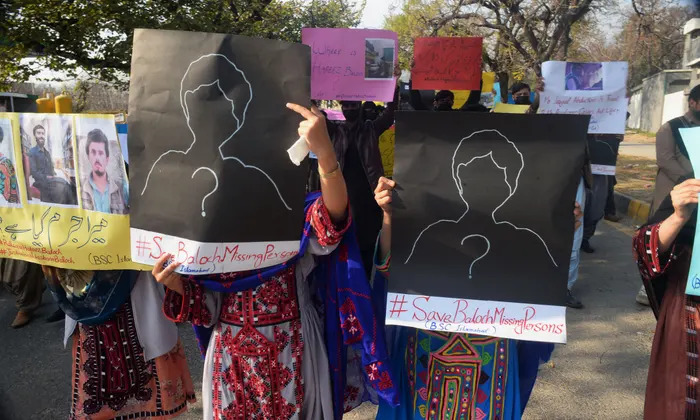
In a compelling press conference at the Quetta Press Club, the Baloch Solidarity Committee, led by student activist Dr. Mahrang Baloch, revealed the harrowing extent of human rights violations that unfolded in Balochistan during the month of July.

Mahrang Baloch’s somber voice resonated with passion and concern as she disclosed the shocking numbers: “More than 43 people were forcibly disappeared this month, while the mutilated bodies of more than 6 people were recovered.” The horrors didn’t end there; she also brought attention to the killing of a woman by a so-called Jirga in Chagai and the relentless extortion by death squads.

The human rights abuses extended beyond Chagai, with incidents of killings in Wadh, use of excessive police force on students in Khuzdar, and frequent operations causing turmoil in Karachi and Kech, Absar areas.

“We have been pleading with each and every state institution, gathering against these rights violations in Balochistan,” Mahrang Baloch implored. Despite their efforts, the violations of constitutional rights and other injustices continue to rise unchecked. She attributed the crisis to the involvement of state’s security agencies, government-backed death squads, state-sponsored criminal gangs, and direct state repression.

State’s Tyrannical Policies

Balochistan’s current state is plagued by illegal activities by the Pakistan Army such as daily raids on houses, enforced disappearances, fake encounters, target killings, torture, humiliation at check posts, and even kidnappings for ransom by criminals. The situation has been further exacerbated by the state’s tyrannical policies, impacting every corner of the province.

The poignant revelations exposed the unsettling reality faced by the people of Balochistan, but it also shed light on the indifference from the media and judiciary towards their struggles. Despite continuous protests and demonstrations, their plight seems to fall on deaf ears.

During the press conference, Mahrang Baloch presented compelling data collected by her organization. In the beginning of July, Isa, son of Jangi Khan, fell victim to a state-backed group in Mushkay, leaving a child injured in the tragic incident. To make matters worse, Isa had previously faced enforced disappearance four times before meeting his untimely demise.

The heart-wrenching report showcased a series of enforced disappearances that occurred in Balochistan immediately after Eid, leaving families distraught and communities in fear.

The Baloch Solidarity Committee’s revelations not only highlight the urgency of the situation but also call for immediate action and accountability from authorities. As Balochistan grapples with the shadows of injustice, the world watches with bated breath, waiting for a glimmer of hope to pierce through the darkness.Following the illegal occupation of Balochistan in March 1948, Balochistan has been fighting the war of its freedom from the clutches of Pakistan.

Illegal tobacco sales, a double whammy for Pakistan’s economy?

A significant case of tax evasion has been uncovered as certain companies breach tobacco export limits, resulting in substantial financial losses for the country.

Companies involved in producing illegal cigarette brands are dodging taxes at the retail level, causing considerable harm to the national economy by exploiting the guise of exports.

Experts highlight that these companies, engaged in the manufacturing and sale of illicit cigarettes, are inflicting damage on the national treasury of Pakistan by evading advance taxes during tobacco processing. While the intention is to export the tobacco, a significant quantity finds its way into the local market without the required advance tax payment.

To curb the production of illegal cigarettes and ensure taxation, the government has imposed an advance tax of Pakistan Rs. 390 per kilogram on tobacco purchased from green leaf threshing units. However, this tax is not being collected, enabling cigarette manufacturers to evade their tax responsibilities.

Data from the Pakistan Tobacco Board reveals that during the fiscal year 2021-22, 52 cigarette manufacturers acquired 22.3 million kilograms of tobacco from green leaf threshing units, amounting to $65.2 million. Among these, three organized industry companies procured 12.39 million kilograms worth $53.4 million, while 49 other manufacturers purchased 10 million kilograms worth $11.8 million.

Approximately 90 percent of the tobacco acquired by these 49 manufacturers is believed to have been sold in the local market without tax payment, resulting in a substantial loss of Rs 4 billion to the national treasury in advance taxes alone.

Discrepancies between data from the Pakistan Tobacco Board and the State Bank of Pakistan suggest that not all the tobacco purchased from green leaf threshing plants for export is genuinely exported. During the same period, the Pakistan Tobacco Board claims that 22.3 million kilograms of tobacco, worth $65.2 million, were bought for export. The difference in these figures closely corresponds to the value of tobacco bought for export but unlawfully sold domestically, evading taxes.

Experts assert that companies involved in the illegal cigarette trade are engaging in double tax evasion. They avoid paying taxes when purchasing tobacco and also circumvent duties and taxes at the retail level. This dual evasion results in an annual loss of 80 billion rupees to the national treasury.

Friday OTT (Netflix) release: The Hunt For Veerappan

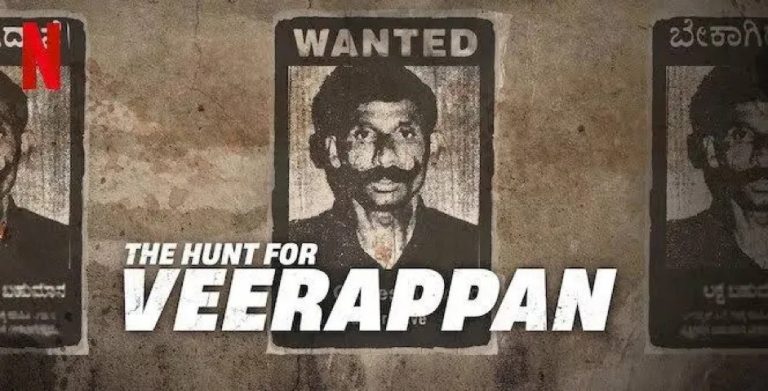
Are you intrigued by the backstories of smugglers and bandits? Here is an exciting series for you to binge-watch on Netflix! The much-awaited series, “The Hunt for Veerappan” will premiere on 4 August on Netflix. Sandalwood smuggler Veerappan and the police were involved in a cat & mouse game for almost 20 years, before the former was caught and killed in 2004.

The director of the series, Selvamani Selvaraj, feels that Veerappan’s story is something that everyone has to know mainly because of the way the bandit-turned-smuggler operated. For over 20 years, the police tried hard in capturing Veerappan, overcoming all odds and political challenges, and this manhunt is talked about even today!

How many episodes will the series have?

Selvaraj had always wanted to make this series as a 4-part documentary, though he admitted that condensing a 20-year incident into 4 parts was definitely a challenging experience. Selvaraj and his team spent close to 4 years making this series, out of which 2 were spent researching the facts. They spent the next 2 years shooting and post-production work. Selvaraj claimed he had read all books there were ever written about Veerappan, but he understood many things only when he visited the real locales and spoke to the people living there still about the smuggler.

The four-part series will focus on distinct themes to take viewers through the life and history of Veerappan. The first part of the manhunt deals with Veerappan living life as the King of the Forest, while the second part deals with the smuggler’s conflicts with the police. The third part deals with the political angle of the manhunt, and the fourth & final part deals with the smuggler’s efforts & desperation to escape from the police and political forces.

What can we expect from the series?

Selvamani Selvaraj aims to give multiple perspectives through this manhunt-based documentary. The series will be more different and special than whatever one has seen and heard about Veerappan, because it features interviews by Veerappan’s widow, Muthulakshmi, the smuggler’s team members, members of the Tamil Nadu Liberation Army, the investigative journalist who met Veerappan in the forest, members of the Special Task Force that were involved in the manhunt and more.

Selvaraj and his team had to gain the trust of these people to get them to speak for the series. Some of the interesting points covered here would be Muthulakshmi’s shocking revelation of how the police tortured her husband and how she had to suffer when the police burned down the houses of innocent people in Nallur. Veerappan’s remastered images look fantastic in the series, and the director credits late photojournalist Netra Raju for the same.

One of the interesting aspects that the series will cover is Veerappan’s amazing relationship with the forest. This angle has not been explored in any of the shows that we have already seen about the smuggler. Selvamani talks about how Veerappan could always feel the presence of a forest angel around him, and how he could predict things with the movement of birds and animals.

Directed by Selvamani Selvaraj and produced by Apoorva Bakshi, this series promises to give us a new dimension of Veerappan, whom we only know as the Sandalwood Smuggler until now. Let’s know more about this person on Aug 4th, when the series airs on Netflix. 

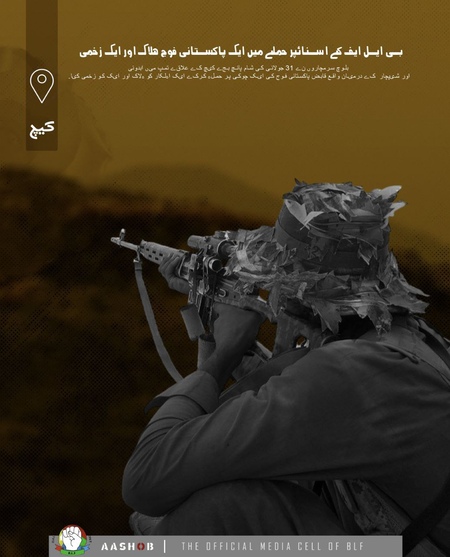
Lethal sniper attack by BLA on Pak Army post in Kech

In a bold and precise operation, the Balochistan Liberation Front (BLF) carried out a sniper attack on a Pakistan Army post in the Tump area of Kech, between Abdoi and Shepchaar.

The attack, which occurred on July 31 at 5 p.m. , resulted in one army personnel being killed, while another sustained injuries. The BLF’s skilled sniper team revealed that they had attacked, as evidenced by a photograph released by the group. The image clearly showed the intended targets and highlighted their precision and capabilities.

The Pakistan Army faces resilient resistance from Baloch Sarmachars across Balochistan, who have demonstrated their ability to penetrate enemy encirclements and achieve their objectives.

In response to international investment partnerships in Balochistan, which is illegal as the land is coercively occupied by Pakistan since March 1948, the BLF issued a warning, urging against projects that contradict Baloch national interests and exploit the region’s resources. The group vowed to take all necessary measures to stop such exploitation. Major Gwaram Baloch, representing the Balochistan Liberation Front (BLF), affirmed the group’s relentless pursuit of retaliating against the enemy’s interests until an independent Balochistan is achieved.Balochistan, being a resource rich nation was occupied by Pakistan Army in March 1948, just after the seven months of its Independence. The only purpose to do so was Pakistan’s lust for resourceful territory.

China coerces Uyghur relatives to monitor anti-China protests overseas

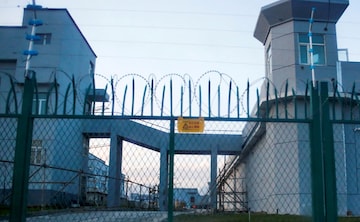
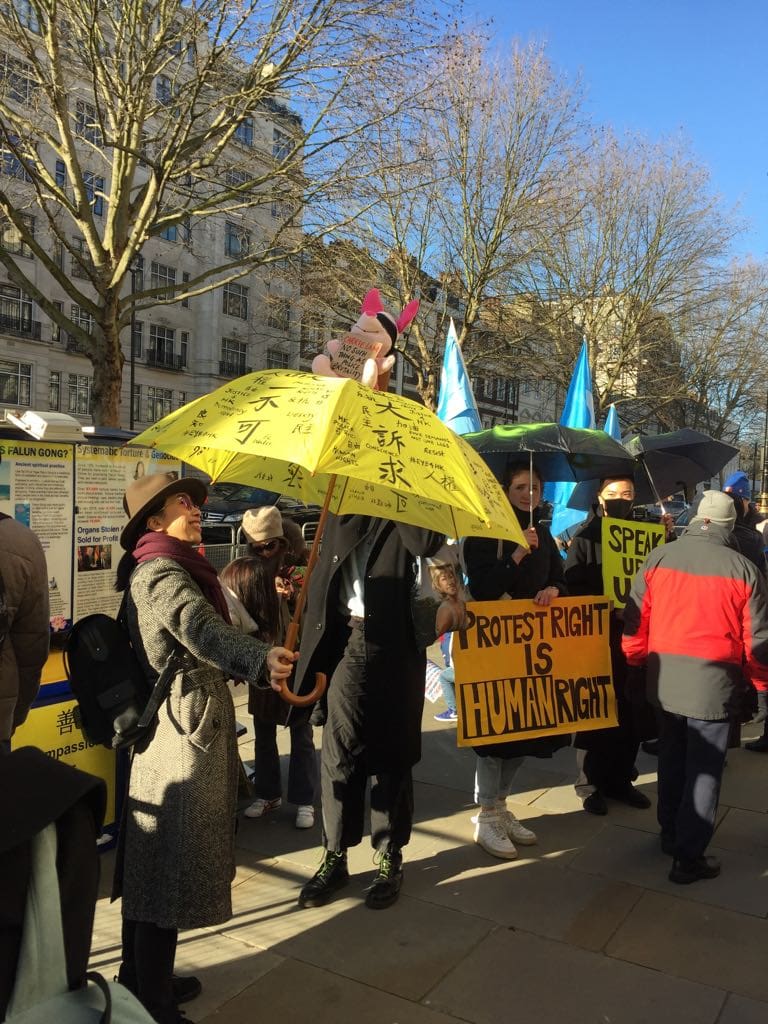
A disturbing revelation has emerged regarding China’s alleged strategy to control Uyghurs abroad and stifle Uyghur activities in other countries. According to researchers, the Chinese government is employing intimidation tactics by holding Uyghur families in China as “hostages”, thereby pressuring those living abroad to cooperate and spy on human rights activists.

Refugees and activists who have fled China told a leading news channel that China’s methods of intimidation are causing significant fractures within their communities and causing emotional distress among families.

In a poignant moment, Aleem (pseudonym) experienced a rare connection with his mother through a video call, marking their first contact in six years since Aleem sought refuge in Britain. However, this heartwarming encounter took a bitter turn as the call was controlled by an unidentified individual. Uyghurs, a predominantly Muslim minority from northwest China, live under constant surveillance and restricted communication.

Due to the sensitive nature of their interactions, a mediator facilitated the video call between Aleem and his mother. Holding two separate mobile phones in front of each other, they shared fleeting glimpses of their lives while struggling to communicate amid muffled sounds and pixelated images.

The emotional encounter took a sinister twist when Aleem received subsequent calls from a Chinese police officer. Allegedly coerced, he was instructed to attend meetings of Uyghur human rights activists, gather intelligence, and relay information to Chinese authorities. Aleem claimed he was asked to monitor anti-China protests in London and provide details about participants. Recordings of these calls were shared with the news channel, illustrating the alleged pressure tactics employed by the Chinese authorities.

Furthermore, Aleem was offered financial incentives to befriend leaders of campaign groups and socialize with them in restaurants, covertly gathering information. The Chinese officer even suggested Aleem establish a business to avoid suspicion about his sudden wealth, revealing a deeper layer of manipulation.

The threatening undertone of these interactions was unmistakable: compliance or risking harm to his family. Feeling trapped and exploited, Aleem stated, “They are using my family as a hostage. I am living in darkness.”

This coercive strategy, known as “international coercion,” involves governments monitoring and controlling their expatriates through various means. Research conducted by Dr. David Tobin and Nerula Elema at the University of Sheffield sheds light on the extent of this practice. Their study involving over 200 Uighur diaspora members from different countries exposes the widespread victimization of Uighurs living outside China.

Dr. Tobin emphasized the crucial role of family separation in this tactic, as fear of surveillance prevents open communication. This breakdown in family ties allows Chinese authorities to exercise control over individuals abroad by leveraging their families’ well-being. Such tactics compromise the safety and agency of Uyghurs, compelling them to comply with China’s demands.

Disturbingly, the practice extends beyond British borders. Uyghurs in Turkey, historically a sanctuary for them, are also experiencing the coercive tactics of the Chinese authorities. Reports suggest that police from China are pressuring Uyghurs in Turkey to spy on their own communities, leading to distrust and division among the diaspora.

The revelations highlight the far-reaching and insidious nature of China’s alleged suppression of Uyghur activities abroad, painting a grim picture of the lengths to which the Chinese government is willing to go to maintain control and silence dissent.

Protests in POJK over soaring flour & electricity prices under Pakistan’s forceful rule

On August 3, people in 10 areas of Pakistan-occupied Jammu and Kashmir held protests against the high prices of basic things like flour and electricity. These protests are organized by groups like Public Action Committees, Trade Unions, and Student Organizations, who want the government to help make flour cheaper, reduce electricity costs, and remove certain taxes.

Since May 9, there have been protests where people sit down in places like Hajira, Thorar, and Rawalkot. They’re doing this to tell the government, Pakistan’s forceful rule that things need to change and become fairer for them. They’ve also done things like not opening shops for a day (called a “shutter-down strike”) and not letting vehicles move (called a “wheel jam strike”). They’ve been doing these things on and off to get their message across.

As momentum continues to build, hundreds of individuals participate in daily day-and-night sit-ins, underscoring the dedication of the community to secure better living conditions. After the August 3 demonstrations, plans have been unveiled for additional protest sit-ins at district headquarters, alongside a proposed civil disobedience movement. This civil resistance strategy includes the initial refusal to pay electricity bills as a form of peaceful protest.

BLA attacks Pak Army across Balochistan

Once again, BLA carried out multiple attacks on the occupying Pakistan Army as well as vehicle plundering Balochistan national resources.

In a first, Baloch Liberation Army freedom fighters attacked a Pakistan Army outpost in Chungi area of Margat, Bolan. Using heavy weaponry, BLA freedom fighters killed one personnel of the occupying Army while leaving at least two injured.

In another attack on the occupying Pak Army’s outpost in Garmkan, Panjgur, BLA freedom fighters injured at least two enemy personnel.

Apart from these two attacks on the occupying army, BLA also targeted a trucks which was loaded with the Baloch national resources. While one truck was destroyed, other was damaged in the attack. BLA has firmly stated in its statement that the attacks like these will continue till the liberation of Balochistan is conceived.

Balochistan, being a resource rich nation was occupied by Pakistan Army in March 1948, just after the seven months of its Independence. The only purpose to do so was Pakistan’s lust for resourceful territoty. Unfortunately, they are exploiting the Baloch national resources till date with full impunity. Consequently, the organisations like BLA are posing resistance to such exploitation.

Attacks on Pak forces in Panjgur and Awaran,POB

In recent developments from Pakistan-occupied- Balochistan, unidentified armed assailants targeted a Pakistan forces’ checkpoint in the Garmkan area of Panjgur. The attack resulted in losses for the forces, although specific details remain undisclosed at this time.

Simultaneously, the region between Awaran and Mishke witnessed a flurry of heavy gunfire and explosions, raising concerns among local sources about a clash between Pakistan forces and unidentified armed individuals.

Meanwhile, in Kolwah, reports have emerged of alleged human rights violations during a military operation. Pakistan forces have been accused of subjecting women and children to torture in various areas. Furthermore, reports indicate that valuable items, including mobile devices, were confiscated from homes during these operations.

Balochistan gained independence from the British on August 11, 1947, but Pakistan forcibly took control on March 27, 1948. Since then, the Baloch people have faced abductions, murders, and atrocities. Despite this, they continue to resist Pakistan’s occupation through protests, armed struggle, and a fight for human rights. The Pakistan military employs illegal tactics to suppress Balochistan’s resilient spirit.

Two Baloch students shot in a fake encounter by Karachi police

In a distressing incident, two Baloch students were shot in a fake encounter by the Karachi Police. This event has once again shed light on the extra-judicial measures taken by the state machinery, wreaking havoc on the lives of Baloch people. The police quickly asserted the legitimacy of the encounter, but the victims’ family promptly released a compelling video that debunked the police’s claims.

Noor and Fahim belonged to Mastung area of Balochistan and were in Karachi to spend their summer holidays with her mother.

The Police stated that they carried out an encounter on July 27, in which Noor Mohammad and Fahim Ahmad sustained gunshots. Police also registered a case against them alleging siezation of weapon from them.

On the other hand, family of the victims stated that armed officials abused the victims and escorted them away on the bike. Meanwhile, the family also took the video of the whole incident. Surprisingly, moments after they were picked, police stated that both the boys were shot in an encounter at Rafah-e-Aam Society.

The family was shocked after listening to Police statement. They soon released the video of the whole incident that busted the claims by Police. This raised resentment in the people.

In response to public outcry, SSP Korangi stated that they have taken cognizance of the incident and are conducting a thorough investigation. Lately, the Baloch students have become a prime target of Pakistan. From Islamabad to Quetta, Pak sponsored atrocious forces are delved in enforced disappearance of Baloch students.

Had those videos not been recorded, the innocent minor Baloch boys would have been declared as terrorists and brutally killed. Moreover, the failed state of Pakistan would have also started to exploit the fake encounter for propagating its anti-Baloch agenda.