Home Blog Page 250

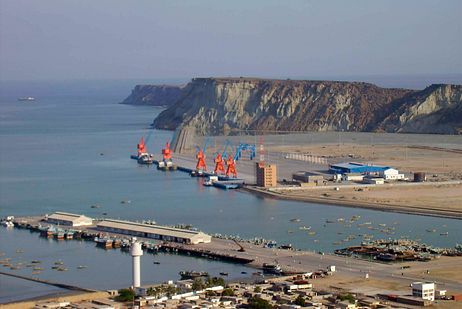
Section 144 imposed in Gwadar port city

The Home Minister of Balochistan Ziaullah Langove ordered the imposition of section 144 in the port city of Gwadar for one month, following the death of a policeman during Haq Do Tehreek (HDT) protest. The imposition of Section 144 means that rallies, dharnas, public gatherings of more than five people and display of any weapons  will be strictly forbidden and cellular services have also been suspended. Post the death of the policeman, Balochistan Mir Abdul Qudoos Bizenjo had ordered the arrest of the suspects in the case. He has also ordered for a full detailed report on the incident and the setting up of a special team for investigation including arrests.

On Monday, the Coastal Highway near Gwadar’s Sarbandan area was blocked after seven protestors from HDT including leader Hussain Wadala were arrested. The demand of the protestors included trouble-free border trade, a depletion in check posts and a total end to deep-sea fish trawling in the sea next to Gwadar. The clashes had occurred this month between the security forces and the locals in Gwadar as protests against illegal fishing turned violent after some people were arrested in the port city.More than 75 people were arrested and cases were registered against many people in Pisni under the Anti-Terrorism Act.

Complete shutter down protest in Gilgit-Baltistan against Paki regime

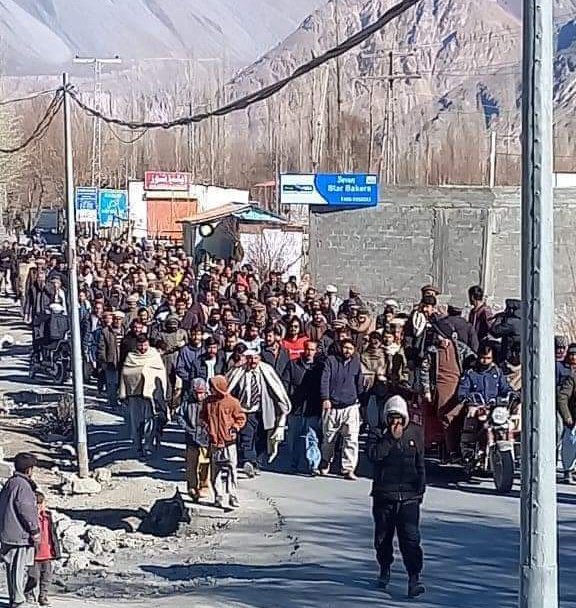
There was a complete shutter-down wheel jam strike in Gilgit-Baltistan and the people came out in protest against land grabbing, illegal taxes, wheat subsidy cuts, and non-provision of other basic human amenities in every district in Gilgit-Baltistan following a call by the Awami Action Committee. The protestors shouted slogans against the Pakistani army and government in Gilgit- Baltistan who have occupied the area.

The Pashtun leader Manzoor Pashteen supported them and said that the harsh colonialism by Pakistan is still present in this state beginning from the British era. They said  that land occupation takes place on one hand and on the other hand there is a media blackout. Subjugated nations are made to feel alienated every hour.The leaders of Gilgit said that they are extremely grateful to Manzoor Pashteen for supporting the voice raised against the illegal occupation of the colonists in Gilgit-Baltistan.

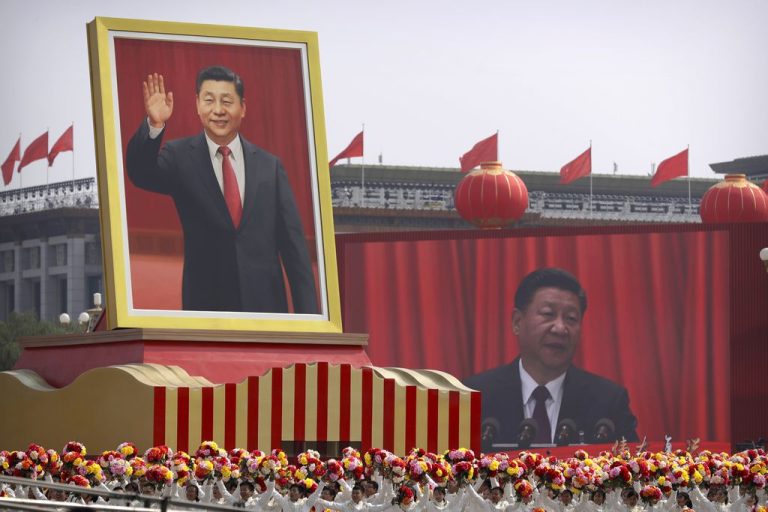
China means Xi Jinping after the 20th CCP Congress

“Most autocrats control the words and deeds of their subjects. Truly ambitious leaders want to guide their people’s dreams.”- ‘From ‘Xi Jinping amends the Chinese Dream’, The Economist, November 10, 2022

Prologue: Perhaps no other leader in the 21st century has elicited more interest, mystique and awe, and has been studied more than President Xi Jinping, who after the 20th Party Congress has anointed himself Emperor of China with unparalleled power. Building on his predecessor’s stupendous work, Xi has gradually changed the very complexion, scope and thrust of China’s progress to achieve his ‘China Dream’ of becoming the foremost power surpassing USA, while simultaneously offering Chinese values, ideology and governance culture as the panacea for prosperity to the globe. This article tries to decipher Xi and China under his rule.

The Beginnings: Xi Jinping was born a ‘Princeling’ to Xi Zhongxun, who once served as deputy prime minister of China and was an early comrade-in-arms of Chairman Mao. In Chinese parlance, father Xi, could be considered somewhat of a rebel and reformist and was often out of favour with his party and government, especially before and during the Cultural Revolution (1966–76). He was one of the rare voices who openly criticized the government’s actions during the 1989 Tiananmen Square incident. After spending his initial years in comfort, in 1969 Xi Jinping was moved to the countryside (Shaanxi province) where he survived for six years doing manual labour. As a natural leader he developed enduring relationships with the peasantry which enhances his image and credibility throughout his life.

Climbing the Ladder within the CCP[i]In contrast to his reformist father, Xi had a reputation for prudence and discretion and for following the party line. Immediately on joining the CCP in 1974, Xi studied and completed his chemical engineering from the prestigious Tsinghua University in Beijing as a worker-peasant-soldier student. His progression was fairly smooth due to his status of a princeling, akin to children of actors in India who join the cinematic profession. First assignment was a golden spoon as secretary for three years to Geng Biao, Vice President and Minister of National Defence. Other prized positions steadily followed; Deputy Secretary in Hebei province; Party committee member and Vice Mayor of Xiamen (Amoy) in Fujian province; Married well known singer Peng Liyyan in 1987; by 1999 acting Governor of Fujian and its Governor in 2000; Governor and party secretary of Zhejiang province in 2002; specially selected as Party Secretary of Shanghai due to corruption of higher echelons; in Oct 2007 elected as one of the nine Politburo members under Hu Jintao; Vice Premier in Mar 2008; Vice Chairman CMC Oct 2010, re-elected to seven member standing committee in politburo in Nov 2012. Succeeded Hu as General Secretary plus Chairman CMC on 15 Nov 2012, and ascended the summit on Mar 14, 2013 during the 12th Congress when voted President.

Popular and Charismatic Xi: Xi assumed presidency with the inspiring promise of accomplishing the ‘Chinese Dream[ii]’. Undoubtedly, since becoming President and even earlier, Xi enjoyed a very high popularity rating with the urban and rural class alike. He delivered and improved their quality of life immensely, and the spectacular economic growth continued Northwards like his predecessors. Controls and restrictions imposed on them were accepted as part of the package and a small price to pay. He addressed headlong the key issues of corruption[iii], crony capitalism and even inequality amongst the ‘haves and have nots’; and added the heady concoction of nationalism, and increasing global status by showcasing China’s rising comprehensive national power (CNP), in which the military hard power, and leadership in niche and disruptive technologies was proudly touted. The image of China, the global export factory with the richest and most generous aid package to assist countries especially the global South without any restrictions or pre-conditions added to his lustre.

CCP First Always and every time: The breakup and collapse of Soviet Union deeply affected Xi. In December 2012, soon after becoming General Secretary, Xi gave a closed-door speech to cadres in Guangdong Province, excerpts of which were leaked and published by a Chinese journalist in early 2013. “Why did the Soviet Union disintegrate? Why did the Soviet Communist Party collapse? An important reason was that their ideals and beliefs had been shaken. It’s a profound lesson for us! To dismiss the history of the Soviet Union and the Soviet Communist Party, to dismiss Lenin and Stalin, and to dismiss everything else is to engage in historic nihilism, and it confuses our thoughts and undermines the Party’s organizations at all levels.” The Central Committee issued Document No 9 in April 2013 (formally titled “Communiqué on the Current State of the Ideological Sphere”), to party cadres that has proved to be a foundational text of the Xi era.[iv]” The message was unambiguous; Western countries conspire to infiltrate, subvert, and overthrow the CCP, so the party must stamp out Western “false ideological trends,” including constitutional democracy, the notion that Western values are universal, the concept of civil society, economic neoliberalism, journalistic independence, challenges to the party’s version of history, and competing interpretations of the party’s “reform and opening” agenda. “In the face of these threats”, exhorted Document No. 9, “we must not let down our guard or decrease our vigilance.” It must be noted, that CCP has never tolerated challenges to its political or ideological authority, or shied away from harsh enforcement of its policies. However, during four decades of economic rise and reopening to the world there was always space for entrepreneurs and personal ambitions of hundreds of millions of individuals.

Gradual shift to authoritarianism and increasing internal control: During Xi’s second tenure, he frequently expressed alarm at rising inequity, and increasing liberties and exposure to West. In 2015, Xi started by initiating stricter party control on religion. At the 19th party congress, He (Xi) highlighted repercussions of “unbalanced and inadequate growth” and pledged to “adjust excessive incomes”. He enunciated and initiated the policy of “common prosperity” (egalitarian but populist agenda). Last year he banned ‘for-profit tutoring of schoolchildren’ including by online language teachers logging on from abroad, which the public unanimously hailed (especially middle income and rural population). Xi also took concrete steps to deflate speculation in ‘real estate’, and cut the wings of elite oligarchs like Jack Ma, which did trigger a ‘crisis of confidence’ in the markets, with global impact. He started micro-managing by even restricting online video-game platforms to youth, and sharply reducing screening of foreign films specially from the West. His recent statements both to internal and external audiences leave little doubt that Xi would be willing to adopt “decisive measures” to supress any dissent or actions which could weaken the CCP. All analysts agree that his statements and actions are governed by ideology and ensuring primacy of the CCP.

Post 20th Congress Expectations: Xi has decisively centralised command and control with him as the pivot, and replaced his most economically literate Politburo colleagues with diehard loyalists, and enshrined the Stalinist-Maoist concept of “struggle” as a guiding principle in the Party Charter. The erstwhile slogan of ‘reform and opening’ appears to be side-lined. His governing style increasingly reflect a deep ambition to unify Taiwan with China; fear of subversion from within, hostility toward the United States combined with sympathy with Russia, and supreme confidence in the ultimate victory of communism over the capitalist West. Regardless of adverse economic fallout, Xi wants to alter the ‘world order’ under Chinese domination. Combined with an aggressive and confident foreign policy of intervention geo-politically- diplomatically-militarily, Xi has relentlessly modernised his armed forces (allegiance to CCP), capable of fighting and winning by ‘intelligentising’ the battlefield. Under his leadership China has achieved remarkable technological payoffs by fine-tuning civil-military fusion, and are accepted as global leaders in the field of artificial intelligence (AI), 5G telecommunication networks, big data, ultra-high voltage electricity networks (high-speed rail), satellite and anti-satellite tech, etc., (niche and disruptive dual use). Good or bad, President Xi with a little help from Putin has provided an alternate ideology and governance model to the world, which unsurprisingly are finding many takers specially with autocratic leaders, and nations frustrated with double standards of the liberal democratic value system led by USA.

Xi and street protests: metamorphosis into a Tsunami? Since the last year, a gradually increasing wave of protests pan-cultural, pan-ethnic, pan-China despite tight CCP control of the population and media is something truly BIG. After the initial support from the people on tough COVID measures (specially being fed on how the world specially USA and West have fared), even the rural population had got frustrated given the slowdown of economy, rising unemployment specially amongst youth, apart from a brutal crackdown with no regard to sensitivity or sensibilities. Along with the anger over harsh Covid protection measures, voices calling for Xi and the CCP to step down suggests that an elusive but important psychological line may have been crossed, and protests could take on a larger political and social hue.

Xi acknowledging the seriousness and future implications of the protests socially and politically moved fairly rapidly with the CCP announcing a major roll back on 7 Dec 22. Moving a step closer to scrapping its dreaded zero-Covid policy, and in light of the changing internal situation and the weakened virulence of the Omicron variant, the State Council or China’s cabinet released new measures to further optimise the response to COVID-19. The new measures include; lockdown limited to individual apartment floors and buildings; strict ban on blocking fire exits and doors; reducing/ scrapping the frequency of nucleic acid testing for entering public places; lifting COVID testing and health code requirements for domestic cross-regional travellers; infected individuals with mild or no symptoms allowed to quarantine at home or choose collective quarantine; areas identified as “high-risk” should come out of lockdown in five days; schools must remain open with student attendance and so on.

Xi’s Conundrum: Ease restrictions and risk thousands of Covid deaths; or maintain the status quo and risk more social unrest and further damage to the country’s economy. The daily virus cases averaging around 30,000 a day could increase rapidly and some experts even forecast a fatality figure of a million! Zero-Covid policy resulted in only 68.7 per cent of people over 60 and 40.4 percent above 80 having taken three doses of vaccine.  Chinese population does not enjoy herd immunity and its non-mRNA vaccine does not provide adequate protection. The economy too is unlikely to get a major quick uptrend.

Epilogue: Xi’s centralization of power has put him in an exceptional position to challenge vested interests and advance difficult reforms. Unfortunately, Xi has shown little interest in such reforms, and instead, he is reviving the state controlled systems which chokes bottoms up entrepreneurship and growth. China always enjoyed ‘Growth with Corruption’. Xi’s campaign successfully struck fear into corrupt officials, but did not removed the root causes of graft: enormous power of the government over the economy and the patronage system in the bureaucracy. If Xi is weakened at home, is he likely to embark on adventuresome policies abroad and/or use harsher measures to snub out domestic challengers? A slowing economy, rising inequity, internal dissension, skewed demography, coupled with unprecedented barriers to Chinese capital and trade flows in the name of national security by USA and allies, is a major challenge and barrier for the ‘China dream’. The West claims the shift was driven largely by the Xi’s changes to China’s model of political economy. Ironically decoupling from China with steps like the CHIPS and Science Act, and Inflation Reduction Act will equally harm the USA and liberal democracies.

China is no Russia or Iran, and Xi is a pragmatic leader of the world’s ‘Second power’ in terms of CNP especially economic (total global integration) and military power. His flexible response to internal protests, vigorous geo-political gaming globally like in Africa and Middle-East indicate that both Xi and China are gearing up for a long, hard and even vicious ideological and economic confrontation. It is too early to even speculate on the outcome, or whether any serious challenge to Xi within China would emerge, or if the CCP hold could weaken. One thing is certain, it is the start of turbulent period in Chinese and global geo-politics.

(This article was published in bharatshakti.co.in under the title, ‘A Peep Into China And Emperor Xi: Sans Hostility And Hyperbole’)


[i] President Xi Jinping’s career is well documented online. Encyclopedia Britannica has also been referred.

[ii] Numerous interpretations of the ‘Chinese Dream’ online. Xi began promoting the phrase as a slogan during a high-profile tour of an exhibit at the National Museum of China in November 2012, shortly after he became leader of the CCP. Xi himself once said the ‘Chinese Dream; is “the great rejuvenation of the Chinese nation.” Interestingly, the appeal of the China Dream is that it is so loosely defined that it means something to every Chinese.

[iii] The largest organised, far-reaching anti-corruption campaign began following his election General Secretary during the 18th National Congress in 2012. Xi vowed to crack down on “tigers and flies”, that is, high-level officials and local civil servants alike. Most of the officials investigated were removed from office and faced accusations of bribery and abuse of power, although the range of alleged abuses varied widely. The campaign ‘netted’ over 120 high-ranking officials, including about a dozen high-ranking military officers, several senior executives of state-owned companies, and five national leaders (Bo Xilai, Zhou Yongkang, Guo Boxiong, Xu CAihou, Ling Jihua.  More than 100,000 people were indicted for corruption. The campaign is part of a much wider drive to clean up malfeasance within party ranks and shore up party unity. It has become an emblematic feature of Xi Jinping’s political brand.

[iv] ‘Xi Jinping in His Own Words: What China’s Leader Wants and How to Stop Him From Getting It’, by Matt Pottinger, Matthew Johnson, and David Feith; Foreign Affairs;November 30, 2022; available at https://www.foreignaffairs.com/china/xi-jinping-his-own-words. Accessed on 01 Dec 22.

Pakistani regime abducts 4 Baloch from Kech

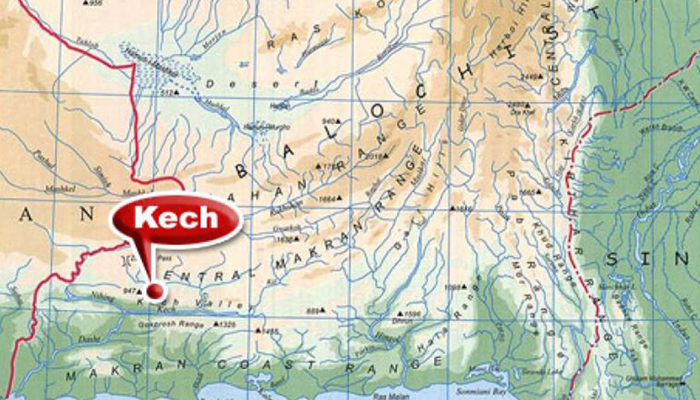
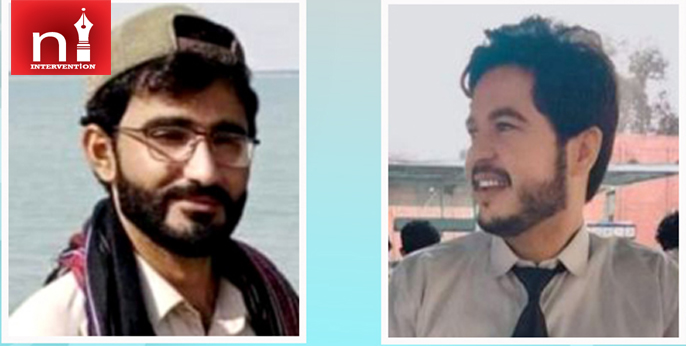
Pakistani security forces raided different houses in Gokdan area of Turbat (the main city of Kech district of occupied Balochistan) and forcibly disappeared four youths. The families of the youths have confirmed the incident. The identity of the mentioned youths are Mirza son of Barkat, Bilal son of Haji Abdul Aziz, Abdul Raziq son of Muhammad Jan and Muhammad Hanif  while a young man named Muhammad Hanif Dadu from Gogdan is already in custody.

Two days ago, three youths Syed Jan, Shahzad and Jahanzeb were forcibly disappeared by the Pak forces from Absar Yaqoob Mohalla in Turbat. Pakistan Army continues its genocide across occupied Balochistan wherein several innocent Baloch youth are first abducted and their bodies found later. Baloch Human Rights organizations have records of more than 30,000 innocent Baloch who have been abducted by the Pakistani security forces and are now “missing”. Another 10,000 Baloch have been killed and dumped by the Pakistan Army in various operations conducted across occupied Balochistan. Historically, Balochistan has been a separate nation that came under British imperial rule along with India. On 11 August 1947 Balochistan attained its independence from British colonial rule. However, this independence was short lived and Balochistan was occupied by Pakistan Army on 27 March 1948. The Baloch have been fighting for the independence from Pakistan since this date.

Jammu & Kashmir gearing up for upcoming polls

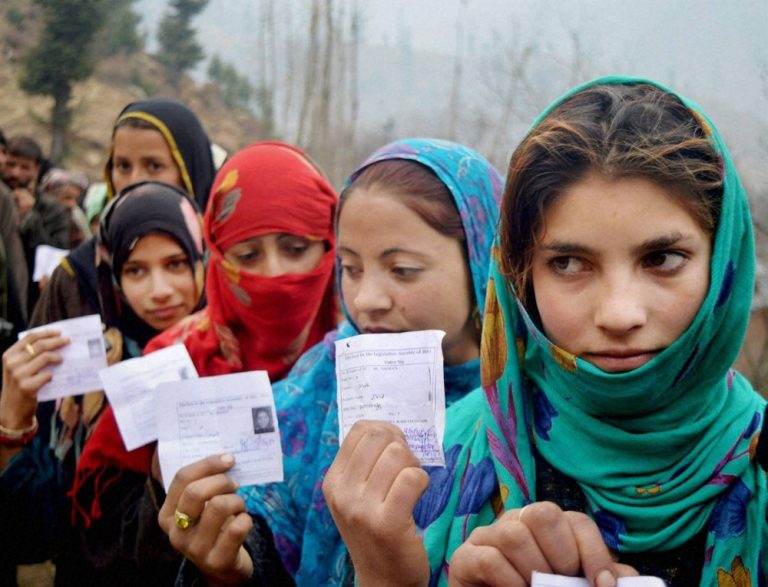
Holding assembly elections in the UT of J&K is voiced by many political parties. The ruling BJP has said that elections would be held after the delimitation process was completed. Initially, there was a difference in the viewpoints of the government and the local mainstream political parties like NC, Congress and even newly formed parties like AP.

First, the timing of the election became a controversial issue between the government and some of the mainstream political parties like NC. Dr Farooq Abdullah the NC leader and MP demanded that elections should be held before the delimitation process was completed. However, the Union Ministry of Home Affairs thought it would be feasible to complete the delimitation task first. Anyway, the Home Minister’s view prevailed.

Now that delimitation has been done and despite opposition from many stakeholders, the government has upheld the decision of the Delimitation Commission and applied the same in practice. The government announced that elections would be held in March 2023.

But there are political groups skeptical about this announcement of the government. They argue that the government is only trying to delay the election for political reasons. In an article under the title ‘No Elections in J&K’, Harsh Dev Singh, a former minister and now the Chairman of Aam Admi Party Coordination Committee has written a strongly convincing article in the Daily Excelsior in which he has put forth his view on the entire election process very forcefully.

Tracing the chequered history of J&K politics in which he thinks democracy has been abused, he concludes as this: “Having been deprived of democratic govt and their right to have an elected govt of their own, the common masses are the worst sufferers. They have hardly any access to the ‘babus’ ruling the roost. And the ‘babus’ have hardly any connection with the general masses. The result is all-around dis-enchantment. But then there is none to speak and to question the govt for who will bell the cat is the pertinent issue”.

Democracy has been considered as an ideal political arrangement for multi-religious and multi-linguistic states like J&K. The point is how democracy has been abused and misused in Kashmir by the local political leadership and their respective political parties for the last three-quarters of a century of their rule (in the name of democracy) has raised many eyebrows among the observers about the feasibility of democracy in J&K.

If the seven–decades–long rule under a “democratic” process has resulted in the abrupt and forceful rise of communalism, Wahhabism or imported/indigenous terrorism and disruption of fundamentals of social jurisprudence, then that pattern of democracy must come under the scanner. The rulers may claim that they have been swearing by true democracy but remember the taste of the pudding is in eating. True democracy should have been reflected on the ground. It has not been the case.

The abuse of democracy cannot be generalized. It is unrealistic and unjust to say that democracy has been abused in other parts of the country and J&K is not an exception. We do not agree with it. Terrorism, fundamentalism, jihadism, etc., have not been externally sponsored in the country except in J&K.

The occurrence of turmoil and disorder in some other parts of the country is not ignored and that is part of our national political dynamics. J&K is the only state where the governments allowed anti-national elements to flourish and indulge in terrorist and criminal activities without impunity. This is true of all major political parties NC, Congress or PDP.

Do not forget that all these parties stoutly claim to be democratic. Their elected candidates thought that election gave them the right to indulge in any subversive, disruptive and divisive activities and they would not be called upon to explain their actions.

Talking about delimitation, we know that there was strong opposition from the leadership in Kashmir. The Gupkar gang said that delimitation was a ploy of the BJP government to carve new constituencies of their choosing. Others also brought many frivolous accusations to paint BJP as a communal and divisive force. The government did not dither and went ahead with its ameliorative agenda.

In retrospect, one may ask what right had the successive governments in Srinagar to deny various communities of the hill-state of Jammu and Kashmir their rightful and constitutionally approved status of OBC, SC, Borderline inhabitants, refugees from the illegally occupied parts of the State by Pakistan, etc. Who is responsible for the deprivation and loss deliberately inflicted on these deprived population segments? Was it not the responsibility of the government to reverse this big social aberration? The measures that the Delimitation Commission has suggested and which the Government of the UT has accepted and is in the process of implementation show  that the advertent error had to be rectified through a legal and administratively sound exercise, that took its time and those who had raised a hue and cry opposing the Delimitation Commission would have understood that by opposing the Commission they were supporting the denial of constitutional rights to the large segment of the population of various nomenclatures in the State.

Another question raised by the critics of the government’s Kashmir policy is that it is not following the directive of the Apex Court which has recommended that the right of the people to have an elected government cannot be overlooked. Of course, there are instructions of the court and the states including the UT of J&K are respecting the relevant verdicts. However, it has to be noted that regarding J&K the Home Minister and the Prime Minister both have announced in no ambiguous terms that elections to the Assembly will be held and the process for the same has been initiated.

The SC verdict does not give a time frame for elections, particularly in the case of J&K. The UT is officially a disturbed area and the state is fighting the armed insurgency bent upon derailing the government’s initiatives of restoring peace and tranquility in the region. No doubt insurgency has come down considerably owing to accelerated action of the security forces and intelligence sleuths but their remnants are still roaming about changing their hideouts. They strike whenever they find an opportunity to kill a defenseless isolated Pandit or hurl a bomb at the police post or a military quarter. Infiltration has come down but the dropping of arms, ammunition, narcotics and even Indian currency through the drones procured by Pakistan from Turkey continue their flights, especially over the borders of Jammu, Samba and Kathua districts. Drone operations are made frequent and this new form of terrorism has to be met by the state.

Unfortunately, our courts sometimes lose sight of the peculiarity of the Kashmir insurgency. What is much more deplorable is the highly biased attitude of some sections of local and national media and political agencies who enjoy the sadism of distorting facts and denigrating democratic institutions. This deals a blow to the democratic structure of India. Sometimes even the courts fail to fathom the peril lying deep in peoples’ negative attitude towards nationhood. After all the courts are run by human beings which means that while we respect their verdicts, we do not preclude their human frailties.

In the final analysis, an environment of trust and goodwill must be created between the people and the government. People have to give up the habit of finding fault with everything that the elected government does or wants to do. The people and their leadership in Kashmir both have to understand the phenomenon with which they are beset not only from the regional and national paradigms but from international paradigms as well.

The rising crescendo of departure of our traditional societies like Saudi Arabia from entrenched conservatism, and transshipment to the digital age, has to be taken as an eye-opener. If the government is delaying elections, it has the purpose of reaching the masses of people and not shunning away from them. We need to understand that haste makes waste. Several things have to be taken into consideration after the removal of Articles 370 and 35- A, both of which, unfortunately,  were added to the Constitution either against the free will of the majority of lawmakers or through a non-transparent mechanism. When cancer is removed, its side effects have to be taken care of.

The bruised and mauled conscience of the people of Kashmir needs time for recuperation. What is the sense in handing them over again to the demagogues? The new Kashmir leadership must tear apart the cobwebs of confusion and uncertainty. Development, trade, transport, connectivity and a vision of the future are the key to the transformation of Kashmirian society.

BLA kills 28 Pak Army soldiers in multiple attack across Balochistan

The Baloch Liberation Army (BLA) launched multiple attack across Balochistan. The areas which were attacked were Quetta, Khuzdar, Turbat, Kalat, Gwadar, Kahan. BLA’s spokesperson Jeeyand Baloch in their press release said that they eliminated 28 soldiers of the Pakistani forces in the attacks in Turbat, Kahan, Gwadar, and Quetta.

The statement said, “On Sunday at 1 pm in Chapi Kach, Kahan members of BLA’s Special Tactical Operations Squad (STOS) targeted a vehicle of the Pakistani military. In the IED attack, eight enemy personnel, including a captain, were killed and three were injured. In the attack, the Pakistan army’s Captain Fahad, Sepoy Asghar, Sepoy Shamoom, Sepoy Mehran, Lance Naik Ameen Ullah, and others were killed. Three army personnel were also injured in the attack”. In another attack by STOS in Gokdan Turbat on the eve of 24 December, a convoy of the Pakistani military was ambushed. “In this attack, at least seven enemy personnel including a junior commissioned officer were killed and four were injured,” the statement read.

Jeeyand Baloch further said that the Pakistani soldiers were targeted when they were traveling in a convoy of nine vehicles from Gokdaan. In the attack, at least three army vehicles were targeted with rockets and heavy weapons, he said. He further added that in the deadly attack, seven including JCO Azhar were killed, four were injured, and two Pakistan army vehicles were destroyed.

BLA spokesperson further said, on Saturday night in another attack in Turbat, BLA fighters targeted a military camp near Hoshaap with rockets. Several rockets were launched at the Pakistan army camp, causing severe losses to the troops.Similarly, in another attack on Saturday night, BLA fighters targeted a military outpost in Dasht Saheji area of Gwadar. “Several grenades were launched at enemy positions, resulting in losses to the enemy forces,” the statement read.

Likewise in Gilli, Bulaida an outpost of the Pakistani military was targeted with grenade launchers and heavy weapons. Three Pakistani troops were injured in the attack.

The BLA statement went on to say that “in Joosk, Turbat a Pakistani military outpost was targeted with a hand grenade. Whereas, in Kehkan, Turbat a military base was targeted with BM12 long-range projectiles”  and on Sunday on Sabzal road in Quetta, BLA targeted policemen guarding the police station with a hand grenade. Two police officials were injured in the attack.

BLA statement added that in the Kalat area of Balochistan, BLA fighters destroyed a truck involved in “plundering” Baloch national resources. The drivers of the truck were released unharmed after final warnings, it said.

“In another attack in Quetta, BLA fighters targeted enemy personnel in Satellite Town, three enemy personnel were injured in this attack,” Jeeyand Baloch said in the statement. He further added that in another attack on Sariab road Quetta, an “enemy” post was targeted with a hand grenade. Three “enemy” personnel were injured in the attack.In Khuzdar, BLA fighters also targeted a police vehicle at Jeelani Chowk where they said that  the Pak forces were harassing gullible civilians in the disguise of security checking.

The statement said that six BLA fighters attained martyrdom and that Baloch Liberation Army pays rich tribute to the fallen heroes for their ultimate sacrifices and that they will continue to achieve the freedom for their motherland.

Gilgit-Baltistan protests against Pakistan’s illegal taxes

The Awami Action Committee organized a protest in Rondu district of occupied Gilgit Baltistan.The protest was organized against illegal and harassing taxes levied  on the people of Pak occupied Gilgit Baltistan. Some of the issues taken up by the Committee were a cut in wheat subsidy, increase in electricity bill, implementation of illegal taxes and absence of teachers in schools and appointment of atleast one lady doctor in the hospital. The Action Committee announced its support for the protest.

The protest  witnessed the participation of a large number of people who shouted slogans against Pakistan and demanded that the government should immediately abolish illicit taxes. The poor people of Gilgit-Baltistan have fallen into the  mill of inflation  and high taxes due to the dismal policies of the government. The attitude of Pakistani federal government, regardless of the party in power, has always been perfidious and double dealing, so far as Gilgit-Baltistan is concerned.

Pakistan Army continues to grab land in Gilgit-Baltistan

Over the past few months,the resource rich region of Gilgit-Baltistan has seen an increase in land occupation of the local people by the Pakistani Army or Pakistani Rangers.

According to one of the locals, efforts are being made to make Gilgit-Baltistan another Balochistan and said that “some members of the local administration have lent  support to the Pakistani army in this”. The Pakistani state is engrossed in forcefully grabbing the lands of the people in which the Rangers are being used to kill the people. Though the locals have protested in anger and resentment against the forceful landgrab by the Pakistani Army ,the rangers have threatened to open fire on the protestors. The Gilgit-Baltistan People’s Action Committee is to take action on this soon.

Balochistan remembers Karima Baloch on her martyrdom anniversary

On the occasion of the second anniversary of martyred Baloch leader Karima Baloch, Baloch Solidarity Committee organized seminars in Quetta and Gwadar, the capital of occupied Balochistan.

Baloch writer and poet A.R. Dad, Baloch intellectual Mir Muhammad Ali Talpur, writer and poet Professor Manzoor Baloch, political activist Khurram Ali, Taj Baloch coordinator HRCB, Khan Zaman Kakar Central Committee member Awami Workers Party, N. Advocate Shahzeb, organizer of DPK, Zain Gul Baloch, organizer of Baloch Women’s Farm, political activist Shari Baloch and political activist Dr. Mah Rang Baloch expressed their views in the seminars.

Others who attended it in Gwadar were Dr. Sami Deen Baloch, Provincial Vice President of JUI Khalid Waleed Safi, former Chairman of BSO Saeed Faiz Advocate, Abdul Wahab Baloch of Baloch Solidarity Council. They opined that Karima Baloch started the Baloch national movement and that her efforts have given a  new dimension to the struggle.

The speakers expressed that the eternal sacrifices of Karima Baloch cannot be forgotten. Infact Karima Baloch has been born in every home  and has inspired many to lead revolutionary movements for Baloch rights and self determination  from occupiers in an organized way . The seminars witnessed large scale participation of women  as well. 

Banuk Karima Baloch had started her journey when she joined BSO-Azad in 2005 until she became an international figure for Baloch all over the world fighting relentlessly for justice and rights not only for Baloch but also for Pashtuns and other subjugated nations of the region.She soon took stepped up as the first woman Chairperson in the history of the Baloch Students Organization (BSO) and became politically active. However, after getting threats from Pakistan authorities for being vociferous she had taken political asylum in Canada. She had always been on the radar of the Punjabi Pakistani army and in December 2020 Karima was abducted,murdered and her body was found at a canal in Toronto.

Bomb attack injures two Pakistani soldiers in occupied Balochistan

Some unidentified men hurled a hand grenade bomb inside the vehicle of the security forces near Abbas Market, Balochistan. The attack has injured  two personnel of the Pakistani forces.

The Deputy Commissioner of Khuzdar said that post the incident, the area was heavily guarded by a contingent of police and the area was cordoned off. However,  the incident is still under investigation. This is the third bomb blast in Khuzdar this week. Earlier on Monday, two explosions took place in the city center at Umar Farooq Chowk.

None of the groups have claimed responsibility for the attacks yet  and the police investigation report of the Khuzdar bomb is yet to be made public.