Home Blog Page 264

Prof. Vaknin on Freedom of Expression

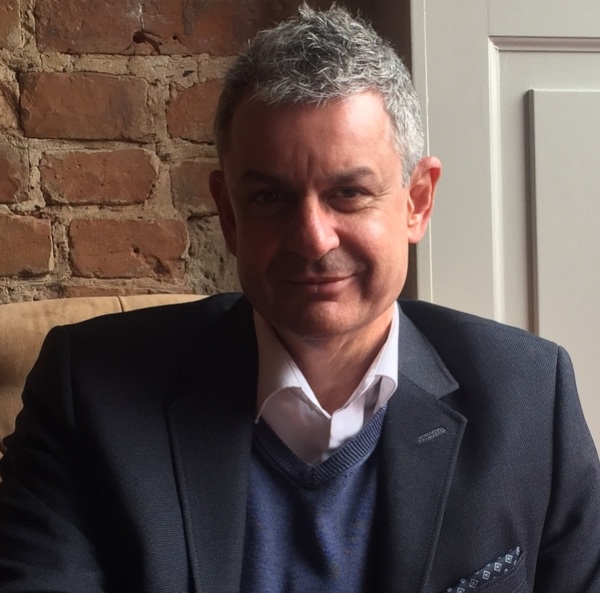
Prof. Shmuel “Sam” Vaknin (YouTubeTwitterInstagramFacebookAmazonLinkedInGoogle Scholar) is the author of Malignant Self-love: Narcissism Revisited (Amazon) and After the Rain: How the West Lost the East (Amazon) as well as many other books and ebooks about topics in psychology, relationships, philosophy, economics, international affairs, and award-winning short fiction. He was Senior Business Correspondent for United Press International (February, 2001 – April, 2003), CEO of Narcissus Publications (April, 1997 – April 2013), Editor-in-Chief of Global Politician (January, 2011 -), a columnist for PopMatters, eBookWeb, Bellaonline, and Central Europe Review, an editor for The Open Directory and Suite101 (Categories: Mental Health and Central East Europe), and a contributor to Middle East Times, a contributing writer to The American Chronicle Media Group, Columnist and Analyst for Nova MakedonijaFokus, and Kapital, Founding Analyst of The Analyst Network, former president of the Israeli chapter of the Unification Church‘s Professors for World Peace Academy, and served in the Israeli Defense Forces (1979-1982). He has been awarded Israel’s Council of Culture and Art Prize for Maiden Prose (1997), The Rotary Club Award for Social Studies (1976), and the Bilateral Relations Studies Award of the American Embassy in Israel (1978), among other awards. He is Visiting Professor of Psychology, Southern Federal University, Rostov-on-Don, Russia (September, 2017 to present), Professor of Finance and Psychology in SIAS-CIAPS (Centre for International Advanced and Professional Studies) (April, 2012 to present), a Senior Correspondent for New York Daily Sun (January, 2015 – Present), and Columnist for Allied Newspapers Group (January, 2015 – Present). He lives in Skopje, North Macedonia with his wife, Lidija Rangelovska. Here we talk about freedom of expression.

*Previous interviews listed chronologically after interview.*

Scott Douglas Jacobsen: Freedom of expression is a paper right in most places of the world. It is listed in international rights documents and in national constitutions. Yet, one could ask, “What is the ‘free’ part of freedom of expression?” It depends on the society and the culture, and the person. So, to open this session, what is a proper framing of rights, responsibilities, obligations, and privileges in societies, i.e., an accurate frame or definition to ground practice of free expression?

Prof. Shmuel “Sam” Vaknin: Freedom of expression, including freedom of speech and freedom of the press, is a feature of individualistic societies. Where collectivism reigns, this amalgam of rights is subordinated to the greater good.

Ironically, utilitarianism inexorably leads to limitations on these freedoms intended to protect the majority against the incursions of disruptive or even destructive minorities.

Yet, even in anarchic polities, freedom of expression cannot be abused to spread panic (crying fire in a crowded theatre), life threatening misinformation (re: the COVID-19 pandemic), or to threaten the wellbeing and lives of others (e.g., virulent racism, or calls for eugenic culling, or victimization). Only anomic civilizations in decadent decline countenance such toxic speech acts.

Jacobsen: Which countries and parts of the world seem the freest regarding freedom of expression?

Vaknin: It is a surprisingly mixed bag including perennials like Denmark and Finland, but also surprises like Argentina and Slovakia.

But freedom – all freedoms – are on the decline everywhere, besieged by populism, profound mistrust of authority and of expertise, anti-intellectualism, anti-elitism, anti-liberalism (anti-“progressivism”), and the dominance of rapid dissemination technologies such as social media.

Ochlocracies (mob rule) are regaining ground all over the world, led by authoritarian, proudly ignorant, and defiantly contumacious and reactant narcissistic-psychopathic leaders.

Jacobsen: Which nations and regions of the world seem the least free regarding freedom of expression?

Vaknin: Again, the rankings are counterintuitive. Canada, for example, is less free than Uruguay and the USA is languishing with Peru somewhere at the bottom of the upper third.

Jacobsen: How did (and does) the internet change freedom of expression or the access to free exchange of words, ideas, and philosophies, or simply disjointed randomly emoted thoughts?

Vaknin: In the internet age, the distinction between raw information and knowledge (structured data) is lost. The internet is a huge dumping ground for half-baked truths, rank nonsense, misinformation, propaganda, hate speech, speculation, and outright derangement. Even where vetted and reliable information is available, it is unprocessed and out of context.

No single technology has harmed free expression more than the internet. It has created a problem of discoverability (locating quality content in a sempiternal tsunami of trash) and allowed mobs to form and to ominously suppress speech by sheer force of numbers (the cancel culture is the latest example of such transgressions).

All semblance of civilized, informed speech is now lost even in academe. Social media were deliberately constructed by engineers and turncoat psychologists to polarize aggressive speech and cement confirmation bias (silos of like-minded people in echo chambers).

Jacobsen: Following from the previous question, is this net good or net bad?

Vaknin: Bad by a long shot.

https://videotranscripts.dk/ (Transcripts)

https://www.youtube.com/watch?v=wpvv_ooqJik (The True Toxicity of Social Media)

https://www.youtube.com/watch?v=QY79nDYjW94 (Malignant Egalitarianism)

https://www.youtube.com/watch?v=jvuRmP3KP1g (The Need to Be Seen)

https://www.youtube.com/watch?v=WgjOH0kDErw (A-social Media: Fracking Mankind)

https://www.youtube.com/watch?v=jVprI6_P8GE (Plugged-in Documentary)

https://www.youtube.com/watch?v=w2rKrWNWkS0 (How to Fix Social Media)

https://www.youtube.com/watch?v=fIElARjRGTo (Social Media as the Big Eye)

https://www.youtube.com/watch?v=5NTwxAJDMTo (Metaverse: Conspiracy or Heaven?)

Jacobsen: One camp will claim complete freedom of expression in social media will be a net good because the liars and defamers will be overwhelmed by more reasonable voices and evidence. Another camp thinks there should be sharp restrictions on particular types of speech, electronic communication, and so on. Those are two big ones. A third believes in outlawing social media altogether, so stringently binding or making illegal social media for some people if not most or all. It’d be similar to acquisition of a firearm in much of the world, getting a driver’s license, qualifying as a surgeon or an accountant, and such. You have commented on this. With social media, what should be done for or against freedom of expression, if anything?

Vaknin: Social media are utilities and should be subjected to the same regulatory oversights that other media and monopolistic utilities are under.

Additionally, owing to the addictive nature of social media, laws should be passed to restrict their use and to monitor the content posted on them.

Self-regulation is a myth on Wall Street as it is in tech valleys around the globe. Where money rears its head, morality and restraint and the public interest go out of the window.

Crowdsourced regulation is the dumbest idea ever. Majorities are forever silent and conflict-averse. Ask the misnamed Mensheviks who were actually the overwhelming majority and yielded to the equally mislabeled Bolsheviks who were more ruthless and vociferous and better mobilized.

Jacobsen: What does social media and internet use do in mild use and in chronic use to the mental health of individuals and groups?

Vaknin: The evidence is unequivocal (see the studies by Twenge et al.): the more extensive the exposure to screens, the longer the screentime, the higher the prevalence and incidence of anxiety and depressive disorders, especially among the young (under 25) and among seniors over 65. There is no such thing as “mild” or “moderate” use: the effects commence at the first moment of use.

Jacobsen: What do trends of expression and outcomes among users of social media tell us about individual psychology and mass psychology, and social media in general?

Vaknin: By far the biggest problem social media use has fostered is what I call “malignant egalitarianism”.

Malignant egalitarianism is threatening our existence as a species. Until about 10 years ago, people – even narcissists – had role models they sought to learn from and emulate and ideals which they aspired to.

Today, everyone – never mind how unintelligent, ignorant, or unaccomplished – claim superiority or at least equality to everyone else.

Armed with egalitarian equal access technology like social media, everyone virulently detest and seek to destroy or reduce to their level their betters and that which they cannot attain or equal.

Pathological envy (egged on by instruments of relative positioning such as “likes”) had fully substituted for learning and self-improvement. Experts, scholars, and intellectuals are scorned and threatened. Everyone is an instant polymath and an ersatz da Vinci.

But, this is just one of many vile side effects and byproducts of social media. Watch my videos on the topic (see links above).

Jacobsen: How will the Metaverse, and associated developments, in the 2030s affect relations between people?

Vaknin: Is the Metaverse the ultimate dystopia, an escape from reality, or the promised technological heaven? I summarized my views in this interview: https://www.youtube.com/watch?v=5NTwxAJDMTo.

Jacobsen: If the goal is mental health for most people most of the time, what are the most efficacious policies and laws for governments to enact, and for individuals and families to practice, regarding social media and the right to freedom of expression?

Vaknin: Limit usage time (clocks embedded in the app will terminate use after 2 hours);

Only real life friends and acquaintances would be allowed to become online friends;

Identity verification would be mandatory for various types of content;

Introduce an accreditation system for experts, gurus, and coaches online;

ScholarTube for vetted, evidence-based knowledge provided by real-life academics or experts;

Curation of most content prior to its release (the contemporary Wikipedia model as distinct from the original crowdsourcing mess).

More here: https://www.youtube.com/watch?v=w2rKrWNWkS0 (How to Fix Social Media)

Shoshanim: Thank you, Dr. Shmuel.

Vaknin: You are always welcome, shoshanim!

Previous Electronic ‘Print’ Interviews (Hyperlinks Active for Titles)

Prof. Sam Vaknin on Narcissism in General

(News Intervention: January 28, 2022)

Prof. Sam Vaknin on Cold Therapy (New Treatment Modality)

(News Intervention: January 30, 2022)

Prof. Sam Vaknin on Giftedness and IQ

(News Intervention: February 2, 2022)

Prof. Sam Vaknin on Religion

(News Intervention: February 11, 2022)

Prof. Sam Vaknin on Science and Reality

(News Intervention: April 30, 2022)

Prof. Sam Vaknin on the Gender Wars

(News Intervention: May 21, 2022)

Prof. Sam Vaknin on Psychological Growth

(News Intervention: May 24, 2022)

Prof. Sam Vaknin on Structure, Function, Society, and Survival

(News Intervention: May 26, 2022)

Prof. Vaknin on Chronon Field Theory and Time Asymmetry

(News Intervention: May 28, 2022)

Prof. Vaknin on Genius and Insanity

(News Intervention: June 1, 2022)

Previous Interviews Read by Prof. Vaknin (Hyperlinks Active for Titles)

How to Become the REAL YOU (Interview, News Intervention)

(Prof. Sam Vaknin: January 26, 2022)

Insider View on Narcissism: What Makes Narcissist Tick (News Intervention)

(Prof. Sam Vaknin: January 29, 2022)

Curing Your Narcissist (News Intervention Interview)

(Prof. Sam Vaknin: January 31, 2022)

Genius or Gifted? IQ and Beyond (News Intervention Interview)

(Prof. Sam Vaknin: February 3, 2022)

Thrive: Your Future Path to Growth and Change (News Intervention Interview)

Prof. Sam Vaknin: May 25, 2022)

Image Credit: Sam Vaknin. 

Pak Army backed Islamist terrorists cause forest fire in POK

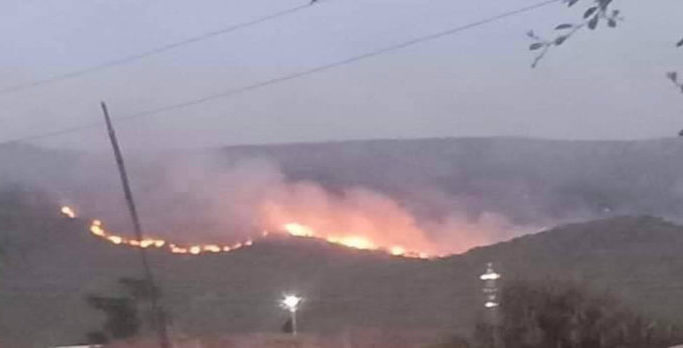
The lush forests of the Bhimber district of Jammu and Kashmir in the Samahni Valley of Pakistan Occupied Kashmir are in the throes of massive fire.On Monday, Pakistani Army backed Islamist terrorists had lit up a bonfire in the forest that turned into an inferno. It set fire to the lush green forests of the Tunin Block Seri Hill.The fire spread over a wide area of forests as soon after.Forest department officials, revenue department and civil society youth rushed to the spot as soon as they were informed.It was a difficult process to control the fire against extreme heat and strong wind.The fire burnt the mountain range adjacent to Samahni Headquarters Seri Hill and Dub Valley into coal. Due to the massive fire, the flora and fauna are bound to burn to ashes.The fire entered the forest from the private area from the Seri hill site. Journalists from Kashmir Press Club registered Samani also played their part in controlling the fire on the spot and assessed the damage .The fire started in the morning and remained uncontrolled till noon.The flames and smoke of the fire kept increasing. The fire increased the temperatures and the atmosphere was severely polluted. Serious circles have demanded concrete steps from the puppet government of Kashmir to protect forests from fire during the fire season.On Saturday night, some anti-environmental elements also set fire to the forests of Baghsar Kaoliyan.Due to the overnight fire, a large area of Baghsar Block was burnt to coal. While all forest blocks in the Samani Valley have been badly devastated by the fire during the fire season so far.The forest department needs to pay attention to it.

There is a lack of local research in Pakistani occupied Kashmir.The Forest Department has appealed to the public to cooperate with the department to protect the forests from fire.Officials at the department blamed the fire, which was not appropriate, for the fire without investigation. There is also a lack of fair investigation. While in Australia, the punishment for setting fire to forest is twenty one years in prison while in Pakistan the same crime is only three years in prison.Forests are the guarantee of life. Everyone has to play a role in saving it.The forest department has to give up its double standards and the people must be severely monitored and discouraged from reasonable punishments.

Take firm steps, else Hindus will be wiped out in Kashmir

The threat

By targeting defenceless men and women belonging to the indigenous minority Hindu community as well as non-locals working in Kashmir, Pakistan sponsored terrorists have succeeded in creating a fear psychosis here. Unfortunately, rather than expressing solidarity and reassuring the terrorised people, local political parties seem to be more interested in extracting political mileage from this humungous tragedy by accusing the government of gross security failure and instigation. While the authorities cannot escape responsibility for being unable to prevent such killings, there’s a need to examine this issue holistically.

The pro-Pakistan lobby and other vested interests have cunningly played the ‘public inconvenience’ card to get a large number of security check posts removed. As terrorists carrying out targeted killings are using pistols which can be easily concealed on their person, a body search is essential to check movement of such assassins. Furthermore, with the recent killing of a Muslim lady TV artiste, Hindu Kashmiri teachers, a non-local bank employee and migrant workers, it’s abundantly clear that virtually every Kashmiri is under threat of being murdered by terrorists. So, ensuring effective security for such a wide range of potential targets spread across the entire length and breadth of Kashmir is practically impossible.  

The paradox

Terrorists as well as their Pakistani mentors never tire of trying to legitimise brazen terrorism in Kashmir by eulogising it as a ‘freedom struggle’. In addition, Islamabad keeps demanding UNSC intervention in Kashmir and despite being repeatedly snubbed by the international community for seeking external mediation, it continues to peddle fabricated accounts of excesses and violation of rights here. So, several questions come to mind. Firstly, doesn’t the rampant killings of defenceless civilians by terrorists in Kashmir tarnish the image of the so called ‘freedom struggle’? Secondly [and more importantly], how exactly will ‘targeted killings’ of minority community members and non-locals in Kashmir help terrorists in achieving their purported aim of the so called ‘armed struggle’?

It’s not that this is the first time that Kashmir is witnessing targeted killings. Right from the day terrorism erupted here, senseless violence has been a constant factor and senior Hurriyat leader Prof Abdul Ghani Bhat has himself admitted this by saying that “This movement [terrorism in J&K] began with the assassinations of thinkers and the individuals who held an opinion”. However, unlike in the past when both the Pro-Pakistan All Parties Hurriyat Conference [APHC] and Islamabad would blame Indian security forces and intelligence agencies for such killings, today, terrorist groups are proudly accepting responsibility for such slayings, albeit under pseudonyms.

Why targeted killings?

On the face of it, this new trend of terrorist groups readily taking responsibility for cold blooded murders is tantamount to discrediting the so called ‘armed struggle’, but there’s a definite method in this barefaced act of madness. With its ridiculous claim that Article 370 abrogation violated UNSC resolutions on Kashmir finding no support from UN as well as the international community, Pakistan army’s spy agency Inter-Services Intelligence [ISI] attempted to use APHC for instigating public unrest to show the world that the people of Kashmir were opposed to this decision.

However, this plan failed-a fact that Hurriyat patriarch SAS Geelani himself admitted in his resignation letter addressed to the APHC leadership post Article 370 abrogation by mentioning that “Despite unprecedented restrictions and detention, I tried to reach out to you people, but you were not available.” ISI also made a determined attempt to create mayhem by escalating terrorist activities in Kashmir. When proactive vigilance along the Line of Control [LoC] made infiltration of terrorists and transhipment of weapons and other warlike stores difficult, ISI started using tunnels and drones for this purpose. However, due to excellent synergy between the army, central and local police forces, plus active support from locals fed up with terrorism, a record number of terrorists were neutralised and this put ISI on the backfoot. 

Having failed to orchestrate public unrest and anarchy in Kashmir through either APHC or terrorists, ISI was caught between the devil and the deep blue sea. So, with no other option available, ISI was forced to task terrorist groups to create unrest in the Kashmir Valley through the self-debilitating strategy of targeted killings. However, there was a problem- since no responsible nation, group or individual would condone violence against innocent people and hence, ISI cunningly created fictitious terrorist groups and these non-existent entities are taking ‘responsibility’ for the premeditated murder of defenceless people.

Recommended response

There’s a definite requirement to ramp up security measures to thwart the menace of targeted killings. Towards this, proactive measures like frisking, as well as enhanced surveillance needs to be re-introduced. Since the government is responsible for ensuring safety of its citizens, necessary measures to prevent such killings by terrorists are necessary. Accordingly, even though it may inconvenience commuters, additional security checks and proactive measures need to be instituted in the larger interests.

Furthermore, Rawalpindi’s shameful duplicity on Kashmir needs to be tackled comprehensively, and more importantly, exposed internationally. Some suggestions:

·        The fact that targeted killings being attributed to imaginary entities are actually the handiwork of Pakistan based terrorised groups needs to be exposed. This can be easily done by producing apprehended assassins and their supporters before the media so that their confessions can be made public.

·        The façade of communal amity being projected by the pro-Pakistan lobby through vocal condemnation of targeted killings should be unmasked. One way of doing so is by asking them to act on their much-touted concern for the safety and wellbeing of their brother Kashmiris from minority communities by demanding that they be accommodated in secure premises. If APHC doesn’t accept this [which will surely be the case], its doublespeak  would be exposed.  

·        Terrorist groups like Hizbul Mujahideen [HM], Jaish-e-Mohammad [JeM] and Lashkar-e-Taiba [LeT] who are denying involvement in such killings should be asked to prove their non-involvement in targeted killings by revealing the identity of the perpetrators. Since these groups boast of enjoying absolute public support, their cadres shouldn’t face any problems in apprehending and exposing the killers.

·        There is a need to up the Diplomatic ante against targeted and Indians should unitedly draw international attention towards targeted killings in Kashmir.

·        The need of the hour is to cease treating incidents of targeted killings as mere statistics and instead highlight the human tragedy which every such senseless murder precipitates.

Bottom line

Since J&K is Indian territory, how New Delhi handles the situation there is strictly its internal matter. As such, there’s no need to be unduly worried by adverse comments from countries and organisations who don’t practice what they preach and have a proclivity to indulge in selective criticism. On the contrary, India needs to be more assertive and make it clear to everyone that since J&K is experiencing a full-blown Pakistan sponsored proxy war in the form of cross border terrorism, taking appropriate measures to defend its hapless civilians from terrorist violence is the sacred and non-negotiable responsibility of the government, which it will carryout- come hail or high water! 

Baloch students protest abduction by Paki regime in Lahore

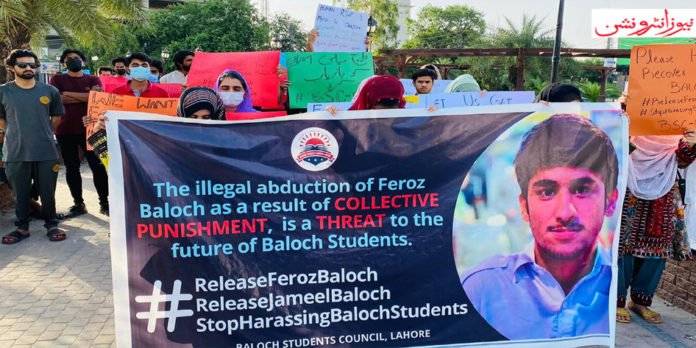
Baloch Students Council Lahore took out a protest rally in Punjab’s educational institutions against harassment of Baloch students  and non-recovery of students Feroz Baloch and Dr. Jamil Baloch. A large number of students participated in the rally while the rally participants carried pictures of the missing persons in their hands. The rally participants have demanded safe recovery of missing students Feroz Baloch and Dr. Jamil Khetran including harassment of Baloch students and elimination of other biased attitudes in Punjab educational institutions.

Protests against the illegal detention and disappearance of Feroz Baloch and Dr. Jamil Khetran have been going on for the past several weeks in various areas including Balochistan. Feroz Baloch was abducted from Rawalpindi, Punjab, a month ago and  Dr. Jamil Khetran has been abducted after being detained from Barkhan.

Students have earlier staged protests in other cities including Islamabad against the non-recovery of Feroz Baloch. According to Lahore protesters, so far there have been incidents of forced abduction and harassment of Baloch students from different cities of Punjab. Security agencies are abducting Baloch students as part of conspiracy. Earlier, fake cases were registered after the detention of several Baloch students which is totally an illegal practice and exposes the miscreants of state institutions. Protesters said that every citizen of Balochistan, including Baloch students, is currently suffering from state injustice. Dr. Jamil Baloch, a social worker from Barkhan, has been in illegal detention for several months and his family is being tortured. The protesters said that law and justice in this country have failed for Balochs. Protesters have demanded that missing student Feroz Baloch and other missing persons be brought to the fore and rescued immediately and  by eliminating the incidents of harassment of more Baloch students, Baloch students should be allowed to pursue their education. Every day, due to forced abductions, Baloch students are suffering from mental agony and harassment.

How Kashmir’s Islamic radicalisation led to death of ‘Kashmiriyat’

On broaching the issue of religious radicalisation in Kashmir, the stock reply is that this is sheer propaganda as there’s no such thing here. This reply is invariably followed by a lengthy monologue on the inimitable and age-old ‘Sufi [Muslim ascetic] -Reshi’ [Hindu sage] culture this region boasts of, which being pluralistic and extremely tolerant in character, blocks ingress of radical religious ideology into the Kashmiri society. However, while Kashmir’s inter-faith bonhomie and secular coexistence was undoubtedly the envy of any cultured society in the past, unfortunately, the same cannot be said today.

What makes this whole issue all the more tragic is that even as Kashmiris brazenly fanned religious intolerance during the nineties, members of Kashmir’s civil society and intelligentsia [either unwittingly or intentionally], failed to raise their voices against such fanatical religious indoctrination which allowed the self-debilitating scourge of radicalisation to spread unchecked. Those who disagree just need to reflect on what Kashmir has been through since terrorism erupted here more than three decades ago and the truth will automatically unfold. So, let’s recapitulate.

When the Jammu and Kashmir Liberation Front [JKLF] started the so-called ‘armed struggle’ in Kashmir, wasn’t ‘azadi’ [liberation or freedom] its singular objective? However, since the Pakistan army had failed to wrest control of J&K twice [in 1947 and 1965], even a novice would know that expecting a ragtag group of youth, hastily trained and armed by the Pakistan army would be able to defeat the Indian army was an absolutely misplaced idea. So, it’s obvious that Pakistan army’s spy agency Inter- Services Intelligence [ISI], had cunningly played the ‘azadi’ card just to beguile gullible Kashmiri youth into picking up guns and then use them as proxies to wage a ‘shadow war’ against India!

Let’s for the sake of taking this discussion forward, give JKLF the benefit of doubt, and for a moment accept its claim that the so-called ‘armed struggle’ envisioned an ‘independent’ Kashmir’ for all its indigenous communities, which would be free from any control or influence of both India and Pakistan. However, if this is true, then what explains senior Hurriyat leader Prof Abdul Ghani Bhat’s factual revelation that “This movement [terrorism in J&K] started with the assassinations of thinkers and the people who held an opinion”? If ‘azadi’ was really the popular demand of the masses in Kashmir, then where was there a need for JKLF to kill “thinkers and the people” who were championing this very same cause?

The answer is simple- it was JKLF’s radicalised mindset that made elimination of revered influencers with secular antecedent imperative. Such killings also terrorised others into silence and thus JKLF was able to execute its ruthless pogrom against the minority Kashmiri Pandit [KP] community and compelled them to leave the Valley. With no one willing to expose this shameful act of communal violence, the pro-Pakistan lobby went about denying the forced exodus of KPs and even conjured a bizarre ‘conspiracy’ theory of this exodus having been orchestrated by the authorities.

Once the genie of religious radicalisation in Kashmir came out of the bottle, there was no way of pushing it back and soon the much-hyped ideals of ‘azadi’ and ‘self-determination’ were overtaken by fundamentalist religious ideology. Self-styled ‘mujahideens’ forcibly enforced their own version of Islamic tenets- women not wearing burqas [a long, loose garment covering the whole body from head to feet, worn by Muslim women in public] risked being shot in their legs or having acid being thrown on their faces, while beauty parlours were asked to shut shop.  Movies were considered ‘un-Islamic’ and grenade attacks in cinema halls forced their closure, and people selling liquor and cigarettes were targeted and their shops vandalised.

It was renegade HM terrorist Zakir Musa who by taking charge of Al Qaida’s newly created cell called ‘Ansar Ghazwat-ul-Hind’ in 2017, brought Kashmir on the global terrorism map.  Musa was a pathetic bundle of contradictions-while on the one hand he said, “We request Kashmiri Pandits to return to their homes. We take the responsibility of their protection,” on the other hand he declared that “I will not fight for Azadi for a secular state,” emphasising that “I will fight for azadi for Islam, for the establishment of an Islamic state.” He also lashed out at the separatists by saying, “I am warning all those hypocrite Hurriyat leaders. They must not interfere in our Islamic struggle. If they do, we will cut their heads and hang them in Lal Chowk.” [Emphasis added].

Surprisingly, despite belittling the so-called ‘armed struggle’, as well as threatening the separatist leadership and mocking Kashmir’s traditional ‘Sufi-Reshi’ culture, thousands turned up to pay homage after Musa was killed in an encounter with security forces. Senior Hurriyat leaders and even HM chief Syed Salahuddin against whom Musa had unsparingly spewed vitriol, heaped praises on him and prayed for his acceptance in paradise! If this isn’t a clear sign of widespread radicalisation, how else does anyone explain such extraordinary public obeisance to a person who openly junked ‘azadi’ and vowed to work towards converting Kashmir- not into an ‘azad’[independent] entity but an “Islamic state”?  

Similarly, if it’s not manifestation of radicalisation, then how else does one interpret the utter disregard exhibited by Kashmiri youth on Hurriyat’s most venerated leader SAS Geelani’s repeated appeals not to display Islamic State [IS] flags during protests? What does desecration of Srinagar’s historic Jamia Masjid by a masked youth who scaled its pulpit and unfurled an IS flag followed by sloganeering by his associates signify? Mirwaiz Umar Farook may try to convince people that this act has been perpetrated at the “behest of certain agencies and handlers”, but isn’t the IS imprint here too deep to ignore or conceal?

So, besides being highly implausible, this allegation also has a striking similarity with allegations the Hurriyat has been making in the past. For example, this separatist conglomerate claimed that Mirwaiz Maulvi Muhammad Farooq, separatist leader Abdul Gani Lone and JKLF ideologue Prof Abdul Ahad Wani were killed by security forces or intelligence agencies. However, in 2011, senior Hurriyat leader Prof Abdul Ghani Bhat exposed this decades-old-lie by admitting that “Lone sahib, Mirwaiz Farooq and Prof Wani were not killed by the army or the police. They were targeted by our own people.” Surprisingly, no shutdown or even a candlelight vigil was organised by anyone to express solidarity with these selfless leaders who were murdered by their own community members!

Can the terrorists’ current killing spree targeting KP community members including women be motivated by anything else other than perverse religious indoctrination that has radicalised minds to such an extent that people genuinely start perceiving that murdering innocent and defenceless men and women just because they are ‘non believers’ would earn their killers a coveted place in paradise! While the deafening silence of Kashmiris on such killings may not be directly related to radicalisation, it does indicate that probably such heinous killings don’t offend public sensitivities any more, which itself is dangerous as it creates an environment which is conducive for radicalisation.

Tailpiece: Those who still insist that the so-called ‘armed struggle’ in Kashmir has no link to radical religious beliefs probably haven’t heard HM chief Syed Salahuddin’s own admission on this issue. In a 2016 interview given to ‘The Telegraph’ he clarified that “The Kashmiri movement was Islamised from day one.” [ Emphasis added]. His reasoning- “Why do you think an educated young man, who has a bright future otherwise, is willing to die? Is he mad? ‘Azadi’ is not his objective. What will he do with ‘azadi’ if he dies during the struggle,”

The HM chiefthen goes on to admit that “We tell him [the terrorist] that he would get into the “real life” after this death and he would get peace. Khuda usey raazi hoga [Allah will be happy with him].” Lastly, by saying that “He [the terrorist] is into militancy because he knows that if he dies for a noble cause, he would become a martyr, as per Islam,” [emphasis added], Salahauddin himself accepts that the ongoing armed struggle in Kashmir is not being driven by the desire for ‘azadi’ or self-determination’ but is solely fuelled by radical religious ideology!

So, while developmental activities, employment generating and people centric initiatives would certainly improve quality of life in Kashmir, unless concerted action to effectively counter religious radicalisation in Kashmir Valley is ensured, peace will continue to elude this region. 

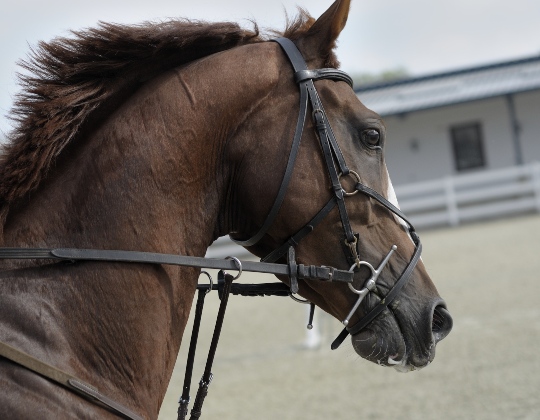
Canadian Equitation Equation Introduction: Langley, Horse Capital of B.C.

*Updated June 4, 2022.*

Equestrianism in the Township of Langley remains a stable staple of community, competition, education, industry, recreation, and sport. Dozens of businesses devoted to the art of horses, equestrianism, the equine: Equitation (horsemanship) writ broad. As a formal independent journalistic research project in person, the introduction into the industry requires on-the-ground experiential depth, extensive interpersonal interactions with every person involved in all facets, and integration with the theory and praxis of working with and knowing horses & their people, which began in late 2021 working from the bottom with zero background in education or careers to buttress entrance into the discipline. The necessary embarrassment of a steep learning curve and arduous manual labour to become acquainted with the sensations and experiences of working around the equine and equestrians. Nothing prepares for it; a world unto itself and, in a manner of speaking, a community unlike most others, though seemingly disparate while networked.

This is a terse introduction to the horse capital of British Columbia: The Township of Langley. A more thorough presentation will be delivered in future articles. In some sense of the term “fundament,” a fundament of Langley is recognition of this as a land of hippophiles in British Columbia. Those thoroughly bred in family/blood lineages warm to the equine. Its businesses, clubs, equestrian centres, equestrian facilities, farms, horse riding schools, ranches, places for instruction, und so weiter, are manifest, plentiful, which makes sense of the moniker: The Horse Capital of British Columbia. Even with a simple search, you can witness the vast number of networked enterprises.

These are the names emerging for Langley alone: Milner Downs Equestrian Center (2005) Ltd, Sacred Equestrians, Los Vientos Equestrian Centre, High Point Equestrian Center, Westcott Equestrian, Greenhawk Equestrian Sport – Langley, Louisa Nicholls Riding Instruction, M & M Connemaras Horse Farm, Cornwall Ridge Farm, Priority 1 Equestrian, Ponte Equestrian Estates, Sunshine Equestrian Centre, Langley 204 Horseback Riding, Greenhawk Harness & Equestrian Supplies, Thunderbird Show Stables, Park Lane Equestrian Centre, Thorbrooke Equestrian, Cartwright Equestrian, Willow Creek Equestrian Centre, Elysium Equine Ltd, Double 4 Equestrian Centre (double 4 equestrian), Footnote Farm, Excelsior Stables & Nicki Muller Training, Sunny Riding Stables, Windsum Enterprises Ltd, Martinoff Equestrian, Langlee Acres, Shelley Lawder Dressage, Equine Studies Canada, Namastables, Sierra Stables, Equidice Stables, Windsor Stables, Thunderbird Show Park, Silver Fox Horse Sales, Epona Stable and Farms Ltd, Sterling Stables, Valley Therapeutic Equestrian Association, Highliner Stables Ltd, Pacific Country Stables, Villa Training, Perneill Training, Dog & Pony Shop, Campbell Downs Equestrian Centre, Papalia Training, Twin Rivers, Hideaway Stables, Hazelmere Equestrian Center, Pacific Riding for Developing Abilities, Stepping Stones Riding & Horsemanship, Triple M Farms, Flightline Farm Arabians, Ponies 4 You, Vintage Riders Equestrian Club, Hit Air Equestrian Canada, OSJS, Glen Valley Stables, The Tack Addict, Denham Stables, Ponder Park Stables, Langley Riders Society, Short Stirrup Stables, October Farm, Highbury Dressage, Jump Start Stables, Gloucester Downs, Laughing Stock Ranch, Skyline Equine, Alliance Training & Stud, The Grene Wode, Bekevar Farms, Willow Lake Farm & Stables, Hobbit Hole Farm, Twin Creeks Ranch, Dreamscape Farm, Adiva Murphy Horsemanship Centre, Rebel Equestrian, EnJ Equine First Aid Training, Freedom Farms livestock, Thunderbird Tack Shop, Unbridling Your Brilliance, Willow Acres, Sycamore Hills Equestrian, Pinto Miremadi Horsemanship, Keepsake Farms, WestMoore Dressage, Dog & Pony Shop, Iron Gait Stables, Hutter Sport Horse Auctions, Thorbrooke Tack, Mia Sheldon Horsemanship, Horse Council BC, Kingdom View Equestrian, High Country Horseshoes, Thunderbird Livestock, BZ Built, Wise Equine Veterinary Services Ltd, Dares Country Feeds, and Stampede Tack & Western Wear, Horse Lover’s Math, probably others.

If not included in the above listing, and wanting inclusion, please let me know (Email: Scott.Douglas.Jacobsen@Gmail.Com), my research is not comprehensive; I’m new to the industry, and know little, even nothing, have mercy on me. The introductory examination to some equestrianism in British Columbia will begin with the Township of Langley while emphasizing those with publicly accessible records via a website, typically. The staggering breadth of one municipality’s horse community extends to other municipalities and across the country – let alone internationally – into a single question, “Where to begin with horses?” Naturally, one at a time, I like a challenge – should be fun.

Canadian equestrianism harbours several household names on the national and international stage: Amy Millar, Eric Lamaze, Erynn Ballard/Erynn L. Ballard, Ian Millar, James Day, James Elder, Jill Henselwood, Laura Balisky (Tidball-Balisky/Tidball), Lisa Carlsen, Mac Cone, Mario Deslauriers, Michel Vaillancourt, Nicole Walker, Thomas (Tom) Gayford, Tiffany Foster, Yann Candele, and many others. Some of these names – e.g., James Day, James Elder, and Thomas Gayford – span back as far as 1968 as a team in show jumping at the Olympics in Mexico City. By the way, all three extant, alive.

While equestrianism can be considered a pursuit for fun, as in a hobby, for most individuals who enter into the discipline, this can slowly, almost inevitably, become a “lifestyle,” which seems like a common phrase in conversation with a number of equestrians, including interviews. It envelops them, as if slowly surrounded by the warm embrace of a horse’s equivalent of a hug. Among other tidbits given by them, to me, when not attempting to force a positive or a negative image of equestrianism, horsemanship, at all levels, remains pluripotent.

Horsemanship seems as if a means by which to show talent relative to one’s class, to integrate one’s flow and feel with a ‘beast of burden’ to perform civilized almost human-like actions, to socialize in a community of others with similar sensibilities and sensitivities, to make a living passing on knowledge to next generations, to create a safe and nurturing environment for girls, women, and the elderly who wish to get on the saddle, et cetera. Even the simple act of tacking up, getting the horse ready, you can watch the gossip, the chit-chatter, and natural activities of a community in love with a lifestyle – fair enough.

All the way to international FEI events and Longines rankings representing the best in class in the world, including several Canadians. Whether small family farms to middle sized ranches to professional equestrian facilities, or carriage tours, or the media sensations about the toings-and-froings of various prominent personalities in community, Canadian equestrianism appears singular (“unto itself”) in many ways. Langley, as one provincial capital, of horses seems like a natural starting place to begin an introduction into equestrianism, so to a community unto itself and, potentially, unlike most others.

Image Credit: Violeta Pencheva on Unsplash.

How to make it huge in the artistic world?

Tattoo artist and fashionpreneur Brando Chiesa gives his opinion. Brando Chiesa has changed the norms of the design and artistic worlds for the better, attaining unbelievable success.

There are so many books, resources, informational guides, etc., that can definitely help people up their game in their respective industries. But, nothing really beats the inspiration and motivation people can draw from real success stories and the experiences they had in the real world. Knowing more about these individuals can help aspiring talented beings direct their efforts in the right direction and gain immense prominence and name in their respective industries, even as youngsters from across the world. Brando Chiesa saw the rise of many greats in different niches of the art world and realized his true purpose to become a modern-day tattoo artist and fashionpreneur with his clothing brand.

Today, he has come forward to share a few tips he believes can help rising talents reach the top in the artistic world. The Italian artist says some people only focus on becoming the “artist” but fail to realize that there are many other jobs as well in the field that can eventually lead them up to become one. They can start with equally important roles in the artistic world, explore more opportunities for growth and then gradually go ahead in becoming an artist themselves.

He adds on further that everything today revolves around digital mediums and social media, and hence, it is advised to become a part of art-related social media handles. This will help individuals to get introduced to a variety of art forms, several opportunities, job offers, and even platforms to showcase their talent and help reach their art out there. Brando Chiesa explains that it is essential to surround oneself with people who share the same interest, which can again happen with the help of social media. This will allow artists to share their ideas, gain insights from others, and together grow as artists.

It is also important to be aware of the trends in the industry, which can give people an opportunity to learn new things in order to stay up on their artistic game. Brando Chiesa (@brandochiesa) lastly says that to become a great artist, be it in any realm, individuals need to consume as much art as possible and keep finding inspiration around them.

Pak Human Rights body ‘concerned’ over Islamabad Bar’s disengagement from Iman Mazari

The Human Rights Commission of Pakistan has expressed concern over the Islamabad Bar Association’s expression of disengagement from Iman Mazari,daughter of the former Human Rights Minister of Pakistan. Expressing concern, the HRCP said in a statement that the Islamabad Bar’s non-alignment after the FIR against Iman Mazari was a matter of concern as there was a false FIR against Iman for making a statement against the army.

RCP condemns FIR against Iman Mazari as FIR against Iman Mazari is aimed at interfering in military politics and raising voice on Iman Mazari for enforced disappearances of students, journalists and human rights defenders. The statement said that Iman Mazari is a human rights lawyer and it is her job to raise voice for human rights. Human Rights of Pakistan demands that the FIR registered against Iman Mazari be withdrawn immediately

POK Kashmiris struggling for school upgradation

An important meeting of the locals was held in Bagh area of ​​Pakistan Occupied Kashmir in which the issue of school building and upgradation was discussed. The people demanded from the Prime Minister Sardar Tanveer Ilyas Chief Secretary Kashmir and MLA Begum Amitaz Naseem that they should consider their two tasks which they had promised during the election campaign. They said, “You promised that I will give high status to this school and its building work will be completed soon”. The promise is yet to be fulfilled. Despite the unfulfilled promises, the staff of the school gave the best results. The other big demand is to give high status to this school. The  institution is ancient and  the foundation of this school was laid in 1928 when Pakistan was not even created . Since then the school has not been upgraded. They said that sit in the garden and make the children study. Hence, “it is important that the office bearers fulfilled their promises” is what they demanded in the meeting.

BLA kills Pakistan-backed Death Squad Gangster

Freedom fighters of Baloch Liberation Army eliminated Ali Akbar Sanari, a leader of death squad that was formed by Pakistani military and intelligence agencies in Khuzdar.

Ali Akbar Sanari was directly involved in an attack on freedom fighters of BLA in Kalat in December 2016. He and members of his death squad accompanied Pakistani military in the attack, which martyred senior BLA member Sulaiman Baloch alias Ali.

Ali Akbar Sanari was also involved in enforced disappearances of several Baloch youth from Khuzdar. His group also abducted several members of business community for ransom from Khuzdar and Kalat.

Due to his grave crimes, Ali Akbar Sanari was on BLA’s hit list and was eliminated near Jeeva Cross Khuzdar yesterday.

BLA is set to punish all individuals or groups, irrespective of their race or religion, if they are active against the Baloch national struggle. BLA once again has warned all such elements to refrain from committing national treason or they will be brought to justice.