Home Blog Page 335

India must transform to meet future international security trends

The World is no longer One Family
Our ancient sages and texts have said “Vasudhaiva Kutambakam” (world is one family). Unfortunately, today and for the foreseeable tomorrow, a multi-polar, fragmented but inter-connected world, where all nations are cooperating, competing, confronting, and if required, conflicting with each other in economic, political, diplomatic and informational sphere to establish / retain / expand their strategic space, realise their national aspirations and find their place amongst the comity of nations; and the nations are hardly behaving like a harmonious family.

Every country’s destiny is dictated by its geography, geo-political and geo-strategic environment which is no longer constant (even geography due to globalization and technology). India the ancient, proud civilization with a glorious history aspires to be a great power in the World Order, and is destined by its geography, size, population, resources and history. India is expected to equal/even surpass the United States (in PPP terms) and become the world’s second largest economy, behind China. We must be absolutely clear that ALL countries are in competition with us including our strategic partners, especially our known collusive adversaries China and Pakistan and immediate neighbours. In future (two decades-2040), while it is envisaged that humans will continue to be central to the decision-making process, its character will be determined by politics, strategy, society and technology, and confrontation/ conflicts fought increasingly by robots or autonomous systems could change the very nature of warfare, as there will be less emphasis on emotions, passion and chance. Alongside this Indian emergence, the international order is undergoing significant change as well, with power increasingly diffused within and among states and a new, multi-polar geostrategic landscape begins to emerge with fresh layers of complexities. 

Why Study Future Security Trends
It primarily provides focus to security policy makers, and Indian armed forces. It has applicability across Indian government and agencies to help their understanding of the future environment in which we all may find ourselves operating by 2040. The nature of ‘futures’ is such that attempting to pinpoint when particular trends or characteristic will emerge is invariably problematic. Some characteristics are likely to be similar to those apparent today, but novel factors (re-alignment of nations, emergence of hi-technology impacting environment, geo-pol-strategic-economic shifts) will emerge and some will become increasingly important in determining the future environment in comparison to today.

Global and Regional Security Zones
International Relations Theory and Regional Security Complex Theory[i] (RSCT) postulate that territorial pre-eminence (military) is more potent and powerful than non-territorial domains in the security calculus. Regional security zones are fairly independent of globalisation and global political trends, due to their strong emotional, geographical and historical links. The capabilities of global powers (US and China) enable them to transcend distance, while lesser powers are satisfied to play within their region. By 2040, two nations US and China will play a truly global game, treating each other as a special class, and projecting their power into far-flung regions. But for the great majority of states, the main game of security is defined by their near neighbours. China will dominate the regional security zones of Asia (East, South-East and South Asia). The probability of being in the midst of a cold war between USA and China with its attendant characteristics similar to the previous cold war is very high. India, while currently caught in the classical power play of global and regional security dynamics as its not yet a great power, should position itself as a ‘balancing power’.

An Overview Of Multi-Domain World (MDW)
Globalisation brought many good practices and developmental growth, but also caused instability and conflict. While threat of full-scale conventional wars has gone down, correspondingly the span of conflict, its complexity, unpredictability, lethality, accuracy, reach and manifesting into many domains have emerged. The physical and nonphysical domains including the cognitive have expanded. Competition is 360 degrees, 24×7, with no front, rear and flanks and there is no place to hide. Commonly held perception of deterrence and conflict has changed irrevocably. Specially after COVID-19, with a flux in the global power structure, nations are in a state of ‘persistent engagement’.

Warfare has already transcended the domains of soldiers, military units, and military affairs, and is increasingly becoming a matter for politicians, scientists, networks and even bankers! Four interrelated trends will define competition and conflict by 2040: adversaries will contest all domains, with the electromagnetic spectrum (EMS) and the information environment gaining pre-eminence; smaller armies can fight on an expanded battlefield that is increasingly lethal and hyperactive; nation-states have more difficulty in imposing their will within a politically, culturally, technologically, and strategically complex environment; and states will compete below armed conflict (Pakistan’s game against India, Iran, North Korea Vs USA).

India is already engaged in a Multi-Domain World (MDW) Confrontation / conflict is a national effort and not fought by armed forces alone. Increasingly our adversaries China and Pakistan, have leveraged multi-domains to expand the battlefield in time (a blurred distinction between peace and war), in domains (space, cyberspace, information, psychological, diplomatic, legal), and in geography (now extended all India) to create strategic, operational and tactical payoffs. In a state of continuous competition, they are trying to exploit the conditions of the operating environment to achieve their objectives without resorting to armed conflict (stay below our red lines) by resorting to hybrid warfare, attempting to fracture our resolve (proxy war, salami slicing and waging ‘Three Wars’ concept). MDW calls for a change of thought process, ‘a transformation and not just modernisation [ii]’.

Simply put, MDW envisions the military and non-military; everything from fighters to destroyers, space shuttle to submarine, cyber to satellites, tanks to attack helicopters, electromagnetic to electronic, media to information influence operations, economists to MNCs, politicians to think tanks, munition factory worker to hacks — working together intrinsically as ONE, to overwhelm the enemy with attacks from all domains. Interdependence, interoperability, and integration are vital to inevitable success on the battlefield no matter its form. Are we, as a nation and the armed forces, ready to fully commit to being such a “full spectrum (military and non-kinetic) capable” armed force and avoid paradigm paralysis? This will also provide India the necessary deterrence, and tomorrow’s India is counting on it. Hopefully, our security eco-system led from the top (PM, CCS, NSA, CDS) will make meaningful headway to meet future challenges from China and Pakistan starting NOW.

Evolving Trends which will Impact Security Environment and India
A future security scan is incomplete without examining, clearly discernible and distinct trends emerging (by 2040) which at first glance appear theoretical and esoteric, but will need careful analysis, planning, management and implementation for India to exploit/manage[iii]. This will enhance our geo-political, economic, diplomatic and military clout, thus ensuring matching capabilities and capacities against our adversaries regionally, along our continental, maritime and space borders and other domains.

  • Diffusion of States: Internally and Externally. Asia and Indo-Pacific will emerge as economic power centres, where the political and military power of China, and to a lesser extent India, will grow, potentially rivalling that of the United States. Other regional players EU, Russia, Iran, Turkey, Japan, Australia, Nigeria, Brazil will remain important political actors, but their influence is likely to diminish and the economic and soft power of the West will reduce. Whether the current institutions, mechanisms and norms of the international system can adapt to accommodate this shifting balance of power is difficult to predict. If it cannot, there will be instability. Dispersed and contested political power will make it harder to forge internationally-binding treaties, and non-compliance and subversion of international laws are likely to increase. The transition of power between states is occurring alongside the diffusion of power within states. A few multinational corporations will become bigger and more powerful, providing vital services that states will depend on, and some will use their power to demand concessions from the state. The sovereignty of the state will diffuse and a more complex, potentially decentralised, hybrid system of governance may begin to emerge.
  • Ever increasing Power and Role of Information. Processing power for the volume and variety of data, and network centric operations will continue to grow exponentially, driving the development of artificial intelligence (AI), quantum computing and the ability to solve problems of increasing complexity and difficulty, leading to improvements across all aspects of human endeavour. Digitization, cyberspace, information will become pivotal to humanity, and ironically conflict. Information Influence Operations (IIO) to include social media will be pervasive creating ‘echo chamber’ effect, polarise populations, eroding trust in institutions, creating uncertainty, and fueling grievances. Difficult to regulate and protect, cyberspace and social media will continue to be exploited by nations, corporates, global terrorist and criminal groups and other malicious actors. Both China and Pakistan are already waging the ‘Three Wars’ against India.
  • Mushrooming Niche and Disruptive Technologies. The change to a significantly more automated world (variously referred to as the 4th Industrial Revolution) involving a range of new technologies that are fusing the physical, digital and biological worlds and impacting all disciplines, economies and industries, is likely to happen faster than previous transitions. Easy accessibility, quantity and quality of kinetic and non-kinetic systems is already changing the global economic and security landscape. This will be beneficial but equally disruptive. China is at the forefront in this field and will exploit her asymmetric superiority in all domains to the detriment of India.
  • Climate Change and Environmental Stress, and Impact of Demographics. There will be a spike in natural and man-made disasters with an enormous impact on the economic and security environment. China and South Asia are particularly susceptible to these developments. Disaster alleviation and community action plans need urgent implementation. Whichever country manages the environment better will enjoy a more stable and steady developmental growth. Needless to state that mismanagement could lead to confrontation and conflict (floods, pandemics, draught, migration, employment). There is sudden realization of the adverse impact of poor demographics and declining population; it can be a game changer and assist achievement of national aspirations or can even be the cause of a nation’s decline (Japan, China, Russia).
  • Rising Human Empowerment. Human security, prosperity, health, awareness and empowerment (limitless information) will grow. May come at the price of more fragmented societies and increasing populism. Inequality is growing, and so is division within many countries between those with liberal and those with traditional views, and nationalism, religious intolerance and antipathy towards immigrants are on the rise. Many governments are becoming more authoritarian, and even with some checks and balances, the rise of autocrats/dictators (Xi Jinping, Trump, Duterte, Kim Jong-un) who will be the final arbiters of a nation is growing. Knowing the mind and personality of leaders is assuming critical dimensions.
  • As a theoretical concept, deterrence rests on the assumption that where risk is involved, humans act rationally, in the sense that they base their decisions on a cost-benefit calculus and act only when the expected gains outweigh the anticipated costs. Research in behavioural economics has cast great doubt on this assumption. Humans, it turns out, cannot be counted to always maximise their prospective gains. Even when they do, they are remarkably inept at understanding how the other side; the adversary in a conflict, calculates his own costs, benefits and risks. In the triangular relations of China-Pakistan-India, we are looking at two illiberal nuclear weapon countries ruled by CCP/military, are collusive and believe in hybrid warfare. India must study its adversaries and their leaders thoroughly.

Manifestation of Trends impacting India
Trends highlighted above can manifest in unexpected ways and complexities due to cross linkages. To illustrate; may result in significant geopolitical shifts in alliances; major conflict (US-China; India-China; India-Pakistan); natural or man-made disasters; financial crisis; collapse of key multilateral organisations; proliferation of a disruptive technology; and 24×7 competition between nations which is already happening. Specific action plans need to be designed and activated to manage the trends. If India does not measure up/cope/exploit niche and disruptive technologies (AI, robotics, nano), public, societal and political unrest, adversary’s IIO (influence information operations), disasters and climate change, and be ahead of the loop for scarce resources like water, rare earths; act pro-actively to dominate/capture fair share of global commons (cyberspace, the oceans, polar regions and space); it will impact our multi-domain capabilities and capacities adversely. In turn this will slow down our GDP growth, impact our freedom to operate in expanding strategic space, with grave consequences to our aspirations for being a regional player, and allow China along with collusive Pakistan and other countries in immediate neighbourhood (Bangladesh, Nepal, Myanmar) to exploit our vulnerabilities. Concurrently, India by planning and execution, can emerge as a regional power.

Deterrence Capabilities and Reputation
Deterrence requires a national strategy that integrates diplomatic, informational, military, and economic powers. India must develop strategies, plans and operations that are tailored to the perceptions, values, and interests of specific adversaries (China, Pakistan, immediate neighbours). A crucial aspect is that successful deterrence is knowledge-dependent and requires the ability to establish secure communication access to adversaries in order to generate the desired decision outcomes. Our military capabilities and potential must be visible and known to all as it’s a pivotal ingredient of deterrence.

Effective deterrence combines military and non-military means. In some cases, military capabilities may not be an effective tool to deter a particular adversary’s action, making other instruments of power the primary deterrent. We certainly need to constantly review our nuclear policy and capabilities in line with global trends specially China and Pakistan. Additionally, coalition support should be integrated to enhance deterrence credibility, but deterrence also must be viable as a unilateral strategy. Military options/actions will always remain the final arbiter to achieve national objectives both proactive and reactive.

However, armed forces are incapable of deterring threats from many non-kinetic domains like economic sanctions, cyber and information warfare. Possessing adequate CNP (comprehensive national power) alone is not sufficient but one must create a reputation (Israel, China, USA) for using deterrent tools when national interests/ sovereignty is at stake. With China, Pakistan and some of our immediate neighbours constantly impinging on our national interests/sovereignty, India must start enhancing her ‘Multi-Domain Deterrent Reputation’ positively by 2040.

Is the Answer a Grand Strategy for India?   
A grand strategy is a road map for how to match means with ends. It works best on predictable terrain, in a world where policymakers enjoy a clear understanding of the distribution of power, a solid domestic consensus about national goals and identity, and stable political and national security institutions. Economic and military power no longer yield influence as reliably as they once did. The result is an emerging world of multi-polarity and disorder, where grand strategy may not work well. For India, the answer possibly could be a mix of centralization and decentralization and moving in increments since changes will be more sudden, unpredictable with global ramifications. We must follow this strategy specially against China and Pakistan, when moving forward, as predictions of global geo-politics is fraught with uncertainties.

Conclusion
Anticipating and exploiting emerging trends have the potential to position India as the world’s most influential democracy in the second half of the 21st century, giving it the ability to shape Asia, Indo-Pacific region and the dynamically evolving global order. From a military point of view, for India to take its destined place as a regional power in the mid-term and a global power in the long term, we need to be a continental, maritime, air, space, cyber, military, information power– a multi domain power. We need to play our cards very carefully and deliberately, exploit emerging trends, continue relentlessly building all verticals of our CNP (comprehensive national power), and create conditions (not just hope) for breaking out from South Asia to balance the security environment regionally, in Asia and beyond.


[i] Relations Regions and Powers; The Structure of International Security; Cambridge Studies International, Barry Buzan and Ole Wæver, CAMBRIDGE

[ii] ‘Multi Domain Warfare in the Indian Context’ by Lt Gen PR Kumar, 36th USI National Strategic Paper, 2018

[iii] Inputs have been taken based on personal experience, seminars, interaction with core experts, and extensive study, reading and research not only from mainstream media, but from Think Tanks, and online SOPs/texts/manuals from global armed forces institutions. It also finds focus in the paper ‘Global Strategic Trends: The Future Starts Today’, MoD, UK

Army ethics permit minimum use of force in counter-terrorist operations

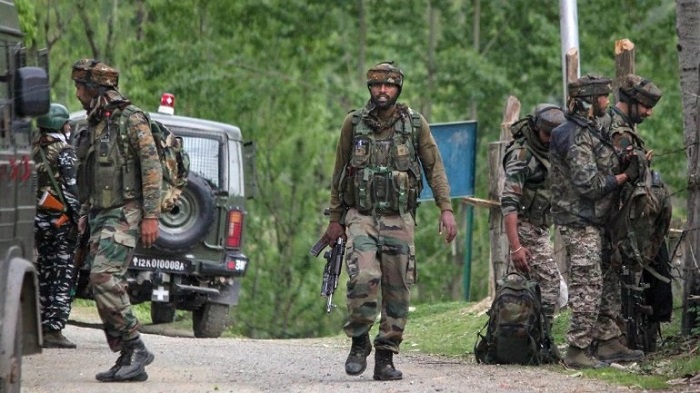
It is being alleged that three men from Rajouri, who had gone to work as labourers in Kashmir, have been killed in the course of a counter-terrorist operation in Shopian. The gunfight took place on July 18 and the men, declared unidentified at that time, have now been identified on the basis of photographs shown to the families. Earlier, the families had registered a missing report for their kin; the DNA reports are awaited.

The Indian Army took cognisance of certain reports concerning the incident and immediately instituted an inquiry under the Army Act. Reports suggest that the process was initiated by the Corps Commander of the Srinagar-based Chinar Corps, Lt. Gen. BS Raju.

This quick response, by the army, to a whiff of a misdemeanor clearly indicates the resolve of the organisation to ensure conduct of sensitive counter-terrorist operations from the highest ethical platform as laid down in the Armed Forces Special Powers Act (AFSPA) and the “Do’s and Don’ts”(also called Ten Commandments) given by the Chief of Army Staff and approved by the Supreme Court. It is clear that the Army is not ready to tolerate violation of the established ethical platform under any circumstances.

The Ten Commandments are, no rape; no molestation; no torture; willingly carry out civic actions with innovations; respect for human rights; no military disgrace (loss of arms, surrender, loss of post or imbibing of an un-army like culture); no meddling in the civil administration (i.e. land disputes or quarrels) and others in the professional domain.

It seems that, in this case, contravention was in respect to human rights violation. As the legal process commenced the Army also put in an advertisement in local newspapers requesting for “credible information” on the case.  

What stands out here is the quick and humane response of the army authorities to meet ends of justice. Further, the Indian Army has sent out a message that despite functioning under the protection of AFSPA it does not countenance any act of indiscipline by its soldiers and will not hesitate from investigating and appropriately dealing with any such matter that comes to its notice.

There is a human rights cell in all army headquarters from the Division level upwards. This cell takes cognizance of all cases of human rights violations that are reported by the national/state human rights commissions or any other body and immediate inquiries are instituted. Cases that come to light within the service itself are also subject to an inquiry.

Such cases that deem legal action, are dealt in accordance with the stringent provisions of the Army Act, 1950. A sizeable number of soldiers have been meted out exemplary punishment in the form of dismissal from service and imprisonment in earlier instances in the state of Jammu and Kashmir itself. In November 2014, the Indian Army convened a General Court Martial (GCM) to try five Indian soldiers, including two officers, on charges of conducting a fake encounter in the Machil sector of the Kashmir Valley in the year 2010. The GCM found the soldiers guilty and awarded them life imprisonment.

So far as the incident under reference is concerned, security forces have confirmed that the operation was conducted jointly by the Army, JK Police and the paramilitary forces on the basis of an intelligence input about presence of terrorists in Village Amshipora of district Shopian. It has also been confirmed by the security forces that the encounter started when holed-in terrorists opened fire on the security forces. When it ended, three bodies were found there which are now being said to be those of the labourers from Rajouri. Some arms, ammunition and other war like stores were also recovered from the encounter site. A point of significance is that though the operation took place on July 18, and the families had lost contact with the men on July 17, itself. It is well possible that the terrorists had taken the labourers into their custody a day earlier and then used them as human shields.

The involvement of this trio with terrorism or related activities is also under investigation by the police. Their presence, since their arrival, in places considered to be terrorist dens in Shopian is being probed. The reason behind their jumping out of a window when an operation was launched at their rented accommodation is also being looked into.

So far as the Army is concerned, it has accepted that “Prima Facie” evidence suggests that the troops who conducted the operation used power in excess of what is permissible under the AFSPA, against the spirit of the Ten Commandments by the COAS. “Committed to ethical conduct during anti-militancy operations, the Army initiated an inquiry after social media reports indicated the three men were from Rajouri district in Jammu and had gone missing at Amshipura,” said Col Rajesh Kalia, the defence spokesperson in Srinagar while adding that, “the probe will be completed in four weeks.”

Justice meted out by the army through its internal mechanism is invariably quick and exemplary; had this case been tried in a civil court it would have dragged on for years on end. All through the period of turmoil in Jammu and Kashmir, the Army has been maintaining high standards of transparency and punishing those among its ranks who are indicted for violating rules. Yet, the unfortunate reality is that the conduct of counter-terrorist operations against a vicious and well trained enemy of foreign origin has its own set of challenges, including collateral damage. This said, all efforts are being made to keep collateral damage at the minimum even at the cost of buying casualties within the army. Alongside, it is the need to protect the soldiers in cases of professional expediency and also mete out exemplary punishment in instances of dereliction of duty and breaking of established protocols.

‘Death Squads’ backed by state have spilt Baloch blood: Mama Qadeer

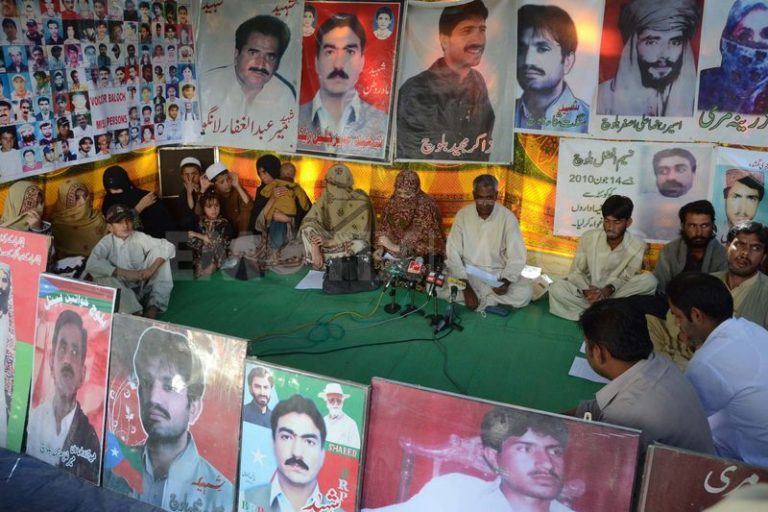
The state-backed Death Squads have spilt the blood of the Baloch across several areas of Balochistan during August this year, said Mama Qadeer Baloch, vice-chairman of Voice for Baloch Missing Persons (VBMP) on Monday. “Death Squads have been formed and licensed for carrying out carnage in Balochistan. Dozens of Baloch have been shot down,” said Mama Qadeer.

The VBMP protest completed its 4,075 th day on Sunday. Israr Baloch, the general secretary of Baloch Student Organization (BSO) and several others visited the camp and expressed solidarity with the families of Baloch “Missing Persons”.

Talking to the delegation, Mama Qadeer said that the Baloch have been, and still are, a historically persecuted nation. Due to remoteness and the scant connectivity it’s not possible to deliver assistance in the wake of ‘bloody military operations’ and this results in ‘cruelty and barbarity’ across Balochistan.

Mama Qadeer explained said that devastating military operations have been carried out in Gichki and Awaran. “Pakistani forces and the Death Squads backed by them have spilt the blood of Baloch sons and dishonoured women. The said operations have expanded to Parom and Panjgur. The women and elderly are harassed and beaten regularly. However, the Baloch women are playing an important role in the Baloch struggle. No obstacle can deter the peaceful Baloch struggle,” he added.

Chinese ‘Dragon’ & its Mind Games

0

As it naturally happens in our great nation, we love to live from crisis to crisis. Aamir Khan in the movie Ghazni made the term ‘short term memory loss’ as part of our household lexicon but this affliction is embedded in our DNA as a nation. The capriciousness of this malice has been capitalized on by TRP hungry media houses, I am reminded of a famous song by Roxette; ‘C’mon Join the Joy Ride’ when we listen to the debates and rants on prime time TV.

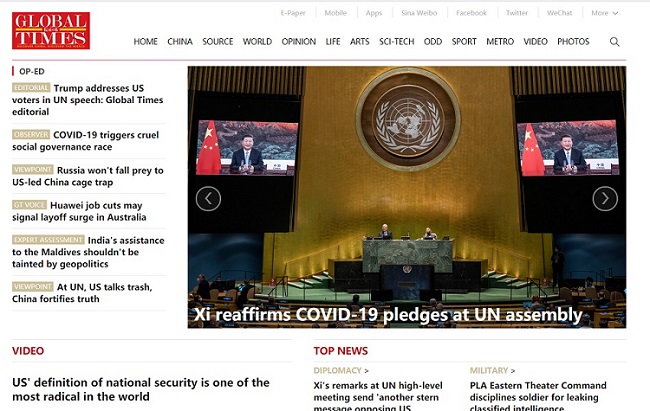
And then of course the ‘New Media’ — the citizen journalists who with a smartphone and a social media account can influence the opinion of the nation; be it on Facebook or Twitter. The ‘Twitterati’ are the microcosm of our society, ranting, raving, debating and of course the sound of sanity in the cacophony emerges for nanosecond before it’s drowned again in the morass of chaos. Having described our state of mind, or the lack of it, for the adversary this is a fertile ground for sowing seeds of self-doubt and influencing the mind. Since the crisis in Eastern Ladakh commenced in May 2020, Global Times has become a primary source of Chinese influence operations in India, as I script this piece, it has 1.9 Million followers and is the oft quoted reference point for Chinese views and opinions. Knowing very well that it’s the mouth piece of the Chinese Government and it says so ‘China state-affiliated media’ and its status reads ‘China’s National English Language Newspaper under the People’s Daily’. We have allowed it to cloud our judgment as a nation.

Way back in 2016, Russian defense expert Vasily Kashin had commented on PLA Strategic Support Force (SSF); “Apart from the former Third and Fourth Departments of the PLA General Staff Headquarters, which were responsible for the technical reconnaissance, cyber intelligence, electronic warfare and offensive cyber operations, the new forces will be responsible for the military intelligence at large and for the psychological operations in particular. It will also incorporate the Foreign Affairs Bureau of the former PLA General Political Department, responsible for political warfare and propaganda operations targeted at the army and population of an enemy.”[1] 

If we had not developed the symptoms of dementia and taken corrective measures, we would have remembered that SSF is the driving force behind whatever Xinhua or Global Times spew out as news. A seminal work done by French Military called Information Manipulation; A Challenge for Our Democracies “China controls more than 3,000 public television channels in the world, over 150 pay TV channels, around 2,500 radio stations, about 2,000 newspapers and 10,000 magazines and more than three million internet sites”[2] and Global Times is surely one amongst them.

China has had a long history of the use of propaganda and today, this know-how is at the service of Chinese interests on a global scale. Beijing has developed tools of influence and interference that are specifically geared towards offensive intentions. Effort on the ideological front has two objectives: First, to shape the internal political space and maintain the Party’s legitimacy (through censorship and disinformation); Second, to influence international opinion and wage the “information war” in favor of Chinese interests.

Information warfare is an integral dimension of PLA’s strategy of influence and intimidation. Chinese strategists brought to fore the manifestation of the “three wars” (sanzhan) in the field of information even during Doklam crisis[3]. Combining the war for public opinion, psychological warfare and legal warfare, this approach is intended — in peacetime as in wartime — to control the dominant discourse and influence beliefs and perceptions so as to serve the interests of the PLA, while also reducing the ability of adversaries to respond.[4] 

This strategy, which explicitly targets public opinion in democracies, exploits the vulnerabilities of open societies like ours and gullible minds or may be senile minds of some of our strategists and experts who in turn become mouth pieces of PLA which then enjoys systematic and multi-vector information manipulation and control capabilities. Chinese content then is broadcast in Hinglish conveying positions and principles that are contrary to Indian interests; a rather convoluted form of HMV (His Master’s Voice). This dimension goes well beyond the framework of conventional conflict and forms part of the deeply volatile and ambiguous hybrid conflict where in the definition of battle space and combatants is a farrago.

On the contrary, internet control and surveillance was initially introduced under the guise of the Golden Shield Project[5] (金盾工程), a massive series of legal and technological initiatives meant to improve intelligence assessments and surveillance capabilities of the national police force. Among the techniques developed at the time was a system for blocking and censoring content known as the “Great Firewall”[6] designed to keep Chinese cyberspace free of pollutants of all sorts, by the simple means of requiring ISPs [internet service providers] to block access to ‘problem’ sites abroad. The Chinese have mastered the art of quarantine and one of the recent events was banning of WION website in China[7].

While they can go ahead and influence the world the QPQ in information domain has been severely constrained. Chinese state or can be read as PLA too, also employs a series of active disinformation and distortion measures to influence social media users. One of the most widely studied has been the so-called “50 Cent Party.” This group of people hired by the Chinese government to surreptitiously post large numbers of fabricated social media comments, as if they were the genuine opinions of ordinary Chinese people, it was initially meant for the domestic audience but its success has prompted the PLA to engage them internationally too. The name is derivative of a rumor that these fake commentators were paid 50 Chinese cents per comment.

The Chinese government has surely sought to use state and PLA resources to influence how Indians view China in this standoff. What separates the influence operations of today from those of 1962 are two factors; First, the ubiquity and impact of social media, and Second, the expanded intent and scope. While he continues to adopt old tactics of playing ‘Bhangra Music’ at the Friction Points[8], the proliferation of social media platforms, the increasingly broad range of services offered, and the ability to engage with (and not just broadcast to) the intended gullible Indian audience offers him deeper strategic reach. Over the course of the past decade, social media platforms have evolved to play an ever-expanding role in the lives of users. In India Indians spend more than 280 minutes a day on social media[9], due to the COVID pandemic lockdown which is an increase of 87% of what was the normal usage prior to the pandemic. Indians have begun to trust the reliability of social media more than traditional news platforms and credit must go to our firebrand anchors who want to know everything even if the nation doesn’t want to (pun intended) and be the judge, jury and executioner on every aspect of our lives, reminds me of old Amitabh Bachchan movies like Shahenshah and further, social media companies increasingly offer users a wider array of services, pulling more of the average user’s time and attention to their platforms.

The last five months has demonstrated that propaganda, the foundation for PLA run influence operations, can still be highly effective, even if it is perceived as overt. This is for the following five reasons:-

(a) We as people are poor judges of true versus false information, and they do not necessarily remember that particular information was false (short term memory loss again).

(b) Information overload leads people to take shortcuts in determining the trustworthiness of messages.

(c) Familiar themes or messages can be appealing, even if they are false and especially if they are anti-establishment or aimed at bashing and grinding an organization to death and some more.

(d) Statements are more likely to be accepted if backed by evidence, even if that evidence is false.

(e) Peripheral cues, such as an appearance of objectivity, can increase the credibility of propaganda.

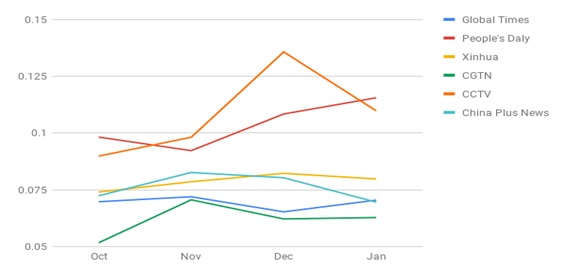
China seeks to convince the world as a whole and India in particular that its development and rise is unfailingly positive, beneficial, cooperative and constructive for the global community. While sentiment analysis can be inexact and possesses a mixed track record, it is most useful on large data sets like this one. Vader sentiment analysis[10] technique and code from their Github repository indicate positive sentiment on the scale as greater than 0.05 and the various Chinese media houses are all above the datum of 0.05.

Positive sentiment for Chinese English Media

PLA has a set of strategic goals, and to achieve it, Chinese state-run social media influence operations are a key Line of Effort (LoE). China’s goal to exert greater influence on the Indian mind during the current imbroglio by portraying the Chinese as indestructible on one side and a benevolent and constructive vector for the region on the other has proven successful thanks to our short term memory loss. China has attempted to influence the Indian population through messages, propaganda, and media influencers some even home grown and military trained too. The travails of a democratic society have been exploited to the hilt and China has inserted an intentionally distorted and biased narrative “for hostile purposes.” In order to advance its aims on a competitive playing field that is hardly level, China propagated a distorted and convoluted view of our government and the armed forces of India. Chinese information manipulation on social media can be countered only by identifying the goals and techniques of these influence operations and then by countering their deleterious agents and effects they generate.


[1] https://sputniknews.com/asia/201601191033349605-china-strategic-support-forces/

[2] J.-B. Jeangène Vilmer, A. Escorcia, M. Guillaume, J. Herrera, Information Manipulation: A Challenge for Our Democracies, report by the Policy Planning Staff (CAPS) of the Ministry for Europe and Foreign Affairs and the Institute for Strategic Research (IRSEM) of the Ministry for the Armed Forces, Paris, August 2018, pg 59.

[3] Indrani Bagchi, Doklam Standoff: China playing out its ‘Three War fares’ strategy against India, https://timesofindia.indiatimes.com/india/china-playing-out-its-three-warfares-strategy-against-india/articleshow/60036197.cms

[4] Elsa B. Kania, “The PLA’s Latest Strategic Thinking on the Three Warfares,” China Brief, XVI:13, August 2016, p. 10–14.

[5] Chandel, Sonali & Jingji, Zang & Yunnan, Yu & Jingyao, Sun & Zhipeng, Zhang. (2019). The Golden Shield Project of China: A Decade Later — An in-Depth Study of the Great Firewall. 111–119. 10.1109/CyberC.2019.00027.

[6]https://cs.stanford.edu/people/eroberts/cs181/projects/20101/FreeExpressionVsSocialCohesion/china_references.html

[7] https://www.dnaindia.com/world/report-as-china-blocks-access-to-wion-support-pours-in-from-readers-across-the-world-2830759

[8] https://timesofindia.indiatimes.com/india/new-pla-tactics-punjabi-songs-warning-to-indian-troops-in-hindi/articleshow/78158229.cms

[9]http://timesofindia.indiatimes.com/articleshow/74879674.cms?utm_source=contentofinterest&utm_medium=text&utm_campaign=cppst

[10] Hutto, C.J. & Gilbert, E.E, VADER: A Parsimonious Rule-based Model for Sentiment Analysis of Social Media Text. Eighth International Conference on Weblogs and Social Media (ICWSM-14). Ann Arbor, MI, June 2014.

Isn’t the Chinese Dragon getting oversized? Yes, the world feels so

Expansionism by force and by treachery is China’s well-known forte. If the originator of the Hindi-Chini Bhai Bhai naiveté became its hopeless victim, bring not the onus to the doorsteps of China. The great lessons that India learnt from the 1962 debacle are primarily twofold. One is the bitter truth that “power flows from the barrel of the gun”, and the second is that “the internal enemy is far more dangerous than the external one” more so when the latter is patently in cahoots with the enemy. Modi’s predecessor exuded the threefold rhetoric of Insight, Jumhuriyet and Kashmiri but left the borders open and penetrable, especially the passes. His was the continuation of Congress’ policy of leveraging its minority community vote bank.

True, during the last three decades China focused on trade and export and was able to strengthen her economy to play godfather to the Third World Countries. With financial affluence, China made solid improvement in her defence preparedness on sea, land and the air. With a strong economy and influence in the world community, China began dreaming of her ancient habit of land hunger or expansionism. Today she is having strained relations with at least 18 neighbouring countries.

If China still toys with the idea of India of 1962, she does it based on the feedback from her Indian moles in politics, administration and media. The Galwan Valley butchery, the Pangong Tso up-reach and Eastern Ladakh border build-up and many months long Sino-Indian military eyeball-to-eyeball stance have opened the eyes of Beijing on India of 2020. From the frontline in Ladakh-China border, Prime Minister Modi thundered that the days of expansionism were over. China was left wondering whether it was the same India whose Prime Minister had shed tears in a public gathering organized in Delhi to condemn the Chinese incursion of 1962. PM Modi knows that China has, in all probability, moved nuclear missile launching pads close to the border. Modi knows that China is blackmailing to convey a message to Islamabad. In a discussion on Pak TV, I happened to watch recently, one zealot boasting that if there was war China would be in New Delhi in 8 hours. The anchor quipped, “Yes it may be that but remember that in the case of war India will be in your GHQ in just 8 minutes”.

Beijing has begun to feel the heat of Indian democratic dispensation because after Xi was declared life-long President in China, his opponents in the party and civil society began expressing their resentment. The resentment is snowballing. The world community has singled out China for bringing the scourge of COVID-19 to the rest of the world which has consumed lakhs of people in hundreds of countries world over and the relent is still nowhere in sight. China stands castigated.

China has compulsions to destabilize normalcy in the Ladakh border. India will become a member of the Security Council’s non-veto group from January 1, 2021. China has got the wind that India is likely to propose exclusion of China from the permanent membership of the Security Council on COVID count and her aggressive and intimidating stance against her small neighbours in the sea and the land. Other permanent members are reported to have informally given a nod to such a proposal.

China cannot go on a full-fledged war with India for various strategic and tactical reasons. She will, therefore, continue with the policy of sword rattling which India understands and responds adequately. China tried the trick of engaging India in prolonged dialogue on various levels of military and civilian to divert her attention from ground action and tried several times to capture some heights. But alert Indian forces scuttled China’s plans and made her eat the humble pie. Indian forces are not only at advantageous heights in Ladakh frontline but are fully prepared to stay put during the cold winter when the temperature falls to -50 degrees centigrade to deny the Chinese any chance of doing an act of perfidy. 

China knows that any big step toward confrontation In Ladakh means galvanizing the Allied naval force in the Indian Ocean. The US, Australia, Japan, Vietnam and France have already assured India of their support in meeting the threat of Chinese expansionism. Many US Congressmen and officials are all praise for India for stoutly confronting China in Ladakh. Lisa Curtis, the deputy assistant to President Donald Trump, said in a virtual panel discussion organized by the think tank Carnegie Endowment for International Peace that the US provided “strong and unambiguous support” to India during its current border crisis with China, which is engaged in increasingly aggressive behaviour throughout the Indo-Pacific even during the Coronavirus pandemic, “Throughout the crisis, the US has provided strong and unambiguous support for India, and our cooperation has certainly grown closer. We are encouraged by India’s strong, yet responsible approach to the Chinese aggression,” said Curtis, who is the Senior Director for South and Central Asia on the National Security Council (NSC) at the White House.

By “India’s responsible approach to the Chinese aggression,” the senior US diplomat referred to the taxing effort that India made in engaging the Chinese on military and on official and foreign affairs level to de-escalate tensions, withdraw forces to previous positions and ensure that nothing would be done to upset the peace. It has to be reminded that despite an agreement arrived at Galwan talks, the Chinese tried to capture some heights at night but had to be beaten back.

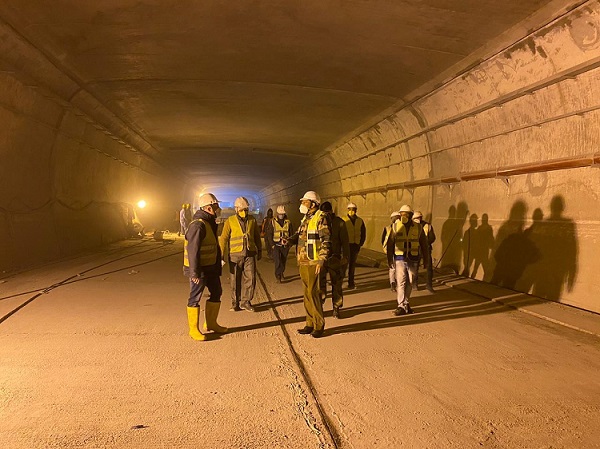
From the hints one gets from the statements of the American senior diplomat, it is clear that the US considers that Chinese aggressive postures in Ladakh are linked to the unpredictable situation in the Indo-Pacific region. Whatever happens in Ladakh will have a reflective impact in the Indo-Pacific situation where American naval carriers are already positioned along with Indian submarines. It has to be noted that China has made a strong build-up along the border in Ladakh, and consequently India had to speed up the construction of Manali-Leh Atal Tunnel, a masterwork of superb engineering which will reduce the journey of 5-6 hours to a few a minutes. It is proving gall to China because not only will it ensure round the year supply of arms, ammunition and provisions to our forces in Ladakh but will also enable keeping surveillance on the movement of Chinese troops along their border.

Atal Tunnel connects Manali with Leh. This tunnel has drastically reduced the travel time to Ladakh. (Photo: PIB)

The developments since June last should be the eye-opener for Chinese that the days of expansionism are over. The days are gone when they would march at leisure into our territory in Ladakh and write Chinese slogans on stones and buildings. Moreover, the days are gone when China used to conduct clandestine smuggling of Chinese goods in a large measure from Ladakh. India has allocated considerably increased budget for the defence purposes and all the bridges and roads connecting Ladakh with the rest of the country are put in place. Five years from today Ladakh will be a different picture of prosperity and peace and the Chinese will not dare to cast a glance on our border. This is the achievement of the Modi government and the achievement of the people of India who are moving along the path of democracy.

The Pakistan Angle

There is another interesting aspect to Kashmir narrative which Pakistan is trying to link up with India-China tussle. At a time when border issues are the most pressing issues India is facing on both its fronts, with Pakistan as well as China, the United Nations on Wednesday called for a “positive” resolution to the matter” The UN Secretary-General Antonio Gutierrez urged India and Pakistan to move in a positive direction to resolve differences concerning the border issue along the Line of Control, reported a UN brief.

It was a clear indication from the UN that the two countries sitting on the eastern and the western borders of the Indian part of Kashmir have adopted threatening posture against India which must be put an end to. By implication, the Secretary-General means that not only Pakistan but China also should settle a border dispute with India.

The second and more important point which he has made in reply to a question by a Pakistani journalist, the Secretary-General said. “The Shimla Agreement between former Prime Minister Indira Gandhi and then Pakistan president Zulfikar Ali Bhutto stated that disputes between the two countries should be settled bilaterally and without any third party involvement.”

As per Resolution 47 adopted on April 21, 1948 the Pakistani government must “secure the withdrawal from the State of Jammu and Kashmir of tribesmen and Pakistani nationals not normally resident therein who have entered the State for fighting, and to prevent any intrusion into the State of such elements and any furnishing of material aid to those fighting in the State”.

Secretary General’s statement nullifies rather belies the claims of Pakistan and also the resolutions of the OIC that India is declining to implement the UN Security Council’s Resolutions on Kashmir. India’s point is that since Pakistan has not implemented the very first clause of the resolution for seven decades and has even deployed more fighting forces in the illegally occupied part of Kashmir, the Resolution of April 21, 1948 has lost its validity as well as sanctity, and is no more tenable. That is the reason why India lately demanded that the Kashmir issue should be deleted from the agenda of the Security Council.  

Tanveer Ahmed in critical condition at Mirpur Central Jail, ISI plotting his murder

Tanveer Ahmed, a well-known senior journalist and researcher from Pakistan-occupied Kashmir (POK), was arrested by the Pakistani forces along with another journalist Safeer Kashmiri on August 21 from Maqbool Butt Square in Dadyal, POK. After arrest, Tanveer Ahmed has been shifted to the Mirpur Central Jail and has been kept in cell reserved for prisoners before being sent to the gallows.

Tanveer Ahmed has been actively protesting for the independence and sovereignty of Pakistan-occupied Kashmir (POK) from Pakistani occupation for the last several years and was arrested for pulling down Pakistani flag from Dadyal in POK.

“On Tuesday, I went to meet Tanveer Ahmed sahib at Mirpur Central Jail where I was surprised to see his condition. Tanveer Ahmed was kept in the police station from August 21 to September 4 and transferred to jail on September 4. In eleven days, his condition has become as if he has been in the prison for eleven years. The reason is that Tanveer sahib has been kept in a death cell, where those sentenced to death are kept after the final decision for their execution has been made. This cell contains numerous insects and their bites have left marks on Tanveer sahib’s hands and other parts of his body. This is the state of our freedom in POK. I am convinced that there is a plan to kill my husband. Therefore, I, my youngest daughter and son appeal to human rights organizations and patriotic compatriots around the world to please do something and save Tanveer Ahmed sahib’s life. Please also send as many curses as you can to this so-called base camp and its leadership,” said Frazim Ahmed, wife of Tanveer Ahmed.

Frazim Ahmed said that the only crime of Tanveer Ahmed sahib was that he pulled down the Pakistani flag from so called “Azad Kashmir” and gave speeches for the rights of Kashmiris. “What else did he do?” asked Frazim Ahmed.

It needs to be noted that Tanveer Ahmed was arrested by the local administration in Pakistan-occupied Kashmir when he lowered the Pakistan’s flag at Maqbool Butt Square, Dadyal POK on August 21, 2020.

However, before pulling down the Pakistani flag Tanveer Ahmed went on a 52-hour hunger strike demanding that the administration take down the Pakistani flag from Maqbool Bhatt Square, Dadyal. The local administration admitted that it was not right to fly a foreign (Pakistani) flag in Dadyal POK. The local administration said that the administration would take down the Pakistani flag in two days. Even after that the administration did not take down the Pakistani flag, after which on August 21, Tanveer Ahmed himself took down the non-state flag. Soon after Tanveer Ahmed was arrested and severely tortured.

Tanveer Ahmed soon after his arrest on August 21, 2020. His health has deteriorated since then. Tanveer Ahmed was arrested by Pakistan after he pulled down Pakistani flag at Dadyal, POK (Pakistan-occupied Kashmir) on August 21. (Photo: News Intervention)

Tanveer Ahmed’s bail was rejected on September 12 by the High Court of Pakistan-occupied Kashmir (POK). An official from the local administration of POK told News Intervention that the cell in which Tanveer Ahmed has been lodged is reserved for those prisoners who have been sentenced to death and the condition of this cell is beyond the imagination of human thought. Speaking strictly on condition of anonymity the local official said that there was a plan to kill Tanveer Ahmed in jail. “The Pakistani intelligence agency ISI had a hand in the process, even earlier several unidentified men who had been jailed, were killed inside the jail compound,” the local administration officer told News Intervention.

Kashmir’s youth are deeply saddened by the Pakistani occupation and a wave of independence is gaining momentum across Pakistan-occupied Kashmir. Several geostrategic experts believe that if something happens to Tanveer Ahmed, then this could prove dangerous for the Pakistani occupation in Kashmir, because now the Kashmiri youth is refusing to take diktats from Rawalpindi and Islamabad.

Click on the YouTube link to watch the news analysis

A Kashmiri student from Pakistan-occupied Kashmir (POK) told News Intervention that Kashmiri have suffered enough and it’s high time Kashmiris assert themselves. “Pakistan incites us Kashmiris against India and occupies us in the name of Islam. Now we have understood the tricks of the state. Yes, now it is necessary to show our strength. Pakistanis forces are armed and do not respect any international laws, so now is the time for Kashmiri youth to respond with bullets,” the Kashmiri student told News Intervention, requesting anonymity.

Another student leader from POK told News Intervention that if something happened to Tanveer Ahmed, then the blood of Kashmiris will drench entire Pakistan.

Armed struggle is already on in Balochistan to counter the Bangladesh-style barbarism of Pakistan Army, and now the idea of an armed struggle against barbarism and human rights violations by Pakistan Army is gaining momentum in Khyber-Pakhtunkhwa and Pakistan-occupied Kashmir (POK). In fact, if Bangladesh-style barbarism of Pakistani Army continues unabated, then just as Balochistan has turned into a pile of dynamite for Pakistan, so too will Khyber-Pakhtunkhwa and Pakistan-occupied Kashmir (POK).

UK MP Jonathan Gullis condemns Hayat Baloch’s murder in Balochistan

UK government has strongly condemned instances of extrajudicial killings or enforced disappearances in Balochistan. British MPs have vowed to speak out about the human rights abuses, including the brutal murder of Hayat Baloch on August 13 in Balochistan.

Dr Naseem Baloch, organizer of the Baloch National Movement (BNM) Diaspora Committee, explained that Jonathan Gullis, the British Member of Parliament (MP) and Conservative Party MP had asked British Foreign, Commonwealth and Development Office about Hayat Baloch’s assassination. Responding to Jonathan Gullis’ query, Lord Ahmad of Wimbledon Minister of State for South Asia and Commonwealth said that the British government strongly condemns any extrajudicial killings and enforced disappearances. We call on all states to investigate such incidents, bring those responsible to justice and provide justice to the oppressed and their families, Lord Ahmad said.

Dr Naseem Baloch added that the BNM Diaspora committee had urged the members of their UK Zone to contact their local MPs and ask them to raise their voice against the murder of Hayat Baloch and other serious humanitarian and human rights abuses in Balochistan. “Since then, many members of the British Parliament have assured us that they will raise the issue with the Foreign Office and hold it accountable,” said Dr Naseem Baloch.

Naseem Abbas Baloch, a UK zone member, contacted the Stoke-on-Trent (North) MP Jonathan Gullis and informed him of these issues. In response to which Jonathan Gullis wrote a letter to the Foreign Office expressing his concerns. In response, the Foreign Office said, “The death of Hayat Mirza Baloch on 13 August was extremely troubling.”

According to a letter from the Foreign Office, they have condemned the August 13 murder of Hayat Baloch. It has now also been condemned by Pakistani politicians and some arrests have been made. “We hope there will be a full investigation,” he added.

Dr Naseem Baloch further said that the Baloch National Movement (BNM) Diaspora committee has been pursuing its diplomatic programme globally raising issues of Baloch nation’s quest for liberation and the serious human rights violations across Balochistan. He said the BNM would liaise with parliamentary members of political parties not only in the UK but also in other European and American countries and ask them to support the Baloch national struggle for independence.

Dr. Christian Sorensen, A Comedic Bris: Uncovering Jewish Humour

0

Christian is a Philosopher that comes from Belgium. What identifies him the most and above all is simplicity, for everything is better with “vanilla flavour.” Perhaps, for this reason, his intellectual passion is criticism and irony, in the sense of trying to reveal what “hides behind the mask,” and give birth to the true. For him, ignorance and knowledge never “cross paths.” What he likes the most in his leisure time, is to go for a walk with his wife.

Scott Douglas Jacobsen: I love much of Jewish culture. One for its longevity, akin to the Chinese or the Navajo. Another for the emphasis on the most demarcated exceptional trait of the hardy species Homo sapiens – bookishness, as a marker of verbal capacity, linguistic fluency, and rapid and agile mathematical ability. Something pointed out about being reached out to become a rabbi (for you). Or the short of it, literacy and numeracy, Jewish culture, in general, values these. For one reason or another, Jewish people have been and continue to be a deep part of life for me, in all domains. Another admirable factor is the resilience of the cultural values with humour. What characterizes Jewish humour?

Dr. Christian Sorensen: I would say, that with Jewish humor, the joke is to complain. I think that one of the distinctive characteristics of this humor, is that the Jews, unlike what occurs with the other types of humor, generally laugh at themselves, nevertheless and also unlike the other humors, I believe that deep down, they never accept that the rest, which are not Jews, dare to laugh at them, in other words, they will only accept that only another Jew, can laugh at a Jew, since otherwise they will always consider it offensive, and may even qualify it as anti-Semitism. Jewish humor also tends to be critical of itself as such, in fact it is said that the worst listener of a Jewish joke, is another Jew, since most likely he will say that he already knew the joke, or that he has a more humorous variant of it. I think that Jewish humor, from a critical point of view, is the only one that due to its intellectual subtlety, has an effect on the unconscious, because it makes laughter something impossible to contain, and induces what I will name as the après-quo understanding time of the joke, which means that it’s after the moment of laughter, that its meaning is fully comprehended, question that from a purely logical point of view, is difficult to explain.

Jacobsen: Jewish humour is multifaceted too. There is a part focused on a recovery from direct trauma or reflection on historical traumas, e.g., the Shoah or the Holocaust, biblical purported catastrophes, exiles, anti-Semitism as a factor in ancient and modern politics, etc. Why is humour in this manner important for individual and collective healing and resilience-building?

Sorensen: Because the fact that they are able to laugh at their own defects and misfortune, demonstrates that they have been able to assume them as such. In turn, I think that the act of laughing at themselves as they do, is always an effect or consequence of already knowing the answer or solution to a certain problem. In consequence, it could be said, that both factors respectively, that’s to say the consciousness and the resolutive capacity for solving problems, linked in turn, with the ability to laugh at one’s own defects and difficulties, is a form of social catharsis, and all this together, is the essence of the sense of resilience.

Jacobsen: Other parts make fun of Jewish culture and people themselves, e.g., Jewish grandmother jokes, making fun of the various kinds of foods, making fun of stereotypic mannerisms or health issues, etc. Why is this a brand of joking?

Sorensen: Because all those expressions, that represent a certain idiosyncrasy, can be labeled as strange, grotesque, and extravagant, therefore since they can be labeled as ridiculous and absurd, then they may be cause for mockery or laughter.

Jacobsen: Another one is the one grounded in a long-term reality of Jewish intellectual achievement. Anyone with a brain can see the statistics and acknowledge this fact. Whether innate, cultural, or both, as the reasons, that’s what anyone dealing reasonably with this is arguing over. There are terms like “goyishe kop” or non-Jewish head to talk about mental sluggishness, doltishness, of the gentiles, goyim, or non-Jewish peoples compared to Jewish peoples. What are some examples of humour in this manner?

Sorensen: I’ll give examples of short jokes without lining. For example, God will give the Gentiles longevity. Why? Imagine someone’s donkey dies, they would lose their money. Or why are the goyim dummies? Because they talk about what they know. Or perhaps, what do you say to a goy with two black eyes? Nothing, someone already tried to explain him things twice.

Jacobsen: What are some other genres, let’s say, in Jewish humour?

Sorensen: I think religious and assimilation themes, are two other typical genres. Regarding the former the classic is the conflict between Ashkenazis and the Sephardim, since the first ones always make fun of the latter because they consider them intellectually inferior, and due to the fact that they estimate that their customs, are overloaded and lacking in sobriety, while the latter says that they give too much importance to study and neglect spiritual development, or that there is no food more insipid than the Ashkenazi’s. The aforementioned, occurs to the point that usually because of the quarrels between both, they say things like, Ashkenazis parents prefer that their daughter get married with a goy before than with a Sephardic, or that when an Ashkenazi and Sephardic are discussing religious topics, actually they’re three Jews instead or two doing so, since they never reach an agreement on anything. Likewise, assimilation is another humorous topic, but from an apprehensive perspective, due to the fact, that there is always the latent fear within the community, that the Jewish population will decrease more and more, because of mixed marriages, which is the reason why they tend to make jokes of converts, such as when it is said, that if you want to identify them inside a community, it is easy, since they are the only normal ones.

Jacobsen: What are the differentiating factors of Jewish humour compared to other forms of humour?

Sorensen: I think that it is an humor, that fundamentally acts as a medium, to vent the enormous historical burden of sufferings and frustrations of the Jewish people. I also consider, that in its self-criticism, carries within, a strong sadistic and projective unconscious streak, since I believe, that subtly through that criticism, what they are doing is referring more to others than to themselves.

Jacobsen: What are the overlaps, non-differentiating factors, of Jewish humour compared to other forms of humour?

Sorensen: I think that its character of black humor, and the linguistic ability to play with words, was inherited from the style of humor characteristic of Eastern Europe, especially before and after the Second World War, and which later moved with the immigrants to America. There is also a burlesque aspect, which was typical of Jewish humor before the expulsion from Spain, but that was actually inherited from the troubadour way of making humor of the society at the time.

Jacobsen: Who are the greatest Jewish male comedians?

Sorensen: Actually, eighty percent of the best-known comedians in America, are of Jewish origin. Some of the most notable, I think that have been Jerry Lewis and Woody Allen, however there were others such as Morey Amsterdam and Charles Chaplin, or more currently like Tom Arnold, and Hank Azaria. In my opinion recently, the comedians that have become recognized for their sparkle and freshness to make people laugh, are Simon Amstell, Ben Stiller and the Israeli Roberto Moldawsky.

Jacobsen: Who are the greatest Jewish women comedians?

Sorensen: I think there are notable women comedians, such as Gabriela Acher, Lisa Arch, Joan Rivers, Bette Midler and Bea Arthur, nevertheless, personally the Argentines Alicia Steimberg, Silvia Plager and Ana Maria Shua, they surprise me with their narrative of humor throughout the twentieth century, particularly regarding the topic of definition of gender identity and roles, as a means to understand the cultural hybridity. Besides, I think it’s remarkable the fact that they visualize humor, as a resource of catharsis regarding conflicts, which at the same time, is a way to problematize the relationship between one’s own and that of others, through a questioning of reality, in other words they see with this medium, a form by which women may manifest themselves in relation to their feelings of concern, responsibility and critical commitment.

Jacobsen: What the most famous Jewish jokes (non-anti-Semitic) outside of the Jewish community?

Sorensen: I like these ones. A Jew goes to the newspaper to put an advertisement about his wife’s death, and says: I’d like a death announcement.

What’s the ad going to say? Rachel died. Sir, says the newspaper clerk, the rate is the same for two or eight words … Worth the same? Then put: Raquel died, I’m selling cheap women’s clothing.

The bride tells her Jewish boyfriend:

These shrimp are delicious, do you want to try them? Thank you, but you know I’m Jewish …

Don’t worry, they are free.

Two Jews fly over the Vatican and one says to the other, dead with envy:

To think that these started with a manger …

What is used to disperse a protest in Israel?

A piggy bank.

Jacobsen: What are the most famous Jewish jokes inside of the Jewish community?

Sorensen: I like these both. A Catholic priest, a Protestant pastor and a rabbi make a bet because they want to know which of them is better at his job. They decide that the best way to do it, is to go separately into a forest, full of bears, and they try to convert each one of them to their religion. Said and done. Afterwards, they meet in the same place to assess what happened:

When I found the bear, says the priest, I read him the catechism and sprinkled him with holy water. Next week he will make his First Communion.

I found a bear, says the Protestant pastor, and I preached the word of God to him. The bear was so surprised, that he let me baptize him. They both turn in unison to ask the rabbi, who lies on a stretcher, and has his whole body in a cast.

On second thought, the rabbi exclaims, before they asked him, maybe, I shouldn’t have started with the circumcision.

A Catholic priest invites a rabbi to dinner. They sit down at the table and each one is served a plate of pork in sauce. The rabbi excuses himself by saying:

I’m sorry, my religion doesn’t allow me to eat pork …

The priest looks at him mockingly and says:

I’m more sorry; you don’t know what you are missing.

At the time of leaving, the rabbi says goodbye saying: Please say hi to your wife …

I’m sorry, I don’t have a wife. My religion doesn’t allow me to have a wife … Says the priest.

The Rabbi looks at him mockingly and says:

I’m more sorry, you don’t know what you’re missing!

Jacobsen: What defines an anti-Semitic joke and differentiates such a joke from a non-anti-Semitic joke?

Sorensen: They differ in that the anti-Semitic joke, regardless of who says it and who hears it, and therefore independently of a perceptual or subjective question, has undeniably a second intention and a second message, that evidently and explicitly intends to aggress the addressee to whom that joke was directed when it was formulated, while the non-anti-Semitic joke, manages to relativize its connotation, depending on the perception that the listener has of the intention of who says it, and regarding the context in which it is said by the latter.

Jacobsen: Thank you for the insight, Christian.

Sorensen: I hope it’s well understood outsight.

India’s endgame in Ladakh must be about Delineation & Demarcation of LAC

Orientation and Background to the India-China Boundary Issue Colloquially, the terms boundary and border are used interchangeably, but a boundary is the line between two states that marks the limits of sovereign jurisdiction. In other words, a boundary is a line agreed upon by both states and normally delineated on maps and demarcated on the ground by both states. A border, on the other hand, is a zone between two states, nations, or civilizations. It is frequently also an area where people, nations and cultures intermingle and are in contact with one another.

Three distinct steps are involved in boundary making. The first step is to have an overall political understanding of the basic boundary alignment. This step is referred to as allocation. The second is to translate this general understanding to lines on a map and this process is called delineation. The third and final step is to transpose the lines drawn on a map to physical markers on the ground[i]. This step is called demarcation. Quite clearly therefore a boundary settlement is not a simple drawing of lines on a map or a demarcation on the ground.It is a significant political act. The Principle of ‘uti possidetis juris’ enshrined in international jurisprudence was invariably followed when it came to settling boundary claims. This principle states that whenever a state becomes independent, it automatically inherits colonial boundaries and that any effort to occupy or violate state territory after it became independent would be considered ineffective and of no legal consequence.

This principle was recognised by the International Court of Justice (ICJ) as legally valid in the Burkina-Faso vs Mali (1986) case. Further, if a state acquires knowledge of an act which it considers internationally illegal, and in violation, and nevertheless does not protest; this attitude implies a renunciation of such rights, provided that a protest would have been necessary to preserve a claim[ii]. This appears the only logical reason that Prime Minister Zhou en Lai rejected Nehru’s offer of taking the boundary issue to the ICJ out rightly as conveyed in his letter of January 1, 1963.

Standoff at the LAC in East Ladakh
The Chinese have occupied Indian territory (our perception of the LAC) in at least two strategically important locations, viz, Depsang Plains and Area Fingers North of Pangong Tso lake. India and specially our Army has bewildered and shocked China with her resolve, bravery and professionalism. On night of 14/15 Jun 2020, our tactical acumen and physical bravery at Galwan set the stage, and firmly conveyed to China that ‘it was not business as usual of continued soft salami slicing’, and repeat doses frequently. The Indian Army followed it up by occupying pivotal defensive positions on night 29/30 August 2020, astride the Kailash range in the Southern Bank of Pangong Tso in the Chushul Sector on own side of the LAC, making the Chinese deployment on the Northern bank vulnerable, and pre-empting any further adventurism by them in the strategically important Chushul sub-sector.

Chinese Deception Strategy: Keep Talking
Concurrently, while all the action was happening on the ground, Chinese as is their practice of subterfuge, continued engaging in talks at the military, bureaucratic, diplomatic and political level with Indian counterparts. There is absolutely no ambiguity on the following aspects regarding the LAC.

  • China has unambiguously violated all Peace and Tranquillity Agreements and CBMs (confidence building measures), and changed the status quo on ground. Chinese troop positions in beginning of April 2020 and mid-May 2020 simply gives the game away unequivocally.
  • After so many years of ‘salami slicing’ and inching forward along the LAC; it just cannot be ‘business as usual’, as repeatedly clarified by our External Affairs Minister Dr S Jaiashankar. Belligerent actions along the LAC cannot be de-linked from other matters like economic cooperation, trade etc.
  • There is a complete breakdown of trust as far as the Indian Armed Forces are concerned. China has repeatedly spoken with a forked tongue, talks one language while simultaneously acting contrary to its assurances.
  • The outstanding act of valour displayed by our troops at Galwan, and our operational initiative of preempting the Chinese and occupying decisive and dominating heights on the Southern Banks of Pangong Tso on night of 29/30 August 2020, have handed over the initiative to the Army and India, and provided the leverage for our diplomats and political hierarchy to speak from a position of strength.
  • Our soldiers on ground should not be expected to adhere to the existing protocols any more. The rules of engagement have changed, and needs to be revisited forcefully (already done and orders passed by Army HQ).
  • Even as I write, the five-point agreement signed by the two Foreign Ministers is being re-interpreted to suit Chinese interests (Chinese Foreign Ministry, media).
  • The Indian Armed Forces are fully prepared to hunker down and spend the winter in the harsh, desolate environment of Ladakh, and face all challenges thrown at them and take the fight to the adversary, if necessitated.

China has crossed Indian Red Lines: Even Status Quo Ante to April 2020 Not Enough
How can our Army trust the Chinese on any future agreement like pull back, or maintain current status quo, create buffer zones (talk in some circles) and the ilk? It also comes with tremendous challenges for implementation on ground on such a long LAC even within East Ladakh, by our commanders and troops on ground. There is lot of talk in open channels on the way forward.

There is also a deep worry especially amongst the veteran community and defence experts, that gains ‘made on ground’ should not be frittered away in the altar of quick peace, establishing stability, for political expediency, especially in view of significantly important upcoming elections, and agree to a compromise solution on ground. Given the Chinese repeated perfidy, deceit and deception along the LAC, and blatant violations of all protocols year after year, even a reversion to status quo ante of April 2020 should not be acceptable, and our soldiers and commanders may balk at the idea.

Withdrawing from the Kailash Range heights is NOT RECOMMENDED at any cost, as it has strategic ramifications, and occupation by the Chinese in future by stealth, will have grave consequences, and very costly to retake. The option of reviewing and coming up with fresh protocols/agreements does not provide any level of confidence that they will be adhered to by the Chinese.

Recommended Workable Solution for Long Term Peace and Stability
First and foremost, the political policy makers (PM, CCS, NSA), diplomats, bureaucrats and most importantly the senior military commanders (CDS and the tri-services Chiefs) MUST be on the same page and reach a consensus on the best ‘way ahead’ which does not compromise on India’s sovereignty and aspirations. To my mind the most workable solution is for India and the Armed Forces to insist on delineation and demarcation of the LAC with China. While to achieve it is challenging, it is the best option to provide at least temporary peace and stability, and provides a fillip and direction to the permanent resolution of the India-China boundary issue.


[i] ‘India-China Boundary Issues: Quest for Settlement’, by Ambassador Kalha, Pentagon Press, 2014; also used in paper written for USI of India as part of yet to be published book on the ‘India-China Boundary Issue: the Way Forward’, by the author.

[ii] Oppenheim. International Law: A Treatise (London: Longman, Green & Co 1955), pp. 874-5.

Ladakh: Beijing is still playing games, New Delhi must be wary

The good news about the Ladakh standoff is that both New Delhi and Beijing have agreed not to allow “differences to become disputes.” The bad news is that while both countries have settled to “expedite work to conclude new confidence building measures to maintain and enhance peace and tranquillity in the border areas,” surprisingly, the onus to “quickly disengage, maintain proper distance and ease tensions has been passed on to “border troops of both sides.” To facilitate this, both foreign ministers have recommended that the Indian Army and PLA “should continue their dialogue.”  

On the face of it, the proposal to allow the two armies to resolve differences in perception regarding the alignment of the Line of Actual Control (LAC) appears to be a good idea since it would enable military commanders on the spot to localise contentious issues and settle them amicably. This in turn would prevent minor perceptional disagreements taking an ugly turn, getting ‘physical’ and ending up snowballing into a major crisis. But while it looks good on paper, even a layperson would realise that there are certain glaring fundamental infirmities in the proposal due to which its practical implementation is well-nigh impossible.

Firstly, in order to resolve differences regarding alignment of the LAC locally, the concerned military commanders on both sides must first arrive at an agreement and this is possible only if they are able to define an alignment that’s mutually acceptable. This arrangement may suit communist China which has a convoluted military hierarchy (remember seeing snaps of the Chinese Defense Ministry team teaming with military officers, while there was not even a single military representative in Indian Defence Minister Rajnath Singh’s team?). But in democratic India, the constitution doesn’t empower the military to take any decision that involves adjusting the LAC alignment by even an inch. So, to expect that Indian military commanders can go about realigning the LAC in order to resolve perceptional differences is a laughable idea!

So, while the Indian Foreign Minister and his Chinese counterpart may have “had a frank and constructive discussion on the developments in the India-China border areas as well as on India-China relations,” but in the joint statement issued after this meeting, there are no specific and well-defined or time-bound initiatives at government levels mentioned to resolve the current crisis. Au contraire, return of normalcy along the LAC is being directly linked to dialogue between military commanders with the expectation of it culminating in quick disengagement, maintaining proper distance as well as easing of tension. Therefore, these recommended measures not only give a creepy feeling but also a lingering sense of unease.

The above mentioned actions would surely work wonders under idyllic conditions. Unfortunately, the current situation in Ladakh is anything but that. In the first place, how can military commanders go about effecting a “quick disengagement” without having resolved the currently differing perceptions on alignment of the LAC? Secondly, how does a military commander decide what “maintaining proper distance” translates into in terms of measurement units? Lastly, with PLA maintaining that they are well within their own territory and Indian Army hotly contesting this claim, how does one adjudicate as to who’s right and who is wrong?

Till the current crisis erupted, peace and tranquillity prevailed along the LAC despite differing perceptions on the LAC alignment since both armies patrolled upto the point which they claimed was their territory. For example, in the Pangong Tso area, while the Indian army patrolled upto ‘Finger 8’ (Indian claim line), PLA patrols came upto ‘Finger 4’ (Chinese claim line) and the same was true for other areas too. However, it was the PLA which started physically blocking the movement of our patrols in these areas which then led to brawls and it was failure of the Chinese military hierarchy to arrest the provocative trend of their rank and file that culminated in the bloody Galwan incident on June 15!

There’s no doubt that PLA has transgressed into Indian territory and New Delhi’s decision to play down the same may have been influenced to a great extent by political considerations. But this was also a very mature decision from the diplomatic point of view as it gave both sides a fair chance to resolve the issue amicably without being compelled to take incongruous positions due to domestic pressures. It goes to New Delhi’s credit that it kept the window of diplomacy open for three months and it was only after realising that Beijing wasn’t inclined to restore status quo ante that it decided to payback Beijing in the same coin by acceding to the army’s recommendation of occupying key dominating features on our own side of LAC that provided a tactical advantage.

The patience and restraint displayed by New Delhi during the current crisis in Ladakh has been well appreciated by the international community. Furthermore, its proactive decision to enhance the army’s defensive posture all along the LAC has not only thwarted any further intrusion plans of the PLA but has also put the Indian Army in a dominating position. That Beijing considered it urgent to hold meetings with New Delhi at the Defence and Foreign Ministers level after Indian Army had taken up forward positions along the LAC is certainly not incidental nor coincidental.

By intruding across the LAC and refusing to budge, the PLA has made its intentions absolutely clear and since it has violated existing border agreements, Beijing is solely responsible for creating a ‘trust deficit’. Accordingly, New Delhi should now be extremely cautious when it comes to believing any assurances emanating from Beijing and must think a thousand times before taking any steps to pull back the Indian Army from forward areas, especially where it is dominating PLA positions. This is because now that Beijing has reneged its own commitments, where is the guarantee that PLA won’t occupy the dominating heights on Indian side of LAC once these are vacated by the army? Moreover, with China being a permanent UNSC member with veto powers, in case PLA does make fresh incursions, to whom will New Delhi complain?

Permanent deployment of armed forces in inaccessible areas comes at a prohibitive cost and that’s why no developing nation would ever like to exercise this option-unless it’s imperative. So, even though India has been the victim of China’s betrayal in 1962, successive governments have all along found it expedient to discount any military threat from China in order to cut defence spending. Furthermore, except for 1967 when Indian Army and PLA clashed at Nathu La in Sikkim, aggressive actions by PLA were limited to shallow incursions across the LAC followed by subsequent withdrawals, and this coupled with Beijing’s sweet-talk seems to have lulled an already complacent New Delhi into a deep stupor.

Let’s not forget that unlike Pakistan which often acts without thinking, its ‘all-weather’ friend Beijing does just the opposite. So, New Delhi needs to accept two realities- One, that the present incursions in Ladakh are neither aberrations nor temporary in nature, they are part of a well-considered strategy taken by Beijing after due deliberation. Two, the five point ‘formula’ enunciated after the foreign ministers’ meet is nothing but an exercise in rhetoric and typical of Beijing’s diplomatic craftiness to obfuscate the core issue of PLA’s intrusions and instead trying to make it appear as if it’s India that has precipitated the current crisis.

In our characteristic exuberance to mend fences, let’s not forget that peaceful resolution of territorial disputes the world over is the sole preserve of governments and not armies and as such, there seems to be much more in Beijing’s attempt to delegate responsibility resolution of the current crisis to Indian Army and PLA, than what meets the eye. Given the fact that Indian Army-PLA talks have yielded no results whatsoever in the past, couldn’t passing the buck of resolving what’s essentially a political issue onto the army be part of Beijing’s game plan of putting the core issue of Chinese intrusions into a ‘military induced’ coma?