Home Blog Page 90

Protest in POJK on Eid against Pak Army’s oppression

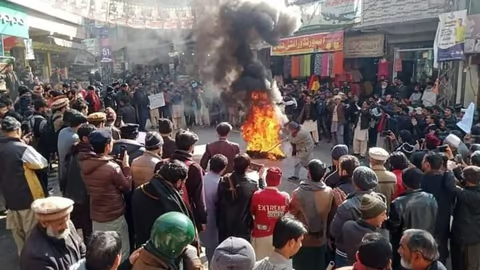
Instead of joyous Eid celebrations, the streets of Tarrakhal city echoed with defiant protests on Tuesday and Wednesday as locals rallied against Pakistan’s oppressive occupation policies in Jammu and Kashmir.

The protesters, organized under the banner of the Jammu Kashmir Awami Action Committee (JKJAAC), demanded the unconditional release of all detainees arrested during massive anti-Pakistan demonstrations in Muzaffarabad in May.

Raising slogans against the heavy-handed crackdown, the JKJAAC leadership also called for the removal of Tourism Minister Faheem Rabbani, for inciting violence and terrorism against the Kashmiri people.

Since May, POJK has witnessed widespread civil unrest, with diverse groups including students, lawyers, and political activists taking to the streets.

What began as protests against wheat flour subsidies quickly escalated into a broader movement denouncing inflated electricity bills, illegal taxation imposed by Islamabad, and the overall suppression of political rights in the disputed region.

Pakistan has responded to the civilian uprising with force, carrying out mass arrests and attempting to quash the protests through intimidation tactics.

Relatives of missing persons protest on Eid across Pak-occupied-Balochistan

The relatives of missing persons in Pak-occupied-Balochistan marked Eid al-Adha with protests and rallies, demanding the recovery of their loved ones and an end to the cycle of enforced disappearances.

Turbat Protest

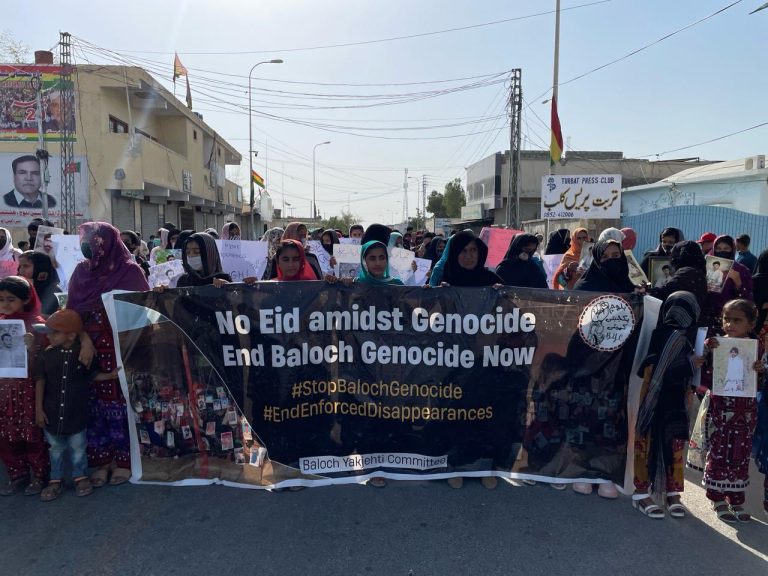
In Turbat, the relatives continued their sit-in protest at Shaheed Fida Chowk and organized a rally on Eid al-Adha morning. Passing through various routes, the participants chanted slogans urging the recovery of missing persons.

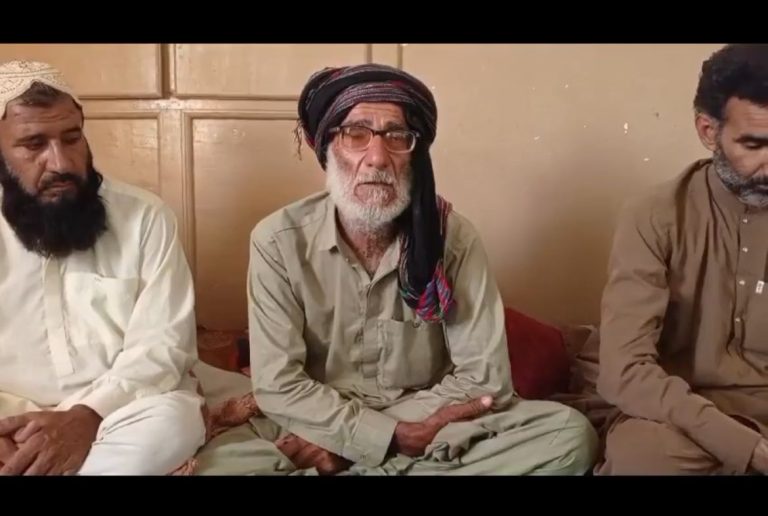
Addressing the rally, Arif Baloch, the father of the missing Muslim Arif, said his son was picked up from his shop in Bolida Gali a year ago. “We have knocked on every door of justice but received nothing but empty assurances,” he said, demanding his son be presented in courts if guilty.

Other relatives, including the sister of Jahanzaib Fazal, the wife of Sameer Baloch, and the 70-year-old father of Fatah Murad, shared similar stories and appealed for the recovery of their loved ones.

The rally was attended by a large number of people, including members of student organizations and the Baloch Yakjehti Committee.

Quetta Demonstration

In Quetta, a protest rally and demonstration were held on the call of Voice for Baloch Missing Persons. Dozens of families participated, holding pictures of their missing loved ones.

The relatives brought Eid clothes and shoes of the forcibly disappeared persons, evoking emotions among the citizens.

The protesters demand their loved ones be brought before the public so they can celebrate Eid with their families instead of on the streets.

Chaman Sit-in

In the border town of Chaman, protesters observing a sit-in since October 21, 2023, against the imposition of passport and visa requirements offered Eid prayers at the protest site.

Thousands of citizens joined the protesters, expressing solidarity with the movement against the border restrictions that have impacted the livelihoods of millions in the region.

The protesters, including organizers Abdul Haleem Pahlawan and Faiz Mohammad, vowed to continue their protest despite the government’s use of force and tactics, demanding the immediate release of detainees and the abolition of the passport and visa requirements for cross-border movement.

Clashes and Arrests

Two weeks ago, clashes between the Chaman sit-in participants and Army personnel resulted in injuries to over 40 protesters and 18 personnel. Several individuals, including the protest leaders, were arrested.

While the occupied authority released around 40 protesters through a reconciliation committee’s efforts, many remain in custody. The situation in the city has since returned to normal, but mobile internet services remain suspended.

The sit-in participants had halted all trade between Pakistan and Afghanistan for four months during their nearly eight-month-long protest. In May, they staged another sit-in on the Quetta-Chaman highway to protest the alleged killings of two protesters, disrupting trade for a month.

As the protests continue, Pak Army face mounting pressure to address the grievances of the residents and stop the long-standing issues of enforced disappearances and border restrictions in Pak-occupied-Balochistan.

Abduction and forced marriage of another Hindu girl to her Muslim abductor in Pakistan

In yet another shocking case, a Hindu girl named Sonika Chawla from Larkana was abducted, forcibly converted to Islam, and married off to her Muslim abductor, highlighting the ongoing issue of forced conversions and marriages targeting religious minorities in Pakistan.

The tragic incident follows the recent case of 13-year-old Roshni Meghwar from Mirpur Khas, Sindh, who was also forcibly converted to Islam and married to a Muslim boy, underscoring the precarious situation of minority girls in the region.

Once a significant population, Hindus have now been reduced to a vulnerable minority, with their daughters becoming prime targets for radical Islamist groups. These groups systematically abduct Hindu girls, forcibly convert them to Islam, and marry them off to their abductors, often men two to three times their age.

The victims frequently face sexual violence and coercion, compounding the trauma of their abduction and forced conversion. Despite the gravity of the situation, international human rights organizations have largely overlooked their plight, enabling the perpetrators to act with impunity.

Protest in Sindh demands release of Pak Army abducted persons on Eid

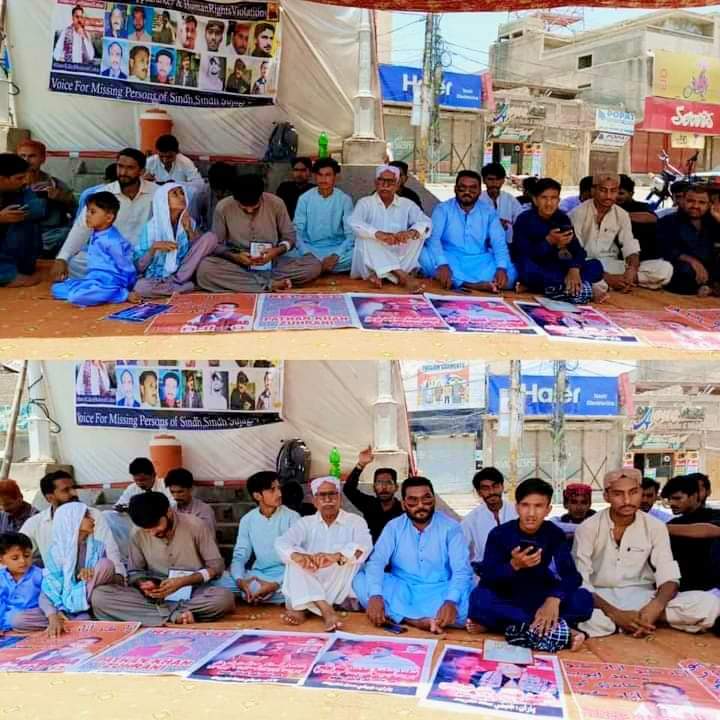
On the occasion of Eid al-Adha, families of missing persons and civil society groups in Sindh organized protests, demanding the release of individuals abducted and subjected to enforced disappearances by Paki establishment.

The protests, organized by Missing Persons Families, Voice for Missing Persons of Sindh, Sindh Sabha, and the National Workers of the Sindhudesh Movement, drew attention to the widespread issue of enforced disappearances in the occupied Sindh, Balochistan, and the Pashtun regions of Pakistan.

Despite repeated pleas and the inability of the judiciary and executive branches to take action, the organizers vowed to continue raising their voices against the cruelty and human rights violations.

The protesters appealed to international human rights organizations, including the Human Rights Commission, Amnesty International, Human Rights Watch, and the United Nations, to take notice and action against the human rights violations in Pakistan.

They also called upon the international community and world powers to support the Sindhi people in achieving their freedom and restoring their independent status from 1843.

The protests brought together families of missing persons, civil society activists, and supporters of the Sindhi independence movement, unified in their demand for justice and an end to the practice of enforced disappearances.

Tehreek-e-Labbaik attacks & desecrates Ahmadiyya mosque on Eid

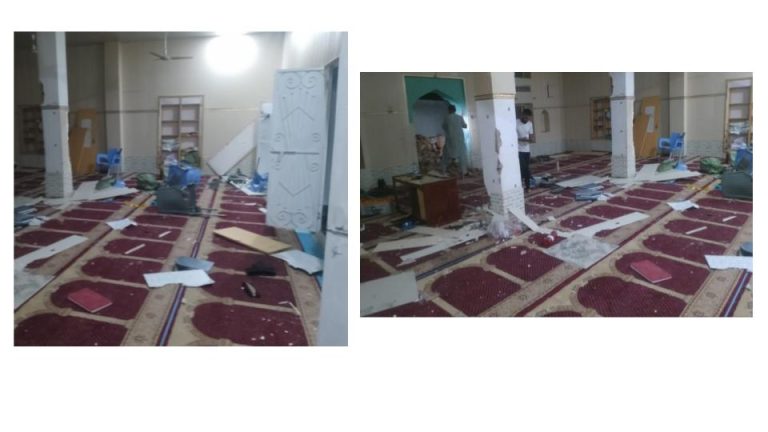
An Ahmadiyya place of worship was attacked and desecrated by over 150 Tehreek-e-Labbaik Pakistan (TLP) extremist men in Kotli district of Pak-occupied Jammu and Kashmir on the first day of Eid al-Adha.

The assailants opened fire and destroyed the minarets and arches of their place of worship in the early hours of Monday.

This attack comes on the heels of another concerning incident where three Ahmadi community members from Punjab’s Chakwal district were detained earlier this month “to avoid any likelihood of breach of peace”.

The detainees, including the community’s Chakwal district president Malik Naveed Ahmad, were held under the Punjab Maintenance of Public Order Ordinance, 1961 and lodged in Jhelum jail. The orders described them as “miscreants” and aimed to prevent them from “unlawful activities and acting in a manner prejudicial to the public safety” – a thinly veiled reference to their intended animal sacrifice on Eid al-Adha.

The Ahmadiyya community, considered non-Muslim by Pakistan’s constitution, has long been a target of persecution and hate crimes in the country. These latest incidents have once again brought to light the precarious situation faced by religious minorities in Pakistan.

Recovery of three forcibly disappeared victims in PoB

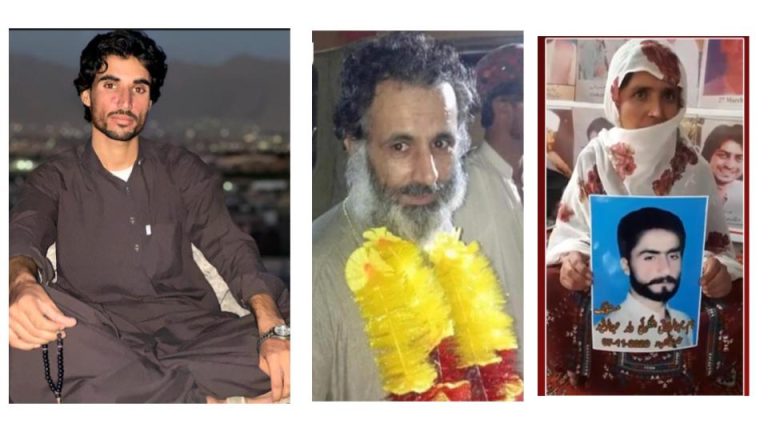
In a positive development, three individuals who had been subjected to enforced disappearance in different areas of Pak-occupied-Balochistan have been recovered. The recovered persons belong to Mach, Kech, and Mastung districts.

Gul Zaman Kurd, who had been forcibly disappeared by Pak Army from Bolan, Mach, has been recovered and has returned to his home. Gul Zaman was forcibly disappeared in March of this year. It is worth noting that his brother, Shair Zaman Kurd, was forcibly disappeared on February 12, 2011, but his mutilated body was later found in Quetta in March. Shair fell victim to the Pak Army’s brutal kill and dump policy.

Meanwhile, Shah Jahan, son of Mullah Noor Allah, who had been forcibly disappeared from Bolida, Kech, has also been recovered. Pak Army had launched an operation in the Gali area of Bolida and forcibly disappeared Shah Jahan along with his brother Sadiq from their home.

In protest against the incident, the relatives staged a sit-in in front of the Pak forces’ camp, along with local residents. However, last night, death squad personnel threatened to kill the protesters in an attempt to sabotage the demonstration.

Additionally, Abdul Razaq, son of Abdul Rasheed Bangalzai, who had been forcibly disappeared from Mastung, has been recovered. He was forcibly disappeared on November 7, 2020, from Shangi Road, Mastung. Abdul was released in Nushki, and his close sources have confirmed his recovery.

The recovery of these individuals has brought relief to their families and renewed hopes for the safe return of other forcibly disappeared persons in Pak-occupied-Balochistan. However, concerns remain about the widespread practice of enforced disappearances and the lack of accountability for the Army.
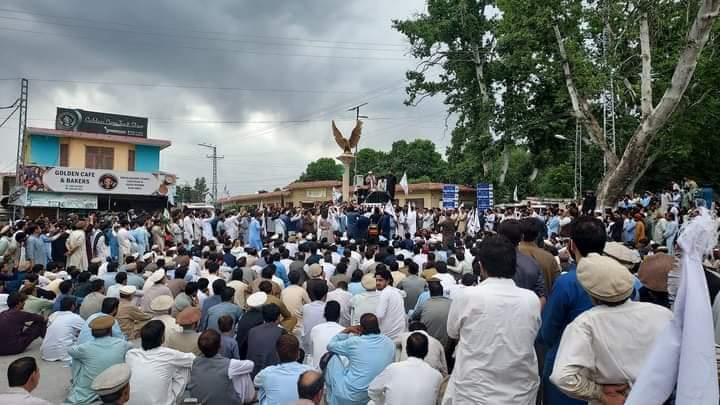
Massive anti-Taliban protest in Kurram

In a massive show of defiance against the Taliban’s presence and harassment by security forces, thousands of residents of Kurram district in Pakistan took to the streets yesterday, demanding peace and rejection of the “Project Taliban”. However, this significant protest remarkably received no coverage from the mainstream media.

The protesters, comprising people from all walks of life in Kurram, raised slogans against the growing Taliban influence and brutalities being inflicted upon the local populace. They criticized both the Taliban militants as well as the heavy-handed actions of Pak security forces operating in the region.

Pashtun leaders have been vocal against Islamabad in promoting religious extremism by providing covert support to the Taliban as part of its regional strategic depths policy, dubbed “Project Taliban.”

However, with no assurances forthcoming from authorities, the people of Kurram continue to live in a perpetual state of fear, caught between the Taliban’s brutalities and the heavy-handedness of security forces.

Baloch families to protest enforced disappearances by Pak Army on Eid

On the occasion of Eid al-Adha, families and supporters of forcibly disappeared Baloch individuals plan to hold a protest sit-in at Shaheed Fayaz Chowk to demand the recovery of their loved ones subjected to enforced disappearances by Pak security forces.

The protesters, including families of missing persons like Muslim Arif, Fatah Miar and Jehanzeb Fazal, are the victims of the Pak Army’s brutal widespread practice of abducting and illegally detaining Baloch activists, students and civilians. This highlights the Army’s brutal suppression of Baloch rights and its campaign of violence against the ethnic Baloch community.

After Eid prayers in the morning, the protesters will stage the sit-in at Shaheed Fayaz Chowk. Later in the evening at 5pm, they plan to march in a rally towards the Press Club to further raise awareness about their cause and missing relatives.

Political parties, human rights groups and the general public have been urged by protest organizers to participate and show solidarity with the families’ struggle against the Pak Army’s human rights abuses through enforced disappearances in occupied Balochistan since 1948.

Pak FC forces torture Chaman protestors in detention

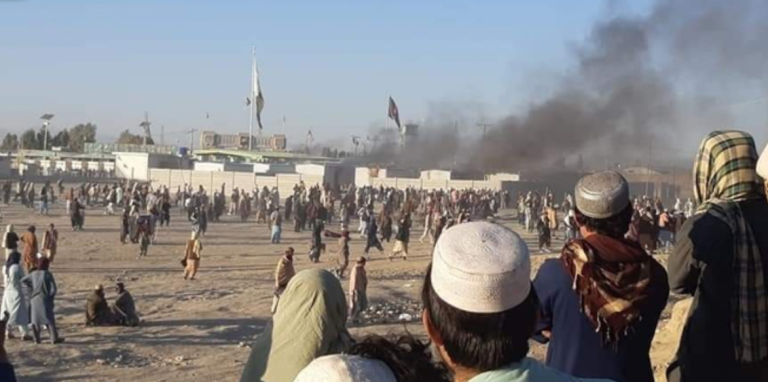
In a fresh development, Chaman sit-in protestors, who were arrested on June 6 are being severely tortured by Pakistan’s paramilitary force, the Frontier Corps (FC), in detention. Reports indicate that the detained individuals were kept handcuffed for days and their eyes were covered.

The arrested protestors were detained on June 6 when the Pak Army’s Frontier Corps (FC) opened fire on peaceful demonstrators in Chaman, escalating tensions and transforming the protest against mandatory passports into a broader struggle against oppressive tactics employed by the Pakistani establishment.

Chaman protest

Notably, lakhs of Pashtuns have been protesting on the Chaman border for over eight months. They are protesting against the Pakistani establishment’s imposed one-document regime under which the previously functional Tazkira system has been abolished, making passports mandatory for trade across the Durand Line.

Being the most important crossing on the Durand Line, this Pak-occupied Balochistan crossing has been crucial for local traders who were earlier allowed to cross the border with Tazkira (a paper slip permission). Additionally, there are familial ties between the local communities on both sides of the border. The new one-document regime is disruptive to these familial ties.

Unfortunately, no measures were taken to address these delicate issues. Moreover, a large section of the Pakistan-controlled media has neglected this massive protest for an extended period, seemingly waiting for it to die down. Seeing that not happening, the Pak Army and its FC forces have launched a crackdown on peaceful Pashtun protestors twice. On June 6, they not only killed many Pashtuns but also arrested and disappeared dozens.

The latest reports of torture are a further gruesome act by the Pak Army. It is surprising that a self-proclaimed top military force, which boasts of being a nuclear power but has lost all the wars it has fought, is only effective in torturing the people it controls.

Pashtuns call for a protest rally against target killings on June 22 by Pak Army

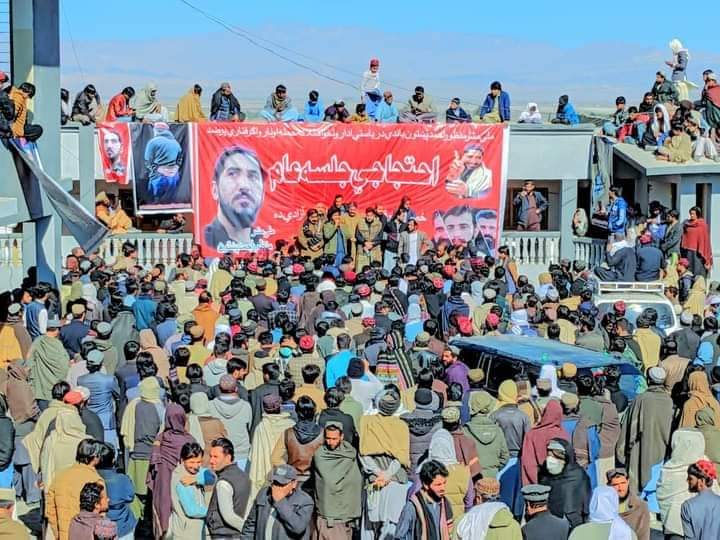
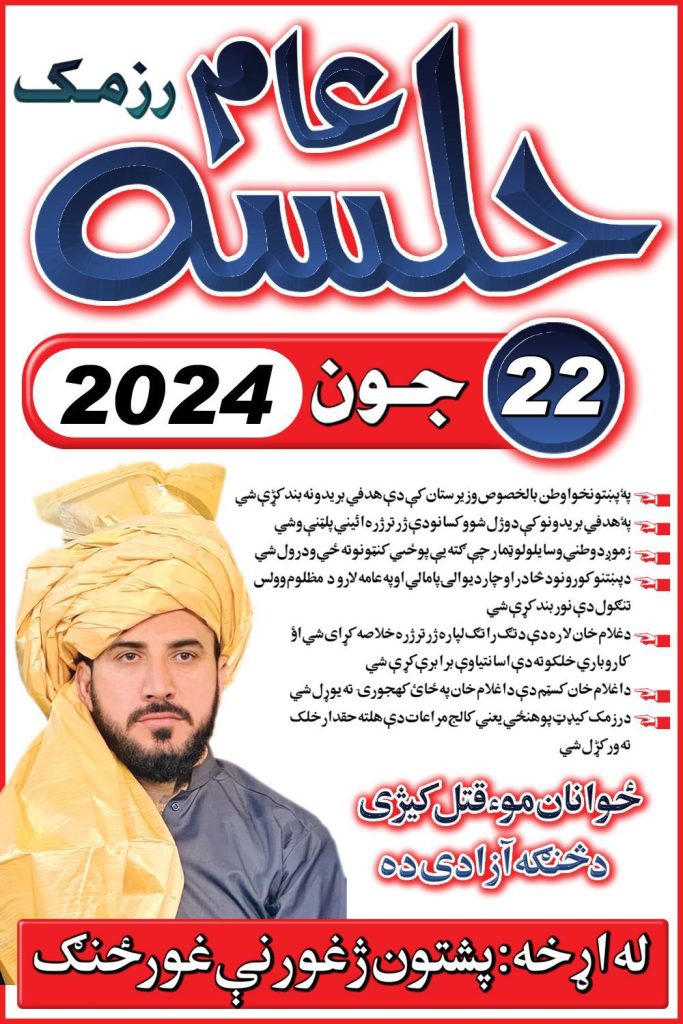
Pashtun Tahafuz Movement (PTM) has called upon Pashtuns and all the oppressed nations under the control of imperial Pakistan to a grand rally against violence in Ramzak area of Waziristan on June 22.

The protest rally is being organised demanding the Pakistan Army to stop attacks on Pashtun homeland, especially Waziristan which has witnessed multiple targeted killings in recent days. PTM is also demanding an investigation into these target killings of Pashtuns.

Moreover, the Pashtun rights organisation has demanded to open the road of Ghulam Khan, thereby facilitating the traders.

Poster of PTM rally (Photo: X)

Notably, Ghulam Khan is a town in Khyber Pakhtunkhwa and is the third most important border crossing after Chaman and Torkham. Like Chaman, Ghulam Khan is also closed over the visa issue.

Meanwhile, the Pashtun organisation has reiterated its call to end the plundering of the native resources by the Pakistan Army. In a poster released by them, PTM said the looters of national wealth, who go to military camps should be stopped.

Earlier on May 23, PTM organised a similar rally in Dhaka city after a series of targetted killings in the region. Over a month has passed since then but the Pak Army has failed to address the concerns of Pashtun community which is facing the wrath of the deadly trend as bodies of the community is dropping on the ground every passing day.