Home Blog Page 102

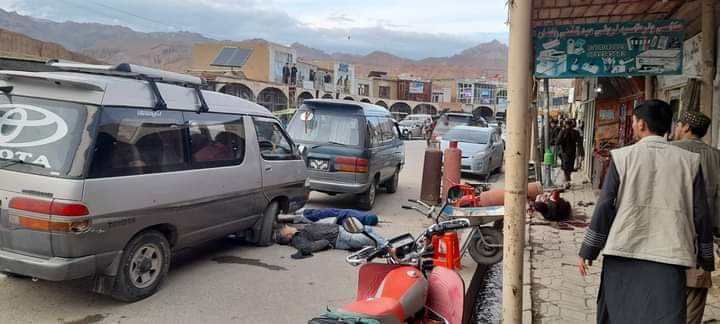
Shooting in Afghanistan’s Bamyan kills 4, includes 3 foreign nationals

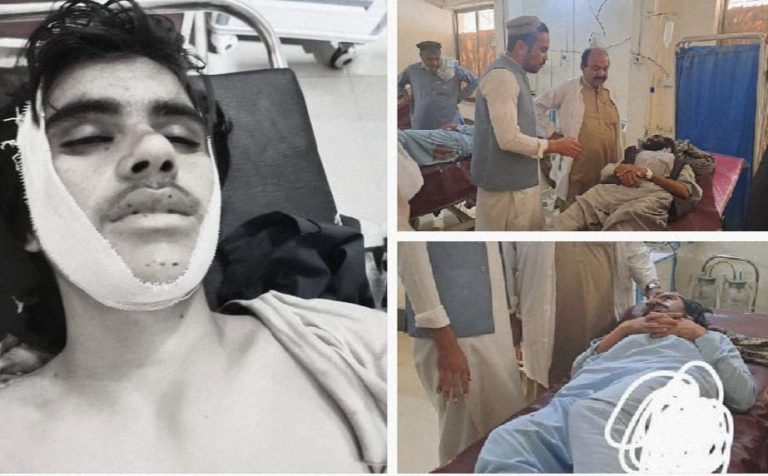
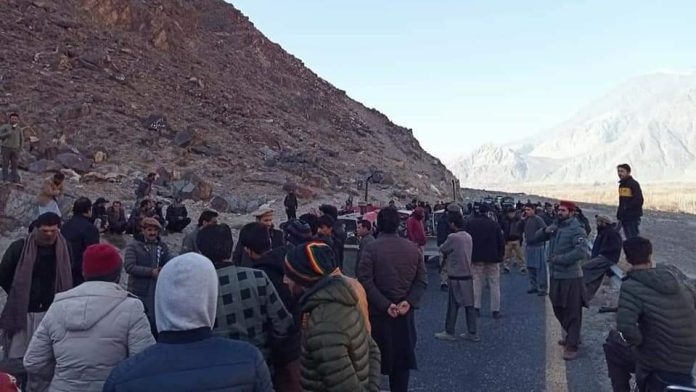
Gunmen opened fire in a busy market in Afghanistan’s Bamyan city center, targeting at least eight people, including four foreign nationals. The incident has left four people dead and four others injured, according to local Afghan media reports.

Abdul Matin Qani, the spokesman for the Taliban Interior Ministry confirmed the fatalities and injuries. “Four fatalities, including three foreign nationals, and four injuries, including three Afghans, were reported in the attack,” the spokesman stated.

It is worth mentioning here that the foreign nationals killed in the attack have been identified as citizens of Spain and Türkiye, according to reports based on sources in the Afghan Interim Government. The incident has sparked concern over the safety of foreign tourists and the general security situation in the region.

However, the security forces of the Islamic Emirate have responded swiftly, arresting four suspects in connection with the shooting. The investigation is ongoing, and authorities are working to determine the motive behind the attack and whether it was an isolated incident or part of a broader threat.

Notably, Bamyan, famous for a large Buddha statue, blown by Taliban in 2001, is the most visited tourist site in Afghanistan. It is still not clear weather the foreign nationals were tourist.

Of late Afghanistan has witnessed multiple attacks. From a Taliban oil tanker to Kabul Bank in Kandahar and others, the attacks have made a huge dent on Talibani regime. Even the top leaders of the terrorist organisation, like Hibatullah Akhundzada are having the heat of the continuous threat. Although, it is unclear who was behind the attack, past incidents show that currently the most active terrorist organisation is Islamic State of Khorasan Province (ISKP).

Pak-occupied J&K’s protest: Manifestation of Islamabad’s institutionalised exploitation

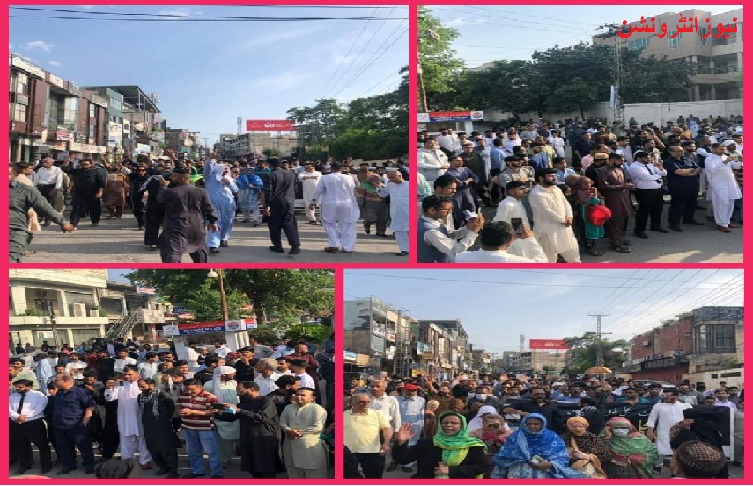
Now that the Joint Awami Action Committee [JAAC] spearheading the ongoing protests in Pakistan occupied Jammu and Kashmir [PoJK] has called off its present agitation, Islamabad must have certainly heaved a sigh of great relief. However, since the situation has been normalised by dishing out a financial dole of Rs. 23 billion instead of eradicating the root causes thereof, how long will peace prevail in PoJK remains a moot point.

The PoJK government has sought to pacify the agitated locals by using the financial package to subsidise flour prices as well as reducing domestic and commercial electricity tariffs. While this would bring some short term relief to locals, PoJK Premier Chaudhary Anwarul Haq has announced that this is a “permanent arrangement” and provisions for its continuation would be made in the 2024-25 federal budget. However, in absence of any further details, from where exactly will this money come from is a million dollar question!

Given Islamabad’s burgeoning economic crisis, its ability to meet this recurring financial requirement remains highly suspect. The very fact that Islamabad vacillated for over a year before releasing the financial bailout package to PoJK clearly indicates its unhealthy financial state and suggests that it isn’t in a position to regularly spare this kind of money. So, while the problem may have been temporarily addressed, it hasn’t been resolved!    

What makes the ongoing PoJK protests unique is that it’s one of the few mass movements in Pakistan that despite being apolitical in nature still has the backing of a cross section of local political parties, rights groups and overwhelming public support. For those unaware, JAAC leadership comprises ordinary people of diverse following and professions ranging from traders, transporters, lawyers and even students, united by a common determination to put an end to skyrocketing price rise and taxes as well as exploitation of PoJK residents by Islamabad.

On its part, Islamabad has been working overtime to project PoJK residents as a happy and extremely content lot. To buttress its incredulous narrative, Islamabad has even named PoJK ‘Azad [free] Jammu and Kashmir’ even though its citizens are denied freedom of expression. Article 7 [3] of PoJK constitution that states, “No person or political party in Azad Jammu and Kashmir [PoJK] shall be permitted to propagate against, or take part in activities prejudicial or detrimental to, the ideology of the State’s accession to Pakistan.” [Emphasis added].

Being denied their fundamental right to freedom of speech isn’t the only woe bedevilling PoJK residents. They are also being subjected to barefaced discrimination and being treated as second class citizens. An example is the partisan way Islamabad has gone back on its assurance of supplying free electricity to the entire PoJK region and complimentary clean water to Mirpur city- a commitment made the Government of Pakistan during construction of Mangla dam in Mirpur district of PoJK.

PoJK produces a whopping 4,000 MW of electricity and the power requirement of this region is a meagre 350 MW. Hence, it’s indeed very surprising that Islamabad hasn’t been able to honour its commitment of providing this miniscule amount of free electricity to the people of POJK. To make matters worse for PoJK residents, in 2013, Islamabad unilaterally ended the subsidy on electricity in PoJK- but things don’t end here.

It is brazenly exploiting PoJK and its people and this can be gauged from Muzaffarabad based prominent political activist Zahid Mughal’s revelation that “Pakistan is buying electricity from us at the rate of Rs 1.5 per unit [and] it again sells it to us at the high rate of Rs 52 per unit.” Not only this, Mughal complains that when people of PoJK “requested Pakistan to provide the electricity at the same rate,  they started calling us traitors.”

Talking of “traitors,” it would not be out of place to mention that both Islamabad and Rawalpindi view PoJK citizens with deep suspicion. Defence of Human Rights [DHR], a reputed Pakistani non-governmental organisation has in its last year’s report revealed that during 2023, PoJK recorded 20 enforced disappearances. Out of these, while 17 individuals who were abducted by the Pakistan Army, its intelligence operatives and law enforcement agencies were subsequently released, two persons, though traced, continue to remain in illegal confinement, while one individual has been the victim of extrajudicial execution. 

It’s the official apathy of the government and administration as well strong arm tactics used by the security forces and law enforcement agencies against peaceful protesters that has fueled the more than a year long JAAC protests. Moreover, besides exorbitant electricity tariff and frequent outages it’s both the acute shortage and spiraling cost of basic food items in PoJK that have put such unbearable financial strain on the people of PoJK that while many are unable to pay their electricity bills, others have refused to do so in protest.

Application of brute force by the Pakistan Army, paramilitary forces and law enforcement agencies has definitely heightened anti-establishment sentiments amongst the masses. The horrifying manner in which mobs physically assaulted police men forcefully dispersing agitators clearly indicates the unusually high level of alienation and animosity amongst PoJK citizens that has been generated by official brutality. While physical violence by protesters cannot be condoned, neither can the government and security forces be absolved of their direct complicity in precipitating this crisis by effusing to negotiate and adopting a highhanded response instead!

The JAAC led protest that turned bloody didn’t erupt overnight as there were several indicators that if the genuine public demands were not met, things could take an ugly turn. The most significant development was the JAAC’s decision to boycott the government organised annual sham ‘Kashmir Solidarity Day’ on February 5 celebrations. JAAC’s decision to observe this day as PoJK “Peoples’ Right Day” for airing their genuine grievances and videos of government sponsored functions posted on social showing only a handful of attendees was an unmistakable sign of public resentment that should not have been ignored.

Toqeer Gilani, a political activist belonging to PoJK convincingly justified boycott of Kashmir Solidarity Day functions by saying, “On the one hand, Pakistan announces to express solidarity with Kashmir on February 5; on the other hand, the same dispensation denies the basic rights to the people under its control.” He has also called Islamabad’s bluff by adding that “we can see that the propaganda of Kashmir [PoJK] is being used rapidly this year in Pakistan to distract attention from the [JAAC led anti-Pakistan] movement that is going on here.”

Despite being under Pakistan’s illegal occupation, PoJK is very much an integral part of India and as such New Delhi’s concerns on the exploitation and physical abuse of its people is fully justified, and in fact needs to be more forcefully condemned. There’s no doubt that people of PoJK are incensed by the step-motherly treatment meted out to them ever since this region was illegally occupied by Pakistan and the deadly cocktail of exorbitant hike in electricity tariff, the burgeoning inflation and phenomenal hike in cost of essential commodities as well as suppression of individual rights has triggered the current protests.

It’s also a fact that the ongoing large scale infrastructure development, launching of several people-centric social welfare programmes and government initiatives to boost tourism and investment in J&K has made this region more prosperous, and all these developments obviously haven’t gone unnoticed in PoJK.

While yawning disparity in living conditions on both sides of the Line of Control has definitely played a major role in escalating anger and frustration levels amongst those residing in PoJK,  inhuman treatment by the Pakistan Army and law enforcement agencies has prompted some PoJK leaders and activists to make calls for merger of this region with India. However, despite airing such vicious anti-Pakistan sentiments, it would still be premature to interpret the ongoing agitation as the beginning of the end of Pakistan’s control over PoJK.  

PoJK is under the tight grip of the Pakistan Army which will ensure that it makes examples of those whom it perceives to be “traitors” and with Pakistan’s Interior Minister Mohsin Naqvi stating that Islamabad has evidence of a “neighbouring country” inciting these protests, Islamabad has already set the stage for facilitating uninhibited use of force by the Army to crush dissent. So even though people of PoJK may genuinely yearn to merge with India, Rawalpindi will not allow it to happen and its spy agency Inter Services Intelligence [ISI] will use every trick in the book to stifle dissent. This is no exaggeration as there are already credible indications of the same.

On the night of May 14, Pakistani poet and journalist Ahmed Farhad Shah who hails from PoJK was abducted from outside his house in Islamabad and despite directions from Islamabad High Court [IHC] to recover him, the police failed to do so. Shah had been extremely critical of Islamabad’s role as well as the Pakistan Army’s conduct during the ongoing PoJK protests and as such it is obvious as to who has orchestrated his ‘disappearance’ from the national capital.

That’s why no one was surprised when IHC judge Justice Mohsin Akhtar Kayani on May 16, directed the Ministry of Defence Secretary “to submit a concise report seeking report from relevant quarters as well as from Military Intelligence [ISI] as to how and under what circumstances the detenue has been kidnapped and abducted . . .” [Emphasis added]. Since abductions are a common occurrence in Pakistan, one doesn’t have to be a Nostradamus to predict what the defence secretary’s reply will be and how things unfold. While ISI will outrightly deny any involvement in this disappearance, Shah will suddenly reappear one fine day [though most probably in the dead of the night], but will neither lodge a police complaint nor disclose the identity of his abductors!

Tailpiece: With news that ‘unidentified’ abductors are on the prowl, while many will avoid saying or doing things that could qualify them as “traitors”, those who don’t could go missing and run the heavy risk of remaining so forever! 

Enforced disappearance of six people by Pak Army sparks outcry in POB

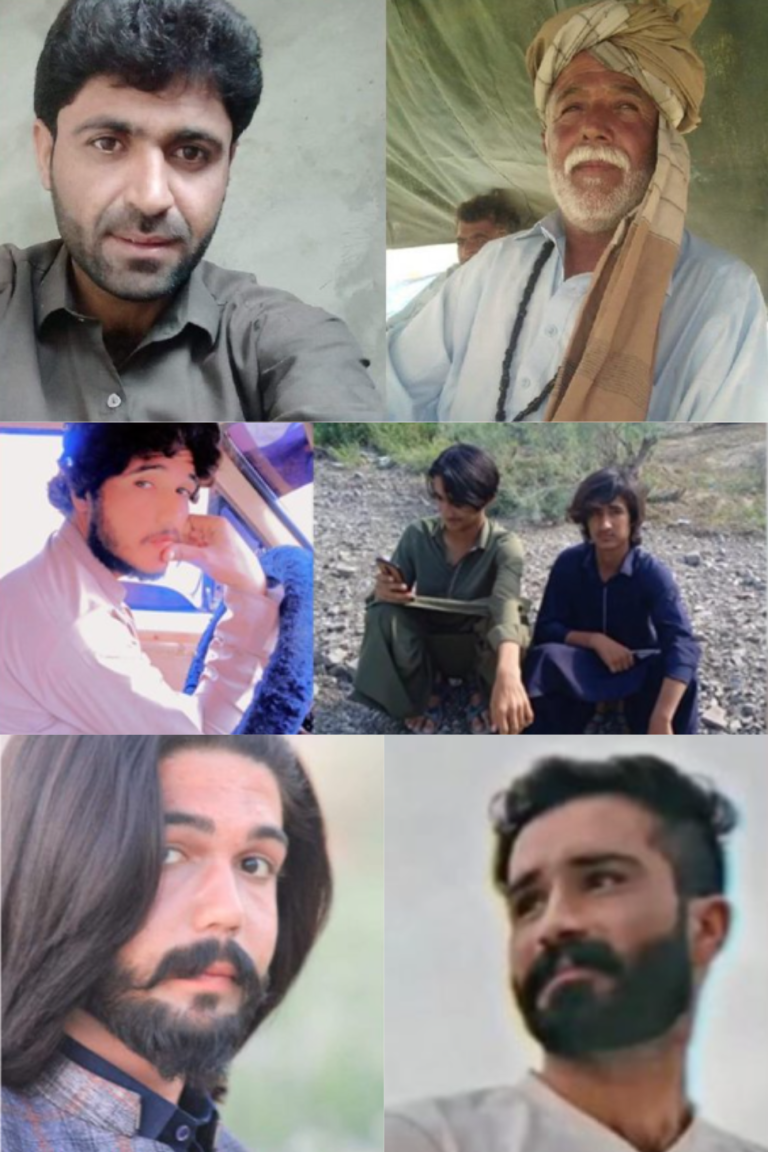
In a concerning incident in Mashkay tehsil of Awaran district of Pak-occupied Balochistan, six individuals including two brothers have reportedly disappeared since Thursday.

The victims have been identified as Amjad and Ali, sons of Deen Muhammad; Mehboob, son of Yar Jan; Taj Muhammad, son of Muhammad Ibrahim; Baloch, son of Dil Murad; and Abdullah, son of Abdul Qadir were detained by the Pak Army after participating in a protest rally against the forced disappearances.  

The rally was organized against the ongoing atrocities of enforced disappearances caused by the Pak Army and the rally spanned from Gorjak to Malash-band.

During the said incident of enforced disappearance, Abdullah, the son of Abdul Qadir was detained in custody and when Taj Muhammad approached the camp to inquire about Abdullah’s disappearance, he also went missing.

In 2017 Mehboob’s father Yar Muhammad was killed in the Gichk area of Panjgur district by the Pak Army-supported ‘death squad’ showcasing the surge in the cases of enforced disappearance in Pak-occupied Balochistan.

This is not an isolated incident but numerous cases are being reported from various districts yet alone in the first half of May.  

The Pak Army has relocated five individuals to an undisclosed location after their enforced disappearance from the districts of Kech and Bolan in Pak-occupied Balochistan. The victims are identified as Kamran son of Abdul Baqi, Saeed son of Musa, Farhad son of Abdul Ghaffar, and two brothers Sagheer Sajjad and Qadeer Sajjad. Both the brothers were taken into custody by the Pak Army from their residence in Miri Kalat yesterday at midnight.

As per the accounts of the family members, the Pak Army raided their house around midnight and took both the brothers into custody, but Qadeer was released shortly afterwards. No information was provided to the family by the Pak Army. The family has demanded the immediate safe recovery of Sagheer Sajjad from the local administration.

The Pak Army also detained a youth named Kamran from Bolan Mach yesterday, who is now missing. Similarly, two weeks ago, the Pak Army took two young men, Saad son of Musa and Farhad son of Ghaffar into custody from Tump Militant, after which both of them are missing.  

Recently, the body of Arsalan, son of Islam was recovered from Pasni. Arsalan who was a teacher at a private school was abducted from Panjgur on Tuesday night.

These stories provide a glimpse into the longstanding pattern of human rights abuses perpetrated by the Pak army against the innocent Baloch community, a struggle that has endured since March 27, 1948.

Pakistan: The ‘war’ within

In his November 2022 farewell address, outgoing Pakistan Army chief Gen Qamar Javed Bajwa conceded that the main reason for the Pakistan Army being “criticised from time to time,” was its unconstitutional “involvement in politics for the last 70 years” and claimed that “the army [had] decided after a lot of deliberation that it will not interfere in any political issue”.

Since this was for the first time in Pakistan’s history plagued by military rule that the country’s powerful Army chief had personally made such a candid public admission as well as given the assurance of Rawalpindi steering clear of politics, one had expected that these announcements would be widely welcomed by the people. However, they were received with indifference and there are reasons for this.

One, the people of Pakistan know very well that expecting the Army’s top brass to meekly surrender the wide-ranging extra-constitutional powers that it enjoys without any associated accountability is purely a delusional fantasy. Two, while Gen Bajwa glibly talked about the Army divorcing itself from politics, his speech itself was pregnant with political innuendoes that outrightly belied his promises. Lastly, assurances of non-interference in politics given by an Army chief who himself brazenly indulged in the same for the better part of his tenure and decided to turn a new leaf only at the fag- end of his tenure wasn’t very inspiring! 

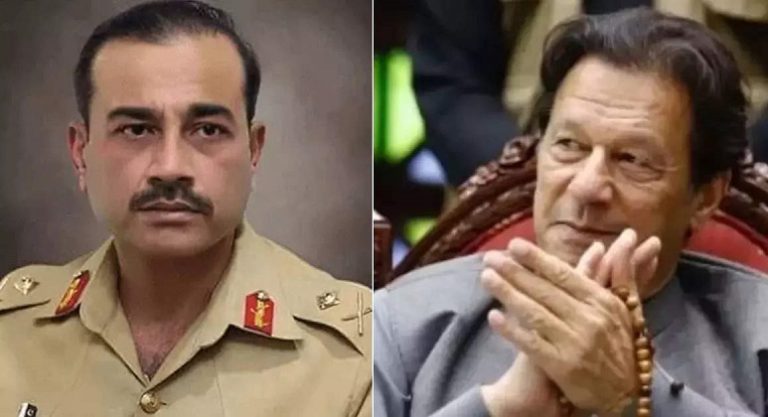
The people of Pakistan weren’t wrong. The current Pakistan Army chief, Gen Syed Asim Munir may have maintained a stoic silence on the issue of Rawalpindi’s involvement in political affairs of the country, but his actions left no doubt in anyone’s mind to the contrary. His barefaced attempts to ensure that former Prime Minister Imran Khan and his Pakistan Tehreek-e-Insaf [PTI] party are politically destroyed is an unambiguous signal that Rawalpindi has no intentions of forfeiting its role of playing king maker in Pakistani politics.

When PTI protesters attacked military assets on May 9, 2023, many saw this massive anti-Army outrage as the beginning of the end of Rawalpindi’s supremacy. However, they were wrong and The Friday Times Editor-at-Large Raza Rumi’s post-election prediction that the military establishment “may have lost in the short-term, but it has a history of rising like a phoenix”, came true. 

In less than a week after this incident, Gen Munir convened a special corps commanders’ conference. The Army press statement released thereafter stated, “The forum expressed firm resolve that those involved in these heinous crimes against the military installations and personal/equipment will be brought to justice through trials under relevant laws of Pakistan, including Pakistan Army Act and Official Secret Act.” [Emphasis added].

What needs to be noted here is that while on the one hand legislatures in Islamabad were still wondering what to do, the Pakistan Army had already decided to play the  lawmakers role by unilaterally ruling that those accused for the May 9 riots would be tried by the Army in military courts. Even though it had had no constitutional sanction to adjudicate on this issue, neither the legislature nor the judiciary opposed Rawalpindi’s diktat. No prizes for guessing what this indicates.

All-out efforts were made by the forums and agencies concerned to legalise the military’s arbitrary decision. The very next day after the special corps commanders’ conference, Pakistan’s National Security Committee [NSC] in a hurriedly convened meeting expectedly recommended exactly what Rawalpindi had decreed during the special corps commanders’ conference, and the Federal Cabinet approved the NSC recommendations without any changes the following day. With the army being able to legalise its decision within a matter of three days, it’s abundantly clear that in Pakistan, the army continues to enjoy absolute power.

Just last week, Director General [DG] of Pakistan Army’s media wing Inter Services Public Relations [ISPR] Maj Gen Ahmed Sharif once again reaffirmed Rawalpindi’s pre-eminence in Pakistan by saying that “There is only one way back for such political anarchists, that it [PTI] asks for an earnest apology in front of the nation and promises that it will forgo politics of hate and adopt [a] constructive [style of] politics.” [Emphasis added].

This statement sets specific preconditions that Rawalpindi wants the PTI to fulfil before its political rehabilitation can be considered, and this leaves no room for any doubt that PTI’s political future is in the hands of the Pakistan Army.  And by adding that “In any case, such dialogue should take place between political parties [as] it is not appropriate for the army to be involved,” DG ISPR has willy-nilly accepted that Rawalpindi is well aware of exceeding its brief.

After PTI chief Imran Khan outrightly rejected the DG ISPR’s offer by making it clear that if the “establishment” [army] was not interested in dialogue, the PTI would not pursue it either, a peeved Gen Munir quickly changed track and to save face announced that there would be “no deal with the architects and plotters of the violent protests.” As things stand today, it would not be an exaggeration to say that Pakistan is being held hostage to what’s unfortunately an ego driven confrontation between Gen Munir and Imran Khan and this is not an exaggeration!

Pakistan’s Dawn in its editorial of May 9 has assiduously observed that“the PTI-military stand-off has been the root cause of Pakistan’s political instability.”[Emphasis added].It has also revealed the harsh reality that “neither side seems interested in a resolution” and hence has suggested government intervention to break this deadlock, which is indeed a good suggestion.

But with Gen Munir despite saying that the Pakistan Army knows its “constitutional limits” while simultaneously crossing swords with PTI, the likelihood of his smoking the peace pipe with Khan, to say the least, is unlikely. Similarly, despite Rawalpindi’s devious machinations that have reduced the status of PTI to virtually a political non-entity, Khan seems to be in no mood of entering into a compromise with the Army which he rightly refers to as the “establishment.”  

Most importantly, Prime Minister Shehbaz Sharif’s ability to broker peace is suspect. By declaring that “The impure plan of May 9 was not just a rebellion against Pakistan but against the state, the Pakistan Army and army chief Gen Asim Munir,” [Emphasis added], he’s made his absolute subservience to the Pakistan Army chief more than evident.

So how on earth can Khan [or for that matter anyone else] ever expect Sharif to be an impartial intermediary capable of amicably resolving the Rawalpindi-PTI impasse?

Pak Army attacks prominent Pashtun activist’s house in Khyber-Pakhtunkhwa

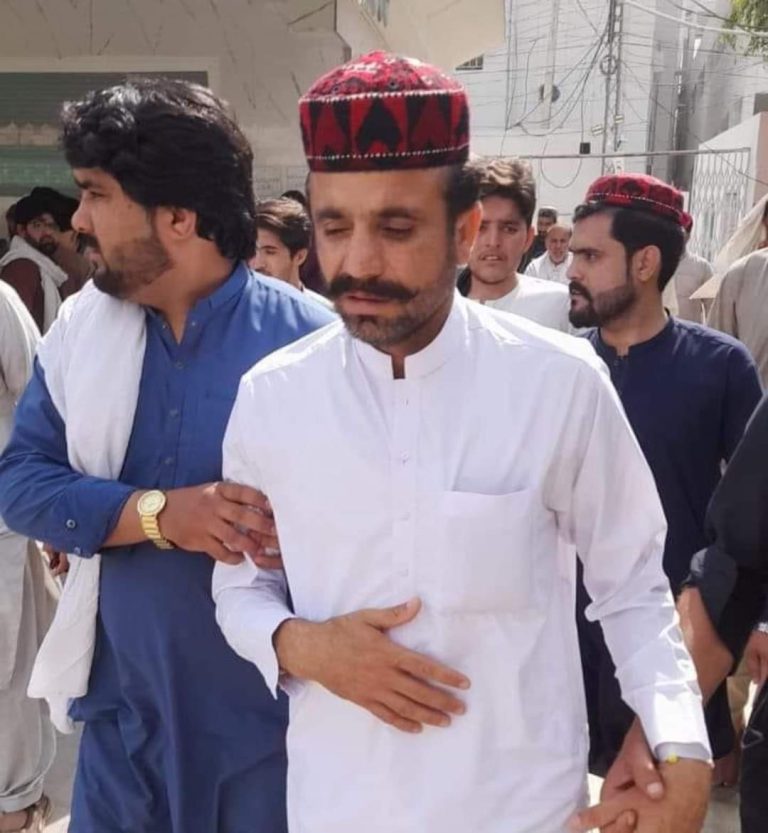
On the night of May 15, unidentified attackers stormed the home of Nazir Afghan, a prominent member of the Pashtoon Tahafuz Movement (PTM) in Dera Ismail Khan district, Khyber-Pakhtunkhwa. The assault, involving heavy weapons, left four people injured, including Nazir Afghan, his cousin, and his uncle.

The attackers used heavy ammunition during the attack, causing significant property damage. They managed to escape the scene.

This incident is the latest in a series of attacks on PTM members, who have been vocal about the Pakistan Army’s human rights abuses in Pashtun regions. PTM activists have frequently been targeted by the Pakistan military to silence dissent.

In the aftermath of the attack, PTM leaders condemned the violence and accused the Pakistan Army of being behind the assault.

The attack on Nazir Afghan’s home underscores the ongoing struggle and violence faced by PTM members as they continue to raise their voices against oppression and demand justice for the Pashtun community.

NIA seizes seven properties of Pak backed JeM terrorist in Jammu and Kashmir

In a significant move against terrorism, the National Investigation Agency (NIA) has attached seven immovable properties belonging to Sartaj Ahmed Mantoo, a prominent terrorist of the banned Pakistan-based Jaish-e-Mohammed (JeM) organisation. The properties, including land measuring 19 Marlas and 84 square feet in Kisarigam, Pulwama district, were attached on Wednesday under Section 33(1) of the Unlawful Activities (Prevention) Act, 1967, following orders from the NIA Special Court in Jammu.

Details of the Case

Sartaj Ahmed Mantoo was arrested on January 31, 2020, with a substantial cache of arms, ammunition, and explosives. Later, he was charge-sheeted on July 27, 2020, and is currently undergoing trial under various sections of the Arms Act, the Indian Penal Code (IPC), the Explosive Substances Act, the Unlawful Activities (Prevention) Act (UA(P) Act), and the Indian Wireless Telegraphy Act, 1933.

Mantoo, along with five co-accused members of JeM, played a crucial role in transporting freshly infiltrated terrorists into the Kashmir valley. This led to a significant encounter in which three terrorists were killed, and numerous arms, ammunition, and explosives were seized. The case (RC-02/2020/NIA/JMU) involves a conspiracy to launch terror attacks on security forces and infrastructure as part of an anti-India agenda.

Background of JeM

Formed in 2000 by Maulana Masood Azhar, JeM has orchestrated numerous terrorist attacks in India, particularly in Jammu and Kashmir. The organization is recognized globally as a major terrorist threat. In 2019, the United Nations Security Council (UNSC) designated JeM as a “Designated Foreign Terrorist Organization” under Resolution 1267. Additionally, Maulana Masood Azhar was declared a “Global Terrorist” by the UNSC.

Recent Crackdown

This action follows the NIA’s recent attachment of six immovable properties belonging to another top JeM terrorist in Kashmir, signaling an intensified crackdown on terror operatives in the region.The NIA’s continued efforts to dismantle terrorist networks and their assets underscore the agency’s commitment to countering terrorism and ensuring the security of the nation. The attachment of Mantoo’s properties is a part of broader efforts to disrupt and disable the financial and operational capabilities of terrorist organizations operating in India.

Our children die in open gutters while India has reached the moon: Pakistani leader Syed M. Kamal

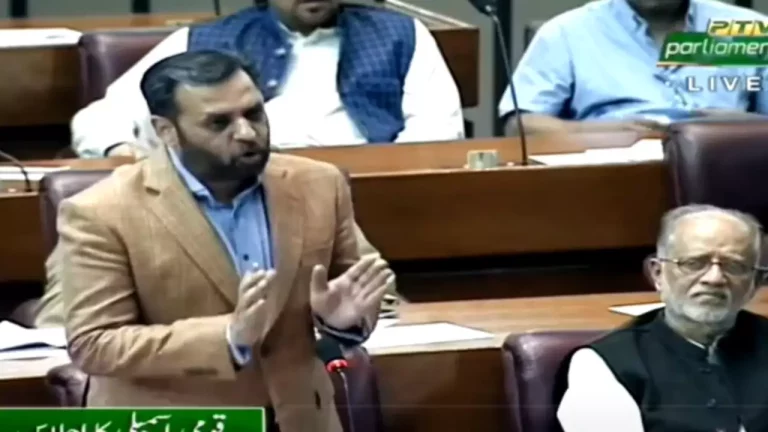
A Pakistani lawmaker’s scathing speech drawing a stark contrast between India and Pakistan’s education systems has gone viral on social media. During his address in the National Assembly on Wednesday, Muttahida Qaumi Movement Pakistan (MQM-P) party and member of the National Assembly of Pakistan, Syed Mustafa Kamal lamented the dire state of education in Pakistan, especially in Karachi.

Kamal said, “Whenever we have talked to Asif Ali Zardari sahab, we have found him positive, receptive and interested in solving the problems. I want to inform him that the world is going to the moon, while in Karachi, a child is dying after falling into an open gutter. On the same screen, on one hand, while there were news about India landing on the moon, on the other, there were news about a child dying after falling in an open gutter in Karachi. This is the news every third day. I am requesting this to the head of Pakistan, to the party’s chairman…”

Kamal bemoaned that while India’s IT exports stand at a staggering $270 billion, Pakistan’s IT exports amount to a mere $7 billion. “Today, if India is booming, it is because they taught what was needed to be taught,” he said.

https://twitter.com/AdityaRajKaul/status/1790730606705344714?t=gphdk_KVg7IqcbRvW5m1uQ&s=08

Highlighting the alarming levels of illiteracy in Pakistan, the lawmaker said there are 70 lakh children in Karachi and over 2.6 crore children across the country who are unable to attend school. “If we just focus on this (lack of education), the leaders of the country shouldn’t get any sleep,” he added.

“We have a total of 48,000 schools, but a new report says that out of these, 11,000 are ‘ghost schools.’ As many as 70 lakh children in Sindh and 2.62 crore in the country are not going to school. That should not let our leaders get proper sleep,” Kamal said.

The MQM-P leader contrasted this with India’s progress, stating, “Our neighboring India – 30 years ago, it taught its citizens those things which the world needed. Today, Indians are CEOs of 25 top Global Companies…Today, there are loads of global investments in India.”

Kamal also took a swipe at the Pakistan’s dwindling foreign reserves, saying, “We have total reserves, which we can’t even spend because we have taken loans, at $8-9 billion…sometimes it is $6 billion. India’s reserve is $607 billion…”

He was referring to the successful touchdown of the Chandrayaan-3 Lander Module near the south pole of the Moon on August 23, 2023, juxtaposed with Pakistan’s lack of basic amenities.

Kamal’s remarks come days after senior politician Maulana Fazlur Rehman, pointed out the economic disparities between India and Pakistan, saying that “India is dreaming of becoming a superpower, and we are begging to avoid bankruptcy.”

Pak Army abducts Kashmiri poet & journalist Ahmad Farhad for condemning Army’s violence in POJK

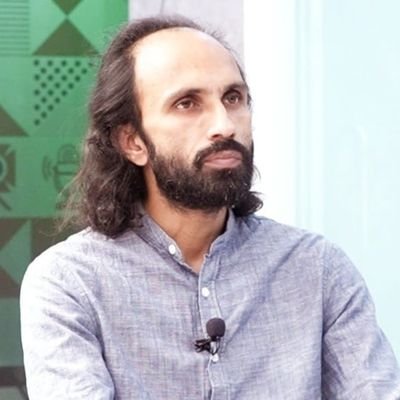
Ahmad Farhad, a poet and journalist from Pakistan-occupied Jammu and Kashmir (POJK) has been abducted by Pak Army from his house.

According to his wife, the abductors broke into their home, disconnected the CCTV, and forcibly dragged Ahmed Farhad outside.

The abduction of Ahmad Farhad by Pak Army has drawn significant attention from the journalistic and political activist communities.

Pashtun Tahafuz Movement (PTM) leader Manzoor Pashteen called him as the chosen voice of Kashmir and demanded his immediate release.

Similarly, prominent Baloch missing persons activist and BYC leader, Dr. Mahrang Baloch condemned tha abduction and said that “Violence cannot suppress movements led by those most affected, and genuine voices daring to expose lies will continue to speak out against the state’s barbarism.”

Sources suggest that Farhad’s disappearance is linked to his recent reporting on the protests in POJK. His pursuit of justice for Kashmiris put him in harm’s way as Pakistan Army has a record of dehumanising them who stand for the rights and provide strength to the rights movements.

Pak FC forces attack civilian vehicle in Waziristan killing 1 & injuring 3

In a violent incident, Pakistan Frontier Corps (FC) attacked a passenger car in the metals and minerals-rich region of North Waziristan, resulting in the death of a local man named Farhad and injuring three others. This attack is part of a series of frequent assaults by FC and military forces aimed at instilling fear and insecurity among the native population, reportedly to facilitate their mass eviction and seize control of the mineral-rich lands predominantly owned by Pashtuns.

This incident occurred just two days after a Pakistani drone strike in Upper Waziristan killed five people of a family, including two women and two children in Tangi Badinzai Village on the night of May 13.

Notably, the family lived in Tank and recently came back to their native land in Waziristan.

The Pakistan Army initially claimed that the attack on the passenger car was triggered by a landmine intended for infiltrators. However, local Pashtuns released pictures of parts of the explosives dropped from the drone, exposing the Pakistan Army’s involvement and undermining their narrative.

This is not an isolated incident. Similar attacks have been reported, including one in last month that also resulted in the deaths of children.

Earlier in April, four Pashtuns, including two children were killed by Pak Army in a mortar shelling after the children went to collect mushrooms near the heavily guarded Pak Army camp.

Pak Army had then also called the death as an outcome of landmine explosion. However, the Pashtun organisation recovered mortar shells from the site exposing the Pak Army’s notoriety.

Astore (POGB) residents threaten Muzaffarabad style agitation over Pakistan’s land grabbing

The people of Ashtore district in Pakistan-occupied Gilgit Baltistan (POGB) have issued a stern warning to the Pakistani establishment and occupying government against land grabbing under the guise of tourism. They have threatened to launch a mass protest akin to the recent demonstrations in Muzaffarabad, POJK, if their concerns are ignored.

Leaders of the Daskhiram Deosai Supreme Council, related to Deosai National Park, held a press conference at the Gilgit Press Club on Wednesday (May 15), drawing attention to the ongoing issue of land grabbing under the pretext of tourism development.

One of the leaders pointed out the legal vacuum in the region, stating that POGB lacks its own constitution, and the Pakistani constitution does not apply there. “The whole region is being ruled based on orders from Islamabad,” he said.

POGB deprived of its 80 per cent share

He further criticized the land grabbing practices, noting that 80% of the revenue from these tourist projects should have been allocated to POGB but has not been distributed. Despite a complete ban on the lease system, powerful individuals, including those from the Pakistan Army and the Pakistani establishment, continue to confiscate POGB land.

Hence, the leaders issued a warning that these actions must stop immediately, or they will initiate a mass protest against these policies. They also demanded that any tenders should be issued by the Daskhiram Deosai Supreme Council and follow proper procedures. They expressed frustration that the council is being bypassed, with Islamabad and the occupying government acting unilaterally.

This warning comes just days after various lands were allocated to the Pakistan Army by the occupying government.

Land grabbing by Pak Army

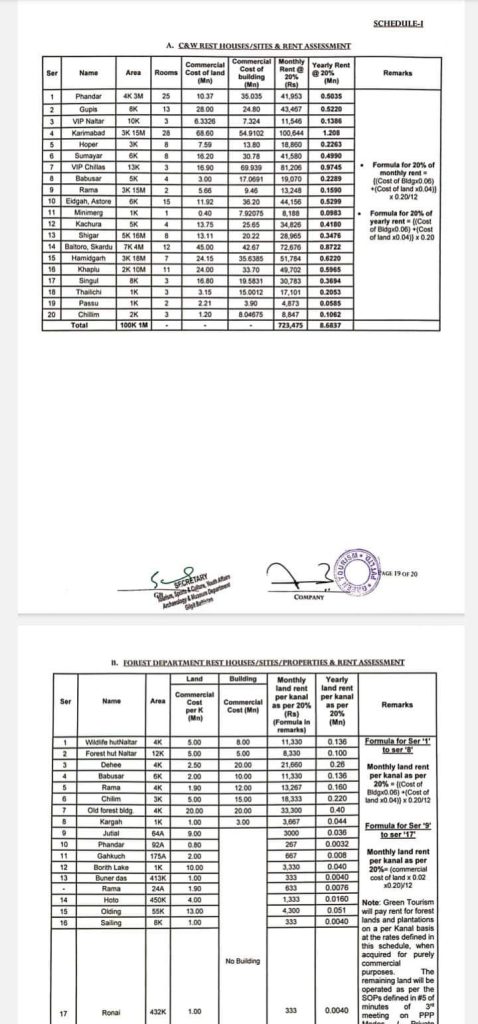
In an order passed by the Secretary of Tourism, Sports and Culture, Youth Affairs Department of the occupying government recently, as many as 20 rest houses and 16 forest nurseries of POGB are handed over to Pakistan Army. But Pak Army uses these land with an intention of penetrating deeply into the region and controlling the people.

Order of Renting houses and nurseries’ land to Pak Army (Photo: X)

The move is a larger conspiracy to instigate changes in the region’s demography and culture by installing people of Pakistani origin into the leased land while gradually making the native population minority.