Home Blog Page 142

European farmers blockade cities, demand aid as protests escalate across Europe

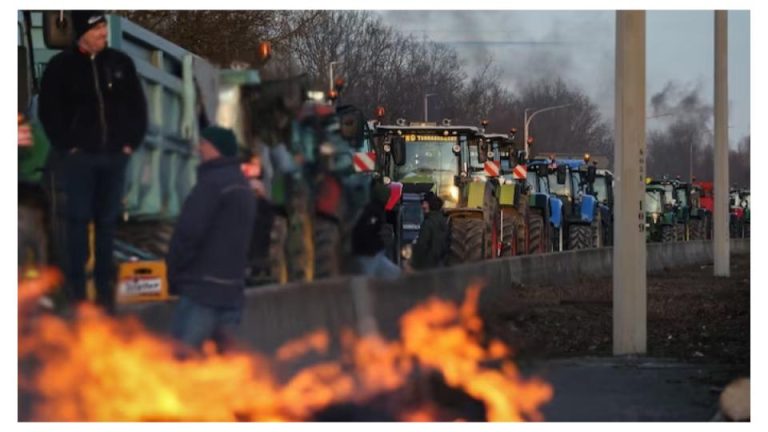
Frustrations boiled over across Europe this week as farmers staged widespread protests, blocking major roads, clashing with police, burning bales of hay, throwing eggs and setting fire to tyres in a desperate plea for help. From France and Belgium to Italy and Spain, the agricultural sector is in turmoil, squeezed by rising costs, unfair competition, and strict environmental regulations.

https://twitter.com/PeterSweden7/status/1753034852331381081


Farmers are facing a perfect storm of challenges. The cost of fuel, fertilizer, and other essential inputs has skyrocketed, while cheap imports, particularly from Ukraine, are undercutting their prices. Additionally, stricter environmental regulations are adding to their burdens, further impacting their livelihoods.


In response, farmers are taking to the streets, demanding action from their governments and the European Union (EU). Their demands include:
Higher prices for their produce
Reduced taxes and regulations
Protection from cheap imports, particularly from Ukraine
More flexibility on fallow land requirements

The protests have been particularly intense in France, where farmers have blockaded highways, surrounded Paris with tractors, and even stormed the Rungis wholesale food market. The French government has responded by dropping plans to cut subsidies on agricultural diesel and promising additional aid for wine producers. However, many farmers believe these measures are not enough, and the demonstrations continue.


The EU Commission has also proposed measures to address the farmers’ concerns, including limiting agricultural imports from Ukraine and offering greater flexibility on fallow land rules. However, these proposals require approval from member states, and it remains unclear if they will be enough to quell the unrest.


The farmers’ protests highlight broader concerns about the economic hardship in rural areas, the fear of competition from abroad, and the impact of environmental regulations on livelihoods. These issues are likely to resonate with voters in the upcoming European Parliament elections, potentially giving a boost to far-right parties who have expressed support for the farmers’ demands.


It remains to be seen whether the protests will lead to lasting changes in European agriculture. However, one thing is clear: the current situation is unsustainable, and governments and the EU need to find solutions that address the legitimate concerns of their farmers.
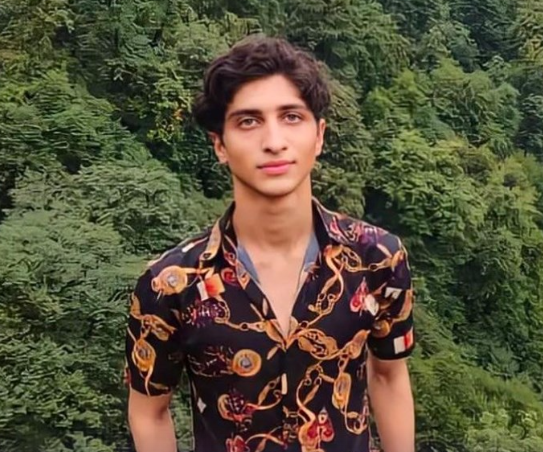
Islamic Revolutionary Guard Corps torture and murder 18 year old Baloch student in custody

In a distressing incident, an 18-year-old Baloch college student Sepehr Shirani from Fanuj city occupied Balochistan passed away while under the custody of the Islamic Revolutionary Guard Corps (IRGC). Sepehr was detained two days ago and he endured fatal torture while in custody. The agents said that Shirani’s arrest was due to the publication of critical posts on social media. However, the truth has not been revealed yet.

Despite the gravity of the situation, Sepehr Shirani’s death has not yet been satisfactorily explained by the IRGC or the Iranian legal system. Furthermore, they have not given the student’s body to his grieving family yet.

It is noteworthy that on January 30, Sepehr Shirani was detained in Zahedan by the IRGC on suspicion of engaging in “social media activities.” The lack of transparency here raises questions about potential violations of human rights and the necessity of a comprehensive investigation.

Notably in recent years, there have been multiple instances of suspicious citizen deaths and murders in police detention facilities, security facilities, and courtrooms. Investigations have been unable to conclusively identify offenders or hold authorities accountable.

Pashtun leader Manzoor Pashteen pens letter to colleague, exposes torture

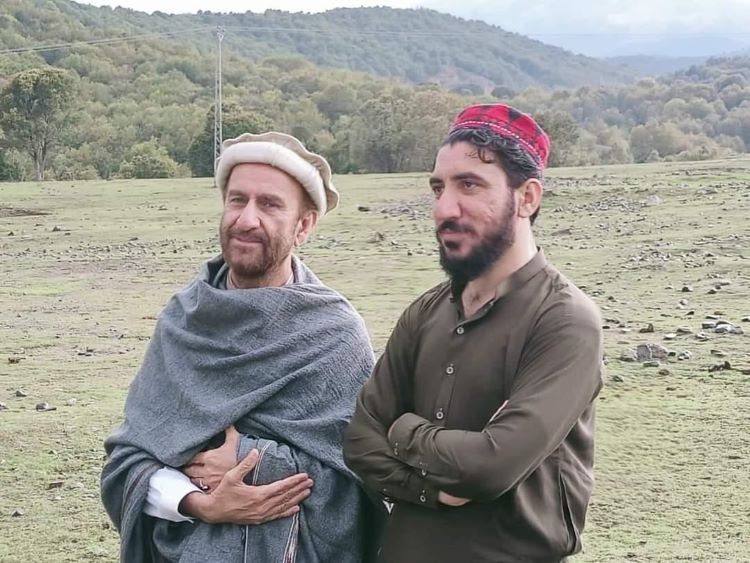
Manzoor Pashteen, who is incarcerated for more than two months is undergoing brutal and inhumane torture by the Paki police. PTM leader Manzoor Pashteen wrote in a letter that he was tortured in Jhelum prison before being handed over to the Attock Police, who arrested him and sent to Attock jail on January 27. He pens the letter to Abdul Samad Khan, his PTM colleague from the Attock Jail.

Clearly, before being handed over to Attock police, Manzoor was imprisoned in Jhelum prison under the controversial 3MPO act, charged up on by DC Chakwal. Manzoor Pashteen has been vocal about Pakistan Army’s nefarious intentions about the Pashtuns and for the policies that led to the persecution of Pashtuns.

Lahore HC on the arrest of Pashteen

It is worth mentioning here that in the hearing of Manzoor Pashteen’s arrest case, the Lahore High Court’s Rawalpindi bench reprimanded Chakwal DC over her reply to the reason for arresting Pashteen. DC Chakwal said that a pamphlet was recovered from Manzoor Pashteen, which posed a threat to law and order. Scorning the DC, court said, “Does peace and order deteriorate with pamphlets?” Later DC Chakwal told the court that Pashteen was freed from the jail on December 27 and that is not imprisoned on her orders anymore.

Interestingly, December 27, is the same day that Pashteen was arrested by Attock police after brutal torture. With due consideration, arresting a person for a pamphlet and that too under 3MPO is clearly not naivety of the Police but a well spun plot to keep Pashteen arrested. And the way he is continuously implicated in other cases one after other by arresting him from the gates of prison shows that its a big conspiracy to harass the PTM chief.

And without a doubt, to manage the police and execute this conspiracy requires an actor that has control over the entire law and order and establishment and that is Pakistan Army. Only Pakistan Army and its general have such a calibre and hold over the establishment.

This malicious foul play clearly shows that human rights and legal system is just a mockery in Pakistan. The only way an individual can survive under the authoritarian regime is to surrender their rights, silence their voice and follow the dictates of barbarian Pakistan Army.

Tensions soar in POGB as Awami Action Committee rejects negotiations with interim minister

The Pakistan occupied Gilgit-Baltistan (POGB) Awami Action Committee, currently spearheading protests for the abolition of the wheat price increase, reinstatement of health cards, and autonomy, has issued a stern statement in response to recent remarks of interim minister Shams Lone.

Shams Lone asserted during a press conference that those participating in “anti-state” activities with external funding during the ongoing protests would be dealt with strictly. This has further heightened tensions in the region.

The Awami Action Committee, representing the aggrieved people of POGB, responded by challenging Shams Lone to provide evidence supporting the accusations or issue a public apology. Failing to do so, the committee has warned that they will not participate in negotiations with the 6-member committee, including Lone. The 6-member committee, formed to negotiate with the Awami Action Committee, was constituted by the occupying government in response to weeks of protests.

More than a month of protest

The protests, initiated after the POGB government abolished the wheat subsidy on December 26, initially focused on issues such as the wheat subsidy, health card reinstatement, and the controversial Finance Act of 2023. However, with the occupying government failing to address their concerns, the Awami Action Committee has entered the second phase of protests, demanding complete autonomy for POGB under a 15-point Charter of Demands.

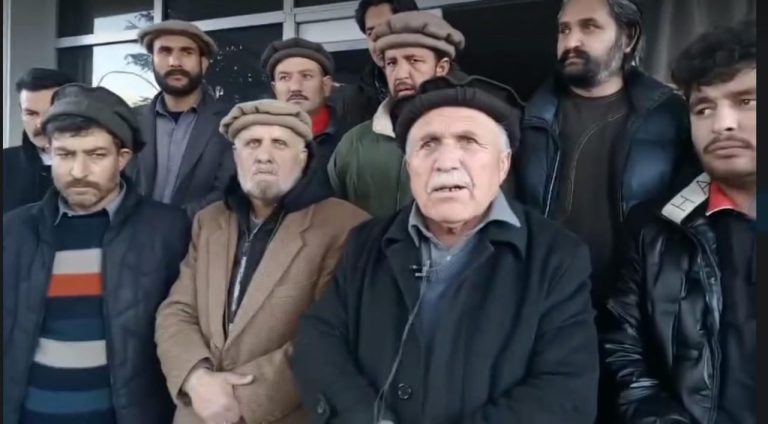
Undeterred by the chilling winter conditions, people across POGB, including Hunza, Yasin, Astore, among others have converged at Ittehad Chowk in Gilgit. The protest marks an unprecedented and significant demonstration in the occupational history of POGB, spanning over 75 years.

The Awami Action Committee remains resolute in its stance, declaring that the sit-in will persist until their demands, including autonomy, are met. The refusal to engage in committee discussions with Shams Lone reflects the deep-seated mistrust and dissatisfaction among the protesters, signalling an intensification of the standoff between the people of POGB and the occupying government.

Women empowerment, youth, farmers, top priority of Interim Budget 2024

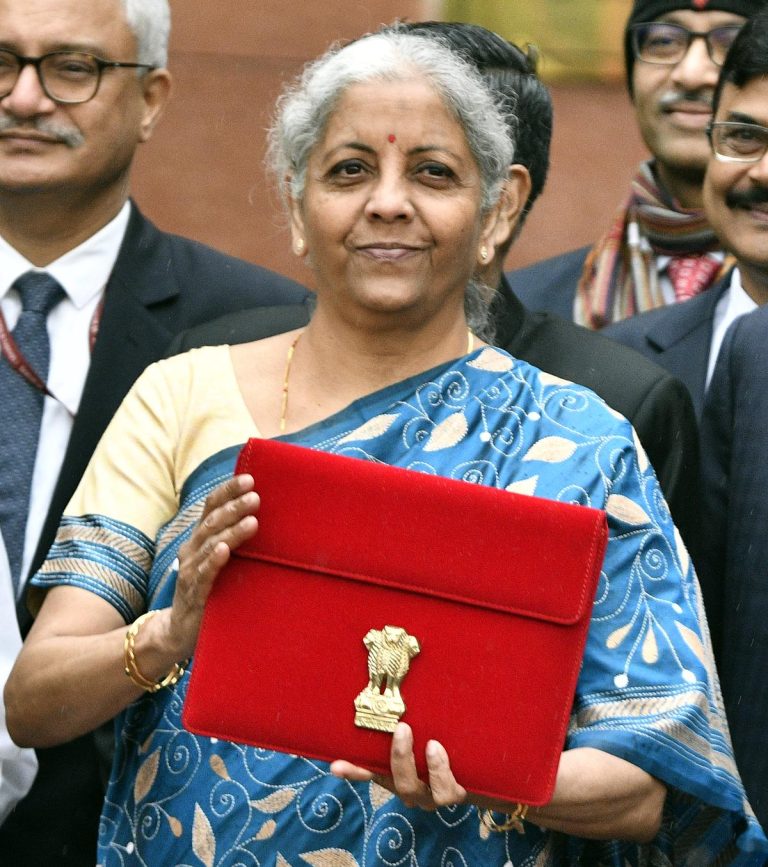
On 1 Feb, Finance Minister Nirmala Sitharaman presented the Union Budget 2024, marking her sixth budgetary announcement. 

The Budget Session of Parliament, commencing with President Droupadi Murmu’s address to the joint meeting of Rajya Sabha and Lok Sabha, is set to conclude on February 9. The full-fledged budget will be presented by the new government post the elections.

In her comprehensive budget speech, Sitharaman underscored the government’s commitment to uplifting various segments of society, emphasizing the transformative changes witnessed in the Indian economy through structural reforms. The Finance Minister highlighted the government’s focus on four pivotal categories: women, youth, poor and farmers, stating, “The country progresses when they progress”.

Key highlights of the Union Budget 2024 are as follows :

  1. The government claims to have lifted 25 crore people out of poverty over the past decade, with 80 crore individuals benefiting from free food through various schemes.
  2. Direct Benefit Transfers amounting to Rs. 34 lakh crore via PM Jan Dhan Yojana accounts resulted in savings of ₹2.7 lakh crore.
  3. Various schemes such as PM Vishwakarma Yojana, PM-SVANidhi, and Mudra Yojana witnessed substantial engagement, providing support to artisans, street vendors, and women entrepreneurs.
  4. Focus on upskilling and reskilling with over 1.4 crore youth trained under the Skill India Mission.
  5. Government’s commitment to rural empowerment with the ‘Lakhpati Didi’ scheme and subsidies for the construction of 30 million affordable houses in rural areas.
  6. Attention to the India-Middle East-Europe Economic Corridor for global trade and emphasis on developing the East for India’s growth.
  7. Positive economic indicators include moderated inflation within the target band (2%-6%) and increased average real income by 50%.
  8. Allocation of over ₹6.21 lakh crore to the Ministry of Defence, a 4.72% increase from the previous fiscal year.
  9. ₹14,225.47 crore allocated to Social Justice and Empowerment Ministry.
  10. A 50% increase in development assistance to the Maldives, from ₹400 crore to ₹600 crore.
  11. A substantial ₹1 lakh crore corpus for research and innovation in sunrise domains.
  12. Expansion of Ayushman Bharat scheme, combining maternal and child health care schemes, and encouragement for cervical cancer vaccination.
  13. Initiatives for agriculture, including the promotion of ‘Nano DAP’ for various crops and support for dairy farmers.
  14. Establishment of a new department, ‘Matsya Sampada,’ to address the needs of fishermen.
  15. Plans to convert 40,000 normal rail bogies to Vande Bharat standards for enhanced safety and convenience.
  16. Allocation of ₹1,300 crore for electric buses and ₹24,931 crore for various metro projects, focusing on transit-oriented development.
  17. Record allocation of over ₹73,000 crore for the Department of School Education and Literacy.
  18. Commitment to Net Zero by 2070 with funding for offshore wind energy, biomass aggregation machinery, and expansion of the e-vehicle sector.
  19. Capital expenditure increased to ₹11.11 lakh crore for 2024-25, with a focus on fiscal consolidation to reduce the fiscal deficit to 4.5% in 2025-26.
  20. Maintenance of tax rates for direct and indirect taxes, including import duties, with no changes to income tax slabs.
  21. Gross and net government borrowings for 2024-25 reduced to Rs. 14.13 lakh crore and Rs. 11.75 lakh crore, respectively, compared to 2023-24.
  22. Tamil Nadu and Kerala received substantial allocations of ₹6,331 crore and ₹2,744 crore, respectively, from the total budget of ₹12,173 crore for Southern Railway in the fiscal year 2024-25, according to Union Railways Minister Ashwini Vaishnaw.

The interim budget, a short-term financial plan, seeks parliamentary approval for an advance grant to meet essential government expenditures for the first four months of the new financial year.

Protestors block road after Pak Army forcefully disappears Baloch student

In yet another despicable display of tyranny, the Pak Army has once again unleashed its reign of terror upon the innocent people of Pak-occupied Balochistan.

Recently, the Pak Army abducted a student named Mehboob Baloch from a passenger bus in the Gwadar district of Pak-occupied Balochistan.

Mehboob is a fifth-semester student at Lasbela University of Agriculture, he was merely en route to his hometown Turbat, Kech for a vacation when he was detained by the ruthless Pak Army.

The incident which transpired at the Badok Checkpoint in Pasni tehsil has ignited the Baloch students to block the Makkoran Coastal Highway road in protest, resulting in several passengers’ vehicles being stranded. Their demand is the immediate release of Mehboob and to put an end to the brutality of the Pak Army.

As the world watches, the people of Balochistan are standing strong against the injustices they are facing since the Pak Army forcibly occupied Balochistan on March 27, 1948. Their cries for justice resound throughout the landscapes of Balochistan, becoming more and more insistent as time goes on.

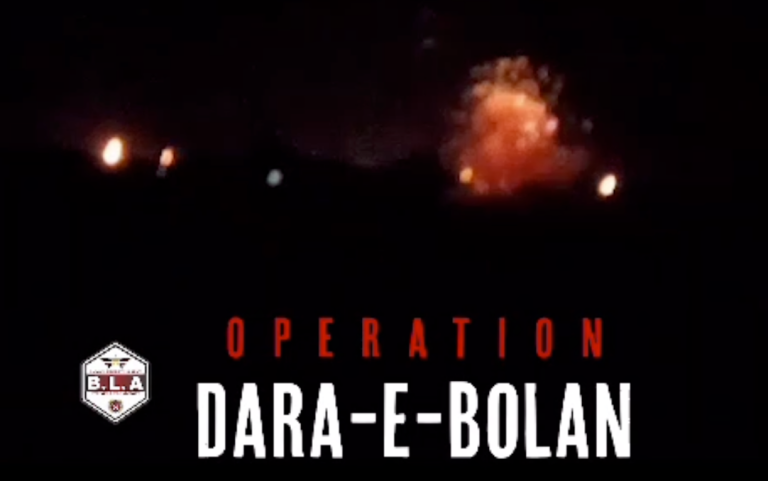
Baloch Liberation Army successfully concludes Operation Dara-e-Bolan

In the most recent development, the Baloch Liberation Army (BLA) declared at UTC+ 19:00 today (Wednesday) that Operation Dara-e-Bolan had concluded “successfully.”

Jeeyand Baloch, the spokesperson of the Baloch Liberation Army, stated in a press release that the two-day operation in Dara-e-Bolan was carried out exceptionally well. “The BLA has achieved all its strategic objectives, leading the Senior Command Council of the organization to make the formal announcement marking the end of Operation Dara-e-Bolan, scheduled for 7 p.m. this evening.”

He stated that all BLA units have been given detailed orders to leave their positions along Mach City’s roads and its surroundings, and they are being urged to return to their base camps. “The BLA emphasizes that the residents of Mach played a critical role in the success of this operation and expresses gratitude for their resilience, morale, and support throughout.”

The spokesperson stated that more information about the operation would be promptly made available to the media to raise public awareness.

The Pak Army has been using daily home raids, disappearances, staged encounters, target killings, torture, humiliation at checkpoints, and kidnappings for ransom against the Baloch people since March 27, 1948.

Operations like Dara-e-Bolan highlight the region’s long-standing struggle for independence and recognition in Pakistan-occupied Balochistan. The Pak Army has retaliated against the Baloch people’s long-standing demand for independence again from Pakistan with a range of oppressive measures. The Baloch people’s resolve to resist oppression and realize their dreams of independence from the Pak Army is demonstrated by the BLA’s actions.

Pakistan’s prejudiced conduct forces Ahmadiyyas to not vote in the upcoming general elections

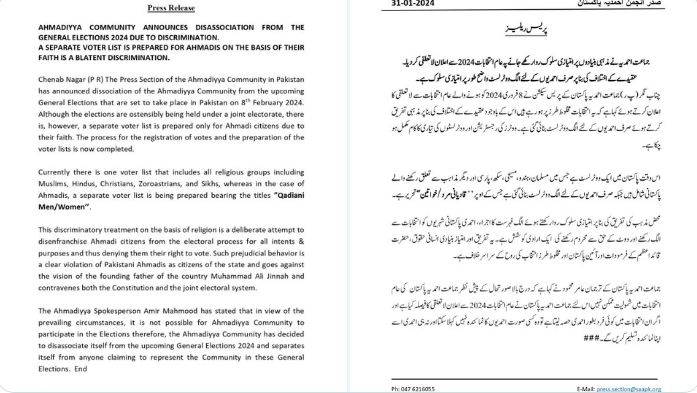
In a recent press statement, the Ahmadiyya Community in Pakistan, through its Press Section, has announced its decision to dissociate from the upcoming General Elections scheduled for 8 February 2024. The move is a response to the discriminatory treatment in the electoral process.

The Ahmadiyya Community, a religious minority in Pakistan, claims that despite the elections being ostensibly held under a joint electorate, a separate voter list has been prepared exclusively for Ahmadi citizens based on their faith. Unlike other religious groups like Muslims, Hindus, Christians, Zoroastrians, and Sikhs, Ahmadis find themselves listed under the title “Qadiani Men/Women”, a distinction that the community deems prejudicial and an attempt to disenfranchise its members.

Press statement of Ahmadiyya community (Photo: X)

An attempt to disfranchise Ahmadiyyas

This unique categorization of Ahmadis in a separate voter list is seen as a deliberate effort to marginalize and exclude, the already discriminated community from the political process, denying them the right to vote. The Ahmadiyya Community argues that such treatment contradicts the vision of Pakistan’s founding father, Muhammad Ali Jinnah, and is a violation of both the Constitution and the principles of the joint electoral system.

Amir Mahmood, the spokesperson for the Ahmadiyya Community, expressed the community’s stance in the face of these challenges. Mahmood stated that given the prevailing circumstances, it is not feasible for the Ahmadiyya Community to actively participate in the upcoming General Elections. Consequently, the community has decided to disassociate itself from the electoral process and has distanced itself from any individuals claiming to represent the community in these elections.

This decision underscores the community’s commitment to standing against discrimination and a violation of their fundamental rights. Significantly, the Ahmadiyya community in Pakistan received an official classification as non-Muslims through a constitutional decree in 1974. Additionally, in 1984, Pakistan stripped them of the right to self-identify as Muslims.

Multiple rockets ambush Pak Army camp in Hoshab, Pak-occupied Balochistan

Recently, a dozen rockets were fired at the Pakistan Army camp in Hosab, Pak-occupied Balochistan. The attack came from an unknown direction and the area echoed with the explosions, additionally, intense gunfire was heard during that time.

As of yet, the authorities have not stated their stance on the damages.

Although Baloch armed freedom fighters are present in the mentioned area no one has claimed responsibility for this attack yet.

Meanwhile, an attack on a vehicle transporting minerals in the Kalat district of occupied Balochistan and a gas pipeline in the Mirpur Khas area of occupied Sindh was carried out by unidentified armed men.

They reportedly bombed a natural gas pipeline on Tuesday night that travels from Sui, Balochistan, to Punjab, close to the Sindhi city of Mirpur Khas. The explosion forced the suspension of gas service in some areas.

Authorities immediately cordoned off the area and began a search and rescue operation. In the meantime, there was also an attack on a natural gas well in Pir Koh, Dera Bugti. It has not yet been determined whether there are any more reports on this incident.

Similarly, in Kalat’s Khanezai neighbourhood, a car transporting minerals was ambushed by unidentified armed men. No casualties from the attack were reported. So far, the responsibility for the aforementioned attacks has not been claimed by anyone.

Since the Pak Army occupied Balochistan in March 1948, they have committed human rights violence and the Baloch genocide. The resource-rich region has been inflicted with the brutal “kill and dump” policy, enforced disappearances, indiscriminate shooting and extra-judicial killings. To remove the Pak Army and their violence, freedom fighters have emerged in the region. Their sole motive is to seek independence and protect the Baloch ethnic group from the atrocities.

Coordination Committee of occupied Baltistan affirms support for united POGB demands

Shedding the clouds of uncertainty over their stand, the Coordination Committee of occupied-Baltistan has made it apparent that they are unwavering in their commitment to stand with the demands of the united Pakistan occupied Gilgit-Baltistan (POGB), as put forward by the Awami Action Committee in the form of a charter of demands.

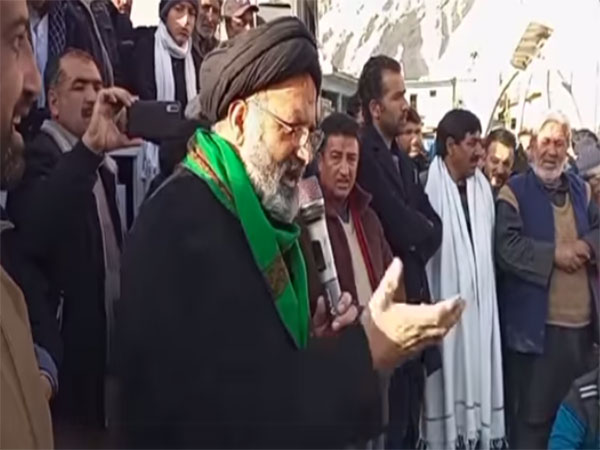
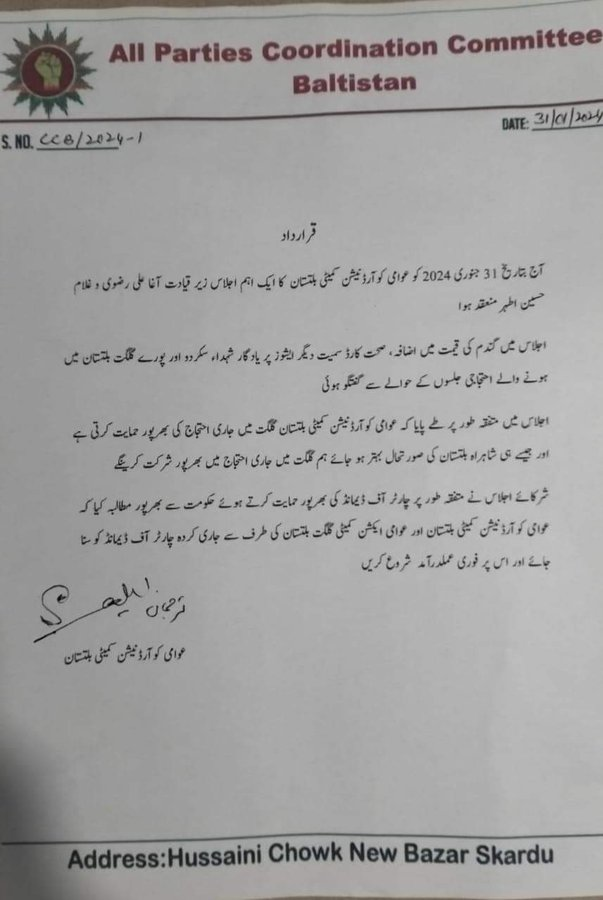
On January 31, the All Part Coordination Committee of Baltistan held a meeting under Agha Ali Rizvi and Ghulam Hussain Azhar. After the meeting, a decision was reached, and an announcement was made. In a letter issued by the All Part Coordination Committee, it was stated that the committee fully endorses and extends support to the ongoing protest. It also mentioned that as soon as Shahrah-e-Baltistan (Jaglot to Skardu road) would be cleared, the caravan will reach and join the Ittehad Chowk Dharna.

Copy of statement of All Party Coordination Committee Baltistan (Photo: X)

Notably, after the occupying government revoked the notification of December 26, which abolished the subsidy, Agha Ali Rizvi stated that the main demand for protest was the wheat subsidy and since it was reinstated, they would now move towards solving other issues through dialogue. This created apprehensions for the further course of action of POGB protest. Additionally, the convoy of Nagar also returned following the occupying government. And hence, the statement of coordination committee of Baltistan is significant and has come as a positive response to the ongoing struggle.