Home Blog Page 158

Pak-occupied Gilgit-Baltistan: Awami Action Committee protests against Pakistani oppression

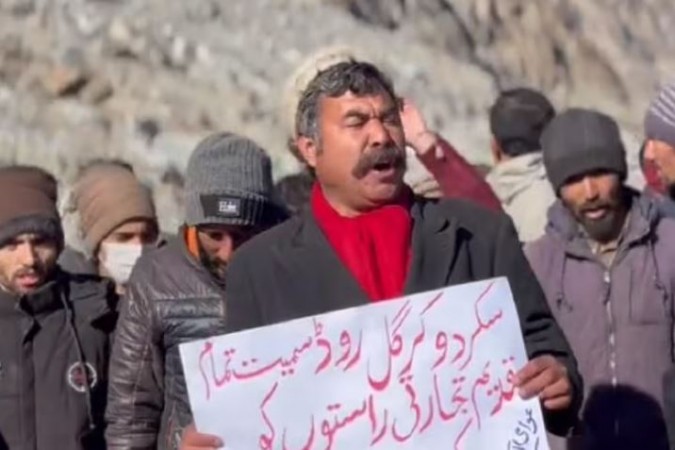
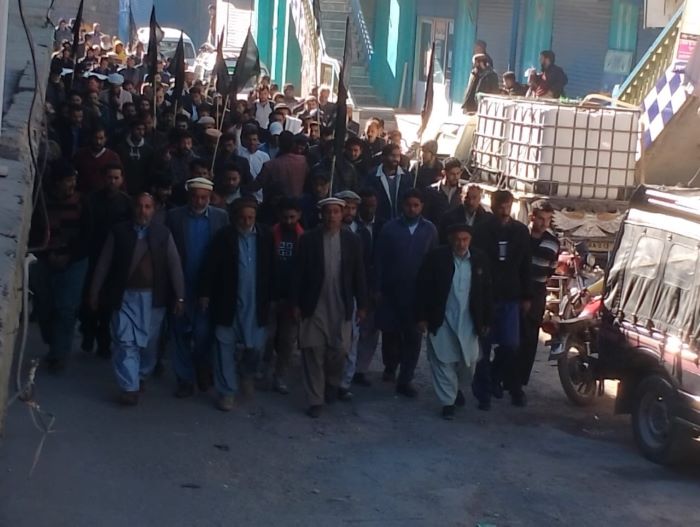
A massive demonstration led by the Awami Action Committee and All Party Alliance swept through Pakistan occupied Gilgit-Baltistan on December 21, denouncing exorbitant electricity tariffs and burdensome taxes imposed on the populace. Voices echoed a resolute commitment to persist until their Charter of Demands is met, with no intention of conceding ground on their principled stance.

The demonstration witnessed support and participation from all walks of life. A large number of people participated in the protest meeting at Gilgit Diniyar Alamdar Chowk Shahrukh Qaraqram for their rights and against the reduction in wheat subsidy. The protestors stated that until the occupying government of Gilgit-Baltistan withdraws its illegal and cruel decisions, the protests will continue throughout POGB and there will be no talks with the occupying government. They also called for the start of Gilgit Chalo movement as the occupying government did not resolve the public demands presented by the Awami Action Committee of POGB.

Backdrop of protest

Evidently, the protest was organised after a meeting of Awami Action Committee and All Party Alliance held on December 19. Representatives from diverse sectors, spanning political, religious, and business spheres, convened in a joint meeting at a hotel in Skardu, chaired by Ehsan Ali Advocate, Chairman of the Awami Action Committee. The meeting was attended by the various leaders from the Awami Action Committee of Pakistan occupied Gilgit-Baltistan (POGB). The discourse revolved around the exploitation of regional resources by the occupying Pakistani authorities, leaving the indigenous people bereft of fundamental necessities.

A critical point of contention highlighted during the meeting was the termination of wheat flour subsidies, which is a clear violation of UN regulations safeguarding the rights of the contested territory’s inhabitants. The looming threat of indiscriminate taxes compounded the distress, exacerbating the grievances of the Kashmiris.

In the meeting it was unanimously approved that following the disapproval of the demands by the occupying government on December 20, an expansive protest movement would be initiated across Pakistan occupied Gilgit-Baltistan on December 21. The demonstrations involved road blockades and gatherings in various districts, specifically targeting the inflated wheat prices. Moreover, there’s a potential expansion of protests to other regions if the grievances persist unaddressed.

The recent protest is the latest in the strings of protests, sit-ins and demonstrations that have been held by the Awami Action Committee in POGB. However, the Pakistani puppet government has not seriously put up the grievances of the people. Interestingly, the Awami Action Committee also seems committed for its ‘Charter of Demands’.

Karima Baloch: Balochistan’s daughter & a symbol of courage

Today, on 22 December, we commemorate the third martyrdom anniversary of Karima Baloch. Across the globe, people are honoring Banuk, Karima Baloch, a Baloch leader and a beacon of hope. At the age of 34, she departed from Balochistan with the mission to amplify its voice globally, firmly believing that if the world wouldn’t come to Balochistan, she would take Balochistan to the world.

Born to migrant parents in the UAE, Karima and her family moved back to Tump in Pak-occupied-Balochistan when she was about 7. A courageous questioner of norms. It was during this time, that the atrocities of Pak Army on Baloch intensified. The conflict became bloody, as the Army targeted not only freedom fighters seeking Balochistan’s independence but also human rights activists, academics, and common people, including Karima’s own family members.

Her family, even though not a big name, was actively involved in politics. Therefore, they were targeted by the Pak Army. Many of Karima’s family members fell victim to the tactics of the Army—enforced disappearances, torture, and the ‘Kill and Dump policy’. Therefore, at a very young age, she understood and bore witness to the atrocities committed by the Pak Army in occupied Balochistan.

In 2004, Karima’s cousin, Gorham Saleh, was kidnapped at a checkpoint while on his way to deliver a truck full of produce. She was just a teenager when she began participating in protests. Although Gorham Saleh was eventually released after four years, the experience left them traumatized. Tragically, another cousin, Bakshi, fell victim to a death squad of the Pak Army and lost his life. These private militias, often armed by the Pak Army, aimed to suppress the independence movement in Balochistan.

Lumma Karima

In 2006 at just 17 years old, Karima joined the Baloch Students’ Organization (BSO Azad), a non-violent student group advocating for better living conditions and freedom for the Baloch people. She shed her last name from Mehrab to Baloch in solidarity with the cause. Despite the dangers, she traveled across Pak-occupied-Balochistan, championing human rights and girls’ education. Rising through the ranks, she became a natural leader in a highly patriarchal society.

In 2009, Karima faced heightened danger as she rose through the ranks of the BSO, witnessing the disappearance of fellow student leaders. By 2013, the Pakistan National Counter Terrorism Authority banned the BSO Azad, the faction Karima was part of. Speaking with Global Voices while still in Balochistan, she described the transformation of their peaceful struggle into a lethal threat. Tragically, in 2009, the vice-chairman Zakir Majeed was kidnapped during a crowded procession and remains missing.

Following Zakir Majeed’s abduction, Karima assumed his role. In March 2014, another BSO leader was abducted in Quetta, Balochistan’s capital. Chairman Zahid Baloc was abducted by the Pak Army, ISI, and MI in front of Karima. In 2015, she was formally elected as the first female leader in the organization’s history, earning the title “Lumma,” meaning “mother” in the Balochi language. After becoming President, serious attempts were made on her life. Her home in Tump was regularly attacked. Her family was shot at and faced mortar attacks. The entire family moved to Karachi due to threats, including calls, gun threats, and raids.

From Tump to Toronto

Living in constant danger, Karima moved between safe houses, rarely seeing her family. The Army sought to charge her with sedition, a perilous situation as those taken into Army custody faced brutal torture, never seeing the light of day or their families again, often ending up as corpses in fields. In 2015, upon her official election as BSO chairperson, the organization had already decided she should leave the country. Even in exile, death threats persisted.

On December 21st, 2020, Baloch tragically disappeared while taking a walk on Toronto’s Centre Island. Her body was found the following day. Karima’s husband, Hammal Haider, also a Pakistani activist living in exile, shared that she left home around noon on Sunday for her usual walk on Toronto’s Centre Island but didn’t come back. The Toronto police issued an appeal for information on Twitter, and her body was discovered on the island the following Monday.

“I can’t believe that it’s an act of suicide. She was a strong lady and she left home in a good mood,” Haider said. “We can’t rule out foul play as she has been under threats. She left Pakistan as her home was raided more than twice. Her uncle was killed. She was threatened to leave activism and political activities but she did not and fled to Canada.”

From BSO activist to exiled advocate, Hammal Haider remains dedicated to the Baloch cause. He continues to organize protests, engage with international media, and raise awareness about the human rights situation in Balochistan.

Foul Play

Her body was retrieved from the icy waters of Toronto. It took sixteen hours for the police to contact the family and state that there was no need for further inquiry, categorizing it as a case of self-harm. Subsequently, Toronto police mentioned that Baloch’s death was under investigation as a non-criminal incident, and no suspicious circumstances were identified. No additional details were provided, and the police conveyed via a tweet that there was “no foul play”.

However,the cause of death – drowning, is awfully similar to the demise of yet another notable Baloch dissident— Sajid Hussain. Just eight months before Karina’s death. The official cause of his death was attributed to drowning. This is not coincidence, but targeted killing of the activists by Pak Army and their ISI on foreign soil. The foreign govt and media also became hand in gloves in keeping the assassination of political asylum seekers under the rug.

Even after her death, Haider continues to receive numerous threatening messages on social media after speaking out about human rights abuses and Army operations in Balochistan. He mentioned, “I was warned that my brothers and wife might be targeted, but I didn’t take it seriously. Such trolls and threats are common when discussing human rights abuses.”

The Fight for Balochistan

Speaking to media, Hammal Haidar, accused the Canadian government of displaying no interest in unveiling the truth behind Karima’s death. Haidar said, “We believe that the Canadian government and…justice system didn’t do well for Karima Baloch and we have been requesting the Canadian government to investigate her case. But, we have seen no interest from the Canadian government.” He added, “So, it is our firm belief that the Canadian government is not concerned about our activists living in Canada…”

He also went on to accuse the Pakistani intelligence agency for her assassination as a part of their bid to eliminate activists abroad. “We have some information that they are also gathering information about other political activists. So, there is no doubt that the Pakistan Army establishment, especially the Pakistani ISI is behind killing,” said Haidar.

Honoring Karima Baloch

Karima Baloch’s life was a testament to the harsh realities faced by the Baloch people under the Pak Army. Just like Karima, with commitment and passion, another brave leader Mahrang Baloch at the helm is leading the Baloch movement. She has become the force to reckon with, and Pakistan, which is already in a dilapidated state, is struggling to contain the valid and much-needed outrage of the Baloch community. Karima would be proud of the nature and force with which the movement is currently leading. Despite the tragic circumstances of her passing, Karima Baloch’s legacy lives on. She is remembered as a beacon of hope, a symbol of courage, and unwavering commitment to justice. Even though we might not get justice for Karima for her murder, we can raise our voice and stand for the cause she was passionate about. Her story continues to inspire people around the world to fight for human rights and stand up against oppression. She is and will always be Lumma Karima.

Pakistan’s desperate struggle of pretence as failures in Pak-occupied J&K lay bare

0

They say names can be deceptive and there’s no better example of this than what Islamabad touts as ‘Azad [free] Kashmir’, the area of J&K under its illegal control, which is appropriately referred to as Pakistan occupied Jammu and Kashmir [PoJK]. While Islamabad tries its best to portray the people of PoJK as a happy and contented lot, the harsh truth of the hardship and institutionalised discrimination being faced by those living in this region is a well known and established fact.

What Islamabad hasn’t been able to explain is that if the people of PoJK are indeed extremely happy being a part of Pakistan [as it so vociferously claims], then what explains inclusion of section 7 [3] in the constitution of PoJK that reads, No person or political party in Azad Jammu and Kashmir shall be permitted to propagate against, or take part in activities prejudicial or detrimental to, the ideology of the State’s accession to Pakistan”? [Emphasis added]. Such a serious impingement of fundamental rights however has let the cat out of the bag! 

Yet, despite making fundamental right of expression an offence under the constitution, Islamabad still wants the world to believe that the people of PoJK are ‘azad’ and perhaps that’s why it takes so much pains to peddle its patently false narrative on this issue. And with the Government of Pakistan sponsoring the visit of controversial US Congresswoman Ilhan Omar’s 2022 visit to PoJK and even paying for her food and lodging, Islamabad’s sheer desperation to sell its incredulous ‘Azad Kashmir’ tale is apparent.

That those living in PoJK are treated as second class citizens is evident from the fact that acute shortage of rations and essential commodities along with frequent and prolonged power outages are forcing its residents  to come out on the streets in protest. Though Pakistani media [expectedly] didn’t cover these developments, amateur videos of protests went viral on social media due to which Islamabad’s attempt to muzzle the media in a bid to keep growing unrest in PoJK under wraps came to naught.

The most conspicuous aspect in these videos is that besides the usual anti-government rant, the “kabiz fauji murdabad” [Down with the army of occupation] slogan were also raised by locals. In PoJK including Pak-occupied Gilgit-Baltistan [GB], locals are also protesting against illegal land occupation by the Pakistan army and Frontier Corps and they have prevented the security from demolishing houses and usurping land. 

Due to such arbitrary actions by the Pakistan Army, denial of fundamental rights and absence of a credible system for people to redress their grievances, locals rightly feel that Pakistan treats PoJK as a colony. That’s why its residents have started threatening to join India and as a matter of right, are even demanding opening of traditional trading routes to Kashmir Valley.

Yet Islamabad contends that all’s well in PoJK and one would have surely agreed, had ground realities not suggested otherwise. On December 13, Law Minister Mian Abdul Waheed submitted a new bill titled ‘Azad Jammu and Kashmir Defamation Act 2021’ in the PoJK legislative assembly which further restricts freedom of expression and the right to know.

This bizarre bill seeks to criminalise criticism of PoJK government policies, officials, departments, or institutions on print, electronic and social media and courts will have to give a verdict within 90 days. So the question that arises is- if things in PoJK are really hunky dory as Islamabad claims, where is the need for enacting this draconian law?

The answer isn’t very hard to find. Thanks to Islamabad’s abject apathy, PoJK continues to suffer immensely on all fronts. Besides severe shortage of essential commodities and recurring power failures, withdrawal of subsidies on wheat and other goods has come as a double whammy for the beleaguered people of PoJK. To add to their woes, the PoJK government seems to have little time for the people.

To make things worse, Islamabad has not only withdrawn PoJK’s electricity subsidy  but also introduced a steep hike in power tariff ranging from Rs. 3 to Rs. 7.50 per unit, which the impoverished people of PoJK can ill afford. The fact that Islamabad is buying power from Mangla dam in PoJK at incredibly low rates and then charging PoJK residents more than 10 times this cost only goes to buttress the fact that Pakistan is treating PoJK as a colony and exploiting its resources without compensating the locals.

Earlier, Islamabad imposed media censorship to keep people of PoJK in the dark and used propaganda to make them believe that they were far better off than their brethren living in J&K. However, in the age of internet, people of PoJK can no longer be fooled and they are well aware of the rapid progress that J&K is making.

New Delhi’s firm determination as well as its substantial fund allocation for developmental and infrastructural improvement projects in J&K is in stark contrast to Islamabad’s discernable indifference towards PoJK. So, it is but natural that people living in PoJK not only feel cheated but also exploited by Pakistan, and hence their threat to chant anti Pakistan slogans and threats to join India are ways of expressing their deep frustration with Islamabad.

The ambitious China Pakistan Economic Corridor [CPEC] project through PoJK has added to the woes of inhabitants. While extraordinary security considerations are causing locals immense hardships, no meaningful benefit in terms of improvement in quality of life or opening up of employment avenues have come to them from CPEC. Au contraire, CPEC has been instrumental in aggravating environmental hazards in GB.

A 2018 ANI tweet mentions that “36 glacial lakes in various valleys of #Gilgit Baltistan declared dangerous due to melting, at least seven of them pose a threat to locals, says survey by a Pakistan based NGO. The region has been facing environmental issues since [the] launch of CPEC.” [Emphasis added]. Just four years later, this apprehension came true and the resultant floods caused widespread destruction and devastation in POGB.

So, with Islamabad failing the people of PoJK on all fronts but wanting to keep up appearances, its attempts to even muzzle constructive  criticism is inescapable and getting the ‘Azad Jammu and Kashmir Defamation Act 2021’ bill passed through the puppet PoJK government is understandable. However, whether such curbs on freedom of expression will help is doubtful, because as Abraham Lincoln had said, “You can fool some of the people all of the timeand all of the people some of the timebut you cannot fool all of the people all of the time.”

J&K: Massive search underway after 4 soldiers die in Pak backed terrorist ambush

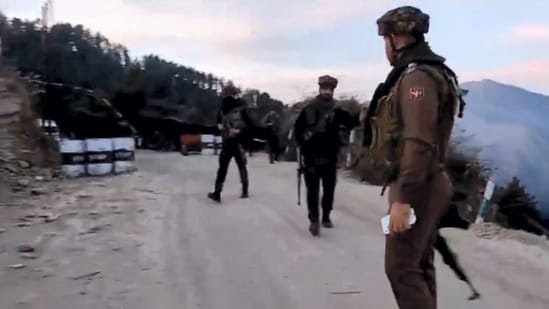
Security forces launched a significant search operation on Friday in response to a terrorist attack that claimed the lives of four soldiers and left three others injured in the Poonch district of Jammu and Kashmir. The attack, which occurred between Dhera Ki Gali and Bufliaz, within the Surankote police station’s jurisdiction, targeted an Army vehicle on Thursday.

Meanwhile, reports have surfaced indicating a heightened state of alert in the Rajouri-Poonch sector of Jammu and Kashmir. Allegedly, there are suspicions regarding the presence of 25-30 Pakistani terrorists hiding in the forested areas of the region. This revelation has added urgency to the ongoing search operation, prompting intensified efforts by security forces to locate and neutralize any potential threats.

Promptly after the tragic incident, security forces mobilized a massive cordon and search operation in the forested areas of Poonch district. Utilizing aerial monitoring and deploying sniffer dogs, law enforcement agencies are diligently scouring the terrain to apprehend the perpetrators responsible for the ambush on two Army vehicles.

Terrorist attack on Indian army in Poonch

The assault, which unfolded at a blind curve at Dhatyar Morh around 3.45 p.m. on Thursday, took the lives of four soldiers who were en route to participate in a cordon-and-search operation.In a disturbing turn of events following the attack, officials reported the mutilation of the bodies of at least two soldiers and the seizure of weapons belonging to some of the deceased personnel.

As part of the ongoing investigation, security officials are meticulously examining the site to decipher the tactics employed during the assault, including the potential use of steel core bullets by the assailants.

The operation underscores the heightened alertness and swift response of security forces to tackle such threats in the region. The search operation remains ongoing, reflecting the commitment of law enforcement to bring those responsible to justice and prevent further such incidents.

The reported suspicions of a presence of Pakistani terrorists in the Rajouri-Poonch sector emphasize the complexity and gravity of the security situation in Jammu and Kashmir, highlighting the persistent challenges faced by security personnel in the volatile region.

Sindh:Radical Islamist abducts,converts & marries a minor Hindu girl using fake document

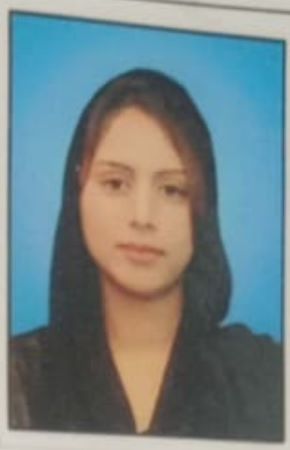
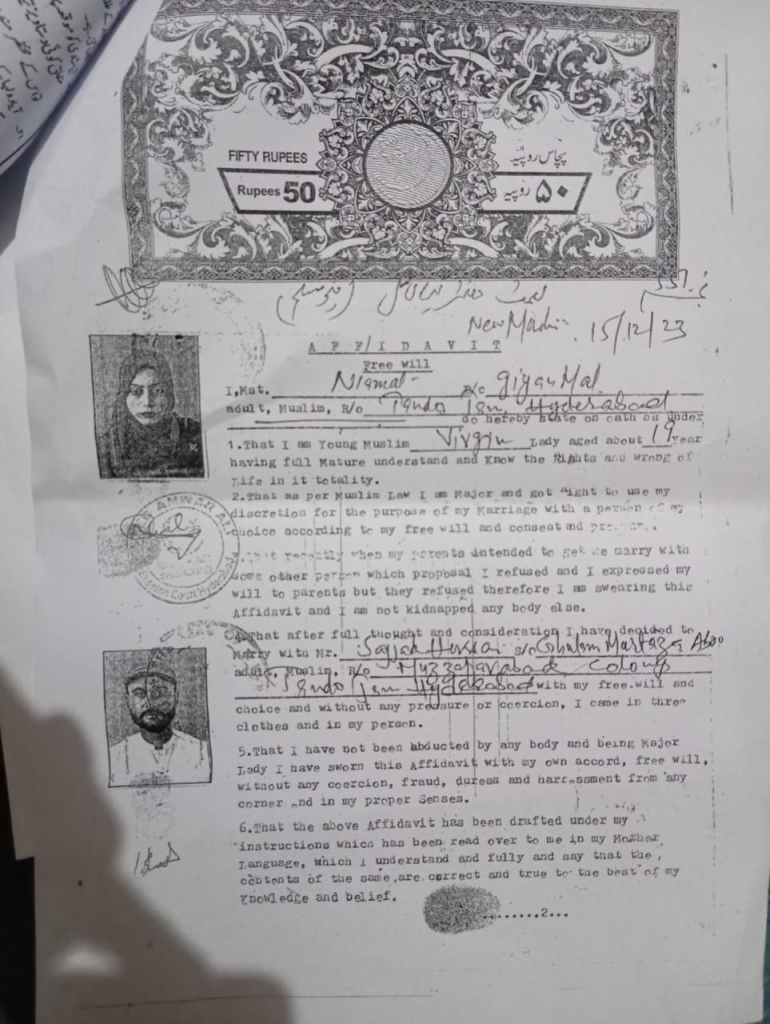
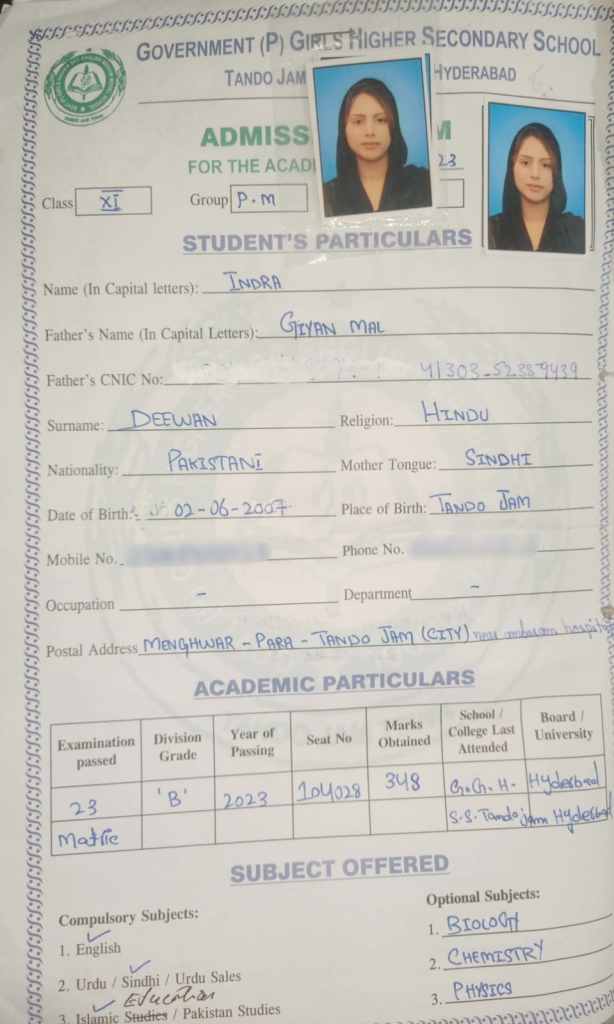
Another minor Hindu girl has been abducted and forcibly converted in Sindh. The latest victim named Indra Deewan, daughter of Gyan Mal was abducted by a radical Islamist named Sajid Hussian. Sajid abducted her from her hometown in Tando Jam, Hyderabad in Sindh. Later he forcefully converted her to Islam and gave a new name, Naimat. After her conversion, Sajid Hussian married her using a fake free will affidavit with her manipulated age. In the forged documents presented by the abductor, Indra’s age is mentioned as 19 years while in her school documents presented by her parents clearly validates her age as 16.

Copy Of Forged Free Will Affidavit (Photo: News Intervention)
School Document Showing 16 Years Of Age (Photo: News Intervention)

Abductor targets parents of Indra

After converting and marrying her, Sajid also registered a counter FIR against her parents, fighting to get their daughter back. Sajid has accused that they have threatened him and Indra. However, his ease in registering an FIR while the parents remain unheard clearly illustrates the social imbalance, speaking volumes about the authenticity of such claims.

The incident clearly shows that such cases are increasing because of the radicalized mindset of Islamists which is harboured by the political, religious, and judicial system in Islamic Republic of Pakistan. The judicial system in this case has apparently given preference to the forged documents instead of the most basic school documents. The sufferings of an innocent minor girl, who has been abducted, converted, and married to someone she does not know, has been veiled by the garb of fake documents. Now she is considered married and converted waiting for the unprecedented persecution that lies ahead in the law less land of Pakistan.    

The tragic case of Indra Deewan yet again highlights that the condition of minority girls, especially Hindus, is worsening by the end of the day. The physical and mental dent they get from a sense of insecurity is unprecedented and largely goes unchecked.

Pak brutality halts Baloch Long March in Islamabad, POB residents block road to Quetta in response

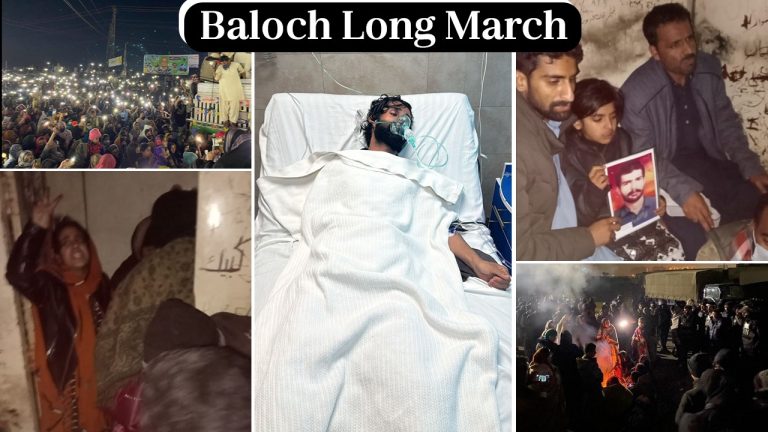
On Wednesday night, the Islamabad police forcefully dispersed Baloch protesters participating in the long march against extrajudicial killings in Pak-occupied-Balochistan. The march, which had reached Islamabad on 21 Dec night, faced obstacles as the police obstructed their entry into the city, using various tactics to harass and intimidate the protesters. The march, led by prominent activist Mahrang Baloch, had covered nearly 1,600 k.m. before encountering obstacles in the capital. But, displaying courage and commitment, she stated, “Our movement will continue until our demands are met.”

Despite facing resistance from the police, the march decided to proceed to D Chowk from the National Press Club Islamabad. In response, the Pakistan Army deployed heavy police forces and water tanks, aiming to disrupt the peaceful protest. The situation escalated as the police resorted to violence, injuring several peaceful protesters through baton charges, tear gas shelling, and water cannons.

Islamabad police cracks down

Numerous protesters were arrested by the Islamabad police, who used force not only on the long marchers but also in front of the press club. The severity of the situation left many peaceful protesters seriously injured, with urgent medical attention needed. Efforts are underway to rescue and support those injured during the clashes.

Disturbingly, the Islamabad police arrested all participants of the Long March, including families, females, and even children, dismantling the camp and initiating violence against women and others present. The crackdown extended beyond Islamabad, as the police searched residences and flats of Baloch students and families throughout the city, brutalising against the Baloch community in the name of apprehending protesters through force and ruthlessness.

The arrested protesters are being shifted to different locations, raising concerns about their safety and well-being. The Baloch community condemns the brutal actions of the Army, and there is a global call for international condemnation of the Baloch genocide.

Baloch Yakjehti Committee

The march, sparked by the death of Balaach Mola Bakhsh in extrajudicial killing, calls for the release of missing persons, disarming of the Counter Terrorism Department (CTD), and accountability for Army’s abuses. Mahrang, whose father disappeared in 2009, emphasized the need for justice and transparency. Leaders of the march demand the release of disappeared individuals and the disarming of the Counter Terrorism Department (CTD) to prevent future abductions and fake encounters.

Mahrang Baloch, a prominent leader of the Baloch Yakjehti Committee organizing the march, emphasized that the movement will persist until their demands are met. Notably, this march is unique as it is led by women, reflecting the uncompromising stand of Baloch women in the face of harassment and disappearances of male activists.

The situation in Islamabad remains tense, with concerns about the whereabouts of detained protesters. The Baloch activists have urged human rights organizations and international media to highlight their cause and advocate for the immediate release of those arrested.

Peaceful protest in Quetta

In the backdrop of the brutal crackdown on peaceful protestors, the residents of Pak-occupied Balochistan have staged a roadblock on the primary route to the capital city, Quetta. This was a remarkable attempt to express unity and solidarity with the marchers, as they call for the prompt release of participants in the Baloch Long March in Islamabad. The community remains resolute, expressing that Pakistan has caused significant harm, and they will not tolerate further violence. The plea echoes the urgency to address the ongoing genocide, emphasizing the need for collective voices to break the silence surrounding this grave issue.

Justice for Balochistan

The Pakistan Army has a long history of denying involvement in enforced disappearances, even as evidence points towards them. The Commission of Inquiry on Enforced Disappearances has received over 9,000 cases since its inception, with the vast majority originating from Pak-occupied-Balochistan.

Bakhsh’s family, like countless others, has no faith in official inquiries. Mahrang, speaking on behalf of the marchers, demands the disarmament of the Counter Terrorism Department and a guarantee of due process for all. The protesters’ call for justice extends beyond Bakhsh’s case; they seek an end to the cycle of violence and impunity that has plagued Pak-occupied-Balochistan for decades.

The crackdown on the Long March highlights the Army attempt to suppress dissent and silence Baloch voices. However, the unwavering determination of the activists and the growing support from within Balochistan and beyond indicate that the struggle for justice will not be easily silenced.

BLA attacks Pak Army in Turbat & Gwadar,Pak-occupied Balochistan

In a resolute demonstration of resistance against the oppressive Pak Army in Pak-occupied-Balochistan, the Baloch Liberation Army (BLA) has claimed responsibility for two strategic bomb attacks in Turbat and Gwadar. These targeted actions were aimed at disrupting the presence of the occupying Army and countering the activities of an enemy agent.

Turbat Strike

In Turbat, BLA operatives meticulously planned and executed an attack near an educational checkpoint where Pakistan Army personnel had gathered. The blast injured four Army personnel. This calculated move was intended to convey a powerful message that the Baloch people will not remain silent in the face of occupation, oppression, violence and injustice.

Gwadar: The Enemy Agent

In a separate operation in the Baloch Ward of Gwadar, BLA operatives targeted an agent of Pak secret agencies who had been operating in disguise. The agent, involved in intelligence activities, had taken refuge in a bathhouse, using it as a front for his covert operations. The BLA strike successfully unmasked his activities, sending a clear warning that those working against the interests of Balochistan will be held accountable.

BLA’s Perspective

Jeeyand Baloch, the spokesperson for the Baloch Liberation Army, emphasized that these operations are a response to the continued forceful occupation of Balochistan by Pakistan Army since 27 March 1948. The Pakistan Army is targeting and monitoring Baloch people, and anyone who has the potential to raise questions is either killed or abducted. The BLA’s actions underscore their commitment to resisting the oppressive Army that have marred the history of Balochistan. These strategic strikes aim to disrupt the operations of the occupying forces and deter those who collaborate with them. As the struggle for liberation intensifies, the Baloch Liberation Army remains steadfast in its pursuit of a free and sovereign Balochistan.

Pashtuns support and join Baloch Long March in Dera Ismail Khan

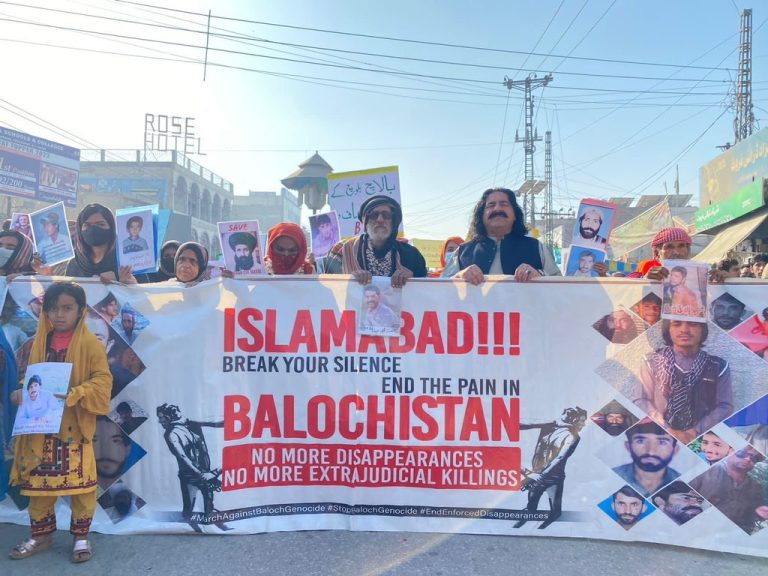
On the 27th day of the Baloch Long March, the movement has reached Taunsa Sharif, marking a significant milestone in the protest against the continuous Baloch genocide. Videos and images circulating online show thousands lining the streets, cheering and waving flags, as the marchers make their way towards Islamabad.

The entire Baloch nation, from Makran to Taunsa Sharif, has taken to the streets to voice their resentment against the brutal actions of the Pak Army. The historic long march received a warm welcome upon reaching Dera Ismail Khan, where the proud residents expressed their support for this bold stance against state terrorism and oppression.

Warm welcome in Dera Ismail Khan

Upon reaching Dera Ismail Khan, the historic march was met with another wave of support and warmth. The local Pashtun community, who themselves have faced state repression, played a crucial role in this warm reception.

Pashtun nationalist leader Ali Wazir, a vocal critic of Pak Army’s oppression, greeted the marchers and presented Mahrang Baloch, a prominent organizer, with a traditional dupatta, symbolizing unity and solidarity. This act of kinship resonated deeply with both communities, signifying the unwavering support of Pashtun communities who themselves bear the scars of Army’s oppression.

https://twitter.com/Ehsan_NL/status/1737368261283508655

This marked a remarkable moment of unity, as the Pashtun tribe, having faced its own challenges at the hands of the Pak Army, joined hands in solidarity with their Baloch counterparts.

The rally held in Dera Ismail Khan drew hundreds, reaffirming the march’s demands for an end to Baloch genocide, illegal forced disappearances, extrajudicial killings by the Counter Terrorism Department (CTD) in fake encounters, and the activity of death squads across Pak-occupied-Balochistan. Wazir’s participation resonated deeply, with his passionate address resonating with the gathered crowd.

With Taunsa Sharif successfully navigated, the march now sets its sights on Islamabad, the capital. There, it will join the established camp of missing persons and unveil its next course of action. The Baloch Long March appears to be galvanizing support as it moves closer to the seat of power, raising its voice for justice and a better future for the Baloch people.

UNSC nears decision on Gaza aid amid diplomatic talks & hostage negotiations

In a crucial turn of events, the UN Security Council is poised for a significant vote today, centering on a resolution designed to escalate the inflow of humanitarian aid into Gaza.This voting session, initially scheduled for Monday, faced a postponement to allow for extended deliberations, underscoring the gravity of the discussions at hand.

Reportedly, behind closed doors, diplomats engaged in intensive negotiations, honing the content of the draft resolution. Originally inclusive of a demand for a “cessation of hostilities”, aimed at facilitating the much-needed aid flow into Gaza, the specifics remained under scrutiny. Notably, the United States continued its review of the proposed text as of the latest update on Tuesday.

Simultaneously, Israel has put forth a proposition to Hamas, presenting a weeklong proposition for a week long cessation of conflict in exchange for the release of approximately 40 individuals held as hostages. Reports suggest that the proposal seeks the liberation of hostages encompassing women, the elderly, and those in dire need of immediate medical attention. Notably, Hamas has explicitly stated their stance, asserting no further releases will occur until a firm ceasefire is secured.

Baloch Long March overcomes challenges,advances towards Taunsa Sharif & DG Khan

Entering its 25th day, the Baloch Long March from Turbat has encountered roadblocks and arrests in Dera Ghazi Khan, but activists remain defiant in their fight against Baloch genocide by the Pakistan Army. The Baloch Long March, organized by the Baloch Yakjehti Council (BYC), faced resistance in Dera Ghazi Khan on Monday (19 Dec). Despite the Army’s attempts to stop the march, activists and protestors continued their journey towards Taunsa Sharif and DI Khan.

The march faced a heavy police presence in Dera Ghazi Khan and attempts to stop them from proceeding further. Authorities cited Section 144, prohibiting public gatherings, but protesters refused to comply.

The determined marchers, led by Mahrang Baloch, encountered resistance from the Pakistan Army in Dera Ghazi Khan, which attempted to halt the long march against the Baloch Genocide. The authorities warned of a ban on transporters unless they lifted their ban, prompting the activists to threaten a dharna (sit-in) in Dera Ghazi Khan.

On 19 Dec, at 11 a.m., the long march is set to continue on foot towards Islamabad from the Gadai Chowk picketing site. Ghayur Baloch, a prominent figure from Dera Ghazi Khan, is expected to ensure his active participation in the ongoing protest.

Clashes at Dera Ghazi Khan

Clashes erupted when marchers insisted on entering the city, where a partial strike had been observed. Police reportedly resorted to baton charges, detaining at least 20 individuals, including two women. Among those detained were prominent activists like Shaukat Ali, Asif Leghari, Miraj Leghari, and Abdullah Saleh. Legal proceedings have been initiated against them under Section 144.

Despite the obstacles, the long march, led by Mohammad Asif Laghari, continued onwards towards Taunsa Sharif and DI Khan. The BYC spokesman urged the Baloch community to join the protest in solidarity. The march began in response to the extrajudicial killing of Balach Mola Bakhsh by the Pak Army, sparking concerns about enforced disappearances and human rights abuses in Pak-occupied-Balochistan.

Despite this obstacle, the marchers, led by Mahrang Baloch, maintain their unwavering commitment to reaching the capital and voicing their protest. The situation is evolving, and it’s yet to be seen what will unfold when the march reaches to the capital.