Home Blog Page 159

J&K police hunts illegal Rohingyas & their facilitators across the region

J&K Police, on Tuesday, launched a massive crackdown against illegal Rohingya refugees across Jammu and Kashmir. In Jammu, a total of 7 FIRs have been registered against locals providing shelter. J&K police has said, “Action was initiated against all those who facilitated shelter and government benefits to the non-citizen Rohingyas.”

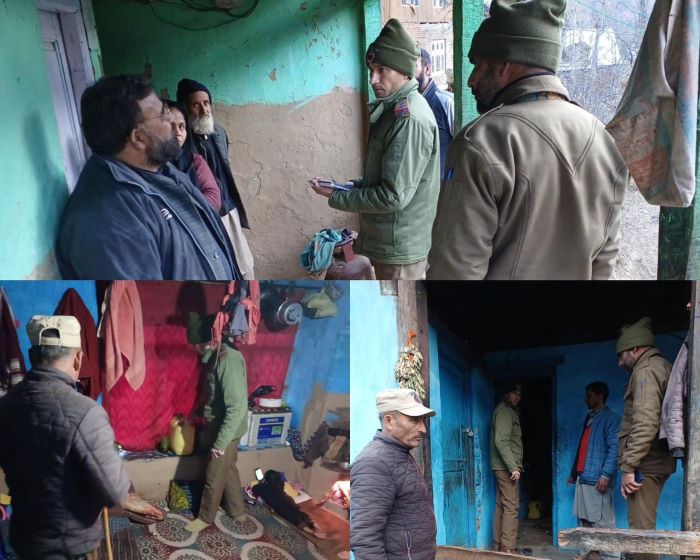
Searches, following procedure and in the presence of magistrates, were conducted at different locations in Jammu district where non-citizens were accommodated, and at the residential places of the facilitators. Illegally acquired Indian documents like PAN cards, Aadhaar cards, and bank documents, as well as other incriminating materials, were seized. The police have initiated an investigation into the matter.

J&K Police’s crackdown in Doda

Along with Jammu, J&K police also conducted raids in Doda district. In Doda, the police registered three FIRs against 10 immigrants, including Rohingyas and Bangladeshi nationals, and their facilitators. They were illegally staying in India and followed illegal procedures to obtain the Indian identity documents like Domicile Certificates, Aadhaar Cards, Ration Cards, Voter ID Cards, and PAN Cards.

‘A detailed inquiry was conducted, revealing that these Rohingyas managed to enter District Doda and illegally obtained Indian identity documents, falsely portraying themselves as permanent residents,’ the police stated.

Crackdown in Poonch

Similarly in Poonch district, the police reported the arrest of three individuals for creating a fake Aadhaar card and ration card for a Rohingya named Mohd Numaan from Myanmar. Numaan had been residing in village Dhargloon since 2013 and married a local girl, Farzana Kosser, from Dhargloon in 2016. Numaan, along with his father-in-law Nazir Ahmed, conspired to prepare fake Aadhaar and ration cards, using a fake Aadhaar card prepared in conspiracy with two others running an internet cafe in Dhargloon. During the investigation, Mohd Numaan, son of Muhib Ullah from Myanmar, was arrested on 30 Nov 2023 and is presently in judicial custody. As of now, four people have been arrested.

Crackdown in Rajouri and Kishtwar

In Rajouri district, J&K Police arrested one person from Laam area of Nowshera for facilitating a Rohingya woman named Haleema from Myanmar in district Rajouri. The arrested individual was, later, identified as Lal Din, son of Chidia, belonging to Kampla Mohra, Rajouri. It’s the second arrest in the case, and the police stated that the enquiry is ongoing with the possibility of more arrests.

Kishtwar Police conducted a crackdown against Rohingyas illegally residing in the Dachhan area. The investigation revealed that Rohingyas managed to procure documents such as domicile certificates, ration cards, Aadhaar cards, and voter ID cards illegally. During the ongoing investigation, the Police conducted house searches, recovering materials seized as evidence. Kishtwar police raided four houses of Ghulam Mohd Sheikh, Mushtaq Ahmed, Shahnawaz, and Fayaz Ahmed Chopan.

These widespread raids across Jammu and Kashmir shed light on the issues surrounding illegal Rohingya settlements and demonstrate the vigilance of Jammu and Kashmir police. Interestingly, the operation comes two months after the J&K Home Department set up a panel to identify illegal foreigners living in the UT.
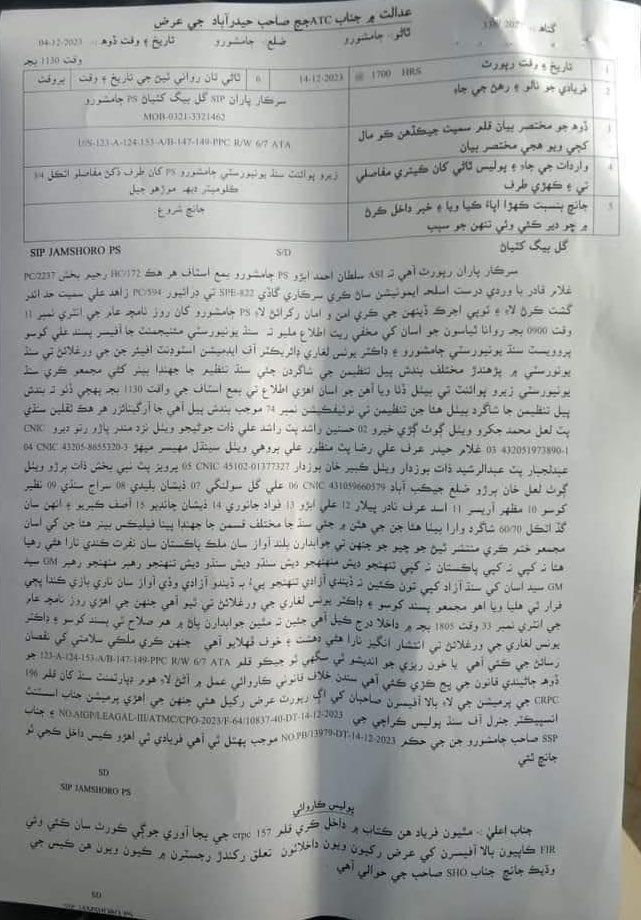
Teachers & students of Sindh University pay a heavy price for celebrating Sindhi Cultural Day

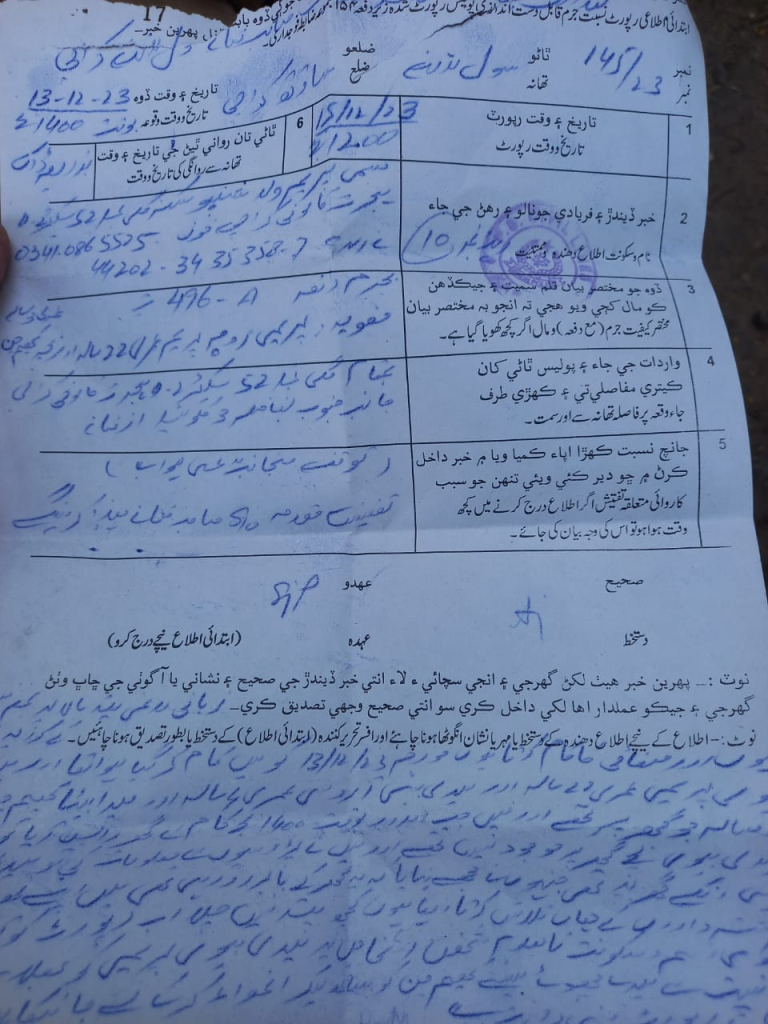
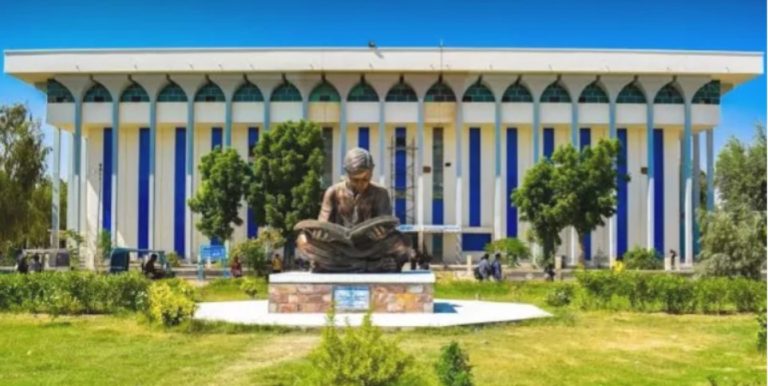
In a disconcerting turn of events, an FIR has been lodged against two teachers and more than 10 students at Sindh University, Jamshoro. The establishment has put allegations that they were involved in terrorism. But, in reality they have been accused because of participating in the celebration of Sindhi Cultural Day. This incident has triggered widespread concerns regarding the limitations imposed on Sindhis in freely commemorating and embracing their cultural heritage. The establishment is not only resisting the celebration of different cultures but also imposing an accusation of terrorism upon them.

Copy Of FIR Against Teachers And Students (Photo: Social Media)

The filing of charges against educators and students of Sindh University for engaging in cultural festivities highlights a distressing pattern of suppressing Sindhi cultural expression. It raises pertinent questions about the extent to which cultural freedoms are permitted within Pakistan. This development has evoked strong reactions from various quarters, with individuals and groups condemning the stifling of cultural festivities and emphasizing the fundamental right of every community to celebrate and preserve its heritage without fear of persecution.

The incident yet again highlights how religious diversity is under threat in Pakistan. Last time, such an atrocious action was taken for the celebration of Holi by the Sindhis. Then also, the university and higher education departments took action against those who celebrated the festival of colours. The Higher Education Commission, at that time, banned the celebration of festivals citing the reason that such celebrations “erode the Islamic identity” of the country.

PTM holds massive protest rally demanding immediate release of Manzoor Pashteen

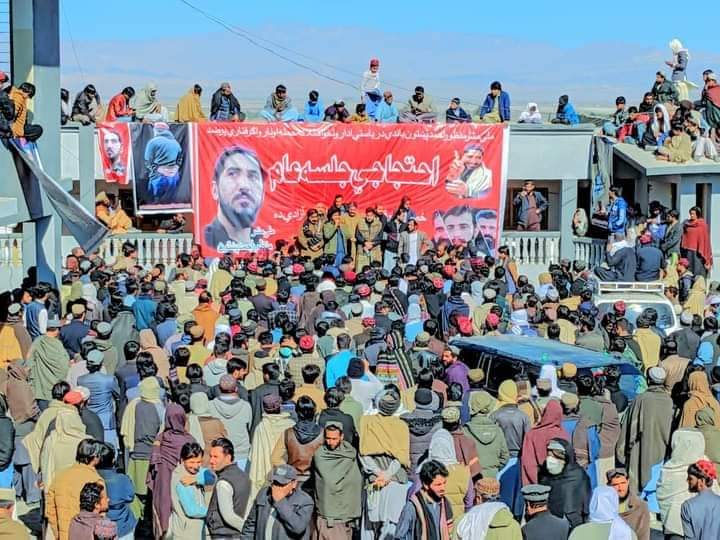
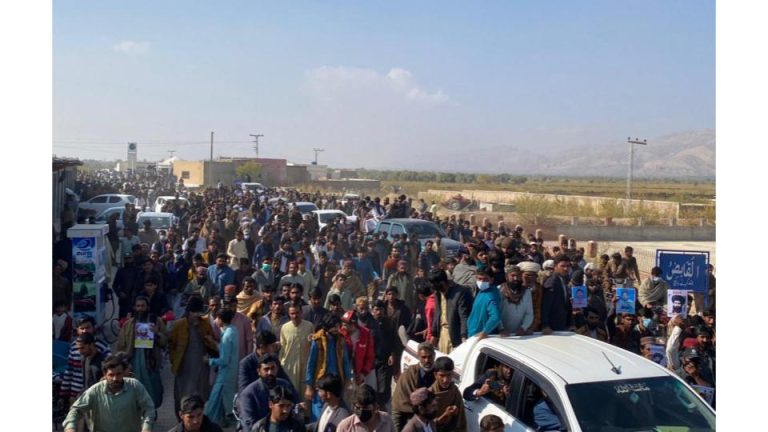
Pashtun Tahafuz Movement (PTM) held a massive protest rally for the release of its chief Manzoor Pashteen in Qila Saifullah, Pakistan-occupied Balochistan.

On Sunday, December 17th, PTM called for a protest sit-in against the deadly assault and subsequent arrest of Manzoor Pashteen. A huge number of Pashtuns took part in the rally making it unprecedented. The protest saw addresses from various PTM leaders who voiced for the immediate release of Pashteen. They also criticised the Pakistan Army for instigating insecurity in the region and persecuting the Pashtuns and Afghans.

Besides, to make the demonstration unsuccessful, Pakistani establishment took extra-judicial measures including raids and arrests. However, Pashtuns participated with full enthusiasm. Noor Bachaa, the Provincial President of PTM (Balochistan) took it to X (formarly known as Twitter) saying, “Long live the resistance. Despite all kinds of hardships, arrests, raids, we delivered our message to our Pashtuns. We will keep this field of resistance warm with the power of consciousness. Salute to all the people of Qala Saifullah. Salute to the organizing friends.”

Considerably, Manzoor Pashteen was arrested after a deadly attack on is convoy while he was enroute to participate in Turbat protest. Later, he was presented to the court three days after his arrest, a strict violation of legal rights of an individual. More recently, he was shifted to Adiala jail after undergoing seven day physical remand. Now PTM and its activists are agitated for the release of Manzoor Pashteen.

University students protest in Pak-occupied Jammu & Kashmir against soaring education costs

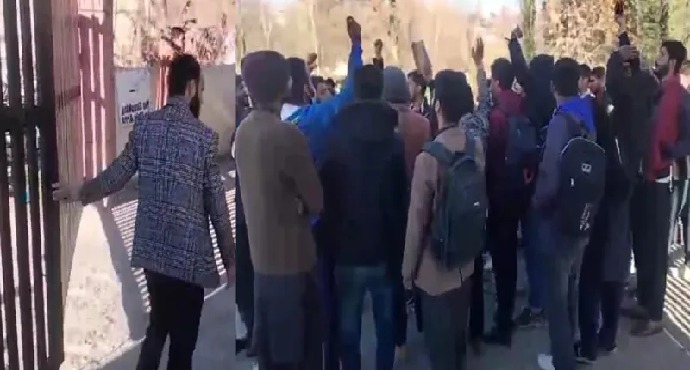
In Rawalakot, students rallied against the high costs of education, blocking roads to protest the soaring fees and closure of southern routes. At the University of Poonch Rawalakot in Pakistan occupied Jammu & Kashmir (POJK), students staged a complete boycott, barring teaching staff from campus entry.

Citing challenges from administrative groups, students voiced support for a comprehensive resolution of their demands. They demonstrated fervently, locking the university’s main campus gates in the morning and halting staff access. Subsequently, a protest unfolded at the main road block.

The protesting students of Poonch Rawalakot university highlighted ongoing challenges with administrative parties. After multiple hurdles, the administration eventually engaged in talks with students and the university. Subsequently, the temporary protest was called off post-negotiations.

Earlier, the students of Karakoram University also held similar protests over the lack of amenities and indiscriminate fee hike in Pak occupied Gilgit Baltistan. Actually, Pakistan is controlling and adultering every thing that benefits the Kashmiris in POJK and POGB. including education. To deprive the youth of the region from education, it is trying to create situations that posts hurdle in front of them. As Pakistan knows that eductaion could possibly lead to emancipation, it could eventually end up in making the region free, and hence it is subtly doing everything to make the life of Kashmiris precarious.

Sindh: Radical Islamists abduct minor Hindu girls and a mother with her child

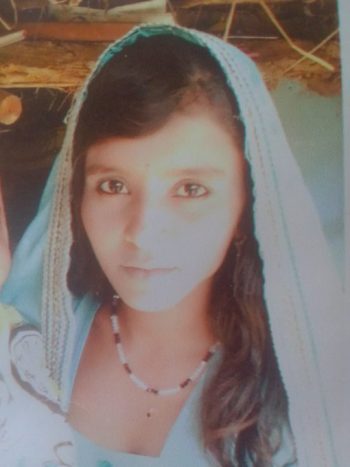
In a series of abductions of minor Hindu girls and women by radical Islamists, three other horrific incidents have emerged, sending chills through the Hindu community in Sindh. In a first, a minor Hindu girl named Jayshree has been abducted and forcibly converted. Jayshree, daughter of Chagan Kolhi was abducted from Samaro town of Umerkot in Sindh. Later she was converted to Islam and married off to her abductor named Nazeer Dhonkai.

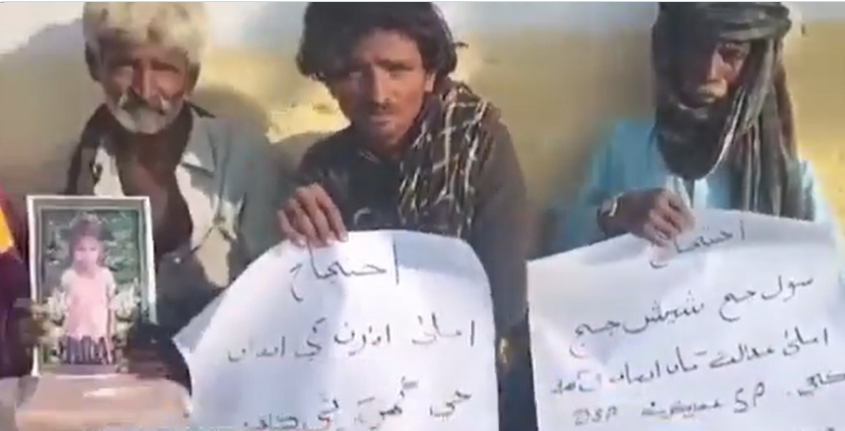
Apart from Jayshree, Nana Bheel, an 8-year-old Hindu girl has also been abducted, showcasing the precarious conditions of Hindus where even girls of this age are not safe. Nana Bheel hailing from Kunri in Umerkot was abducted by Hanif Khaskheli from her house. Unfortunately, the police is as usual trying to stave off the matter.

Family Of Nana Bheel Demanding Her Recovery With Placards And Her Photo (Photo: Social Media)

In another case of abduction, a Hindu woman named Premi has been abducted from her residence in Hijrat colony in Karachi. She was not abducted alone but with her child.

Copy Of FIR Against Abduction Of Premi (Photo: Social Media)


These cases of abductions yet again underscore that Hindus in Pakistan are under attack by the radical Islamists guided by a bigoted mindset. To make things even more perilous, the law and order provides such criminals a safe haven.  

Attack on Pakistan Army camp in Kolhu, Pak-occupied Balochistan

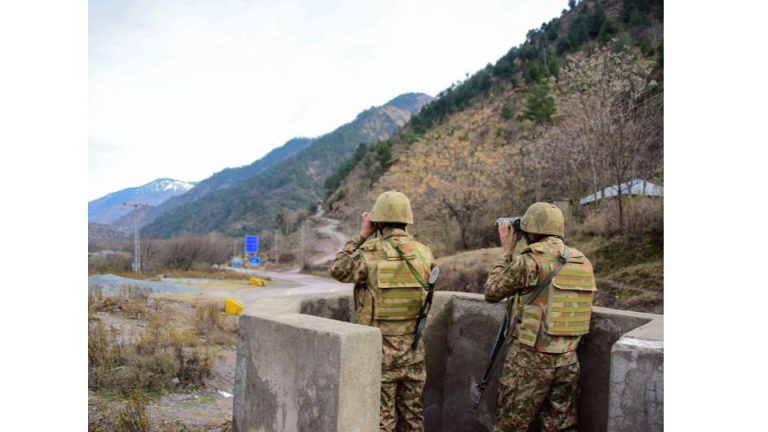
In a significant incident, unidentified armed individuals launched a targeted assault on a camp belonging to the Pakistan Army in the Malar area of the Awaran district. The attack occurred during the night earlier this week, with reports surfacing of significant financial losses incurred by the Army.

Details emerging from the scene suggest that the assailants, armed with rocket launchers and other heavy weaponry, initiated the attack at approximately 5 p.m. The central camp of the Army became the focal point of the assault.

Details surrounding the attack remain sketchy, with official statements from Army yet to be issued. However, initial reports suggest a fierce exchange of fire between the armed assailants and the Pakistan Army stationed at the camp. The extent of casualties on both sides remains unclear, and the condition of injured personnel is also unknown.

It is noteworthy that the Kohlu region of Pak-occupied-Balochistan and its surrounding areas have been known for the presence of Baloch freedom fighters. However, no group has claimed responsibility for the attack. The longstanding grievances of the Baloch people against the Pakistan Army, primarily concerning resource depletion and human rights violations, have fueled ongoing tensions in the region since the Army forcefully occupied Balochistan in 1948.

Protests for Baloch rights intensify as Long March reaches Dera Ghazi Khan

The long march for Baloch rights, which began in Turbat and made its way through Quetta, has reached Dera Ghazi Khan. However, concerns have been raised about the continued human rights violations in the region, as four innocent Baloch students from Ghazi University – Sakim, Ameer, Salman, and Zubair – went missing from their hostel in Model Town.

Baloch Students Action Committee (BSAC) Secretary General Azhar Baloch confirmed the incident, stating that the Counter-Terrorism Department (CTD) and Punjab Police conducted overnight raids on multiple student hostels in Dera Ghazi Khan.

This incident highlights the ongoing pattern of human rights abuses of Baloch in Pak-occupied Balochistan. Since the forceful annexation of the resource-rich province in 1948, reports of torture, intimidation, and enforced disappearances have been widespread. Pak Army’s “kill and dump” policy, where individuals are abducted, extrajudicially killed, and their bodies discarded, has left families in anguish and uncertainty.

The Pakistan Army is resorting to ruthless tactics, such as the kidnapping of Abdullah Saleh, Mairaj Khalid, Jamil Baloch, and Asif Baloch. Although they were called for negotiation at the DPO office, their whereabouts are still unknown. These actions by the Pakistan show their hostility towards the Baloch community.

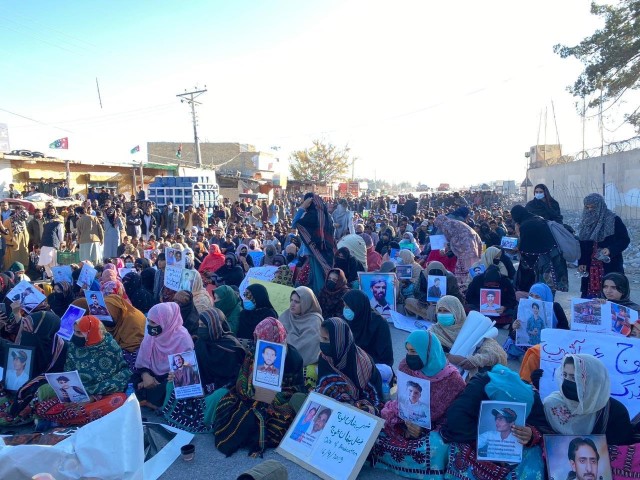
The plight of the families is particularly heartbreaking. They stage protests, marches, and hunger strikes in desperate pleas for answers and justice. Young children, some with pictures of their missing fathers, brothers, and uncles, brave the harsh weather to join these demonstrations. These incidents are a stark reminder of the ongoing tragedy.

The long march against the Baloch genocide was because of the death of Balach Baloch, 24, during a CTD raid in Turbat on November 23rd. It was the straw that broke the camel’s back & led to sit-ins and protests and now Long March. Balach was picked up by the CTD on October 29th and fell victim to the Army’s “kill and dump” policy.

The protests and sit-ins arose from both a demand for justice for Baloch victims and a call for action against the perpetrators within the CTD, which has become a tool for the Army’s raids, abductions, and indiscriminate extrajudicial killings. Frustrated by the lack of progress, the Baloch Yakjahti Committee initiated the long march.

However, the Pakistan Army has not relented. A large number of protestors, including many women, were detained on 17th Dec, as they joined the march. Police also erected barricades to impede the progress. Despite the obstacles, the march continues, with Barkhan witnessing a significant outpouring of support before it reaches Dera Ghazi Khan, where further arrests have been reported.

As the march for justice winds its way towards Islamabad, the plight of the missing and the ongoing human rights violations in Pak-occupied Balochistan scream for an independent investigation.

PTM joins the Long March against Baloch genocide from Quetta

After the arrest of PTM Chief Manzoor Pashteen, PTM has actively launched a campaign demanding his immediate release. Recently, Provincial President of PTM (Balochistan), Noor Bacha along with other Pashtun activists and leaders reached Quetta and joined the Long March against “Baloch Genocide.” The march reached Quetta from Turbat on December 12.

While talking to media, he said that PTM chief Manzoor Pashteen had announced to visit Turbat protest. While he was enroute to participate in Turbat, the police abruptly attacked his car and convoy. After the indiscriminate firing, he was arrested illegally.

He said, “As he wanted to participate in Turbat protest and raise his voice against the Baloch genocide, our PTM leadership has decided that we will complete the mission of our leader Manzoor Pashteen.”  He reiterated that PTM stands with Baloch Solidarity Committee (BYC) and supports their demands.

Noor Bachaa went on to say that for the last five months a ban has been enforced over Manzoor Pashteen’s travel to Pak-occupied Balochistan. He elucidated that Pashtun and Baloch are persecuted communities and Pakistan suppresses their voice, their rights are being violated and the brutality is at its peak. Despite all this, the Generals of GHQ are purchasing properties abroad. Since Manzoor Pashteen raises these issues and voices for the rights of persecuted communities, he was banned to come to Pakistan occupied Balochistan. They fear that the oppressed communities will stand by Manzoor Pashteen and become unstoppable. And that is why, as soon as Pashteen started moving towards Balochistan, all checkposts between Chaman and Quetta were sealed, and a large number of security forces were deployed. When they saw Pashteen they opened fire on him and arrested him.

Pakistan is trying to keep communities isolated

He stated that the establishment works on the policy of keeping the oppressed communities isolated. Because they know that if these communities start working together, then they will fight with full strength against the Pakistani tyranny and would go to any extent.

Accordingly, he asked all the communities be it Sindhis, Baloch or Pashtun, to unite and give a tough fight for the rights of people. Talking about the interim CM of Pak-occupied Balochistan Jan Achakzai, Noor Bachaa said that he is not competent, and he is in office for merely three months. He challenged Achakzai to sit with Pashtun leaders and address their problem, saying “we will send our representatives who will raise our issues. And if we do not give proof of every bomb blast, every missing Pashtun, Baloch and Sindhi, and every extra judicial killing, we are ready to be hanged at any square.”    

As of now, PTM has joined the long march against Baloch genocide in its second phase, where the march is proceeding from Quetta to Islamabad.

Baloch Long March continues, displays Baloch unity & resilience against Pak Army’s violence

The Baloch Yakjehti Committee (BYC) successfully brought the “Long March” against the Baloch genocide to Kohlu, marking a significant demonstration of Baloch national unity and resilience in the face of oppression. Thousands of courageous Baloch individuals from Kohlu joined the rally, emphasizing their collective stance against the Pak Army’s violence.

The long march, initiated in Turbat a week ago and passing through Mastung before reaching Quetta, drew participation from thousands of people rallying from Makran to Kohlu. The Baloch Yakjehti Committee initiated the march from Turbat to Quetta in response to the extra-judicial killing of the Baloch youths. In Quetta, the march faced resistance from Army.

Large crowds, including many women, gathered at Sariab Road to demand action against the Counter Terrorism Department (CTD) for the broad daylight extrajudicial killing of an innocent man, Balach Baloch. Protesters attempted to enter the Red Zone, a sensitive administrative area but were met by baton-wielding police and pushed back. The march currently remains at Sariab Road for demonstrations.

The Long March has touched several Baloch towns, drawing attention to the ongoing grievances of the community. While the future of the march remains uncertain, its impact in galvanizing the Baloch people and raising awareness of their concerns is undeniable.

The Long March transcends the specific incident of Balach Baloch’s death. It represents a broader struggle for the rights and dignity of the Baloch people, who have long faced marginalization and oppression at the hands of the Pak Army. The march’s success in uniting Baloch across tribal and regional lines serves as a powerful symbol of their unwavering commitment to their cause.