Home Blog Page 162

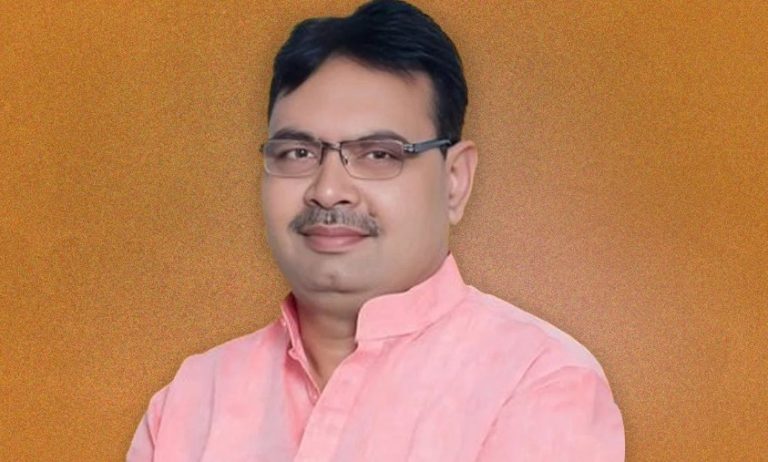
BJP announces Bhajan Lal Sharma as the new Chief Minister of Rajasthan

Following a decisive meeting of the legislative party in Jaipur, the Bharatiya Janata Party (BJP) has officially declared Bhajan Lal Sharma as the new Chief Minister for Rajasthan. Sharma, a first-time MLA from the Sanganer assembly seat and a four-time member of the BJP state executive committee, emerged as the unanimous choice for the leader of the legislative party in the presence of observers.

Sharma’s victory in the Sanganer constituency, traditionally considered a stronghold of the BJP, showcased his electoral prowess. He secured a substantial win over his Congress rival, Pushpendra Bharadwaj, with a margin of 48,081 votes in the recent elections.

Along with him, Divya Kumari and Prem Chandra Bairwa are announced to be the next Deputy Chief Ministers to assist Bhajan Lal Sharma. Prem Chand Bairwa is BJP MLA from the Dudu constituency in Rajasthan who won the seat in the 2023 assembly election by defeating Congress candidate Babulal Nagar with a margin of 35,743 votes. On the other hand, Diya Kumari won Vidhyanagar constituency by a margin of more than 71,000 against Congress candidate Sitaram Agrawal.

The Rajasthan Assembly Election 2023, which witnessed the declaration of results on December 3, saw the BJP sweeping to power with an overwhelming majority, securing 115 seats. In contrast, the incumbent Congress faced defeat, managing to secure only 69 seats.

Barrick Gold Corp pens human rights day post: Gold standard in irony

On December 10, 2023, commemorating Human Rights Day and the 75th anniversary of the Universal Declaration of Human Rights, Barrick Gold Corporation, a prominent Canadian mining company operating globally in gold and copper, published a lengthy, self-congratulatory post about their unwavering commitment to human rights. The lengthy piece touted its “zero tolerance” policy and its vision of “socio-economic upliftment.”

They emphasized that at Barrick, respect for human rights stands as a cornerstone of their sustainability vision, asserting a zero-tolerance policy for any violations committed by employees, affiliates, or third parties associated with their operations.

The narrative continued, outlining the positive impact of responsible mining on local communities, host countries, and society at large. Barrick acknowledged the potential adverse effects their activities might have on stakeholders and human rights, emphasizing the need for careful management to mitigate negative impacts and enhance project benefits.

Barrick’s Saindak shame

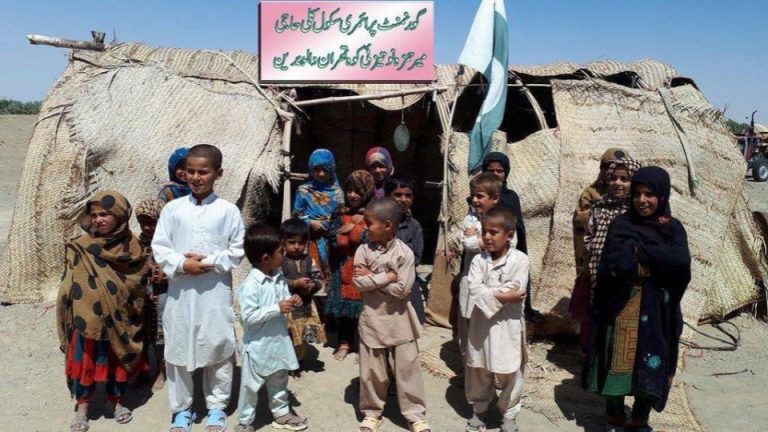
However, Rahim Baloch, a distinguished lawyer, a Member of BNM, and former Secretary General of BNM & Chairman of BSO, cast a critical light on Barrick Gold Corporation. He exposed the corporation’s facade, not with words, but with a single image: a primary school in Dalbandin, located in Pak-occupied Balochistan near the Saindak Gold mines, a desolate testament to Barrick’s alleged commitment.

The school, constructed from rugged carpets and frail wooden logs, portrayed the dire state of Balochistan under the control of the Pakistan Army. This image pierced through Barrick’s carefully crafted narrative. While they boast of “zero tolerance” for human rights violations, their silence on the systematic oppression of Balochistan speaks volumes. The lawyer questioned Barrick’s commitment, highlighting their seeming indifference to the grim conditions in Pak-occupied-Balochistan.

Long March

Since 1948, the Pakistan Army has occupied Balochistan, its iron fist crushing the region’s aspirations for independence and development. Enforced disappearances, staged encounters, target killings, torture, humiliation, and kidnappings for ransom have become the norm. And, the Saindak Gold mine, operated by Barrick, sits like a monument to this oppression, extracting resources while impoverishing the local population.

Despite an ongoing long march protesting the Pakistan Army’s “kill and dump” policy, involving extrajudicial killings and abductions, corporations remained silent. Every raid, every disappearance, every staged encounter is a testament to their disregard for human rights. Barrick Gold, for all its claims of zero tolerance for human rights violations and socio-economic development, failed to address this crisis. Barrick, complicit in this exploitation through their resource extraction, chooses to turn a blind eye to the suffering they enable.

The case of Barrick and Balochistan is not an isolated incident. It highlights the complex challenges of balancing corporate interests with human rights concerns in resource-rich regions. It raises questions about corporate accountability, transparency, and the true cost of resource extraction. The plight of Balochistan demands more than lip service; it demands accountability and a genuine commitment to upholding the very values Barrick claims to champion.

Barrick’s Human Rights Day post served as a stark reminder that corporations cannot simply pay lip service to human rights while profiting from exploitation. We must look beyond their carefully crafted narratives and demand genuine action. Only then can we hope to see a future where human rights are not just words on paper, but a lived reality for all.

UN to vote for a ceasefire in Gaza as Israel claims edge over Hamas

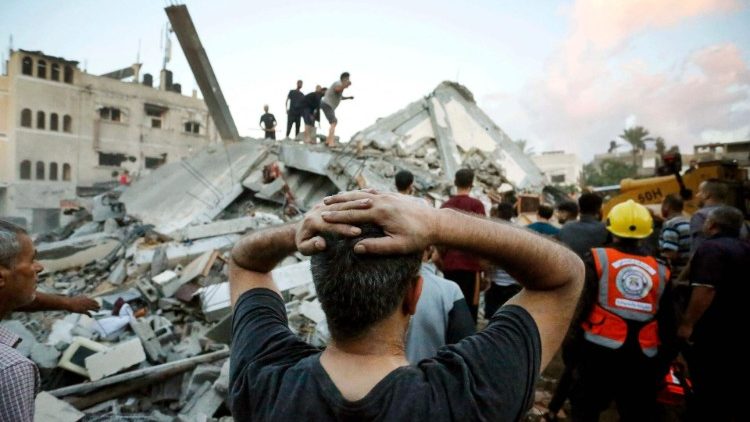
As the war between Israel and Hamas entered its second month, the United Nations General Assembly is preparing to vote on a non-binding resolution demanding “an immediate humanitarian ceasefire” in Gaza – on Tuesday, a call that the council has so far failed to make.

Earlier on Friday, the United States, one of only five permanent members of the UNSC vetoed to halt a draft text calling for a ceasefire, the latest sign of impasse. UN Secretary-General Antonio Guterres has warned of a looming “complete breakdown of public order” in the besieged Gaza. After Friday’s failure on draft text, many countries along with human rights organisations expressed dissatisfaction and regret. Furthermore, Guterres on Sunday described the Council’s authority and credibility as “undermined”.

Meanwhile, IDF has stated that Israel is augmenting the speed of inspection of the humanitarian aid along with sending it to Gaza and will be using two crossings to help screen humanitarian aid for Gaza.

After Friday, a top UN official stated that the UN staff in Gaza is feeling abandoned after the US veto. The UNRWA chief Philippe Lazzarini told the media that they (UN Staff) “cannot understand” why a ceasefire has not been agreed upon after thousands have been killed and displaced.

Nonetheless, while a ceasefire vote is being prepared, Israeli troops are continuing with their operations. Recent reports suggest that they are encircling Hamas’ final two strongholds in northern Gaza, Israeli Defense Minister Yoav Gallant claimed on Monday that Hamas battalions in the Jabalya and Shejaiya areas were “on the verge of dismantling”. According to him, the surrendering terrorists had admitted that they are running short of weapon and food supply.

Awami Workers Party demand immediate release of Pashtun leader Manzoor Pashteen

The Awami Workers Party has strongly condemned the arrest and ill-treatment of Pashtun Tahafuz Movement leader Manzoor Pashteen, who was not allowed to contact his family for 2 days and was then charged in an anti-terrorism court in Islamabad. Calling it a violation of the principles of basic human dignity, AWP demanded an immediate release of Manzoor Pashteen.

The party warned that such violent actions not only violate the constitutional rights but are also a provocative act for followers of its non-violence political ideology and further weaken the foundations of Pakistan’s weak sovereignty.

Party President Akhtar Hussain and General Secretary Bakhshal Thalu said that Manzoor Pasteen was arrested by the police from Chaman while he was taking part in the ongoing peace protest on the border with Afghanistan. Contrary to the official statement, when his vehicle moved from Chaman towards Turbat, he was first threatened and then fired upon indiscriminately. He was going to express solidarity with the ongoing sit-in against the killing of three Baloch people in a fake encounter in Turbat.

The party iterated that Manzoor has the constitutional right to travel anywhere in Pakistan and all the allegations leveled against him in the fake case filed against him are baseless.

Awami Workers Party condemned the extra-constitutional proceedings

The leadership of the Awami Workers Party also condemned the manner in which Pashteen was handed over to the Ismail Khan Police and then to the Islamabad Police and was prevented from contacting his lawyers or any of his close relatives for 48 hours. This points to the growing lawlessness in Pakistan and makes a mockery of the establishment’s claim that it is creating a peaceful environment for holding elections.

Instead, such inhuman treatment of people who are peace-loving and progressive with conscience, along with others, makes it clear that the Pakistani establishment is rapidly becoming militarized and a graveyard of justice.

The party demanded the immediate release of Manzoor Pashteen. Additionally, all false cases made against him should be dropped immediately. Accordingly, Awami Workers Party also expressed solidarity with the ongoing peaceful protests across Pakistan for the rights of the people, oppressed communities and oppressed classes.

Fast-fashion giant Zara under fire for ethical lapses

Spanish fashion retailer Zara is facing criticism over its recent collection campaign named “The Jacket.” Palestinian and pro-Palestinian social media users are calling for a boycott, claiming that the campaign, released on December 7, mocks the death of Palestinians.

The collection features a model in black clothes against a white backdrop with props resembling a ravaged structure in ruins. Deleted images, shared on social media platform X (formerly Twitter), allegedly showed the model holding a mannequin wrapped in white cloth with rubble in the background. Other images included mannequins positioned in different ways and a prop resembling the Palestinian map. Critics point to specific elements, including:

  • A white cloth-wrapped mannequin resembling deceased Palestinians.
  • A plastic-wrapped mannequin lying on the floor, reminiscent of bomb victims.
  • A prop resembling the Palestinian map, further fuelling the controversy.

These elements, coupled with the backdrop, have led many to interpret the campaign as insensitive and disrespectful towards the suffering of Palestinians, particularly in Gaza. Pro-Palestinian users, like Majid Freeman, have compared these images to scenes from Gaza amid Israeli strikes on Hamas. The campaign has been labelled the “Gaza genocide collection,” leading to calls for a boycott.

Zara maintains that the campaign is a deliberate design choice to showcase the versatility of the garment. Amid the boycott, an older controversy involving Zara’s Israeli head designer, Vanessa Perilman, has resurfaced. In June 2021, Perilman criticized Hamas in a private chat with a pro-Palestinian model, leading to a viral exchange. In a private chat with a pro-Palestinian model, Perilman expressed critical views towards Hamas and questioned Palestinian practices. Screenshots of the conversation went viral, sparking outrage and threats against Perilman.

Perilman, an Israeli fashion industry veteran, has worked with various brands and has held the position of Head Designer for Zara Women’s Collection since 2015. The controversy has reignited amidst global calls for the boycott of Israeli brands following an offensive strike by Israel in response to the October 7 terrorist attacks by Hamas.

Zara, however, argues that the campaign’s design was intended solely to showcase the versatility of the jacket. Despite the backlash, Perilman remains employed by Zara. Some argue that her statements were courageous and defended her right to express her views. They also suggest that Islamists may be exploiting the Zara campaign to revive the Perilman controversy and attack the brand.

The controversy highlights the complex relationship between fashion, politics, and social sensitivity. While artistic expression and creative freedom are important, brands must also be mindful of the potential impact of their work on sensitive issues and communities. It remains to be seen how this situation will unfold. The boycott movement’s success will likely depend on how Zara responds to the criticism and whether it can effectively address the concerns raised.

Mohan Yadav, new Chief Minister of Madhya Pradesh

The speculation surrounding the new Chief Minister of Madhya Pradesh has finally concluded as the BJP legislative party confirmed Mohan Yadav for the position. After winning 163 seats in the assembly elections, defeating anti-incumbency, this decision follows intense discussions in New Delhi and Bhopal. Several names, including Shivraj Singh Chouhan, Prahlad Patel, Jyotiraditya Scindia, VD Sharma, and Kailash Vijayvargiya, were considered.

Mohan Yadav’s selection, surprising many, comes a day after the BJP announced Vishnu Deo Sai as the CM in Chhattisgarh. The official announcement was made after BJP observers met with the newly elected MLAs in the state. Yadav, an MLA from Ujjain South and a former minister in the Shivraj Singh Chouhan cabinet, emerged as the Chief Minister-elect.

The BJP, securing 163 out of 230 seats in the November 17 polls, retained power in Madhya Pradesh. Mohan Yadav’s appointment comes more than two weeks after the BJP’s victory. In his response, Mr. Yadav expressed gratitude for the opportunity, acknowledging his role as a humble party worker.

To address ambitions and maintain harmony, the BJP also appointed two deputy chief ministers – Jagdish Deora and Rajesh Shukla. With these appointments, the suspense over the chief ministers for the states won on December 3, including Chhattisgarh, has ended.

Mohan Yadav’s selection, at 58, marks a significant turn in the state’s political landscape, potentially signaling a new era. The BJP’s strategy of “collective leadership,” centered around Prime Minister Narendra Modi, played a pivotal role in their landslide victory, sidelining the four-time Chief Minister Shivraj Singh Chouhan.

The BJP’s decisive win, contrary to exit polls, underscores the effectiveness of their campaign strategy. Former Union Agriculture Minister Narendra Singh Tomar, now a three-time MLA, has been appointed Assembly Speaker, with speculation about his potential succession to the top post. With Rajasthan being the only state without a Chief Minister among those that voted in November, the BJP has concluded its leadership announcements in the other victorious states.

Protests across Pak-occupied Balochistan against the arrest of Manzoor Pashteen by Pak Army

On December 10, a wave of protests surged through Zhob, Pakistan-occupied Balochistan as supporters of the Pashtun Tahafuz Movement (PTM) rallied against the illegal arrest of their supreme leader Manzoor Pashtun and several PTM members. The demonstrations were fuelled by outrage over a violent attack on Pashtun’s convoy in Chaman and the forced removal of Afghan refugees, which garnered widespread condemnation.

Amidst the fervor, PTM leaders and activists gathered in Zhob for a significant protest gathering. However, the situation escalated when senior PTM figure and former MNA Ali Wazir was intercepted by the Zhob administration while en route.

Apart from leaders, thousands of impassioned Pashtun protestors flooded Zhob, demanding the immediate release of Manzoor Pashteen and questioning the circumstances surrounding his arrest. The manner of Pashteen’s apprehension, coupled with a murderous attack and abduction, sparked concerns of human rights violations within the community.

Adding to the outcry, Pashteen was presented in an anti-terrorism court three days after his arrest and subsequently remanded to seven days of physical custody. Critics and supporters alike condemned the delay in legal proceedings, labeling it a violation of due process and fundamental rights.

Notably, Pashteen was arrested while he was en route to Turbat to participate in a protest staged around the brutal extra-judicial killings of four innocent Baloch youth by the CTD. Turbat protest sent shockwaves to the Pakistani administration and Pakistan Army since it started. Pashteen’s presence in the peaceful protest would have strengthened the struggle, fearing which Pakistan Army opened fire on Pashteen’s convoy and arrested him . The events show the horrible condition of law and order in Pakistan and emphasize the irresponsible and extra-constitutional way of working of Pakistani establishment under Pakistan Army.

Baloch Liberation Army targets & eliminates CTD officer in Khuzdar

In a daring operation, the elite force of the Balochistan Liberation Army (BLA), known as the Special Tactical Operations Squad (STOS), successfully eliminated Murad Jamot, a senior officer associated with Pakistan’s Counter-Terrorism Department (CTD), in an attack in Khuzdar.

The meticulously executed operation took place on Sultan Ibrahim Road in Khuzdar, where STOS operatives employed a magnetic Improvised Explosive Device (IED) on the target’s vehicle. The result was the complete destruction of the vehicle and the successful elimination of the intended target.

Murad Jamot’s affiliation with the so-called CTD raised concerns as the organization has been implicated in numerous human rights abuses, including raiding civilian homes, harassing locals, enforcing disappearances, and engaging in extrajudicial killings in fake encounters. Jamot himself was implicated in such crimes in Khuzdar and nearby areas, earning him a spot on BLA’s target list. The elite unit of BLA acted on this list, successfully removing Jamot from the equation.

The BLA asserts its commitment to conducting further operations against Pak Army until a complete withdrawal is achieved from Balochistan. This incident underscores the ongoing struggle in the region and the BLA’s determination to address alleged human rights violations and maintain pressure for the liberation of Balochistan. Since 27 March 1948, the region continues to be plagued by violence against innocent Baloch citizens. They suffer targeted killings at the hands of the Pak Army. The Pakistan Army is targeting and monitoring Baloch people, and anyone who has the potential to raise questions is either killed or abducted.

Supreme Court upholds the constitutional validity of abrogation of Article 370

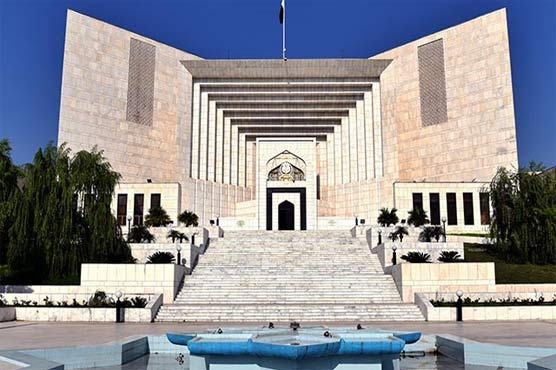
In a landmark ruling, the Supreme Court of India delivered a comprehensive judgment upholding the validity of the constitutional order abrogating Article 370, a contentious issue for Jammu and Kashmir. A Constitution bench comprising five judges, led by Chief Justice of India (CJI) DY Chandrachud, had concluded hearings on 23 petitions on September 5 this year, after a 16-day session, and reserved its verdict for judgment. Chief Justice DY Chandrachud, accompanied by Justices Suryakant and BR Gavai, formed a unified opinion, while Justices Sanjay Kishan Kaul and Sanjeev Khanna penned separate concurring opinions.

The pivotal questions addressed by the apex court regarding the validity of abrogation of Article 370 spanned the nature of Article 370’s temporariness, the validity of Parliament’s 2019 amendment redefining the meaning of “Constituent Assembly of Jammu and Kashmir,” the extension of the entire Indian Constitution to Jammu and Kashmir via Article 370, and the legality of various actions taken by the Centre without the recommendation of the J&K constituent assembly.

Excerpts of the historic judgement over Article 370

Chief Justice Chandrachud underscored that Jammu and Kashmir, post-accession to India, relinquished its internal sovereignty. Emphasizing the validity of actions by the President and Parliament following the proclamation of President’s rule under Article 356, the Chief Justice clarified that these actions were not prima facie mala fide or an extraneous exercise of power.

Furthermore, the judgment reiterated that J&K did not possess a distinct or unique relationship with the Indian Constitution. It emphasized that J&K’s integration with India was evident in both the J&K Constitution and the Indian Constitution, affirming its status as an integral part of India.

Regarding Article 370, Chief Justice Chandrachud reaffirmed its temporary nature, citing its historical context as a transitional provision designed until the formation of the J&K Constituent Assembly and to address the state’s war-like situation at the time.

Addressing the reorganization of Jammu and Kashmir into two Union Territories—Jammu and Kashmir, and Ladakh—the Court refrained from determining the validity of this move due to the Centre’s assertion that the Union Territory status is temporary. Notably, the judgment directed the expeditious restoration of statehood to J&K and mandated the Election Commission of India to conduct elections for the Legislative Assembly of J&K by September 30, 2024.

Issue of Human rights

Justice Sanjay Kishan Kaul opined that his conclusions are in tandem with what CJI concluded. He said that while the purpose of the J&K Constitution was to ensure day-to-day governance, the purpose of Article 370 was to integrate J&K into India. Mentioning his ‘sentimental’ epilogue at the end of his opinion, Justice Kaul said, ‘The valley of Kashmir carries a historical burden and “We the people of Jammu and Kashmir are at the heart of the debate.” He went on to say, “Armies are meant to fight battles against enemies… not to control law and order in the state. The entry of the army created its own ground realities in the state… men women and children have paid a heavy price.”

He proposed the establishment of a Truth and Reconciliation Commission to investigate alleged human rights violations in J&K, emphasizing dialogue and justice delivery without adopting a criminal court approach. Justice Khanna in his remarks said that Article 370 was an example of asymmetric federalism and not indicative of the sovereignty of J&K. He proclaimed that the abrogation of Article 370 does not erode federalism.