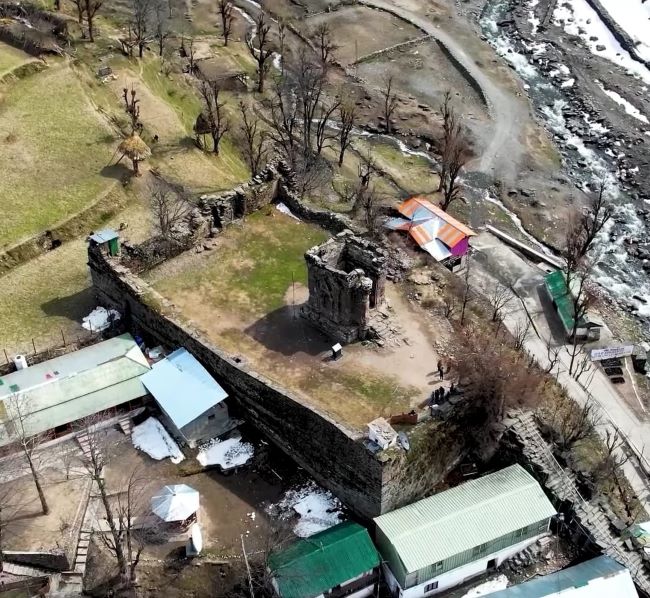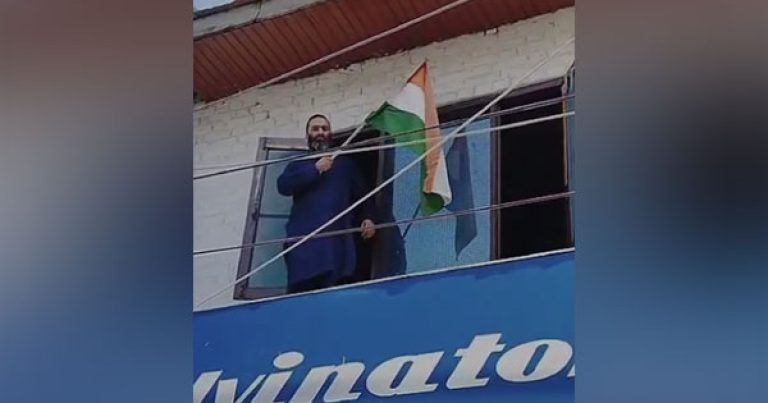
Authorities in Pakistan-Occupied Jammu & Kashmir (PoJK) have initiated the repair of the damaged boundary wall of Sharda Peeth, a day after India’s Home Minister, Amit Shah, emphasized India’s claim over PoJK. The temple, located in the Neelam Valley of PoJK, holds immense historical significance as an ancient seat of learning dedicated to the Hindu goddess of learning, Maa Saraswati.
Sharda Peeth served as a prominent temple university between the 6th and 12th centuries CE. However, recent years have witnessed encroachments on the temple’s land, facilitated by the Pakistan Army, leading to damage of the temple premises. Notably, the boundary wall of the revered site was vandalised and a coffee house was recently constructed by Pakistan Army in the premises.
The Save Sharda Committee, comprising members from both sides of the Line of Control (LoC), has actively advocated for the temple’s protection and the removal of encroachments. According to revenue records, the temple initially possessed 73 kanals of land, but currently only retains 10 kanals, with the rest encroached upon.
Kashmiri Pandits, along with other Kashmiris have long been demanding access to the temple premises to safeguard its sanctity. Home Minister Amit Shah, while addressing the Lok Sabha, reiterated India’s claim over PoJK and announced the reservation of 24 assembly seats for the region, further intensifying discussions surrounding the illegal occupation of Pakistan.
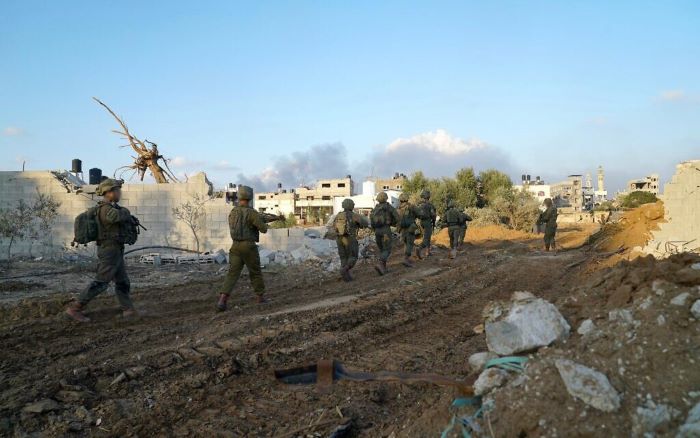
Israel faced its most severe combat losses in over a month on Wednesday, after an ambush in Gaza City’s ruins and faced increased diplomatic isolation as civilian casualties grew, and the humanitarian crisis worsened. Intense fighting persisted in both northern and southern Gaza, following the United Nations’ call for an immediate humanitarian ceasefire. Israel’s global influence is also at stake as U.S. President Joe Biden criticized Israel’s indiscriminate bombing of civilians, noting its negative impact on international support.
Meanwhile, an Israeli minister declared that the war would continue ‘with or without’ international support. Israeli warplanes conducted further bombings across Gaza, aggravating conditions for hundreds of thousands living in makeshift tents amid winter rain. The majority of Gaza’s 2.3 million population has been displaced so far.
Initially receiving global sympathy, Israel launched a campaign to eradicate the Hamas militant group controlling Gaza after an incursion on Oct. 7 which resulted in the deaths of approximately 1,200 Israelis, mostly civilians, and the capture of 240 hostages.
However, since then, Israel has blockaded Gaza and caused extensive destruction. Gaza’s health ministry reported over 18,600 fatalities and 50,600 injuries due to Israeli strikes since Oct. 7, with many more potentially trapped in debris or inaccessible to ambulances.
In Rafah, southern Gaza, where hundreds of thousands sought refuge, a family killed in an overnight airstrike, including several young children, lay covered in blood-soaked shrouds in the rain. One child, the size of a newborn, was wrapped in a pink blanket.
Moreover, Israel’s military continued raids in Jenin, West Bank, for a third consecutive day, which has further complicated situations for Israel at the international level. It resulted in the deaths of 11 civilians and injuring 10. Amidst all of this, pro-Palestinian hackers breached the Israeli army’s website earlier today.
Recent reports suggest that IDF has launched an attack on Hezbollah sites in southern Lebanon that has killed one terrorist. It comes a couple of days after the terrorist group attacked northern Israel with 12 lethal attacks in merely 24 hours. The tense situation underscores that peace is still a long way ahead and the crisis potentially can become protracted.
In a brave act of defiance, the freedom fighters of Baloch Liberation Army (BLA) launched a targeted assault on a post of Pakistan Army, resulting in the death of three Army personnel. The attack took place in the Sadiq area of Zamaran, where BLA commanders orchestrated a meticulously planned assault on a position held by the Pakistan Army. The fighters used rockets and other heavy weaponry in their offensive, aiming at a strategic post held by the Army in the resource-rich province of Pak-occupied-Balochistan.
BREAKING Baloch Liberation Army (#BLA) takes responsibility of attack on Pakistani forces in Sahdem area of #Zamuran. “At least three enemy forces were eliminated and three wounded.” Says Jeeyand Baloch spokesperson for the BLA
As a consequence of the attack, at least three personnel of Pakistan Army lost their lives, and three others sustained injuries. The Baloch Liberation Army, in a statement, acknowledged its involvement in the attack and reiterated its steadfast commitment to its cause. The group expressed its determination to continue its operations until the complete withdrawal of the Pakistan Army from Balochistan is achieved.
The Baloch people have a distinct language and culture, and they have long chafed under Pak “establishment”. The Pakistan Army is targeting and monitoring Baloch people, and anyone who has the potential to raise questions is either killed or abducted. In the face of little willingness from the international community to address the concerns of the Baloch people, the BLA remains resolute and has vowed to continue its fight for independence.
The Pakistan Supreme Court has made a conditional decision to permit the civilian trial in military court, temporarily suspending its previous unanimous ruling from October 23 that had invalidated the jurisdiction of military trials for civilians.
In a six-member bench, the court voted 5-1 in favor of the verdict, with Justice Musarrat Hilali dissenting. The decision was announced during the hearing of a series of intra-court appeals challenging the prior order.
Interestingly, Attorney General Mansoor Awan advocated for the conditional resumption of military court trials of civilian suspects, prompting the court to grant conditional permission for continuing trials. However, the military courts are not authorized to issue a final verdict against the suspects.
Furthermore, the court clarified that the ultimate judgment would be contingent upon subsequent orders from the Supreme Court. The Pakistan Army controlled caretaker federal government, along with provincial administrations in Pakistan-occupied Balochistan, Khyber Pakhtunkhwa, and Punjab, alongside the defense ministry, had collectively appealed against the prior judgment by filing intra-court appeals.
The recent judgement yet again underscores that the law in Pakistan is conveniently modified as per the requirement of the authoritarian Pakistan Army. Civilian trial in military court is clearly a violation of the human rights of the people.
In a shocking turn of events during the Winter Session of the Indian Parliament, the Lok Sabha experienced a major security breach on Wednesday (13 Dec), resulting in the detention of four individuals by the Delhi Police.
Two unidentified persons managed to breach security protocols by jumping into the Lok Sabha chamber from the visitors’ gallery. Simultaneously, outside the Parliament, a man and a woman were detained for their involvement in a protest that involved the use of colored smoke.
The incident unfolded on a significant day, marking the 22nd anniversary of the 2001 Parliament attack. This attack, carried out by terrorists associated with the Pakistan-based Lashkar-e-Taiba and Jaish-e-Mohammed outfits, claimed the lives of nine people.
The Lok Sabha descended into chaos as the two unidentified individuals entered the House chamber. Members of Parliament (MPs) hurriedly evacuated as the individuals reportedly shouted slogans and released gas. The entire incident was captured on camera, revealing the severity of the security breach.
Delhi Police promptly detained both individuals from inside the Lok Sabha, with one of them identified as Sagar Sharma. Additionally, a man identified as Amol Shinde (25) and a woman identified as Neelam (42) were apprehended for their protest outside the Parliament, involving the use of cans emitting yellowish smoke.
#WATCH | Delhi: Two protestors, a man and a woman have been detained by Police in front of Transport Bhawan who were protesting with colour smoke. The incident took place outside the Parliament: Delhi Police pic.twitter.com/EZAdULMliz
MPs who witnessed the incident described scenes of panic and chaos. While some highlighted the potential danger, stating that the emitted smoke could have been poisonous. Others criticized the lack of identification tags for visitors and reporters, emphasizing a security lapse.
Addressing the House, Lok Sabha Speaker Om Birla confirmed the apprehension of the individuals involved and the seizure of materials. He stated that the preliminary investigation indicated that the smoke was of an ordinary kind, seeking to allay concerns about potential harm.
2001 Parliament attack
The incident occurred on the solemn anniversary of the 2001 Parliament attack, where terrorists from Lashkar-e-Taiba (LeT) and Jaish-e-Mohammed (JeM) opened fire on the Parliament complex.
On the morning of December 13, 2001, at approximately 11:40 am, a group of five terrorists infiltrated the Parliament House Complex. They utilized an Ambassador car equipped with a red light and a forged Home Ministry sticker on the car’s windshield.
As the suspicious vehicle approached Building Gate No. 12, a vigilant member of the Parliament House Watch and Ward Staff intervened, compelling the car to turn back. In the process, the car collided with the vehicle of then Vice President Krishan Kant. Subsequently, the terrorists disembarked and initiated gunfire.
An immediate alarm was sounded, leading to the swift closure of all building gates. A fierce firefight ensued, spanning over 30 minutes. The confrontation resulted in the elimination of all five terrorists, along with the unfortunate loss of eight security personnel and a gardener. Additionally, at least 15 individuals sustained injuries. Notably, the approximately 100 ministers and Members of Parliament present in the Parliament at that time emerged unharmed.
The security breach raises questions about the vulnerability of parliamentary spaces and the need for enhanced measures to ensure the safety of lawmakers and staff during crucial sessions.
The UNGA passed a resolution demanding an immediate humanitarian ceasefire in Gaza, marking a rebuke against the US, which had previously blocked a similar resolution in the Security Council. With 153 nations in favor, 10 against, and 23 abstentions, the nonbinding resolution holds significant political weight. On the other hand, Israel has started pumping sea water in tunnel in Gaza
Heightened Conflict
At Israel’s northern border with Lebanon, Iranian-backed fighters, including Hezbollah, executed 12 attacks from southern Lebanon. Despite ongoing Israeli defense operations that have notably diminished Hamas’s capabilities, Khan Yunis, once deemed a safer zone, has become a primary battleground due to intensified Israeli assaults. Reports indicate Palestinian militias resisting Israeli attacks from Khan Yunis’ north and east fronts, launching seven such counteroffensives. Over a million individuals have fled northern Gaza since October 13, with approximately 215,000 seeking refuge in UNRWA camps within Khan Yunis.
Escalation in West Bank and development in Gaza
Simultaneously, the situation in the West Bank has deteriorated, amplifying international pressure on Israel. Seventeen clashes between Palestinian fighters and Israeli forces have been documented, alongside reported attacks on Palestinians by settlers.
Meanwhile, Israel has started to pump sea water in tunnel network operated by Hamas in Gaza, which are used as launchpads and shelters. Amidst various apprehensions regarding environmental and Humanitarian concerns, Israel has clarified that there are no hostages in these tunnels.
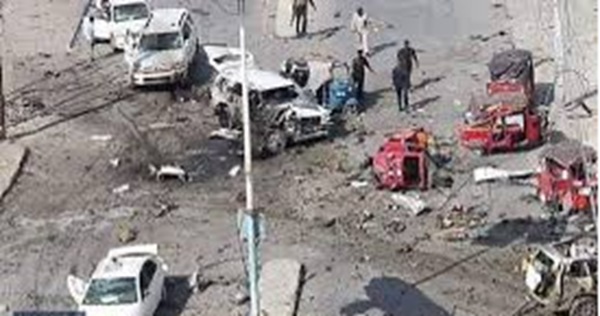
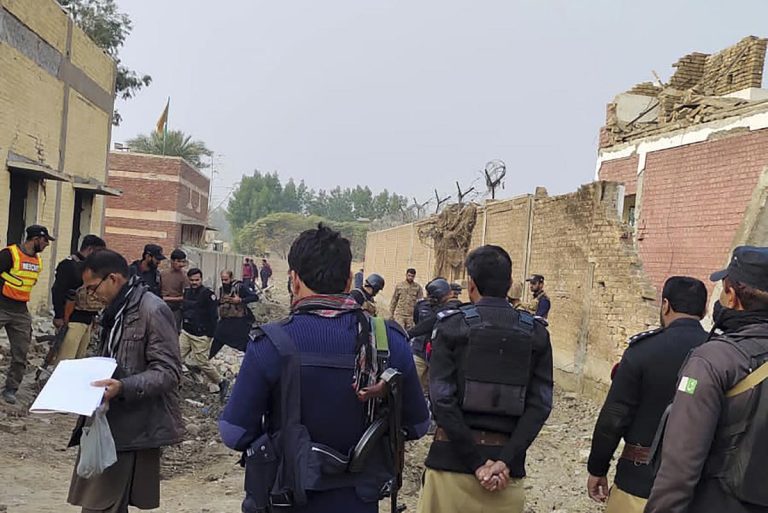
In a devastating assault in Khyber-Pakhtunkhwa province, near the Afghan border, at least 23 Pakistan Army personnel lost their lives while numerous others sustained injuries. The terrorist attack occurred in the early hours yesterday, as militants orchestrated a violent onslaught targeting the Pakistan Army base camp in Dera Ismail Khan.
The assailants’ tactics involved a vehicle laden with explosives ramming into the compound, triggering chaos and destruction. Prior to this, the militants attempted to breach the compound but were thwarted, prompting the subsequent vehicular assault.
Following the vehicle’s impact on the compound’s boundary wall, a harrowing suicide bomb attack ensued, resulting in the collapse of the building. The incident claimed the lives of numerous individuals who were asleep at the time. It is reported that there was an explosion of ammunition stored within the compound.
Tehreek-e-Jihad Pakistan (TJP), the militant faction affiliated with the TTP has claimed responsibility for this audacious terrorist attack. Subsequent military operations in the area led to the elimination of six attackers, with a total of 27 militants reported killed.
Pakistan’s caretaker Prime Minister Anwaar ul-Haq Kakar and caretaker Interior Minister Sarfraz Bugti vehemently condemned the assault. Pakistan’s Foreign Secretary, Syrus Sajjad Qazi, called on the envoy of to promptly communicate to the Taliban government in Afghanistan, emphasizing the necessity for a thorough investigation and decisive measures concerning the issue. Since past year the attacks orchestrated by the newly emerged militant group Tahreek-e-Jihad Pakistan (TJP) have significantly increased.
This falls in line with withdrawal of the hard-line Islamist militant group Tehrik-i-Taliban Pakistan (TTP) from a ceasefire last year. Notably, Islamabad has consistently alleged that insurgents operate from regions across the Afghan border, a claim staunchly denied by the Afghan Taliban. This grim incident adds to the series of violent episodes, including the attack on Mianwali airbase last month and January bombing at a mosque in Peshawar that claimed the lives of at least 100 people. Despite initial denial by the TTP, attributions were made to a commander of a breakaway faction.
Persecution of Hindus in Bangladesh is no hidden fact. Being a minority, Hindus face multiple type of existential challenges there. In the latest development, a call has been made by a Muslim students and their parents to ban the admission of Hindu students in government schools.
The case of this religious discrimination has emerged in Bangladesh’s Chattagram town. As per reports by Hindu Voice, just before the start of the academic year, which starts from January in Bangladesh, some Muslim students and their parents have demanded that the Hindu students should not be given admission to the Government Muslim Higher Secondary School. After making their demands, they also staged a protest along with placards and banners in the school premises.
Since the concerned school is state owned, this has raised outrage in the Hindu community, who are concerned about such religious discrimination in a state-owned institution. As of now no explanation has been provided by the administration.
Considerably, the hate crimes against Hindus have persisted for long and have only increased in the past few months in Bangladesh. This increase in religious persecution is more concerning given the fact that the country is poised to choose a national government in a few months and the political situations are tumultuous. Accordingly, this worsening condition is only making the Hindu community more vulnerable.
Another Hindu minor girl has been converted and married to a Muslim man after being abducted in Sindh’s Ghotki. Reena was abducted and taken to Gol Mosque in Sukkur. She was forcibly converted at the mosque and was married to an unknown Muslim man named Shahzado Chachar. Shahzado Chachar is far more aged than victim Reena. Unfortunately, the gruesome act yet again highlights the precarious conditions of Hindu minor girls in Pakistan.
Getting abducted, forcibly converted, married to abductor or an unknown man and often getting raped are the worst kinds of persecutions that a girl could undergo. Unfortunately, all this is happening to Hindu girls and women in Pakistan. To make it even worse, the justice system also shuts its doors on their face. Instead of providing them a refuge, the judiciary kneels in front of the forged documents and forced statements.
The condition of Hindu girls is worsening with each passing day without any ray of hope.
In a defiant display, the Baloch Long March, organized by the Baloch Unity Committee against enforced disappearances, extrajudicial killings, and human rights violations, finally reached Quetta on Monday (11 Dec) evening, overcoming hurdles and tight security measures imposed by the authorities.
The march, comprising families of missing Baloch persons, began in Turbat a week ago and has traversed hundreds of kilometers, drawing support and solidarity from local communities along the way. Despite attempts to impede their progress in various districts, the determined participants braved elements like fatigue, and police barricades to reach their destination.
Challenges and Resistance
The march faced its first major obstacle in Mastung, where authorities erected roadblocks and attempted to halt its progress. Undeterred, the participants peacefully but firmly challenged the restrictions, eventually pushing forward.
Similar attempts were made in Quetta, with police deploying heavy contingents and sealing off the Red Zone, a high-security area housing government offices, to prevent the march from reaching its intended endpoint. However, the families persisted, navigating alternative routes and successfully entering the city.
Red Zone Sealed
As of Monday evening, the Red Zone remains sealed off, with container trucks blocking access and security forces maintaining a vigilant presence. The families have set up camp nearby, vowing to hold a peaceful protest on Tuesday (12th Dec) to highlight their plight and demand justice for their loved ones.
A Symbol of Resilience
The Baloch Long March has become a powerful symbol of resilience and the unwavering pursuit of justice for the Baloch community. Their determination and peaceful defiance in the face of adversity have captured the attention of the nation and drawn international media spotlight.
The Baloch Unity Committee has urged national and international organizations to take notice of the human rights crisis unfolding in Balochistan and demand an end to the Pak Army’s abuses. The long march’s success in reaching Quetta stands as a testament to the families’ unwavering commitment to their cause and their determination to keep the plight of their missing loved ones in the spotlight.
The next few days will be crucial as the families hold their protest in Quetta. Whether the authorities will engage in dialogue and address their concerns remains to be seen, but the march itself has undoubtedly achieved its goal of raising awareness and highlighting the ongoing tragedy in Pak-occupied-Balochistan.
We use cookies on our website to give you the most relevant experience by remembering your preferences and repeat visits. By clicking “Accept All”, you consent to the use of ALL the cookies. However, you may visit "Cookie Settings" to provide a controlled consent.
This website uses cookies to improve your experience while you navigate through the website. Out of these, the cookies that are categorized as necessary are stored on your browser as they are essential for the working of basic functionalities of the website. We also use third-party cookies that help us analyze and understand how you use this website. These cookies will be stored in your browser only with your consent. You also have the option to opt-out of these cookies. But opting out of some of these cookies may affect your browsing experience.
Functional cookies help to perform certain functionalities like sharing the content of the website on social media platforms, collect feedbacks, and other third-party features.
Performance cookies are used to understand and analyze the key performance indexes of the website which helps in delivering a better user experience for the visitors.
Analytical cookies are used to understand how visitors interact with the website. These cookies help provide information on metrics the number of visitors, bounce rate, traffic source, etc.
Advertisement cookies are used to provide visitors with relevant ads and marketing campaigns. These cookies track visitors across websites and collect information to provide customized ads.
Necessary cookies are absolutely essential for the website to function properly. These cookies ensure basic functionalities and security features of the website, anonymously.
Cookie
Duration
Description
cookielawinfo-checkbox-analytics
11 months
This cookie is set by GDPR Cookie Consent plugin. The cookie is used to store the user consent for the cookies in the category "Analytics".
cookielawinfo-checkbox-functional
11 months
The cookie is set by GDPR cookie consent to record the user consent for the cookies in the category "Functional".
cookielawinfo-checkbox-necessary
11 months
This cookie is set by GDPR Cookie Consent plugin. The cookies is used to store the user consent for the cookies in the category "Necessary".
cookielawinfo-checkbox-others
11 months
This cookie is set by GDPR Cookie Consent plugin. The cookie is used to store the user consent for the cookies in the category "Other.
cookielawinfo-checkbox-performance
11 months
This cookie is set by GDPR Cookie Consent plugin. The cookie is used to store the user consent for the cookies in the category "Performance".
viewed_cookie_policy
11 months
The cookie is set by the GDPR Cookie Consent plugin and is used to store whether or not user has consented to the use of cookies. It does not store any personal data.