Home Blog Page 176

Israeli-Hamas war claims lives of 27 journalists so far, several others injured

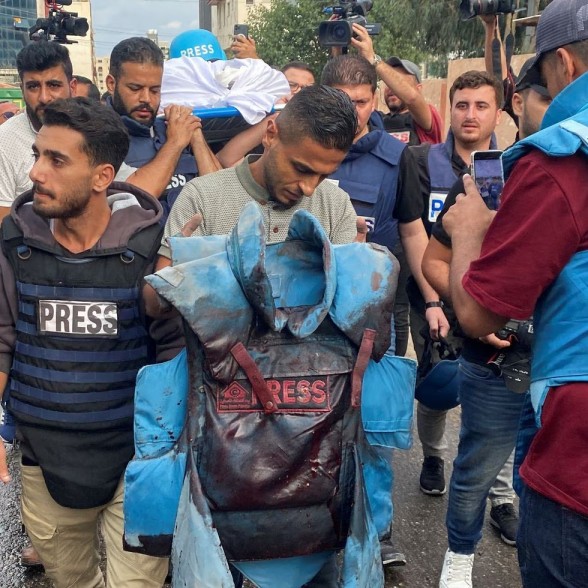
In a recent report published by the Committee to Protect Journalists (CPJ), a globally recognized organization dedicated to safeguarding the rights and lives of journalists, a grim and distressing reality has come to light. As the conflict between Israel and Hamas escalated so far, 27 journalists have lost their lives, including many more sustaining injuries and facing detention or disappearance.

This disheartening toll on the journalistic community is a stark reminder of the perils they face while carrying out their duty to inform the world about the ongoing crisis. Among the journalists who lost their lives, there is a poignant mix of newspaper correspondents, TV reporters, representatives of news agencies, cameramen, non-affiliated journalists, and media managers. They represented the media of Palestine, Israel, Lebanon, the Middle East, and other nations, and their loss is felt deeply across the journalistic spectrum.

One particularly devastating incident involved an airstrike on the home of an Al Jazeera TV correspondent in a camp, which reportedly claimed the lives of his entire family. This tragic incident underscores the far-reaching and devastating consequences of the conflict.

Sharif Mansour, CPJ’s Middle East and North Africa coordinator, emphasized the incredibly hazardous conditions in which these journalists are working. He noted that they willingly put their lives on the line to report on the dangerous and challenging situation, particularly in Gaza.

One alarming trend highlighted by international sources is that more journalists are losing their lives and facing injuries during the Israeli attacks on Gaza compared to other conflicts. Tragically, their families are also suffering the consequences as their homes become targets of bombardment.

J&K: ₹86,000 crore investment proposal for development

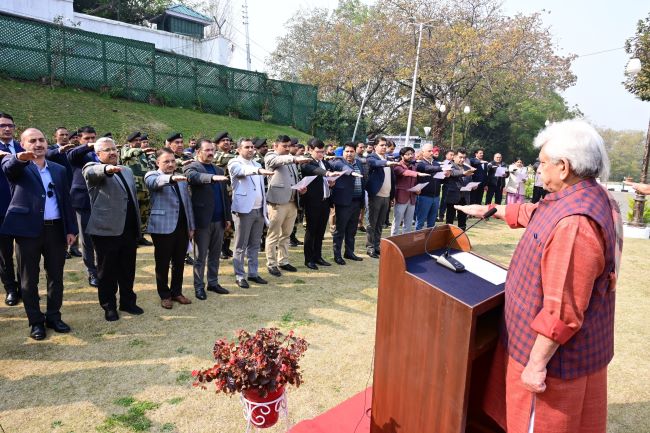
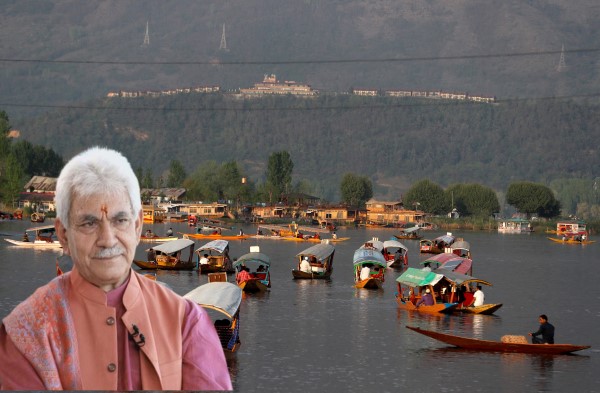
Jammu and Kashmir (J&K) has been witnessing a transformational wave of economic growth and development since the abrogation of Article 370 in 2019. This remarkable progress was underlined by Lieutenant Governor Manoj Sinha, who announced that ₹86,000 crore worth investment proposals in Jammu & Kashmir have been received. This groundbreaking revelation came during his speech at the inauguration of a state-of-the-art cold storage facility, marking another milestone in J&K’s journey towards prosperity.

Projects worth thousands of crores inaugurated

In the past six months, J&K has seen a surge in infrastructure development, with projects worth ₹1,250 crore inaugurated. An additional 269 projects are in the pipeline, set to create employment opportunities for approximately 16,000 people. This surge in infrastructure development is expected to have a profound impact on the region’s economic landscape.

The newly inaugurated cold storage units are poised to benefit fruit growers significantly. With a combined storage capacity of around 6,000 metric tons, these units will not only help farmers preserve their produce but also provide employment for approximately 600 individuals. The government is dedicated to enhancing storage capacity across J&K to further support agricultural growth.

Lt. Governor Manoj Sinha emphasized the government’s commitment to supporting growers at every stage, from seed to market. Special emphasis is also being placed on smart and digital agriculture. Post-harvest issues faced by farmers are being addressed, and training sessions at the panchayat level are being conducted to ensure that farmers have the necessary skills to thrive in the evolving agricultural landscape.

Harnessing the fruit diversity

One of the key advantages for investors in J&K is the extended occupancy of cold storage units, often spanning the entire year due to the diverse range of fruits available in the region. Combined with favorable incentives, the potential for investment in Controlled Atmosphere (CA) storage is promising.

Lt. Governor Sinha revealed that the government is actively working to provide land and support to the investors behind the ₹86,000 crore proposals. The goal is to ensure that more and more people benefit from this significant inflow of investments.

The Industries Department has also introduced new policies to attract more investors and create an enabling environment for economic growth in J&K. The integration of the National Single Window System exclusively in J&K has streamlined the process, making 182 services available online to facilitate ease of doing business.

The transformation of Jammu and Kashmir is evident in the unprecedented economic growth and opportunities emerging in the region. The abrogation of Article 370 in 2019 has ushered in an era of stability and security, dispelling long-persisting insecurities and bridging the gap between the people of the UT and the rest of India.

Today, J&K is embracing mainstream development with open arms. The substantial investment proposals in Jammu & Kashmir signify a changed mindset among the people, who now prioritize development and the future of their children as their primary goals. This economic surge marks a significant shift from the terrorising environment experienced over the past five to six decades and paints a promising picture of a brighter, more prosperous future for Jammu and Kashmir.

Israeli-German girl Shani Louk dead after being kidnapped by Hamas

Ricarda Louk, the mother of Shani Louk, a young woman abducted by Hamas during a music festival in Israel, has officially confirmed her daughter’s tragic demise. The heart-wrenching revelation came after the Israeli military informed Ricarda Louk that a DNA sample obtained from a skull bone fragment conclusively matched Shani’s.

Despite this confirmation, Shani’s body remains undiscovered. Her sister, Adi Louk, also made the painful announcement on social media. In an Instagram post, Adi disclosed that Shani had fallen victim to the “massacre at Re’im”, referencing the Hamas attack near the Gaza Strip in southern Israel that occurred on October 7.

However, its unclear from where and when the fragment of Shani’s skull was discovered. Consequently, Israel’s foreign ministry expressed its deep sorrow on social media.

Shani, 22 years old, had been attending the festival near Kibbutz Re’im when Hamas armed assailants opened fire, plunging the event into chaos. The attack resulted in over 260 casualties, according to Israeli authorities, with many individuals taken hostage.

Shortly after the incident, a distressing video circulated widely on social media, depicting the body of a young woman being paraded through the streets on the back of a truck, surrounded by assailants and others shouting “Allahu Akbar” (God is Greatest). Shani was identified by her family through her dreadlocks and distinctive tattoos.

While there had been speculation about her fate, Shani’s mother, at the time, believed her daughter was still alive. In a plea for information shared online, Ricarda Louk mentioned receiving a video showing her unconscious daughter with Palestinians in a car driving around the Gaza Strip.

During an interview with the German TV news channel RTL/ntv on Monday, Ricarda Louk shared her heartbreaking assumption that her daughter had passed away since October 7, possibly due to a gunshot wound during the Hamas attack. She added that, at the very least, Shani didn’t suffer, expressing some relief in having closure.

The conflict between Israel and Hamas resulted in over 1,400 casualties, according to Israeli authorities. The identification of some individuals has been delayed due to the challenging condition of some bodies. Over 220 people are believed to have been taken hostage, with four released thus far.

Meanwhile, the Hamas-run health ministry in Gaza reports that more than 8,000 individuals have lost their lives since the onset of Israel’s retaliatory bombings.

J&K: Security forces thwart infiltration attempt in Kupwara, eliminates one Pak backed terrorist

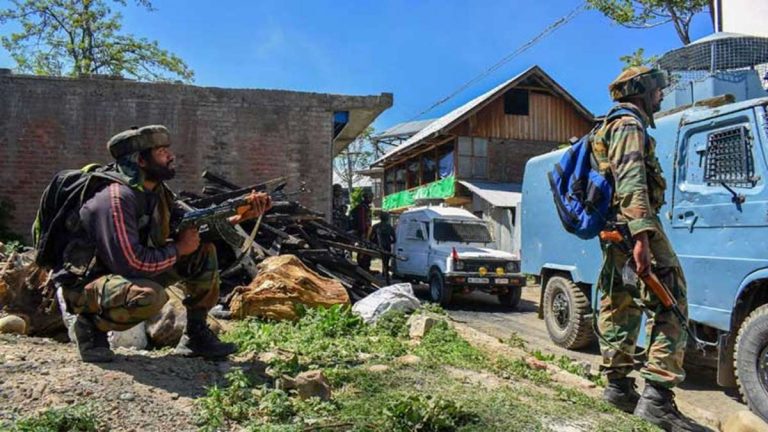
In a recent operation along the Line of Control (LOC) at the Jumagund sector in Kupwara, Jammu and Kashmir, security forces successfully foiled an infiltration attempt, resulting in the elimination of a terrorist. The joint operation was carried out by the Indian Army and Kupwara Police on Sunday, October 29.

Search operations are currently ongoing in the region to ensure the safety and security of the area.

Injured security personnel in different incident

Meanwhile, on the same day, October 29, another unfortunate incident occurred, leaving a security official injured. In Srinagar, Jammu and Kashmir, a police official was shot in the Eidgah area. The injured inspector, identified as Masroor Ahmad, has been promptly transferred to a hospital for medical treatment.

According to the police, Inspector Masroor Ahmad Wani was engaged in a game of cricket with local boys at the Eidgah ground when he was targeted and shot by terrorists. Security personnel swiftly cordoned off the area, launching an extensive manhunt for the assailant.

The Jammu and Kashmir Police, in a statement shared on social media (X, formerly Twitter), reported: “Terrorists fired upon and injured Inspector Masroor Ahmad near Eidgah, Srinagar. He was immediately shifted to the hospital for treatment. Preliminary investigation reveals that a pistol was used in this terror crime. The area was cordoned off, and a case has been registered.”

Security forces in J&K have thwarted many infiltration attempts in past few years. Just a few days prior, on October 26, a significant encounter unfolded in the Machhal sector of Jammu and Kashmir’s Kupwara district, resulting in the elimination of five Lashkar-e-Taiba terrorists.

Massive protests in cities of Pak-occupied Jammu and Kashmir against Paki ‘establishment’

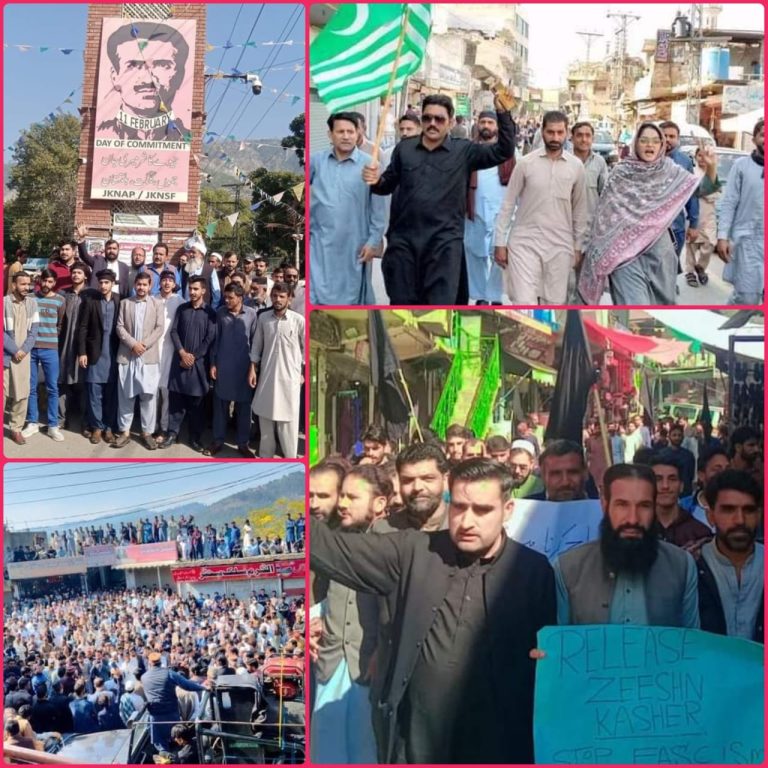
On October 28, 2023, a massive wave of protests swept across both small and major cities in Pak occupied Jammu and Kashmir, all carried out under the banner of the Jammu and Kashmir Joint Public Action Committee or Awami Action Committee. The demonstrations, held against Pakistan, aimed to voice the concerns and grievances of the local populace.

The solidarity movement was not confined to the region itself; even the Rawalpindi Kashmiri community residing in Pakistan joined in, staging a demonstration in front of the Pindi Press Club. During these protests, participants followed a long-standing tradition of burning electric bulbs, symbolizing their unity and determination. In certain locations, after determining the ‘winner’ of this symbolic act, the bills were buried in the ground, while in others, they were burnt to make halwa “pudding” over it.

One of the key issues highlighted during the protests is the collective non-payment of electricity bills by a significant portion of Pak occupied Jammu and Kashmir. Reportedly, this non-payment has persisted for the past four months, with residents using this peaceful movement as a platform to address their concerns.

The protests have been characterized by peaceful and orderly conduct, marking a significant expression of the people’s solidarity and desire for positive change. As the movement gains momentum, the Awami Action Committee is expected to make an announcement regarding the next phase, keeping the international community and stakeholders informed about developments in the region.

Kerala shaken by multiple explosions at a religious gathering

On October 29, a series of explosions rocked an event organized by Jehovah’s Witnesses, a Christian-based religious movement in Kerala. The incident occurred in Kalamassery town, where over 2,000 followers had gathered for a three-day event. Preliminary investigations suggest that the blasts may have been caused by an Improvised Explosive Device (IED) concealed inside a tiffin box.

Jehovah’s Witnesses Event

The death toll from these explosions has now risen to three, with the unfortunate passing of a 12-year-old girl who succumbed to severe burn injuries during treatment on Oct 30. The young girl, a resident of the Ernakulam district, had suffered extensive burns, and despite receiving extensive medical care, her condition deteriorated, ultimately leading to her demise.

The incident unfolded at the Zamra International Convention and Exhibition Centre, where Jehovah’s Witness followers had congregated for their annual event. Two women, Leona (aged 55) and Kumari (aged 53), lost their lives in the explosions, while 52 others sustained injuries as a result of improvised explosive device (IED) blasts that occurred at the venue. These tragic events took place around 9:30 am on the final day of a three-day zonal conference of the Jehovah’s Witnesses, an organization with a significant following in Kerala.

High-Level Probe

A man named Dominic Martin surrendered to the police hours after the explosions, claiming responsibility for the heinous acts. In a live social media video, Martin declared himself a member of the Christian sect and alleged that he was reacting against the group as he believed were anti-national and seditious teachings. Martin claimed that his discontent with the Jehovah’s Witnesses’ teachings had been growing for the past six years, and he had attempted to persuade them to cease the promotion of hatred and sedition.

He said, “I asked them several times to correct their ways. But they were not ready to do it.”

The explosions have put authorities across the country on high alert, prompting the National Investigation Agency (NIA) and National Security Guard teams to respond swiftly to the scene. The blasts occurred while nearly 2,500 people were in prayer, filling the convention center with smoke.

Investigation Underway

Initial investigations into the blasts suggest the use of a timer-based low-intensity IED, with batteries and wires recovered at the scene indicating the use of a timer. A forensic examination is expected to provide further details about the type of explosive employed. The IED was strategically placed near an oil container, exacerbating the fire.

Police are presently questioning Martin and examining evidence related to his involvement in the explosions. A preliminary First Information Report did not specify a suspect.

Consequently, Kerala’s Chief Minister, Pinarayi Vijayan, has promised a comprehensive investigation and called for an all-party meeting to discuss the situation. In response to the incident, security measures have been tightened in various cities across India, including the capital city of Delhi and Mumbai.

The tragic events in Kerala have sent shockwaves throughout the nation, and further developments are anticipated as the investigation unfolds.

The killing of people of Parachinar (Khyber-Pakhtunkhwa) has to stop: Shafqat Shirazi

In Parachinar (Khyber-Pakhtunkhwa) , a beautiful yet strategically sensitive valley near the border, recent developments have left the region in a state of tension and unease. Dr. Ulamam Sid Shafqat Hussain Shirazi, the Head of the Majlis Ulemas of Pakistan and Secretary of the Foreign Affairs Majlis of Unity Muslim, has expressed grave concerns over the treatment of the people of Parachinar by Pakistan in the past years. He questioned the repeated attempts to disrupt the peace in the area, which the Pakistan Army has struggled to control.

The Parachinar region, formerly part of FATA, remains under complete military control, and any threat to the safety and security of these areas raises questions about the performance of Pakistan Army. Dr. Shirazi emphasized the need for a reevaluation of their approach, as the local population, characterized as patriotic, continues to suffer due to a poor strategy that has sown hatred and left the tribes destitute and impoverished.

It is noted that the Pakistani establishment, in the past, had a strained relationship with the people of this region as it provided safe havens to terrorists, a consequence of which is borne by the oppressed population today.

Conflict started over construction of Imam Bargah

It is worth noting that situation has grown increasingly tense in recent days in Parachinar. Incidents have erupted, including an attack on civilians during the construction of an Imam Bargah by Shias in Gander near the Taliban-inhabited area of Bushurhu. An 18-year-old youth lost his life in the attack, and several others sustained injuries.

The attack on Gander village resulted from a dispute over whether the construction was for an Imam Bargah or a mosque. This sparked tensions that quickly escalated, leading to confrontations in multiple areas, including Hundred, Kharklay, and Balshakhail, leaving a total of twelve dead and twenty injured in the ongoing clashes.

Normal life in the district has been severely impacted, with transport routes, educational institutions, and mobile and internet services all suspended. A defamatory voice message from a government website had previously ignited tensions, drawing condemnation from Shiite leaders, who called for the arrest of the responsible individual. Although the police arrested the perpetrator’s brother, the actual instigator, identified as Zeeno Mangal and Saif Allah, remained at large, fueling unrest and extremist rhetoric.

It is well known that Shias have been under continuous threat since the controversial amendments in blasphemy laws. The Shiite communities have become vulnerable which could be easily seen in Parchinar.

Hamas fires rockets at Israel’s nuclear facilities

The armed wing of the Palestinian resistance organization, Hamas, known as the Qassam Brigades, has claimed responsibility for launching a series of rockets toward an area believed to house Israel’s nuclear facilities.

Israeli media sources have confirmed the rocket attacks on the vicinity of Dimunah. Fortunately, there have been no reported casualties resulting from these rocket strikes. However, sirens were activated in areas including Aries and the Netherlands, causing alarm among residents.

Disturbing video footage obtained from Hebrew sources has surfaced on various social media platforms, notably Twitter (X), depicting plumes of smoke rising near mountainous regions where the suspected nuclear facilities are believed to be located.

This incident has prompted heightened concerns about regional stability and has reignited tensions between Hamas and Israel. Authorities are undoubtedly conducting thorough investigations into the matter, and international observers are closely monitoring the situation for further developments.

It is worth noting that Israel neither confirms nor denies the existence of its nuclear program. Nevertheless, this incident serves as a stark reminder of the persistent challenges in the Middle East and the potential ramifications of such actions on the broader geopolitical landscape.

Kashmiris in Pak-occupied Jammu & Kashmir take out massive protest against Pakistani exploitation

Kashmiris in Pakistan occupied Jammu and Kashmir (POJK) look concerned yet united like never before. The reason behind this unity amidst uncertainty is the ongoing public rights movement in the region. The Awami Action Committee on October 2nd issued a ‘charter of demand’ and announced a plan of action against the increasing inflation and the subsequent exploitation by Pakistan. Based on the plan of action, the Jammu and Kashmir Awami Action Committee held a region-wide protest on October 28. The day marks the completion of the third month of boycotting electricity bill payment. Since last three months more than 78 per cent of Kashmiris have not paid the bills and, in fact, floated them into river.

Three months of boycotting electricity bill payment

October 28 protest also shows same pictures across POJK. In Rajmehal Kotli, Kashmiris protested in a unique and resonating way. Native Kashmiris in the region carried out funeral of the electricity bill and chanted slogans against the establishment.

Symbolic Funeral Of Electricity Bills In Kotli (Photo: News Intervention)

In Rawalkot, thousands of protestors took to the streets holding placard written with the anti-establishment slogans. The protestors hurled slogans calling “sarfaroshi ki tammanna ab hamaare dil me hai, dekhna hai jor kitna baaju-e-qaatil me hai,” a famous poem written against the British Imperialism during Indian independence struggle which means, “the desire for revolution is now in our hearts, let’s see how much strength lies in the arms of the murder (Pakistan)”.

In Tatrinote village in Poonch and Muzaffarabad, the protestors tied their electricity bills to the balloons and left them into the air, to symbolically denounce the Pak sponsored imposition of price hike by the puppet government of POJK.

Kashmiris in POJK protest like never before

Kashmiris in POJK are protesting like never before. Since the past five months, Kashmiris are raising their voice against the abrupt removal of subsidies on basic amenities especially wheat flour. To make things worse, the occupying government also raised the price of electricity in the region. This caused unrest in the Kashmiris as being the electricity surplus region, they had to pay the quadruple prices as compared to production price. This simply meant that the resources of POJK are exploited, and its benefits are reaped by the entire Pakistan but people of POJK.

The situation of Kashmiris is worsening with each passing day. They don’t have enough resources to fulfill their basic needs. And so, after months of protests and sit-ins, they realized the need for a more organized and formal movement, which on September 16, gave rise to Jammu and Kashmir Joint Public Action Committee or Awami Action Committee. The committee issued ‘charter of demands’ to be conveyed to puppet government of POJK and other international organisations including United Nations.

Past protests on the call of Awami Action Committee

The committee also announced a series of protests against the Pak sponsored exploitation of POJK. Following the announcement, the first protest was held on October 5 which saw participation from all walks of society. During the protest, a complete shutdown was observed in the entire POJK, marking the biggest and most expansive protest in the POJK history since its illegal occupation by Pakistan.

During the second protest, the women and children across the POJK protested for the fulfillment of the charter of demands. The women and children protest were held on 10th of October. Following the women and children protest, the student organisations also protested on 17th of October, as per the call of Awami Action Committee. This protest transcended the boundaries of POJK and was observed in various parts of Pakistan including Islamabad and Karachi.  One of the demand of the student organization protest was the revival of student unions, which Pakistan has abandoned as it fears the voice of dissent.

Nonetheless, the protest of October 28, made it categorically clear that Kashmiris don’t have an iota of patience to take the malicious Pakistani tactics and that they are firm on their demands. On the other hand, Pakistan which has used the coercion at the start, has also got a clear idea that its terrorizing policies are going to make no difference. As of now, the Awami Action Committee is firmly standing its plank, and it looks like it will continue to do so till its demands are met.  

Iranian teen Armita Geravand dies after being brutally assaulted by Morality police

Armita Garavand, a 17-year-old girl who had fallen into a coma following an incident with special officers enforcing compulsory hijab rules in the Tehran subway, has tragically passed away. She was admitted to Tehran Air Force’s Fajr Hospital, where she recently experienced brain death, and medical professionals had given up hope of her recovery.

As reported by the Hengaw Organization for Human Rights, Armita Garavand, a 17-year-old from Kermanshah (Kermashan), has now become the most recent victim of compulsory hijab regulations, losing her life after spending 28 days in Tehran’s Fajr Hospital. This case has raised serious questions about Iran’s strict dress rules for women, particularly the mandatory hijab laws, as conflicting narratives and concerns of a cover-up emerge.

Manhandling Armita Geravand

It was reported that Armita Geravand was manhandled following an altercation with female officers of Morality Police on the Tehran metro, who had apprehended her for allegedly violating the strict dress code for women. The family of Armita Geravand, represented by the Kurdish-focused Hengaw rights group, have claimed that Armita’s medical team informed them that her brain is no longer functioning, and there is no hope of recovery.
Iran has vehemently denied accusations of any wrongdoing and insists there was no altercation. Iran’s official news agency, IRNA, even published an edited CCTV clip showing a girl being carried out of a train. However, this footage has come under scrutiny as human rights organizations and Amnesty International have raised concerns about its authenticity.

Restrictions on Information and Suspected Coercion

The situation surrounding Armita Geravand has been further complicated by restrictions on information and potential coercion of witnesses. Iranian journalist Maryam Lotfi was briefly detained after attempting to report on Geravand’s condition, and she remains heavily guarded by Iranian security forces.

The controversy deepened with the release of an edited CCTV clip by Iran’s official news agency, IRNA. The clip shows a girl being carried out of a train. However, crucial footage depicting her entering the metro station, boarding the train, and the events leading to her fainting inside the wagon have not been made public. It is worth noting that all metro stations and trains in Tehran are equipped with CCTV cameras. The failure to release this footage has led to increased doubts about the official narrative.

Amnesty International conducted an analysis of footage provided by Iranian media, which purportedly shows there was no altercation. Amnesty’s findings raised concerns, as the footage appeared to be edited, with an increased frame rate, and over three minutes of content was missing.

Tehran metro managing director Masood Dorosti has denied any “verbal or physical conflict” between Armita Geravand and passengers or metro staff.

In a surprising twist, IRNA later published interviews with two girls claiming to be friends of Armita Geravand, who corroborated the official account. However, Hengaw has raised doubts about the verifiability of interviews with family and eyewitnesses of the incident that were published by state-controlled Iranian media.

Amnesty International has expressed “serious concerns” that Armita Geravand’s family and friends may have been coerced into appearing in propaganda videos and echoing the state narrative under duress and threats of reprisals.

A Grim Echo of the Past

This case reminds many of the tragic fate of Jina (Mahsa) Amini, a 22-year-old Kurdish woman who died in the custody of Iranian morality police in September 2022. Her death was labeled as a “state murder” by Iran Human Rights, prompting international calls for a UN fact-finding mission into Iran’s human rights violations.

Iran Human Rights has now called for international pressure on Iran to allow an independent investigation team into the country to determine the circumstances that led to Armita’s coma. Failure to do so, they argue, would be seen as another attempt to cover up a crime and allow the perpetrators to escape accountability.