Home Blog Page 177

BLF launches coordinated attacks on Pakistan Army

In a meticulously planned operation, the Balochistan Liberation Front (BLF) launched a series of coordinated assaults on multiple locations, including a Army camp in Mashkay, delivering significant blows to the Pakistan Army.

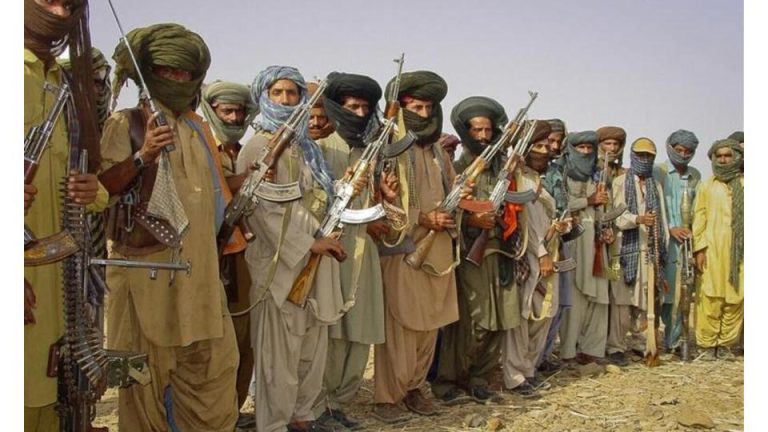
On the night of October 24, four distinct factions of Baloch freedom fighters united to execute a series of strategic attacks. These well-organized offensives took aim at various Army targets, encompassing a Army camp in Nali, Rindak Nokjo, another Army camp in Pagar, and checkpoints in Miani Kalat. The BLF fighters were armed with modern weaponry, and a team of proficient snipers played a pivotal role in the operation.

The attacks occured between 7 pm and 9 pm, inflicting substantial damage on the Pakistan Army’s presence in Mashkay. Rockets and grenades were unleashed upon the Army’s camp in Nali from multiple directions, resulting in casualties and material losses. The relentless assault continued as heavy machine guns opened fire on the targeted site.

Series of strategic BLF attacks

In Rindan Kojho, a significant Pakistan Army camp became the focal point of the attack, as advanced weaponry was employed to disrupt the enemy’s operations. Simultaneously, an assault was initiated on a Pakistan Army checkpoint in Pegor. Meanwhile, the BLF sniper team demonstrated remarkable precision by engaging the Pakistan Army with sniper fire in Miani Kalat.

These synchronized attacks underscore the BLF’s strategic readiness to confront the enemy on various fronts simultaneously. Despite the Pakistan Army’s military might, their hold on Balochistan remains tenuous. With steadfast support from the Baloch nation, the BLF is resolute in its mission to oust the Pakistan Army from Baloch territory, making it increasingly inhospitable for the occupying forces.

For decades, BLA has carried on an armed struggle against the Pakistan Army and ‘establishment’, as they have illegally occupied Balochistan. Since 27 March 1948, Pakistan Army has been oppressing Baloch through daily home raids, disappearances, staged encounters, target killings, torture, humiliation at checkpoints, and kidnappings for ransom. The Pakistan Army is targeting and monitoring Baloch people, and anyone who has a potential to raise questions is either killed or abducted. 

Madrasa teacher arrested for sexually abusing 10 students in Gujarat

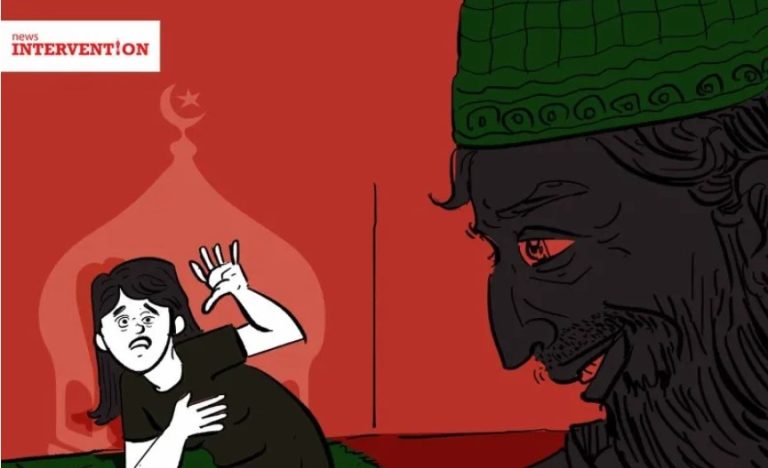
In a heinous incident, a 25-year-old Maulana, also a madrasa teacher, has been apprehended for sodomising at least ten minor students in Junagadh, Gujarat. The accused, who was responsible for imparting Urdu education at the madrasa, is now facing serious charges that have left the local community reeling.

Adding to the gravity of the situation, a 55-year-old trustee of the madrasa has also been taken into custody for neglecting the students’ complaints against the teacher. This shocking revelation has brought to light the kind of sexual exploitation that persists in madrasas and is often covered under the garb of religious preaching.

The Junagadh Police issued an official statement on Monday, October 23, confirming the arrests. The Maulana has been found in hiding in Surat and was apprehended, while the madrasa trustee, who had managed to flee the scene, was later detained in Junagadh.

Victim’s family reached out to Police

The case unfolded after a courageous 17-year-old boy, a student at the madrasa located on the Mangrol-Veraval bypass, managed to use a teacher’s mobile phone to contact his mother and report the unspeakable acts committed by the Maulana against students. His desperate call for help prompted his mother to approach the police and file a complaint, accusing the madrasa teacher of sexually assaulting students who lived and studied within the institution.

On October 21, the police, with the assistance of concerned Muslim leaders, visited the madrasa premises. They embarked on the challenging task of gaining the trust of the students who had fallen victim to these horrifying acts. Shockingly, ten boys studying at the madrasa revealed that they had been subjected to these reprehensible actions by the Maulana. They further disclosed that the teacher had threatened them with dire consequences if they dared to report these incidents to their parents.

As if this weren’t troubling enough, the students also revealed that they had approached the madrasa’s trustee to report the abuse, but their pleas fell on deaf ears. Instead of taking swift action against the teacher, the trustee facilitated the accused’s escape from the area, compounding the injustice suffered by the young victims.

Police on its toes

In response to the mounting outrage and distress within the community, Harshad Mehta, the Superintendent of Police in Junagadh, personally visited the madrasa as part of the ongoing investigation. He met with the concerned parents of the students and assured them that the police would carry out a thorough and impartial inquiry into the matter.

The disconcerting reality is that this incident is far from isolated. Month after month, reports surface from various madrasas across the country, shedding light on the horrifying trend of clerics engaging in sexual exploitation of underage children. Reportedly, the documented cases number between 10 to 15 every month. However, it is widely acknowledged that the actual count may be significantly higher, with many victims and their families refraining from lodging complaints due to fear and the associated social stigma surrounding such traumatic occurrences.

Pashtuns hold massive protest against passport checking at Pak-Afghan border in Chaman

The Pashtuns and Pakistan have come face to face on many issues since past few months. Be it the Afghan refugee issue or Pakistan’s ignorance towards the region. In all these conflicts, PTM has emerged as a forerunner of the Pashtun cause. In fact, it would not be wrong to say that it is single handedly resisting the arbitrary and oppressive actions of Pakistan. To that extent, a new protest has been organized by the Pashtuns against the passport checking at Pak-Afghan border.

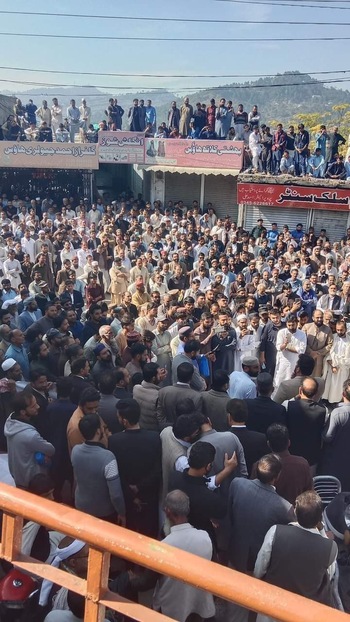
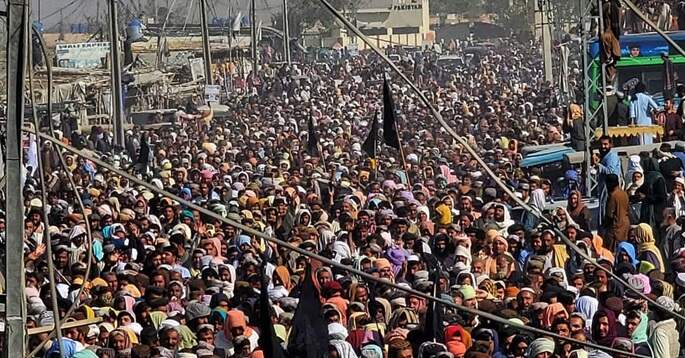
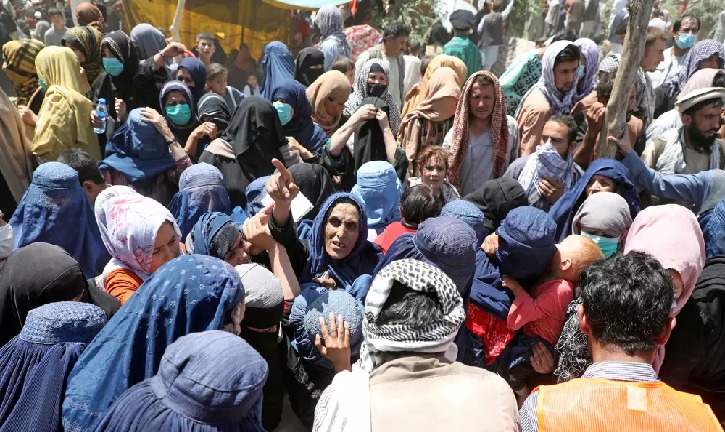
The protest against the mandatory passport checking at Pak-Afghan border was started on 21 October in Chaman district of Pak-occupied Balochistan, which is the major route for the trans Durand trader movement. As of now the protest has entered its 7th day. On the 6th day of protest, i.e. October 26, the protest was made fiercer by organizing a rally which saw participation from the entire Pashtun and Afghan community. Lakhs of people hit the streets of mall road in Chaman as a symbol of protest against the Pakistani establishment of passport checking at Pak Afghan border for cross border movement for trade. They raised the slogans of “passport namanzur, namanzur” (Passport unacceptable, unacceptable).

Passport checking at Pak-Afghan border under ‘One document regime’

It is worth mentioning that after the Taliban take over of Afghanistan and especially after the Chitral clashes between TTP and Pakistan Army, the relation between the terror regimes of Pakistan and Taliban have seen a new low. Unanticipatedly, Pakistan got the taste of its own medicine from the Taliban. As a result, Pakistan launched a crackdown on unregistered Afghan civilians since a couple of months ago. In line with that the Paki establishment has recently declared that its “one document regime” policy will replace the decades-old practice of granting special travel permits to individuals with divided tribes straddling the nearly 2,600-kilometer Durand line between the two countries.

According to an official federal directive sent to immigration authorities at all Afghan border crossings, “passport as the only traveling document is going to be implemented from November 1, 2023.”

Accordingly, the passport and visa requirement are primarily going to hit the Pashtun dominated regions where the Pashtun population is spread on either side of the border.  Thousands of families from Afghanistan side travel to Pakistan to meet their family and relatives or in search of work and return to their homes slip of paper, locally called tazkira. Tazkira is granted under the easement rights that guarantee free travel. Almost every Pashtun use Chaman border to travel to Pakistan.

And so, the issue is crucial for Pashtuns and the abrupt decision of Pakistan has left the community in disarray. Consequently, the Pashtuns are protesting with full vigour.

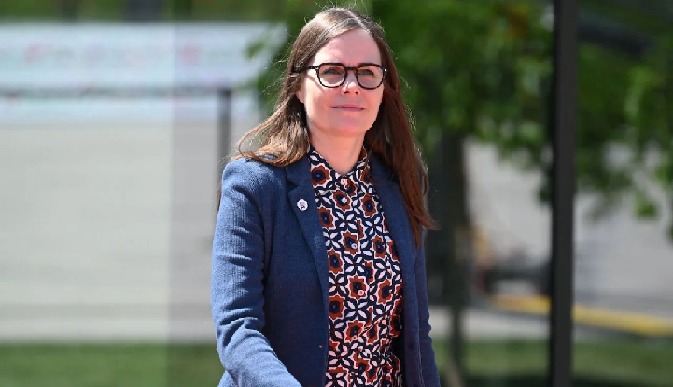
Iceland’s PM joins womens’ strike: A call for gender equality

In a powerful display of unity and determination, Iceland brought the nation to a standstill, in a womens’ historic strike calling for an end to gender-based discrimination and inequality. The event, which has been compared to the iconic womens’ strike of 1975, saw public transport delays, understaffed hospitals, and an array of untidy hotel rooms as women from all walks of life refused to participate in unpaid and underappreciated work.

The strike was organized and supported by trade unions and central organizers who called upon women to boycott unpaid and underpaid work. Remarkably, nearly 90 percent of the country’s workers, both men and women, belong to a union, underscoring the widespread support for this movement.

Prime Minister Joins the Strike

In a striking show of solidarity, Prime Minister Katrin Jakobsdóttir, a champion of gender equality, publicly announced her participation in the strike. She also expressed her expectation that other female members of her cabinet would follow suit. The Icelandic government has made gender equality a top priority, and this action further emphasizes their commitment to closing the gender pay gap and addressing issues like violence based on caste.

On Tuesday, meetings were held across Iceland. The judges exposed serious facts about economic inequality and sexual violence and called it a fabrication in the name of equality.

The Prime Minister also said in an interview that we have not yet reached our goals of complete gender equality and we are still dealing with the gender-based wage gap, which is unacceptable. We are still dealing with caste-based violence, which has been a priority of my government to tackle.

Reminiscence of 1975 women’s strike

The women’s strike on October 24, 2023, evoked memories of a similar, watershed moment in Icelandic history. In 1975, Icelandic women took to the streets to demand equal rights regardless of sex. Their unwavering efforts led to the passage of a law guaranteeing these rights. Since then, Iceland has seen several partial-day strikes, culminating in the massive event this week. The strike of 2018, with women leaving work early in the afternoon, was another step in this ongoing journey toward equality.

The impact of Iceland’s strike in 1975 was felt far beyond its borders. The movement inspired similar demonstrations in other countries, including Poland. Women in Spain, for example, staged a 24-hour strike on March 8, 2018, and declared, “If we stop, the world will stop.”

In 1976, Iceland passed a law guaranteeing equal rights regardless of sex. Since then there have been several partial day strikes. The recent strike in 2018 with women leaving work in the early afternoon is also a continuation of these partial strikes.

Iceland, the most gender equal country

Iceland, known for its rugged landscapes and a population of approximately 3.8 million people, has held the distinction of being the world’s most gender-equal country for 14 consecutive years, according to the World Economic Forum. However, it is vital to recognize that complete gender equality remains an elusive goal, even in Iceland. Gender pay gaps persist, and Tuesday’s women’s strike is a potent reminder that there is still work to be done.

Iceland’s commitment to gender equality is also evident in its political landscape, with the cabinet of Prime Minister Katrin Jakobsdóttir being evenly divided between male and female ministers. Nearly half of the lawmakers in the Icelandic Parliament are women, reflecting the nation’s dedication to breaking down gender barriers.

While Iceland has made remarkable progress, the strike and the Prime Minister’s remarks serve as a poignant reminder that the journey toward gender equality is far from over. The gender-based wage gap and caste-based violence remain persistent issues that demand urgent attention.

In a world where progress is often measured in small but significant steps, Iceland’s latest strike stands as a resounding declaration that the quest for gender equality continues. And, as the women of Iceland have shown, when they unite, they can make the world stand still.

Pakistan’s plan to deport Afghan migrants face strong resistance

An online petition has surfaced, calling for an end of the evacuation of Afghan migrants in Pakistan and seeking international support for Afghan refugees. The petition has gained momentum, with hundreds of people from various linguistic backgrounds endorsing it. It is available in English, Pashtun, Dari, Urdu, Turkish, and other languages, making it accessible to a broad audience.

The petition emphatically states that signatories reject the government of Pakistan’s deportation plan and stand in solidarity with Afghan nationals residing in Pakistan and elsewhere. It advocates for the official recognition of all Afghans as integral citizens of Pakistan, stressing the importance of preserving principles like permanent residence, citizenship, and asylum.

Furthermore, the petition underscores the interconnected struggles of Afghan migrants in Pakistan with those of ethnic and religious minorities, individuals facing political differences, homeless Pakistanis, women, and various segments of society. It asserts that the cause of Afghan migrants in Pakistan aligns with the global struggle of oppressed people, migrants, and refugees, as well as the broader Afghan diaspora.

Solidarity, a fundamental right and responsibility

Importantly, the petition clarifies that this solidarity is not an act of charity or mere human sympathy but a fundamental right and responsibility. It calls for the rejection of any attempts to divide ethnic and religious minorities and tribal communities within the country.

The petition also urges individuals, activists, communities, and organizations globally to continue expressing solidarity with Afghan refugees and to take proactive measures to protect Afghan community members from racial violence.

A heartfelt appeal is made to people worldwide to acknowledge their responsibility for the well-being of Afghans, both inside and outside Afghanistan. It demands an end to the ongoing migration of Afghans to Pakistan and other destinations.

The petition also directs its pleas to governments of countries like Britain, Germany, Canada, America, and others. It implores these nations to expedite the relocation of Afghan citizens, particularly those who find themselves stranded in transit in Pakistan. The immediate opening of asylum routes for Afghans is deemed a pressing need.

Furthermore, the petition highlights the necessity of shifting the international migration system’s focus from immediate repatriation programs to advocating for the long-term legal rights of Afghans in Pakistan.

Call to halt arbitrary detention

In addition, the petition calls upon the Government of Pakistan to halt arbitrary detentions and harassment of Afghan refugees, as well as the demolition of their residences. It insists that calls for Afghans to leave Pakistan cease immediately, and ongoing migration be halted. It urges continued protection for vulnerable Afghan populations in their pursuit of safety. Moreover, it advocates for the inclusion of undocumented Afghans in the asylum system and the development of a legal framework for refugees and asylum seekers within Pakistan, including long-term residence and pathways to citizenship.

Pakistan Army helicopter crashes in Quetta

In a recent incident report from Quetta, a helicopter from the Pakistan Army’s Khalid base near Sir Ghaggai made a crash landing.

According to security sources, the incident unfolded when the helicopter experienced a technical fault while in mid-flight. The captain, faced with a critical situation, executed a crash landing.

Reportedly, there were no reported casualties during the crash landing. However, as per Pak Army officials, the helicopter did sustain partial damage as a result of the incident.

Teachers go on strike in Pak-occupied Jammu & Kashmir medical colleges

In the POJK city Muzaffarabad, the employees of AJK Medical College have been protesting, stating that the Paki ‘establishment’ has refused to extend the contracts of employees who have been working on a contractual basis for the past twelve years, saying that the employees were recruited on political grounds.

The protesting employees have refused to play a supporting role in the teaching process after not receiving salaries for four months, due to which teaching has been suspended in medical colleges. Due to the strike, it has become impossible for professors to continue classes in classrooms.

After this move by the Pak Army, students and their parents are in a state of extreme anxiety and tension.

Salihah, a student at Muzaffarabad Medical College, expressed that due to the employees’ strike, the college’s system has come to a halt. With the power generator out of operation, there is no one to turn it on. She urged the Army to provide salaries to the employees as they also have families to support.

Under the administration of Pakistan-occupied Kashmir, there are three medical colleges, including Muzaffarabad, Mirpur, and Rawalakot, with approximately one thousand students under education. These medical colleges employ around three hundred teaching staff, and the strike has left the educational activities in these institutions completely disrupted.

The strike is a serious problem that has the potential to damage the quality of medical education in POJK. Pakistan that is grappling under huge economic debts is now unable to pay the salaries of the teaching staff. The rise in the prices of electricity, flour was already a burden on the public and now disruption in the education will be the final nail in the coffin of Pakistan.

Pakistan-IMF negotiations to start in November

Pakistan and the International Monetary Fund (IMF) will hold negotiations on November 2 for the next tranche of the $3 billion Stand-By Arrangement, worth $710 million.

The negotiations are expected to be difficult, as the Pakistan faces a number of challenges, including a shortfall in external financing, a declining rupee, and a need to reduce oil subsidies.

However, it looks like Pak Army is hopeful of the success of the negotiations, and is taking steps to strengthen its position. For example, the Army is expected to announce general elections soon, which would help to improve investor confidence. It is also working to reduce power division circular debt, which is a condition of the IMF program.

The outcome of the negotiations will have a significant impact on the Pakistani economy. If the negotiations are successful, the Paki ‘establishment’ will be able to access the next tranche of IMF funding, which will help to stabilize the economy. However, if the negotiations are unsuccessful, Pakistan will face further challenges in its efforts to meet its economic goals.

Analysts’ Views

Analysts say that the negotiations are crucial for Pakistan, as the country is in desperate need of foreign financing to avoid a default on its foreign debt obligations. However, they also warn that they will have to make tough concessions in order to reach an agreement with the IMF.

One analyst told Express Tribune that the Paki establishment will need to “commit to a credible fiscal consolidation plan” and “raise taxes significantly” in order to meet the IMF’s demands. Another analyst warned that they will also need to “end oil subsidies and raise electricity prices” in order to reduce its budget deficit.

The Pakistan-IMF negotiations will be a major test for the Pak Army’s ability to manage the country’s economy. If the negotiations are successful, they will be able to avoid a default and stabilize the economy. However, if the negotiations are unsuccessful, the country could face a serious economic crisis.

Pakistan Army forcibly disappears yet another Baloch youth

On October 25, 2023, at 1 a.m., a young Baloch man named Balach, son of Muhammad Khalid, was abducted by Pakistan Arm from Turbat district in Pak-occupied-Balochistan. He was taken to an unknown location and is now missing.

The missing youth has been identified as Balach Walid. The Voice for Baloch Justice, a human rights organization, has condemned the abduction and demanded the immediate release of Balach. The organization has also appealed to human rights organizations to take note of the forced disappearances of Baloch youths and play a role in their recovery.

In a statement by Daren Ithna, Vice Chair of the Baloch Bar Council, it is mentioned that four youths from Turbat have been forcibly disappeared by the Pakistan Army. Among the missing youth, two have been identified. Sarfraz, son of Ayub, was abducted from his shop in Absar, while Balach Walid Khalid was forcibly disappeared by the Pakistan Army from Sangani Sar. The forced disappearances of Baloch youth have surged again, and several youths have been forcibly disappeared from various areas of Balochistan in recent days, which is a matter of great concern.

The forced disappearance of Baloch youths is a serious problem in Balochistan. According to the Human Rights Commission of Pakistan, over 47,000 Baloch and around 35,000 Pashtuns are missing. The Commission of Inquiry of Enforced Disappearances has received over 950 new complaints of enforced disappearances in the first four months of 2023.

The case of Balach Walid is just one of many cases of enforced disappearances in Pakistan-occupied-Balochistan. There are thousands of people who have been forcibly disappeared, and Pakistan Army is solely responsible for these disappearances. Pakistan-occupied-Balochistan have a long history of human rights abuses, including torture, extrajudicial killings, and enforced disappearances.

BLF fighter Abbas Majeed dies after battling illness

In the recent Press Release, the Baloch Liberation Front (BLF) reports the tragic loss of one of the dedicated freedom fighters, Abbas Majeed. He also known as Abbas, hailing from Essai Panjgur, Pak-occupied-Balochistan, was an active member of the BLF, fighting for the freedom of Balochistan. He played a vital role in monitoring the activities of their adversaries within the city and supporting the BLF in its operations.

Due to his increased involvement, he drew the enemy’s attention, leading to his relocation to a BLF camp for intensive guerrilla warfare training. Unfortunately, during his training, his health deteriorated, and despite efforts to treat him, he couldn’t recover. He was being moved to a secure location for further treatment, but his condition worsened during the journey, and he passed away on October 21, 2023, near the Charpani River area of Buleda.

It is noteworthy that Abbas Majeed was a dedicated and honest companion who worked tirelessly for the cause of Baloch freedom. His untimely death is a significant loss to the Baloch nation and the BLF.

The BLF pays tribute to the martyred national soldier Abbas, known as Majeed, and all Baloch martyrs who have made immense sacrifices for the cause of Balochistan’s liberation. The sacrifices of these fighters will be engraved in the memory. These sacrifices motivate the Baloch people to remain determined to achieve the liberation of Balochistan from the brutal Pak Army.

For far too long, Pakistan-occupied-Balochistan has witnessed enforced disappearances, targeting political activists, students, and civilians by the Pak Army. They are subjected to torture, and their lifeless bodies are discarded in isolated areas. Following the illegal occupation of Balochistan in March 1948, Balochistan has been fighting the war of its existence and freedom from Pakistan.