Home Blog Page 178

Pakistan-IMF negotiations to start in November

Pakistan and the International Monetary Fund (IMF) will hold negotiations on November 2 for the next tranche of the $3 billion Stand-By Arrangement, worth $710 million.

The negotiations are expected to be difficult, as the Pakistan faces a number of challenges, including a shortfall in external financing, a declining rupee, and a need to reduce oil subsidies.

However, it looks like Pak Army is hopeful of the success of the negotiations, and is taking steps to strengthen its position. For example, the Army is expected to announce general elections soon, which would help to improve investor confidence. It is also working to reduce power division circular debt, which is a condition of the IMF program.

The outcome of the negotiations will have a significant impact on the Pakistani economy. If the negotiations are successful, the Paki ‘establishment’ will be able to access the next tranche of IMF funding, which will help to stabilize the economy. However, if the negotiations are unsuccessful, Pakistan will face further challenges in its efforts to meet its economic goals.

Analysts’ Views

Analysts say that the negotiations are crucial for Pakistan, as the country is in desperate need of foreign financing to avoid a default on its foreign debt obligations. However, they also warn that they will have to make tough concessions in order to reach an agreement with the IMF.

One analyst told Express Tribune that the Paki establishment will need to “commit to a credible fiscal consolidation plan” and “raise taxes significantly” in order to meet the IMF’s demands. Another analyst warned that they will also need to “end oil subsidies and raise electricity prices” in order to reduce its budget deficit.

The Pakistan-IMF negotiations will be a major test for the Pak Army’s ability to manage the country’s economy. If the negotiations are successful, they will be able to avoid a default and stabilize the economy. However, if the negotiations are unsuccessful, the country could face a serious economic crisis.

Pakistan Army forcibly disappears yet another Baloch youth

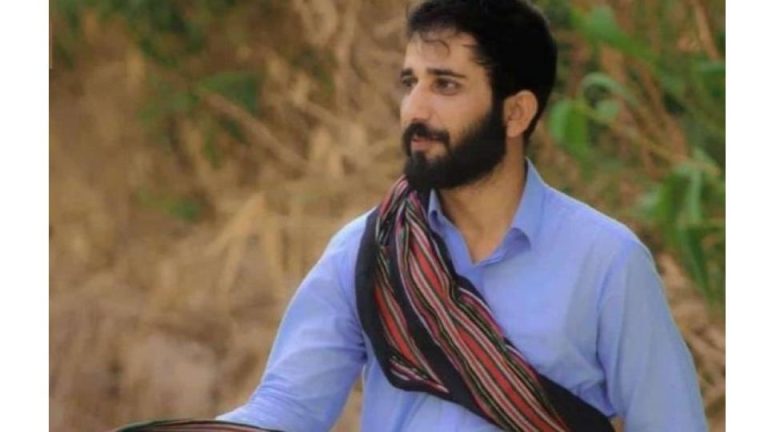
On October 25, 2023, at 1 a.m., a young Baloch man named Balach, son of Muhammad Khalid, was abducted by Pakistan Arm from Turbat district in Pak-occupied-Balochistan. He was taken to an unknown location and is now missing.

The missing youth has been identified as Balach Walid. The Voice for Baloch Justice, a human rights organization, has condemned the abduction and demanded the immediate release of Balach. The organization has also appealed to human rights organizations to take note of the forced disappearances of Baloch youths and play a role in their recovery.

In a statement by Daren Ithna, Vice Chair of the Baloch Bar Council, it is mentioned that four youths from Turbat have been forcibly disappeared by the Pakistan Army. Among the missing youth, two have been identified. Sarfraz, son of Ayub, was abducted from his shop in Absar, while Balach Walid Khalid was forcibly disappeared by the Pakistan Army from Sangani Sar. The forced disappearances of Baloch youth have surged again, and several youths have been forcibly disappeared from various areas of Balochistan in recent days, which is a matter of great concern.

The forced disappearance of Baloch youths is a serious problem in Balochistan. According to the Human Rights Commission of Pakistan, over 47,000 Baloch and around 35,000 Pashtuns are missing. The Commission of Inquiry of Enforced Disappearances has received over 950 new complaints of enforced disappearances in the first four months of 2023.

The case of Balach Walid is just one of many cases of enforced disappearances in Pakistan-occupied-Balochistan. There are thousands of people who have been forcibly disappeared, and Pakistan Army is solely responsible for these disappearances. Pakistan-occupied-Balochistan have a long history of human rights abuses, including torture, extrajudicial killings, and enforced disappearances.

BLF fighter Abbas Majeed dies after battling illness

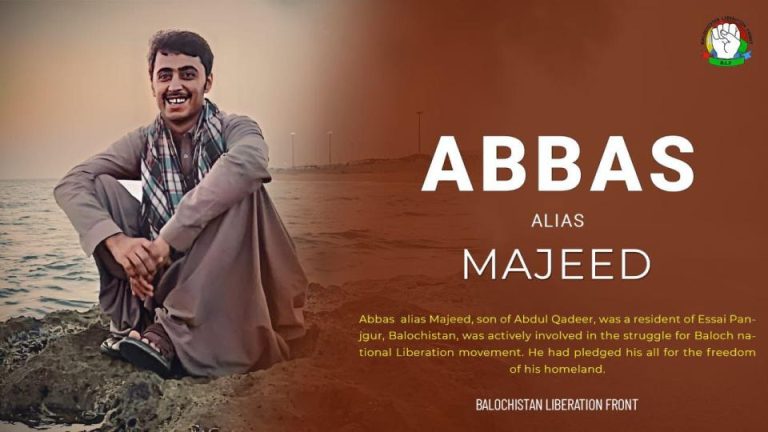
In the recent Press Release, the Baloch Liberation Front (BLF) reports the tragic loss of one of the dedicated freedom fighters, Abbas Majeed. He also known as Abbas, hailing from Essai Panjgur, Pak-occupied-Balochistan, was an active member of the BLF, fighting for the freedom of Balochistan. He played a vital role in monitoring the activities of their adversaries within the city and supporting the BLF in its operations.

Due to his increased involvement, he drew the enemy’s attention, leading to his relocation to a BLF camp for intensive guerrilla warfare training. Unfortunately, during his training, his health deteriorated, and despite efforts to treat him, he couldn’t recover. He was being moved to a secure location for further treatment, but his condition worsened during the journey, and he passed away on October 21, 2023, near the Charpani River area of Buleda.

It is noteworthy that Abbas Majeed was a dedicated and honest companion who worked tirelessly for the cause of Baloch freedom. His untimely death is a significant loss to the Baloch nation and the BLF.

The BLF pays tribute to the martyred national soldier Abbas, known as Majeed, and all Baloch martyrs who have made immense sacrifices for the cause of Balochistan’s liberation. The sacrifices of these fighters will be engraved in the memory. These sacrifices motivate the Baloch people to remain determined to achieve the liberation of Balochistan from the brutal Pak Army.

For far too long, Pakistan-occupied-Balochistan has witnessed enforced disappearances, targeting political activists, students, and civilians by the Pak Army. They are subjected to torture, and their lifeless bodies are discarded in isolated areas. Following the illegal occupation of Balochistan in March 1948, Balochistan has been fighting the war of its existence and freedom from Pakistan.

Pakistan Supreme Court bans civilian trial in military court

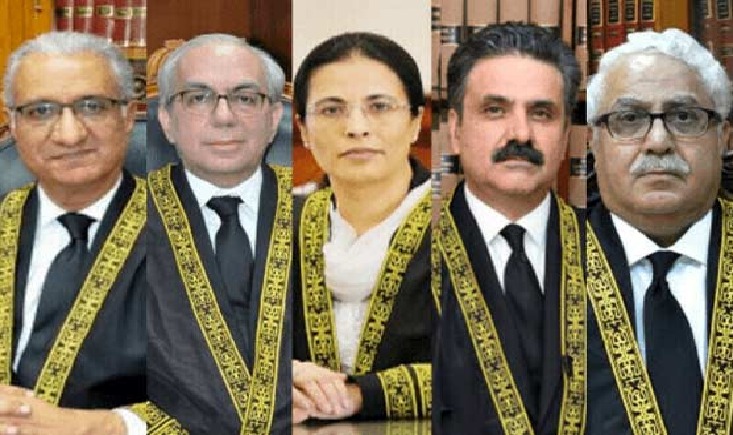
In a landmark decision, the Supreme Court of Pakistan has ruled to nullify the civilian trial in military courts. This significant judgment comes after a rigorous legal process that engaged a five-member large bench, with Supreme Court Justice Aajjaz Al-Hassan presiding. The bench included esteemed justices Maneeb Akhtar, Ahmed Afridi, Mohammad Ali Akbar Naqvi, and Aaishhu Malk.

Justice Aajjaz Al-Hassan, reading the concise judgment, revealed that the decision passed with a majority of four to one, with Justice Ahmed Afridi dissenting from the majority’s ruling. The ruling particularly declared Section 2D One as unconstitutional.

Hearing on May 9 instance

In effect, the verdict unequivocally states that military courts can not hold civilian trials, emphasizing that the trial of 103 individuals linked to events on May 9th must be conducted solely in criminal courts.

At the outset of the hearing, lawyer Salman Akram Raju highlighted instances of military courts initiating trials for civilians despite previous assurances. In response, Justice Aajzaz Al-Hassan expressed awareness of the matter and announced the court’s intention to hear the Attorney General.

During the proceedings, Attorney General Usman Mansoor assured the court that all requirements of Article 10A of the Pakistani Constitution would be met. He stated that appeals would be filed in the High Court and later in the Supreme Court. Additionally, the Attorney General referenced various judicial decisions and argued that military courts could address prohibited areas and attacks on buildings.

In response, the Chief Justice inquired whether a constitutional amendment was necessary to distinguish between the trial of terrorists and common citizens. The Attorney General contended that such an amendment was unnecessary as long as the accused had direct links with the Armed Forces.

Army act relates to corruption within Armed forces

Justice Aaishhu Malik pointed out that the Army Act deals primarily with issues related to corruption within the armed forces, and Justice Mohammad Ali Naqvi urged the Attorney General to review the Army Act cover. Justice Aajzaz Al-Hassan emphasized that the law was evidently crafted for individuals within the armed forces and questioned how its connection with the civilian population could be established.

The Attorney General argued that the Army Act also encompasses officers who prevent others from performing their duties, even civilians. However, Justice Aaishhu Malk questioned the potential implications for fundamental rights in such circumstances.

The Attorney General clarified that the Army Act includes those who occasionally serve with the armed forces. Justice Aajzaz Hassan countered that this pertained solely to service matters, but the Attorney General maintained that the Constitution recognized that individuals preventing members of the Armed Forces from performing their duties might also be civilians.

Justice Aaishhu Malk reminded that the Constitution and the law bound the armed forces to perform their duties while safeguarding fundamental rights, making it clear that the law applied to those who disrupted the armed forces.

The Attorney General cited the definition of “relation to the armed forces” and promised to provide additional arguments, explaining the necessity of military courts in the Liaquat Hussain case.

As the proceedings concluded, the court allowed written arguments from the Attorney General and also noted the involvement of Shah Khawar as the lawyer representing several ministers.

The court, while rejecting nine separate applications on the grounds of withdrawal, reserved its decision concerning the trial of civilians in military courts.

Application filed to stop criminal proceedings against Imran Khan

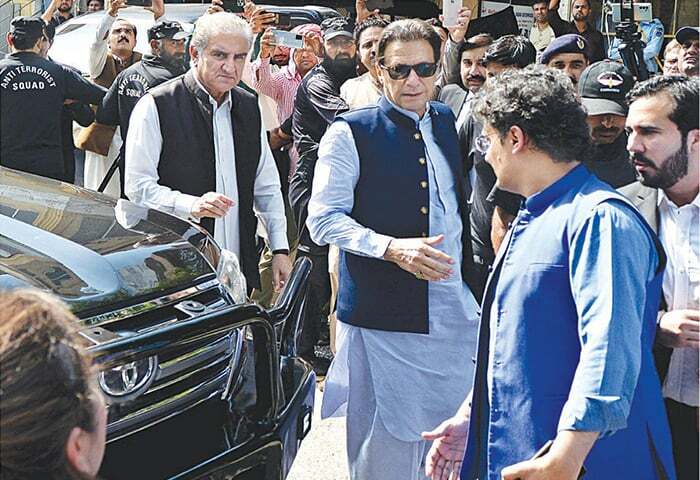
In a dramatic turn of events, an application has been submitted to halt the criminal proceedings against Imran Khan, former Pak PM and PTI Chief in the Cypher case, invoking the Official Secrets Act. Special Court Judge, Abu Hasanat Twalekaranin, presided over this high-stakes hearing held within the former prison.

The formal application to cease the criminal proceedings was submitted by Vokla Safai, while Prosecutor Shah Khawar vehemently opposed this move. The case involves a total of 28 witnesses, with plans to summon government witnesses following the alleged offense.

Prosecutor Shah Khawar argued that this application is merely an attempt to delay the proceedings, emphasizing that today’s hearing is solely focused on addressing the criminal offense. Khawar urged the court to dismiss the application and proceed with the criminal charges.

Former Foreign Minister Shah Mahmoud Qureshi is also implicated in the case, with a charge sheet prepared and delivered to both accused parties. Chairman PTI and Shah Mahmoud Qureshi have acknowledged receipt and affixed their signatures to the documents.

The hearing of the Cypher case unfolded under extraordinarily strict security measures outside the court jail premises, reflecting the gravity and sensitivity of the matter.

Hamas repulses an Israeli attack near the Gaza border

Tensions in the region reached a boiling point today as the Palestinian resistance organization, Hamas repulsed an Israeli attack and engaged in a ground clash at the Gaza-Israel border near Khan Younis. Notably, it is 19th day of Israel’s ongoing military operation in Gaza, during which more than 4,700 lives have been lost, with 40 percent of the casualties being innocent children and over 16,000 people sustaining injuries, as reported by international human rights organizations.

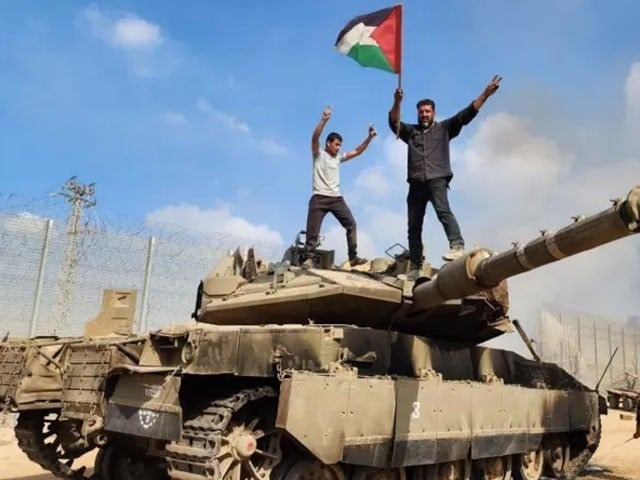
The clash unfolded when Israeli forces attempted to breach the Gaza border, with the intent of reaching the iron fence that separates Gaza from Tel Aviv. According to reports from international media, the Al-Qassam Brigades, Hamas’ military wing, fiercely repelled the Israeli incursion, forcing Israeli soldiers to abandon their vehicles and retreat.

Confirmations of attack

According to reports Hamas successfully thwarted the Israeli attack and army’s attempt to enter Gaza, a significant development in the ongoing conflict. Israel acknowledged the engagement and reported one soldier killed and three others wounded.

The Israeli army’s push toward the iron fence separating Gaza and Tel Aviv culminated in an attack on an Israeli tank by the Al-Qassam Brigades. The tank came under intense fire, exacerbating the already high-stakes situation on the border.

This incident serves as a stark reminder of the relentless violence that has marred this region for weeks, with both sides enduring significant losses. The toll on the civilian population, particularly the loss of innocent children’s lives, has drawn condemnation from international human rights organizations.

Efforts towards a ceasefire or a de-escalation of hostilities have yet to yield substantial results, leaving residents of Gaza and Israel in a state of perpetual fear and instability.

As the conflict rages on, the world watches with bated breath, hoping for a swift end to the violence and a path towards lasting peace in the region.

Palestine-Israel tension, 6 Chinese warships deployed in the Middle East

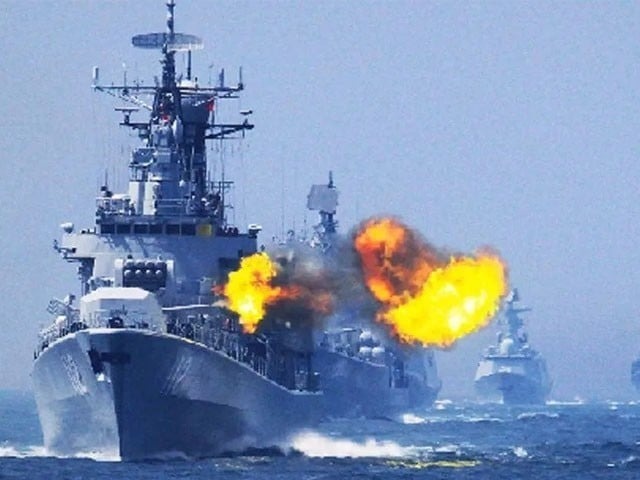
In response to the escalating Israeli-Palestinian conflict, China has dispatched a naval task force consisting of six Chinese warships to the Middle East. According to Chinese media, the task force, including the Type 052D guided missile destroyer Zebo, the frigate Jingzhou, and the supply ship Qingdao, recently conducted joint exercises with Oman’s navy before heading to an undisclosed location.

The deployment of the Chinese naval task force follows the earlier dispatch of the USS Gerald R. Ford by the United States to the Middle East in support of Israel after a Hamas attack on October 7. The situation in the region remains tense, and the presence of both American and Chinese warships raises questions about the potential impact on regional dynamics and ongoing efforts to address the conflict.

This comes in the wake of various attacks on US assets in the Middle East, including Iraq and Syria. The developments underscores the possibility of more aggravated bipolar clashes if escalation continues.

Pakistan rangers: Law unto themselves?

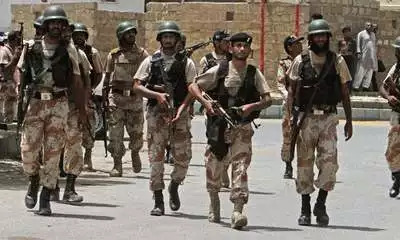
Though a paramilitary federal law enforcement force and part of Pakistan’s civil armed forces, Pakistan Rangers is officered and administratively controlled by the Pakistan Army, which makes it Rawalpindi’s most trusted asset for performing ‘extraordinary’ operations throughout the country in order to preserve the military’s supremacy.

It goes to the credit of Pakistan Rangers that it has lived up to expectations of the military’s top brass by implicitly following orders, even when they are patently illegal and one such example is the 20 days long Faizabad Interchange sit-in organised by Tehreek-e-Labbaik [TLP], a far-right Islamic extremist political party in 2017 that held the Nawaz Sharif government hostage and blocked the major highway in the capital city.

A week and a half into the Faizabad sit-in, Islamabad High Court ordered authorities to clear the Faizabad blockade. Al Jazeera quoted Mushtaq Ahmed, a top local administration official saying that “We have been told to enlist the services of the Rangers and FC [Frontier Corps] as well, if required.” [Emphasis added]. He revealed that “We have been told to clear the protest, by hook or by crook.” On November 25, 2017, the government issued a notification calling-in the military to control law and order in the national capital and the army- Rangers duo did just that by pandering to the protesters!

The sit-in ended after the Rangers brokered a shamefully populist agreement with TLP that saw Director General of Punjab Rangers Maj-Gen Azhar Navid Hayat distributing cash envelopes to protesters and even expressing solidarity with them. Another embarrassing highlight of this agreement was that while it was signed by Pakistan’s Interior Minister and the Interior Secretary, it was the then Director General Inter Services Intelligence [ISI] Maj Gen Faiz Hameed who endorsed his signatures as ‘Guarantor’.

While the entire Faizabad sit-in episode does reveal an ISI-Rangers nexus, inclusion of the sentence- “We are thankful to him [army chief Gen Qamar Javed Bajwa] as he has saved the nation from facing a huge disaster,” in the agreement leaves no room for any doubts. And with DG ISI endorsing the agreement the first sentence of which reads “Tehreek-i-Labbaik Ya Rasool Allah is a peaceful party and does not believe in violence and unrest,” it’s clear that Rawalpindi has no issues with this fundamentalist entity.

Just three years after the Faizabad sit-in, Pakistan Rangers once again grabbed headlines when they behaved with the arrogance reminiscent of Nazi storm troopers. In what came to be known as the infamous 2020 ‘Karachi incident’, Rangers alongwith ISI officers abducted Inspector General of Police [IGP] Sindh  Mushtaq Mahar and compelled him to sign an arrest warrant for Nawaz Sharif’s son-in-law on charges of allegedly violating the sanctity of Quaid-i-Azam Mohammad Ali Jinnah’s mausoleum.”

Subsequent removal of officers involved in the Sindh IGP’s abduction from their assignments confirms that ISI and Rangers were guilty of committing a criminal act and as this tarnished the Army’s image, one expected that the defaulters would be dealt with severely. However, with Pakistan army’s media wing Inter Services Public Relations [ISPR] pronouncing that the officers involved had merely reacted “rather overzealously” it’s amply clear that the unlawful actions of the Rangers were condoned and this reveals the unbelievingly high degree of Rawalpindi’s patronage that Rangers enjoy!

Five months ago, the Rangers once again came into limelight for arresting and abducting former Prime Minister Imran Khan from Islamabad High Court premises. While this action was sanctioned by the competent authority, using Rangers rather than the police for bundling away a prominent citizen who had come to court to appear in another case is, to say the least, illegal and in extremely poor taste.

This highly provocative act expectedly proved to be the proverbial last straw that broke the camel’s back and Khan’s enraged supporters took to the streets triggering the May 9 anti-army protests riots. Surprisingly, while Rawalpindi is going hammer and tongs after PTI leaders and rioters, it has not even considered it necessary to inquire as to why Rangers [which is a paramilitary force commanded by Pakistan army officers] were used to make this routine arrest and that too in the highly secure court environs?

The recent operation in Sindh’s Sakrand village launched by Sindh Rangers on September 28 is yet another addition to its hall of shame. In this action, innocent civilians were killed and injured due to indiscriminate firing, which exposed the cavalier ways of this trigger happy paramilitary force. Differing versions of this incident given out by Sindh Rangers, police and locals lend credence to suspicions of a massive cover-up to shield the culprits.

In its statement, the Sindh Rangers claimed that this operation was conducted as “There were reports of high-value criminals in possession of explosives and firearms,” and maintained that “Upon seeing Rangers and police, the armed miscreants opened fire, injuring four Rangers personnel. In retaliatory fire, three miscreants were killed.” However, the police version is completely different.

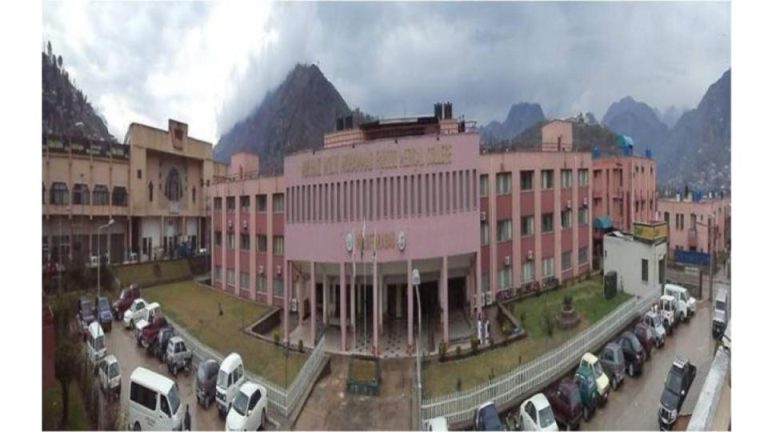
Dawn.com quotes Benazirabad Senior Superintendent of Police Hyder Raza saying that the operation was launched to apprehend members of proscribed Sindh Revolutionary Army [SRA] and four civilians were killed in the firing by Rangers. He also expressed ignorance regarding injuries suffered by the Rangers and whether their injured personnel had been admitted in People’s Medical College hospital.

The fact that it’s not clear whether the joint Rangers and police team were seeking out “high value criminals” or SRA fighters is a clear giveaway that something is amiss and the absolutely different version of Sindh United Party [SUP] deepens the mystery. The SUP claims that the Rangers came to  Sakrand alongwith Liaquat Jalbani, a veterinary student who had been arrested earlier and they attempted to arrest and whisk away another innocent local youth named Allahdad Jalbani from his home in the village.  

SUP secretary general Roshan Buriro told Dawn.com that after the Rangers arrived, men, women and children of the village congregated at Allahdad’s residence and the crowd not only prevented the Rangers from arresting Allahdad but even managed to free Liaquat from their custody. This led to the Rangers opening fire on the crowd in which four villagers were killed and an equal number injured. This version appears most plausible.

In all probability, the double humiliation caused by forced ‘release’ of an apprehended youth and preventing the arrest of another person by locals would have most certainly enraged the Rangers and acted as the trigger for unprovoked and indiscriminate firing on unarmed villagers.

The detailed Human Rights Commission of Pakistan [HRCP] investigation report on this incident mentions that, “The mission notes with concern that this security operation, hastily executed and lacking a comprehensive strategy, resulted in chaos and the deaths of four villagers. There are incongruities between the statements of the district police, Rangers, state officials and the residents. While the exact nature of the threat prompting this operation remains unclear, the state and law enforcement officials [Rangers] must take responsibility for the deaths of four civilians and the injuries sustained by others.” [Emphasis added].

By observing that With no history of such an incident taking place in the village before, and a lack of criminal history against the civilians caught in the crossfire, the actions of the law enforcement personnel involved must be gravely called into question” [Emphasis added], HRCP has placed the Rangers in the dock. It now remains to be seen whether Rawalpindi will act against the Rangers responsible for killing and injuring innocent civilians, or will this cold blooded murder also go unpunished as hitherto fore? 

Indian security forces foil Pak backed terrorist infiltration attempt in Uri

In a significant security operation, Indian security forces successfully thwarted an infiltration bid by terrorists along the Line of Control (LoC) in the Uri sector of north Kashmir’s Baramulla district. The operation resulted in the elimination of two terrorists.
The operation was conducted under challenging weather conditions, characterized by incessant rainfall and poor visibility. Based on specific intelligence inputs from various agencies, including the Jammu and Kashmir Police, security forces were alerted to the likelihood of a major infiltration attempt in the Uri sector. This involved a group of heavily armed terrorists attempting to cross the LoC.

Operation

On October 21, at approximately 3 p.m., alert troops intercepted the group of terrorists, leading to a fierce exchange of gunfire that continued until nightfall. As a result, two terrorists were killed while the remaining terrorists managed to withdraw to the other side of the LoC, carrying the bodies of the deceased.

The area remained under constant surveillance throughout the night. Subsequent to the operation, a thorough search of the incident site was conducted. The search revealed significant evidence and the recovery of a cache of heavy weaponry, including two AK series rifles, six pistols, four Chinese grenades, blankets, and two blood-stained bags containing both Pakistani and Indian currency notes, Pakistani medicines, and food items.

The recovery of two blood-stained bags indicated that at least two terrorists were seriously injured, forcing them to abandon their supplies and retreat across the LoC.
Due to the adverse weather conditions, the search operation had to be temporarily suspended but is expected to resume once conditions improve. This successful thwarting of the latest infiltration bid marks the sixth such incident along the LoC in north Kashmir over the last five months.

Past Incidents

Official data revealed that these operations have resulted in the killing of 14 foreign terrorists, including the two terrorists killed on October 21. The LoC in north Kashmir witnessed a series of six infiltration attempts being foiled over the past five months, showing the determination and vigilance of the Indian security forces in maintaining border security.

Reportedly, June witnessed the foiling of three infiltration attempts.

In the initial instance, two terrorists met their demise during an operation in Machil, Kupwara on June 13, followed by the elimination of five foreign terrorists in a separate operation in Jumagund, Kupwara on June 16.

Continuing the success, four terrorists were killed during an operation in Kala Jungle, Machil on June 23.

July 19 marked another significant achievement, with two Pakistani terrorists being neutralized in a Machil operation. Subsequently, an intruder was fatally shot in the Tangdhar sector of Kupwara on August 6.

China supports Russia in brokering a ceasefire in Palestine

In a significant diplomatic development, China has expressed its readiness to collaborate with Russia in addressing the ongoing conflict and possibility of ceasefire in Palestine. This commitment was articulated during a high-level meeting between Chinese officials and Russian Deputy Foreign Minister Mikhail Bogdanov in Doha, Qatar.

Suffering Palestine

The primary focus of the discussions was the dire situation in Palestine, particularly in the Gaza Strip, and the urgent need for renewed negotiations to bring an end to the protracted conflict. Chinese representatives conveyed their concerns about the suffering endured by Palestinians and the deteriorating humanitarian conditions in the region.

Notably, Beijing emphasized its staunch opposition to any actions targeting civilian populations and vital infrastructure in Gaza. This commitment aligns with China’s longstanding advocacy for a peaceful and equitable resolution to the Israeli-Palestinian conflict.China’s Foreign Minister, Wang Yi, has consistently called for a peaceful solution to the Palestinian conflict. He has urged armed groups to exercise restraint and stressed that the root cause of the ongoing turmoil in Palestine is the injustice and oppression faced by the Palestinian people.The discussions in Doha underscore the shared commitment of China and Russia to address the complex and deeply rooted issues contributing to the ongoing conflict. Both nations are determined to facilitate peaceful negotiations and a resolution that respects the rights and aspirations of the Palestinian people.

This collaboration between China and Russia highlights the international community’s recognition of the urgency in addressing the Palestinian crisis and signals a collective commitment to a just and equitable resolution. Further diplomatic efforts are anticipated in the coming months as China and Russia continue to work together to support a peaceful resolution to the Palestinian-Israeli conflict.