Home Blog Page 180

Students protest across POJK in favour of ‘Charter of Demands’,condemns Pak repression

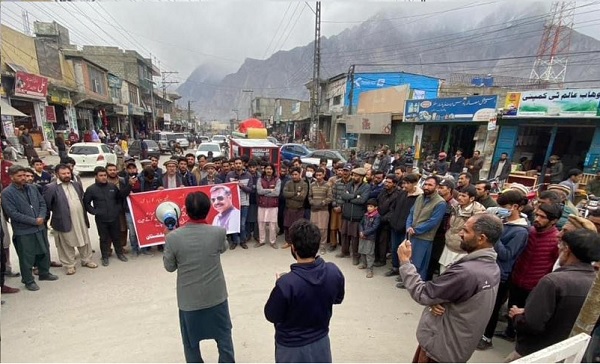
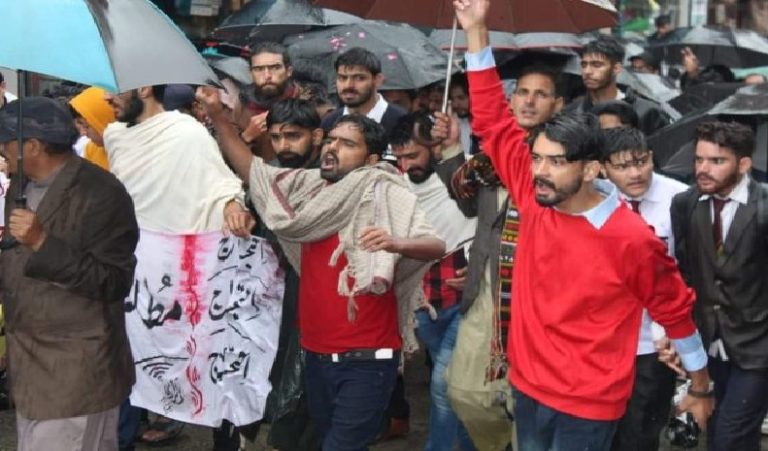
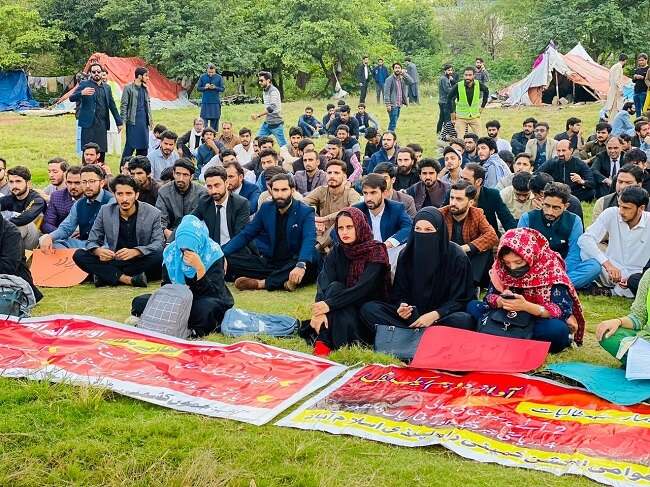
Despite heavy rain and cold weather, thousands of students protest in Pakistan occupied Jammu and Kashmir (POJK). These rallies and programs were organized in various districts and town centers, spanning Muzaffarabad, Poonch, and Mirpur divisions, including both small and large markets. Students from Jammu and Kashmir also held protest demonstrations in major cities of Pakistan, such as Islamabad, Lahore, and Karachi.

The protests witnessed significant participation from female students. In addition to voicing their demands, the students chanted slogans in favor of giving control over the region’s resources to its citizens.

Student protest on the call of Awami Action Committee

These demonstrations were organized in connection with the ongoing public rights movement, which has persisted for five months in Jammu and Kashmir. The Awami Action Committee (Jammu Kashmir Joint Public Action Committee) had earlier announced plans for a region wide student protest march on October 17. These marches were coordinated by student organizations within educational institutions, showing solidarity with the public rights movement.

A declaration made at the end of the protests stated that the primary purpose was to express support for the ongoing public rights movement in Jammu and Kashmir. The protest also addressed the issues faced by students in Rawalpindi Islamabad, especially those hailing from Jammu and Kashmir.

One of the key demands was the revival of the Students Union, which is part of the central program of the Awami Action Committee. Other demands included a reduction in fees, provision of hostels, and the establishment of anti-harassment committees with student and female student representation.

The declaration strongly condemned Pak sponsored repression within the ongoing public rights movement in Jammu and Kashmir and called for the immediate release of all detainees and closure of related cases.

The student-led protest called on laborers, students, scholars, women, lawyers, and journalists in Pakistan to join the movement.

The students pledged their unconditional support for all the demands put forth by the Awami Action Committee and committed to playing a leading role in the public rights movement until these demands are met.

Students defy occupying government efforts

Despite government efforts to restrict the student protests, which included closing university gates and confining students within educational institutions, the students pressed on. The government also issued warnings to private educational institutions, threatening to cancel their registrations if they allowed students to participate in the protests. Special measures were taken to prevent female students from attending the protests, but their determination prevailed.

As part of the ongoing public rights movement, the boycott of electricity bills will continue for the third month. Protest camps have been set up at various locations to facilitate citizens in boycotting electricity bills. Last month, 78 percent of citizens boycotted their electricity bills. Further protest demonstrations are scheduled for October 28, involving the collection and symbolic burning of light bulbs.

Additionally, the government has formed a negotiation committee, raising the possibility of talks commencing on October 18 to address the concerns raised by the public rights movement.

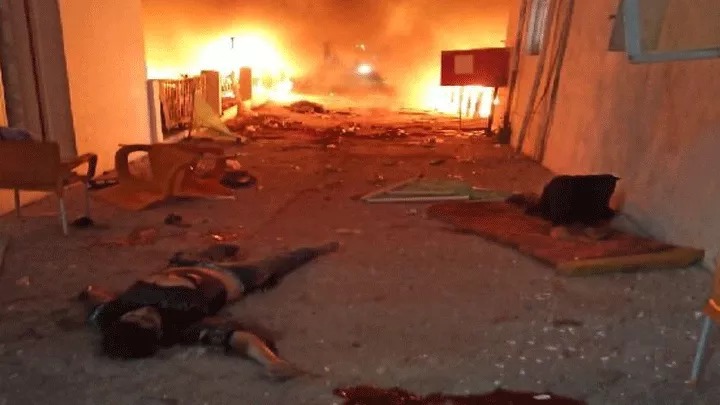
Israel-Hamas War: Dead children ask, tell me why?

I can’t vouch for it because I wasn’t there. But yet I’m sure that the one common question that would have crossed minds of both Israeli and Palestinian children writhing in agony as life ebbed out of their tender bodies was- why have they done this to me? In a way it’s good that I wasn’t there, because I wouldn’t have been able to answer their simple question and despite the fact that we are absolutely clear in our minds as to both who the villain is and who’s the victim, I’m sure none of us can.

This paradoxical situation owes its existence to the proclivity of human mind to quickly take up strong positions based on preconceived ideas and then look for reasons to justify the same. So, those on Israel’s side, justify Tel Aviv’s extraordinarily severe military response by drawing attention to the unprovoked ‘invasion’ by Hamas, its merciless killing of Israeli civilians including the aged, young, infants and even babies, as well as the taking of hostages.

According to those supporting Israel’s actions, due the gory bloodbath of innocents and their forcible abduction as well as desecration of the dead, Hamas deserves no mercy, . They also contend that since Hamas fighters take refuge in and launch rocket attacks against Israel from densely populated areas, Tel Aviv has the right to attack such sites. Hence, onus of any collateral damage in terms civilian casualties and destruction of residential buildings and public facilities rests entirely with Hamas.

In short, those defending Israel’s response maintain that, [1] By initiating unprovoked violence, it’s Hamas that upset status quo and precipitated the current crisis and so Palestinians have no right to play the ‘victim’ card [2] Hamas has ‘invited’ trouble by killing innocent Israelis including aged people, women, children and babies; hence Palestinians would have to bear the consequences [4] Being forced into a war, Israel’s ‘eye for an eye’ policy is justified by the ‘All’s fair in love and war’ dictum, and [5] Israel has all the rights to defend itself by whatever means it deems fit!

On the other hand, those who support the Hamas have an equally convincing argument to support their viewpoint. They contend that Palestinians have been a victim of brazen apartheid and the target of institutionalised persecution by Israel for the last seven and a half decades due to which the Gaza strip is a veritable ‘open air jail’. With Israel disregarding implementation of various international resolutions and accords that address genuine aspirations of Palestinians, this group feels that since Hamas represents aspiration of Palestinians, it has the moral right of using force to compel Israel to end its high handed approach.

Those sympathising with Palestine also maintain that since Israel has forcibly driven out Palestinians from their land and denied them their fundamental rights, use of violence by Hamas against these ‘oppressors’ is fully justified. Furthermore, with no alternative available to redress their grievances, Palestinians have little choice but to fight for their rights since Tel Aviv only understands the language of violence. Most importantly, they defend the violence committed by Hamas as the natural and inescapable response to prolonged subjugation.

The Pro-Palestine lobby’s justification of violence committed by Hamas is simple. It strongly maintains that [1] Oppression by Israel justifies retaliatory aggression by Hamas  [2] Elimination of Jews has religious sanction and is hence kosher and obligatory [3] Killing of aged people, women and children is a ‘tit for tat’ response to Tel Aviv’s barbarity [4] Hamas fighters are voluntarily embracing ‘martyrdom’ for the sake of their people and as such Palestinians should honour their sacrifice by willingly accepting losses of life, limb or property caused due to retaliatory action by Israeli Defence Forces [IDF] to Hamas instigated violence. 

With both sides having multiple reasons for supporting violence being wrecked on each other by Israel and Hamas [however skewed or perverse they may be], Israelis and Palestinian men, women and youth who unfortunately fall victim to such carnage know very well why they have been targeted. However, what about Israeli toddlers living peacefully in a kibbutz killed by Hamas gunmen or Palestinian babies crushed to death under debris of buildings in Gaza bombed by Israeli Air Force?

While we will all definitely express anguish and grief on the killing of children, even if they belong to the side we oppose. Yet, we will nevertheless shamelessly defend such gruesome acts committed by the side we support by citing instances of similar atrocities committed by the opponent. And we are so conscious of the fact that we’re knowingly defending the indefensible that we invent reasons to justify our stand by selectively drawing inferences from anything and everything, ranging from theology to geography, history and even philosophy.

Consequently, by vociferously supporting senseless violence by a particular people against another, we miss the wood for the trees and end up [intentionally or unwittingly] mainstreaming community violence. That’s why while we can keep waxing eloquent on the right of a particular side to perpetrate violence, we lack the courage to stare a dead child in the face because we are afraid that its glazed eyes and twisted lips may suddenly come alive and innocently pose the disturbing question, “tell me why?”

Ten Years of China-Pakistan Economic Corridor: Has the ‘Game-Changer’ part been overhyped?

According to a recent news report carried by Nikkei Asia, China has spurned Pakistan’s proposals for inclusion of new projects in its Belt and Road Initiative [BRI]. It was a ‘source-based’ account that mentioned that “Two officials who have seen the minutes told Nikkei Asia that the Chinese side turned down Pakistan’s suggestions to add more projects related to energy, climate change, electricity transmission lines and tourism under the China-Pakistan Economic Corridor (CPEC) — the $50 billion Pakistani component of the Belt and Road.” [Emphasis added].

While both Beijing and Islamabad would like to rubbish this claim, this isn’t an easy task as the Nikkei Asia news report contains compelling details which clearly indicate that things aren’t as rosy as the two ‘iron clad’ brothers so vociferously maintain. For example, even though the Joint Cooperation Committee [top decision-making body for CPEC projects] meeting was held in October last year the minutes were ratified only in July this year. The inordinate delay of nine months between China’s meeting and the signing of its minutes certainly raises red flags!

Then, the report also reveals that in the minutes of this meeting there’s a mention of Beijing rejecting Islamabad’s proposal for a 500 KV transmission line to connect the port city of Gwadar to the national electricity grid from Karachi. Beijing has even refused to entertain cash-strapped Islamabad’s simple demand for relocating a 300 megawatt coal-fired power plant in Gwadar to facilitate use of domestic rather than imported coal, which is rather intriguing.   

That Nikkei Asia’s claim would elicit a response from Islamabad’s ‘Iron Brother’ Beijing was expected. After all, doesn’t Islamabad tout Sino-Pak friendship as being “higher than the mountains, deeper than the sea, sweeter than honey, and harder than steel”? However, the question was whether the response would come out in the form of an outright rebuttal of disclosures made by two unnamed officials to Nikkei Asia, or by playing down this embarrassing truth by trumpeting the CPEC success story.

Beijing expectedly chose to do the latter.

Exactly a week after the Nikkei Asia report appeared, The Express Tribune carried a news report that the Chinese Ambassador to Pakistan Jiang Zaidong had stated that “CPEC has brought a total of $25.4 billion in direct investment, 1, 55,000 direct jobs, 510 Km of expressways, 8,200 megawatts of power capacity and 886 Km of core power transmission grid to Pakistan.” He also contended that in the last decade, CPEC succeeded in “injecting strong momentum into Pakistan’s economic and social development” [Emphasis added].

However, Pakistan’s rapidly deteriorating economic condition and burgeoning unemployment belies Zaidong’s claim that CPEC has injected “strong momentum” in Pakistan’s economy and furthered social development. While there are no grounds to doubt the authenticity of data furnished by the Chinese ambassador, but given its precarious financial condition, the people of Pakistan have all the reasons to question as to where all this money has gone, and where are the jobs?

However, the answers aren’t very easy to find.

Inexplicable lack of transparency regarding the terms and conditions of CPEC contracts and the suspicious secrecy surrounding interest rates that Beijing is charging for its extraordinarily lavish loans to Islamabad certainly gives rise to suspicions that there’s more to it than what meets the eye. In 2017, the media was abuzz with news regarding rampant corruption in CPEC’s infrastructure projects of such humongous magnitude that Beijing temporarily stopped funding of three major road projects.

Just three years later, an investigative news report based on credible documentary evidence provided details of the mind boggling financial empire of retired Lt Gen Asim Saleem Bajwa, who was serving as special assistant to the prime minister on information and broadcast as well as chairman of CPEC authority. While the beleaguered Lt Gen Bajwa agreed to resign from the former post, his refusal to quit as chairman CPEC authority fuelled speculations that he was merrily dipping into the CPEC’s till.

However, the Chinese ambassador to Pakistan isn’t the only one who has tried to convince the world that all’s well with CPEC. Nikkei Asia has quoted Andy Mok, a senior research fellow at Center for China and Globalisation [which is close to Beijing] saying that “China’s approach to Belt and Road investments is guided by prudence and long-term sustainability.” Mok goes on to justify tardy CPEC progress by adding, “Concerns like political instability in partner countries like Pakistan necessitate greater caution, especially regarding the safety of Chinese nationals.”

Despite all the talk about CPEC being ‘game changer’ for Pakistan, the harsh reality is that Beijing primarily conceived CPEC to further  its own strategic and commercial interests, hence, any benefits from it that come Pakistan’s way are just incidental. However, it would be wrong to assume that the payback from CPEC for Pakistan is a dole from Beijing because Islamabad has paid a very heavy price for China’s ambitions.

Firstly, though its financial crisis predates CPEC, Pakistan’s external debt has risen astronomically due to investment in this project, both in terms of machinery and material imports as well as heavy loans taken from Chinese banks at near-commercial rates of interest. Secondly, by extending special privileges to Chinese players like permitting uncontrolled trawling off the Gwadar coast and giving them tax exemptions, locals have been marginalised. And public ire is evident from the massive two month long ‘Gwadar Ko Haq Do’ [Give Gwadar its rights] movement that in a first of sorts saw a massive turnout of women.

Thirdly, by escalating the level and frequency of punitive actions against innocent civilians as retribution for attacks by Baloch freedom fighters on CPEC assets and Chinese workers to protest exploitation of the region’s natural resources, the already alienated people of Balochistan have been pushed into a corner. Resultantly, the level of violence in Balochistan has surged exponentially and further invigorated separatist ideology. Lastly, by allowing CPEC projects in Pakistan occupied Jammu and Kashmir [POJK], Islamabad has compromised its own narrative of J&K being ‘disputed territory’.  

So, while CPEC hasn’t exactly measured up to the expectations of Pakistanis even after a decade of its inception, one sincerely hopes that the situation changes soon and the promised unending downpour of money starts. After all, Islamabad desperately needs such a miracle in order to repay the estimated $30 billion loan that Beijing has extended at commercial rates of interest. Only this can ensure that the ‘sweeter than honey’ relationship between the two stays intact, and China remains a friend and doesn’t become the master, [in case this hasn’t happened already!]

Israeli military prepares for ‘unexpected offense’ in Gaza

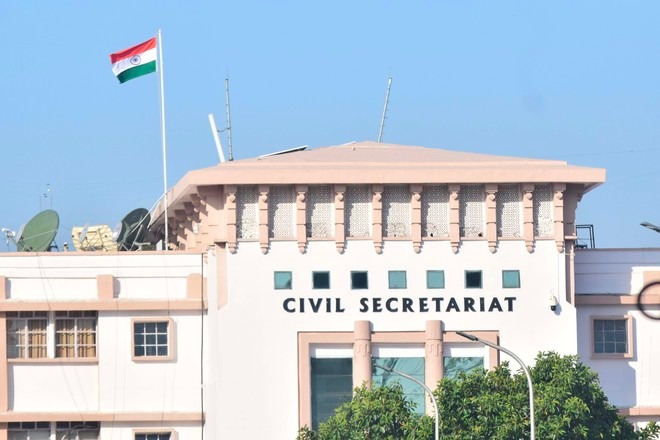
The Israeli military is gearing up for the next phase of its campaign against the Gaza Strip, but the details of their plans may not align with the widespread expectations of an imminent ground offensive, according to a statement by army spokesperson Lt. Colonel Richard Hecht.

“We are preparing for the next stages of war. We haven’t said what they will be. Everybody’s talking about the ground offensive. It might be something different,” Lt. Colonel Richard Hecht told reporters during a regular briefing.

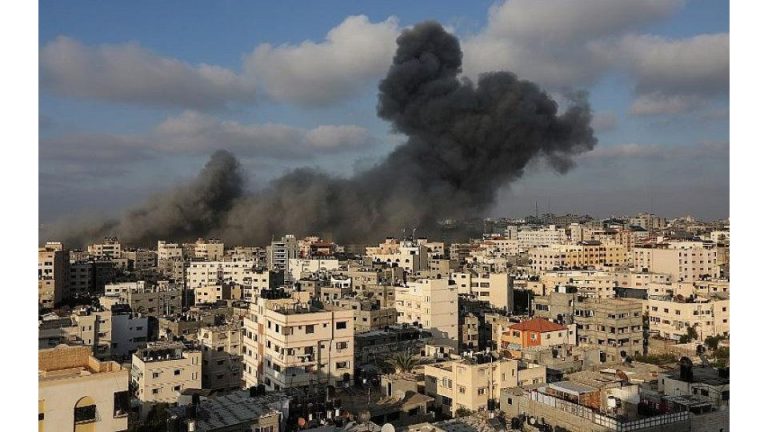
On October 7, Hamas initiated this attack with a significant and unexpected barrage of rockets, along with a large-scale ground assault. In reaction, Israeli forces have been deployed in the southern regions to engage with Hamas fighters, and the Israeli air force continues to target locations in the Gaza Strip. Hamas’s unprecedented attack on Israel, resulted in the deaths of more than 1,400 people and the taking of numerous hostages. In response, Israel launched retaliatory air strikes in Gaza. Therefore, Israeli ground offensive is anticipated.

Tensions in the region have been escalating, and there has been intense speculation about the Israeli military’s intentions regarding the ongoing conflict. The possibility of a ground offensive has dominated discussions, given the circumstances and analysis of the scenario. However, Lt. Colonel Hecht’s statement has cast doubt on these assumptions.

The Israeli military’s decision to remain cryptic about their plans has added an element of uncertainty to the situation. We are yet to witness how their campaign will unfold and which strategies they will employ as they press forward with their efforts in the Gaza Strip.

Student organisations protest across Pak-occupied Jammu & Kashmir, demand basic amenities

Student organisations across Pakistan occupied Jammu and Kashmir (POJK) are protesting against the rising inflation and scarcity of basic amenities across the region.

On the call of Awami Action Committee (J&K Joint Public Action Committee), huge number of student organizations have come down to the streets and have started a protest against the Pakistani establishment and occupying government of POJK. During a meeting on October 3, the Awami Action Committee announced a comprehensive plan of action and a charter of demand. In a communique it was announced that under the aegis of Awami action Committee, various protests across the POJK will be held. The first protest was a complete shutdown on October 5 and the other was a women and children protest on October 10. Both the protests were held with immense rigour and turned out to be the biggest and most expansive protest in the past 75 years of illegal occupation of Pakistan.

The student organization’s protest which was decided to be held today has also seen participation from across the region. Despite heavy rains during the protest, students protested in massive strength.

Student organisations protest in Kotli

In Kotli, various student organisations accumulated and raised slogan against the Pakistani establishment and reiterated their demand as mentioned in the Charter of Demands.

In another such protest in Kotli, students raised slogans of “takseem-e-Jammu Kashmir ke khilaf, hum ek hain”  (Against the division of Jammu and Kashmir, we are one).

Bagh Protest

Similarly in Bagh, hundreds of protestors agitated over the crucial issues and joined the protest of student organisations. They raised slogans-

“Pami humara-rate tumhara, namanzoor..naamanzoor..” (Water ours, rate yours unacceptable..unacceptable..)

“Dam humare-Kabza tumhara, naamanzoor..naamanzoor..” (Dam our, encroachment yours, unacceptable..unacceptable..)

“Bijli humari, hukum tumhara, naamanzoor..naamanzoor..” (Electricity our, order yours, unacceptable…unacceptable…)

“Mulk hamara, qabza tumhara, naamanzoor..naamanzoor..” (Country ours, occupation yours, unacceptable…unacceptable…)

https://twitter.com/SamRaja21700228/status/1714193358225014933

One of the massive protests has been organized in Tarar Khel. A significant number of protestors took to the streets in support of local student organizations. They carried out a rally sloganeering their demands and hurling condemnation against the occupying regime of POJK.

In Dhar, the protest rally witnessed a teenager at the front cursing the atrocious regime and highlighting the inflation. His voice echoed the situation in POJK that even the flour and sugar are expensive and are hard to buy.

https://twitter.com/SaveYasinMalik/status/1714223709836447872

Apart from these protests in POJK, Kashmiris in Islamabad also protested against Pakistan in solidarity with Awami Action Committee. The students rigorously protested for restoration of student union, restoration of free electricity and subsidy on wheat flour, abolition of privileges of the rulers.

It must be noted that, these protests are the testament to the fact that Kashmiris have now become aware that in the past 75 years, Pakistan has only given misery, exploitation, human rights violation, and scarcity while it has taken benefits from POJK’s tourism, electricity, land and other resources. As a result now the Kashmiris stand deprived and watch their future in darkness. The electricity from the Mangla Dam is produced at low cost and transmitted to Pakistan which, further, is sold to Kashmiris at more than quadrupled rate. In the wake of a economic crisis, the wheat flour subsidy that was given to Kashmiris was also terminated. In spite of all this, ruling puppets of Pakistan are living a luxurious life of abundance.

The stark difference between the ruled and the ruler, and that too an occupying one shows that condition of Kashmiris in POJK is fragile and at an all time low. And hence, Awami Action Committee is now posing resistance in an unprecedented way. In turn, Pakistan is now using coercive measures to curb the protests. As per reports, various schools and universities had also issued directions to students to not participate in the protests. However, defying every authoritarian dictates, thousands of students across POJK made the protests successful.

Shias offer to volunteer in the fight alongside Palestine against Israel

As the Israeli-Palestinian conflict continues to escalate, Shias in the region are coming together to express their support and solidarity, emphasizing humanitarian concerns over taking sides.

Reports from Iran indicate that a substantial number of Shias, with over 2.4 million volunteers, are offering their assistance to stand alongside Palestinians. This surge in support signifies a shared humanitarian sentiment rather than a political stance.

Similarly in Lebanon, the longstanding alliance between Hezbollah and the Palestinian cause has seen local villagers expressing their unwavering support. Messages left by Lebanese civilians for Hezbollah fighters reflect a common bond and a readiness to assist in challenging times.

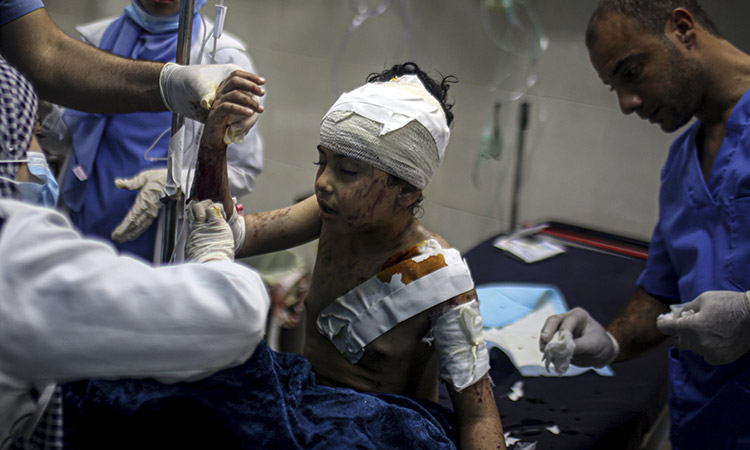
The recent cycle of violence began with rocket attacks from Hamas in Gaza, met with an Israeli military response. This has resulted in significant civilian casualties and critical infrastructure damage in Gaza.

The crisis is further exacerbated by an Israeli blockade on Gaza, causing severe shortages of essential supplies. The situation has triggered a worsening humanitarian crisis, affecting countless innocent lives.

Jeay Sindh Freedom Movement pays tribute to Thori Phatak martyrs on the 38th martyrdom anniversary

On the 39th martyrdom anniversary of Thori Phatak victims, Jeay Sindh Freedom Movement called upon Sindhi people to pay tribute to the martyrs by lighting candles in their homes, neighbourhoods, press clubs, and mausoleums.

In the annals of history, the small village of Thori Phatak near Manjhand, in the Jamshoro district of Sindh, bears witness to a haunting incident that unfolded on October 17, 1984. It was a day when the lives of five innocent Sindhi student activists were abruptly cut short, victims of an act of state-sponsored terrorism.

These brave activists, belonging to the Jeay Sindh Student Federation (JSSF), included Amanullah Vistro, Maalik Khushik, Zakaria Memon, Anwar Abbasi, and Mithu Buledi. They were pursuing their education at esteemed institutions like Sindh University and Mehran University, striving for a better future for themselves and their homeland.

Indiscriminate killing in Thori Phatak

However, on that fateful day, their identity as students was cruelly twisted into an accusation of being ‘dacoits’ by the security forces. It’s a grim irony that in the eyes of the authorities, merely being a student could lead to such a devastating fate.

While these students were on a bus journey to Larkana, security forces halted the bus and opened fire on them without warning. This brutal act resulted in the loss of five young lives and left 15 others wounded. It also led to the unjust arrest of hundreds of Sindhi nationalists.

Today, 38 years later, justice remains elusive for these martyrs. Thori Phatak is a stark reminder of the injustices faced by Sindhi people and the need for acknowledgment and justice. It’s a call to ensure such tragedies are never repeated and to honor the memory of those who sought a brighter future for Sindh.

Various gatherings, rallies, and musical events with Sindhi national songs were organized to celebrate the day.

BLF attacks Pakistan Army in Gomazi in Pak-occupied Balochistan

In a recent act of valour, the Balochistan Liberation Front (BLF) attacked a Pakistan Army post in the Gomazi area of Tump in Pak-occupied-Balochistan. The attack, which occurred on 15 Oct night at 8 p.m., was carried out by Baloch Sarmachars (Freedom fighters), who used a rocket launcher to target the Army’s installation.

During the assault, the rocket struck the Army post, and it is likely that the enemy suffered a significant loss both in terms of financial and human, as a result of the attack. The BLF’s fighters strategically launched the attack with precision to minimize potential harm to civilians and their property due to the post’s proximity to the local population.

The attack was targeted because the brutal Pakistan Army had established the checkpoint by forcefully occupying the residence of Shaheed Sarmchar Jabbar, also known as Captain Janahgeer, a member of the Balochistan Liberation Front. This checkpoint has been identified as a priority target for the BLF in the region. Because of this oppressive behaviour, Pak Army should anticipate such attacks in future as well.

As part of their tyranny collective punishment policy, the Pakistan Army has consistently targeted the families of Baloch activists and other freedom fighters. This policy involves burning their homes, confiscating their properties, and converting them into Army camps and outposts. The primary objective of the BLF’s struggle is to put an end to the occupation of Balochistan by the Pakistan Army, a crucial step for the preservation of Baloch national identity.

For decades, BLF has carried on an armed struggle against the Pakistan Army and ‘establishment’, as they have illegally occupied Balochistan. Since 27 March 1948, Pakistan Army has been oppressing Baloch through daily home raids, disappearances, staged encounters, target killings, torture, humiliation at checkpoints, and kidnappings for ransom. The Pakistan Army is targeting and monitoring Baloch people, and anyone who has a potential to raise questions is either killed or abducted. Therefore, BLF continues to assert its commitment to the cause of an independent and sovereign Balochistan.

Hindu women escapes the captivity of a radical Islamist in Pakistan

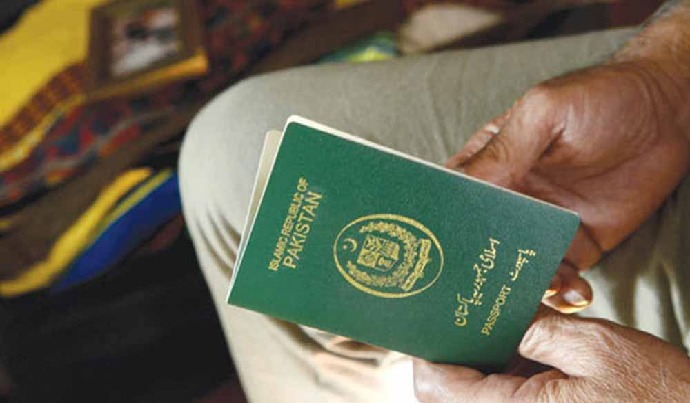
In a distressing incident, a Hindu woman was abducted two months ago by a radical Islamist in Pakistan. The victim, Reeta Meghwar was abducted by Ashiq Ahmadani from Badin in Sindh. Her whereabouts remained unknown until she managed to escape the captivity of her abductor a day ago.

She told her horrific story that is the harsh reality of Hindu women who are targeted on the basis of religion in Pakistan. After she was abducted, she was forced to give up on her religion and convert to Islam. Reeta was also coerced to marry a Muslim man. The fanatic Islamists threatened her that if she doesn’t accept their dictates, her parents would be killed.

This is the sorry state of Hindus and especially women who suffer at the hands of radical Islamist in Pakistan. A country that has devastated the life of religious minorities and only persecuted them stands shamelessly on the global platforms talking about minority rights in other countries.

The incident underscores the reason for the dramatic fall in the Hindu minority population in the Islamic Republic of Pakistan since its formation. Hindus are not safe under the administration of this terror regime. It must be noted that Hindus don’t even have a safe refuge in Pakistan while dealing with such cases. The bigoted Islamic clerics, judiciary, law enforcement institutions and Pakistan Army, each and every part of this syndicate is involved in this persecution with a sole motive of converting every single minority to Islam.  

BLA kills six Pak Army agents in Turbat

On 14 October, freedom fighters of the Baloch Liberation Army (BLA) killed six agents of the Pakistan Army in an operation in Turbat, Pak-occupied-Balochistan.

According to the press release issued by the BLA, the operation was carried out on the basis of intelligence reports that several informants and agents of the Pak Army were using a residential house as their base in Turbat city. These agents were observed going into Army camps and using their vehicles. They were also working as informants in disguise and providing safe houses to members of the Pakistan Army’s “death squad”.

Later, BLA fighters raided the compound at midnight and eliminated six agents, while two were injured. A youngster was also present in the compound, however, he was not harmed due to his age. The six eliminated agents were identified as Rizwan, Shahbaz, Waseem, Shafeeq Ahmed, Mohammad Naeem, and Sikandar.

The BLA issued a warning to local contractors, hotels, and landlords, urging them not to provide any form of support to agents and personnel associated with the Army. These agents are working on behalf of the Paki establishment against the Baloch liberation movement in Turbat and its neighboring areas.

The BLA highlighted the importance of contractors, hotels, and private landlords refraining from offering any form of assistance to enemy agents, cautioning that they would be held responsible for their actions if they did not comply.

The BLA is a freedom fighters group striving for the independence of Balochistan from the control of Pakistan Army. The conflict in Pak-occupied-Balochistan has been going on for decades and has resulted in the deaths of thousands of innocent Baloch people. The Army continues their brutal human rights abuses in Pak-occupied-Balochistan, including extrajudicial killings and enforced disappearances.

The elimination of six enemy agents by the BLA is a significant development in the Balochistan conflict. It shows that the BLA is still capable of carrying out attacks against Paki ‘establishment’, despite the Army’s crackdown on the liberation movement.

For decades, BLA has carried on an armed struggle against the Pakistan Army and ‘establishment’, as they have illegally occupied Balochistan. Since 27 March 1948, Pakistan Army has been oppressing Baloch through daily home raids, disappearances, staged encounters, target killings, torture, humiliation at checkpoints, and kidnappings for ransom. The Pakistan Army is targeting and monitoring Baloch people, and anyone who has a potential to raise questions is either killed or abducted.