Home Blog Page 181

Khyber-Paktunkhwa: Shias file blasphemy case against banned terrorist organisation in Pakistan

Shias in Pakistan are agonized over the insult of their pious religious figures and are filing blasphemy cases. At the front of this malicious propaganda against Shias is the banned terrorist organization Sipah-e-Sahaba Pakistan.

In a latest development, a blasphemy FIR has been filed by Shias in Khanpur, district Haripur, Khyber Paktunkhwa. The FIR has been registered against a Sunni Sipah-e-Sahaba Pakistan cleric Abdul Matin Hazarvi under Section 295A, 298 and 153A for insulting Shia practices on Facebook.

Another blasphemy case

Similarly, Shias in Islamabad also reached the police station in Islamabad against another Sipah-e-Sahaba Pakistan cleric Aurangzeb Farooqi for insulting Ahl-e-Bayt. As per the Shia community, a complaint was registered against the cleric on Friday for insulting hidden Imam but still has not been entertained by the local Police. Consequently, the group of people who reached the police station warned that if the proceedings are not taken forward, they would sit in front of police station in protest.

It is worth mentioning that Shias are under the target of radicalized Sunni regime of Pakistan. A couple of months ago Pakistan has passed a “Criminal Laws (Amendment) Bill 2023” according to which any criticism of Yazid, Aby Sufiyan and Mu’awiya is considered as a criminal offence. This stirred controversy, as the very foundation of Shi’ite community and its basic difference from Sunnis lies on the same premises. Pakistan did it to widen the gap between Shia and Sunnis and hence degrade the former into an inferior community. The Sunni clerics who are hand in gloves with Paki establishment picked their patron’s agenda and started giving blasphemous statement against Shias and their religiously significant figures. Unfortunately, this trend is continuing and Shias are facing the wrath of the radicalized Sunni Paki establishment.

Jeay Sindh Freedom Movement condemns the abduction of Sindhi youth

The Jeay Sindh Freedom Movement (JSFM) Central Chairman Sohail Abro, Vice Chairman Zubair Sindhi, and other prominent members have issued a joint statement expressing deep concern over the relentless targeting of innocent nationalist activists in the Sindh region, the latest being Irfan Zahrani, by what they describe as a “Punjabi fascist state.” The statement highlights the urgent need for a strong response to protect the rights and safety of the people in the region.

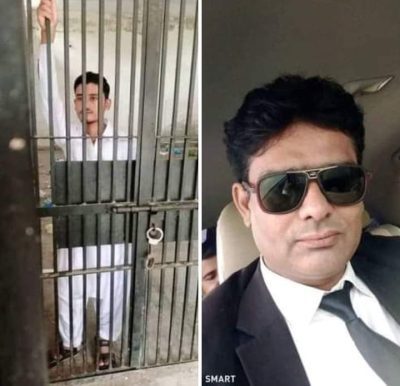
The press release shed light on the recent disappearance of Irfan Zahrani, a national activist, who had been previously released after enduring six months of torture and four months of forced imprisonment in a Punjab prison. Zahrani’s re-kidnapping has been attributed to Pakistani intelligence agencies in the Rahim Yar Khan area of Punjab. Additionally, Advocate Mohib Azad, the lawyer who courageously fought Zahrani’s case, has also been forcibly disappeared. JSFM leaders strongly condemned these actions as acts of terrorism.

Concern over the arrest of advocates

In their press release, JSFM leaders decried the alarming situation, asserting that even lawyers advocating for the rights of the oppressed are not safe from harm. Furthermore, they argue that this lawlessness, extending to Sindhi, Baloch, and Pashtun communities, demands a revolutionary response to counter the oppressive tactics of this ‘Punjabi fascist state.’ The leaders called for an intensification of their struggle and urged supporters to take to the streets and block national highways linking Sindh to Punjab.

The statement issued by JSFM leaders further condemns what they describe as the Punjabi Pakistan Army’s brutal actions and the ongoing genocide of the Sindhi people. The situation in Sindh is dire, and JSFM leaders are calling on the international community to take notice and address the human rights violations being committed.

Appeal to International organisation

JSFM has made a direct appeal to Human Rights Watch, urging them to scrutinize the actions of the Pakistani government, which they characterize as “fascist.” They emphasize that these actions constitute a violation of international law and human rights principles, and those responsible must be held accountable for their actions.

The situation in Sindh, as outlined in the press release, highlights the need for greater international attention and efforts to address the ongoing human rights violations in the region. Accordingly, JSFM’s call for action and support underscores the urgency of the situation and the need to protect the rights and lives of those affected by these troubling events.

Assam school students pay plastic waste as fee for education

A school in Assam is doing a remarkable work to bring a positive change in society and environment. In this school students pay plastic waste as fee for their education, in the form of plastic bottles and other non-usable items.

This school, named “Akshar” (meaning “letter” or “alphabet”), is established by a couple, Mazin Mukhtar and his wife Parmita Sharma, in the village of Pamohi, and has been running for 32 years. The couple initially set up the school to spread education among underprivileged children in the area, but later, they also aimed to raise awareness about environmental pollution in the local community and took practical steps in this regard.

The couple established the school to spread the light of knowledge among the children of the underprivileged area, but later they also aimed to raise awareness among the local population about environmental pollution and take action in this regard.

Adverse effect of burning plastic became the driving force of change

In fact, the people of the village used to burn large quantities of plastic bottles and bags for cooking food etc. in their houses and due to the smoke rising from them, the air was being polluted on the one hand and on the other hand, sitting in the classrooms due to this smoke. Children were suffering from cough and chest infections.

Most of the population of the village works hard in the nearby stone quarries. Village children also went to work with their families so very few parents were sending their children to school to study.


Mazin Mukhtar told a correspondent of a British newspaper that when we asked the parents to start sending the plastic bottles used in his house to the children, initially no one listened to us. The wife told them that we are starting to charge the fee. She told them they have two options, either they pay in cash or or pay plastic waste as fee.

Mazin says that after this, all parents started sending plastic bottles and other items along with their children, and they also took a written commitment from the parents that they would not burn plastic items as an offering.

Environmental and social change

In addition to raising awareness about air pollution among children, the school also provides vocational training. During the training, children are taught to install solar panels and practical skills such as carpentry and electrical appliance repair. The school started with 20 children and has now grown to accommodate around 110 students. The age of the students ranges from 4 to 15 years, and they are taught by seven teachers.

Parmita Sharma says that they teach every student to take responsibility for their surrounding environment. Every student contributes 25 items made from plastic as a fee, approximately amounting to 10,000 rupees per month. This initiative results in the collection of a significant amount of plastic waste each month, which is later used to make eco-friendly bricks that are utilized in construction.

Parmita Sharma mentioned that due to their efforts, the air quality in the village and the school, which was previously polluted by the smoke from burning plastic, has significantly improved and is now clean and pure. In this way, we collect around 10 thousand plastic items per month from which eco-friendly bricks are made which are later used in construction. Parmita Sharma said that due to their initiative, the atmosphere around the village and school, which used to be full of smoke and smell from burning plastic, has now become cleaner.

Gwadar: Water crisis prompts city-wide shutdown

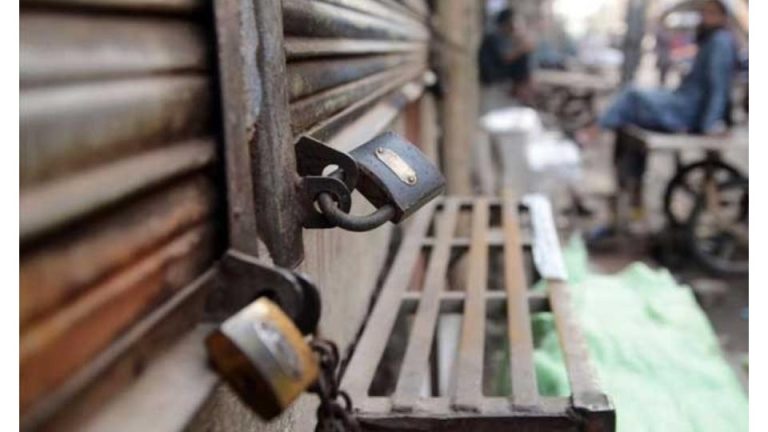
Residents of the port city of Gwadar, Pakistan-occupied Balochistan, observed a complete shutterdown strike on 13 Oct, to protest against an ongoing water crisis. The strike was called by the All Parties and Traders Association, and all banks and commercial centers in the city remained closed.

Reportedly, All Parties stated that, the water crisis in Gwadar was created by the illegitimate Public Health Department and the Gwadar Development Authority (GDA). Despite giving a 48-hour ultimatum, water was not provided by both organizations.

The protesters said that the citizens of Gwadar have not been provided with water for a month. They accused the administration of Gwadar of not taking the issue seriously. “If the water crisis is not resolved, we will be forced to protest strongly,” the protesters said.

The water crisis in Gwadar is not new. The city has been facing water shortages for several years, but the problem has worsened in recent months. It has a serious impact on the lives of the people of Gwadar. Pakistan Army has taken no concrete steps so far and the plight of the innocent Baloch is falling on deaf ears.

They are trapped and are enduring inhumane conditions and violence by the Pakistan Army in their own homeland. Following the illegal occupation of Balochistan in March 1948, Balochistan has been fighting the war of its existence. Be it the peaceful way of protests or the armed resistance, against the inhumane authoritarian rule of Pakistan Army, Balochs are fighting an all-front war.

BLA & BLF attacks Pakistan Army in Pak-occupied-Balochistan

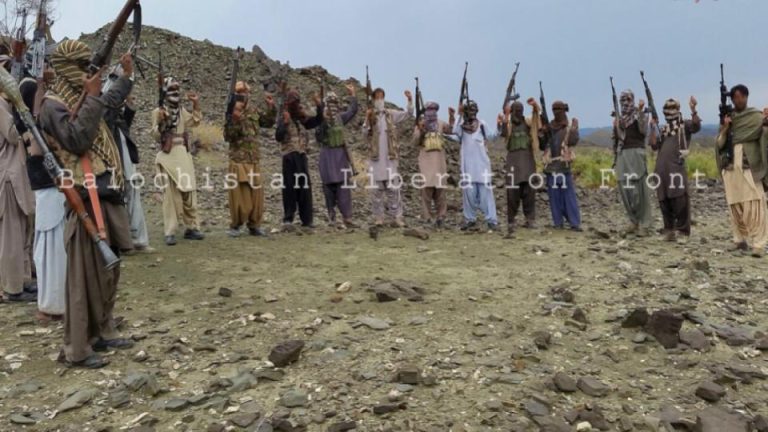
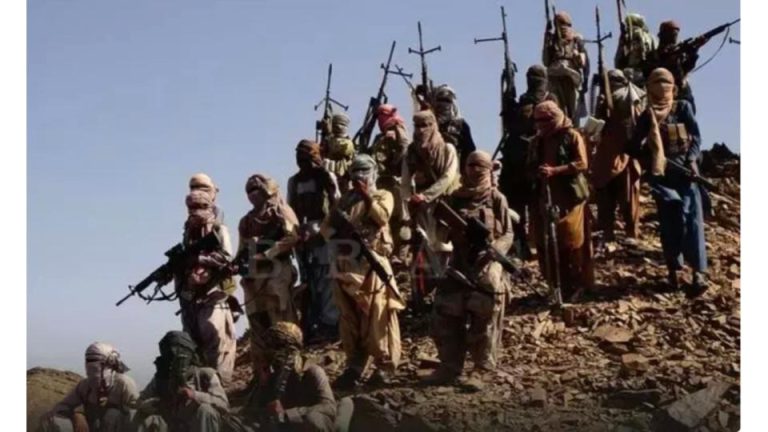
In recent developments, the mighty freedom fighters of Baloch Liberation Army (BLA) and Baloch Liberation Front (BLF) attacked Pak Army in Pak-occupied- Balochistan. The attack resulted in loss of manpower and infrastructure of the Pakistan Army. In their press releases, the BLA & BLF has announced significant achievements in their ongoing struggle for the region’s freedom.

BLA’s Attack in Kolwah

On 15 Oct, the incident occurred at approximately 9 p.m. when BLA fighters targeted the Pak Army’s outpost in the Rodh area of Kolwah. The fighters employed grenade launchers during the assault, causing injuries to at least three Army personnel. The BLA spokesperson, Jeeyand Baloch, stated that such actions would continue until a full withdrawal of Pakistan Army from Balochistan is achieved.

Bomb explosion in Awaran

In a separate incident, the Balochistan Liberation Front (BLF) targeted a convoy of Pakistan Army’s vehicles in Awaran, located between the areas of Kinchiti and Hotan (Kolwah), with a remote-controlled bomb attack. As a result of this attack, one Pakistan Army vehicle was completely destroyed, and another sustained partial damage. In addition, seven Army personnel were killed, and several others were injured.

The operation took place at 5:30 p.m. on 13th Oct, aimed at restricting the movement of Pakistan Army. The reason for this attack was the increase in the Army’s movements and their actions against innocent Baloch civilians.

These attacks are a reminder of the ongoing struggle for independence in Pak-occupied-Balochistan, which has been going on for decades. Both the BLA and BLF are fighting for the independence of Balochistan from Pakistan. On a daily basis, Pakistan Army causes massive human rights abuses in Pak-occupied-Balochistan. For far too long, Pakistan-occupied-Balochistan has witnessed enforced disappearances, targeting political activists, students, and civilians by the Pak Army. They are subjected to torture, and their lifeless bodies are discarded in isolated areas. Following the illegal occupation of Balochistan in March 1948, Balochistan has been fighting the war of its existence and freedom from Pakistan.

PTM holds protest in North waziristan, defies Paki ‘establishment’ dictates

Pashtun Tahafuz Movement (PTM) held protest demanding the release of its activists and workers, illegally abducted and detained by Paki establishment, in Miran Shah, North Waziristan.

On October 12, PTM leader Manzoor Pashteen announced a protest demonstration in front of Press Club in Miran Shah, North Waziristan against the Pakistani establishment’s impunity and extrajudicial detainment policy and the subsequent detention of the PTM activists. Since past few months, Pakistan Army has launched a crackdown on PTM, because of which, various activists including Eid-ur-Rehman Wazir, Zakim Wazir, Gilaman Wazir and Noorullah Tareen have been detained by Pakistan and are still not presented in front of court.

With an announcement of protest, nervous Pakistan took extrajudicial measures to thwart the organisation of protest. The local police raided the house of PTM chief Manzoor Pashteen on the eve of protest. Paki establishment also imposed Section 144 in the area.

Additionally, to make the protest worthless, Paki establishment blocked the ways to North Waziristan’s Miran Shah and deployed heavy forces across the region. However, defying the dictator establishments order, thousands of Pashtuns accumulated in front of the press club and voiced for the release of their fellow civilians. PTM’s protest turned out to be highly successful which saw participants from all the regions. On the other hand, Pakistan has yet again failed to thwart the protest of Pashtuns like they failed during PTM Islamabad jalsa. This shows that the concerns of Pashtuns in the region are driving them to be more ferocious in their demand, while Pakistani establishment is only trying to curb these demands and suppress the voice of peaceful Pashtuns

Sindhi youth goes missing after being released from jail

In a deeply troubling and recurring pattern, Irfan Zahrani, a prominent Sindhi nationalist youth, has been forcibly disappeared once again, this time alongside his lawyer, Advocate Mohib Azad Leghari. The Voice for Missing Persons of Sindh (VMP-Sindh) has raised their voices in protest against these disturbing actions, which have raised serious concerns about human rights violations in the region.

Irfan Zahrani had previously endured months of enforced disappearance at the hands of Pakistani agencies, followed by imprisonment in a Punjab jail. His release from Sadiqabad jail on October 13 was met with a renewed sense of hope for his family and supporters. However, their relief was short-lived as he and his lawyer, Advocate Mohib Azad Leghari, were once again taken into custody by Pakistani forces.

Surath Lohar, the head of VMP-Sindh, expressed outrage at these repeated abductions, deeming them as a blatant violation of human rights within Sindh. Accordingly, the organization has now called upon a range of international bodies, including the Supreme Court of Pakistan, the Human Rights Commission of Pakistan, Amnesty International, and the United Nations, to take immediate notice of these actions and address the situation.

Horrific cases of enforced disappearances of Sindhi nationalist

Notably, VMP-Sindh has been at the forefront of advocating for those who have fallen victim to enforced disappearances. According to Surath Lohar, the past eight months have seen over 40 Sindhi nationalist activists subjected to similar disappearances, painting a grim picture of the situation.

These persistent incidents of enforced disappearances have raised alarms among human rights defenders and organizations worldwide, who continue to call for an end to such practices and demand the safe return of Irfan Zahrani, Advocate Mohib Azad Leghari, and all others who have been forcibly disappeared in Sindh.

Taliban refuses to accept Pakistani aid for earthquake disaster relief

The interim Taliban government in Afghanistan has refused aid from Pakistan for the earthquake-affected individuals. This recent development is further evidence of the growing tension in the relationship between two terror friendly regimes.

Last week, a powerful earthquake struck Afghanistan, resulting in the loss of at least two thousand lives and affecting multiple villages. Subsequently, on Wednesday, another earthquake caused further damage.

The Prime Minister of Pakistan, Anwar-ul-Haq Kakar, promptly offered assistance by announcing the dispatch of rescue and relief teams. However, due to Kabul’s refusal to grant clearance, aid and supplies from Pakistan have not yet reached Afghanistan.

The exact reason for this denial has not been formally communicated by the authorities of both nations. However, the fundamental cause behind the Taliban’s rejection of aid appears to be related to the ongoing tensions between both the countries.

Anwar-ul-Haq Kakar’s Post as the reason

According to media reports, a senior Taliban official mentioned that the reason why Taliban refused Pakistan Prime Minister Anwar-ul-Haq Kakar’s offer was his social media post (a former tweet). This dispute originally began in the western Afghan province of Herat following the aftershocks of a 6.3 magnitude earthquake.

In response to the earthquake, Islamabad swiftly declared its intention to send assistance. They promised to provide 5,000 tents, 15,000 blankets for winter use, food supplies, medical equipment, and a team of doctors, along with transport aircraft.

Pakistan’s National Disaster Management Authority had prepared relief supplies and published details on its official website.

However, a few hours later, Kakar stated on the social media platform “X” that this assistance was being sent at the request of the Taliban.

The Taliban, on the other hand, has expressed skepticism about any formal request for aid. They claim that no official appeal for external assistance has been made thus far.

Pakistan Army’s forced evacuation threat in tribal area sparks humanitarian crisis

In the tribal region of Taman Gurshani, located in Rajanpur, Pakistan, a looming humanitarian crisis has been ignited by the Pakistan Army’s forced evacuation orders. Indeed, fifteen days ago, the military forcibly gathered the residents, informing them that they must vacate their homes in various areas, including Mari, Mauza Grozhan, Daraj Thal, Mauza Chambhari, Mauza Lot La Sham, Khalchas, and Rekani Gahore, citing an impending missile test.

Despite the military’s evacuation ultimatum, the people of these areas have refused to leave their native lands, expressing deep concerns that their displacement may result in their inability to return. These regions are known to experience an early onset of winter, and relocating the population, along with their belongings and livestock, presents a daunting challenge.

This isn’t the first time the residents of Taman Gurshani have faced such a predicament. In 2018, missile tests in the region led to significant financial losses for the local population in areas like Bargh Fawad, Maranj, Ghazbor, Daragal Mari, Kaliri Thal Sauri Gahore, and Joph Fawad.

The situation was further aggravated as post-missile test, widespread epidemics have been rapidly spreading in the region, further straining an already beleaguered population, who lack adequate medical facilities.

As the Pakistan Army’s imposed deadline has ended, residents are grappling with a stark reality: If they are expelled from their homes, they are sure to confront insurmountable difficulties, from the harsh winter conditions to the absence of proper healthcare.

Nervous Pakistan officials raid PTM Chief Pashteen’s house ahead of protest

The local Police barged into the home of PTM Chief Manzoor Pashteen and harassed his family in South Waziristan.

Yesterday, on the night of October 12, SHO South Waziristan, Sarokai Ashiq Elahi raided the house of PTM Chief Manzoor Pashteen in an attempt to arrest him. The local police yet again showed its inhumane face when they harassed the family members of Manzoor Pashteen. In fact, it is evident that whenever, cruel Pakistan Army or its subsequent machineries raid a house of any activist, the first thing they do is they harass women and children. This shows their corrupt and horrific mindset, according to which, targeting women and family can silence the voice of oppressed.  

Nonetheless, this uncivilized and barbaric act was done on the call of Pakistan Army, whom Pasteen, has several times accused of persecuting Pashtuns. Interestingly, this illegal raid on the PTM Chief house comes just a day after PTM set up a camp in Pakhtunkhwa to collect aid to help the victims of Herat earthquake, however, Pakistan closed the camp.

Meanwhile, PTM Central Committee member Farman Akhtar has been arrested today in Wana, Lower South Waziristan. Agonised by this, the local PTM workers blocked the Wana-DI Khan road for all kind of traffic.

Pakistan has no way to deal with PTM

The rising influence of PTM in the region or its growing acceptance, for that matter, is perceived  by the Pak Army as a threat to their, so far unchallenged, dictatorship. Hence, they want to decimate the group at any cost.

Additionally, the raid on Pashteen is even more concerning, considering the fact that just a couple of hours earlier, he announced to hold a protest next day, against the illegal abduction and imprisonment of PTM workers namely, Zakim Khan, Eid-ul-Rehman, Gilaman, Noorullah Tareen. The protest was to be held in front of Miran Shah military cantonment at 2 PM.

This shows that Pakistan Army is afraid of PTM and its protest. And it happened after the last PTM protest that shook the roots of Pakistani establishment.  

For long Pakistan has used this region to bolster its terror industry. And in pursuit of that the cost has been paid, exclusively, by the inhabitant Pashtuns. The region is grappling with the challenges of instability and insecurity. And to fight that and fight for their just rights, PTM has vocally protested the establishment non-violently.