Home Blog Page 183

India emerges as a Global Balancing Power with G20 Declaration and Biden-Modi Summit

The Current volatile global geo-political and security environment:

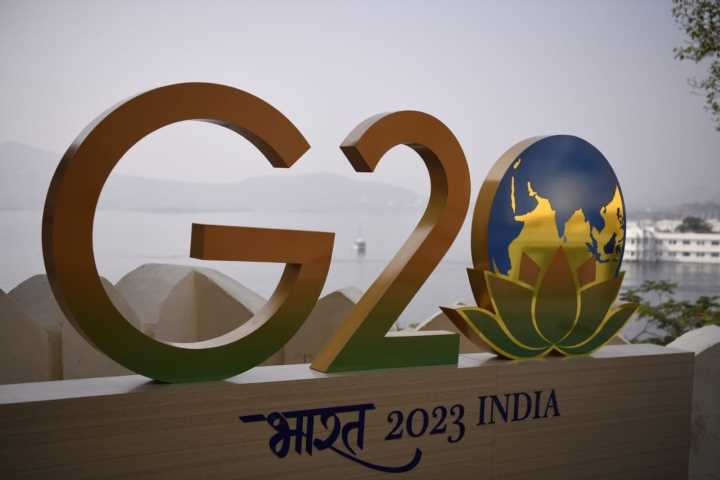
The current global geo-political and security environment necessitates cooperation, competition, and confrontation (increasingly conflicts too), both bilaterally and multi-laterally between nations. It is becoming true even for intra-state relations. The scope and spectrum of confrontation has widened substantially, encompassing multi-domain arenas including non-kinetic/cognitive fields like economic, psychological, legal and informational. The environmental dynamics gets impacted by non-state actors, multi-national companies, groups and even powerful and rich individuals (like Beta, X, Google, Microsoft, Elon Musk, Murdoch, etc). Reaching a consensus on various global issues, has become extremely difficult if not impossible. It is under these difficult, uncompromising circumstance that India hosted the G 20 Summit in Sep 23, where different power centres were aligned at opposite ends of the spectrum on many issues like Ukraine, climate change, ideology, asymmetry between the rich and powerful countries (mainly West led by USA) and the global South. Internationally, it has been accepted that given the circumstances, India put up a spectacular show, and pulled off a miracle of unanimity in the concluding G 20 as reflected in the Leaders’ Declaration[i]. A concurrent summit meeting between US President Joe Biden and Indian PM Modi was also held centerstage[ii].

Consequently, India, has emerged as a world balancer of significant stature and weight. The G 20 summit showcased India as the bridge between varying group of nations, specially between the West and the global South. Coupled with the Biden-Modi meeting, we can proudly surmise that India has finally arrived at the high table managing global affairs. As accolades have poured in, there have also been a series of negative events which are testing our resilience as a secular, democratic nation. Some of the events are undoubtedly driven by nations and groups with an agenda to stall India’s irreversible march forward. A holistic view of payoffs to India by above events has been attempted.

Buildup to the Summit:    India’s moment in the sun almost got obliterated by the expected absence of President Putin, but also by Xi Jinping’s decision to stay away from the G 20 summit with the possible intention of denying India and Modi her moment. Instead, Prime Minister Narendra Modi along with the US figured out how to more effectively counter China on the world stage. Importantly, the fact that the global South and Asian nations cooperated, signifies their geo-political compulsions to maintain multiple options other than muscular China.

The pivotal strategic payoffs from the G 20 Summit

India pulled off a ‘win-win’, with members reaching an agreement on a joint communiqué, despite opposing views on the Ukraine war. There was considerable doubt whether the world leaders in the Group of 20 meeting would be able to reach an agreement with the Ukraine war being the major divisive issue. The fact that on Day 1 of the Summit, the New Delhi Declaration was adopted with “100 per cent consensus on all developmental and geo-political issues” is testimony to India’s leadership. The key was the wording of ‘war in Ukraine’ rather than ‘war against Ukraine’, compared to a more aggressive stance adopted in the Bali Declaration. The Declaration supported a “comprehensive, just, and durable peace” in Ukraine and advocated conflict resolution through diplomacy and dialogue, while emphasizing Modi’s famous words that “Today’s era must not be of war”. Even Lavrov, the Russian Foreign Minister called the summit statement a diplomatic win for Russia[iii].

The icing on the cake was a promise to deliver more financing to developing nations, to admit Africa to the G 20 as a permanent member, and announcement of a historic and ambitious rail and maritime network straddling India – Middle East – Israel – Europe (IMEC). India, the US, UAE, Saudi Arabia, France, Germany, Italy and the European Union signed a Memorandum of Understanding (MoU) to establish IMEC. President Biden hailed it as a “game-changing regional investment”; Israeli PM Netanyahu termed it the “largest cooperation project in our history” which will change the face of the Middle East, Israel, and will benefit the entire world[iv]; Crown Prince of Saudi Arabia, Mohammad bin Salman bin Abdul Aziz Al Saud, was one of the pioneers of the initiative[v], and Ursula von der Leyen, the EU President, called the new economic corridor ‘historic’. Swasti Rao, an associate fellow at the Europe and Eurasia Center at the Manohar Parrikar Institute for Defense Studies and Analyses, stated that “there is little doubt that middle order powers wish to keep the global economic order multipolar and not fall into the Chinese game of dominating it.” PM Modi launched the Global Biofuel Alliance during the G20 Summit and invited world leaders to join. The alliance aims to accelerate the energy transition by promoting the use of sustainable biofuels, similar to the International Solar Alliance, and help accelerate global efforts to meet net zero emissions targets by facilitating trade in biofuels derived from sources including plant and animal waste.

A most significant achievement was India’s ability to grasp the moment to assert a global leadership role, especially permanent inclusion of the Global South as a G 20 member. PM Modi declared that “history has been created” while his chief negotiator, Amitabh Kant, called India “the spokesperson of all the Global South.” He added that “It has also demonstrated that India has a huge capacity of bringing the world together and leading the world in developmental and geopolitical issues.”

India – USA Bilateral Summit

President Biden and PM Modi issued a 30-point joint statement that brought out the multifaceted nature of the India-US strategic partnership. The prologue evaluated the international geo-political-economic situation, and noted the importance of “the shared values of freedom, democracy, human rights, inclusion, pluralism, and equal opportunities for all citizens” that are essential for the two countries to prosper, and emphasizing “that these values strengthen our relationship.” The statement, touched on all the important areas of cooperation, including shared participation in smaller multi-lateral partnerships such as the QUAD, which works “in supporting a free, open, inclusive, and resilient Indo-Pacific.” While in June 2023, the US took the decision to be part of the Indo-Pacific Oceans Initiative, the US agreed to co-lead the Indo-Pacific Oceans Initiative Pillar on Trade Connectivity and Maritime Transport. Biden reiterated US support for a reformed UN Security Council with India as a permanent member. Other issues of strategic import to India are enumerated below.

  • Technological Cooperation:   Statement highlighted Indo-US collaboration in iCET (Initiative on Critical and Emerging Technologies), space, and semi-conductor supply chain. US companies, including Microchip Technology, Inc., and Advanced Micro Devices, have made a substantial investment in India; others like Micron, LAM Research, and Applied Materials, are also in talks for collaboration. In the field of telecommunications an MoU between Bharat 6G Alliance and Next G Alliance has been agreed to.
  • Space:  The joint statement outlined in some detail their plans for space cooperation; establishing a working group for commercial space collaboration under the existing India-US Civil Space Joint Working Group. In June 2023 meeting, “enhanced commercial collaboration between the U.S. and Indian private sectors in the entire value chain of the space economy and to address export controls and facilitate technology transfer” was discussed. This meeting enhanced the scope and focus on “modalities, capacity building, and training for mounting a joint effort to the International Space Station in 2024” and “continuing efforts to finalize a strategic framework for human space flight cooperation by the end of 2023.” The intent to increase coordination on planetary defence, with US support for India’s participation in asteroid detection and tracking, was announced.
  • Nuclear Energy: The importance of nuclear energy as a necessary resource to meet India’s climate, energy transition, and energy security needs was reiterated. Both sides agreed ‘to expand opportunities for facilitating India-US collaboration in nuclear energy, including the development of next-generation small modular reactor technologies in a collaborative mode’.
  • Quantum Technology and Biotechnology Collaboration: Both nations also discussed their commitment to work together in the quantum domain, with India’s SN Bose National Centre for Basic Sciences joining the Quantum Economic Development Consortium. They endorsed collaborations in biotechnology, promoted by an Implementation Arrangement between the US NSF (National Science Foundation) and India’s Department of Biotechnology.
  • Defence and Aerospace Cooperation: While cooperation has increased manifold recently, both leaders pledged to deepen defence and aerospace cooperation, particularly in new and emerging domains like space and AI. Their specific mention of the commencement of negotiations for a commercial agreement between GE Aerospace and Hindustan Aeronautical Limited (HAL) to manufacture GE F-414 jet engines in India, will speed up the process. This capability will be a “big game changer” and form the basis of future indigenous engines that will power Indian (will enhance export capability) military aircraft.
  • Economy and Trade: Both lauded the settlement of all outstanding WTO disputes, which will act as a catalyst for better trade relations. An ambitious “Innovation Handshake” agenda under the India-US Commercial Dialogue is in the pipeline to connect start-ups, venture capital firms, and government officials in both countries’ innovation ecosystems.
  • Healthcare and Education Collaboration: Collaboration in healthcare, cancer research and care, was discussed, with the launch of the India-US Cancer Dialogue and the US-India Health Dialogue shortly. Educational collaborations, such as the establishment of the India-US Global Challenges Institute was formalised.

India ‘was Different’. Compared to the staid handling of global summits by nations, India celebrated the G 20 presidency. India moved to make the G 20 process, internally and globally, more inclusive, responsive, and celebratory. For inclusion of Africa as a permanent member of G 20, India consulted and persuaded 125 countries. Within India, by spreading the G-20 activities across 60 Indian cities brought a wave of fresh economic activity into them. Tourism and hospitality have boomed, infrastructure refurbished, and airports rejuvenated. The Global South now has a credible voice in international affairs. Coupled with a unanimous G 20 Delhi Declaration despite widely disparate views specially on the Ukraine war, India enhanced and validated her position as a global leader and a credible balancing power. The G 20 and Biden-Modi Summit will provide the momentum towards abiding friendships and alliances, and global geo-political stature, as also significantly enhance our economic, technological, and military capabilities and capacities to face future geo-political and security challenges. Concurrently, we must stay alert to the vulnerabilities which befall any rising nation.

(This article was first published in Bharatshakti.in)


[i] ‘G20 New Delhi Leaders’ Declaration’, New Delhi, 09 -10 September 2023, g20.org, available at https://www.g20.org/content/dam/gtwenty/gtwenty_new/document/G20-New-Delhi-Leaders-Declaration.pdf. Accessed on 14 September 2023.

[ii] ‘Joint Statement from India and the United States’, Prime Minister’s Office, Posted On: 08 SEP 2023 11:02PM by PIB Delhi, available at https://pib.gov.in/PressReleaseIframePage.aspx?PRID=1955696. Accessed on 15 September 2023.

[iii]India for G-20 summit statement success’, by Suhasini Haider, The Hindu, September 10, 2023, available at https://www.thehindu.com/news/national/win-for-global-south-says-russian-fm-praises-india-for-g-20-summit-statement-success/article67292866.ece. Accessed on 26 September 2023.

[iv]Biden and Netanyahu welcome IMEC’, by Prashant Jha, The Hindustan Times, September 21, 2023, available at https://www.hindustantimes.com/world-news/biden-and-netanyahu-welcome-imec-101695233948445.html;  and article titled ‘IMEC ‘largest cooperation project’ in history: Israeli PM Netanyahu’, Millenium Post, 10 September 2023, available at https://www.millenniumpost.in/business/imec-largest-cooperation-project-in-history-israeli-pm-netanyahu-532388. Accessed on 25 Sep 2023.

[v] ‘How Saudi-backed India-Middle East corridor is ‘game changer’ for New Delhi, Arab News, September 26 2023 available at https://www.arabnews.com/node/2374786/world. Accessed on 26 September 2023.

Shahid Latif, Pathankot attack mastermind killed in Pakistan

In a surprising turn of events, Shahid Latif, the mastermind behind the infamous Pathankot attack and a notorious terrorist of Jaish-e-Mohammed (JEM), was shot and killed by unknown assailants in Sialkot’s Daska situated Jama Masjid in Pakistan.

Hailing from Gujranwala, Shahid Latif was the JEM commander in Shialkot sector and was responsible for planning attacks and launching terrorists in India. He had a dark reputation, orchestrating attacks that caused significant harm.

Early one morning, Shahid Latif and his companion, Hashim, were inside a mosque to offer their morning prayers, a routine seemingly at odds with their other lives. This incident is eerily reminiscent of recent attacks on terrorists in Pakistan. Since past few weeks, many terrorists have been killed in Pakistan by the unknown assassins.

Latif spent 16 years in Indian jail

Latif had a long history of involvement in terror activities but his involvement in the 2016 Pathankot attack proved his notoriety as never before. The assault on the Pathankot Air Force Station in India not only claimed lives but also strained relations between India and Pakistan.

Nevertheless, the terrorist that has devastated uncountable number of lives has met his fate. Shahid Latif’s life was marked by controversy and crime. In 1994, Indian authorities arrested him, leading to a 16-year confinement in India. He was deported in 2010 via the Wagah border crossing.

Accordingly, the Indian government labeled him a terrorist, and the National Investigation Agency (NIA) pursued a case against him under the Unlawful Activities (Prevention) Act (UAPA).

The identity of Latif’s attackers remains a mystery. The terrorist patron and the hub of terror industry, Pakistan is now working to uncover the truth and understand the motives behind this incident.

BLA freedom fighters eliminate 8 Pak Army soldiers in Turbat

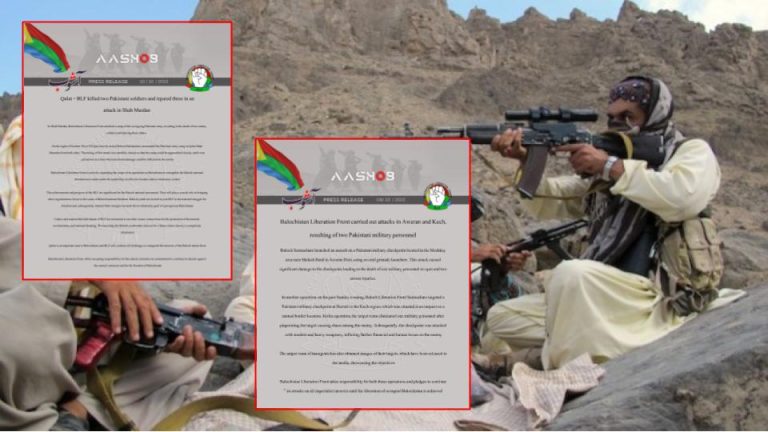
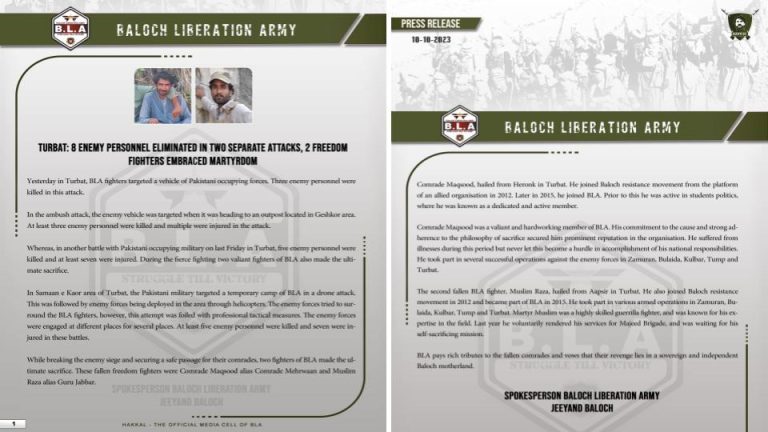
In a recent statement issued by the Baloch Liberation Army (BLA), it has been revealed that Turbat witnessed two separate attacks. It resulted in the elimination of 8 Pakistan Army personel while two valiant BLA fighters laid down their lives in the struggle for Balochistan’s sovereignty and independence.

In Turbat, BLA fighters executed a daring operation by targeting a vehicle of Pakistan Army. This act of resistance killed three personnel. The assault occurred as the enemy vehicle was en route to an outpost situated in the Geshkor area, where at least three enemy personnel lost their lives, and numerous others sustained injuries.

Moreover, another fierce battle erupted in Turbat last Friday, resulting in the elimination of five enemy personnel and injuring at least seven others. This intense engagement resulted in the ultimate sacrifice of two valiant BLA fighters.

In the Samaan e Kaor area of Turbat, the Pakistan Army launched a drone attack targeting a temporary camp of the BLA, followed by deploying ground forces via helicopters. Despite the enemy’s efforts to encircle the BLA fighters, their professional and tactical measures prevented these attempts. The enemy forces engaged in battles at various locations, resulting in the death of at least five Pak Army soldiers and seven injured.

In the process of breaking the enemy siege and securing a safe passage for their comrades, two brave BLA fighters laid down their lives. These courageous freedom fighters were Comrade Maqsood, also known as Comrade Mehrwaan, and Muslim Raza, known as Guru Jabbar.

The Price of Freedom

Comrade Maqsood, hailing from Heronk in Turbat, joined the Baloch resistance movement in 2012 through an allied organization and later joined BLA in 2015. He was previously active in student politics, earning a reputation as a dedicated and committed member. Comrade Maqsood played a vital role within BLA, actively participating in successful operations against enemy forces in Zamuran, Bulaida, Kulbar, Tump, and Turbat. Despite battling illness, he never wavered in fulfilling his national responsibilities.

Muslim Raza, originating from Aapsir in Turbat, also joined the Baloch resistance movement in 2012, becoming part of BLA in 2015. He participated in various armed operations in Zamuran, Bulaida, Kulbar, Tump, and Turbat.

The spokesman said, “Martyr Muslim was a highly skilled guerrilla fighter, and was known for his expertise in the field. Last year he voluntarily rendered his services for Majeed Brigade, and was waiting for his self-sacrificing mission.”

The BLA pays solemn tributes to these fallen comrades and pledges that their memory lives on in the pursuit of a sovereign and independent Baloch motherland. Their sacrifice serves as a poignant reminder of the unwavering dedication to the cause of Balochistan’s freedom and justice. Following the illegal occupation of Balochistan in March 1948, Balochistan has been fighting the war of its existence and freedom from Pakistan.

Protests across Pak-occupied Balochistan for the release of detainees and end to Paki oppression

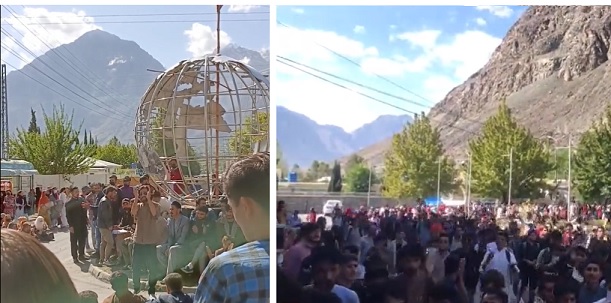
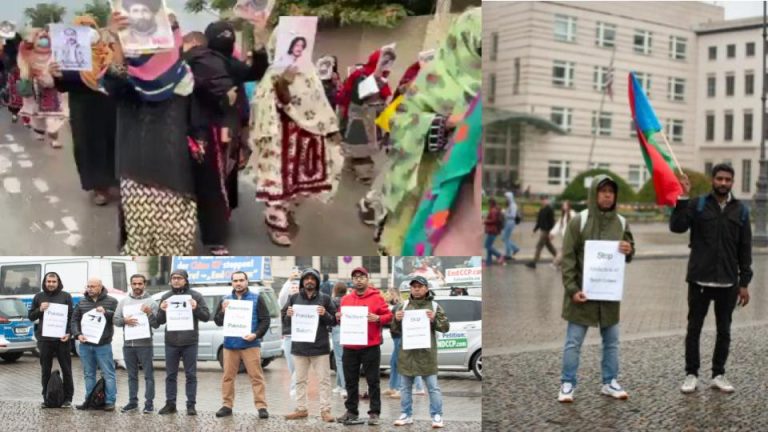
Demonstrators from Pak-occupied-Balochistan have taken to the streets, voicing their outrage over the prolonged detention of students and human rights activists without trial. These protests have ignited a call to act for human rights organizations to intervene and secure the release of those unjustly held.

The heart-wrenching situation in Pak-occupied-Balochistan has prompted citizens to rally together in unity, demanding justice and the immediate release of their loved ones. The arrests of students and human rights activists have left families in distress, as their loved ones fade behind bars for years without facing trial.

Meanwhile, in Germany, the Baloch Republican Party (BRP) organized protests against the military operations in Dera Bugti and the continuous human rights violations in Pak-occupied-Balochistan. The Paki establishment says that the Pak Army launched a rescue operation to recover six footballers who were abducted while traveling from Sui Dera Bugti to Sibi. However, under this lie, Dera Bugti has been under siege by the Pak Army.

Consequently, Adil Baloch, Vice President of BRP Germany, took center stage during the demonstration and he shed light on the atrocities committed by the Pakistan Army in Pakistan-occupied-Balochistan. Adil Baloch also highlighted the alarming instances of fake encounters and abductions conducted by the Counter-Terrorism Department (CTD) targeting innocent Baloch civilians.

For far too long, Pakistan-occupied-Balochistan has witnessed enforced disappearances, targeting political activists, students, and civilians by the Pak Army. They are subjected to torture, and their lifeless bodies are discarded in isolated areas. Following the illegal occupation of Balochistan in March 1948, Balochistan has been fighting the war of its existence and freedom from Pakistan.

Women rise in protest in Pak-occupied Jammu & Kashmir against Paki exploitation

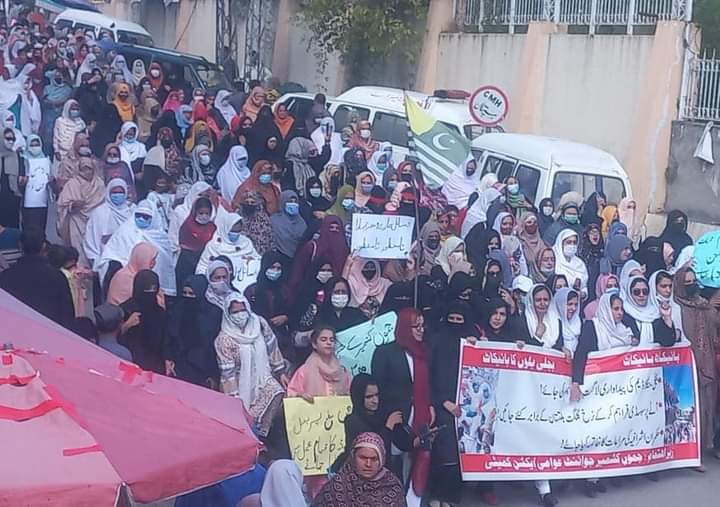
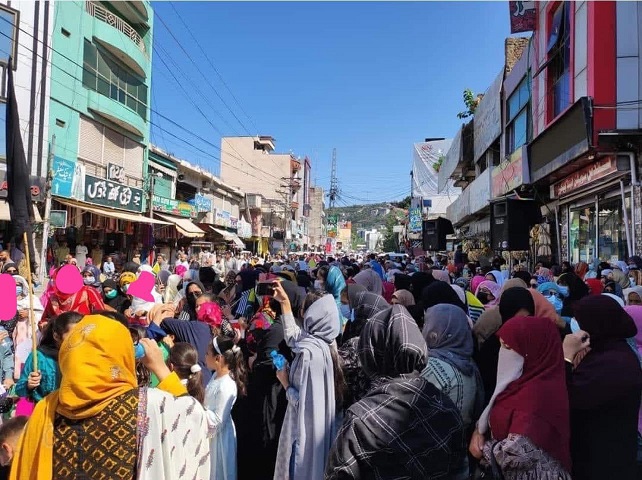
Following the call of Awami Action Committee, women and children across Pakistan occupied Jammu and Kashmir (POJK) have started protest demonstrations against the exploitative regime of Pakistan and its puppet government in POJK.

The ongoing protest is a part of a series of protests announced by Awami Action Committee against the indiscriminate hikes in the electricity prices and the termination of subsidies on wheat flour.

Widespread protest of POJK women

In one such protest rally in Kotli, hundreds of Kashmiri women raised slogans for their demands and against the government. They also referred to the Prime Minister of occupying government as useless. The protesting POJK women echoed, “na ahal hukumat, hay..hay..; nalayak hukumat, hay..hay..; chor hukumat, hay..hay..” (curse to incompetent government, curse to useless government, curse to thieving government).

Furthermore, in a unified voice, hundreds of POJK women shouted “dam humare kabza tumhara, namanzur..namanzur….; Bijli humari kabza tumhara, namanzur..namanzur…; Vasail humaare kabza tumhara, namanzur….namanzur… (Dam ours encroachment yours, unacceptable..unacceptable; Electricity our encroachment yours, unacceptable…unacceptable…; resources ours encroachment yours, unacceptable…unacceptable…).

Amidst the rising voices they also demanded the resignation of the PM of the puppet government.

Similar protests were recorded in other parts of POJK including Bagh, Neelam Valley, Hajira, Rawalkot among others. The ongoing protest under the aegis of Awami Action Committee is the biggest and most widespread protest in the history of POJK. POJK has been suppressed and deprived of their right to live with dignity for the past 75 years but has never resisted in such an unprecedented way. The message is loud and clear that the Kashmiris have now understood the true intentions of Pakistan and they are not going to kneel down in front of this imperialist establishment.  

Exploitation without accountability

Notably, after Pakistan faced an economic meltdown, it shred all of its financial burden on the occupied territories. Since the past few months, POJK is facing long and abrupt power cuts and paying high electricity prices. Extra tariffs have been imposed to benefit the people in Pakistan. Interestingly, POJK is facing these issues when it generates approximately 3000 megawatts of electricity, while it uses merely 400 MW. Simply put, POJK produces electricity which is wholly transmitted to Pakistan. In turn, Pakistan exhausts this POJK’s electricity indiscriminately and sells the remaining electricity back to POJK on a heavy price, roughly 3-4 times the actual cost. Apparently, it is the blatant exploitation of the POJK resources on the hands of Pakistan while leaving the inhabitants deprived of the benefits.  

This becomes even more shocking to note that those sitting on the dominant positions in occupying government and entire Pakistan are using the electricity and other POJK resources free of cost and without any accountability. Frustrated and agitated, 78 per cent of the Kashmiris have now boycotted to pay the bills since more than two months.

This imperialistic approach of Pakistan towards the occupied territory is not just limited to electricity, its implications also transcends to other commodities too. The most controversial among them is wheat flour. Flour is the most basic commodity needed for the survival. But the atrocious establishment has relinquished the subsidy that the people of POJK are entitled to get and hence they are paying a hefty price for it. This problem has persisted since a long time. Above all, the wheat flour bags that they are getting, are also of the worst quality. A couple of months ago, reports emerged from POGB where the protesting Kashmiri women claimed that the 40 kg flour bag contains more waste than flour.

The exploitation and subversion of Kashmiris with impunity has created widespread unrest among the masses. And hence they are protesting against the occupying government. On October 3, Awami Action Committee issued a communique calling for protests. In line with that, a complete shutdown was observed across POJK on October 5, marking the biggest protest in the history of POJK. In this series of protests, the Awami Action Committee had already called for the next protest by the student organisations across POJK on 17 October. The demands of the Kashmiris is clear and just- The resources of Kashmiris does not belong to Pakistan.

Israel-Hamas War: Death toll reaches 1500

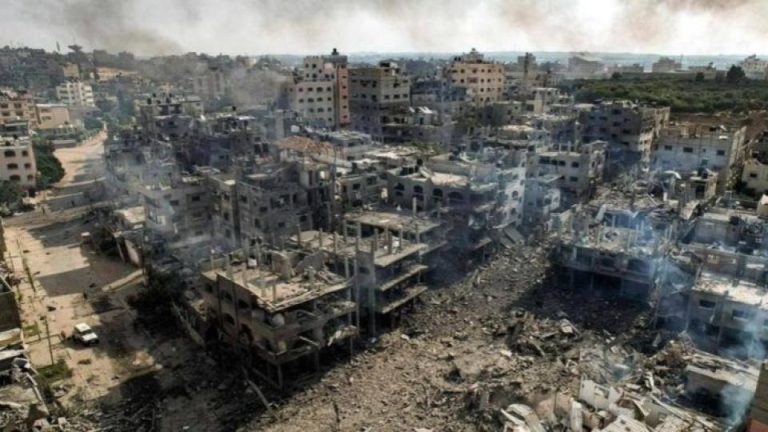
In the ongoing Israel-Hamas war, that began on Saturday, the confirmed death toll in Israel and Gaza has now exceeded 1,500 people.

Israel reports that approximately 900 people have been killed, while Palestinian authorities state that at least 687 people have lost their lives due to the bombings in Gaza, including numerous children. Thousands have been injured in the conflict.

Most hospitals in Gaza are overwhelmed with casualties, and power cuts from Israel have created further challenges. The United Nations warns that Gaza’s sole power plant is the last source of electricity and may run out of fuel in a matter of days.

Hamas operatives unleashed thousands of rockets on Israel throughout the week, and the rocket attacks continue into the night. In return, Israel has launched intense airstrikes on Gaza, while fighting persists in multiple areas of southern Israel, where Hamas fighters infiltrated. Israel has called up an additional 100,000 reservists for the operation. As per UN, 1,80,000 Gazans have fled their homes after Israel initiated counter airstrikes.

In the United Nations, Iran has faced accusations of being involved in the unprecedented attacks initiated by Hamas.The United Nations mission in Iran released a statement saying, “We strongly stand behind unwavering support for Palestine’s unshakeable resolve. However, we are not involved in this particular Palestinian reaction, as it is solely and exclusively the action of Palestine.”

In the United Nations, Israel’s ambassador criticized Hamas.Speaking to journalists ahead of a United Nations Security Council meeting, Israeli Ambassador Gilad Erdan said, “There is no debate anymore. Now is the time to dismantle the military infrastructure of Hamas completely and remove it, so that such a horrifying event never occurs again.”

Hamas militants attacked Israeli settlements at the end of last week, killing scores and taking dozens hostage.

Suspension of Flights amidst Israel-Hamas war

Several Asian airlines have suspended their flights to Israel, citing concerns over the security situation.Hainan Airlines, the only Chinese airline flying between China and Israel, has canceled flights between Shanghai and Tel Aviv. Meanwhile, Cathay Pacific has also canceled its flights between Hong Kong and Tel Aviv. Korean Air, Asiana Airlines, and others have joined in suspending services to Israel.

BLA’s bomb attack kills Pakistan Mineral Development Corporation official

In an act of resistance and determination, the Baloch Liberation Army (BLA) carried out a remote-controlled bomb attack near Soranj, Pakistan-occupied-Balochistan, on 8 October 2023. This operation targeted the Project Manager of PMDC (Pakistan Mineral Development Corporation), Shabir Marza, who was critically injured and, later, succumbed to his injuries.

Quetta Senior Superintendent of Police Jawad Tariq confirmed the incident and identified Shabir Marza as the deceased. Marza was on his way to the Sor Range with his driver, Muhammad Zakir, when the bomb detonated. While, Marza lost his life, Zakir sustained critical injuries and was transported to the Quetta Civil Hospital Trauma Centre for medical treatment.

This bomb attack is a stark reminder of the ongoing struggle in Pakistan-occupied-Balochistan. The BLA has claimed responsibility for this operation. Their actions are driven by their unwavering commitment to safeguarding Balochistan’s resources and resisting projects that exploit the region’s wealth. Over the years, there has been tragic plundering of Baloch resources, often with the assistance of Pakistan Army.

For far too long, Pakistan-occupied-Balochistan has witnessed enforced disappearances, targeting political activists, students, and civilians by the Pak Army. They are subjected to torture, and their lifeless bodies are discarded in isolated areas. Following the illegal occupation of Balochistan in March 1948, Balochistan has been fighting the war of its existence and freedom from Pakistan. Be it the peaceful way of protests or the armed resistance, against the inhumane authoritarian quasi state of Pakistan, Balochs are fighting an all-front war.

Explosive attack rocks Khuzdar, Pak-occupied Balochistan

On 8 Oct, an explosive incident unfolded in the Khuzdar area of Pakistan-occupied-Balochistan. Unidentified individuals threw a hand grenade and swiftly made their escape, resulting in a powerful explosion that rocked the region.

According to Khuzdar’s officials, the assailants specifically targeted Shahzad Gulmani. He is a prominent figure leading the Jhalawan Public Panel in Khuzdar, before vanishing into the night.

Pakistan Army officials quickly went to the scene and launched a thorough investigation into the incident. However, the details regarding potential casualties or the extent of the damage remain unconfirmed.

The motive behind the attack remains mystery. But the targeting of a prominent public figure has raised concerns about the situation in Pakistan-occupied-Balochistan. This is not an isolated incident. Earlier as well, various cases have been reported of the unidentified assailants targeting the region. The province has long been plagued by violence and instability, with Pakistan Army using all its might to control the people and the resources.

Voice for Baloch Justice highlights Pak Army’s torture on young Baloch at a conference in France

On 7 October, a representative of Voice for Baloch Justice, a human rights organization, highlighted the issues being faced by young people in Pakistan-occupied-Balochistan at a conference held in Strasbourg, France.

Yusuf Baloch spoke about the widespread problem of forced disappearances, which has been documented by human rights groups as a serious human rights violation in Pakistan-occupied-Balochistan. He also spoke about the challenges faced by young Baloch people who have migrated to other countries.

Yusuf said that the biggest problem facing young people in Pakistan-occupied-Balochistan today is fear, insecurity, forced disappearances, fake encounters by Pak Army, and the occupation of educational institutions by Pakistan establishment. In addition, young people who have migrated from Pakistan-occupied-Balochistan due to the hardships of the situation and are living a life of migration by taking refuge in different countries also face various challenges in these countries.

Call for Action

Yusuf called for action to address the human rights situation in Pakistan-occupied-Balochistan and to improve the welfare, protection, and educational and social development of youth.

Members of other organizations participating in the conference expressed their support for Yusuf’s demands. They called on the international community to play a role in stopping the series of human rights violations in Pakistan-occupied-Balochistan.

The conference was organized by the Council of Europe, UNP, and Youth Jins. It was attended by representatives from various communities, organizations, and human rights workers. Participants shared their thoughts on the challenges and issues facing youth. The conference is a reminder of the ongoing human rights crisis in Pakistan-occupied-Balochistan. It is important to raise awareness of the issues young people are facing under the Pak Army regime and to call for action to address them.

For far too long, Pakistan-occupied-Balochistan has witnessed enforced disappearances, targeting political activists, students, and civilians by the Pak Army. They are subjected to torture, and their lifeless bodies are discarded in isolated areas. Following the illegal occupation of Balochistan in March 1948, Balochistan has been fighting the war of its existence and freedom from Pakistan.

Hamas attack: Thousands of Indians trapped in Israeli towns

Amidst escalating gun battles in various towns and on highways, a dire situation is unfolding in Israel, where nearly 18,000 Indians have been trapped. This includes a diverse group of caregivers, IT professionals, students and caretakers. The ongoing conflict between Israel and the Palestinian group Hamas has reached a critical juncture, claiming around 1,100 lives on both sides, including 700 in Israel. Tragically, 44 Israeli soldiers have also lost their lives in this deadly warfare.

Hamas initiated a massive and unexpected attack on Israel, unleashing a barrage of rockets and launching a large-scale ground assault on Saturday. In response, thousands of Israeli forces have been deployed to engage Hamas fighters in the southern regions, while the Israeli air force continues to strike targets in the Gaza Strip.

The situation is particularly concerning for the approximately 85,000 Jews of Indian-origin living in Israel. Many caregivers from India are hired by agencies to assist the elderly population in Israel.

Indian embassy on their toes

As the conflict intensifies, the Indian embassy in Jerusalem and the Representative Office of India in Palestine have issued advisories to Indian nationals in their respective countries. The advisories urge Indian citizens to “remain vigilant” and to “directly contact the Office” in case of emergencies.

The conflict has taken a grave turn, with gunmen associated with Hamas launching attacks in Israeli towns. This has resulted in casualties and the taking of dozens of hostages, marking one of the deadliest days of violence in Israel since the Yom Kippur war half a century ago.

The Indian embassy in Tel Aviv has been inundated with requests from Indian nationals, including tourists, who find themselves stranded due to the ongoing Israel-Hamas conflict. Fortunately, as of now, there have been no reports of any untoward incidents involving Indian nationals.

Additionally, Wanweiroy Kharlukhi, a Rajya Sabha MP, along with his wife and daughter, are part of a group of 27 Indians who had successfully been evacuated to Egypt from conflict-ridden Israel yesterday.

As there are huge number of Indians trapped in Israel, the Indian government and relevant authorities are working diligently to ensure the safety and well-being of their citizens caught in the midst of this escalating conflict.