Home Blog Page 182

Pakistan Army conducts brutal operations in Margat and Zarghon, Pak-occupied Balochistan

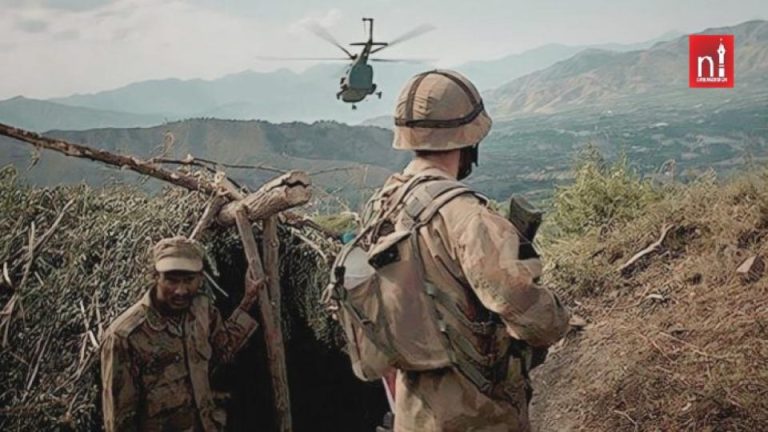
In a recent development, the Pakistan Army is conducting operations in various areas of Pakistan-occupied-Balochistan, including the suburban areas of Zargun and Margh near the capital Quetta.

In the operation, Pak Army’s helicopters are taking part and the areas are witnessing shelling at various places. Foot forces of the Paki establishment have also set up checkpoints at various places. As the area has been sealed off, there is very limited information about the casualties.

The operation comes after a series of attacks by Baloch freedom fighters in the region. On 12 oct, a large number of armed men set up a roadblock on the highway in the Margh area and took into custody a non-commissioned officer of the Pakistan Army and his companion.

The Baloch Liberation Army, an organisation seeking liberation from the brutal Pak Army, has been attacking Pakistan Army in Margh and its surroundings. Three days ago, the project manager of the Pakistan Mineral and Development Corporation (PMDC) was targeted in a bomb attack near Margh, in which he was killed on the spot and his companion was seriously injured.

The Baloch Liberation Army has claimed responsibility for targeting the PMDC manager, however, Pakistan Army has not yet commented on the ongoing operations in Pak-occupied-Balochistan. For far too long, Pakistan-occupied-Balochistan has witnessed enforced disappearances, targeting political activists, students, and civilians by the Pak Army. They are subjected to torture, and their lifeless bodies are discarded in isolated areas. Following the illegal occupation of Balochistan in March 1948, Balochistan has been fighting the war of its existence and freedom from Pakistan.

Radical Islamists abduct another minor Hindu girl in Sindh

Minor Hindu girl has been abducted from her house by some radical Islamists in Tando Muhammad Khan, Sindh.

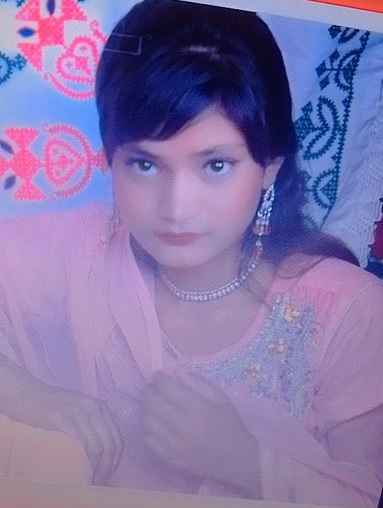
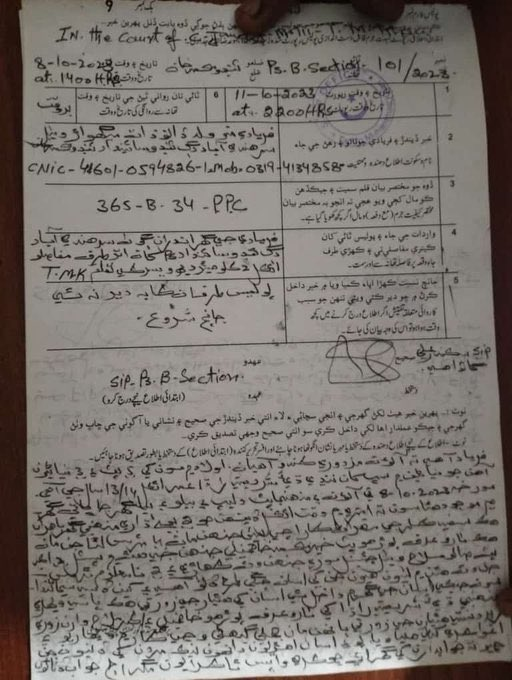
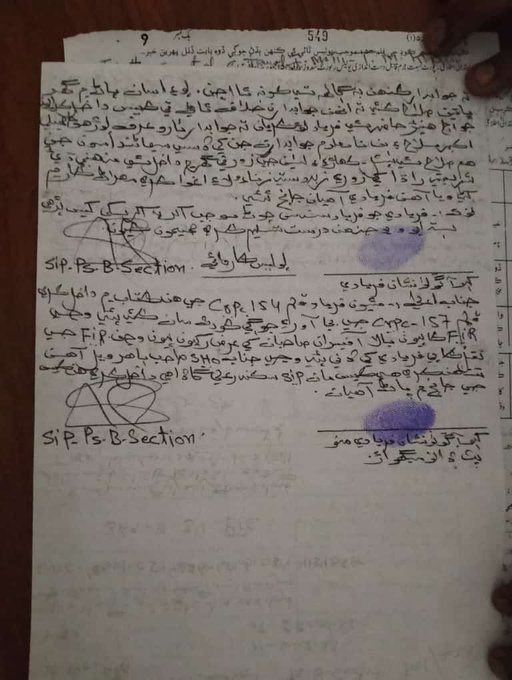
On 8 October, Radha Meghwar, a 13-year-old minor Hindu girl was abducted from her house by Tharo Khaskheli and his goons. The family members registered an FIR against the perpetrators but it has been five days and police has failed, both, to arrest the perpetrators and  to recover the girl.

Th incident and the impunity of radical Islamists in Pakistan especially Sindh has aroused resentment in the minorities. Incidents like these have become routine in Sindh.

Copy of FIR, Pg.1 (Photo: News Intervention)
Copy Of Fir, Pg.2 (Photo: News Intervention)

Recently, a Hindu woman aged 34 years was physically tortured by some radical Islamists before being brutally murdered in Khipro village of Sanghar district in Sindh, Pakistan. The gruesome incident once again highlights the degrading condition of minority Hindus in Pakistan.  As per reports, the perpetrators of the crime have been apprehended by the police. However, it is worthless to expect justice for the woman, seeing the track record of police in Pakistan while dealing with the crimes against Hindus.

Hindu women and girls are the prime targets of these radical Islamists. Unfortunately, they are proudly doing such an act of inhumanity and cowardice because they get widespread support from the establishment, police, local bigoted clerics. The life of Hindu girls and women has become hell in the Islamic Republic of Pakistan. Mostly, the girls are abducted and converted to Islam. Some of them are even raped and married off to the abductor. The incidents becomes more grieving when the courts turn a blind eye over these incident. Its time that the international community must take cognizance of the issue and deal with this menace, once and for all.

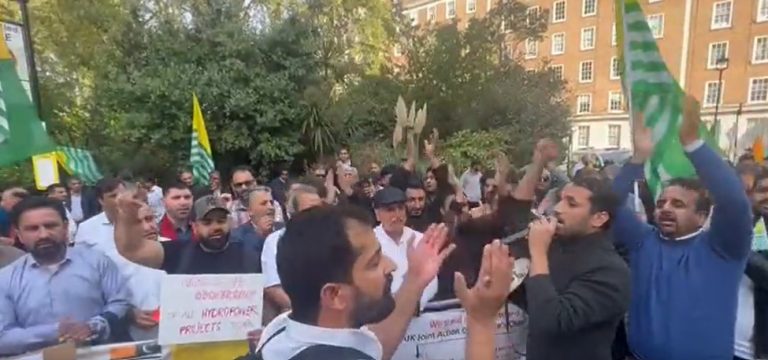
Kashmiris protest outside Pakistan High Commission in London demanding basic amenities for the people of POJK

The rights movement in Pakistan-occupied Jammu and Kashmir (POJK) has transcended borders and found its voice in the United Kingdom. In a remarkable show of solidarity, a significant number of Kashmiris in London gathered outside the Pakistan High Commission to voice their support for the ongoing movement in POJK. Kashmiris residing in the UK have come out in strong support of their compatriots in POJK, protesting against the lack of basic amenities particularly the skyrocketing electricity prices and inflation.

The protesters, hailing from various cities across the UK, displayed banners, and black flags, standing in unity with their fellow Kashmiris across the seas.

Support for the Joint Public Action Committee’s Demands

The protesters in London expressed their unwavering support for the movement organized under the banner of the Joint Public Action Committee (Awami Action Committee) in POJK. They enthusiastically endorsed the Charter of Demands, which includes calls for affordable electricity, subsidized flour, an end to privileges for the ruling elite, and resolution of public cases in the region.

The ongoing protests in POJK are the second phase of the movement which started from May this year.

The movement’s first phase began last year and intensified in ongoing second phase this year. Following the release of joint communique, Awami Action Committee held mass protests and complete shutdowns on October 5, which marked the biggest and most widespread protest in the history of POJK. Following this, on October 10, the Awami Action Committee organized a protest involving women and children across the region, garnering significant attention and participation.

Ongoing Demands for Basic Amenities

Kashmiris in POJK are demanding electricity at the price of production from the Mangla Dam and subsidized flour, highlighting their long-standing grievances due to the region’s exploitation and deprivation of basic necessities on the hands of Pakistan over the past 75 years.

As the movement continues to gain momentum and international recognition, the Kashmiri diaspora stands united in their demand for a better future and access to essential services for the people of POJK. The next protest of the movement will see students in POJK taking to the streets to voice their concerns and demands for a better life on October 17.

Islamabad: Pakistan Army’s unabated enforced disappearances continue

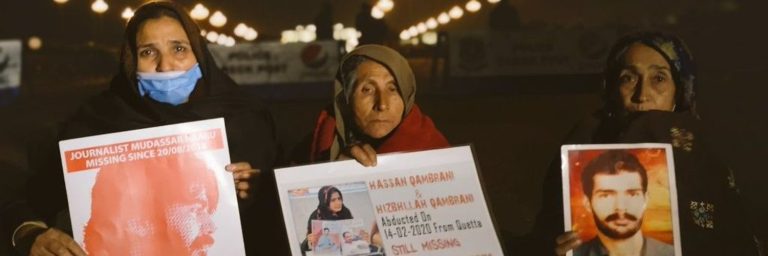
Last Thursday, five year old Sachal accompanied by his maternal grandmother appeared before the divisional bench of Islamabad High Court [IHC] comprising CJ Farooq and Justice Miangul Hassan Aurangzeb. Sachal is the son of Pakistani journalist, poet, and blogger Muddassir Naaru, who went missing from Kaghan Valley in Mansehra district of Khyber Pakhtunkhwa while on a family excursion in 2018.

Being just six months old at that time, Sachal does not have any memories of this horrendous incident, which in a way is a good thing. But destiny has been rather cruel to him. In 2021, his mother suddenly passed away leaving this poor ‘half orphan’ to singlehandedly deal with the double trauma of having lost his mother and being unaware about the whereabouts and state of his father.

Naaru was also a social activist and human rights defender and had antagonised the Pakistani security forces and intelligence agencies by highlighting excesses being committed in the garb of fighting terrorism. Hence, there are good reasons to believe that these all-powerful entities considered it expedient to cause an inconvenient person refusing to be reined to simply ‘disappear’!

Enforced disappearances orchestrated by the Pakistan Army, its intelligence agencies and the para-military forces under it’s command is so commonplace that in 2021, the then IHC Chief Justice Athar Minallah had remarked that “If the press was [really] independent, the pictures of missing person’s families would have been in paper every day.” [Emphasis added].

With thousands of enforced disappearances suits languishing in courts for years, Naaru’s case too would have met the same fate had it not been for a couple of positive developments. The first lucky break came when Nuru was spotted by a close associate at a detention center meant for ‘missing people’ a few months after his disapppearance. This belied the police version that the journalist may have accidently died or committed suicide by drowning in the Kaghan River and confirmed that he was alive.

Two, Chief Justice Minallah took a very serious view of the government’s apathy in discharging its duty of protecting the people and made a scathing attack on the Pakistan Army by stating that “half of our lives were spent with non-democratic governments in power.” Noting that “Had the state existed somewhere, why would the affected family need to approach the court [sic],” he directed that a meeting between the parents and children of Naaru with the prime minister should be ensured before the next hearing into the case.

Though the meeting with the prime minister was held and many assurances were given, the Naaru case remains in limbo and Sachal along with his grandmother continue to knock on IHC’s door for justice and that’s why they were there last Thursday. And in its news report, Dawn mentions, “When Naaru’s case came up, the CJ noted how the court felt embarrassed that the matter has been lingering for five years now.” What could be more embarrassing for a country than its court publicly expressing embarrassment for its inability to dispense justice?

In another such case heard along with that of Naaru’s disappearance, the petitioner informed the court that his two sons had been missing for a very long time. Noting that this case was extraordinary and brought disrepute to Pakistan, the two member IHC divisional bench division lamented that “the state appeared to be helpless in the matter.”

This observation clearly reaffirms the fact that the burgeoning cases of enforced disappearances in Pakistan are primarily due to Rawalpindi’s lack of accountability that flows from its absolute supremacy over both the country’s legislature and judiciary. This admission revives memories of IHC senior judge Justice Shaukat Siddiqui’s 2018 revelation that “Today the judiciary and media have come in the control of ‘Bandookwala’ [army]. Judiciary is not independent…,[sic]” and how “In different cases, the ISI forms benches of its choice to get desired results.”

The fact that the Pakistan Army has scant regard for observing human rights is evident from its self-admitted involvement in enforced disappearances. Readers may recall that during a press conference in 2019, the then DG ISPR Maj Gen Asif Ghafoor, had while replying to a question on enforced disappearances said, “We don’t wish that anyone should be missing. But when it’s war, you have to do a lot of things- as they say, all is fair in love and war; war is very ruthless.” [Emphasis added].

Human Rights Watch World Report 2019 on Pakistan also mentions that “During counter-terrorism operations, Pakistani security forces often are responsible for serious human rights violations including torture, enforced disappearances, detention without charge, and extrajudicial killings, according to Pakistan human rights defenders and defence lawyers… Authorities do not allow independent monitoring of trials in military courts and many defendants are denied the right to a fair trial.” [Emphasis added].

In its editorial of October 7, Dawn appropriately stated that “The blight of enforced disappearances has become almost normalised in our society, with hardly any voice being raised against the unlawful detention of citizens,” and leaves the reader with a haunting question- “Is the state comfortable with the fact that Pakistan is seen as a lawless land, where people disappear and are arbitrarily punished?”.

BLA’s sarmachar Masood Ahmed embraces martyrdom

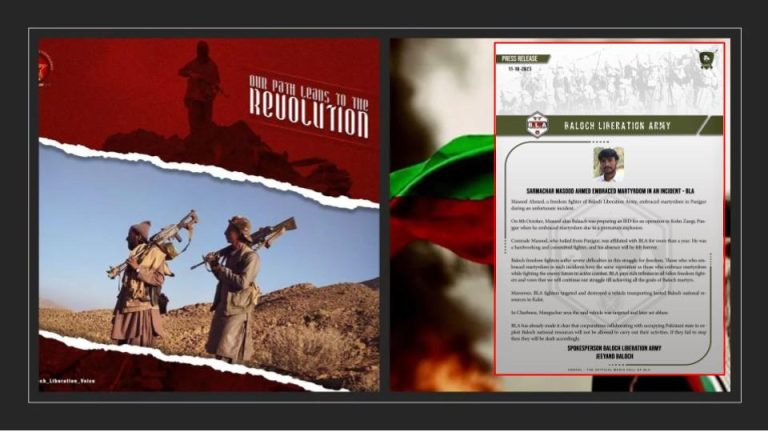
In the recent Press Release, the Baloch Liberation Army (BLA) reports the tragic loss of one of the dedicated freedom fighters, Comrade Masood Ahmed. On 8 October, Masood, also known as Balaach, was diligently preparing an improvised explosive device (IED) for an upcoming operation in Kohn Zangi, Panjgur. Tragically, a premature explosion occurred, resulting in his martyrdom.

Comrade Masood, hailing from Panjgur, had been an integral part of the BLA for over a year. His unyielding commitment, unwavering dedication, and tireless efforts in the pursuit of Baloch freedom have left an indelible mark on the organization.

The journey toward freedom is fraught with immense challenges, and the BLA holds those who embrace martyrdom in the highest regard. The BLA paid heartfelt tributes to all fallen comrades and reaffirms its commitment to pursue the goals envisioned by Baloch martyrs.

In addition to mourning the loss of Comrade Masood Ahmed, the BLA has taken a resolute stance against entities involved in the exploitation of Baloch national resources. In a recent operation, BLA fighters targeted and set ablaze a vehicle transporting looted Baloch national resources in the Charbooz, Manguchar area.

The BLA reiterates its strong position that corporations collaborating with the Pakistan Army to exploit Baloch national resources will face resistance. For far too long, Pakistan-occupied-Balochistan has witnessed enforced disappearances, targeting political activists, students, and civilians by the Pak Army. They are subjected to torture, and their lifeless bodies are discarded in isolated areas. Following the illegal occupation of Balochistan in March 1948, Balochistan has been fighting the war of its existence and freedom from Pakistan.

‘We will defend Palestine with millions of Mujahideen’, Sayed Abdul Malik al-Houthi

The head of the revolution in Yemen and “Ansar Allah” “Sayed Abdul Malik al-Houthi” has accused that the West and the United States provide support to prolong the Israeli occupation. The West’s rhetoric in the name of rights and freedom is not for the Palestinian people, because in their eyes, the Zionists have the right to massacre Palestinian children and women. He said that the West has allowed Israel to perpetrate all atrocities on Palestine. He alleged that the West wants to keep the Zionists as its agents in the Arab countries so that it can target the Islamic Ummah.

Sayed Malik opined that Israeli crimes indicate that Western leaders are just as cruel . Syed Abdul Malik al-Houthi said that the West has a superiority complex and perceives human society as a tad bit stupid. Human rights organizations have not helped the Palestinian people for seventy years. The trends of the Security Council and its resolutions did not benefit Palestine, nor did they support women and children.

The head of Ansarullah said that the American and European governments want Israel to continue killing , but the Palestinians do not give up. They want to suppress the Palestinian cause by restoring relations with Arab and Islamic countries. He described resistance as the only solution to Israel’s withdrawal from Palestine. Sayed Abdul Malik al-Houthi said that Al-Aqsa Storm is a great and important operation which has been carried out for the legitimate right of the Palestinian people against the cruel and occupying enemy. He urged the Muslims to not be silent spectators when Western countries are supporting Israel and said that they should support Torfan al-Aqsa.

He expressed the hope that the entire Muslim Ummah will stand with Palestine. If necessary, Palestine with be defended with millions of Mujahideen.

Humanitarian crisis deepens as Israel imposes total blockade of Gaza

In a turn of events, the Israeli forces have imposed a complete blockade on Gaza, intensifying the humanitarian crisis in the region. The blockade comes after a series of conflicts since Hamas launched the offensive attack on Israel.

Calls for Humanitarian Action

Humanitarian organizations operating in the region have been urgently requesting the establishment of corridors to deliver aid to the residents of Gaza. Hospitals in the area are grappling with an increasing number of casualties, exceeding their capacity, and they are running critically low on essential medical supplies and medications.

The situation has escalated, and the blockade has halted the supply of food, fuel, and medicines, further exacerbating the suffering of the people of Gaza.

Border Crossings Sealed

Israeli forces have sealed all border crossings for exiting Gaza, leaving the border with Egypt as the sole exit route. However, Egypt has closed off even this crossing, as it made this decision due to the vicinity near the border crossing becoming a target for aerial attacks.

Rescue efforts in Gaza are also encountering challenges, as many people remain trapped in the rubble of collapsed buildings. Vital equipment and ambulance vehicles are struggling to reach the affected areas, obstructing the rescue operations.

The death toll from the recent conflict has reached 1,900 lives lost in just five days of attack. There is growing concern that the fighting might continue, leading to further casualties.

Regional Tensions and International Response

Tensions are not confined to Gaza alone, as reports emerge of Israeli forces engaging in hostilities along the borders with Lebanon and Syria. These incidents have the potential to escalate into broader regional confrontations, raising alarm among international observers.

In response to the crisis, President Biden confirmed that at least 14 American citizens have fallen victim to the recent Hamas attacks. It is also reported that U.S. citizens are among those caught in the crossfire.

President Biden said that there is no justification for terrorism and condemned the ongoing violence. The U.S. Secretary of State is also considering a visit to Israel. The U.S. Foreign Minister, Antony Blinken, is expected to visit Israel in the coming days to convey a one-sided message of support.

The Looming Ground Offensive

A significant question on everyone’s mind is whether Israel will launch a ground offensive in Gaza. Gaza, a narrow strip of land approximately 40 kilometers long, is sandwiched between Israel, Egypt, and the Mediterranean Sea. This densely populated region, home to nearly 2.3 million Palestinians, has become the focal point of these intensifying hostilities.

Israeli forces claim to have targeted hundreds of objectives in Gaza. Many of these are in areas where Hamas officials and media organizations and relief agencies’ offices are located.

On Tuesday afternoon, Hamas fired a significant number of rockets at Israeli cities such as Ashkelon and Tel Aviv. However, the full details of the recent rocket attacks by Hamas are not yet available.

Women in Pak-occupied Jammu & Kashmir join People’s Rights Movement to protest against Paki atrocities

The People’s Rights Movement in Pakistan-occupied Jammu and Kashmir (POJK) has entered its sixth month. On October 10, women protested in all the districts and tehsil headquarters of POJK, including small and large markets and villages. Thousands of women participated in these protests and expressed their full participation in the public rights movement.

The largest women’s protest rally was organized in Rawalkot, the main center of the movement. Apart from this, the capital Muzaffarabad, Kotli, Mirpur, Bagh, Neelam, Hajira, Khai Gula, Rera, Dhirkot, Dharbazar, Shaukatabad, Koian, Banjunsa Miralgula, Derek, Chahar and also in the capitals of Pakistan Islamabad and Karachi women of Jammu and Kashmir organized protest programs.

Children’s protest rallies were also held at different places on Tuesday, joint protest rallies of children and women were held in some cities. This is the first time in POJK that women have joined the streets in a public movement and thousands of protests have been held in all cities on a single day.

Six months of People’s Rights Movement

It should be noted that the ongoing public rights movement in Jammu and Kashmir started on May 9 with a sit-in at Rawalkot. This is the second phase of this movement. The first phase started last year. However, it was not possible to involve the masses in the first phase.

During the 5 months of May to October, protest sit-ins were held at dozens of places across POJK. Protests, shutter downs and chakka jaam (complete shutdown) strikes were held at various instances. The Awami Action Committees were formed at each locality, village, union council, tehsil and district level, and on September 16, the people involved in the movement in the entire POJK formed a Jammu-Kashmir Joint People’s Action Committee and elected a unified leadership.

Also, Kashmiris in the region are observing a boycott of electricity bills for more than two months. In the month of September, more than 78 per cent of the citizens in the entire POJK refused to submit their electricity bills and burnt these bills along with making their paper boats which were floated into rivers as a symbolic protest.

Next phase of People’s Rights Movement

In the next phase of the movement, student protests will be held on October 17. In this regard, the formation of student action committees has started. Protests and rallies will be held on October 28 after completing the boycott of electricity bills for the third consecutive month.

On the other hand, the government has also formed a negotiation committee after failing to break the movement through crackdown and violence. There is also a possibility of negotiations with the government in the coming days.

It should be remembered that this movement has three basic demands, with another 12 demands. These are collectively included in a charter of demands issued by Awami Action Committee (J&K Joint Public Action Committee) . The three main demands include uninterrupted supply of electricity at Mangla Dam production rates, subsidy on flour to be set at par with Gilgit-Baltistan and end of privileges of the ruling elite.

Notably, Mangla Dam produces huge amount of electricity which is transmitted to Pakistan and then sold back to POJK at hefty prices. On the issue of flour, the subsidy that they got was terminated by Pakistan which ended up in exerting extra financial burden on already deprived Kashmiris.

The third basic demand of ending privilege of ruling class stems from the resentment among Kashmiris that they are paying double-triple amount for their own resources and living I scarcity. On the contrary, ruling elites who are puppets of Pakistan are leading a luxurious life, based on the hard earned money of the Kashmiris.

BLF attacks Pakistan Army across Balochistan

The Balochistan Liberation Front (BLF) targeted Pakistan Army’s camp in Shah Mardan, Awaran and Kech, and killed the Army personnel in Pak-occupied-Balochistan. In their press releases, the BLF has announced significant achievements in their ongoing struggle for the region’s freedom.

Shah Mardan Attack

On the night of October 7 at 9:30 pm, heavily armed Baloch Sarmachars (freedom fighters) carried out a well-coordinated assault on a Pakistan Army camp in Qalat Shah Maradan. This strategic attack resulted in the loss of two Pak Army personnel and injured three others. BLF carefully selected the timing to maximize damage to the enemy, successfully executing their mission.

Awaran and Kech Operations

On the 8 of October at 3 p.m., BLF’s Baloch Sarmachars initiated a fearless operation against Pakistan Army forces in Awaran and Kech. In Awaran, the attack targeted a Pak Army’s checkpoint near Malash Band in the Meshkay area. BLF’s precision attack with grenade launchers resulted in one personnel being killed on the spot, with two others sustaining severe injuries.

In Kech, the BLF sniper team exhibited their incredible precision by eliminating a Army personnel at a Pak Army’s checkpoint in Duzrah, located near a mutual border area. Subsequently, the checkpoint came under a heavy attack with modern weaponry, causing further losses to the Pak Army.

BLF’s sniper team even managed to capture images of their targets, showcasing their courage and dedication. The Balochistan Liberation Front proudly takes responsibility for both these operations and reaffirms their commitment to continue their relentless attacks on all imperialist interests until the liberation of Pak-occupied Balochistan is achieved.

For far too long, Pakistan-occupied-Balochistan has witnessed enforced disappearances, targeting political activists, students, and civilians by the Pak Army. They are subjected to torture, and their lifeless bodies are discarded in isolated areas. Following the illegal occupation of Balochistan in March 1948, Balochistan has been fighting the war of its existence and freedom from Pakistan.

These recent operations reflect the unwavering spirit and dedication of BLF to the Baloch national cause. They stand as a testament to the Baloch people’s resolute determination to secure their freedom from the oppressive Pak Army.

University students in Pak-occupied Gilgit-Baltistan protest over indiscriminate fee hike

Since five days, the students at Karakoram International University in Pakistan occupied Gilgit Baltistan (POGB) are protesting over the indiscriminate fee hike.

On 6 October, the KIU students carried out a protest by blocking the University Road for hours against the indiscriminate and unjustified fee hike. They also raised concern over the mismanagement in the University.   

According to the students, university has messed up its resources and is exerting burden over the poor students by means of fee hike. Notably, students have claimed that the university administration has increased the tuition fee by 134-150 per cent. Infuriated by the huge student protests in and around the university, the administration had suspended the admissions of various students involved in agitations and also registered FIR against them.

Parents come in support

Interestingly, some of the parents of university students also joined the protest. Accordingly, one of the parents said, “The whole region is crushed under inflation. The poor strata are breaking under the high prices. There is a two-fold increase in the prices. The students and people here are victims of a double whammy. In this scenario, increasing fees to the tune of 134-150 per cent is a stark attempt to crush the students and their parents and deprive students of education.”  

Today marks the fifth day of the protest and students are sloganeering against the university administration and Vice Chancellor, without any assurance of their concerns getting acknowledged. Meanwhile, some students have also claimed that the VC often remains absent and spends the university funds on his own, instead of spending it on the university development and requirements.

A move to deprive POGB students from education

It is worth mentioning that the region is already grappling with many challenges including high inflation and basic amenities’ shortage. In such a condition, raising the fee indiscriminately and unilaterally without taking cognizance of the issues of those getting affected is condemnable.

This indiscriminate hike in fee resonates the ideology of occupying Pakistan, which wants to deprive the inhabitants of POGB from education so that they remain dependent on it, and it can continue the illegal occupation of the territory. However, the students of POGB seems to be in no mood to give away with their demands so easily.