Home Blog Page 191

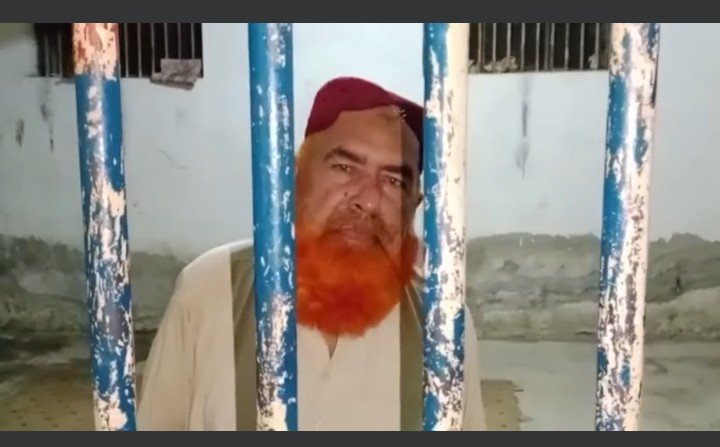
Gilgit Shia cleric vows to ‘break jaws’ of those who insult Imam Mehdi

Shias in Pakistan-occupied Gilgit-Baltistan (POGB) are agitated and protesting against the Sunni cleric Qazi Nisar for insulting Imam Mehdi and calling him fake.

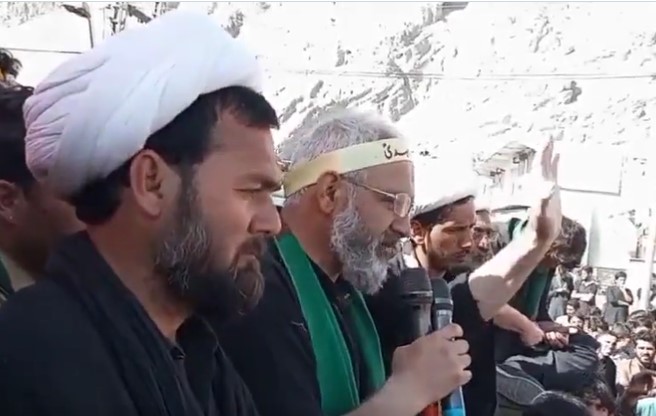
Recently, a Shia cleric Allama Syed Ali Rizvi lambasted Qazi Nisar and pledged to break his jaws during the Arabeen procession in Skardu. He said, “Imaam Hussain se ahad, Immam-e-Zaman se ahad hum dat jaenge, mar jaenge magar hum Imam ko nahi chhorenge.” (Taking oath of Imam Hussain and Imam-e-Zaman, we will die but will never leave Imam). He went on to say, “Ya Imam-e-Mehdi, jisne aapki ghustakhi ki hai, uskke jabrdon ko tod kar rakh denge.” (Oh! Imam Mehdi, whosoever, has insulted you, we will break his jaws).

He asked the people in prosession that whether they were ready, to which, the crowd raised their hands in affirmation. This was followed by loud sloganeering saying – “Ye lashkar kiska – Mehdi ka” (Whose procession is this? – Its Imam Mendi’s).

In another protest rally in Kharmang, Shia cleric Sheikh Akbar Rajai demanded strict punishment for the Sunni cleric Qazi Nisar for insulting Iman Mehdi. Amidst his address, the gathered crown chanted “ghustakh-e-nabi ki ek hi saza, sar tan se zuda” (Insulting Prophet has only one punishment, behading).

Additionally, not only in POGB, Shia clerics in other parts have also erupted in protest. In Karachi, a Shia cleric Allama Sadiq Raza Taqvi addressed a rally and stated warned Pakistan govt that it should promptly arrest Sunni cleric Qazi Nisar for allegedly insulting the Hidden Imam. He also warned the govt that it should not test their patience. He said, “If there’s no action against him, we shall kill him ourselves.”

A deliberate attempt to ethnically cleanse Shias

Shias are enraged over the Sunnis insulting Imam Hussain and Imam Mehdi. Moreover, they are also agitated against the controversial law that calls the criticism of Yazid, Aby Sufiyan and Mu’awiya as blasphemy. As per the Shia community, there has been a fundamental difference between them and Sunnis and, thus, making offense is a deliberate attempt to carry out ethnic cleansing. The Pakistani ‘establishment’ is trying to create resentment between the communities so that Shias would get purged from the region.

POGB, which is illegally occupied by Pakistan for more than seventy-six years, is a Shia majority region. In recent years, the oppressive policies of Pakistan has made them vocal and so they have been demanding their right. The calls of unification with India have also been raised by the people of POGB from time-to-time. Pakistani ‘establishment’, which wants to sustain its illicit hold and dominate over the region, has now come up with another radical and inhumane policy of exploiting religious differentiation to harass and suppress  the Shia community.

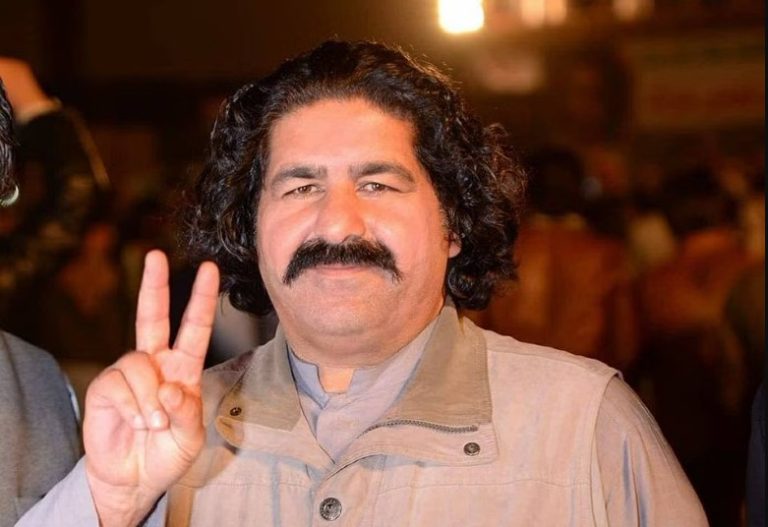
PTM leader Ali Wazir sent to Adiala Jail on Judicial Remand

In a significant development, former National Assembly member and PTM leader Ali Wazir has been remanded to Adiala Jail on judicial remand by the Islamabad Anti-Terrorism Court. This decision comes in the wake of a fraud case against him, marking a crucial development in the ongoing legal proceedings.

The Islamabad Anti-Terrorism Court, presided over by Judge Raja Jawad Abbas, conducted the hearing pertaining to the fraud allegations against Ali Wazir. Following the completion of Ali Wazir’s three-day physical remand, he was presented before the court by the police.

During the hearing, the prosecution requested an additional six-day extension of Ali Wazir’s physical remand. However, Judge Raja Jawad Abbas declined this request, opting instead to place Ali Wazir under judicial remand and handing him over to the police custody.

This decision signifies a pivotal moment in the legal process surrounding Ali Wazir’s alleged involvement in the fraud case. Additionally, the court has issued notices for September 11 to address Ali Wazir’s bail application in connection with the ongoing fraud case.

PTM leader Ali Wazir, a former member of the National Assembly, has been a prominent figure in the politics of Pakistan and the Pashtun Movement. He was arrested during a crackdown on PTM workers after the PTM rally in Islamabad. Since then, the Pakistan establishment has taken every extra-judicial measure to oppress the leaders and activists related to PTM.

Balochistan: BLA launches another attack on Pak Army in Panjgur & Turbat

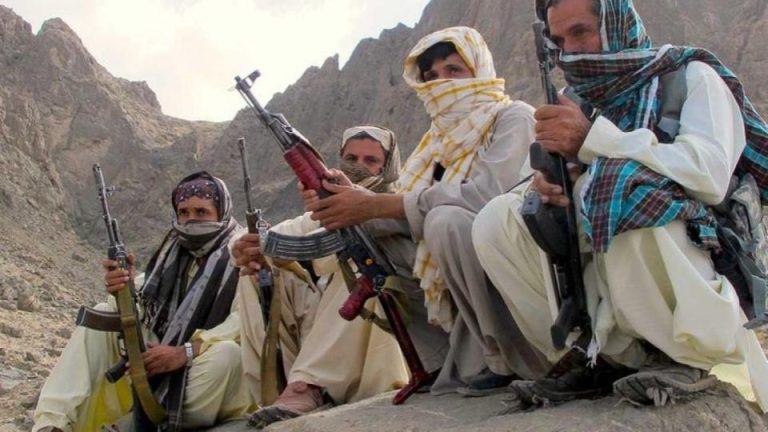
In a daring attack, the Baloch Liberation Army (BLA) has targeted the Pakistan Army and its agents again in two separate attacks in Panjgur and Turbat. These attacks resulted in injuries of at least five personnel.

In the first incident, BLA fired multiple rounds at a Pakistan Army post situated on the CPEC route in Rahi Nigor, Panjgur, during the night. The attack, which involved the use of a grenade launcher, left at least three Pakistan Army personnel injured. It also inflicted financial losses on the military post.

The second attack occurred on the night of September 2 in Josk, Turbat, where BLA targeted a Pakistan Army checkpoint with a hand grenade. As a result of this attack, two Army personnel sustained injuries.

Baloch Liberation Army has officially claimed responsibility for both of these attacks. They have reiterated their commitment to continue their operations against the Pakistan Army and its collaborators until Balochistan is liberated from the clutches of the brutal regime of Paki ‘establishment.’ 

For decades, BLA has carried on an armed struggle against the Pakistan Army and ‘establishment’, as they have illegally occupied Balochistan. Since 27 March 1948, Pakistan Army has been oppressing Baloch through daily home raids, disappearances, staged encounters, target killings, torture, humiliation at checkpoints, and kidnappings for ransom. The Pakistan Army is targeting and monitoring Baloch people, and anyone who has a potential to raise questions is either killed or abducted. 

Global South in focus as world leaders from Argentina to Mauritius descend on New Delhi for G20 summit


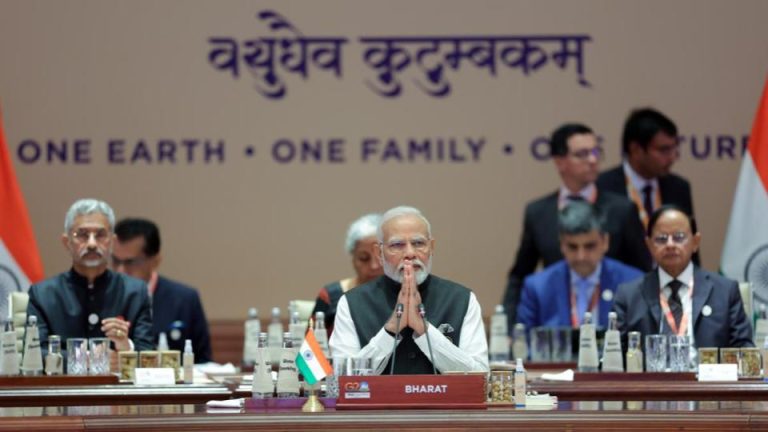
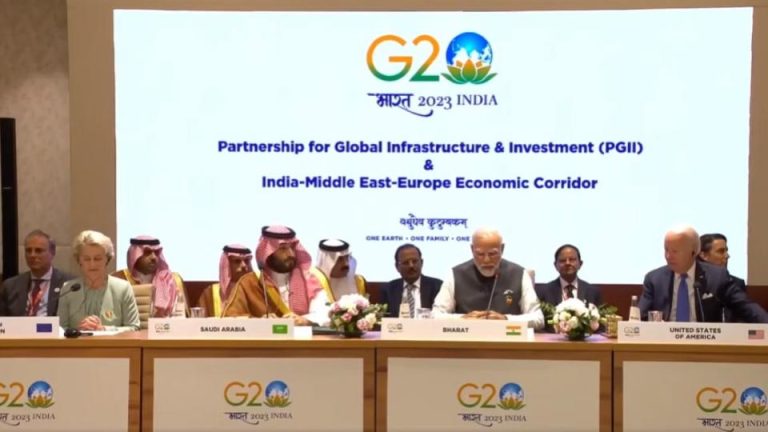
The G20 Summit in New Delhi will witness some groundbreaking roadmaps being set and many comprehensive and diverse collaborative partnerships formed – especially with and between countries of the Global South – over the next three days.

Argentina President Alberto Fernandez, who arrived at the Palam airport Friday morning, has an interesting first day of activities that includes bilateral meetings with the leaders of South Korea (Yoon Suk Yeol); the United Arab Emirates (Sheikh Mohamed bin Zayed Al Nahyan); and, with the Prime Minister of Bangladesh, Sheikh Hasina.

The Argentine head of state is also scheduled to hold many more bilaterals, including with Prime Minister Narendra Modi, on the sidelines of the 18th Summit of Heads of State and Government of the G20, which will take place on Saturday and Sunday under the motto ‘One Earth, One Family, One Future’.

Fernandez will also speak in plenary sessions that will take place on Saturday after the ceremony of welcoming leaders and heads of official delegations by PM Modi at the Bharat Mandapam, Convention Centre and International Exhibitions (IECC) that is hosting the Summit.

The Mauritian delegation attending the G20 Summit, which is led by Prime Minister Pravind Kumar Jugnauth, has also reached New Delhi.

Jugnauth will meet External Affairs Minister S Jaishankar today and then hold discussions with PM Modi later in the afternoon.

In addition to international organisations (UN, IMF, World Bank, WHO, WTO, ILO, FSB and OECD), Chairs of regional organisations (AU, AUDA-NEPAD and ASEAN), India, as G20 Presidency, has invited Bangladesh, Egypt, Mauritius, Netherlands, Nigeria, Oman, Singapore, Spain and UAE as guest countries, as well as ISA (International Solar Alliance), CDRI (Coalition for Disaster Resilient Infrastructure) and ADB (Asian Development Bank) as guest international organisations.

As reported by IndiaNarrative.com, Nigerian President Bola Tinubu – the first Head of State to arrive in India on Tuesday – has already been holding a series of meetings in New Delhi pledging “best returns” to business community for investment in his country.

“I will captain and lead the course of investment, development, and prosperity for the largest democracy in Africa and for investors from the rest of the world,” Tinubu told heads of major Indian companies at a presidential roundtable in New Delhi.

Similarly, Deputy Prime Minister and Personal Representative of Sultan of Oman Haitham bin Tarik, Sayyid Asaad bin Tarik Al Said will be arriving in New Delhi on Friday with an official delegation that includes Foreign Minister Sayyid Badr Hamad Al Busaidi, Economy Minister Said Mohammed Al Saqri, Commerce Minister Qais Mohammed Al Yousef and other top officials.

(This article was first published in India Narrative)

Defanging Imran Khan and emasculating Pakistan Tehreek-e-Insaf Party

Para 91 (7), Part III, Chapter 3 of Pakistan’s Constitution stipulates that “The Prime Minister shall hold office during the pleasure of the President.” However, the reality is that in this matter, it’s actually the pleasure of Pakistan’s Army chief that counts and the fate of former prime ministers Zulfikar Ali Bhutto and Nawaz Sharif are just two cases in point.

Cynics may also like to look up Forbes 2018 list of ‘The World’s Most Powerful People’ in which former Pakistan Army chief Gen Qamar Javed Bajwa is ranked 68th, and an accompanying remark reads, “Although the president is his boss on paper, Pakistan’s chief of army staff is de facto the most powerful person in the nuclear armed state.” [Emphasis added].

The unsavoury sobriquet ofbeing a ‘selected’ prime minister earned by Pakistan Tehreek-e-Insaf [PTI] chief Imran Khan clearly establishes Rawalpindi’s continuing complicity in rigging election results to ensure victory of its selected candidate.

Unfortunately, Khan’s honeymoon with Gen Bajwa didn’t last too long, and it was only a matter of time before their relations soured beyond imagination. That crossing swords with Gen Bajwa would end with Khan losing his chair was a foregone conclusion, but few had imagined that this would be orchestrated by Rawalpindithrough a manipulated no confidence motion.

But, if Gen Bajwa had reckoned that Khan would bow out meekly, he was sadly mistaken. The PTI chief hit back and took the all-powerful Pakistan Army head-on with the characteristic vengeance of a spurned lover. Terming his ouster as a ‘conspiracy’ hatched abroad and executed by forces acting at the behest of foreign powers and dubbed the Shehbaz Sharif government as an ‘imported’ one.

He not only made several uncharitable remarks about the army but even did the unthinkable by praising the Indian army-something considered blasphemous in Pakistan. However, by asserting that the “Indian army is not corrupt and they never interfere in civilian government,” Khan cleverly put Rawalpindi in an embarrassing bind without even naming it.

He even had the gall to take a swipe at Army chief Gen Syed Asim Munir by saying, “There is no rule of law in Pakistan . . . it is run by only one man and that’s the army chief,” and this unkind compliment would surely have enraged the army chief. 

The positive fallout of Khan’s ‘foreign conspiracy’ accusations and his diatribe against the Pakistan Army is that it struck a chord with the masses fed up with Rawalpindi’s unbearable interference in everyday affairs. However, the negative side is that his phenomenal popularity and the abortive attempt on his life presumably gave the PTI chief a false sense of invincibility.

So, pushed his luck too far by continuing to embarrass both the government and military, and so it was but natural that the first thing Gen Munir decided to do after taking over as Army chief was to ensure Khan’s ‘political debilitation’ and this he did by using the simple yet novel stratagem of ‘giving a dog a bad name and hanging him’!

Having foreseen the likelihood of his detention, the wily Khan cleverly shared this apprehension with his supporters as a forewarning. He also made it clear to the ‘establishment’ [as Khan sarcastically refers to the Pakistan Army], that any attempt to arrest him would precipitate massive public unrest and cripple the country. Initially, this threat did act as an effective deterrent. 

Rawalpindi also realised as Khan remained within the bounds of law while taking pot shots against the Pakistan Army, to lure him into taking a wrong step that would ensnare him was difficult. However, having served as the Pakistan Army’s spymaster, Gen Munir seems to have put his practical experience of compromising his victim by identifying and attacking his Achilles heel, which in the PTI chief’s case was his frenzied band of supporters itching for action.

So, it’s quite likely that extraordinarily provocative conditions were intentionally created to provoke PTI supporters into creating a serious law and order problem, which made apportioning blame for the same on the PTI chief an easy job. Besides discreditinghim, this would also portray Khanas an agent provocateur who had incited violence and hence, is liable for legal action.  

Rawalpindi’s plan was, to say the least, an audacious one. Khan was unceremoniously ‘abducted’ like a petty criminal from the premises of Islamabad High Court [IHC] where he had gone in connection with the hearing of one of the numerous cases filed against him. The brazen act of forcibly whisking away the PTI chief in broad daylight and full public view incensed his supporters and acted as the proverbial straw that broke the camel’s back of the PTI.

It goes to the Pakistan Army’s credit that it left nothing to chance. So, even though its plan to ‘snatch’ Khan from IHC was enough to trigger public unrest, the clever decision of using Rangers [a para-military force officered by the Pakistan Army which is answerable to Rawalpindi] instead of the police to ‘arrest’ the PTI chief made Pakistan Army the prime object of widespread public ire and resulted in the targeting of military installations and facilities on May 9.

The Pakistan Army’s media wing Inter Services Public Relations [ISPR] craftily projected the abject failure of soldiers to safeguard military assets as exemplary restraint exercised to avoid civilian casualties. However, this is far from true. Even a lay person knows that the task of protecting military facilities is a non-negotiable assignment that soldiers are duty bound to fulfil even at the cost of their lives. Hence, there’s no question of them not doing so-unless of course specific orders to the contrary were issued.

Moreover, Rawalpindi and Lahore cantonments are virtual fortresses which are accessible through only a few entry/exit points. Designed to thwart large scale terrorist attacks, these are well fortified and heavily guarded and hence, for unarmed mobs to easily breach the same and barge into these cantonments teeming with soldiers, is something that’s a bit too hard to believe.

It could be argued that any inference suggesting that Rawalpindi wilfully allowed PTI supporters to destroy military assets is tantamount to cutting the nose to spite the face. While this observation does have merit, but for an army which can go to the extent of outrightly disowning the dead bodies of its own soldiers killed in combat, allowing arsonists to run riot in army cantonments just for discrediting Khan is no big deal!

Hence, even though Khan’s accusation that “The May 9 was a well-planned false flag operation with the full backing of a controlled media and state institutions only with one purpose, to crush PTI” may sound incredulous, yet the same cannot be summarily dismissed, because as they say-anything is possible in Pakistan! 

The spontaneous attacks on military assets by emotionally charged mobs was made out to be a premeditated conspiracy, and by emphasising that “The events of May 9 have proven what enemies [read- India] couldn’t do in 76 years, a bunch of miscreants and their facilitators did,”[Emphasis added], DGISPR attempted to evoke patriotic feelings. Prime Minister Shehbaz Sharif was more specific and claimed that “India could not achieve its dreams after the 1965 war, but May 9 rioters fulfilled their dream.”[Emphasis added] and this lends credence to Khan’s ‘false flag’ operation allegations.

Today, Khan is a mere shadow of his former self. Debarred by the Election Commission of Pakistan from holding public office for five years, the PTI chief faces a more serious charge under the amended Official Secrets Act for allegedly leaking the contents of a classified diplomatic cipher and misplacing it. But that’s not all-with Lahore anti-terrorism court approving questioning of the PTI chief on the May 9 riot and Sharif stating that “Those involved in the May 9 incidents wanted to overthrow the military leadership,” the road ahead for Khan is definitely not going to be an easy one.

By imaginatively using the carrot and stick, Rawalpindi has successfully broken PTI’s top-rung organisational cohesion while trying rioters [including the PTI chief] in military courts under Pakistan Army Act will ensure that Khan is ‘defanged’.

Yet, like always, Rawalpindi is not leaving anything to chance and it thus requires adequate time for using every trick in the book to oversee the complete political destruction of PTI, for which the stipulated 90 days window between dissolution of the government and the next elections isn’t enough.

Could this have any link with Pakistan election commission’s decision to postpone elections till the time consuming exercise of delimiting electoral constituencies after approval of the 2023 census results is completed?

So, while Khan may have been an undefeatable star cricketer of yesteryears, but with his skilfully delivered ‘googlies’ Gen Munir has convincingly established that he’s very much the present day’s ‘Man of the Match’!

Massive shutdown and protests in Pak-occupied Jammu & Kashmir against rising inflation continues

In Pakistan-occupied Jammu and Kashmir, a complete wheel jam and shutdown strike was observed in the Poonch and Mirpur divisions on Tuesday. Protests and rallies were held in 7 districts, involving local administration officials and various small and large markets, with the participation of thousands of people.

During this peaceful strike, the districts of Poonch, Kotli, Mirpur, Bagh, Sudhanoti, Bhimber, and Haveli experienced a complete shutdown and wheel jam. Besides ambulances, no public or private vehicles were seen on the roads. It’s important to note that no road blockades were occurred during this strike.

In Poonch district, protests and sit-ins took place in various locations, including Rawalakot, Hajira, Abbaspur, Thoarad, Paniola, Khai Gala, Ali Sojal, Chhota Gala, Barien, Shoukat Abad, Thalla, Tyen Dhalkot, and Mujahidabad. The protests in Rawalakot involved over 30,000 participants, while other cities in Poonch also witnessed thousands of demonstrators taking to the streets to voice their demands.

In Bagh district, protests and rallies occurred in Bagh city, Rerah, Malot, Dhirkot, Rangla, and other locations, with thousands of people participating. Kotli district saw protests and rallies in Kotli city, Sahnsa, Panjerah, Sarsawa, Holard, Nikyal, and Chadhoi, with a significant turnout. In Mirpur district, Chakswari, Dadyal, and Mirpur city witnessed protests with the participation of thousands of people.

Bhimber district saw protests and rallies in Bhimber, Samahni, and Barnala, while Kotli included demonstrations in Khota and Khursheed Abad. Large numbers of people participated in these protests as well. Sudhanoti district experienced protests in Mang, Plandri, Baloch, Trarkhal, Garela, and Tangi Gala, with significant participation from the local population.

Protesters in Pakistan-occupied Jammu and Kashmir (POJK) have expressed outrage over the recent hike in electricity prices, despite long power outages. This protest movement began on May 9 from Rawalakot and has since spread not only throughout Pakistan-occupied Jammu and Kashmir but also to various cities across Pakistan. The Rawalakot protests have been ongoing for over 120 days. The demands of this protest movement include uninterrupted and free supply of 400 megawatts of electricity, in line with the region’s requirement out of the 3190 megawatts generated from Pakistan-occupied Jammu and Kashmir, setting up its own grid station and reduction in wheat prices. The demands also include provision of subsidies and an end to the privileges of the ruling elite of Pakistan.

The demands of solving the problems of dam victims in Muzaffarabad and Mirpur have also been included in the charter of demand of this movement. The process of stopping payment of electricity bills has also started since last month. On Tuesday, while addressing the leaders, it was announced that they will continue to boycott the electricity bills until their demands are approved. For the next stage of the protest, it has been announced that they will hold a meeting with the representatives of the entire Pakistani-occupied- Jammu and Kashmir and will issue a plan of action.

In a surprise turn of events, Pakistan’s Caretaker Energy Minister Muhammad Ali said that people will not get cheap electricity until electricity theft ends and people pay their bills.

He added that task forces are being formed at the local level to prevent electricity theft. He said that 589 billion rupees electricity is stolen or bills are not being paid. The Caretaker Prime Minister has called that there is a significant loss of 100 billion rupees in the Islamabad, Lahore, Gujranwala, Faisalabad, and Multan distribution companies (discos) out of a total billing of 3044 billion rupees. Additionally, discos in Peshawar, Hyderabad, Quetta, Sukkur, Tribal Areas, and POJK have incurred a loss of 489 billion rupees.

The situation couldn’t get any worse, POJK has been not only forcefully occupied but is being exploited every single day. The citizens of POJK have been deprived of not only the legal share of their own resources but also their rights. Pakistan is nothing more than a wolf preying on the innocent. It doesn’t consider the citizens of POJK as its own, maybe because it still considers them Indian. These protests are a clear indication that the people of the region are also not happy with the forceful occupation of Pak Army.

Kashmir: DGP Dilbagh Singh orders seizure of properties owned by Kashmiri terrorists

In a recent press conference held in Rajouri, Director General of Police (DGP) Dilbagh Singh revealed that the properties of Kashmiri terrorists who have sought refuge in Pakistan after operating in various parts of Jammu and Kashmir are being seized, with the process ongoing. The move comes as authorities aim to curtail the potential revival of militancy in the region.

DGP Singh stated, “We have a list of terrorists who are natives of J&K and were operating in various parts of the UT but have fled to Pakistan to take refuge there. Their properties are being attached and the process will continue.” He emphasized the relentless pursuit of such individuals, indicating that they would not be shown mercy if they attempted to return, as they are believed to be behind efforts to rekindle militancy in Jammu and Kashmir.

Authorities are closely monitoring these militants, who continue to promote militancy while residing across the Line of Control (LoC). Singh warned that there would be no leniency, and any return to Indian territory would result in their elimination.

According to DGP Singh, there are currently 9-12 terrorists, the majority of whom are suspected to be foreigners, operating in the Rajouri Poonch range. In fact, recent intelligence suggested that they were in transit from Kulgam-Shopian to the Rajouri-Poonch region. Security forces have already eliminated three of these militants, with efforts ongoing to track down the remaining individuals.

Strengthening VDCs

While speaking on the properties of Kashmiri terrorists being seized, Singh also praised the collective efforts of the police, army, and CRPF in successfully carrying out operations in the Rajouri-Poonch range. Furthermore, he assured that these operations would persist to eliminate any resurgence of militancy in the region, emphasizing that “we will not allow attempts from across the LoC to revive terrorism in Rajouri-Poonch range.”

The DGP also highlighted the strengthening of Village Defence Committees (VDCs), commending their crucial role in anti-terrorist operations. Addressing infiltration attempts, he reported that all major infiltration bids had been thwarted. Following recent review meetings, it was decided that police personnel would be deployed at certain points along the LoC alongside the army to further enhance the “border grid.” This collaborative effort aims to bolster border security and prevent any attempts to reignite militancy in the region.

The ‘Badshah of Bollywood’ strikes gold again with Jawan

The Badshah of Bollywood Strikes Gold Again with Jawan

Shah Rukh Khan’s new movie, Jawan released today, and his fans haven’t stopped going gaga over him, seeing their hero in a brilliant, massy avatar. Directed by South filmmaker, Atlee Kumar, Jawan presents SRK in different avatars, and it stars other talented actors like Vijay Sethupathi as the antagonist, Nayanthara as the female lead and Deepika Padukone in a cameo.

While Pathaan, which released early this year, saw the superstar in a classy, action role, Jawaan takes it several notches higher. According to early reports, Jawaan is packed with emotion, patriotism, brilliant action moves and SRK’s evergreen humor and wit. Overall, it can be said that the movie is a perfect blend of the brilliance of the North and South.

The movie does have its usual moments of some masala, romance and song sequences, but Atlee does a good job of ensuring that these don’t steal anything away from the main plot. It’s an SRK show all along, and it is quite amazing to see the 57-year old pull stunning action sequences with utmost grace and elegance.

2023 definitely seems to be SRK’s year, and it is even more important considering that the actor had a pretty dull time in his career before this. While he announced his return with Pathaan in January, SRK confirms he is going nowhere with Jawan! That the advance ticket collections of Jawan broke the collections record of Pathaan is only proof of this fact. This is the year of Badshaah, indeed.

One of the major highlights of Jawaan is that SRK’s army of girls are given reasonable screen time to prove their mettle, instead of appearing as arm candies only, like we see in most other big budget movies. Some of the girls whose performance deserves special mention in the movie are Dr. Eram (Sanya Malhotra), Kalki (Lehar Khan), Helena (Sanjeetha Bhattacharya) and Lakshmi (Priyamani).

Sindh: The tragic story of Kandhkot protest

Kandhkot protest by the local Hindus has been brutally dealt with by the Sindh Police which is backed by the Paki ‘establishment’, injuring many protestors demanding the release of individuals abducted by the dacoits. On Wednesday, Sindh police reached the protest site and carried on a baton charge over the peaceful protestors.


The chain of protests and demonstrations in Pakistan is both widespread and diversified. Almost every region is protesting against the establishment. Every region has its own problem that ranges from enforced disappearance, persecution, indiscriminate tax surge, religious persecution among others. In between all this Sindh is also registering its protest against the failure of law-and-order machinery.

People of Sindh, for quite some time, have been raising the concern of dacoits that are freely executing crimes without any fear. But the negligent establishment failed to provide redressal. In a series of abductions Mukhi Jagdish Kumar, a 72-year-old Hindu trader was abducted on June 22 from Bakshapur town of Kashmore district in Sindh. Along with him, the dacoits also abducted his grandson Jagdish Kumar, who is 9 years old. While the Police turned a blind eye to his abduction, a month later, a video was released by his son showing Jagdish Kumar in shackles and being tortured by the dacoits.

The dacoits demanded Rs. 5 crores as ransom for the release of Jagdish Kumar. Meanwhile, another young man named Sagar Kumar was also abducted by the dacoits on August 9. Later, a similar video was again released by the dacoits in which Sagar Kumar was chained and was brutally tortured. He, akin to Jagdish Kumar, pleaded for his release. Unfortunately, even after two months of such horrendous law and order violations, the Police kept silent and no actions were taken.

Start of the Kashmore Protest

Some reports suggest that a doctor named Munir Niyaj has also been captivated by the dacoits for more than 40 days. As per protestors, there are approximately 10 people who had been abducted by the dacoits.

As people were disheartened over their unfortunate condition in Pakistan, it was another video of Jagdish Kumar that made people enraged. Seeing no other way left, the frustrated people of Kashmore decided to organize a protest demonstration and a sit-in to seek the establishment’s attention to the case in point.

On September 1, the Hindu community staged a protest at Dera More in Kashmore. The protest got widespread attention and sympathy from all across Sindh. The protest led to the release of Mukhi Jagdish Kumar and two others. As a result, the Kashmore protest was called off on Tuesday, September 5th.

However, there were other people in captivity, who were not released, the local residents started another protest, referred to as Kandhkot protest, the very next day.

But soon after the protest started, local police started lathi-charge on the people. The protestors were so brutally treated that some of them sought immediate medical attention. Police also lodged FIR against some of the protestors. Besides this unjustified act by the local police, a group of assailants also infiltrated the event and injured the protestors, showing a clear nexus between the Police and assailants.

Never-Ending Tale Of Hindu Persecution

While talking to The Dawn, Qaumi Awami Tehreek (QAT) leader and Sindh Bar Council (SBC) member Advocate Abdul Ghani Bijarani, said: “The sit-in at Kashmore’s Dera More ended last night, but this protest is in fact continuity of it.” He went on to say, “We are just demanding recovery of hostages and nothing else.” And “We are being told to call off the protest, but we refuse to do so.”

The baton charge aggravated the anger even more and to pacify the protestors, the local SHO has been suspended by the SSP. According to him, the measures taken by the SHO were unauthorized from the high ups. Furthermore, an enquiry has also been ordered by the SSP.

Nevertheless, what the SSP is doing is nothing more than a damage control procedure. Currently, the situation still remains vulnerable as the protests have been thrashed brutally and those who are in captivity of dacoits still don’t have any way out.

So, how the Kashmore protest started and later transformed into Kandhkot protest is yet another tragic incident that underscores the worsened law and order situation in Sindh along with the never-ending tale of Hindu persecution in  the region.

Khyber-Pakhtunkhwa: TTP captures villages, attacks Pakistan Army


TTP has captured villages in Khyber-Pakhtunkhwa after it launched  a massive attack on the Pakistan Army in Chitral district. Chitral is a border district that touches Afghanistan’s Kunar, Nuristan and Badakhshan provinces. The attack was launched on Wednesday. While there were clouds of suspicion over the attack, as Pakistan media almost kept silence, TTP commander confirmed their action through a telephonic conversation to The  Khorasan Diary.

During the conversation, he said, “An operation in Chitral district has been launched by the TTP and various villages have been captured. It started at 4 am this morning. We will share pictures as well as currently we are having poor internet issue there.”

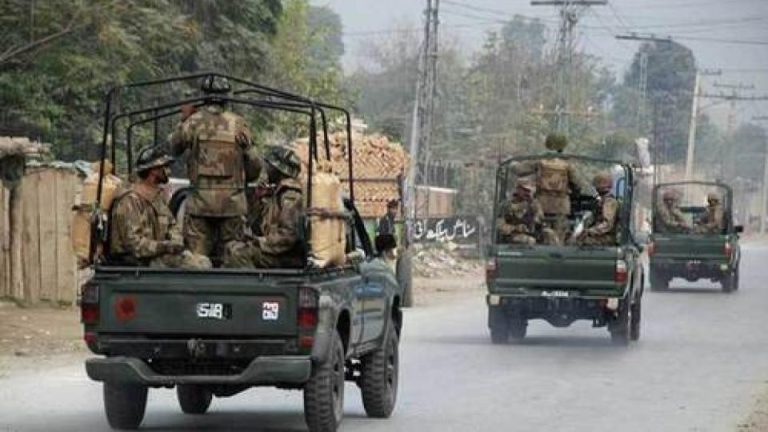
TTP also captured two Pakistan Army post in the region. Soon after the attack was launched the Pakistan Army launched its counter operation, but, failed to curb the TTP attack quickly and suffered heavy losses. Reportedly, there have been almost  500 TTP militants in the region waging a war against Pakistan. Pakistan also roped in their SSG commandos to deal with the TTP penetration.

While the shelling escalated from both the sides, 11 Pakistan Army personnel have reported to be killed. On the other hand, 12 of the TTP militants have also been killed. Some of the reports also suggest that, as many as 90 Pakistan Army soldiers have also been captured by TTP.

Pak Army Kills Innocent Children

Meanwhile, Pakistan’s shelling inflicted heavy losses on the civilian population. In Waziristan, Pakistan Army shelling led to the death of four innocent children, marking a start of debate around the way Pakistan Army is dealing with TTP.
Amidst escalating war like situation in Chitral, the clashes also ensued in Quetta. Today morning, Counter-Terrorism Department forces killed five TTP militants  during  an operation conducted in Aghbarg area of Quetta.

Pakistan that has been the protagonist and patron of terrorism in South Asia is now facing the outcomes of its own horrendous acts. Unfortunately, it’s the people of Khyber Pakhtunkhwa and Balochistan that are also paying the cost.