Home Blog Page 192

Pakistan CTD lodges FIR against the attendees of Sumaiya Qalandarani’s funeral 

The Counter-Terrorism Department (CTD) of Pakistan has lodged an FIR against several attendees at the funeral of Sumaiya Qalandarani, who carried out a suicide attack on a Pakistan Army convoy in June.

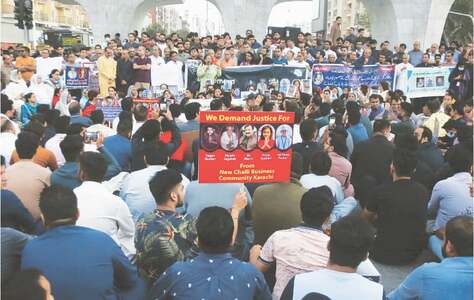
On the behest of the Paki ‘establishment’, the FIR accuses the attendees of promoting separatist ideologies and encouraging the younger generation of Balochistan to adopt these viewpoints. It specifically refers to a widely circulated photograph from the funeral that includes thirteen notable political and social figures from Turbat in attendance, such as Gulzar Dost and Maulana Khalid Waleed Saifi.

The CTD contends that an unidentified individual displayed a victory sign during the funeral, which they interpreted as violation under the Anti-Terrorism Act (ATA)’s Sections 11-F and 11-W. However, this interpretation has not yet been verified through any means or form of legal channels.

Not only the interpretation but also the accusations levelled in the FIR have not been legally assessed. The implications for those named have remained uncertain as well. This incident brings to light the intricate situation in Pakistan-occupied-Balochistan. Instances such as this, where individuals attending a funeral might face legal repercussions, shows how the local Baloch population is being treated by the brutal Pakistan Army. 

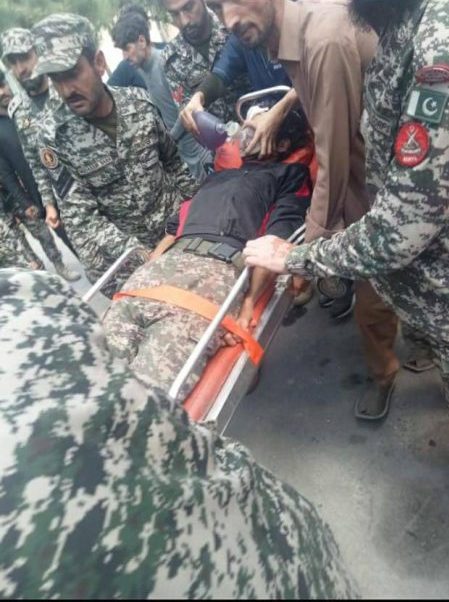
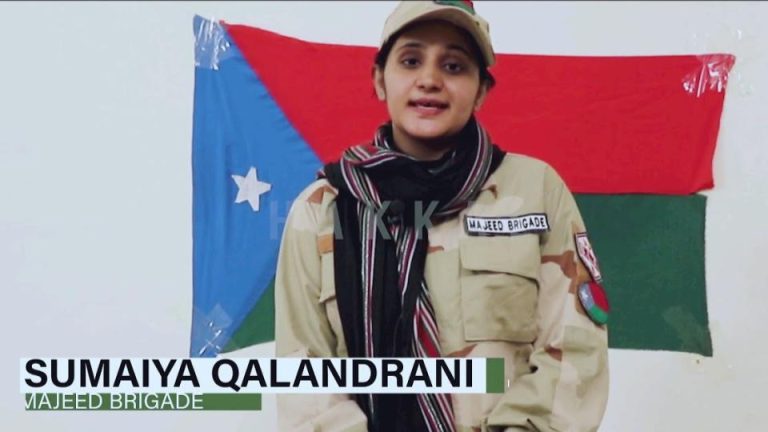
Sumaiya Qalandarani was a member Majeed brigade, a suicide squad of the Baloch Liberation Army (BLA), a group that seeks Balochistan’s independence from brutal oppression under the Pakistan Army. Last June, she executed an attack on a convoy of Pak Army at Chakar-e-Azum Chowk in Turbat. The targeted attack killed four Pakistan Army personnel. The BLA claimed responsibility, calling Qalandarani a “female fidayee” (self-sacrificer).

Jeeyand Baloch, the group’s spokesperson, stated that “BLA’s female fidayee (self-sacrificer) Sumaiya Qalandarani Baloch was behind the attack on Pak Army personnel.”

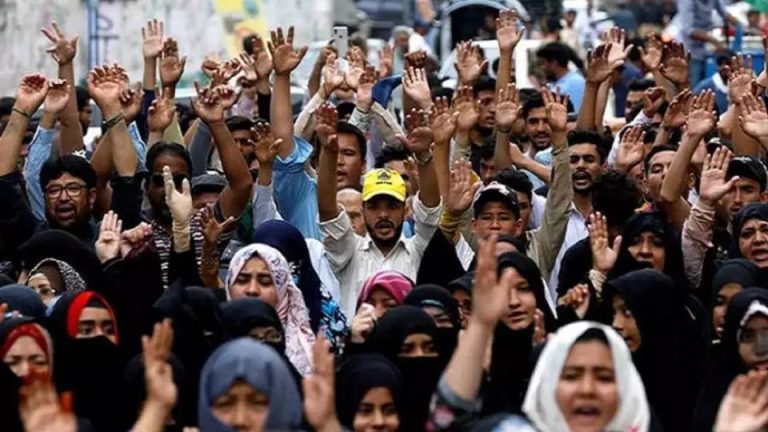
The funeral for Qalandarani was attended by a large number of people, including many political and social figures from Turbat. Notable figures such as Khalid Waleed Saifi, the vice president of Jamiat Ulema-e-Islam Balochistan; Ghulam Yasin Baloch, the convener of All Parties Kech; Haji Qadir Ahmad of the People’s Party; and Gulzar Dost, the convener of the Turbat Civil Society, among others were also present. 

Therefore, the CTD’s FIR against the attendees is a desperate attempt to silence dissent voices by the Pakistan Army. 

Balochistan under Pakistan Army has faced numerous atrocities, including daily home raids, disappearances, staged encounters, target killings, torture, humiliation at checkpoints, and kidnappings for ransom. Following the illegal occupation of Balochistan in March 1948, Balochistan has been fighting the war of its existence.

India’s move to invite Hasina for G20 maybe a masterstroke ahead of elections in Bangladesh

0

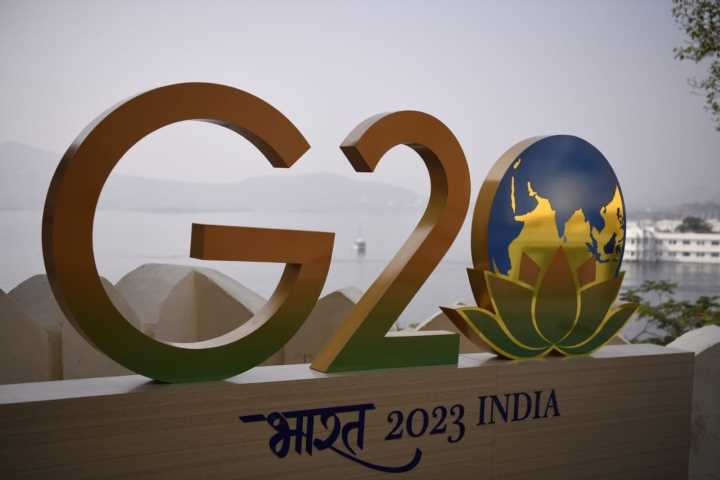
India’s special invitation to Bangladesh as a guest for the G20, this year has boosted New Delhi’s image in the neighbouring country while expanding goodwill. Bangladesh’s participation in G20 comes amid US’ increased watch over Dhaka as general elections approach.

Earlier, this year, Washington had threatened visa restrictions against Bangladeshis who undermined the democratic election process at home.

Notwithstanding these issues coming up, New Delhi has remained on course with its bilateral dealings with Bangladesh.

Bangladesh Prime Minister Sheikh Hasina, who will arrive in New Delhi on Friday to attend the G20 summit, will hold a bilateral meeting with Prime Minister Narendra Modi prior to the mega event.

“This is a message to the West that India will continue to follow its own foreign policy trajectory based on its own assessment. The Modi-Hasina meeting is of special importance as it is slated to take place before the Prime Minister’s meeting with US President Joe Biden,” a foreign policy analyst told India Narrative. The meeting also reflects India’s focus on its Neighbourhood First policy while strengthening New Delhi’s role in the Global South.

“We believe that our honourable Prime Minister’s participation at the G20 Summit in New Delhi will add yet another feather to the ‘Sonali Adhyay’ or ‘Golden Chapter’ of our bilateral relations,” Bangladesh’s Foreign Minister AK Abdul Momen said.

Bangladesh’s participation in G20 has given Hasina a platform to showcase Dhaka as a pivotal point in the Indo Pacific policy frame. Right after the G20 summit, French President Emmanuel Macron will visit Dhaka. Macron will be the first French President to be visiting the country in over three decades. Russian Foreign Minister Sergey Lavrov too will be in Dhaka on a two day visit just before the G20 summit. Back home, Bangladesh’s participation in the G20 summit will give Hasina a huge edge.

This is the first time Bangladesh has been part of the G20 forum. But that is not all. It is the only South Asian nation to have been invited for the G20. Naturally, Bangladesh sees this as a special honour. Bangladesh’s participation in G20 meetings throughout the year has pushed its narrative on the global stage, amid Dhaka’s preparations to exit the list of the least developed countries by 2026.

Andalib Elias, Bangladesh Deputy High Commissioner in Kolkata in an interview to ANI last month said, “We are an invited country but we have been actively participating in G20. This year, we have seen that India has taken G20 to a newer and higher level. As the President, India has achieved new goals and targets.”

Elias noted that while Bangladesh is not a member of G20, the decisions taken at the summit will have an impact the world over.

“When one of our closest friends becomes the President of that organisation, that definitely helps us in multiple ways,” he added.

Besides Bangladesh, Egypt, Mauritius, Nigeria, Oman, Singapore, Spain, Netherlands, and the United Arab Emirates (UAE) have also been invited.

(This article was first published in India Narrative)

Protests in POJK continue against indiscriminate hike in power bills

Illegally occupying territory is one thing and sustaining the illegal occupation is a different thing altogether. Pakistan is suffering from the same dilemma in Pakistan occupied Jammu and Kashmir (POJK).

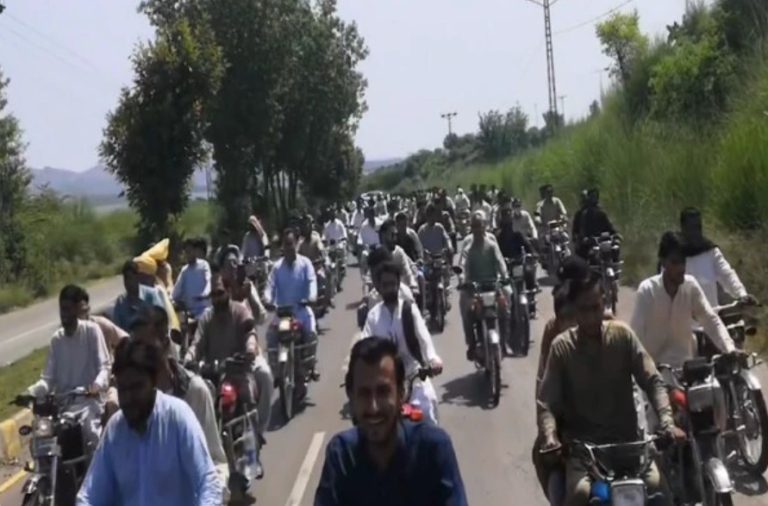
POJK has erupted in protest over the rising cost of electricity, inflation and unjust tax hikes. People in POJK took over to streets in Hajia region of the Rawalkot district. People organized demonstrations and bike rallies to protest against the government.

Frustrated protestors raised concern over the hikes in the price of electricity despite the long power cuts. The protests also led to standstill in the region as a call for complete shutdown was also made by the protestors. The call was well received by the people across POJK as most of the area remained closed.

The nationalist parties and the pro-Independence groups also urged the people to break-free from the clutches of imperial Pakistan that can’t even provide basic amenities to the people. On of the prominent cause of such massive protest is the luxuries enjoyed by the Pakistan Army, leaders and bureaucrats. All of them thrive on the cost of poor Kashimiris.

Taxes Double As Of Charges

People are enraged by the fact that Pakistan has been illegally occupying a part of Jammu and Kashmir and has exploited the region and its resources. On the other hand, it has only deprived the people of their rights and legal share of the benefits of their own resources.

Sheikh Abdul Rashid, the Chairman of Federation of Realtors said, “They should not change any tax from the people of this region. We are ready to give the taxes that are just. But we cannot allow them to impose taxes of Rs. 5,000 or Rs. 10,000, in a bill of Rs. 5,000. That’s atrocious. We were promised free electricity by the then President when the Mangala Dam was being constructed. Pakistan is already receiving massive benefits from the dam.”

Protestors have demanded immediate roll back of the taxes that have been raised. Along with that, the protestors also demanded a transparency in pricing mechanism, swift economic relief measures and immediate redressal of issues related to health and infrastructure.

Also, this is not the first time that the people of POJK have protested the rising cost of electricity. A month ago, similar protests were held in POJK where people opposed Pakistan’s policy. They protested over the rising cost of electricity and wheat flour. But unfortunately, Pakistan has failed to address the concerns of Kashmiris. Maybe because they actually believe in the reality that the inhabitants are not Pakistanis and are Indians.

Pakistan is nothing more than a land grabbing establishment that see a territory as a piece of land only and does not look after the inhabitants. Now after more than seven decades this harsh reality is emerging out.

Dr. Allah Nazar Baloch rejects dialogue with Caretaker Prime Minister of Pakistan

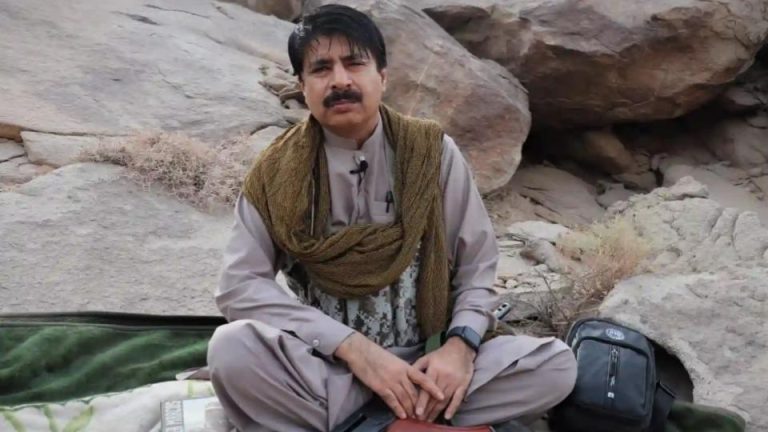
BLF chief Dr. Allah Nazr Baloch addressed the Caretaker Prime Minister of Pakistan Anwar Haq Kakar in his post on the social network site, X, and said that he is the chosen one of the Army whose hands are stained with the blood of thousands of Baloch. Both the means of the Army (dialogue and use of force) have been rejected by Dr. Baloch.

Addressing Anwar-ul-Haq Kakar, he said “no one will hold a dialogue with a person who cannot schedule his own breakfast”.

It should be noted that the Caretaker Prime Minister of Pakistan, Anwar-ul-Haq Kakar gave an interview to a Pakistani journalist, Saleem Safi. When asked the question, “Would you talk to the Baloch military organizations?” He said that the “state uses both force and negotiation options according to the time and circumstances”. He further added,”I personally believe the use of both force and negotiation.”

Quoting the same interview, Dr. Allah Nazir Baloch replied,” whoever does not schedule his morning breakfast according to the will of the Army, his chattering and crushing statement is just wishful thinking.”

Further in his statement, Dr. Allah Nazir Baloch said that Baloch have been facing the use of coercion and force for more than 7 decades by the Paki ‘establishment’. In the month of August alone, 65 Baloch students have been abducted and disappeared.

He further added,”we as a nation appeal to the United Nations to hold the criminals of the Pakistani state accountable for seven decades of oppression and brutality on the Baloch people.”

The Pakistan Army has committed numerous atrocities, including daily home raids, disappearances, staged encounters, target killings, torture, humiliation at checkpoints, and kidnappings for ransom. Following the illegal occupation of Balochistan in March 1948, Balochistan has been fighting the war of its existence.

Pakistan records increased armed attacks in August, highest since 2014

In Pakistan, there was a sharp increase in armed attacks in the month of August, with 99 incidents reported across the country, the highest number in any month since November 2014. These attacks resulted in 112 deaths and 87 injuries, most of which were Pakistan Army personnel. There was an 83% increase in attacks from July, when 54 attacks were reported.

According to data compiled by the Pakistan Institute for Conflict and Security Studies (PICSS), there were also four suicide attacks in August, three of which occurred in the tribal districts of Khyber-Pakhtunkhwa (KP) and one in mainland KP. There were also five suicide attacks in July, the maximum in a year.

Overall, there were 22 suicide attacks in Pakistan in the first eight months of 2023, resulting in 227 deaths and 497 injuries. The data shows that Balochistan and the erstwhile FATA were the most affected areas by violence in August.

Kyber-Pakhtunkhwa province (excluding the tribal districts) also saw a significant increase in militant attacks, rising from 15 in July to 29 in August, an increase of 83%. There was also a 188% and 73% increase in deaths and injuries, respectively.

The province was primarily targeted by the TTP and splinter groups, which claimed responsibility for several attacks. There was a slight increase in attacks in Sindh, increasing from three in July to five in August. Deaths also rose from one to four.

Punjab province remained relatively peaceful and there were no reports of any attacks in August. The only attack in July was a low-intensity explosion near a police station in Lahore that injured one person.

The data also shows that security forces have remained the primary target of militant violence, accounting for 50% of all deaths and 63% of all injuries. There was a 51% increase in security force deaths in August 2023 compared to July.

In August, a total of 85 attacks were carried out by the Baloch armed freedom fighters, including a major attack on a Chinese citizen convoy in a sensitive area of Gwadar on August 13 by the BLA Majeed Brigade.

In the same month, an IED attack in Balghatar targeted a vehicle of Pak Army-backed trader’s vehicle, killing 7 people. Baloch freedom fighters targeted Pakistan Army personnel in various types of bombings and armed attacks in other cities, including the capital Quetta.

Christians again under attack in Pakistan after Jaranwala incident

Weeks after the Jaranwala incident of mass vandalization of Churches on the call of radical clerics, Christians are again under attack.
In a viral video, a Christian man belonging to Sheikhpura in Lahore expressed the horrific situation saying that Jaranwala like call had been made from the local mosque. Frightened by the call, he along with his family fled their house and reached an unknown location. He stated that various other families have also fled the locality and are seeking refuge.

In the video, the man elucidates how an argument between a Christian man and a Muslim led to the atrocious calls. The allegations of blasphemy have been put on the local Christians and a large mob of radical Islamists had gathered to conclude the mischievous “purge”.

The aforesaid man urged the authorities to take strict measures to protect them and their houses. Blasphemy has been used as a brutal tool to target the religious minorities in Pakistan. Apparently, Hindus and Christians are under attack. The Islamic Republic of Pakistan has crafted the law to oppress and harass the religious minorities, as a result, the radicalized individuals exploited it and made an environment of absolute anarchy.  

Islamabad: Pak Army abducts PTM member

Pakistan has persistently undertaken a crackdown on the Pashtun Tahafuz Movement (PTM) leaders and activists. More recently, a PTM member named Qazi Tahir Masoud has been disappeared by the Pakistan Army.

Reports suggest that Tahir was abducted from his house in Manghopir Karachi at around 4:00 a.m. Being a member of PTM, he has been vocal for the human rights of Pashtuns. Tahir has also been raising his voice over the extra-judicial measures taken by the Pakistan authorities to oppress the people across Pakistan.

As of now, his whereabouts remain unknown. PTM has warned that if he is not released, their workers will organise a sit-in demonstration in front of the Mangopir Sultanabad police station. Abduction and enforced disappearances have been the tool of the Pakistan Army and its subsequent “so-called” law enforcement machinery. They use it to crush the voice of dissent.

After the Islamabad jalsa of PTM, Pakistan authorities are using every tactic possible to subvert the Pashtun masses. The large number of Pashtuns that gathered in Islamabad shook the Pakistan authorities and Army from its roots. Hence, with the sole motive of brutally crushing the Pashtun Movement, a series of illegal arrests and detention have ensued that needs to be highlighted.

Pakistan Army VS Tehreek-e-Taliban Pakistan: All-out war or ‘No Contest’?

On July 14, Pakistan Army’s media wing Inter Services Public Relations [ISPR] released a rather stern statement that read, “The Armed Forces of Pakistan have serious concerns on the safe havens and liberty of action available to TTP in Afghanistan”.

Alleging that “The involvement of Afghan nationals in acts of terrorism in Pakistan is another important concern that needs to be addressed”, ISPR went as far as conveying an undisguised threat by stating that “Such attacks are intolerable and would elicit effective response from the Security Forces of Pakistan” [Emphasis added].

Though ISPR hasn’t specifically attributed these comments to Pakistan Army chief Gen Syed Asim Munir, its tone and tenor leave no room for any doubts that these are indeed his thoughts. Given the fact that just two days earlier, the Pakistan Army had suffered its most serious setback in recent times, his exasperation that resulted in such a vitriolic outburst is understandable.

Readers would recall that on July 12, the Pakistan Army lost 12 soldiers in South Western Balochistan. While nine soldiers were killed when Tehreek-e-Taliban Pakistan [TTP] terrorists stormed an army base in Zhob district, three soldiers lost their lives when Baloch Liberation Army fighters targeted an army convoy in Sui. This was the largest single day fatalities suffered by Pakistan Army in recent time

This incident surely would have come as a major embarrassment for Gen Munir, because in the very first corps commanders’ conference that he chaired after taking over as the army chief it was pompously announced that the forum had “resolved to fight against terrorists without any distinction and eliminate this menace as per the aspirations of the people of Pakistan”. 

However, while the Pakistan Army has been conducting what it refers to as ‘intelligence based operations’ [IBOs] against terrorists and claiming that many terrorists “have been sent to hell”, yet there’s no discernable improvement in the security situation. While TTP and Baloch fighters continue targeting Pakistani security forces with impunity, Islamic State-Khorasan [IS-K] too has also joined in by carrying out a suicide bombing that killed 54 civilians in Bajaur district of Khyber Pakhtunkhwa [KP] province on Jul 30.

Gen Munir’s threat of an “effective response from the Security Forces of Pakistan” is yet to materialise. On August 22, Dawn carried a reassuring news report about “state-to-state” talks between Islamabad and Kabul and quoted Khyber Pakhtunkhwa [KP] Counter Terrorism Department [CDT] chief Additional Inspector General Shaukat Abbas confirming that “very serious negotiations are underway“.

But just hours later, at least six Pakistan Army soldiers were killed during a “skirmish” with TTP terrorists in the Asman Manza area of South Waziristan district, indicating that the much hyped ‘state to state’ talks between Islamabad and Kabul was mere theatrics! And it seems that the same is also true for Gen Munir’s threat of “effective response from the Security Forces of Pakistan”.

August has been a particularly bad month for Rawalpindi. With TTP killing one junior commissioned officer and eight soldiers nine days after the deadly Asman Manza attack, this month becomes the one in which the Pakistan Army has suffered the highest number of casualties since 2014. Unfortunately, September too hasn’t started off too well as on the very first day of this month, the Pakistan Army has lost one Major and two soldiers in terrorist attacks along the Pak-Afghan border. So, if Islamabad is sanguine that “terrorists who shed the blood of Pakistanis can find refuge on Afghan soil”, then isn’t it evident that the Taliban government in Kabul is doing precious little to address Islamabad’s concerns about TTP sanctuaries on Afghanistan soil with the seriousness and sincerity it deserves?

Gen Munir has been quoted as saying that Pakistan’s armed forces were seriously concerned about the “safe havens and liberty of action” TTP has in Afghanistan. While Kabul has claimed that Afghan Taliban’s supreme leader Hibatullah Akhundzada has announced that “If anyone goes outside of Afghanistan for the goal of ‘jihad’, it won’t be called jihad”, it’s apparent that TTP has not heeded this message. So, with diplomatic means to resolve this grave issue yielding no results, doesn’t it become incumbent on Rawalpindi to consider the military option of striking TTP bases inside Afghanistan?

With the Pakistan Army admitting that it has lost more than 100 soldiers in terrorist related incidents since the beginning of this year, isn’t it high time Rawalpindi struck at the very fountainhead of TTP terror and targeted its leadership rather than being content with sending a handful of low level fighters to “Hell”? What is holding back Rawalpindi from taking decisive action to ensure security of its own rank and file is incomprehensible!

Even though he may be at the right place, Gen Munir is still an unlucky Army chief as he is there at the wrong time. By portraying TTP as an Indian proxy being helped by US backed regimes in Kabul, his predecessors and denying its large scale presence in Khyber Pakhtunkhwa [KP] had avoided public censure for the Pakistan Army’s failure to decimate this terrorist group. However, with Rawalpindi’s protégé Taliban now in the seat of power in Kabul and TTP running riot in KP, this excuse is no longer convincing.

Many opine that the Pakistan Army’s top leadership is not mentally inclined to take the battle against TTP to its logical conclusion for a host of reasons, the main being that it may necessitate targeting TTP hideouts on Afghanistan soil. It appears that Rawalpindi has been intimidated by its former ally and Taliban’s current interior minister Sirajuddin Haqqani’s veiled threat that “If they [Pakistan Army] want to solve the [TTP] issue through force in Afghanistan, the two nations that have a lot in common, will be harmed”.

Accordingly, it’s likely that Gen Munir’s threat that if Taliban fails to rein-in TTP then these “intolerable attacks would draw an effective response,” was made with the intention of playing to the domestic gallery. While this may or may not be true, Rawalpindi’s ambivalence in taking the TTP menace by its horns does support this inference!

So as TTP attacks against the Pakistani security forces continue unabated, it seems all that Rawalpindi can do is to placate the terrorism weary of Pakistan by repeating its hollow pledge that “Security forces of Pakistan are determined to eliminate the menace of terrorism and such sacrifices of our soldiers further strengthen our resolve!”.

BLF and BLA warn China against further looting of Balochistan’s natural resources

On 2 September, the Balochistan Liberation Front (BLF) released a video for their attack on a convoy of Chinese engineers in Pakistan-occupied-Balochistan. The attack took place on the Karachi-Quetta highway near Gajjar Nadi Bridge on Monday evening.

The BLF said in a statement that the attack was carried out by its Sarmachars, and that the vehicle carrying the Chinese engineers was specifically targeted. The statement also said that the attack was in retaliation for China’s exploitation of Pakistan-occupied-Balochistan. The BLF has long been fighting for the independence of Balochistan, which has been illegally occupied by Pakistan.

The attack comes at a time when China is increasing its investment in Balochistan. China is building a number of infrastructure projects in the region, including a railway line and a port. BLF is opposed to any form of Chinese investment in Pakistan-occupied-Balochistan. The group has also targeted Chinese workers in the past.

On 3 Sept, in a video message, Basheer Zaib Baloch, the leader of the Balochistan Liberation Army (BLA), addressed the international community and particularly China. He began by stating that the Baloch people are a nation with a long history and historical significance. He also stated the fact that the Baloch have always been an independent and sovereign nation, and that Pakistan has illegally occupied Balochistan.

Balochistan is a resource-rich province, and the Pakistan Army has been exploiting these resources for its own benefit. In the video message, Baloch said that Pakistan has illegally occupied Balochistan and is exploiting the province’s resources, including its sea, Saindak, Gwadar, and Rackdong projects. Pakistan is selling off the Baloch resources to international powers, particularly China.

He called on the international community to stop doing business with Pakistan in Pakistan-occupied-Balochistan until the Pakistan Army withdraws from the province. He also said that the international community should establish relations with the Baloch people directly, rather than through the failed state. Baloch also highlighted that the Baloch individuals used as representatives of Baloch people are in fact the paid agents of the Pakistan Army.

The video message by Basheer Zaib Baloch is a strong statement of the Baloch people’s desire for independence from Pakistan. It is also a warning to the international community that the Baloch people will not tolerate the exploitation of their resources by Pakistan or any other country.

Both independent forces have unequivocally stated that foreign nations, including international investors, engaging in investments in Balochistan must acknowledge the region’s sovereignty. All actions should align with the Baloch national will as per international treaties that guarantee equality and respect for Baloch national interests.

The Pakistan Army has committed numerous atrocities, including daily home raids, disappearances, staged encounters, target killings, torture, humiliation at checkpoints, and kidnappings for ransom. Following the illegal occupation of Balochistan in March 1948, Balochistan has been fighting the war of its existence. Be it the peaceful way of protests or the armed resistance, against the inhumane authoritarian quasi state of Pakistan, Balochs are fighting an all-front war.