Home Blog Page 197

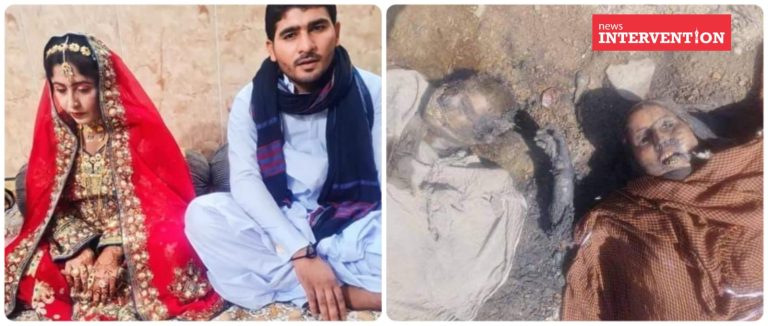
Mutilated bodies of abducted Baloch couple Hani Gul & Sameer Baloch recovered

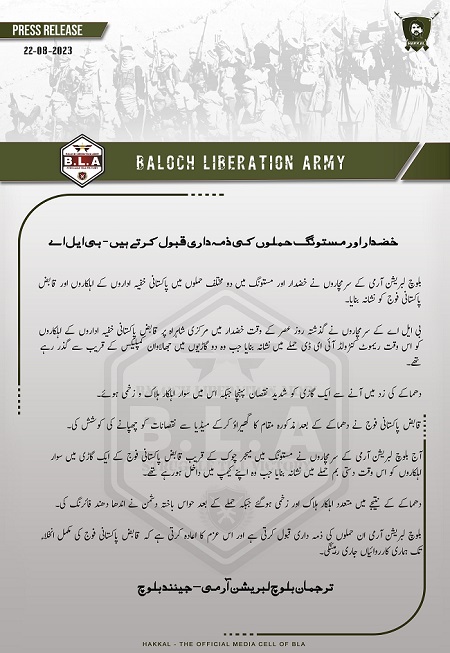
The bodies of Hani Gul and Sameer Baloch have been identified by their family members. Hani and Sameer were kidnapped from their residence in Iranshahar, Western Balochistan. The remains were located in the Sarawan region and have been transported to the Khaash morgue.

The abduction, executed by unidentified individuals dressed as civilians, has left many questions unanswered regarding the precise circumstances.

Hani Gul, renowned for her human rights advocacy in Balochistan, had previously disclosed her abduction alongside former fiancé Naseem Baloch, orchestrated by Pakistani intelligence agencies. While Hani endured alleged mistreatment and was subsequently freed, Naseem Baloch’s current location remains undisclosed.

Sameer Baloch was the sibling of Abdul Rauf Baloch, an educator from Turbat, Balochistan, who was fatally targeted and killed following accusations of blasphemy. The potential correlation between these occurrences and the couple’s abduction remains to be established, but it is worth mentioning that just a couple of days after Abdul Rauf was killed, the couple was abducted.

As the community mourns the loss of Hani Gul and Sameer Baloch, ongoing investigations aim to shed light on the intricate circumstances surrounding these tragic events.

The curious case of Pakistan’s official secrets and Army Act Amendment Bills

It sounds like a typical Hollywood potboiler. Two contentious bills that strike at the very heart of the democratic rights of citizens that are introduced in the Pakistan’s National Assembly are hastily passed and sent to the President for his approval. Nothing is heard about these bills from the President’s office and after ten days it is announced that these bills have become laws, and this is where things take an unexpected twist.

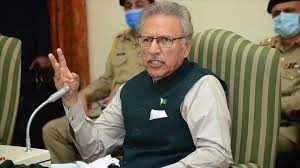
This news seems to take Pakistani President Arif Alvi by complete surprise and he quickly takes to social media and with God as his witness, makes the startling revelation that he never signed these bills as he “disagreed with these laws”. He goes on to state that “I asked my staff to return the bills unsigned within stipulated time to make them ineffective. I confirmed from them many times that whether they have been returned & was assured that they were.”

Alvi’s claim that “I have found out today that my staff undermined my will and command” raises a very pertinent question- as he holds the highest position of authority in the country, how could someone dare defy orders issued by the President of Pakistan? While no definite answers can be given, the one logical deduction which can be made is that whosoever on President Alvi’s staff took this decision was either acting on orders or had the blessings of someone who was interested in seeing these bills become laws and whose power and authority exceeds that of the President of Pakistan.

It’s no secret that the latest amendments to the Official Secrets and Army Act have specifically been made to serve a stick to beat former Prime Minister Imran Khan and his PTI supporters with and keep them out of the forthcoming electoral race. So, Rawalpindi is most certainly interested in ensuring that these two bills become laws. And it’s also no secret that the Pakistan Army chief is the one who calls the shots in Pakistan.

Readers would recall that while nominating the then Pakistan Army chief Gen Qamar Javed Bajwa as the 68th most powerful person in the world in its 2018 list, Forbes mentioned that “Although the president is his boss on paper, Pakistan’s chief of army staff is de facto the most powerful person in the nuclear armed state.” So, there can be no two views that if what President Alvi is saying is true, then Gen Syed Asim Munir is definitely the one on whose orders the bills weren’t returned by the President’s Office.

However, there’s also a flip side to this entire episode. After President Alvi went public claiming that he had not signed these bills and his orders to return the same were disregarded, int­erim Law Minister Ahmed Irfan Aslam and Infor­mation Minister Mur­taza Solangi held a joint press conference and gave their side of the story. It was clarified that any bills pending at the Presidency for more than 10 days automatically becomes a law.

Aslam further clarified that “Under Article 75 of the Constitution, the president only has two options: either to sign a bill or reject it; in case of rejection, he has to give reasons for returning the bills unsigned.” In an obvious reference to President Alvi’s claim that he had asked his staff to return the bills, the interim Law Minister clarified that “Returning the bills without any observations or assent is not provided for in the Constitution.”

Could this incident be a simple case of the president’s staff wilfully disobeying his orders as being claimed by President Alvi? Is his contention that “I confirmed from them many times whether they [the Official Secrets and Army Amendment Bills] have been returned and was assured that they were,” true; or, is the failure to return the bills within 10 days a classic case of running with the hare and hunting with the hounds on the president’s part to allow them to become laws through default?

And it’s here that the mystery deepens.

While President Alvi has complained that though he disagreed with the bills they still became laws as his staff “undermined” his “will and command,” he hasn’t spoken a word about taking those responsible for this unpardonable lapse to task. Given the seriousness of this blunder, isn’t it surprising that while the President is seeking “forgiveness from those who will be effected” by these draconian laws, he doesn’t consider it necessary to disciple his errant staff?

By saying that his orders were intentionally disregarded by his staff President Alvi has clearly admitted existence of vested interests within the President’s secretariat, and this certainly demeans the office of the President of Pakistan and merits legal action against him, even it is means impeachment.

Pakistan’s Ministry of Law and Justice has in a statement accused President Alvi of “purposely” delaying the approval of the bills, and said that “It is a matter of concern that the president has chosen to discredit his own officials. The president should take responsibility for his own actions.” However, it has not mentioned anything on the issue of initiating legal action against him for what it’s clearly suggesting is a pack of lies.

Similarly the interim Information Minister has also ruled out any action against the president saying “The sanctity and respect of the president’s office do not allow us to make any such move,” adding that “No action can be taken against him till he is in his office.”  So, at the end of the day, while President Alvi’s claim that he had not consented to the Official Secrets and Army Amendment Bills may have stirred a hornet’s nest, it has also strengthened his position as a die-hard PTI supporter.

The new caretaker Prime Minister Anwaar-ul-Haq Kakar’s proximity to the military is well known. Hence, could the caretaker government’s decision not to proceed against the president actually be a Rawalpindi ‘approved’ quid pro quo for the intentional delay by President Alvi that facilitated seamless approval of the Official Secrets and Army Amendment Bills? Lastly, could this face-saving exercise to boost Alvi’s image actually be part of a bigger plot hatched by Rawalpindi to ‘cultivate’ him for serving as a nail in Imran Khan’s political coffin?

It may sound weird, but as they say-anything is possible in Pakistan!

Lure of critical minerals should not trigger a second scramble for Africa

Lured by raw materials including ivory, rubber, palm oil, cocoa, tea, diamonds and tin, European colonial powers, between 1833 and 1940 steadily acquired control over Africa. By the eve of the first world war, they had colonized nearly 90 per cent of the continent. The feverish undertaking was described as the scramble for Africa, following the Berlin conference of 1884, where Europe’s rapidly industrialising countries sought an orderly exploitation of the continent’s resources. 

More than a century later, and with the first phase of decolonisation over during the Cold War, the African economies are once again set to play a pivotal role on account of their resources. In the coming years the world is bound to scramble for rare earth elements and other critical minerals such as copper, lithium, nickel, cobalt in a bid to switch to clean energy backed by changing geopolitical and geo-economic dynamics.

The inclusion of the two-decade old African Union (AU) into the G20 bloc, as pitched by India, will therefore be critical, in ensuring that Africa, instead of being short changed, benefits from its resources that will power the new economy. Thus, the inclusion of AU will give it a voice at a time when the world is turning towards the continent amid a shift in power play towards the Global South.

Analysts said that India, which is currently the G20 chair, must complete the process of including the African bloc by the end of the term.

Many of the group’s most prominent members, including the United States, China, Japan, Germany, and France, have endorsed full membership for the AU, which Indian Prime Minister Narendra Modi has proposed granting at the upcoming G20 summit in New Delhi, the Project Syndicate noted.

About 30 per cent of the world’s critical mineral reserves are found in Africa. To meet the expected rise in global demand, the production of minerals and metals such as lithium, graphite and cobalt will need to increase by nearly 500 per cent by 2050, a study by the United Nations Environment Programme revealed.

“Considering this the AU must play a more focused role and channelise economic agendas, investments and trade related to critical minerals,” an Africa expert told India Narrative.

According to Africa Business, how the continent responds to the insatiable demand for its critical minerals could determine the continent’s growth trajectory in the decades to come. Currently, most of the mineral mining projects in the continent are driven by the Chinese.

Several other issues need to be resolved.

To begin with AU will need a strong representative or ‘Sherpa’ to turn things around.

While the AU has traditionally succeeded in shaping African views on diplomatic matters, opinions on economic policy tend to be fragmented and are offered only sporadically, the PS said.

Analysts also pointed out that the AU would need more coordination among its member states and present uniformity.

Baker McKenzie in a note said that for Africa, the focus now is firmly on how the global demand for critical minerals can be translated into the sustainable growth of its mineral mining operations and production facilities, and how it can be ensured that this growth will benefit the African continent and its people, not just in terms of the demand for critical minerals, but in how the continent can make use of its own resources to ramp up its energy transition and provide the continent with much needed access to clean power.The AU needs to take a lead role in chalking out a strategy to ensure Africa’s role in maintaining the supply chain for these critical minerals.

All eyes on Africa 

Meanwhile, Africa has taken centre stage with South Africa hosting the 15th BRICS (Brazil-Russia-India-China-South Africa) summit in Johannesburg.

A host of African countries including Egypt, Ethiopia Alegria, Nigeria, and Zimbabwe have also expressed their interest in joining the BRICS bloc.

“Africans are not interested in the illusion of coordination. They want to see real change and real impact in tangible ways that benefit them and their societies,” South China Morning Post quoted Cameron Hudson, senior associate at the Centre for Strategic and International Studies’ Africa programme as saying.

(This article was first published in India Narrative)

JSFM slams Pakistan over burning of churches and Fatima’s death

In a shocking turn of events, the recent incident in Jaranwala has ignited widespread condemnation, with the Jeay Sindh Freedom Movement (JSFM) at the forefront, denouncing the act. The press release issued by the JSFM center has highlighted the gravity of the situation and its implications on society.

The chairman of Jeay Sindh Freedom Movement, Sahil Abro, along with key members including Vice President Zubair Sindhi, Amr Azadi, Sudhu Sindhi, Hafiz Deshi, and Parh Sindhu, expressed their profound disappointment over the incident. They strongly condemned the event, emphasizing that such atrocities tarnish humanity’s collective conscience.

Punjab Pattern In Working

The press release emphasizes the recurring pattern of such incidents in Punjab. The JSFM leaders assert that under the guise of religion, certain individuals resort to heinous acts, including burning people alive and targeting places of worship. The incident in Jaranwala, where a Christian place of worship was set ablaze, is seen as another link in this chain of events.

Furthermore, the JSFM leadership raised concerns about the involvement of state institutions in supporting those who employ religious extremism as a weapon. The leaders questioned the lack of legal consequences for those who perpetrate acts like burning graves in the name of religion. They also highlighted the immense suffering inflicted upon the Christian community, asserting that such actions are not only inhumane but also demonstrate the impact of state-backed extremism on families.

Similarly, on the tragic incident in Ranipur, the JSFM leadership expressed deep sorrow over the loss of innocent child Fatima. They strongly condemned the event and called for a thorough and transparent inquiry into the incident. The tragic event in Ranipur, where 10-year-old innocent Fatima lost her life after being tortured and raped by the Pir in Khairpur, got widespread attention when a video went viral on social media. The viral video in which Fatima was yearning before dying has prompted widespread grief and underscores the urgent need for a comprehensive investigation.

Another Christian man killed by a mob of Islamist fundamentalists in Punjab, Pakistan

Days after the radical lslamists ransacked 21 Churches and various other houses of Christian minorities, another Christian man has been killed by a mob of Islamic fundamentalists in Sheikhpura Punjab, Pakistan.

A viral video being circulated on social media, shows a frenzied mob targeting a man named Malik Ijaz, while the gunshots could be heard in the background. The mob barged into his house and vandalized it. They looted and threw the belongings on the road.  Later, Ijaz was shot dead.

In addition, a church was also desecrated by the radical Islamists belonging to Tehreek-e-Labbaik Pakistan (TLP). They also inscribed phrases related to Allah and Prophet, on the walls of the Church. The erasure of which could potentially incite another blasphemy case.

The Pakistan government has so far failed to stop these acts. And that is probably because of its overindulgence with the groups that are involved in such heinous acts. The conditions of minorities is descending across Pakistan and the law enforcement have knelt down in front of the Paki radical Islamists.

Supreme Court Bar Association of Pakistan condemns Imaan Mazari’s arrest by Paki ‘establishment’

The Supreme Court Bar Association of Pakistan (SCBAP) has voiced strong condemnation over the recent arrest of Imaan Mazari, a prominent human rights activist and Advocate. In a statement issued today, the SCBAP reiterated its commitment to upholding the rule of law, the supremacy of the Constitution, and the independence of institutions.

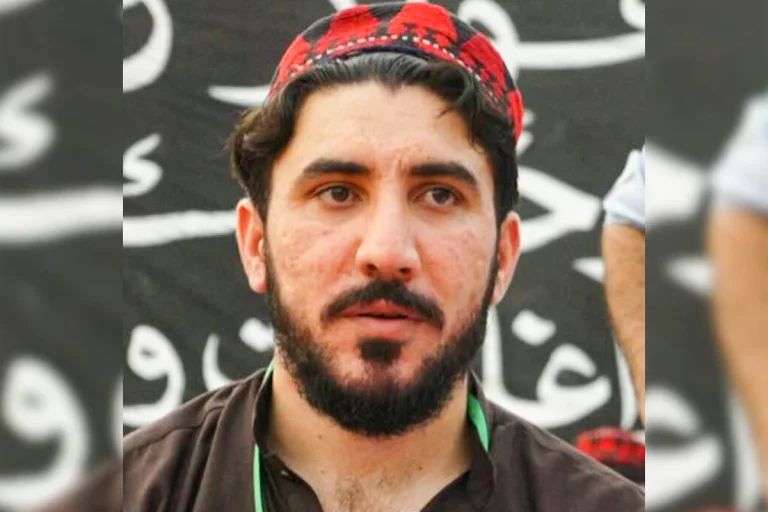
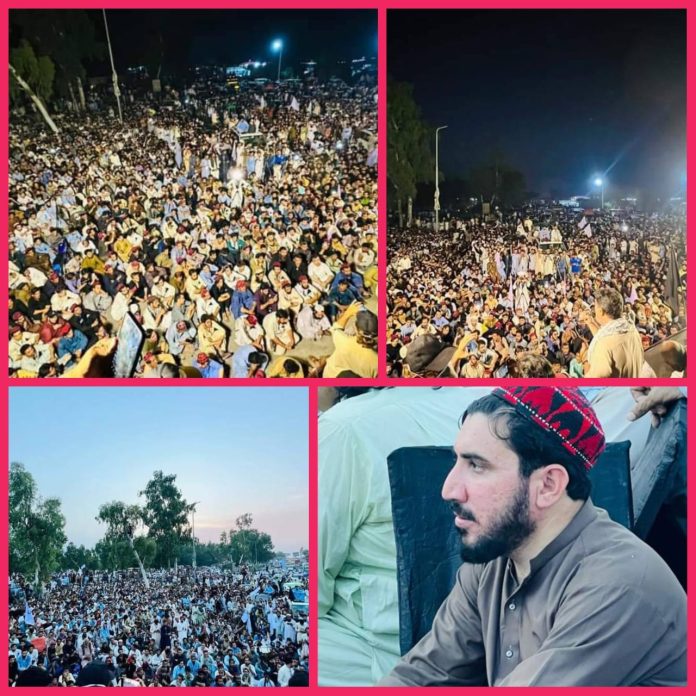
It must be noted here that, Imaan Mazari was arrested on the morning of August 20, after she addressed a PTM rally in Islamabad besides Manzoor Pashteen and Ali Wazir. Along with her, former lawmaker Ali Wazir has also been sent to three-days physical remand.

Following which, SCBAP issued a press release stating that the order passed by the Anti-Terrorism Court that granted three-day physical remand of Mazari is concerning. The Association pointed out that the order seemed disproportionate to the circumstances, raising questions about the legitimacy of the charges under which she was arrested.

Furthermore, the Supreme Court Bar Association of Pakistan underscored the importance of conducting legal proceedings transparently and justly, adhering to the principles of justice and human rights. The statement by the Bar Council highlighted the necessity of preserving the fundamental rights of all individuals, including the right to a fair trial, as enshrined in various articles of the Constitution. The Bar Council stressed the need for the legal system to operate within the framework of the law, and it demanded the immediate release of Imaan Mazari.

Deadly TTP attack on Pakistan Army,18 casualties

Tehreek-e-Taliban Pakistan (TTP) has launched an attack that resulted in the loss of 18 Pakistani Army personnel lives. The attack took place in South Waziristan, where TTP ambushed a Pak military convoy. TTP spokesperson Muhammad Khurasani stated that the ambush occurred at approximately 9:30 a.m. (Pakistan time).

According to Khurasani, TTP Mujahideen “successfully ambushed two army vehicles near Spin Mosque in the Shulam Khesoor area of Tiaraza district in South Waziristan Province, resulting in the deaths of 18 army personnel.” He added that four soldiers managed to escape the attack.

Khurasani assured that all TTP members were safe during the operation. He has also mentioned that the Army initiated shelling on the area via helicopters to retrieve the fallen soldiers’ bodies. However, Pakistan Army reports indicate that six Pakistani soldiers and four terrorists were killed in the Khyber Pakhtunkhwa province.

The ambush transpired in the Asman Manza area of South Waziristan, a tribal district bordering Afghanistan. Inter-Services Public Relations (ISPR), the military’s media wing has revealed that four terrorists were killed in response, while two sustained injuries.

Pakistan Army added that a “sanitisation operation” is currently underway to eliminate any remaining terrorists in the region.

Established in 2007 as an amalgamation of various militant factions, TTP the banned terrorist organisation has caused a series of terror activities in Pakistan. Pakistan has experienced increase in terrorist incidents attributed to TTP.

In the past month, TTP militants attacked a police checkpoint in Khyber Pakhtunkhwa province, resulting in loss of lives of two policemen. Earlier on January 30, a Pakistan – Taliban suicide bomber blew up himself in a mosque during afternoon prayers in Peshawar, killing more than 100 and injuring around 200 others. In February, TTP militants stormed the office of Karachi’s Police chief, triggering gunfire that resulted in loss of three militants and four others, as well as two police constables.

TTP that has ties to Al-Qaeda, has been linked to numerous deadly assaults across Pakistan, including an attack on an army headquarters in 2009, military base assaults, and the 2008 bombing of Islamabad’s Marriott Hotel. The heinous 2014 Army Public School attack in Peshawar, orchestrated by TTP, claimed the lives of over 130 students.

Past events suggest that the Army tried to maintain a relationship with terrorists, but it was limited to “kinetic operations.” However, historical instances suggest otherwise. For instance, the 2004 ‘Shakai agreement’ with Nek Mohammad Wazir granted amnesty to terrorists and allowed them to keep weapons. Now, upsurgence of attacks against Pakistan Army showcases the outcome of breeding terrorists.

Did not sign official secrets, Pakistan Army bills: Pakistan President Alvi

Failure of Pakistan’s democratic processes has once again come to the fore as President Arif Alvi’s recent statement sheds light on the intricate power dynamics between the civilian leadership and the military establishment. The president’s revelation that he did not sign the Official Secrets (Amendment) Bill and the Pakistan Army (Amendment) Bill, which subsequently came into force, raises concerns about the extent of civilian authority in the country.

Pakistan President Arif Alvi took to the social media platform X, formerly known as Twitter, to express his disagreement with the two Bills and to assert that he did not sign them. His message reads, “As God is my witness, I did not sign Official Secrets Amendment Bill 2023 & Pakistan Army Amendment Bill 2023 as I disagreed with these laws.” Alvi went on to explain that he had instructed his staff to return the bills unsigned within the stipulated time to render them ineffective. He further revealed that he had confirmed multiple times with his staff whether the bills had been returned, and he was assured that they had.

However, it was subsequently discovered that the President’s instructions were not followed, and his staff had deliberately not returned the bill. The consequences of this unconstitutional act has now led to the bills taking effect. Under Pakistan’s constitution, if a bill is not returned within 10 days, it is considered passed, leaving room for concern regarding the adequacy of checks and balances within the legislative process.

What are Official Secrets (Amendment) And Pakistan Army (Amendment) Bills?

Under the Official Secret (Amendment) Bill 2023, the definitions of military instalments has been widened and the digital and modern means of communications have been brought under the ambit of law. This would eventually bring bloggers and bloggers under the ambit of law. The definition of “documents” has also been widened to include written, unwritten, electronic, digital and any other instrument related to military procurements and capabilities. Similarly, the definition of “enemy” has also been introduced, according to which- “Any person who is directly or indirectly, intentionally or unintentionally working for or engaged with a foreign power, foreign agent, non-state actor, organisation, entity, association or group guilty of a particular act… prejudicial to the safety and interest of Pakistan.”

Under the Pakistan Army (Amendment) Act 2023, more power has been accorded to the Army Chief while there are restrictions put on the ex-servicemen. The bill introduces Section 26-B, which forbids any person subject to Army act from engaging in any political activity for two years. Similarly, those who have been posted on the sensitive posts and locations are barred to take part in any political activity for five years from the date of his retirement, resignation, discharge or removal. Defying which could lead a person to a rigorous imprisonment of up to two years.

A clause introduced in Section 176-C gives power to the Amy chief to confer any oh his power to any officer subordinate to him. Under Section 176-E, it is provisioned that the laws under the act “shall have effect notwithstanding anything inconsistent contained in any other law, rules or regulations for the time being in force”, adding that any such inconsistent law shall, “to the extent of any inconsistency, cease to have effect”.

Pakistan, A Facade of Democracy

This recent episode is indicative of a broader issue in Pakistan’s political landscape, where the military establishment is the de facto ruler having full control and authority, while the civilian government is just a puppet in the hands of military. The president’s claim of being unable to exercise his prerogatives, despite holding the highest office in the country, underscores the longstanding military’s influence over the civilian leadership.

The Bills in question, which were first approved by the National Assembly and later passed by the Senate, have raised eyebrows for their controversial clauses. After criticism, some contentious provisions were removed, and the Bills were ultimately approved by the Senate before being sent to the president for his signature.

The subsequent turn of events, including the bills coming into force despite the president’s disagreement, points to deeper concerns about the degree of autonomy enjoyed by the civilian leadership in matters of policy and governance. The incident also carries implications for the transparency and accountability of Pakistan’s democratic institutions.

As this latest incident unfolds, critics argue that Pakistan’s democracy remains constrained by the military’s influence, casting doubts on the true extent of civilian governance and decision-making within the country. The situation has been further complicated by the arrest of former Foreign Minister Mahmood Qureshi, which has ignited discussions about the broader political landscape and the role of various stakeholders in shaping the nation’s trajectory.

Belgian boy’s forced foot-kissing by Islamist migrants triggers backlash

A disturbing incident of bullying and physical assault involving a group of youngsters has sent shockwaves through the community of Zelzate, a Flemish region in Belgium. The incident, which was captured on video, has ignited conversations about intolerance and safety within the community. In the video, a young Belgian boy is seen being humiliated and physically assaulted by a group of individuals. The group, suspected to be of migrant origin, reportedly demanded that the boy to kiss their feet. Following his compliance, the group subjected him to physical assault, leaving him visibly distressed.

As of now, the identities of the individuals involved in the incident have not been revealed by the police. The video, which was circulated on social media, caught the attention of various stakeholders, including the president of Vlaams Belang, a Flemish far-right populist party. He labeled the video “disgusting” and suggested that the gang members might have migrant backgrounds.

Increasing Similar Incidents

In the aftermath of the incident, another video surfaced showing a girl being subjected to physical aggression in close proximity to the earlier incident. The girl’s relative expressed that now she fears leaving her house after the traumatizing incident.

However, local law enforcement is actively investigating the matter, attempting to ascertain whether both incidents were perpetrated by the same group of individuals. Accordingly, Police have identified the perpetrators as residents of Zelzate and are committed to swiftly apprehending them.

To aid their investigation, the acting mayor of Zelzate, Luc Van Waesberghe, issued a temporary order allowing the police to check the identification of children aged 10 to 18. This measure is intended to expedite the process of identifying those involved and ensuring the safety of the community. The temporary order grants the police the legal authority to conduct identification checks without explicit reasons until August 22.

Furthermore, Mayor Luc Van Waesberghe, representing the social democratic political party Vooruit, voiced condemnation for the incidents that have come to light through social media. “We strongly condemn every incident that has been shown on social media,” the mayor stated, reflecting the community’s shared concern over the incidents.

New caretaker Cabinet in Pakistan-occupied Balochistan

Balochistan has inaugurated its 5-member caretaker cabinet through a formal oath-taking ceremony.

Conducted at the Governor House Balochistan, the oath was administered by the Governor of Balochistan to the members of the Caretaker Cabinet, namely Amjad Rasheed, Captain Zubair Jamali, John Achakzai, Dr. Qadir Bakhsh Buzdar, and Prince Shahzad Ahmed Ali.

It’s important to highlight that the initial announcement featured a 6-member caretaker cabinet, which included Jamal Raisani’s name. However, he was not part of the official swearing-in event.