Home Blog Page 198

Baloch block CPEC highway to protest against increasing firing & shelling by Paki forces

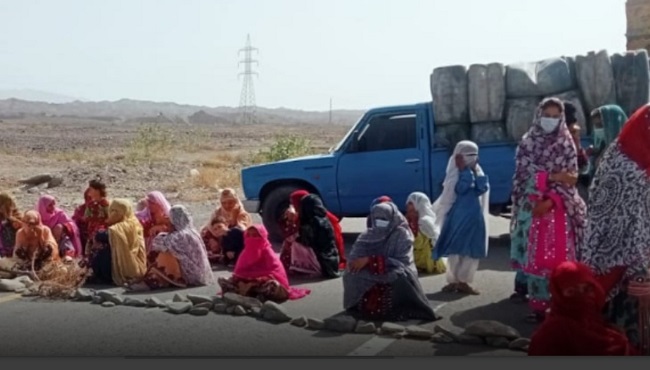
Residents of Balochistan’s Kech district have undertaken a protest by blocking the China-Pakistan Economic Corridor (CPEC) highway at the Tajaban area.

As per reports, the demonstrators, primarily comprised of women and children, are expressing their grievances against reported incidents of firing and shelling by Paki officials stationed at the Tjaban camp.

The protest aims to draw attention to the night-time firing, which has reportedly resulted in bullet and shell damage to homes in the nearby Srisingabad village. The protestors are demanding the relocation of the camp and an immediate cessation of firing towards civilian residences.

Paki ‘establishment’ directs court to extend Ali Wazir & Imaan Mazari’s imprisonment

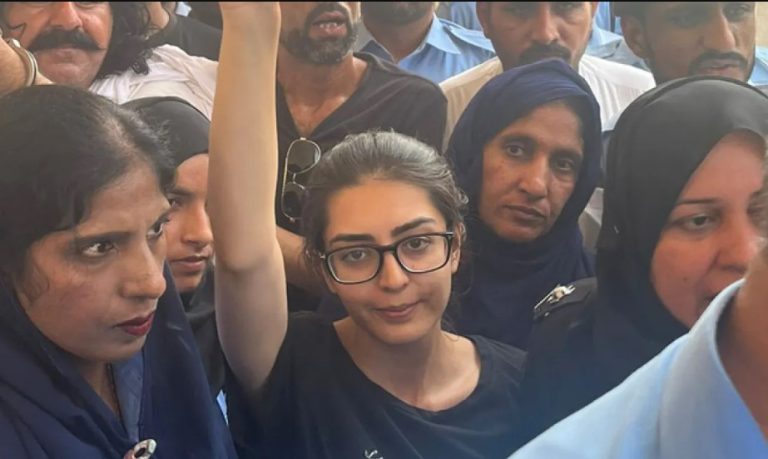
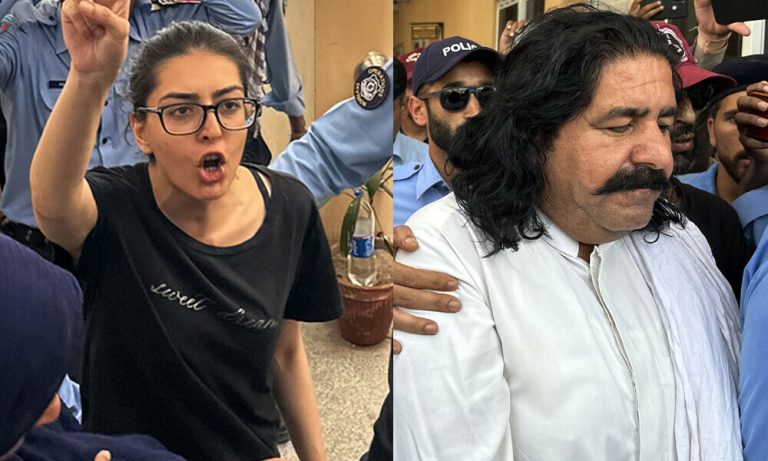
ISLAMABAD : A trial court has ordered the remand of Imaan Zainab Mazari-Hazir and Ali Wazir into three-day custody, directing the police to present them before the ATC on August 24. The police are seeking to conduct a photogrammetric and voice matching test for the human rights lawyer Imaan Zainab Mazari Hazir. Pashtun activists Ali Wazir and Imaan Zainab Mazari find themselves captive under the custody of the Pakistan Army; a result of their participation in the protest in Islamabad.

On 18 August, an immense rally took shape, drawing thousands of Pashtuns and Balochs to the heart of Islamabad, challenging the very foundations of the Pakistan “establishment”. The rally, a resounding statement against the Pakistan “establishment” had  rebuked the Pakistan Army for committing murders, extrajudicial abductions and rapes of Pashtuns across Pashtunistan. The rally was spearheaded by prominent figures of the Pashtun Tahafuz Movement – the founder Manzoor Ahmad Pashteen, co-founder Ali Wazir, a former member of the National Assembly of Pakistan, and the fervent human rights activist and lawyer  Imaan Zainab Mazari-Hazir , daughter of Shireen Mazari former minister in Imran Khan’s government.

In a poignant post on Twitter, Shireen Mazari lamented , “Taking away our security cameras and her laptop and cell. We asked who they had come for and they just dragged Imaan out. They marched all over the house. My daughter was in her night clothes and said let me change but they just dragged her away. Of course no warrants or any legal procedure. State fascism. Remember we are only 2 women living in the house. This is an abduction”.

The Islamabad capital police have stated that Ali Wazir and Imaan Zainab Mazari-Hazir were sought for investigation, charged with offenses including interference in state affairs, organizing a sit-in, and resisting authority.

But the rally was not just a display of unity; it was a seismic tremor that shook the corridors of power. The trio, Ali Wazir,  Imaan Zainab Mazari-Hazir  and Manzoor Pashteen dared the unthinkable – challenging the seemingly untouchable Pakistan Army. Imaan Mazari  demanded  court martial proceedings for all the generals of the Pakistan Army if they have committed crimes against the people. In that charged atmosphere, Imaan Mazari’s resounding words echoed, “Yeh jo dehshat gardi hai . . .Iske piche wardi hai ” (This slogan pertains directly to Pakistan Army being the biggest terrorist organization). She further said that this powerful slogan should be shouted such that it echoes the GHQ, the headquarter of the Pakistan Army. She also reaffirmed their resolve not to back down in the face of a war driven by economic interests, shedding light on the presence of terrorists concealed in air-conditioned rooms.

Simultaneously, Ali Wazir, fresh out of his term as a parliament member, had merely voiced his criticism of Pakistan’s  policies towards the Pashtuns and its pro-terrorist stance within the region. This marks a significant juncture, as the PTM confronts the Pakistan Army head-on, demanding Azadi (freedom)  of the Pashtuns from the Punjabi Pakistan regime for the very first time.

According to a First Information Report (FIR) circulating on social media, Ali Wazir and Imaan  Mazari are among numerous individuals charged under different sections of the Pakistan Penal Code (PPC) for participating in a Pashtun Tahafuz Movement (PTM) rally that aimed to “interfere in state affairs” on a Friday.

Even though things in Pakistan are chaotic, there haven’t been any sanctions or restrictions on global platforms for the human rights violations and suppression of minorities’ voices as the global media can’t talk about the atrocities the Pakistan Army does in Khyber-Pakhtunkhwa and Balochistan.

How BRICS hopes to set the agenda for change driven by the Global South

0

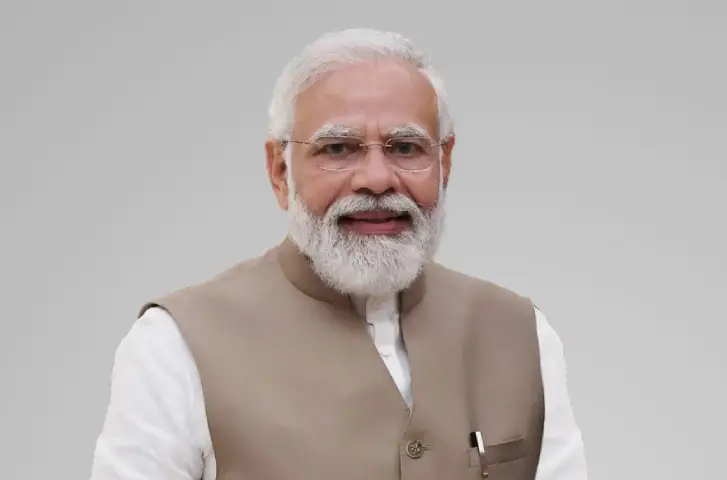
Prime Minister Narendra Modi has departed for South Africa to participate in the BRICS summit, with a clear-eyed goal of reforming international institutions in a manner that would reflect the rising aspirations of the Global South.

In his departure statement PM Modi made it plain that he saw the emerging economy grouping of Brazil-Russia-India-China-South Africa (BRICS) as a platform for “discussing and deliberating on issues of concern for the entire Global South.”

These included the development challenges confronting the Global South as well as reform of the multilateral system, implying expansion of the UN Security Council that will also represent the Global South. Within the BRICS, India, Brazil, and South Africa have been demanding a permanent seat at the UN Security Council. The BRICS countries are also part of the G-20, which will meet in New Delhi early next month. PM Modi has already declared that the G-20 should focus on the Global South during the New Delhi summit.

During his stay the Prime Minister will hold bilateral meetings with some of the Leaders present in Johannesburg. There has been considerable speculation that PM Modi will meet Chinese President Xi Jinping, signalling a possible thaw in India-China ties which have been hit on account of military tensions along the Line of Actual Control (LAC) in eastern Ladakh. Military commanders from India and China have been holding marathon talks over military disengagement along some of the friction points along the contested border ahead of the BRICS summit.

PM Modi said that the BRICS summit will review the grouping’s institutional development. So far, the BRICS have setup the Shanghai based New Development Bank (NDB)—a multilateral lender for the emerging economies.

In tune with the global movement to empower women, a business delegation is heading to Johannesburg to participate in the BRICS Women Business Alliance and the BRICS Business Forum. The delegation will also participate in the meetings of the BRICS Business Council.

With focus on Africa during the summit, the Prime Minister will also participate in BRICS–Africa Outreach and BRICS Plus Dialogue event. PM Modi has already called for the permanent participation of the African Union (AU), a 55-nation grouping from Africa, in the G-20.

Ahead of the summit, some of the world’s top oil producing countries– Saudi Arabia, Iran, UAE have sought membership of the BRI. If their application as accepted, an expanded BRICS will dominate the world energy order, with Russia, a top oil producer already a part of the grouping.

(This article was first published in India Narrative)

Pak backed terrorist killed in an encounter in Pulwama,J&K

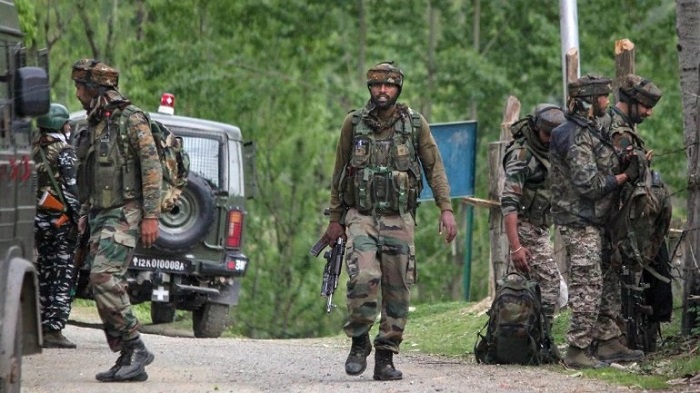
In a significant development, the Indian security forces have successfully neutralized a terrorist in an encounter that took place in the Larrow-Parigam area of Pulwama district, Jammu and Kashmir. The operation was initiated on Sunday night and resulted in the elimination of the terrorist. The encounter witnessed the collaborative efforts of both security forces and the police.

The Kashmir Zone Police shared a statement on ‘X’ (formerly Twitter), confirming the operation and stating, “Encounter has started in Larrow-Parigam area of Pulwama. Police & Security Forces are on the job. Further details shall follow.”

Earlier this month, security forces were involved in a similar operation in the Bariyama area of Rajouri district, where they successfully neutralized another terrorist. The ongoing efforts of the security forces underscore their commitment to maintaining peace and security in the region.

As the security forces engaged in the encounter in the Larrow-Parigam area of Pulwama district, Jammu and Kashmir, the local police issued a safety advisory for residents in the vicinity. According to a report by PTI, residents were advised to maintain a safe distance of at least 2 kilometers from the encounter site to ensure their safety.

Arms And Ammunitions Confiscated

The Additional Director General of Police revealed that the eliminated terrorist is suspected to be of Pakistani origin. During the operation, security forces managed to recover a bag in possession of the suspect, which contained an assortment of arms and ammunition. The confiscated items included one AK47 rifle, two pistols, magazines, ammunition, cash, and other materials.

The successful encounter in Pulwama comes after a previous operation carried out in the Gundha-Khawas village of the Budhal area. During a cordon-and-search operation launched by the police and the army, an unidentified terrorist was killed in an exchange of fire. The body of the slain terrorist was subsequently retrieved from the scene.

These recent operations underscore the unwavering dedication of security forces in their mission to counter the threat of terrorism and maintain the safety and security of the region.

Nervous Pakistan Army arrests Pashtun leaders Ali Wazir & Imaan Mazari

Pakistani “establishment” has arrested Pashtun leaders Ali Wazir and Imaan Mazari along with dozens of other Pashtun activists in their desperate effort to suppress assertive Pashtuns from exposing the gruesome atrocities of Pakistan Army. Policemen and rangers raided the home of Shireen Mazari, mother of Imaan Mazari and former minister in Imran Khan’s government, and forcibly dragged away Imaan Mazari. Senior Pashtun leader Ali Wazir has also been abducted on direct orders from GHQ Rawalpindi.

The Pashtun Tahafuz Movement (PTM) rally at Islamabad on August 18 had been hugely successful where several Pashtun leaders including Manzoor Pashteen, Ali Wazir, Imaan Mazari had rebuked the Pakistan Army for committing murders, extrajudicial abductions and rapes of Pashtuns across Pashtunistan. Manzoor Pashteen demanded Azadi (freedom) for Pashtuns from the Panjabi Pakistani regime. Ali Wazir and Imaan Mazari said in clear terms that the biggest terrorist organisation is Pakistan Army.

Balochistan’s ongoing struggle for liberation from Pakistan: BNM Chief, Netherlands

A commemorative event was held by BNM Netherlands on Balochistan’s Independence Day (August 11), shedding light on the region’s historical struggle for self-determination. Hamal Haider Baloch, the BNM Foreign Secretary, addressed participants, emphasizing the significance of the day and the ongoing challenges faced by Balochistan.

Speaking to the participants of the program, BNM Foreign Secretary Hamal Haider Baloch said that August 11 is an important day in the history of Balochistan. On the same day, Balochistan was liberated from British occupation, but unfortunately, after a few months, it was taken over by Pakistan by force, which is of no importance as since the beginning, the Baloch nation has been continuously fighting against the forced occupation of Pakistan.

Abdul Wahid Baloch, the President of BNM Netherlands, and Vice President Didug Baloch also expressed their views during the event. They stressed the importance of uniting and organizing the Baloch national movement, while acknowledging that differing opinions and criticisms are part of the political landscape. They emphasized the need to learn from past mistakes and not rationalize them, as delaying understanding only leads to further difficulties.

The speakers highlighted the long history of resistance against powerful forces that seek to occupy sovereign states under various pretexts. They recognized the sacrifices made by countless individuals who have dedicated their lives to the cause. Despite facing various challenges, the Baloch nation has steadfastly remained on the path of resistance, demonstrating unwavering commitment to their identity and aspirations.

Pashtun Tahafuz Movement (PTM) protest continues in Islamabad defying arrests and closures

The Pashtun Tahafuz Movement (PTM) marched towards Islamabad, announcing a protest in front of the Supreme Court in Islamabad against sabotage in Khyber Pakhtunkhwa. In this regard, PTM workers from all over Pakistan reached Islamabad.

PTM caravans were stopped from entering Islamabad by the government. Many workers who resisted were arrested by the police. The Khyber district convoy was stopped at Takhta Beg check post, and 68 workers along with their leaders were arrested.

In this regard, there are reports that dozens of convoys have been stopped and more than a thousand workers have been arrested. The participants of the Pashtun Tahafuz Movement (PTM) rally against sabotage in Khyber Pakhtunkhwa gathered at Tarnool after they were denied permission to protest in front of the Supreme Court in Islamabad.

In view of the protest by the Pashtun Tahafuz Moment in front of the Supreme Court of Pakistan today, the administration imposed Section 144 in Islamabad and arrested activists across Pakistan at their homes and on their way to Islamabad. There are also reports of stopping and arresting workers coming from Balochistan, Sindh, and Khyber Pakhtunkhwa.

In the crackdown by the Swat administration against Pashtun Tahafuz Movement (PTM) officials and workers, PTM Provincial Coordinator Idris Bacha, District Coordinator Mir Inam Khan Advocate, and many other leaders and workers were arrested. Cases have also been registered under the 3MPO against Ataullah John O’Doctor and many activists in civil society.

Despite the imposition of Section 144 in Islamabad, a significant number of PTM workers have managed to gather in the capital. On this occasion, Manzoor Pashteen, their leader, addressed his supporters in Islamabad, stating, “Bengalis had stripped you, but we are not Bengalis; we are Pashtuns and Baloch. We will remove your skin.”

Manzoor Pashteen praised the unwavering determination of rally participants who braved continuous crackdowns, road closures, and multiple arrests over a span of two days. Despite these challenges, a substantial number of people joined the rally, demonstrating their commitment to a shared cause.

In his message, Manzoor conveyed his salutations to the spirit and courage exhibited by the participants. He underlined the collective resolve by stating, “Friends, take heart. The struggle will continue.” His words echoed the sentiments of those who gathered, united by a shared goal despite the adversity they faced.

Rawalpindi [selectively] cracks the whip on rioters behind the burning of churches in Pakistan

In his farewell speech last year, former Pakistan Army chief Gen Qamar Javed Bajwa expressed concern regarding burgeoning domestic criticism of the Pakistan Army, and opined that “… the reason for this is the constant meddling by the Army in politics for the last 70 years, which is unconstitutional.” He followed this extremely bold admission by stating that “… since February last year, the military has decided they will not interfere in any political matter.”

While incurable optimists and the unversed took Gen Bajwa’s assurances seriously, the majority who belong to the ‘leopard can’t change its spots’ school of thought, didn’t and their reservations were well founded. By talking about “development of national consensus by all stakeholders to sail through the confronted challenges of economy and terrorism,” within just a few days of his taking over as the Pakistan Army chief, Gen Bajwa’s successor Gen Syed Asim Munir has made it clear that Pakistan continues to remain an Army with a country!

Doubts to the contrary that may have still persisted were quickly dispelled after the May 9 protests that saw widespread damage to and destruction of military assets by supporters of former Prime Minister Imran Khan after he was whisked away by Rangers from Islamabad High Court premises while appearing for another case.

On May 15, a special corps commanders’ conference was held at Rawalpindi after which Pakistan Army’s media wing Inter Services Public Relations [ISPR] in its press release stated that “The forum expressed firm resolve that those involved in these heinous crimes against the military installations and personal/equipment will be brought to justice through trials under relevant laws of Pakistan, including Pakistan Army Act and Official Secret Act.”

Given the severity of the anti-army protests, Rawalpindi’s exasperation is understandable. However, by unilaterally decreeing that the May 9 protesters would be tried under Pakistan Army Act, Gen Munir has explicitly conveyed the message that he is very much in the country’s driving seat.  

The very next day, the National Security Committee [NSC] got into a huddle and decided exactly what the corps commanders had already resolved a day earlier. The Federal Cabinet approved the NSC’s decision the following day, and this unusual chain of events leaves no room for doubt that contrary to Gen Bajwa’s assurance about Pakistan Army being “strictly adamant” about keeping away from politics, Rawalpindi continues to rule Pakistan as hitherto fore!

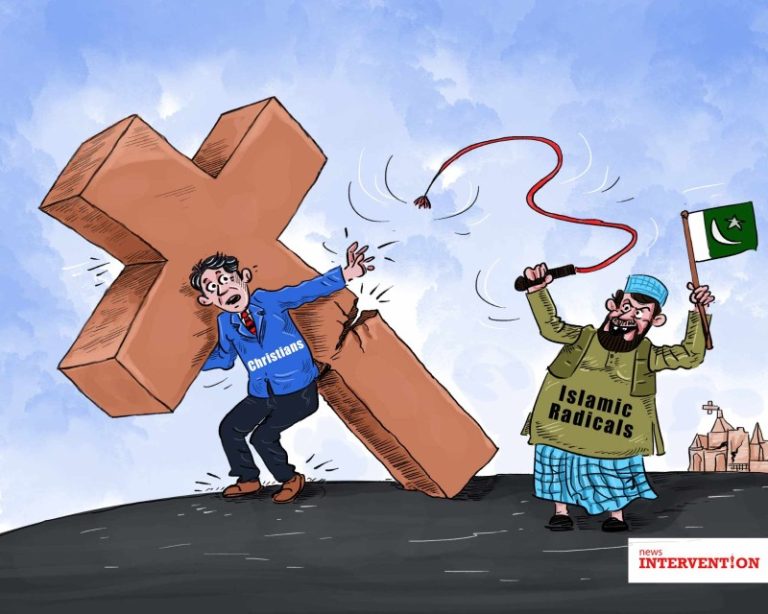
After the burning down of several churches and the dwellings of Christians as well as desecration of their graveyard by mobs in the Jaranwala area of Pakistan’s Faisalabad district on May 16, Gen Munir said that the “Jaranwala incident is extremely tragic and totally intolerable.” His condemnation of targeted violence against the minority Christian community is certainly a welcome step. However, by adding that “… those culpable of committing such crimes will be brought before the court of justice, [Emphasis added], Gen Munir transgressed into the domain of the legislature, law enforcing agencies and judiciary, making it clear to everyone that he’s the one who runs the entire show.  

Besides relevant sections of the Pakistan Penal Code, the August 16 arsonists have also been charged under various sections pertaining to “punishment for acts of terrorism” of the country’s Anti -Terrorism Act, 1997. While this incident definitely calls for stringent action against the guilty, there’s nothing in the media reports to suggest that this horrific incident has any terrorism angle.

However, caretaker Prime Minister Anwaarul Haq has been quoted as saying that this incident was a “planned conspiracy” to “light a fire in the country and sabotage its peace.” Gen Munir has also expressed concerns and highlighted “efforts of inimical forces towards creating and fomenting fissures, intolerance, mistrust and violent behaviour among the people to spread anarchy and unrest in the country.” If what Haq and Gen Munir are claiming is indeed true, then invoking the Anti-Terrorist Act is justified, but there are no indications that the August 16 arsonists will be tried by military courts.

According to Islamabad, Wednesday’s communally charged incident of arson has a strikingly similarity with the violent anti-military protest of May 9, as both are allegedly ‘planned conspiracies’ orchestrated by “inimical forces” to drive a ‘wedge’ in Pakistani society- between the Army and people in the former case, and amongst the Muslim and Christian communities in the latter incident. Most importantly, Islamabad has classified both incidents as acts of terrorism.

With so many common denominators, there can be no doubt that just like the accused in the May 9 riots, those blamed for the August 16 Jaranwala incident should also be tried under Pakistan Army Act. If this happens, then it’s well and good, but if it doesn’t, then Gen Munir has  some really serious explaining to do, because while the targets of mobs in both cases may have been different, the intent and object was the same!

Despite working overtime to give the Army’s ruling of invoking the Pakistan Army Act and trying those accused in the May 9 riots by Army courts, ISPR has failed to give this contentious decision even a modicum of acceptability. Au contraire, this atypical move is largely being seen as an expedient tool being used by Rawalpindi [which former Prime Minister Imran Khan referred to as the ‘establishment’]to ‘legally’ intimidate PTI supporters.

While numerous arrests have been made, Dawn has reported that in one of the criminal complaints lodged with the police, eight people who led a mob have been identified and amongst these, one is affiliated with the Jamaat Ahl-e-Sunnat and another with the Tehreek-i-Labbaik Pakistan [TLP].

TLP is the same far-right Islamic extremist political party that had paralysed Islamabad for three weeks by blocking roads in 2017 and called off the sit-in only after the Pakistan Army brokered an agreement with the government. Readers would recall that after the protest ended, a two star Pakistan Army General was caught on tape not only handing out envelopes containing cash to protesters but also telling them, “Aren’t we with you too?” [Emphasis added]. In an obvious reference to arrested protesters, the General also gave the unusual assurance that “God willing, we’ll get all of them released.”

Hence, not trying those involved in the August 16 anti-Christian violence under the Pakistan Army Act will only further buttress two palpably pervasive apprehensions- one, that Rawalpindi has a ‘soft-spot’ for TLP, and two, that there’s definitely a lot of merit in Khan’s accusation that he and his supporters are being victimised by Rawalpindi only because he stood up for Pakistan and its people instead of toeing the Pakistan Army’s line!

Baloch Solidarity Committee raises alarm over forced disappearances and crimes across Balochistan

The Baloch Solidarity Committee Islamabad has issued a statement expressing deep concern over the surging incidents of enforced disappearances and state-sponsored crimes across Balochistan. The committee emphasized that the state crime market is flourishing throughout the province, with Baloch students, political activists, and ordinary citizens being forcibly disappeared on a daily basis. Even children, elderly individuals, and women are not exempt from the clutches of this state-sponsored evil.

According to the statement, the rise in cases of abduction of Baloch people by state forces is indicative of a deliberate policy aimed at Baloch genocide. Balochistan is presently ensnared in a web of state terrorism, where daily military operations, active death squads, state-sanctioned religious extremism, and various forms of repression against the Baloch have become the norm.

“Pakistani forces aim to sustain their dominance over the Baloch people through violence and illegal coercion. Baloch genocide is being carried out on the basis of Baloch national identity, subjecting the entire Baloch nation from Dera Ghazi Khan to Gwadar to the inhumane treatment by Pakistani forces,” the statement conveyed.

The statement further elucidated that enforced disappearances continue unabated in Balochistan, with incidents taking place in cities including Quetta, Khuzdar, Kech, Panjgur, Awaran, Tamp, and Nushki. Individuals like Yahya Baloch and Kimber Baloch went missing from Quetta. Similarly, Kamran son of Soomro Khan and Saeed Baloch from the Mullah area of Khuzdar, Atif son of Master Adil from Nushki, and numerous others, including five women, were forcibly disappeared and apprehended during operations in Gwadar. The statement highlighted that around 50 individuals were forcefully disappeared from various regions of Balochistan in the past three weeks.

Military operations, raids, abductions of Baloch youth from their homes, and violence against their families have been identified as stark manifestations of state terrorism. The state’s policy of enforced disappearances is giving rise to a climate of insecurity within the Baloch nation. Given these circumstances, the perceptive members of the Baloch community should recognize that the state’s current policies in Balochistan, if left unchecked, could render Balochistan unlivable for its people. While state oppression escalates, international powers and human rights organizations have largely turned a blind eye, allowing state-sponsored terrorism to continue in Balochistan. The onus lies on the Baloch people to resist such heinous acts.

Following the illegal occupation of Balochistan in March 1948, Balochistan has been fighting the war of its existence. Be it the peaceful way of protests or the armed resistance, against the inhumane authoritarian quasi state of Pakistan, Balochs are fighting an all-front war.

As the human right abuses and exploitation of the Baloch resources are increasing with each passing day, there is also an inceasing voice from inside Balochistan demanding the forceful resistance against these atrocities. Unfortunately, one of the various reasons for such a voice is also the ignorance of international and multilateral human rights organizations. Inspired by their sinister interests, almost every organization has turned a blind eye towards the complete devastation of Balochistan.