Home Blog Page 199

Haseena Oad’s struggle of rape, forceful conversion in Sindh & her quest for justice

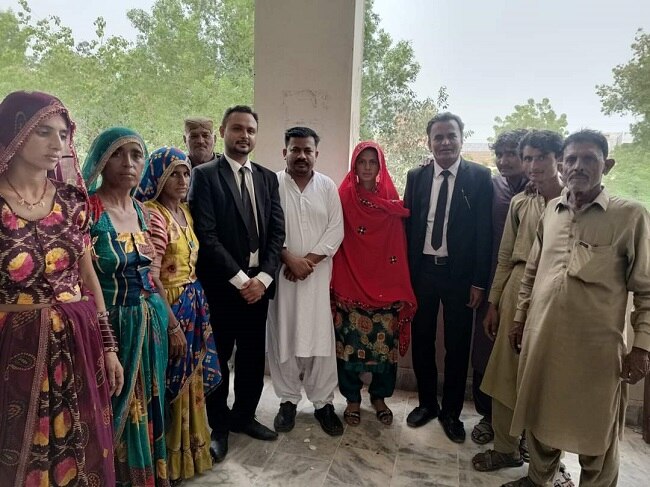
After four months of her abduction, a minor Hindu girl named Haseena Oudh has returned home. She was handed over to her parents by the court.

In May 2023, Haseena Oad, belonging to Umarkot, Sindh was abducted at gunpoint by Shokat Shar and four others. Frightened by the modus operandi of the radical Islamists, her father filed a complaint against five accused suspecting that his daughter might be coerced to convert and marry the abductor.

His apprehensions proved true as Haseena stated to the court that after she was illegally and forcefully abducted, she went through extreme brutality. While crying in front of First Additional Sessions Judge, she told that she was converted and raped multiple times. While speaking she raised a question on the impunity given to these types of radical Islamists. She said that the one who kidnapped and raped her is still roaming freely.

Unfortunately, this is not a question that is only raised by Haseena. Many Hindu families in Sindh have gone through the same pain that Haseena and her family felt. And the reason behind this is lawlessness prevailing in Sindh. The radical Islamists and their patrons, who are well connected within the system exploit their power to carry on a fanatical war on the minorities including Hindu. In their pursuit, they target the minor girls, sometimes even less than 7 years, and convert them to Islam.

Hindu girls are being under a constant torture and brutality. Rapes, forced abductions, conversions and marriage with the abductor are some of the most common crimes against the Hindu girls. The shocking similarities among the incidents and their subsequent developments clearly indicates that Pakistan as a state has been supporting such inhumane acts and that too because of the religious dissimilarities between the bigot perpetrators and victims.  

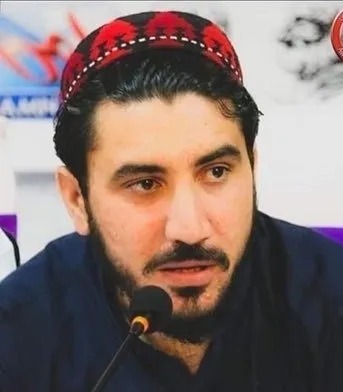
Manzoor Pashteen (PTM) raises concerns for Pashtun rights ahead of Islamabad rally

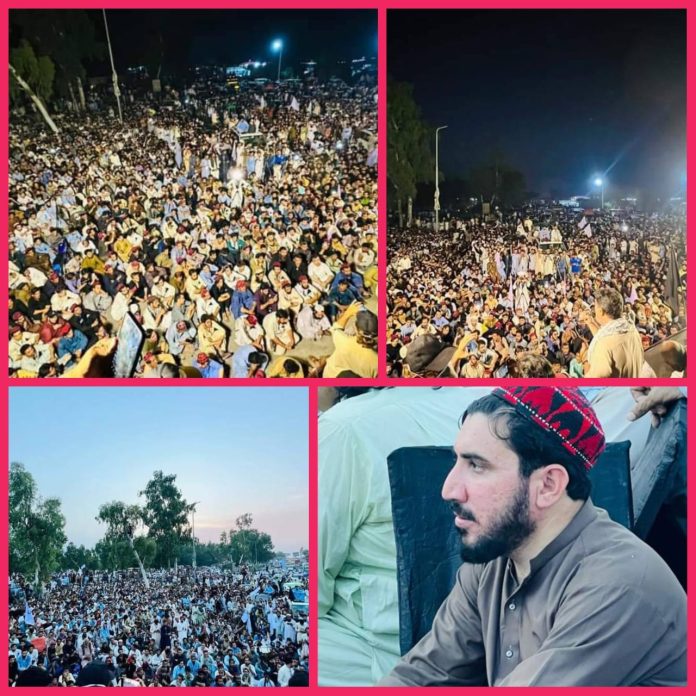
In a recent statement issued by the leader of the Pashtun Tahafuz Movement (PTM), Manzoor Pashteen, it has been announced that all caravans traveling to Islamabad for the upcoming rally have been halted in various districts of Khyber Pakhtunkhwa. The statement raises concerns about the Pakistani state’s refusal to grant a voice to Pashtuns and other oppressed communities seeking protection for their rights.

The statement underscores concerns that the Pakistani state does not permit Pashtuns and other oppressed communities to raise their voices for protection of their rights.

The question raised in the statement is whether this denial of voices represents a form of modern-day slavery. It affirms that they are prepared to make all sorts of sacrifices for the sake of the oppressed and subjugated people caught in the bloodshed of dollar-driven wars.

No matter where these caravans are, the message is to strive forward instead of being deterred by arrests. The statement expresses confidence that, God willing, they will succeed in their efforts.

“Our struggle will continue. We have given the message for all caravans to gather at Tarnol Chowk,” Pashteen stated. He indicated that PTM activists will attempt to enter Islamabad from Tarnol in the form of a rally.

As events unfold, the Pashtun Tahafuz Movement’s determination remains resolute, promising to stand firm for the rights and protection of the marginalized people it represents.

Fatima’s tragic death exposes child rights violations & police apathy in Pakistan

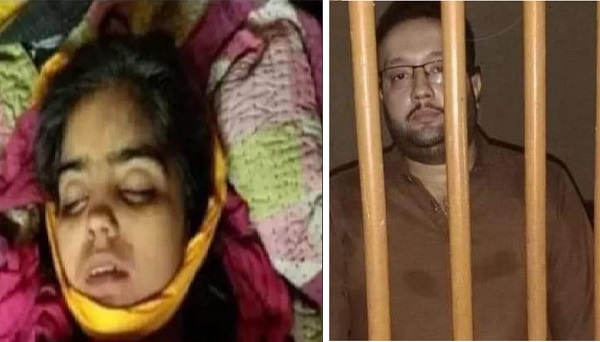
Once again, Pakistan stands exposed on the security of child right after the tragic demise of Fatima, a 10-year-old girl. Fatima was a victim of child labour in Pir Asad Jilani’s house in Khairpur, where she undergone extreme torture and abuse on the hands of Pir’s family.

Fatima belonged to a poor family who, in order to earn a livelihood, sent her at Pir’s house to work. As per preliminary sources, Fatima was beaten, raped and was kept as a slave. It was very unfortunate that her body marks, especially on her face and stomach, clearly indicated abuse, still the local Police showed no interest in registering a complaint at first. Later a video was leaked on social media which showed Fatima agonizing in pain. In the viral video Pir could also be seen sleeping nearby. After a course of moment, Fatima succumbed to her pain.

It was after the video circulated on social media, the DIG Sukkur took the cognizance of the incident and ordered SHO Ranipur to register an FIR. Accordingly, Pir of Ranipur Asad has been arrested. The SHO and doctor have also been arrested.

Cases like these, where poor minor kids are employed in houses and are then abused have become frequent ones in Pakistan. This continues to persist because of the saddened state of law and order. The local police took every measure to sweep the matter under the rug, even a medical report was forged to protect the accused. And that is just because, a major radicalized section of society in Pakistan morally justifies the child labour and the subsequent abuse. Had the video not been leaked, little Fatima’s story would have remained behind closed doors.

14 Years on, Mama Qadeer continues to demand Justice for forcibly disappeared Baloch & Baloch martyrs

Mama Qadeer Baloch calls on Pakistani security agencies to avoid burdening the public with their failures.

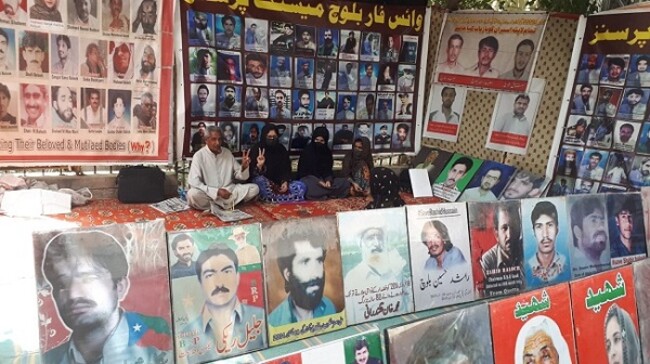
The Voice for Baloch Missing Persons (VBMP) has completed a protest camp at Shaal Press Club after 5139 days (14 years, 26 Days) of demanding justice for forcibly disappeared persons and Baloch martyrs. Abdul Majid Baloch and other Political and social workers from Kalat joined the camp for solidarity on Thursday.
Mama Qadeer Baloch, the VBMP vice-chairman, expressed concern about the ongoing enforced disappearances in Balochistan to those who came to support the event. He reported that Balochistan witnessed 57 people forcibly disappear last month, with violence leading to over 20 more people disappearing in just two weeks. Most of the missing people were young adults.

Mama Qadeer emphasized that although the United Nations (UN) has declared enforced disappearances a crime against humanity, the global institutions have failed to prevent the wave of enforced disappearances in Balochistan, which has disheartened the Baloch people and weakened their faith in the UN and its ability to help them. He called for the UN to step up and play a crucial role in finding a permanent solution to the Balochistan issue.

Pakistan’s reaction to this crisis is inappropriate and beyond the scope of the laws, claimed Mama Qadeer. The Pakistani forces use non-professional and illegal tactics, like death squads and criminal actions, to attack the opponents. The government and judiciary are not taking any legal steps. The recent reports of arresting hundreds of people, including at least five women, after an attack in Gwadar in the last few days have brought the attention of local human rights and international institutions.

Mama Qadeer condemned these enforced disappearances and said there is news of hundreds of extrajudicial arrests, including five women in Gwadar. He urges the relatives of the disappeared individuals to contact their organization with information so that local and international human rights organizations can be informed about the situation.

Mama Qadeer vehemently condemned these enforced disappearances and said that rather than holding the public responsible for their misfortunes, Pakistani security agencies should reevaluate their policies and refrain from committing more human rights violations.

Baloch activist released after being abducted by Pak Army

Baloch Activist Fazal Yakub Baloch, the Chairperson of Save Student Future organization was released by the Pak Army after he was abducted some days back.

Fazal Yakub was a former student of the Zakaria University in Multan. His abduction was carried out by the Pakistan Army in a series of abductions before Pakistan’s Independence Day that continued afterwards also. If reports are to be believed, he was abducted for raising his voice against the abduction of his nephew Shams Baloch. Shams was abducted by the Pak armed forces in three Vigo vehicles on August 13. Shams is a fifth-semester agriculture student at the University of Sargottha and was abducted from his home in Khuzdar at around 1:20 AM.  

Fazal Yakub, who as a Baloch Activist often raised his voice for students’ rights, did the same for his brother. And consequently, was abducted. During his abduction, it was told that the military personnel violently and abusively dealt with innocent women and children.

As of now both Shams and Yakub have been released by the occupying armed forces after going through brutal torture. As Pakistan has illegally occupied Balochistan since March 1948, it is afraid of the resistance that the Baloch are offering. Accordingly, it continues to deploy the occupying Pakistan Army so as to carry on the profiling and enforced abduction of those who are perceived as a potential threat to their illegal occupation.   

India’s Konark wheel replica graces Times Square

On the joyous occasion of India’s 77th Independence Day, Michelin-starred celebrity chef Vikas Khanna unveiled a replica of a Konark Temple wheel at Times Square, New York. The stone art piece is made up of sandstone and will be on display until August 22nd. Later, the replica will be moved to Khanna’s upcoming flagship restaurant in New York City in 2024. Khanna said the unveiling of the 1,800 kg Chakra sculpture is a “dream come true”, as it took nearly five years to bring it to New York City.

The Chef shared a photo of the sculptor that was made by Odisha artist Amaresh Chandra Bindhani and his team on Twitter. 

Odisha Chief Minister Naveen Patnaik congratulated him and shared a video of him unveiling the stone art.

The inauguration was held by the Indo-American Arts Council (IAAC), in collaboration with The Consulate General of India in New York and The City of New York. He said, “For the diaspora, for the younger generations, they will get a reference to seeing something from India—so pure and majestic at the same time”.

The Konark Sun Temple, a 13th-century architectural marvel located in Konark, Odisha, holds immense national pride and heritage significance. Now, a symbol of India’s rich history and culture graces the landscape of the USA.

People have embarked on a new journey towards peace and stability: J&K LG Manoj Sinha

What’s happening in Jammu & Kashmir was far from what one has ever anticipated when it comes to the notion of national integration. The apprehensions were put to rest after the abrogation of Article 370. Even then it was hard to think of a prospering J&K, at least in a short span of time, considering its history. But the successful conduct of G20 meeting in the state marked an end to any type of doubt that was left regarding the prosperity and progress of Jammu & Kashmir. The participation of delegates form across the globe and their positive point of view towards changing J&K made thorough impressions over the globe. And now this has been validated by the Independence Day speech of Lt. Governor of J&K Mr. Manoj Sinha.

While addressing the Independence Day functions at Bakshi Stadium in Srinagar, LG Manoj Sinha shed light on the peace and stability in the state and the attitude of the people. He said that people have embarked on a new journey towards peace and stability. This journey, according to LG, will eventually lead them towards a brighter future.

He also highlighted the positive effects of organising G20 meeting in the state. He said, “After the G 20 meeting, the arrival of foreign tourists compared to the last few years increased by 59%… Foreign devotees participated in the Amarnath yatra as well.”

Thriving Progress And Development Of Mutual Trust

Explaining about the approach of the central government and his administration towards the people and development of state, Lt. Governor stated that the J&K government is committed to giving every possible opportunity to the youth of the state to excel their career. He also said, “New roads, rail lines, power projects, airport terminals, cinema halls, river fronts etc. are coming up.” The event was attended by hundreds of people including women and children. The national flag was unfurled in all district headquarters, Police stations and all the government departments.

A prospect towards Jammu and Kashmir has undergone a major shift after the abrogation of Article 370. Now the valley is witnessing an unprecedented peace, development and tourism sector growth. As the government called these changes optimistic for the people, a large section of individuals have also endorsed the view. Independence Day celebrations further validated this.

As per the orders of administration, this year no restrictions were put and neither the internet was banned. The Tiranga rally and other functions were held and celebrated with the utmost respect towards the nation. The voluntary participation of the people of J&K further affirmed the notion of national integration. Here, it is worth understanding that easing out restrictions and putting no ban is not just an arbitrary step. Rather it holds a significance. In a region like J&K, where separatism has been a concern for decades, measures like this could only take place when the mutual trust between the administration and people has developed. This mutual trust needs to strengthen further so that the state can never turn back to see its horrible past of separatism and instability.

Family losses three generations to devastating landslide in Shimla

A landslide occurred in Himachal Pradesh’s Shimla in the Summer Hill area, prompting a search and rescue operation. In a heart-wrenching incident, a family has been struck by an unfathomable tragedy, losing three generations to a devastating landslide. Sniffer dogs and rescue teams were at the scene.

So far, the remains of five family members have been recovered from the wreckage left by the landslide, while two individuals are still unaccounted for. The community, alongside local authorities, is fervently engaged in the search and rescue operation, hoping to find those missing.

Sunita Sharma, a relative of the victims, pleads, “I have just one request, find them and bring them to us. We will accept them dead or alive. We have been waiting for three days, clinging to the hope that they’ll come back to us.”

Sunedhi, the sister of one of the missing individuals, expresses her bewilderment, saying, “We don’t know what God did to us. It feels like a nightmare we can’t wake up from.”

Vinod, a brother of another missing family member, directs attention toward the broader issue of safety measures. He calls upon the local administration to prioritize the implementation of safeguards in vulnerable areas. “The administration should make such areas safe and have some kind of system in place to ensure that water recedes immediately,” Vinod urges, echoing the need for preventive measures to avert such catastrophes.

The tragedy has reverberated through the community, impacting not only the family directly involved but also their neighbors. Mehar Singh H Verma, a neighbor, recounts the somber reality, “We performed the last rites of four of the members yesterday. They lost their three generations, a loss that’s difficult to comprehend.”

According to SDM Shimla (Urban) Bhanu Gupta, local reports suggest there could be 21 casualties. So far, 12 bodies have been found, and the rescue operation continues with NDRF, SDRF, army, local police, and home guard teams. Any positive news about survivors will be acted upon.

Chief Minister Sukhvinder Singh Sukhu held a meeting to enhance disaster management, as heavy rainfall led to extensive damage. Around 400 of 1,220 blocked roads have been cleared, and efforts are on to restore electricity and water services.

Pakistan is trying to change the demography of Balochistan through forced occupation: Dr Naseem Baloch

BNM Chairman Dr. Naseem Baloch said that Pakistan is trying to prolong its forced occupation of Balochistan. For this, it is trying to change the demography of Balochistan through settlement. It is accelerating looting in order to stabilize itself, maintain its occupation, and destroy the demand for and sense of freedom among the Baloch.

He expressed his views in a program organized by the Baloch National Movement UK chapter on Balochistan’s Pledge Renewal Day. Balochistan Pledge Renewal Day is celebrated every year on August 11 to commemorate the independence of Balochistan from the British occupation. On this day, the Baloch nation remembers its lost freedom and renews its vow to regain it.

Apart from Dr. Naseem, Baloch historian Dr. Naseer was also invited to address the historical background of the day.

Dr. Naseem further said that Pakistan is trying to expand religious extremism by keeping the Baloch nation backward in the field of education and development in order to continue its occupation of Balochistan so that future generations of Baloch will be deprived of education, mental and being deprived of conscious development, they remained victims of mutual differences and could not stand against Pakistani ambitions. The state is also fueling tribal conflicts to confuse the Baloch among themselves.

Dr. Naseem Baloch, while talking about political activities in Balochistan, said that since its existence until today, the state of Pakistan has been afraid of the political consciousness and struggle of the Baloch nation. Baloch political activists and leaders have been killed, and thousands have been forcibly disappeared. The Baloch nation has banned pro-Baloch political parties. However, it has not been able to stop the political journey of the Baloch nation, and the Baloch are moving towards their destination in a more organized manner than before.

He said that despite its atrocities, Pakistan could not eliminate the yearning for freedom from the hearts of Baloch people, and they are facing constant armed and political resistance from the Baloch nation.

Speaking on this occasion, Dr. Naseer Dashti said that before describing the history of August 11, we have to go into the background of why we needed to get freedom on August 11 and under what objectives we were enslaved by Great Britain. After British withdrawal from Dakhila and the subcontinent, Balochistan was handed over to the newly born country of Pakistan under British rule.

He said that in the early decades of the nineteenth century, the world was dominated by a few powers, in which the two world powers were Britain and Russia at the top, while France and Spain were also among the world powers, but their monopoly extended to Latin America and the continent of Africa in the west. While Britain’s occupation was from the continent of Australia to the continent of America, and India was their main colony and market in Asia, on the other hand, Russia was expanding its occupation in Central Asia.

Dr. Naseer Dashti, highlighting the background of the British occupation of Balochistan, said that in the beginning, Britain kept its border in India up to the Indus River, but the Russian expansionist ambitions in the west and its occupation of Central Asia prompted Britain to adopt a forward policy. In order to get within a few hundred kilometers and protect the most profitable colony, India, from a possible Russian attack, they started colonizing Afghanistan and installing a puppet ruler. They started the effort to use Afghanistan as a buffer state. Under this objective, they invaded Afghanistan via Peshawar and Baluchistan, occupied it, and returned with the puppet ruler Shah Shuja replacing Dost Muhammad as ruler. Using a minor incident as an excuse, the British attacked the state of Kalat and killed Khan Kalat along with hundreds of his companions, which started the dark days of slavery in Balochistan.

He said that due to strategic importance, the British separated the areas of Balochistan adjacent to Afghanistan under the name of British Balochistan and kept them directly under their control, while the rest of the state of Kalat was run as a subordinate state by the puppet Khawanin Kalat. After the Treaty of Mustang, the Crown was dependent on Britain to conduct its internal and external affairs.

According to Dr. Naseer Dashti, the future of Balochistan received a second shock when the labor-friendly socialist revolution took place in Russia under the leadership of Lenin and the Bolshevik Party, due to which the workers in other countries, including Great Britain, saw a ray of hope and intensified their efforts. Fearing this socialist revolution, Britain made a secret plan to divide the subcontinent before withdrawing from it. According to this plan, it was decided to create a separate independent country for Muslims, Pakistan, to act as a buffer state between Soviet Russia and the left-leaning state of India and to prevent Soviet expansion.

Dr. Naseer Dashti, highlighting the events of 1947, said that when the British decided to leave India, the Khan of Kalat, who was an incompetent ruler, was convinced by other Baloch leaders that the British were going back, so they talked about the independence of Balochistan. At the insistence of Baloch political figures, Khan of Kalat chose Muhammad Ali Jinnah as his lawyer so that he could fight the case of Balochistan. However, they could not prevent the British from taking possession of the Balochistan territory and later joining Pakistan.

He said that the state of Kalat, after its independence on August 11, barely remained free for nine months before being taken over by the newly born state of Pakistan with the ulterior motives of the British and their help, while the incompetent Khan of Kalat did not control his state at any level. He neither attempted to rescue nor provided assistance to his brother Agha Abdul Karim Khan and his companions who were determined to oppose the forceful annexation of the Kalat state.

Multiple BLA attacks target Pak Army & Independence Day celebrations across Balochistan

In a series of coordinated attacks around Pakistan’s Independence Day, the Baloch Liberation Army (BLA) attacked Pakistan military installations and so-called Independence Day celebrations across various locations in Pak occupied Balochistan. The attacks as follows resulted in casualties and injuries among Pakistan Army personnel and collaborators.

Bolan: During a state gathering in Kolpur, Bolan, intended for Pakistan Independence Day celebrations, an attack took place involving a hand grenade. The incident occurred in the evening hours, leaving several individuals injured.

Turbat: A night earlier, BLA fighters targeted the main Pakistan Army camp in Turbat using grenade launchers. The attack left at least three enemy personnel injured. In a separate incident, BLA also raided a location based on intelligence, and killed two collaborators of the Pakistan military.

Panjgur: During an event related to the so-called Independence Day in Panjgur, the Deputy Commissioner’s office was attacked by BLA fighters using a hand grenade. The attack took place in the afternoon hours. In Panjgur only, BLA carried out another attack in Gichk area. At an unspecified time, a patrolling party of occupying forces was targeted by BLA fighters in Gichk, Panjgur, resulting in significant losses for the enemy troops.

Kalat: In Mangochar, Kalat, BLA fighters launched a two-directional attack on the main Pakistan Army camp. The intense assault occurred in the early morning hours, resulting in the deaths of two enemy personnel. Unfortunately, the retaliatory fire from the enemy troops claimed the life of a nomadic civilian.

Mastung: On 11 August, BLA carried out two attacks in Mastug. During their attack, BLA targeted the Police line offices and the Municipal Committee office, using hand grenades. These attacks led to losses among the occupying state’s police personnel.

August 14 Observed As Black Day Across Pakistan

The spokesperson for the Baloch Liberation Army, Jeeyand Baloch, issued a statement warning individuals involved in organizing events related to the “so-called Pakistani Independence Day” to refrain from their activities, or face the consequences. The BLA reiterated its commitment to continue targeting occupying forces until the liberation of Balochistan is achieved.

It is worth mentioning here that because of Pakistan’s enslavement mindset policies, several states including Balochistan observed August 14 as the Black Day.

It has been more than 75 years, since March 1948, and still Balochistan is under the illegal occupation of Pakistan. So, colonising Balochistan and claiming it to be Pakistan’s territory exposes Pakistan’s double standard on the right of freedom.