Home Blog Page 2

A World in Conflict: Not Just War, But a Marketplace of Power

What we are witnessing today is not merely West Asia being dragged into war by Israel and America. That is the surface. Beneath it lies a deeper and more calculated reality a global system where conflict is increasingly intertwined with commerce, particularly the commerce of weapons.


Wars are no longer just fought on ideological or territorial grounds. They are sustained, prolonged, and at times conveniently escalated in a way that keeps the global defence industry alive and thriving.

Asian countries, many of them developing and already burdened with internal challenges, are gradually being pulled into this cycle forced to upgrade arsenals, sign defence deals, and align with powerful military-industrial blocs led by the United States, Israel, and their allies.


This is not to deny traditional causes of conflict, but to acknowledge that modern warfare has acquired an economic dimension that cannot be ignored.

In this evolving global order, the Indian subcontinent remains one of the most sensitive flashpoints. India and Pakistan, despite decades of hostility, have largely avoided full-scale war in recent years due to strategic restraint and nuclear deterrence.

Yet, the underlying tensions have never disappeared.
Today, the situation feels different.


Diplomacy appears weakened. Global institutions that once acted as buffers are losing their moral authority. The language of negotiation is being replaced by the language of assertion.

In such an environment, even a minor trigger has the potential to escalate disproportionately.
To assume that confrontation is impossible would be naive.

To ignore the changing nature of that confrontation would be even more dangerous.

There was a time when institutions like the United Nations symbolized collective global conscience, and alliances like NATO operated within defined strategic limits.

Today, their relevance is increasingly questioned.
Resolutions are passed but rarely enforced. Conflicts continue despite international outrage. Power has become more unilateral, less accountable, and more openly driven by national interest than ever before.


When global moderators weaken, regional tensions intensify. Developing regions especially in Asia become the most vulnerable to this shift.

At the same time, one cannot ignore the undercurrent within India itself. A nation as vast and diverse as India naturally carries multiple layers of political, social, and economic tensions.


Elections across regions, rising political polarization, and the constant churn of public sentiment create an environment where internal narratives can quickly intersect with external pressures.


The challenge is not just to recognize this undercurrent, but to understand how it can be managed with vision, responsibility, and long-term thinking something that often gets overshadowed in the immediacy of electoral politics.

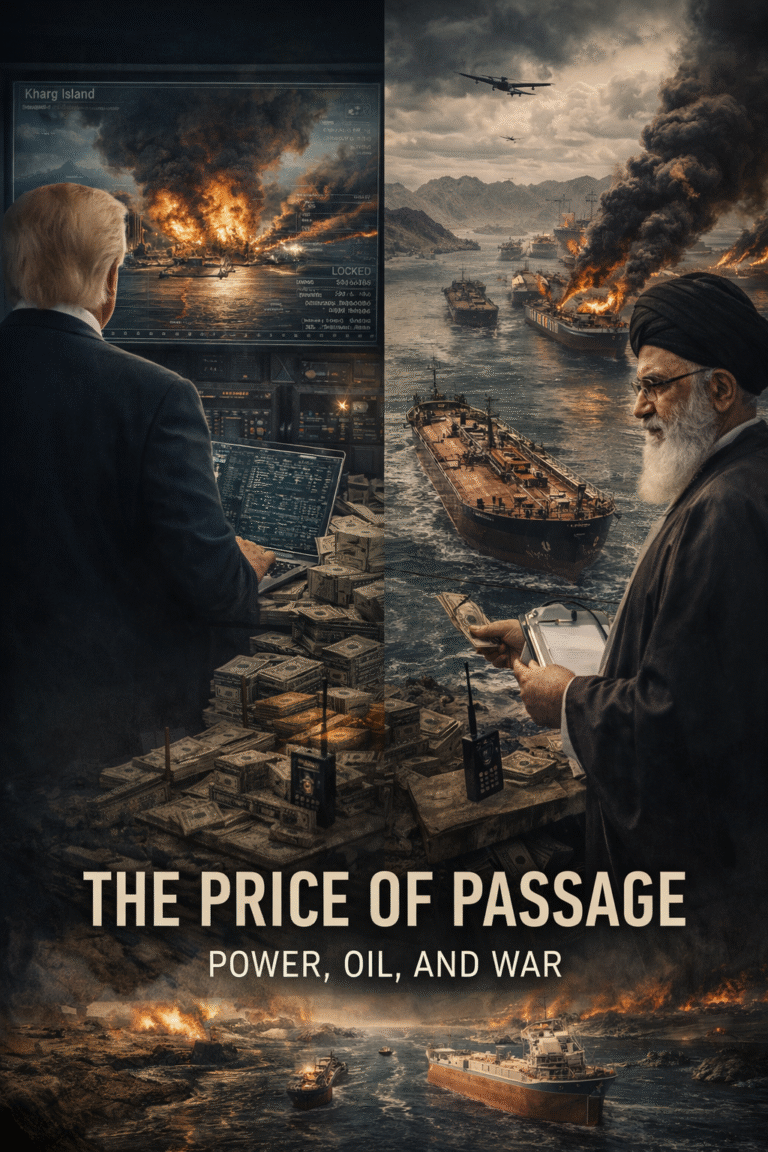
The immediate aftermath of a direct military confrontation between Israel, the United States, and Iran has extended far beyond the battlefield. Strategic assets such as oil terminals, ports, and critical infrastructure have become primary targets, disrupting not only regional stability but also global energy lifelines.

The Strait of Hormuz through which a significant portion of the world’s oil supply passes is witnessing heightened militarization and temporary closures.

Such a scenario has not just escalated tensions in West Asia but sent shockwaves across continents, affecting supply chains, shipping routes, and geopolitical alignments.

Global markets are reacting with immediate volatility. Oil prices have surged unpredictably, impacting everything from transportation to manufacturing costs worldwide. Stock markets, particularly in emerging economies, are experiencing sharp fluctuations as investor confidence is weakening.

Inflationary pressures is intensifying, currencies destabilizing, and nations heavily dependent on energy imports are facing severe economic strain. In such a climate, the defence industry is paradoxically witnessing accelerated growth, as countries are rushing to secure military capabilities amid rising uncertainty, further reinforcing the cycle where conflict and commerce feed into each other.

For India, the implications are both complex and critical. As a major energy importer with deep economic and diaspora ties to West Asia, India has to navigate a delicate balance between strategic autonomy and global alignment.

Ensuring energy security, protecting trade routes, and safeguarding Indian nationals in the region has to become immediate priorities.

At the same time, this evolving situation underscores the need for India to strengthen internal resilience, economically, politically, and militarily, while continuing to advocate for diplomatic stability.

The key takeaway is clear: in a world where conflict is increasingly systemic, India’s greatest strength will lie not just in its power, but in its ability to anticipate, adapt, and act with strategic foresight.

The experiences of Afghanistan, the Kurds, Iraq, Pakistan, Bangladesh, Nepal, Afghanistan again under shifting power games, and South Lebanon demonstrate a consistent principle America and Israel ultimately prioritize their strategic interests over alliance loyalty.

Partnerships are transactional, not emotional. That is the hard grammar of geopolitics.
For India, the key lesson is not distrust but preparedness.

India must cooperate where cooperation strengthens us.

India must benefit where engagement delivers technology, defence capability, intelligence, agriculture innovation, and economic growth.

But India must never become dependent.

An Israel policy in India that appears one-dimensional or overly aligned cannot succeed in the long run.

India’s greatest strength has always been strategic autonomy the ability to maintain relations with Israel, Iran, the Gulf, Russia, and America simultaneously without surrendering sovereign decision-making.

If we move as if we are operating from the playbook of an American think tank, even when certain strategic reports categorize India Pakistan conflict scenarios in secondary tiers of priority, we risk reducing our diplomatic flexibility. No major power writes another nation’s grand strategy for its benefit alone.

Internal security challenges today are far more complex than external threats.

Emotional narratives imported from foreign battlefields can create internal fault lines.

Social cohesion, intelligence preparedness, cyber monitoring, economic resilience, and border management must receive more attention than symbolic foreign policy optics.

There is also the larger strategic question of regional balance.

America’s fluctuating engagement with Pakistan over decades shows how regional equations are adjusted according to larger global interests. India must remain alert, self-reliant, and confident not reactive.

BRICS, despite its promise, has struggled to fully achieve its core agenda of counterbalancing Western-led institutions and building a truly multipolar order with stronger Global South representation.

Multipolarity cannot be declared; it must be built through economic power, institutional depth, and long-term strategy.

Perhaps the most striking reality of our times is this: nations are no longer pretending.
Political agendas are no longer hidden behind diplomacy they are increasingly visible, unapologetic, and assertive.

Alliances are shaped by interest, not ideology.

Conflicts are justified in the language of security, but often sustained by deeper strategic and economic motivations.
This is a world stripped of illusions.

This is not a call for fear, but for awareness.
Understanding the changing nature of global conflict is essential, especially for countries like India that sit at the intersection of multiple geopolitical pressures.

The future will not be shaped merely by military strength, but by strategic clarity, internal stability, and the ability to navigate a world where the lines between war, economics, and politics are increasingly blurred.


In such a world, the biggest risk is not conflict itself but failing to understand the forces driving it.

From Operation Sarp Vinash to Hybrid Terror: Reading Peer Panjaal Through the lens of “Aman Ke Farishtey”

0

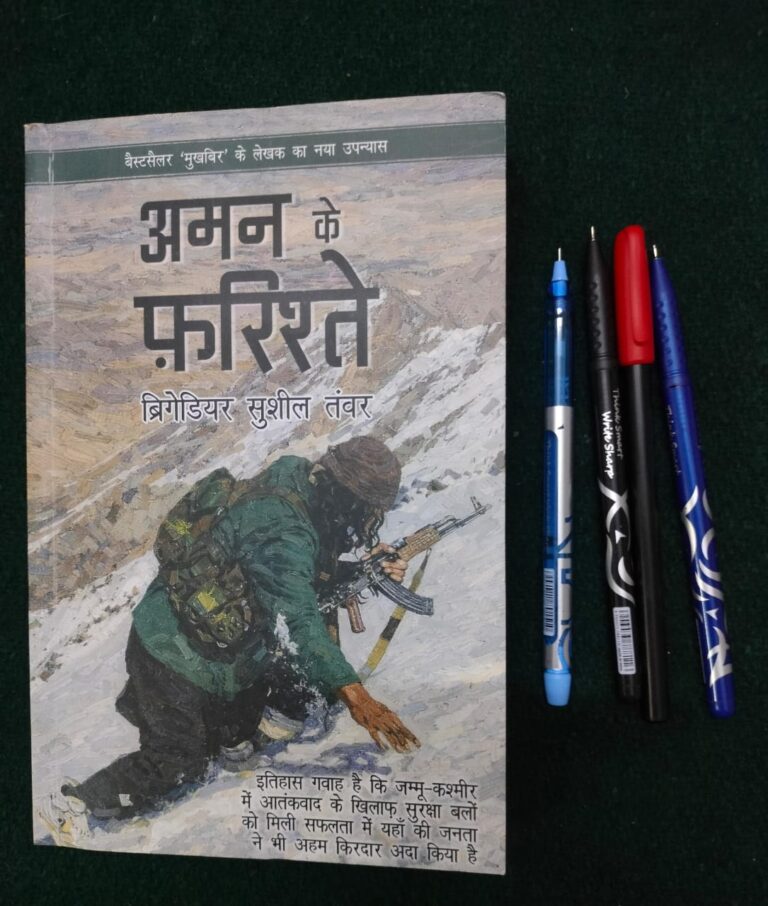
Aman Ke Farishtey by Brigadier Sushil Tanwar, in my view, is not just a novel it is a reflection of a reality that many people hear about, but very few truly understand.

The book connects deeply with the ground situation of the Peer Panjaal region, especially areas like Poonch and Rajouri, where the fight against terrorism has been long, complex, and ongoing.

As I read the book, I felt that it closely matches the realities we have seen and lived ourselves.

The story of Surankote is not just fiction it reflects real conditions shaped by incidents like the brutal ambush near Dera Ki Gali, where District and Sessions Judge Vijay Kumar Phool was killed along with his security personnel and a companion in 2001.

This was not just an attack, but a clear sign of how strong and organised the terror network had become in the Peer Panjaal belt and locals used to call Surankote as “Chota Pakistan”.

The book presents this terror ecosystem very realistically. The way it describes hidden camps, communication systems, and the role of terrain matches what actually existed on the ground before major operations like Operation Sarp Vinash.

The connection with the Hill kaka area and the destruction of terrorist infrastructure during that operation is clearly reflected in the story.

For me, the character of Captain Ashish Chauhan is not just a hero of the story he represents how intelligence officers actually evolve in such situations. He starts as a young and energetic officer but slowly becomes more careful, practical, and strong.

His personality shows two sides he is kind and understanding with local people, but during operations he becomes strict and focused. This shows the real mental pressure and responsibility that officers carry in such conflict zones.

What makes this book even more personal for us is that we are the people who have faced the maximum impact of Pakistan-backed proxy groups active in the Peer Panjaal region. I still remember the time when vehicles were not allowed to move on roads after 4:00 PM.

Fear was real, and daily life was controlled by the presence of terrorism. Movement, trade, education everything was affected.

One of the most understated yet powerful aspects of Aman Ke Farishtey is how it quietly brings alive the cultural fabric of the Peer Panjaal region.

Without long descriptions or forced explanations, the narrative naturally weaves in elements like the warmth of noon chai shared in local homes, the distant yet familiar call of the azaan echoing through the valleys, and the discipline and devotion of roza during Ramadan.

These moments may appear small, but they add depth to the story, reminding the reader that beyond operations, intelligence networks, and conflict, there exists a living, breathing society rooted in tradition and faith.

This subtle portrayal makes the story more authentic, showing that even in areas affected by terrorism, daily life continues with dignity, culture, and resilience.

Those who have not lived through that time may read this book as a story, but for us, it is a memory. That is why Operation Sarp Vinash was not just a military success it was a turning point in our lives. It did not only destroy terror modules; it became the stepping stone towards peace in the region.

It broke the backbone of organized terrorism in the hills and gave people the confidence to live normally again. The silence of guns that followed was not accidental it was earned through sacrifice and planning.

One of the strongest points of the book, in my opinion, is its focus on local people. The informers, or Mukhbirs, and ordinary civilians are shown as key players in maintaining peace. In the Peer Panjaal region, where it is not possible to have army presence everywhere due to tough terrain, it is the trust between people and forces that becomes most important. The book clearly shows that intelligence is built on relationships, not just surveillance.

But where my thinking goes beyond the book is in what happened after the period it shows. The novel reflects a time when operations like Sarp Vinash had weakened terrorism and brought relative peace. However, after around 2005, this calm also gave time to Pakistan’s ISI to rethink and rebuild its strategy.

Over the next fifteen years, a new kind of threat developed a hybrid terror ecosystem. This system is not as visible as before. It works through small groups, local support, and sudden attacks.

Because of this, even today, the region continues to face challenges. More than sixty people have lost their lives in the Peer Panjaal region in recent years. This shows that even though the old structure of terrorism was destroyed, a new form has emerged and is still active.

In this context, Aman Ke Farishtey becomes even more important. It helps us understand how such systems work from building trust to gathering intelligence and handling human emotions.

The Rajouri Poonch belt of the Peer Panjaal region has witnessed a clear shift in the nature of terrorism from silent rebuilding to high-impact attacks and now to a more decentralised hybrid model.

The early years saw infiltration and quiet revival of networks, but by 2023 the region experienced a sharp escalation with incidents like the Dhangri civilian killings, the Bhata Dhurian ambush, and the Dera Ki Gali attack, where both civilians and security forces were targeted with precision. These attacks were marked by the use of forest cover, elevated positions, and detailed surveillance, showing deep familiarity with terrain.

Encounters in areas like Kalakote and the Shah Satar forest belt further highlighted how terrorists had shifted into dense interiors, avoiding permanent bases and operating in small, mobile groups.

In the years that followed, the pattern evolved further fewer large attacks but a sustained presence through hidden modules, overground worker networks, and sporadic strikes.

This evolution makes one thing clear terrorism in the Peer Panjaal has not disappeared; it has adapted, and continues to operate in a more covert but equally dangerous form, constantly testing the security grid and the resilience of the region.

In the Peer Panjaal region, one of the most critical lessons from years of counter-terror operations is that human intelligence remains irreplaceable.

While technology, surveillance systems, and artificial intelligence have strengthened monitoring and detection capabilities, they cannot substitute the depth, accuracy, and context that comes from human sources.

Information shared by locals, informers, and ground-level networks carries insights that no sensor or algorithm can fully capture intent, behaviour, trust, and hidden movements within communities.

In such terrain, where dense forests and scattered habitations limit technological reach, it is human intelligence that has consistently played a decisive role in identifying threats and preventing attacks.

Over-reliance on technology without strengthening human intelligence networks can create blind spots, because machines may detect movement, but only humans can interpret motives.

This reality reinforces a fundamental truth of counter-insurgency in the Peer Panjaal peace and security are ultimately sustained not just by systems and tools, but by people, trust, and timely human inputs.

At the same time, it also indirectly shows how these systems can return if constant attention is not given.

The characters in the book like Sarpanch Nur Mohammad, Bashir Lohar, Hamid, and Ashraf Ghazi show different sides of society in conflict areas. Some choose peace, some choose violence, and some are caught in between. Their stories make it clear that the situation on the ground is never simple.


What I believe strongly is this no one can connect with Aman Ke Farishtey more deeply than the residents of Rajouri and Poonch. For others, it may be a well-written novel, but for us, it is a lived experience put into words. It reflects our past, explains our present, and warns us about the future.


In the end, the book is both a tribute and a reminder. It is a tribute to those who worked silently, officers, informers, and ordinary people to bring peace. And it is a reminder that peace in the Peer Panjaal is not permanent; it has to be protected every day.
The story of our region is still being written and Aman Ke Farishtey helps the world understand it.

Haq Insaaf Council Hosts International Women’s Day Program, Recognizes Contributions of Women at Heritage Town Hall, Border Poonch

0

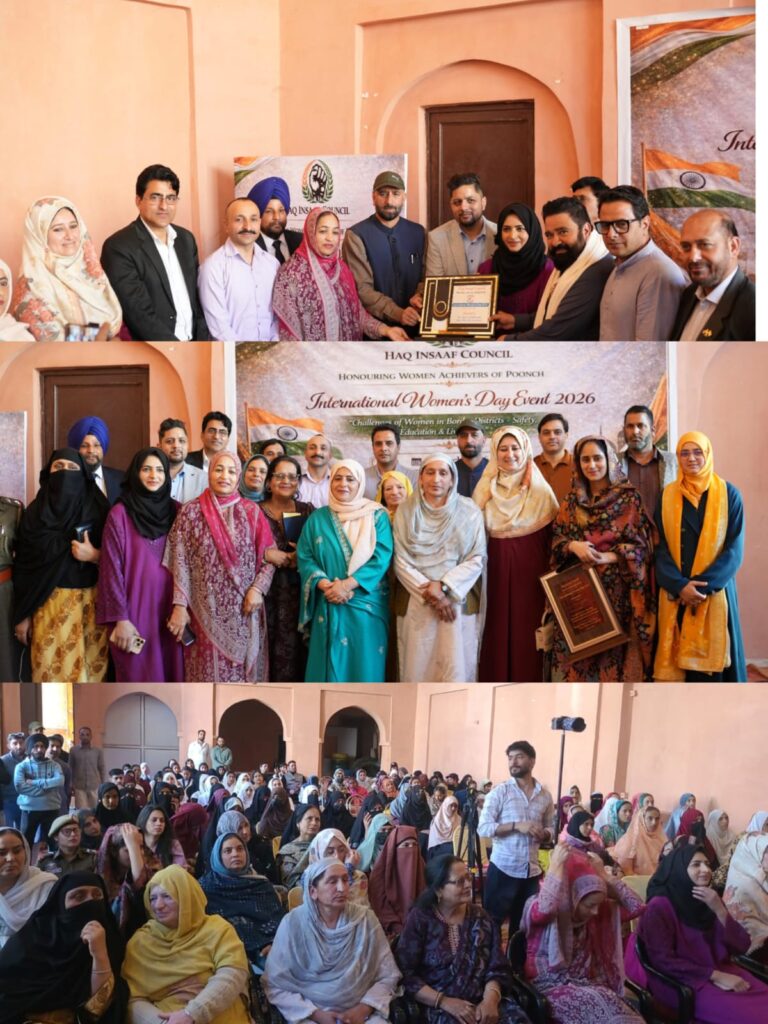
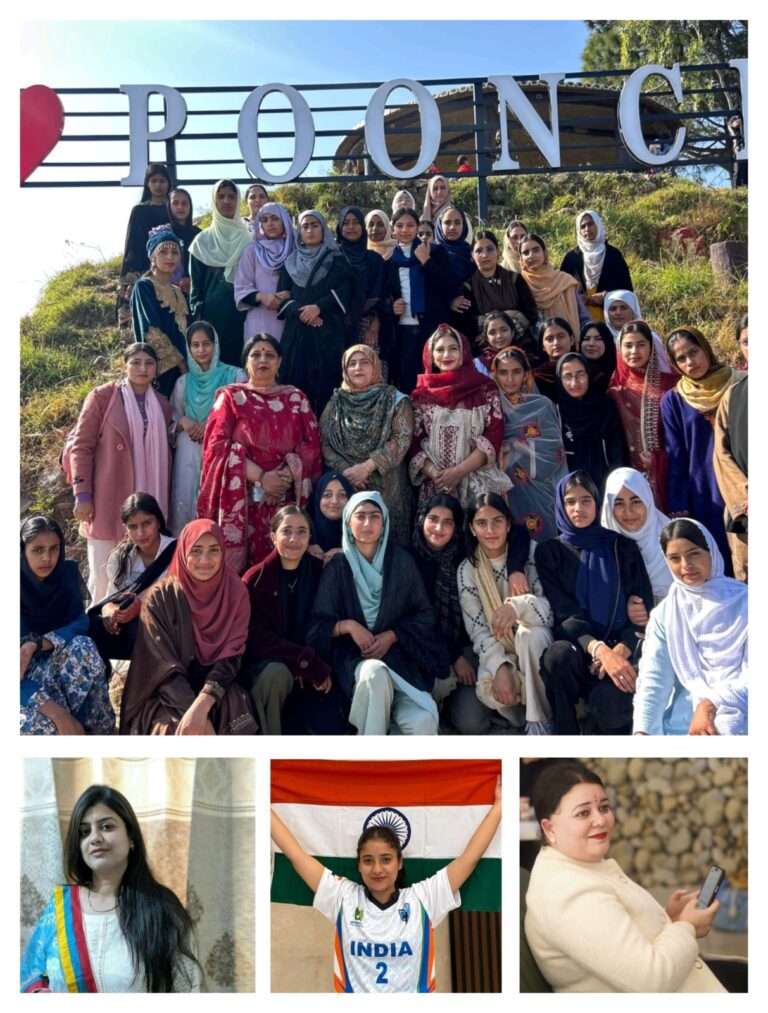
International Women’s Day was celebrated with great enthusiasm and dignity at the historic Town Hall Poonch. Haq Insaaf Council, brought together prominent public representatives, civil society members and women achievers from across the district. The program was held under the chairmanship of Advocate Zeshan Syed, Chairman Haq Insaaf Council.

The theme of the event was “Challenges of Women in Border Districts – Safety, Education, Livelihood.”
The program commenced with the National Anthem, followed by a welcome address by Ikhlaq Mehmood Parray, who highlighted the importance of recognizing the contributions and resilience of women in border districts.

The event witnessed the presence of distinguished guests including MLA Haveli Ajaz Ahmed Jan, MLA Surankote Ch Mohd Akram, Additional SP Poonch Mohan Sharma (Shaurya Chakra), Former DDC Member Raiz Naaz, Alhaj Syed Zaki Haider (Chairman ACT Trust), Narinder Singh Talwar (COAS Medal Recipient), Prof Shamim Banday, Advocate Iftikhar Bazmi, Mohd Mashooq Khatana, Kamran Ali, Dr Nusrat Shah and Prof Fateh Mohammad Abbasi.

The program featured panel discussions focusing on women’s empowerment and the challenges faced by women in border areas. The first panel discussion, hosted by RJ Faieza Tabasum, featured MLA Haveli Ajaz Ahmed Jan and Advocate Zeshan Syed as panelists.

The second panel discussion was hosted by RJ Touseef Ganai, with DDC Chairperson Tazeem Akhter, Additional SP Poonch Mohan Sharma and DDC Member Riaz Naaz as panelists.

The third panel discussion was hosted by journalist Sharaz Ahmed, with MLA Surankote Ch Mohd Akram participating as a panelist.

The panelists emphasized the importance of women’s empowerment, safety, education, economic opportunities and leadership participation, particularly in border districts where women face unique social challenges.

Speaking on the occasion, Dr Shamim Banday highlighted the importance of education and awareness in strengthening women’s empowerment and building a progressive society.

The program was gracefully hosted by renowned moderator Pradeep Khanna.
During the event, several women achievers from various fields were felicitated for their outstanding contributions to society in different categories including Lifetime Achievement Award, Courage Under Conflict, Education Excellence, Youth Leadership, Grassroots Health Worker and Security.

The awardees included Tazeem Akhter (DDC Chairperson), Anjuman Shaheen (Principal GHSS Poonch), Rani Mughal (Principal GDC Surankote), Prof Nighat Chowdhary, Taj-un-Nisa Kazmi (Former CDPO), Dr Shamim Bhatti (Former Chief Medical Officer), Kailash Sharma (Radio/Media), RJ Faieza Tabasum, Er Falak Hameed, Shamshad Akhter (Self Help Group Leader), PSI Dr Avinash Rajput, Anjali Sharma (Martyr Family), Simran Yaqoob (Kurash), Ekta Kapoor (Taekwondo Champion) and Pakiza Irshad (Taekwondo Champion).

The organizers stated that the event at district Poonch was aimed at recognizing the courage, leadership and contributions of women in border districts while encouraging greater participation of women in social leadership and nation building.

Community Radio Stations and Ground Impact: From Policy Architecture to Lived Experience

0

Community Radio Stations (CRS) represent one of the most localized and participatory forms of media within India’s communication ecosystem. Unlike commercial broadcasting, which prioritizes mass markets, or national broadcasting that operates at scale, community radio is hyper-local, low-power, and community-owned in spirit.

Its relevance becomes particularly pronounced in geographically remote, socio-economically vulnerable, and border regions where information asymmetry often limits access to government schemes, public services, and credible news.

In such settings, CRS serves as a vital bridge between policy architecture and lived experience. India’s community radio policy framework enables educational institutions, non-profit organizations, and community-based groups to establish stations tailored to specific local populations. Operating within limited transmission radii and covering nearby villages, these stations produce content in local languages and dialects, ensuring cultural relatability and accessibility.

This linguistic intimacy distinguishes community radio from mainstream media and builds a foundation of trust among listeners. In border districts, terrain barriers, intermittent internet access, and limited newspaper circulation frequently restrict information flow. Community radio mitigates these constraints by broadcasting government advisories, agricultural guidance, health awareness campaigns, skill-development opportunities, and disaster alerts.

In regions prone to natural disasters or security-related disruptions, CRS functions as a real-time information lifeline. Timely and verified announcements reduce panic, counter misinformation, and enable coordinated community responses. One of the most significant contributions of CRS lies in translating complex policy frameworks into accessible communication.

Government schemes often involve eligibility criteria, documentation processes, and procedural formalities that can appear overwhelming to rural residents. Community radio simplifies these complexities through storytelling, interviews with local officials, interactive question-and-answer sessions, and dramatized explanations.

Instead of abstract administrative language, listeners hear relatable narratives that clarify benefits and processes. This reduces exclusion caused by lack of awareness and enhances effective implementation at the grassroots level.

CRS also strengthens participatory democracy by facilitating two-way communication. Listeners can call in, share grievances, seek clarifications, and suggest discussion topics. Such engagement enhances transparency and accountability. When citizens understand their entitlements and responsibilities, leakages decline and governance outcomes improve.

In this manner, community radio becomes not just an information platform but a participatory civic space. Women and youth engagement is another defining dimension of community radio. CRS initiatives frequently train local volunteers in scripting, recording, editing, and anchoring programs. Young participants acquire technical and communication skills that enhance employability and confidence. Women-led broadcasts address maternal health, sanitation, nutrition, education, financial literacy, and social challenges that may otherwise remain under-discussed in conservative settings.

The microphone becomes a tool of empowerment, enabling marginalized voices to shape discourse and influence community priorities. In sensitive border environments where rumour and misinformation can spread rapidly, trusted local broadcasting plays a stabilizing role. Because CRS is rooted in community credibility, its messaging carries authenticity and acceptance. It can dispel false narratives, clarify official announcements, and reinforce calm during periods of tension. This localized counter-narrative capacity carries strategic significance in frontier regions.

Culturally, community radio preserves oral traditions, folk music, poetry, and dialect storytelling. By broadcasting local heritage and shared memories, CRS strengthens social cohesion and intergenerational continuity. When communities hear their own languages and lived experiences reflected on air, representation deepens belonging and reinforces identity.

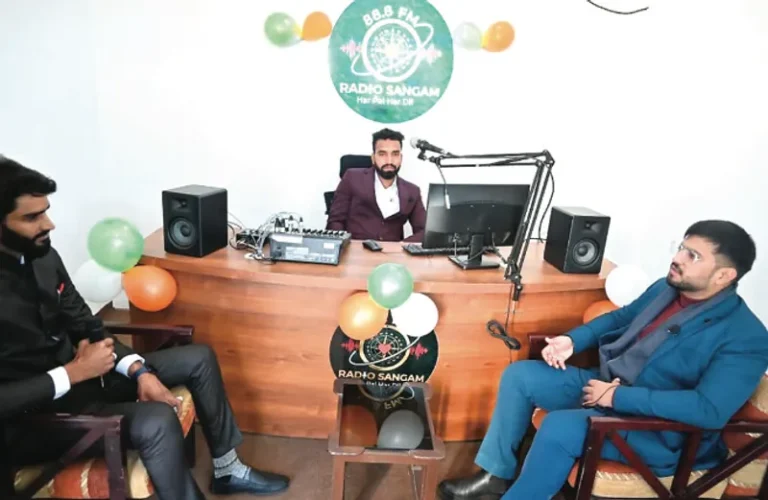
Community radio initiatives in the Pir Panjal region, particularly Sadaa-e-Pir Panjal and Radio Pir Panjal, are playing a transformative role in strengthening grassroots communication across the border districts of Jammu & Kashmir. Operating in culturally rooted and linguistically familiar formats, these stations have emerged as trusted platforms for broadcasting educational content, health awareness programs, agricultural advisories, youth engagement discussions, and information about government welfare schemes.

In geographically sensitive areas where connectivity gaps and terrain barriers limit mainstream media outreach, these CRS platforms ensure that timely and verified information reaches remote villages. Beyond dissemination, they nurture local talent by training youth as radio jockeys, content creators, and technical operators, fostering community ownership and skill development.

By promoting local culture, countering misinformation, and encouraging participatory dialogue, Sadaa-e-Pir Panjaal and Radio Pir Panjaal are not merely broadcasting stations they are instruments of social cohesion, democratic awareness, and developmental empowerment in the border belt.

Resilience at the Frontlines: Women of India’s Border Villages

0

India’s border villages occupy a unique and often paradoxical position in the national imagination. They are geographically peripheral yet strategically central; economically fragile yet symbolically powerful; vulnerable to cross-border hostilities yet remarkably resilient in everyday life. Stretching across Jammu & Kashmir, Ladakh, Punjab, Rajasthan, Gujarat, Uttarakhand, Himachal Pradesh, Sikkim, Arunachal Pradesh, Nagaland, Manipur, Mizoram, Tripura, and Meghalaya, these frontier settlements stand as the first line of both defense and democratic continuity.

At the heart of this endurance are the women of these regions. Their resilience is neither rhetorical nor episodic; it is deeply embedded in lived experience shaped by geography, conflict exposure, resource limitations, and evolving development frameworks. To understand the resilience of women in India’s border villages is to understand the intersection of security, development, identity, and democratic participation at the nation’s edges. Women in frontier districts often live under the recurring shadow of cross-border firing, infiltration attempts, and sudden escalations in tension.

In areas along the Line of Control and the International Border, episodes of shelling have historically disrupted schooling, agriculture, livestock rearing, and domestic stability. Families sometimes shift temporarily to safer zones during heightened tensions, and homes, crops, and community infrastructure have faced repeated damage.

In such circumstances, women carry disproportionate responsibility for sustaining normalcy. They ensure food security, safeguard children and elders, manage emergency relocations, and restore routine once calm returns. Their resilience extends beyond endurance it is adaptive leadership under uncertainty. Many women become de facto heads of households when male family members migrate for employment or serve in the armed forces and other security agencies.

This transition reshapes traditional gender roles, not necessarily through ideological transformation, but through necessity-driven responsibility and competence. Over the past decade, structural reforms in rural development policy have significantly influenced the socio-economic position of women in border regions. Financial inclusion initiatives have enabled women to access bank accounts, direct benefit transfers, and micro-credit systems, strengthening economic autonomy.

Self-Help Groups under rural livelihood missions have emerged as powerful instruments of collective enterprise. Across border districts, women-led groups engage in dairy production, mushroom cultivation, tailoring, handicrafts, food processing, organic farming, and small-scale agro-enterprises. What was once subsistence-based agriculture is increasingly complemented by value-added economic activity. These micro-enterprises enhance household incomes, expand decision-making power, and reduce vulnerability during periods of crisis. Economic participation reinforces dignity and fosters confidence in long-term stability.

Education has become a transformative force reshaping aspirations in frontier communities. Enrolment of girls in border blocks has steadily improved, supported by scholarships, transportation facilities, residential schooling options, and awareness initiatives promoting gender equity. Young women from remote villages are entering higher education, appearing in competitive examinations, and aspiring to careers in civil services, police, defence services, healthcare, education, and entrepreneurship.

The presence of female role models local teachers, elected representatives, health workers, and officers creates a multiplier effect within communities. Resilience thus becomes intergenerational; mothers who once lacked educational opportunities now prioritize schooling for their daughters as a strategic pathway to empowerment and mobility. Political participation through Panchayati Raj institutions has further deepened women’s leadership at the grassroots. Reservation of seats has resulted in visible female representation in local governance. Women sarpanches and panchayat members actively plan and monitor development projects related to roads, drinking water, sanitation, school infrastructure, health centers, and welfare implementation.

Their governance priorities are grounded in everyday needs, shifting focus from conflict narratives to development-centric agendas. In sensitive and conflict-prone regions, such participatory leadership strengthens trust between citizens and institutions, reinforcing democratic legitimacy and social stability. Healthcare access has improved through expanded insurance coverage, institutional delivery schemes, vaccination drives, and rural health missions. For women in border villages, maternal health services, mobile medical camps, and improved institutional outreach have reduced historical vulnerabilities.

The construction of community bunkers in shelling-prone areas reflects a civilian-security interface designed to protect women and children during escalations. Simultaneously, infrastructure expansion roads, electrification, tap water connections, and LPG access has reduced physical drudgery and enhanced quality of life. Time saved from fuel and water collection can now be invested in education, entrepreneurship, and civic engagement. The inspiring journeys of Shagun Sharma and Manali Sharma exemplify how resilience in border districts translates into national achievement.

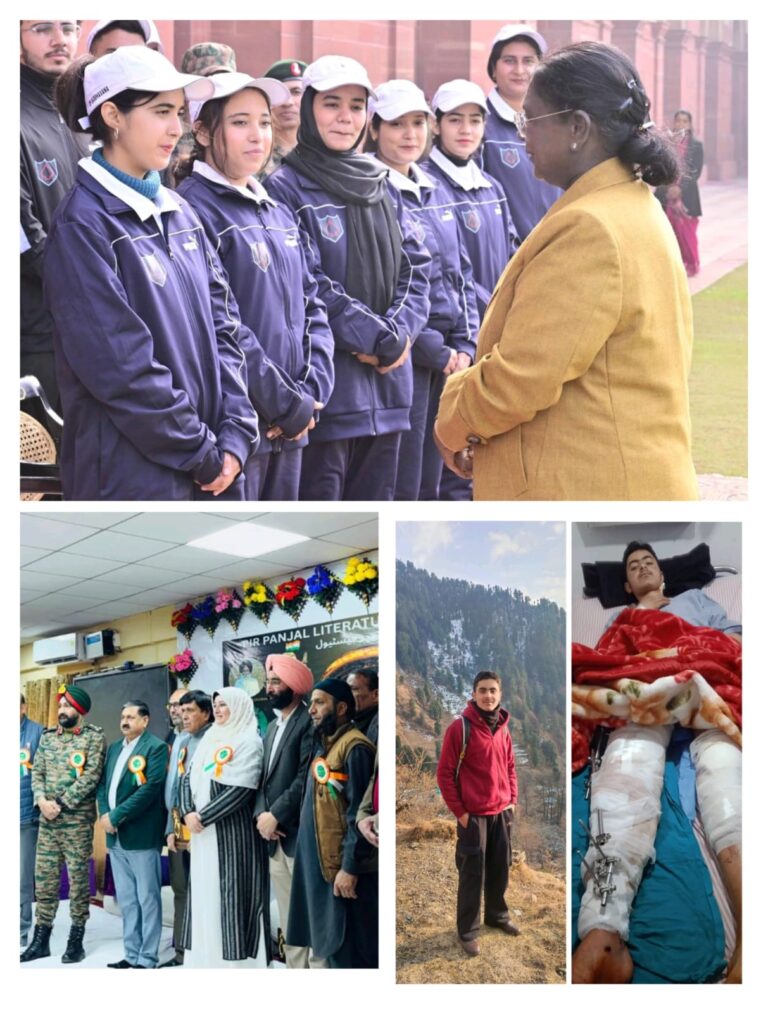
Shagun Sharma, from the border district of Poonch in Jammu & Kashmir, became the first girl from her area to join the Officers’ Training Academy of the Indian Army. Growing up amid recurring cross-border shelling and instability, she refused to let adversity define her aspirations. Through determination, perseverance, and disciplined preparation, she cleared the competitive examinations and stepped into the defense services transforming a narrative of vulnerability into one of leadership.

Similarly, Manali Sharma made history as the first female naval officer from a border village of Poonch district to serve in the Indian Navy. Her achievement signals expanding horizons for young women from frontier regions who are now entering elite national institutions with confidence and competence. The journeys of Abhilove Kour from Poonch, Preeti Sharma, Anjuman Shaheen, Dr. Pallavi Banotra, and Parvinder Kour (JKAS) further reflect the evolving landscape of women’s leadership in Jammu & Kashmir’s border villages.

Abhilove Kour symbolizes youthful determination and sporting excellence emerging from a district often viewed through the prism of conflict rather than talent. Preeti Sharma represents intellectual confidence and professional growth in educational and public spheres. Anjuman Shaheen embodies grassroots educational leadership and community strengthening. Dr. Pallavi Banotra reflects professional excellence in healthcare and public service.

Parvinder Kour, serving in the Jammu & Kashmir Administrative Service, exemplifies administrative leadership, demonstrating that women from border belts are not merely participants but policy implementers shaping development at the institutional level. Culturally, women remain custodians of linguistic and traditional heritage in frontier regions.

Whether preserving Pahari, Dogri, Ladakhi, Punjabi, Rajasthani, or tribal dialects and crafts, they transmit identity across generations. Cultural resilience strengthens psychological integration with the broader national framework while safeguarding regional distinctiveness. In areas vulnerable to misinformation and destabilizing narratives, this rooted cultural confidence acts as a stabilizing force. Women in border villages also serve as informal bridges between communities and security institutions.


Participation in civic outreach programs, medical camps, skill-development initiatives, and community dialogues fosters trust and cooperation. Stability in border regions cannot rely solely on physical security infrastructure; it requires social cohesion, and women play a central role in nurturing that cohesion.

Beyond the Battlefield: Indian Army as the First Responder in Crises

When most people think about the Indian Army, they imagine soldiers standing guard at the borders, protecting the nation from external threats. This image is both correct and deeply respected. The Army’s primary duty is national defence. However, in the districts of the Jammu region from the hinterland of Doda and Kishtwar to the border belts of Rajouri and Poonch the Army performs another equally important role. It acts as the first responder in times of crisis.

At the centre of this responsibility stands Indian Army’s XVI Corps. Headquartered in Nagrota, the White Knight Corps oversees a vast and sensitive area that includes Rajouri, Poonch, Doda, Kishtwar, Ramban, Reasi, and rural Jammu. These districts are not only strategically significant but also geographically challenging. High mountains, deep valleys, dense forests, fast-flowing rivers, and unpredictable weather define the region. Life here demands resilience.

Crisis is not rare; it is part of everyday reality.
Under initiatives such as #HumAapkeSaathHain, the White Knight Corps has strengthened humanitarian and security measures across the region. While the operation primarily focuses on countering threats and ensuring stability, it has also enhanced the Army’s preparedness to respond swiftly during emergencies. The same operational readiness that safeguards borders also enables rapid humanitarian response.

The Corps has left no stone unturned in not only protecting the nation’s frontiers but also acting as a lifeline for civilians living in hinterland and border villages. In a very recent development yesterday, alert troops of the White Knight Corps achieved two significant operational successes in the Rajouri sector along the Line of Control. A terror associate residing near the border was apprehended late Wednesday night by an Army patrol in the Raipura Bhatta area of Nowshera.

The individual, a resident of Sehar village close to the LoC, was found in possession of two foreign-made pistols one manufactured in Turkey and the other in China along with four magazines and fifteen rounds of ammunition.

In a separate but related development in the early hours, suspicious movement was detected in the Nathua Tibba area of the Sunderbani sector based on specific intelligence inputs and sustained surveillance.

Responding with swift and calibrated fire, Army troops successfully foiled the infiltration attempt. Following the operation, troops have been suitably repositioned and reoriented to ensure complete domination of the area through integrated ground and aerial surveillance, and a high level of operational alert continues to be maintained across the sector. In these areas, danger rarely comes in a single form.

A village may face cross-border shelling in one season and heavy snowfall in another. Landslides block roads during the monsoon. Flash floods wash away footbridges. Cloudbursts damage crops and homes. In winter, snow isolates entire communities. In such situations, time becomes critical. Quick action can save lives and reduce suffering. Civil administration and disaster management authorities play a central role in relief and rehabilitation. However, reaching remote areas in difficult terrain often takes time.

Roads may be damaged. Communication lines may fail. Weather conditions may delay rescue teams. The Army, already deployed and trained to operate in extreme conditions, is often able to respond immediately. During episodes of cross-border shelling in Rajouri and Poonch, the Army’s role extends beyond maintaining security. Soldiers assist in evacuating civilians from exposed villages, provide immediate medical support to the injured, and coordinate emergency care.

They offer reassurance and stability until civil agencies establish longer-term arrangements. In moments of panic, their calm and disciplined presence brings confidence to families living under constant uncertainty. Natural disasters present equally serious challenges. The Jammu–Srinagar highway, especially around Ramban, frequently faces landslides during heavy rainfall. Vehicles become stranded for hours or even days.

Army personnel often assist in clearing debris, distributing food and water to stranded travelers, and helping vulnerable passengers reach safety. In Doda and Kishtwar, where villages are connected by narrow mountain roads, heavy rains can cut off entire areas. In such crises, Army teams move on foot when vehicles cannot pass, carrying essential supplies and providing medical assistance. Flash floods in Rajouri and surrounding districts have seen soldiers form human chains to rescue trapped civilians. Children caught near swollen streams have been pulled to safety. Houses damaged by sudden flooding have been cleared with the help of Army engineers.

Temporary shelters are arranged until normal conditions are restored. Heavy snowfall creates another major challenge. In high-altitude areas such as Peer Gali and Sawjian, roads can be completely blocked. Ambulances cannot reach patients. In such situations, Army troops have carried sick and elderly people through deep snow for kilometers. There have been instances where pregnant women requiring urgent medical care were evacuated by soldiers because civilian transport was impossible. Helicopters are deployed when weather permits, ensuring critical patients receive timely treatment. These rescue operations are made possible by the Army’s strong logistics and training.

Military vehicles are built to operate in rough terrain and harsh weather. Engineering units can quickly construct temporary bridges if permanent ones collapse. Communication equipment ensures coordination even when mobile networks fail. Medical teams are trained to provide emergency care in remote and challenging conditions. The White Knight Corps’ commitment extends beyond responding to disasters. Through civic action programmes, it supports communities throughout the year.

Medical camps offer free check-ups and medicines in remote villages. Veterinary camps assist livestock owners whose animals are central to their livelihoods. Winter relief programmes distribute blankets and essential supplies. Youth engagement initiatives, including sports tournaments and motivational talks, encourage young people to pursue education and constructive careers.

In border and remote districts where opportunities can be limited, such initiatives help channel youth energy in positive directions. They reduce frustration, build confidence, and strengthen the bond between local communities and security forces. The psychological impact of the Army’s presence during crises is significant.In moments of fear and uncertainty, people look for stability.

The arrival of soldiers with organized relief efforts reduces panic. Families feel protected. Children feel reassured. The visible commitment of the Army sends a clear message: the nation stands with its border communities. However, while the Army often acts as the first responder, long-term resilience depends on effective governance.

The Army can provide immediate rescue and relief, but permanent solutions require strong infrastructure, careful planning, and transparent administration. Roads must be reinforced. Bridges must be built to withstand heavy rains. Drainage systems should reduce flood damage. Community bunkers are essential in shelling-prone areas. Healthcare and educational institutions must remain functional even during crises. Coordination is the key to effective crisis management.

The Army, civil administration, police, and disaster management authorities must work together seamlessly. Regular joint exercises, clear communication channels, and defined responsibilities ensure faster and more organized responses. When institutions cooperate, relief efforts become more efficient and impactful.

The White Knight Corps, through its operational readiness and humanitarian outreach, has demonstrated that the Indian Army’s service extends far beyond combat. Indian Army’s commitment symbolizes this dual commitment. While strengthening security and eliminating threats, it also enhances the Army’s ability to respond swiftly during emergencies.

The relationship between soldiers and civilians in the Jammu region is built on trust. Rescue operations during floods, snowstorms, and shelling deepen this bond. Every act of assistance strengthens national unity. The Army’s presence is not only about defence; it is also about compassion and responsibility.

The commitment of the Indian Army toward border communities goes far beyond military duty.

It is reflected in everyday acts of care, in the infrastructure it helps build, in the schools and outreach programmes it supports, in the medical aid it provides, and in the trust, it builds with local people.

In the Jammu region, the White Knight Corps particularly in the Poonch–Rajouri sector has set a powerful example of service delivered with both courage and heart.

A strong illustration of this commitment was seen when a minor, Anayat Hussain from Arai, met with a serious accident involving an Army vehicle near Mandi in Poonch.

The soldiers immediately rushed him to Sub District Hospital Mandi for urgent treatment. As his condition worsened, he was referred to District Hospital Poonch and later shifted to GMC Rajouri.

Recognizing the need for advanced medical care, the Army swiftly coordinated his transfer to Amandeep Hospital in Amritsar, ensuring he received specialized treatment without delay. Senior officers personally monitored his condition, and the Army extended full financial support to the family, even arranging around ten units of blood to save the young boy’s life.

Upon his recovery and discharge, Anayat’s father publicly expressed heartfelt gratitude, stating that the Indian Army had stood by the family in their most difficult hour.This episode once again demonstrated that beyond safeguarding borders, the Army remains deeply committed to humanity. Beyond the battlefield, the Indian Army stands as a guardian of both territory and people.

The White Knight Corps has shown that protecting borders and serving civilians are not separate responsibilities but interconnected duties. From clearing landslides in Ramban to rescuing stranded families in Rajouri and carrying patients through snow in Peer Gali, the Army continues to act as a lifeline.

When crisis strikes and hope seems distant, it is often the soldier who arrives first steady, disciplined, and ready to help. In the hinterland and border villages of the Jammu region, the Indian Army is not only a shield against threats but also a symbol of support, strength, and reassurance.

Challenging Misinformation and Conflict Narratives: BGSBU Rajouri Witnesses First-of-Its-Kind South Asia Dialogue

0

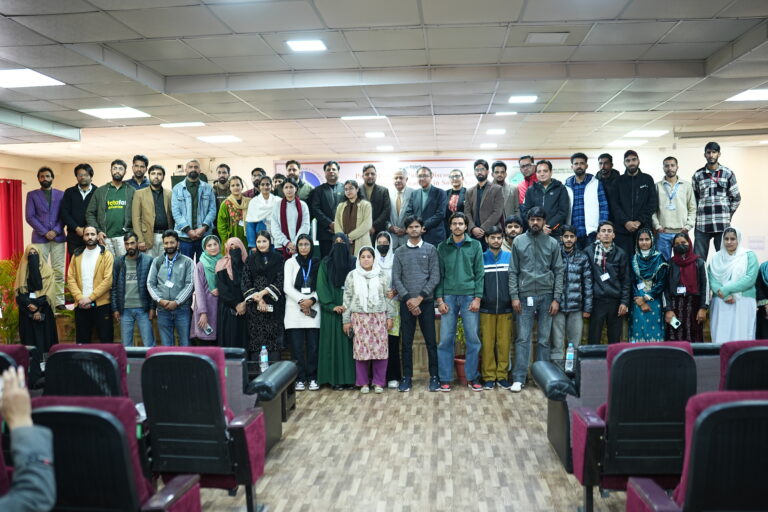
A thought-provoking and intellectually enriching discussion on “Power Politics, Public Discourse, and Institutional Dynamics in South Asia” was successfully organised at Baba Ghulam Shah Badshah University (BGSBU), Rajouri, under the banner of the Jammu & Kashmir Haq Insaaf Council, a Jammu & Kashmir based peace-building and civic platform headed by Advocate Zeshan Syed.

The programme marked a first-of-its-kind initiative at BGSBU, aimed at strengthening informed public discourse, democratic values, and institutional accountability, particularly in sensitive border and conflict-affected regions.

The programme commenced with the National Anthem, followed by a two-minute silence to pay solemn homage to the bravehearts who laid down their lives for the nation during Operation Sindoor.

The dignified opening set the tone for deliberations rooted in constitutional responsibility, national sacrifice, and respect for human dignity.
The discussion witnessed the participation of eminent academicians, journalists, legal experts, and civil society voices from different parts of Jammu & Kashmir, including Prof. Ashok Aima (Former Vice Chancellor, Central University of Jammu), Saleem Beg (Former Director General, Tourism Department), Prof. Karan Maini, Dr. Ali Asghar Shah, Dean, School of Biosciences and Biotechnology, Advocate Uma Kapahi, Javed Beigh (Human Rights Activist), Sumit Bhargav (Journalist), and Azad Rahat (Journalist).

The programme was moderated by Tahir Mustafa Malik, while Sajid Arain delivered the welcome address. Speakers offered nuanced, fact-based perspectives, reflecting academic rigor, democratic maturity, and a shared commitment to truth and dialogue.
Key highlights of the programme included
Deliberations on the growing menace of misinformation and its disproportionate impact on youth, particularly in conflict-affected and border regions.

A critical examination of the gap between public discourse and ground realities in border districts.
In-depth discussions on human rights, institutional accountability, and the need for transparent governance.
Insights into women’s leadership in Jammu & Kashmir as a substantive and transformative force in South Asia.

Analysis of conflict entrepreneurship and its adverse implications for regional stability.
Emphasis on fact-based dialogue, responsible media practices, strong institutions, and inclusive governance as prerequisites for sustainable peace and national integration.

Addressing the gathering, Advocate Zeshan Syed, Chairman of the Jammu & Kashmir Haq Insaaf Council, lambasted Pakistan for its role in regional disturbances, stating that its continued support to terrorism has paralysed SAARC and betrayed the collective interests of South Asian nations.

He remarked that developments in countries such as Bangladesh, Nepal, Sri Lanka, Afghanistan, and other South Asian states offer critical lessons for retrospection and future policy thinking in the face of propaganda unleashed by what he described as a failed state.

He asserted that the youth will oppose, expose, and defeat such nefarious designs, particularly on 5th February, which is projected internationally as Kashmir Solidarity Day. He further alleged that international aid meant for the development of the downtrodden and needy populations of PoJK and PoGB is being misused to promote terrorism, benefitting vested interests rather than ordinary people.

The programme saw enthusiastic participation of scores of youth, including students of BGSBU and young participants from Rajouri, Poonch, Jammu, and the Kashmir Valley, making the interaction lively and meaningful.

Their active engagement reflected a growing awareness among young citizens that democracy thrives not on slogans or polarisation, but on critical thinking, informed participation, and civic responsibility, especially in border districts that bear the direct consequences of conflict and policy decisions.

At a time when public discourse across South Asia faces increasing polarisation and institutional trust is under strain, the programme reaffirmed the essential role of universities and civil society in nurturing democratic resilience. It reinforced the belief that peace without justice is fragile, security without accountability is incomplete, and development without inclusion remains unsustainable.

The program was attended by Deans of the Schools, Directors, Principals, Heads of different departments, faculty members, officers of the University, non teaching staff, research scholars and students.


The Jammu Kashmir Haq Insaaf Council reiterated its commitment to continuing such academic and civic engagements in the future, with a focus on promoting fact-based discourse, constitutional consciousness, and constructive youth participation.

The organisers stated that initiatives of this nature are not merely academic exercises, but democratic necessities, particularly in regions where voices have historically remained underrepresented.

CPEC Is Reshaping Pakistan’s Army, Not Its Economy

0

Pakistan-occupied Jammu & Kashmir (PoJK), along with Gilgit-Baltistan (GB), forms the northern backbone of the China Pakistan Economic Corridor (CPEC), giving Pakistan critical transit access between Xinjiang and Gwadar. The region hosts two major hydropower projects Karot (720 MW) and Kohala (1,124 MW). Both classified as priority CPEC investments supported by multi-billion-dollar Chinese financing. Pakistan promotes these projects as evidence of internal development and as a crucial component of a broader connectivity spine linking China to the Arabian Sea. However, the reality on the ground reveals a heavily securitized development model.

Pakistan has deployed extensive military and paramilitary forces across PoJK, GB, and Balochistan, embedding permanent security grids for CPEC protection. Since 2017, the Special Security Division (SSD) has been tasked with guarding a 5 km radius around CPEC sites, institutionalising a military footprint that prioritises infrastructure protection over civilian governance. This security architecture includes roadblocks, surveillance, intelligence-based operations, and tight control of movement.

The drive to secure northern passages roads, tunnels, Optical fiber Cables network, and hydropower corridors has amplified the security-development nexus. Military-linked commercial networks have acquired land near project sites. With repeated allegations of land seizures, forced displacement, and fencing of ancestral property.

In Balochistan, reports document harsh counter-insurgency operations, including village demolitions, blockades, forced labour, and punitive raids in regions like Khuzdar and Zehri. Civilian casualties, large-scale displacement, and enforced disappearances continue to escalate social grievances. In PoJK and GB themselves, Pakistan’s response to public unrest has been forceful. Waves of protests over taxation, electricity tariffs, wheat shortages, and political marginalization have been met with police crackdowns. Rangers deployment, mass detentions, and media censorship. GB’s constitutional ambiguity grants Islamabad unchecked authority in land and resource allocation, enabling rapid military intervention whenever dissent emerges. This governance model entrenches political exclusion, fuels resentment, and heightens instability in territories Pakistan claims to administer democratically.

Long-term fiscal exposure adds another layer of risk. CPEC hydropower projects come with significant tariff commitments, Chinese loans, and dependency on external capital binding. Pakistan’s future energy pricing and limiting economic autonomy. With security costs rising and local dissatisfaction deepening, Chinese stakeholders face increasing reputational and operational challenges.

While marketed as a gateway to prosperity and connectivity, the region has instead become a theatre of militarized development, political suppression, and economic dependency. The securitization of PoJK, GB, and Balochistan underscores the fragility of Pakistan’s approach one that prioritizes strategic corridors over people, and coercive control over meaningful development.

CPEC was introduced to the world as a massive economic opportunity, but what is happening in Pakistan-occupied Jammu and Kashmir (PoJK), Gilgit-Baltistan and Balochistan tells another story one India cannot afford to ignore. Far from being a development corridor, CPEC has become a military corridor, reshaping the security landscape close to India’s borders and pushing China deeper into South Asia’s most sensitive terrain. Pakistan proudly showcases the Karot and Kohala hydropower projects as signs of growth in PoJK.

Yet the real picture behind these multi-billion dollar ventures is a mix of financial strain, local displacement and growing military involvement. These projects have locked Pakistan into long-term tariff commitments to Chinese companies, and they have justified a heavy troop presence in regions already lacking democracy and basic rights. For India, the concern is not the electricity Pakistan claims to generate, but the strategic environment these projects help create.


The northern stretch of CPEC runs through areas that Pakistan administers without the consent of the people living there. Gilgit-Baltistan remains constitutionally undefined, giving Islamabad and Rawalpindi full control over land and resources. This ambiguity has become convenient for both Pakistan and China. It allows them to operate without accountability, build infrastructure without consultation and deploy security forces without question. Every new road, tunnel and fibre line is guarded by armed troops, creating a security belt across territory that legally belongs to India. Balochistan shows what happens when Pakistan decides to “secure” development at any cost. Reports from the ground speak of forced evictions, burnt homes, and mass disappearances during military operations.

Entire villages in areas like Khuzdar and Zehri have been uprooted. People have been pushed aside to make way for roads, pipelines and port expansion. These actions reveal the true foundations of CPEC: control, coercion and fear. Instead of addressing local grievances, Pakistan responds with more soldiers, more raids and more crackdowns. This instability does not stay within the boundaries of Balochistan; it affects the wider region and shapes the mood of Pakistan’s internal politics, often spilling into its dealings with India. In PoJK, recent protests over electricity prices, taxation and daily hardships were met with tear gas, arrests and surveillance. The message from Pakistan’s establishment was clear CPEC comes first, people come later.

Such actions expose the hollowness of Pakistan’s claims of championing Kashmiri rights. When its own citizens in PoJK demand dignity, Islamabad responds with force, not dialogue. For India, this contrast matters. It highlights the difference between development driven by democratic engagement and development imposed through military pressure. The growing Chinese presence in the region must also be viewed with caution. CPEC gives Beijing long-term physical access to areas adjoining the Line of Control and regions close to Ladakh.

It creates opportunities for intelligence gathering, dual-use infrastructure and logistical support that could be activated in times of crisis. China and Pakistan call this “connectivity,” but for India it is clearly a strategic alignment with long-term implications. CPEC was expected to transform Pakistan’s economy. Instead, it is transforming Pakistan’s military posture and deepening its dependence on China. The cost is being paid by the people of PoJK, Gilgit-Baltistan and Balochistan, who are losing land, rights and voice.

Pakistan wants the world to see glass towers and new highways. What it hides is the growing anger, the resentment and the fear that simmers beneath. In the end, the corridor that Pakistan celebrates as a symbol of progress has become a corridor of control. For India, recognising this reality is essential. CPEC is not simply a foreign investment project.

It is a strategic instrument that alters ground realities in territories under illegal occupation and brings China closer to India’s doorstep. Understanding this shift is not just a matter of foreign policy. It is a matter of national security.

Why Islamic radicalization persists? Why Muslim societies need urgent reforms?

The blast in Delhi was more than an intelligence failure or a tragic act of terror. It was a warning—one that points to deeper structural, ideological and cultural fractures that have been ignored for too long. Every major terror incident forces us to revisit the uncomfortable question: Why does radicalisation continue to find fertile ground across certain pockets of the Muslim world, and why do these ideological fault lines spill across borders with such ease? To understand this, we must step beyond immediate political narratives and confront the deeper roots of the crisis.

A Legacy of Turbulence

Islam’s early political history was shaped by constant conflict. The Prophet Muhammad’s lifetime was marked by battles for consolidation, and the period immediately after his death was one of violent succession struggles. Caliphs Umar, Uthman and Ali all met assassinations; Imam Hasan too died under violent circumstances. This formative turbulence left an imprint: the idea of “jihad” entered the religious vocabulary not merely as a spiritual struggle, but as a sanctified tool of political assertion. Over centuries, this vocabulary got amplified by other related terms, creating a language that shaped the mindset where force was not an aberration but an accepted instrument of preserving faith and authority.

This historical memory continues to echo in contemporary struggles, making the teaching and practice of non-violence far more challenging. 

When Culture is Squeezed Out

Civilisations soften through culture. Art, music, dance, theatre, sculpture and literature expand the imagination and weaken the hold of dogma. Yet, many orthodox interpretations within Islam have long discouraged or prohibited these very expressions. The anxiety about the arts has deprived many Muslim societies of the cultural buffers that moderate extremism.

This does not diminish the grand contributions of individual Muslims—from the architecture of Andalusia to the poetry of Rumi and Ghalib. But these flourished when thinkers and artists transcended the strictest boundaries of theology. Creativity survived despite orthodoxy, not in harmony with it. Where culture is throttled, dogma grows teeth. 

Modern States in Peril

A distressing pattern is visible across several Muslim-majority societies: fragile democracies, authoritarian politics, shrinking civic freedoms, and the persistent persecution of minorities. When states fail to create avenues for dissent, cultural expression and open debate, alternate radical networks step in—often transnational in character, well-funded, and ideologically rigid.

The Delhi blast must be located within this global reality. Violent extremism is not born in a vacuum; it flows through ideological pipelines that often originate far beyond India’s borders, powered by sermons, online propaganda, and political developments in West Asia, Afghanistan and Pakistan. Dismissing the linkage between Islamism and terrorism as mere propaganda or “Islamophobia” does not help anyone—not Muslim societies, and certainly not victims of terror.

Self-denial cannot be a strategy for survival especially when a multilayered web of funding from Turkey and Qatar, charity from Gulf, handlers based at Turkey and training camps based in Pakistan join hands to infiltrate the minds of Indian muslims, that too doctors, to engineer a series of blasts to rock the country. How does a Muslim defend the undefendable? 

Education Without Enlightenment

One of the most troubling paradoxes of our time is the rise of highly educated yet deeply indoctrinated individuals. Doctors, engineers, and technocrats from Muslim backgrounds often show excellence in professional domains while simultaneously resisting intellectual scrutiny of their religious beliefs.

This is not accidental. In several Islamic institutions, modern scientific training coexists with rigid doctrinal teaching. Students learn complicated anatomy or engineering equations in one classroom, and in another, absorb sermons that warn against questioning scripture. This duality produces individuals with professional competence but ideological rigidity—a potent combination when exposed to radical narratives.

Thus, even when economic conditions improve, the psychological grip of doctrinaire thinking remains intact. If radicalisation is to be reversed, education must liberate the mind, not divide it. The theological leaders must rewrite the unethical interpretation of teachings and take the ownership for correcting the wrongs. Likewise, governments of Islamic nations must take the lead in resurrecting Islam from the dogma and reinvesting the vocabulary of non-violence. 

The Imperative of Internal Reform

The global conversation around Islam often collapses into two camps: Those who see Islam as inherently violent and those who insist that the religion is a monolithic victim of misinterpretation. Both positions are oversimplified. The reality is more complex and demands nuance: Islam today stands at a crossroads where internal reform is not only desirable but essential anti-dote for the venom which is fast becoming synonymous with Islam. 

Several steps are indispensable:

  1. Keep faith private and keep devotion must remain within the personal sphere, not the political domain. Even use of loudspeakers at mosques and processions on streets may be stopped as a step towards reformation.
  2. Open religious texts to scrutiny – The Qur’an, Hadith and the Prophet’s biography must be open to debate, reinterpretation and academic criticism. Suppression only breeds resentment and radicalism.
  3. Abandon dreams of a Sharia-governed state – Modern nations demand secular constitutions that protect all citizens equally. Non muslim minorities must be protected by the State and not to fend for themselves. What is happening in Pakistan and Bangladesh is horrendous. 
  4. Shift from madrasa dependency to universal schooling – Education must nurture curiosity, not conformity. There may be madrasas that are models for ideal education, but overall they are being identified as the institutions for breeding radical ideologies. The products in turn breed violence. This nexus or perception of nexus must be dismantled.  
  5. Reclaim culture – Music, art, theatre and literature must return to public life as instruments of social healing. Nothing can be declared as male specific activity, not open to females. The acts such as declaring fatwa against “all girls band” in Kashmir few years ago by the Grand Mufti, should be treated as a criminal act. People misusing religious authority must be taken to task. 
  6. Reconsider puritanical dress codes – Burqa and hijab are not merely garments; they often symbolise deeper gender segregation and inequality.
  7. Respect diverse beliefs – Tolerance must extend to non-Muslims and atheists alike.
  8. Prioritise national identity over transnational religious identity – Loyalty must flow toward the land where one lives, not imagined global umma politics.
  9. Embrace family planning and gender equality – No society can progress while half its population remains restricted by theology.

These steps are not anti-Islam; they are pro-civilisation.

Reform or Darkness

Every major religious tradition has experienced internal upheavals and reforms—Christianity through the Reformation, Hinduism through social movements, Judaism through philosophical renewal. Islam’s moment for self-renewal is overdue. Without introspection and change, radicalisation will continue to feed tragedies like the Delhi blast. The answer does not lie in denial, outrage or defensive rhetoric. It lies in the courage to reform.

If the foundational issues remain unaddressed, the world will witness more violence—and Muslim societies themselves will face the gravest consequences.

The Delhi blast is not just a terrorist act. It is a signal from the future: reform now, or brace for a deeper and darker crisis.

Cracking the Code of Hybrid OGWs: New Threats, New Counter Measures

0

In the aftermath of the sharp decline in terrorist recruitment across Jammu & Kashmir a result of sustained security operations, development initiatives, community mobilization, and shifting youth aspirations terrorist networks have been forced to adapt. Unable to rely on mass recruitment or carry out large-scale group attacks, many outfits have evolved their tactics. They now increasingly deploy what India calls “hybrid Over Ground Workers” or OGWs young men and women who never formally join militant ranks but serve as facilitators: guiding logisticians, ideologues, recruiters, spotters for security forces, propagandists, fund-raisers, cyber-operatives, or lone-wolf attackers.

This grey zone warfare allows terror outfits to maintain influence without open confrontation. Their actions, spotting security patrols, sharing information, producing propaganda, or sheltering infiltrators, remain below the legal radar, often eluding conventional counter terror frameworks. Cracking the code of hybrid OGWs has therefore become one of India’s most urgent security challenges.

Hybrid OGWs thrive on ambiguity. They operate between legality and illegality, activism and radicalism, social identity and violent ideology. Many are radicalized gradually, through social media, online sermons, or peer groups, without ever meeting a foreign handler.

They are not typical recruits; they do not pick up weapons or join known groups. Their participation may be limited to sharing disinformation, raising small funds through hawala or donations, or alerting handlers about troop movement. Yet these micro acts are essential to sustaining terror ecosystems.

Because hybrid OGWs never formally affiliate with militant organizations, they escape standard intelligence profiling. Their invisibility is their armor. They blend in, carry no record, and fade away after missions, complicating detection and prosecution.

To understand the hybrid OGW phenomenon, one must go beyond the stereotypes of radicalization. Their motivations are diverse, ranging from ideological conviction and social alienation to economic desperation or misplaced identity politics.

Post 2019 developments in Jammu and Kashmir, including the abrogation of Article 370, triggered psychological shifts among sections of youth. Many, struggling to reconcile identity and opportunity, became vulnerable to extremist narratives of defense and solidarity.

Crucially, many OGWs do not perceive themselves as criminals. They see themselves as defenders of a cause, not as terrorists. This cognitive dissonance, believing one is right even while aiding terror, makes them especially difficult to counter through force alone.

India’s security establishment has gradually adapted to this evolving threat. Intelligence agencies have expanded human intelligence (HUMINT) networks across schools, mosques, and community hubs. Local police, CRPF, and administrative units now combine traditional surveillance with community engagement, encouraging citizens to report suspicious but non violent activity.

Digital monitoring has also intensified. Social media platforms, WhatsApp groups, and Telegram channels are scanned for coded language, radical imagery, and coordinated disinformation. Artificial intelligence tools help identify behavioral clusters indicative of early radicalization.

But India’s approach is not limited to surveillance. Recognizing that hybrid OGWs operate in both physical and psychological spaces, the state has begun deploying preemptive disruption measures, community outreach, youth mentorship, and digital literacy programs to inoculate society against extremist influence.

The battle today is as much online as it is on the ground. Hybrid OGWs use digital anonymity to spread propaganda, recruit sympathizers, and organize logistics. In response, cyber cells of the J&K Police, CERT In, and national intelligence agencies are collaborating to dismantle these online ecosystems.

When radical influencers are identified, their networks are mapped using metadata and financial trails. Many interventions at this stage are non punitive, focusing on counseling, awareness drives, and parental engagement rather than immediate prosecution. Only when behavior crosses into criminal intent are legal provisions under UAPA or BNS invoked. This graded response ensures that counter terror measures do not alienate communities but instead strengthen trust between citizens and the state.

Perhaps the most creative counter to hybrid OGWs lies in reclaiming the narrative. Extremist propaganda thrives on emotional appeal, portraying militants as heroes and India as an oppressor. To dismantle this psychology, the government has turned to trusted influencers, local artists, entrepreneurs, social media creators, and sportspersons who articulate an alternative Kashmiri identity rooted in development, pluralism, and peace.

Through songs, short films, and digital campaigns, these voices counter extremist messaging with stories of progress, humor, and hope. They offer cultural antidotes to radical rhetoric, redefining pride in being Kashmiri as pride in coexistence, resilience, and opportunity.

This soft power strategy, combined with civic empowerment, has begun eroding the appeal of extremist propaganda among youth audiences.

Hybrid OGWs often facilitate small but critical financial flows, storing cash for weapons purchases, aiding militant families, or raising donations under social pretexts. Financial Intelligence Units and police now track such micro transactions, linking them through data analytics between banks, digital wallets, and unregistered trusts.

The integration of RBI and Central FIU systems allows security agencies to trace unusual cash patterns and cut off the financial oxygen that sustains hybrid networks. Every disruption in funding prevents a potential act of violence downstream.

India’s counter OGW framework increasingly balances enforcement with rehabilitation. Young offenders identified at early stages are offered pathways to rejoin mainstream life through skill training, education, sports, and mentorship. Families are engaged as partners, not targets.

This approach prevents stigmatization and breaks the cycle of alienation that extremist networks exploit. Rehabilitation is no longer an afterthought, it is a frontline counter radicalization tool.

The hybrid OGW model did not evolve in isolation. Pakistan’s intelligence apparatus actively promotes such tactics because they are low cost, high impact, and deniable. Diaspora based propagandists and radical media channels abroad produce extremist content tailored for Kashmiri youth.

India has responded by working with foreign governments and tech platforms to identify and remove such content. Diplomatically, New Delhi continues to highlight Pakistan’s state sponsored information warfare, pressing for greater global accountability in cyberspace.


At the grassroots, the government’s investment in sports and cultural infrastructure has proven a subtle but powerful counter measure. New sports arenas, art studios, and digital learning centers across J&K engage thousands of young people who might otherwise be idle or frustrated.

These are not just recreational spaces, they are safe nodes of social reintegration. Coaches, trainers, and mentors act as early warning observers, identifying behavioral shifts and offering guidance long before radical influences take hold.

By filling psychological and social voids with purpose, these centers quietly dismantle the recruiting ground that hybrid OGWs depend upon.


India’s evolving response to hybrid OGWs represents a multi layered security doctrine that combines intelligence precision, social inclusion, and digital innovation. It recognizes that the battlefield has moved from mountains to minds, from bunkers to browsers.

The strategy rests on five pillars: preemptive intelligence, digital counter narratives, financial disruption, rehabilitation, and community resilience. Each success story, each intercepted network or reintegrated youth, adds to a growing body of learning that refines future interventions.

Yet challenges remain. Hybrid OGWs are adaptive and decentralized. Legal frameworks must keep pace with non violent extremism, and digital regulation must balance security with privacy. Vigilance must never slide into vigilantism.

But India’s greatest strength lies in its pluralism, democracy, and youth driven optimism. If these values continue to guide policy, Jammu and Kashmir could soon stand as a global example, a region that defeated hybrid warfare not just with force, but with foresight and faith in its people.


The goal is not merely to eliminate OGWs, but to transform them, to redirect misled energy toward civic engagement and nation building. A youth once radicalized through a WhatsApp channel can become a cyber mentor; a local propagandist can turn into a peace educator.

When hybrid threats are met with hybrid responses, where intelligence meets empathy and technology meets trust, India demonstrates a new model of democratic strength in the age of asymmetric warfare.

The code of hybrid OGWs is complex, but India’s approach is clear: fight the shadow with light, and build peace not only through deterrence but through dignity.