Home Blog Page 201

Will Saudi Arabia join Barrick in mining operations in the face of Baloch resistance?

The Baloch are most unhappy over reports that Saudi Arabia might join Canadian miner Barrick Gold in extracting copper and gold from the conflicted region of Balochistan.

Numerous Baloch sources told India Narrative that even if Saudi Arabia joins Barrick Gold in gold and copper mining, their stand that Balochistan’s wealth is being plundered by Islamabad and its allies remains unchanged.

Pakistan has been extracting minerals from the region with Chinese help besides allowing Beijing to construct a deep water port in the coastal town of Gwadar – activities which have been stoutly resisted by the local Baloch community through mass agitations and armed resistance.

It has been reported that Saudi Arabia’s Public Investment Fund (PIF) – one of the world’s largest sovereign wealth funds, is likely to pick up a considerable stake in the Reko Diq mine operated by Barrick Gold. The strategy also fits in with the new line of thought among the Gulf nations that they should be investing in Pakistan instead of bailing it out repeatedly.

PIF’s possible partnership in the mine became known after Mark Bristow, CEO of Barrick Gold told news agency Reuters that while his company will not dilute its stake, it has no reservations if PIF takes up the Pakistan government’s stake. He also said that he is aware of the close relations between Pakistan and Saudi Arabia.

Currently, Barrick holds a 50 per cent stake in the Reko Diq mines with the rest shared between the federal government and the Balochistan government.

If Saudi Arabia’s PIF indeed picks up stake in mining operations, it would seem like a clever ploy by Pakistan to drag more foreign powers and companies into a conflict zone. Despite pumping in troops to quell the insurgency and enforcing a media ban in the area, Pakistan has been unable to curb Baloch insurgency.

Qazi Dad Mohammad Rehan, the Information and Cultural Secretary of the Baloch National Movement (BNM) says that “Balochistan has a rich history, with extensive commercial, cultural, and religious links to the surrounding regions. Arab countries have a particularly strong relationship with Balochistan, making it all the more disappointing when they support the ongoing occupation by Punjab”.

Rehan told India Narrative that investments from Saudi Arabia or other countries will only “serve to compound the current problems and lead to a worsening of the situation”.

Rehan warned that the conflict in Balochistan is likely to worsen.

“It is not safe to invest here, and any guarantees given by the Pakistani Army to protect an investment would be subject to the same human rights violations that have already worsened after the China-Pakistan Economic Corridor (CPEC)”, referring to President Xi Jinping’s $62 billion investment in Pakistan that is under sporadic but deadly attacks by Baloch rebels.

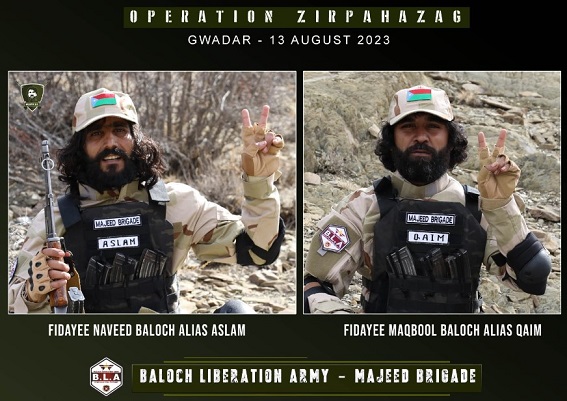
The tumultuous province occupies over 40 per cent of Pakistan’s landmass and has one of the longest running insurgencies. Well-armed Baloch nationalist groups have been waging a seven-decade-old insurgency seeking independence from Pakistan. Bordering Afghanistan and Iran, Baloch rebels claim to have shot down two military helicopters in 2022 and have mounted damaging strikes on Pakistani Army camps.

In response, the Pakistani government has sent in attack helicopters and drones to support the ground forces.

One of the Baloch diaspora members told India Narrative on conditions of anonymity that the role of Gulf countries in Balochistan is not new.

“The Saudi role in Balochistan in helping religious Mullahs is a long history. It has been an obstacle against the secular Baloch and the freedom struggle. The Pakistani agencies have been secretly spreading religious fundamentalism in Balochistan through these mullahs”, said a member of the Baloch diaspora.

He reiterated the Baloch feeling of being alienated and economically exploited by successive Pakistani governments, pointing out that the Baloch insurgents carried out two attacks this month – one targeting workers toiling on CPEC-related projects and the other targeting Senator Abdul Ghafoor Haideri – the deputy chairman of the Pakistani upper house of parliament and a coalition partner in Prime Minister Sharif’s government.

Armed resistance to mining of Baloch resources may not be the only problem that lurks ahead for foreign mining agencies.

The Baloch diaspora, which has been steadily spreading across the Western nations, may try to take on Barrick Gold through the legal route, premising its opposition on the reality that the company does not have the approval of the local community and is working in a conflict zone.

Activist Lateef Johar Baloch has locked horns with the global mining giant in various forums in Canada with the help of environmental organisations and activists.

A cash-strapped Pakistan, with its economy in doldrums due to high inflation, low foreign exchange, food shortages and power cuts, is on a selling spree. It has already hived off Karachi Port operations to a UAE company, sold off iconic buildings in the USA and is privatising its national airline.

Amidst an overdrive to invite foreign funds and stabilise the country politically, the Shehbaz government also organised a minerals summit, ‘Dust to development: Investment opportunities in Pakistan’, on August 1. Saudi Arabia’s PIF had attended the summit along with Barrick Gold.

In its haste to raise funds and pull-out Pakistan from the tentacles of a looming economic crisis, Pakistan just might have invited more opposition to its gold and copper mining projects in an war-zone Balochistan, where Chinese nationals work in uncomfortable conditions.

(This article was first published in India Narrative)

‘Ragging’ claims life in Jadavpur University, alumnus arrested

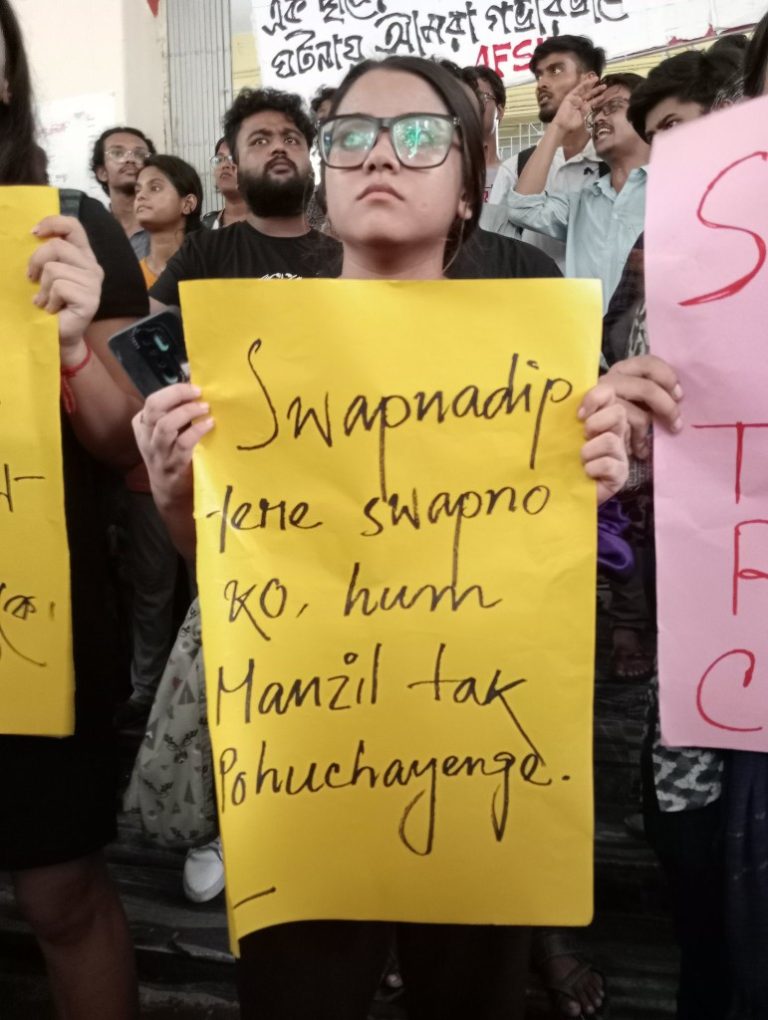
Swapnodeep Kundu, an 18-year-old first-year student, lost his life in a horrifying manner, raising alarming questions about the Jadhavpur University’s responsibility, student safety, and the glaring lack of effective action by the authorities.

Swapnodeep allegedly fell from the second-floor balcony of the Jadavpur University Main Hostel on the night of August 9. He soon passed away succumbing to his injuries. His family alleges that he was a victim of ragging, a claim supported by heart-wrenching stories shared by students who have faced similar ordeals. Sources said that Swapnodeep was asked to strip naked and walk on the terrace by seniors and while doing so he jumped off the building.

In a conversation on Wednesday night, Swapnodeep reached out to his mother, sharing his distress and fear. He said he wasn’t feeling well and asked her to come quickly, hinting at something serious. Sadly, their talk was cut short, and subsequent calls went unanswered.

This incident has shown that bullying, also known as “ragging,” is still a big issue at the university. Reports reveal that students are routinely subjected to physical and mental abuse under the guise of introduction. Many students have shared their stories about being bullied, and it’s clear that something needs to change.

One student, Subhajit Ghosh, talked about how he was forced to do humiliating things and was even kicked out of his room by other students. He tried to complain to the university, but they didn’t do much to help him. He felt very unsafe and scared. Students faced forceful sleep deprivation, demeaning tasks, physical assaults, and even asked to strip.

The final-year postgraduate student recalls his traumatic experiences, “I was subjected to humiliation and abuse from the moment I stepped into my hostel room. Despite my complaints, the authorities shifted me to a guest room instead of holding the perpetrators accountable. This lack of action fueled my torment,” He further added, “I realized, I will never be safe in this place no matter who led the ragging menace,” Ghosh said.

Shockingly, these reprehensible acts have been carried out with the knowledge of university authorities. The very individuals entrusted with students’ well-being have been accused of turning a blind eye, failing to take effective action to protect the vulnerable.

The distressing stories highlight a pattern of abuse primarily targeting economically underprivileged students, who often have no choice but to endure the torment due to limited options for affordable accommodations.

The Kolkata Police have initiated a murder investigation based on a complaint lodged by the victim’s father. Three senior students have reportedly been detained, including Sourav Chowdhury, a former student who had never left the Main Boys Hostel.

The state human rights commission has also stepped in, seeking a report from the university authorities. Governor CV Ananda Bose visited the campus and interacted with students, promising to address their concerns.

Pakistan’s suppression and torture of Baloch increases preceding Independence Day

Ahead of Pakistan’s Independence Day, Pakistan Army has started a more aggravated oppression against Balochistan. Accordingly, the enforced disappearances have also seen a sharp increase. In just a couple of days, Pakistan Army has abducted more than dozen Baloch individuals.

As per reports, seven individuals have been disappeared by the Pakistan Forces in  Khairabad locality of Tump, Balochistan. Among them four individuals have been identified while the identity of the rest is yet to be confirmed. Those identified are Sattar, Liaqat, Khalil and Riaz.

On similar incidents of late-night raids, Faqeer Jan from Panjgur and a Levies Officed Saeed Ahmad from Khuzdar.  Additionally, Pakistani forces have detained a young man named Sher Jan son of Amin from Absar Balochi Bazar area of ​​Turbat and transferred him to an unknown location.

Surprisingly, this is not just limited to Balochistan, even the Baloch-majority areas in Karachi are also under the tension. In Karachi, the so-called Counter Terrorism Department (CTD) barged into the home of Dad Shah and took him with them. Dad moved to Karachi from Balochistan’s Gresha in search of better education. Similarly, Baqir, another individual was abducted  by the forces but released afterwards. However, during his abduction, the forces misbehaved with the women and children.

Amidst all this, Pakistan forces have conducted aerial and ground attack in Mazanband and Zamuran in the Kech district which have led to the deaths of many Baloch.Two bodies of victim have been transferred to the Turbat Civil Hospital.

The intensity of torture, subversion and human rights violation clearly shows that till the so-called Independence day, the situation is going to turn more horrible as the rule of law is absent under Pakistan.

Eyeing China’s growing influence in Indo-Pacific, Germany steps up military ties with ‘reliable’ India

German Air Force chief Lieutenant General Ingo Gerhartz has proposed a joint exercise with the Indian Air Force (IAF) – a move that is not surprising as Berlin is refocusing its future engagement in the Indo-Pacific and, like France, has put New Delhi at the centre of its maritme strategy.

Concerned about China’s geostrategic striving for supremacy, which is challenging the other neighbouring countries, the navies of both countries are also scheduled to hold a joint exercise later this year during the Indo-Pacific deployment of German warships.

As they step up bilateral defence ties and engage in more military exercises, both countries believe that a concrete cooperation will deepen the trust in a region that is shaping the future international order.

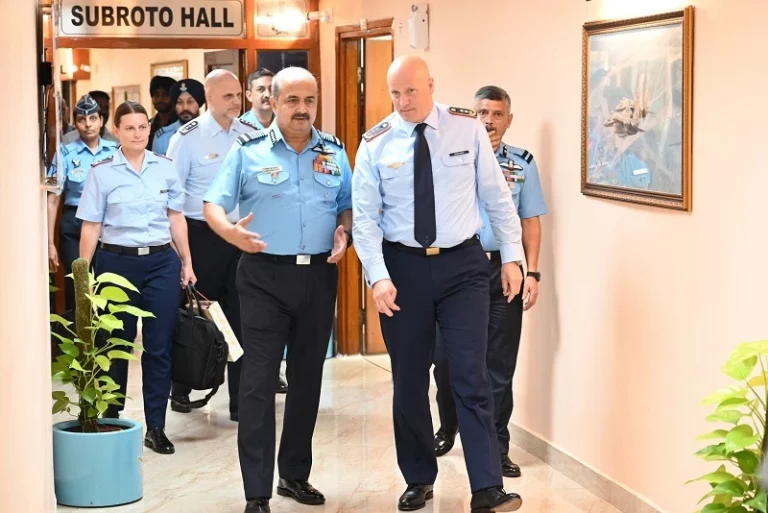
“India has the third largest air force in the world. During his visit to New Delhi, Gen Lt Ingo Gerhartz spoke with the Indian Air Chief Marshal VR Chaudhari about possible cooperation and promoted the idea of a joint exercise next year in India,” the German Air Force said after Wednesday’s meeting between the two air force chiefs.

Over the last three days, Gerhartz has held crucial talks with Defence Secretary Giridhar Aramane, Chief of Defence Staff (CDS) General Anil Chauhan, Chief of Naval the Staff (CNS) Admiral R Hari Kumar besides CAS Air Chief Marshal Chaudhari to discuss new avenues of collaboration towards bolstering defence ties and ops engagements.

German Air Force chief Lieutenant General Ingo Gerhartz with CAS Air Chief Marshal VR Chaudhari (Image courtesy: Twitter/@Team_Luftwaffe)

On Thursday, the German Air Force chief visited the IAF’s Tactics and Air Combat Development Establishment in Gwalior where he was introduced to various operational and tactical training aspects. He also shared his views on various training aspects of Germany.

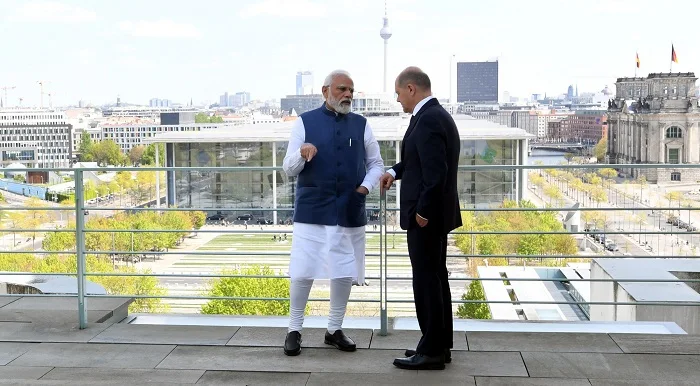
The last 12 months have seen defence ties becoming a key pillar of the India-Germany Strategic Partnership as Prime Minister Narendra Modi and German Chancellor Olaf Scholz have met several times spotlighting their mutual commitment to growth of the multifaceted relationship between the two largest democratic economies of the world.

Germany is concerned with the increasing Chinese belligerence in the Indo-Pacific and has a strategic interest in free sea routes as more than 20 per cent of German trade is with countries in the region.

As Berlin began to see Beijing as a partner in global challenges, a competitor and “increasingly as a systemic rival”, it amplified exchange with actors from the region and saw India as a trusted friend for it to have a good assessment of the challenges that lie ahead.

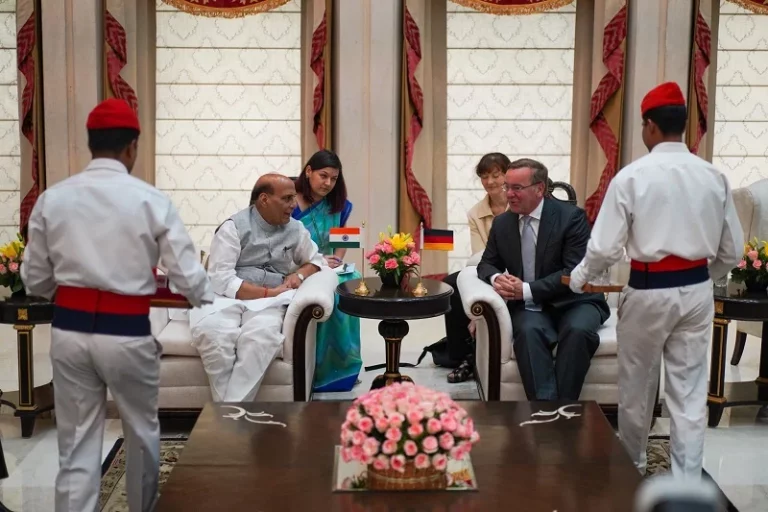
Defence Minister Rajnath Singh with the German Federal Minister of Defence Boris Pistorius (Image courtesy: Twitter/@BMVg_Bundeswehr)

In June, Boris Pistorius became the first German Defence Minister to visit India since 2015 and called New Delhi a “strategically reliable partner” which should be treated at par with Australia and Japan when it comes to German arms exports.

It was in his presence that Thyssenkrupp Marine Systems – a German world market leader in non-nuclear submarines – signed a Memorandum of Understanding (MoU) with Mazagon Dock Shipbuilders Limited on the intended construction of conventional, Air-Independent Propulsion (AIP) submarines.

The MoU laid the foundations for the German company’s future cooperation with India’s premier defence shipyard to compete in the Indian Navy’s tender for the supply of six submarines in a deal believed to be worth six billion Euros.

In a meeting with his German counterpart, Defence Minister Rajnath Singh suggested that India and Germany could build a more symbiotic relationship based on shared goals and complementarity of strength, namely skilled workforce and competitive costs from India and high technologies and investment from Germany.

He mentioned the opportunities that have opened up in the defence production sector, including the possibilities for German investments in the two Defence Industrial Corridors in Uttar Pradesh and Tamil Nadu.

“The Indian defence industry could participate in the supply chains of the German defence industry and add value to the ecosystem, besides contributing to supply chain resilience,” Singh told Pistorius who wrapped up his India visit after a trip to the headquarters of the Western Naval Command in Mumbai.

At the same time, amid the ongoing Russia-Ukraine war, Germany continues to enhance its military strength like never before.

The German media quoted Gerhartz as saying on Friday that the country will soon acquire 60 Chinooks following which it will own NATO’s second largest helicopter fleet, after the United States.

(This article was first published in India Narrative)

Pakistan social media accounts found linked to Mewat riots

0

The ongoing investigation of Mewat riots has brought forth Pakistani connection in allegedly instigating the violence.

Around a dozen social media groups traced to Pakistan have come on police radar during investigations for allegedly playing a pivotal role in Mewat clashes. The groups are being run on social media platforms like WhatsApp, Facebook, Twitter and Telegram and have thousands of followers from across the Mewat region of Haryana, UP and Rajasthan.

These groups are allegedly professing hatred through daily broadcasts. The groups not just instigated mobsters to ‘give it all’ for the community during riots but were flooded with celebratory messages after the attack. Majority of accused nabbed have been found to be active members of these groups.

Amongst a dozen, was a YouTube account by the name of “Ahsan Mewati Pakistani”. His videos were specifically crafted using social media feeds that were making rounds on social media on July 31 when the riots started in Nuh district of Mewat. In response to complaints against this channel it has been taken down by YouTube. The now-removed YouTube channel, with 273 videos and 80,000 followers, was dedicated to spreading misinformation and promoting violence during the recent Haryana communal unrest.

“Yes there we have social media accounts being run from Pakistan under scanner for instigating the flare up in Nuh. Though majority chats or broadcasts have been deleted, we are trying to retrieve it. We have even recovered videos of clashes from these accounts which helped us identify the accused,” said Nuh SP Narendra Bijarnia.

The accounts are under the radar of National security agencies also. Rajasthan police too on an alert are probing similar accounts with numerous followers in districts of Alwar and Bharatpur.

It may be noted that around 40 voice messages shared in groups are being probed by the cyber cell where the mob was instigated by local leaders to attack and kill. One of the 2 minutes 50 seconds audio clip that has gone viral reveals a local leader asking a mob to attack Nalhar temple.

“Meos are not a community of cowards and this is the time to prove it. They are 200 here right now, at least kill 20 to teach a lesson and create impact. Gather all at Shingaar temple. Get out of attachments with your family, money, children etc as one day everybody has to die, so die for your community. Don’t shoot any videos while attacking. Video addiction is a major problem with you people,” one of the voice messages posted on a group said.

Before the government could shut down the Internet, videos of cars and their locations were shared in WhatsApp groups asking local mobsters to gather, intercept and attack. There were voice messages asking mobsters to cover faces and ensure they are not captured in any video

Many WhatsApp groups were in fact created that very same day and accused were part of these. The messages had been deleted but the cyber cell with help of experts is recovering the same.

(This article was first published in India Narrative)

Pak Army abducts two Baloch youth in Balochistan

Two young Baloch have disappeared by the Pakistan Army, while a third person has been released after the incident.

As per reports, Zareef Baloch and his friend Tahir Baloch were forcibly abducted by the Pakistan Army from Absar Kolwai Bazar in Turbat, Balochistan. While Tahir Baloch was eventually released, Zareef Baloch’s whereabouts remain unknown.

In a similar incident, another Baloch youth named, Fayyaz Ali was taken from his home by Pakistan forces. Considerably, this is the second time that Faiyyaz Ali has been forcefully disappeared by the Pakistan Army. Last time when he was disappeared, it took him nine months to return home.

Families of Zahir Baloch and Fayyaz Ali have been trying to seek the information regarding the arrest and their whereabouts. Unfortunately, the impunity of Pakistan Army is making them suffer even more. Since the last few weeks, Pakistan Army has been more indulged in abducting the youth and even minors. The disappearance of young Baloch is a part of new measure to intensify the curbing of Baloch voice. Also, this indicates towards the profiling done by Pakistan Army and so-called security forces is to keep a check on rising potential voices. The case of Fayyaz and Zareef are an evidence of that. Since, the illegal occupation of Balochistan in March 1948, Pakistan has incorporated every method to suppress the voice of Baloch nation. However, with more suppression they are only witnessing more resistance.

Turbat erupts in protest, demands return of Naushad Baloch abducted by Pak Army

Turbat, a city in Balochistan, witnessed a fervent rally as the family of Naushad Baloch, along with the Baloch Solidarity Committee, raised their voices against the troubling case of his enforced disappearance. Naushad Baloch, the son of Miandad, was taken into custody by Pakistani forces near Turbat Obsar check post on July 31. Despite the passage of time, he has not been located or heard from since that fateful day.

The rallying cry for Naushad’s safe return grew stronger as his family and supporters organized a protest rally in Turbat. Addressing the media at the Turbat Press Club, Naushad Baloch’s family members shared the heart-wrenching account of his disappearance. He was reportedly taken while returning from his work in Turbat, near the Obsar Check post. The family lamented the lack of information or answers, urging authorities to take swift action to locate him and ensure his safe return.

In an emotional appeal to the KACH authorities, the Balochistan government, and human rights organizations, Naushad’s family emphasized the urgent need for intervention. They called for a collective effort to secure his release and put an end to the distressing ordeal their family is enduring.

The family vehemently denied any wrongdoing on Naushad’s part that could justify his disappearance. They pleaded for transparency and fairness, demanding that if there are allegations against him, they should be proven through due process rather than resorting to enforced disappearances, which they assert is not justifiable under any legal framework.

The case of Naushad Baloch highlights the deeply troubling issue of enforced disappearances in Balochistan, a region grappling with the painful separation of loved ones. His family’s plea resonates as a call for justice, transparency, and compassion. As the rally in Turbat demonstrates, the demand for answers and action remains unwavering until Naushad Baloch is safely reunited with his family and loved ones.

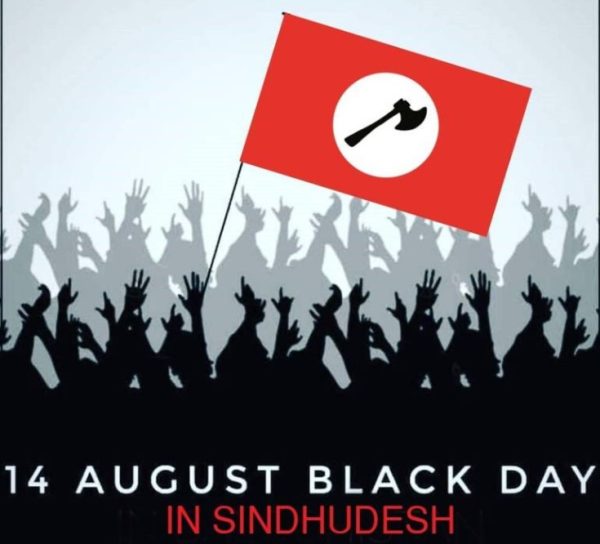
Balochistan declared independence from the British on August 11, 1947. However, this freedom was short-lived. On March 27, 1948, Pakistan forcibly occupied Balochistan. Since then, Balochs have been subjected to mysterious abductions, mass murders, and mutilations.

To fight this unending era of subversion, Balochistan is waging an all-out war against the occupying Pakistani forces. Whether it is through protests in Balochistan and abroad or through an armed struggle against the absolute abrogation of human rights and illegal occupation, Balochistan is resisting the brutal Pakistani establishment.

Frightened by the spirit of Balochistan, the state terrorists of Pakistan, i.e., the Pakistan Army, are using every illegal approach to curb this resistance.

Lok Sabha: Centre introduces three bills to replace Indian Penal Code, CrPC & the Indian Evidence Act

Union Home Minister Amit Shah unveiled a trio of bills in the Lok Sabha today, marking a significant move to revamp the country’s criminal justice system. The proposed legislation seeks to replace the Indian Penal Code (IPC), the Code of Criminal Procedure (CrPC), and the Indian Evidence Act. In presenting these bills, Shah emphasized the government’s objective of ensuring “justice, not punishment”.

The bills, named the Bharatiya Nyaya Sanhita, 2023, the Bharatiya Nagarik Suraksha Sanhita, 2023, and the Bharatiya Sakshya Bill, 2023, will now undergo detailed examination by a parliamentary panel.

Shah highlighted the critical shift in focus from punitive measures to the dispensation of justice. He highlighted that the current laws were designed to serve the interests of the British administration and primarily aimed at punishment. The new legislative framework, however, intends to safeguard the rights of Indian citizens and prioritize justice over retribution.

He stressed, “The intent of the new laws will not be punitive; instead, they will be centered on delivering justice.” Shah further explained that while punishments would remain integral to deter crime, the primary emphasis would be on addressing the root causes and ensuring the fair treatment of individuals within the criminal justice system.

Repeal of Sedition Law

A notable aspect of Shah’s announcement was the repeal of the sedition law, which has been a topic of debate in recent times. The new legal framework introduces Section 150, which focuses on acts endangering the sovereignty, unity, and integrity of India. This provision encompasses various forms of expression, including spoken and written words, electronic communication, or any means that promote secession, rebellion, subversive activities, or separatist sentiments.

The new law suggests severe penalties for such actions, including life imprisonment or imprisonment of up to seven years, accompanied by fines.

Capital Punishment for Mob Lynching:

A significant proposal brought forward by Shah is the inclusion of capital punishment for mob lynching cases. The provision states that when a group of five or more individuals collectively commits murder based on factors like race, caste, community, gender, or personal beliefs, each member of the group will face death penalty or imprisonment for life, with a minimum of seven years’ imprisonment and fines.

Stricter Punishments for Rape:

The proposed bills also entail modifications to the punishment structure for rape cases. Notably, the death penalty could be imposed for the rape of minors. The term ‘life imprisonment’ is redefined as ‘imprisonment for natural life.’ The new law advocates rigorous imprisonment of not less than ten years, extendable to imprisonment for the remainder of the offender’s natural life, along with fines. The bills also include provisions for punishing those who disclose the identity of rape survivors.