Home Blog Page 200

Operation Maa by Indian Army rehabilitated Kashmiri youth during insurgency: General Tiny Dhillon

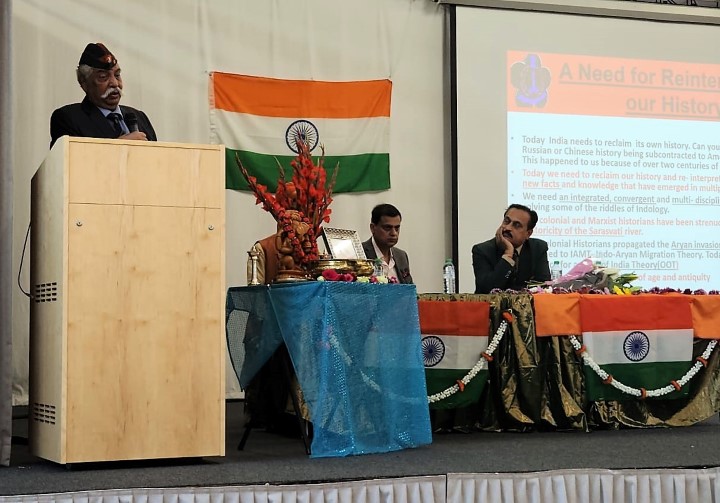
London: Indians in London got a rousing applause from retired army generals – GD Bakshi and Tiny Dhillon on Sunday. The noted generals, who remain hyper active years after retirement, urged the diaspora to battle convoluted global narratives and emphasised how India is taking on Pakistani machinations in Kashmir.

Addressing the diaspora, General Tiny Dhillon spoke about Operation Maa, through which the Indian Army mainstreamed dozens of Kashmiri youth by finding them jobs and settling them in cities like Jammu and Srinagar. Giving an insight into the Indian Army initiative, Dhillon said: “We were able to save at least 50 Kashmiri youth who dropped their guns and came back to their families… During encounters we found that most Kashmiri youth always carried a letter with them which was mostly addressed to their mothers and seldom to other members of the family”.

He highlighted how as a captain posted in Kashmir, he realised that the Kashmiri youth had a special place for their mothers. “Then we decided to stop the encounter and would call their mothers or other family members. We would even recharge their mobile phones so that they could speak with their families”. Dhillon said the army then decided to persuade the militants by offering to keep their identities a secret, by not filing police cases and rehabilitating them by placing them in jobs according to their qualifications.

Dhillon highlighted the hardships that army families face. He recalled how his wife got news of his death twice and how she composed herself on both occasions. He also illustrated how adversities and tough situations have created leaders.

General GD Bakshi on the other hand spoke about ancient India and how a global narrative set by Western academia has sought to undermine Indian history, civilisation and valour.

Talking about the contribution of the diaspora, Bakshi said that Indians have always made the country proud. “The diaspora fought in the Second World War… and it was the diaspora that joined the Indian National Army in Singapore and Malaysia to lead the march for Indian freedom”.

Addressing the diaspora just a day before Pakistan celebrates its Independence Day on August 14, Bakshi said how he was a part of the 1971 war in which India changed the map of the world by creating Bangladesh. “In just 13 days we marched 515 km from three sides into Bangladesh… The Pakistani general was sobbing as he handed over his pistol to General JS Arora”. He underlined how India was able to make the Pakistani Army surrender its 93,000 soldiers – the biggest such surrender after the World Wars.

Talking about his research into Indian history after his retirement from the Indian Army, Bakshi said: “I have spent my time correcting India’s history. Very few countries had their history betrayed in a fashion so malicious by colonial historians. They are working to an agenda… It is time that we stop the outsourcing of Indian history”.

Bakshi added that the new historians are not saffronising history. “We are only going by the truth… We are the oldest surviving civilisation according to carbon dating. We have been present in Haryana in Bhirrana for at least 8,500-9,000 years… The vedas go back nearly 10,000 years”.

The general, who has now focused his life on digging into the roots of Indian civilisation said that India is the cradle of civilisation as Indians spread out from here and it was not the other way round. He added that he has been using all the new tools of investigation – satellite image mapping of Saraswati river, speaking with genetic experts, doing historiography, discussing with archaeologists so that the reality of the Indic civilisation can be dug out.

Taking Bakshi’s discussion further, even Dhillon said that 10,000 years as a civilisation “gives us a lot of stability on the planet” and urged the countrymen and women to exert themselves through their civilisational heritage, culture and history.

(This article was first published in India Narrative)

Har Ghar Tiranga rallies sweep across a new Kashmir as peace takes centre stage  

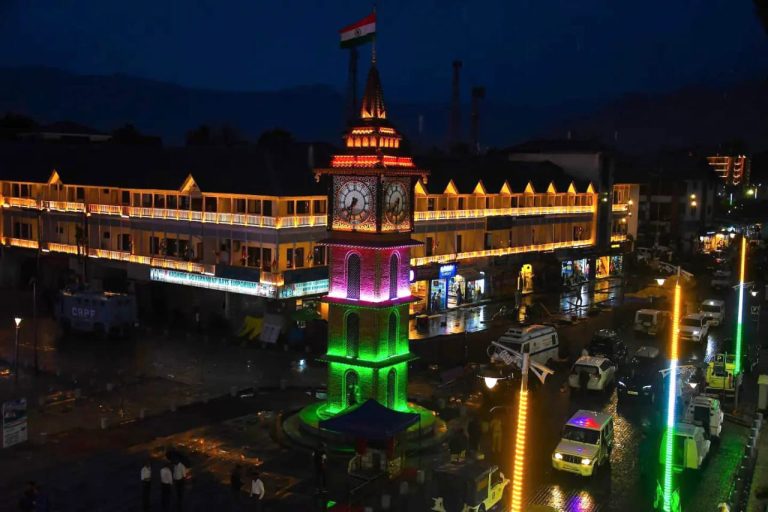
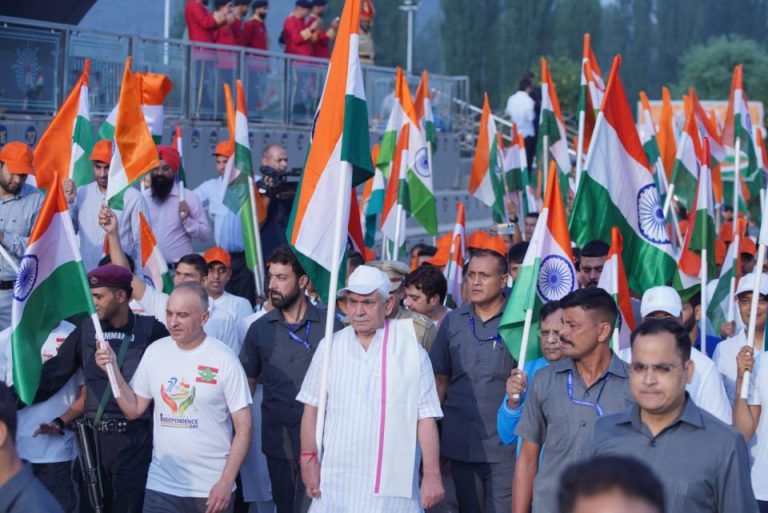
Srinagar:  On Sunday and Monday, thousands of Kashmiris participated in the “Har Ghar Tiranga” campaign initiated by LG Manoj Sinha with a grand show in Srinagar. Reports of such rallies are pouring in from all district headquarters in a new Kashmir that presents a stark contrast to its turbulent years of terrorism.

While extremists such as Ahad Jan and Burhan Wani have vanished in the last 13 years—particularly in the last 5 years—the man in news from Bandipora on Independence Day 2023 is carpet weaver Mohammad Maqbool Dar, 35, of Ashtengo.

In a first, the 35-year-old weaver has designed and hand-knotted the map of India in tricolour on a carpet. “I was thinking I should make something different for my country, so I made a map of India in tricolour. It took me two months — day and night — to weave this design,” Dar said at his unit ‘Delight Carpet Weavers’. He is hopeful that his unique carpet would hang on a wall of the new Indian Parliament building in New Delhi very soon.

In the summer of 2010, as many as 55 civilians died in different incidents of police and CRPF firing from 11 June to 15 August when Omar Abdullah’s National Conference-Congress coalition dealt with street demonstrations and arson across the violence-ridden Kashmir valley. The number of such fatalities subsequently reached 80 when the turmoil subsided in October.

Thousands of police and paramilitary personnel and civilians sustained injuries. Thousands of civilian and government vehicles including hospital ambulances were damaged in stone pelting. Tear gas, pellets and bullets were the government’s only answer to douse the flames of protest.

When Chief Minister Omar Abdullah was in the midst of his Independence Day ceremonial speech at Bakhshi Stadium of Srinagar on 15 August 2010, a suspended police head constable, Ahad Jan of Ajas, Bandipora, hurled his shoe straight at the chief guest’s head. It fortunately missed the intended target and created ripples in the media and political circles.

Jan was taken into custody and later released on CM’s personal instructions but as many as 15 police and security personnel were placed under suspension.

Groping in the dark, the government on one side attempted to beat down the street turbulence with force but looked apologetic on the other side. No sooner did the news of Jan’s “bravado” spread in the hinterland, hundreds of azaadi-lovers gathered at his home and praised his “bold act of resistance.” There were slogans for azaadi and Pakistan and against India and the government.

As Syed Ali Shah Geelani’s unending hartal calendars paralysed life across the valley for several months, Omar sent his political advisor Devender Singh Rana to a Forest Department hut at Cheshma Shahi, outside Raj Bhawan, where the separatist hardliner had been detained. On behalf of the Chief Minister, Rana begged Geelani for “a small space” for the NC and its government. This is exactly what Prime Minister Narendra Modi and Lieutenant Governor Manoj Sinha are referring to when they assert that their government would not “buy peace”.

Now have a look at the scenario before and after August 2010.  Ahead of Independence Day in 2008, a robust ecosystem of separatists and militants paralysed life across the valley. On 11 August 2008, a rally of 100,000 people was organised for a march from Sopore-Baramulla to Muzaffarabad (PoK). Even as the police and security forces failed to stop the access of several separatist leaders to the march, firing was opened near Sheeri on Baramulla-Uri highway in which prominent separatist leader Sheikh Abdul Aziz and some of his associates were killed.

Governor N.N. Vohra’s administration permitted Sheikh Aziz’s grand Rasm-e-Chaharum congregation at Pampore. Again, there were slogans, speeches and flags for azaadi and Pakistan. On their return, the processionists dismantled the house of the key counterinsurgent Ghulam Mohammad Lone alias Papa Kishtwari. The I-Day parade and speech on 15 August 2008 at Bakhshi Stadium was just a formality. Only a few government officials and personnel attended.

In August 2016, Kashmir witnessed worse. Hizbul Mujahideen terrorist poster boy Burhan Wani’s death in an encounter at Bamdora, Kokernag, triggered a massive street turbulence. Everybody in the PDP-BJP government was apologetic. Chief Minister Mehbooba Mufti said publicly that she would have lifted the operation if she had known about Wani’s presence at the hideout. Almost all the top officers involved in this operation were removed and shifted to insignificant positions.

Later, on one occasion, one of CM’s key aides and Ministers wrote a letter to Geelani, virtually seeking amnesty for her. He beseeched Geelani to treat Ms Mufti as his own daughter. Geelani apparently remained unrelenting. Months later, it surfaced that the Government had inducted Geelani’s grandson as an officer at Sher-e-Kashmir International Convention Centre. Candidates alleged that it was a backdoor appointment as the candidate with 76% marks had been selected and those with 84% marks dropped. On the day of Interview, Geelani called for a total shutdown and a march to Hazratbal.

As Geelani’s hartal continued for over four months, Chief Minister Mehbooba Mufti in her extempore Independence Day speech claimed credit for her father and her party. She asserted that Mufti and his government had finished the fear of the counterinsurgent forces, “the fear of the white Gypsy and crackdown”.

“In 2002, we opened the gates of the jails and released everybody. We released Geelani Sahab and Yasin (Malik) Sahib. We gave them freedom, told them you run your movement and seek solutions in your own way, we will run ours in our own way. We withdrew POTA, stopped crackdowns” Ms Mufti said. Like 2008 and 2010, Bakhshi Stadium wore a deserted look with a sombre ambience. By the time, the valley’s most violent street turmoil ended, around a 100 people got killed, over 10,000 civilians, in addition to over 5,000 personnel sustained injuries—mostly due to pellets and stones.

Over 18,000 civilian vehicles are estimated to have been damaged by the stone pelters while imposing Geelani’s infinite hartal calendars. Respected citizens complained of physical torture and humiliation by unruly youngsters who struck the defaulters bodies with highly acidic nettle and checked if the female commuters were really pregnant and going to a hospital. It was a state of total anarchy and lawlessness.

Residual effects of 2016 were also visible in 2017 and 2018. Finally, the door for that turbulence was decisively shut when the PDP-BJP government collapsed in June 2018 and the imposition of Governor’s rule, followed by President’s rule.

Independence Day celebrations remained muted on 15 August 2019 due to the curfew imposed after abrogation of Article 370 on 5 August. In 2020 and 2021, Covid-19 queered the pitch of all celebrations. Finally, a new chapter began in August 2022, when a large number of people and students participated in the ceremonial parade and the government agencies encouraged Tiranga rallies in Srinagar and elsewhere. However, the first major show of the changed situation is waiting at Bakhshi Stadium on Tuesday.

It is for the first time after 2017 that Independence Day ceremonial parade is being held back at its traditional venue of Bakhshi Stadium. It is also for the first time since 1989 that the Government has abandoned the entry pass system and invited the common people for participation, making it officially clear that there would be no restrictions, no curfew or hartal and no telecommunication/internet shutdown anywhere in Kashmir.

(This article was first published in India Narrative)

Why at 77 a new India is becoming the flavour of the world

0

India, after 76 years of Independence, has finally firmly positioned itself not just as a force to reckon with on the world stage, but a voice for the Global South through its soft diplomacy and the adherence to the ethos of strategic autonomy. India’s steady economic growth aided by its foreign policy has now caught the attention of the world. Last year, India surpassed the UK to become the world’s fifth largest economy.

“The new India under Prime Minister Narendra Modi displays confidence and decides what is best for its own people. Importantly, it has made it clear that it will not be dictated by any other power,” a foreign policy watcher said.

Last year External Affairs Minister S Jaishankar famously said that “Europe has to grow out of the mindset that Europe’s problems are the world’s problems, but the world’s problems are not Europe’s problems.”

Despite repeated nudging from the West, India refused to condemn Russia for its attack on Ukraine. Simultaneously, its assistance to bankrupt Sri Lanka, spearheading the exercise to resurrect the island nation and continuous support to Afghanistan have given New Delhi an unprecedented edge. In fact, its action stood out after it rushed with necessary aids to the earthquake-hit Turkey earlier this year.

“It is incredible how India has been helping other nations,” a CEO based out of South Korea told India Narrative.

“A large part of the credit has to go to the leadership. Modi with his unique style has managed to bring India on the world map,” he noted.

Among his several high profile visits, Modi, in July, attended the Bastille Day military parade in Paris along with French President Emmanuel Macron as the chief guest. Modi also visited Washington where he addressed the US Congress besides being hosted by American President Joe Biden for a state dinner.

Hong Kong based South China Morning Post said that to just state that the Indian prime minister has found himself in the sweetest of spots is still an understatement. “At the moment, love him or hate him, it’s probably fair to say that he is the world’s most successful politician,” the newspaper said.

It further said that from Moscow to Beijing, and from Paris to Washington, leaders of the East and West have either been busy courting Modi or going out of their way to avoid upsetting New Delhi.

India has also managed to make a mark as the chair of the G20 and Shanghai Cooperation Organisation groups this year.

The Global Leader Approval Ratings released by a US-based consulting firm Morning Consult revealed that Modi with an approval rating of 76 per cent, Modi remains the world’s most popular leader.

Just two years ago, at a time when it was in the middle of the Covid 19 pandemic, many pundits had almost written off the India story.

Congress party leader Rahul Gandhi in fact tweeted saying that “India looks a lot like Sri Lanka.” Earlier this year, former Reserve Bank of India governor Raghuram Rajan said that India is dangerously close to Hindu rate of growth.

(This article was first published in India Narrative)
Senior journalist Jan Mohammad Mahar murdered in Pakistan

The deplorable condition of journalists in Pakistan has once again been brought to the forefront following the brutal murder of Jan Mohammad Mahar, a seasoned journalist. Mahar was a senior news reporter and the Bureau Chief at Kawish Television Network (KTN) News in Sukkur, Sindh. At approximately 9 p.m. yesterday, he left the office and was in his car when unidentified assailants on a motorcycle attacked him. The perpetrators fired multiple shots at Jan Mohammad Mahar. He was initially taken to the civil hospital and later transferred to a private hospital, where he succumbed to his injuries.

According to reports, the police sealed off the area and reviewed CCTV footage from the vicinity. Local law enforcement has asserted that the killing was connected to a land dispute. However, a segment of the population has raised concerns about the police’s statement, arguing that such a hypothesis cannot be justified without a thorough investigation, especially within such a short timeframe.

Nevertheless, this incident is not an isolated one and further underscores the deteriorating situation of journalists in Pakistan. According to the ISJ South Asia Press Freedom Report 2022-23, Pakistan has witnessed 101 instances of media rights violations, resulting in the deaths of five journalists.

The International Federation of Journalists (IFJ) and its affiliate, the Pakistan Federal Union of Journalists (PFUJ), have strongly condemned the killing and have called for an immediate investigation, as well as compensation for the grieving family.

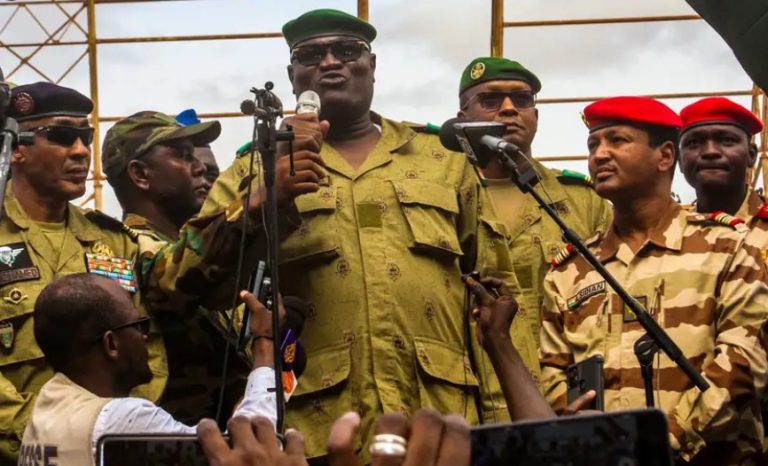
Niger military to prosecute ousted President Bazoum for “high treason”

The coup leaders of Niger have stated that they will prosecute ousted President Mohamed Bazoum, whom they toppled. He would be prosecuted on the charges of “high treason” and “undermining the security of the country.”

The military regime has said that it has enough evidence to “to prosecute the deposed president and his local and foreign accomplices before the competent national and international bodies for high treason and undermining the internal and external security of Niger.”
The Generals also called the sanctions imposed by ECOWAS as “illegal, inhumane and humiliating”. Bazoum has been held in his presidential residence along with his son and wife since July 26. It has been reported that the ousted President has been living without electricity and proper food. However, the coup leaders has repudiated such claims.  

The statement by the coup leaders could further aggravate the conflict, as a week ago, ECOWAS ordered the activation of a standby force for the possible use of power against junta. The order was issued after the Summit of the head of states of the West African Nations in Nigeria’s capital, Abuja. Nigerian President Bola Tinubu, chair of ECOWAS had said that no option had been taken off the table, including the use of force as last resort.

The situation has been intense since day one of the coup. After military took over the nation, ECOWAS gave a deadline of July 30 to release the ousted President, which was ignored by the coup leaders.  And now, after the activation of standby forces, the decision of prosecution of Bazoum looks retaliatory and has the potential to take the conflict to a new level.

Sindh observes ‘Black Day’, strongly condemns Pakistan’s establishment

The Jeay Sindh Freedom Movement (JSFM) has marked August 14 as a “Black Day” across the province of Sindh, as its workers tie black arm bands and hoist black flags at intersections, while also raising the national flag adorned with a red mace. The movement’s members are using this occasion to record their protest against what they deem as the historical mistake of Pakistan’s establishment on August 14, 1947.

JSFM’s leadership, including Chairman Sohail Abro, Zubair Sindhi, Amar Azadi, Sodho Sindhi, Hafeez Deshi, and Pireeh Sindhu, issued a joint statement expressing their perspective. They contend that prior to 1947, Sindh existed as an independent entity for thousands of years, making the establishment of Pakistan an unnatural state and a grievous historical error.

Pakistan’s Creation: A Dark Day For Humanity

Describing the creation of Pakistan as a “dark day for humanity”, the JSFM leaders claim that the Sindhi, Baloch, and Pashtun communities were subjected to oppression and enslavement by what they refer to as the “Punjabi military establishment”, They accuse this entity of ongoing economic and political suppression, asserting that their lands, resources, and homeland have been forcefully occupied.

“The right to self-determination and freedom is our birthright”, declared Chairman Sohail Abro, affirming their unwavering commitment to achieving independence from Pakistan. “One day, we will break free from this rogue state.”

As the anniversary of Pakistan’s independence approached, JSFM raised concerns about the crackdown on pro-independence political workers in Sindh by Pakistani Punjabi state agencies. They claim that cases of abduction and disappearance of such workers are still rampant across the region. JSFM leaders have issued an appeal to international organizations, including the United Nations, Amnesty International, and the European Union, to take notice of these human rights violations and to intervene in accordance with international law.

While tensions continue to simmer, JSFM’s observance of Black Day underscores the persistence of historical grievances and the ongoing struggle for self-determination in Sindh.

Four leopard skins seized from poachers in Srinagar

Officials of the Directorate of Revenue Intelligence (DRI) has seized the skins of four leopards after busting poaching gangs operating in Jammu and Kashmir’s Srinagar. As many as 8 people including a J&K policeman involved in the illegal wildlife trade have been detained.

Acting on intelligence reports, officers of Mumbai Zonal Unit reached Srinagar in J&K posing as buyers of leopard skins.

After several rounds of negotiations, the sellers brought the first skin of a leopard to a pre-designated place near Dal Gate in Srinagar. Officers on surveillance intercepted a person who was carrying a leopard skin near the designated place. On the basis of his information, another accomplice was also intercepted at a public place in Srinagar.

After securing the first catch, the rounds of intense negotiations were continued with another gang of sellers following which another 3 leopard skins were seized and 3 people arrested in the case.

Initial investigation suggested that the leopards were poached from Ladakh, Doda and Uri.

Nation gears up for PM Modi’s last Independence Day speech before Lok Sabha polls next year

0

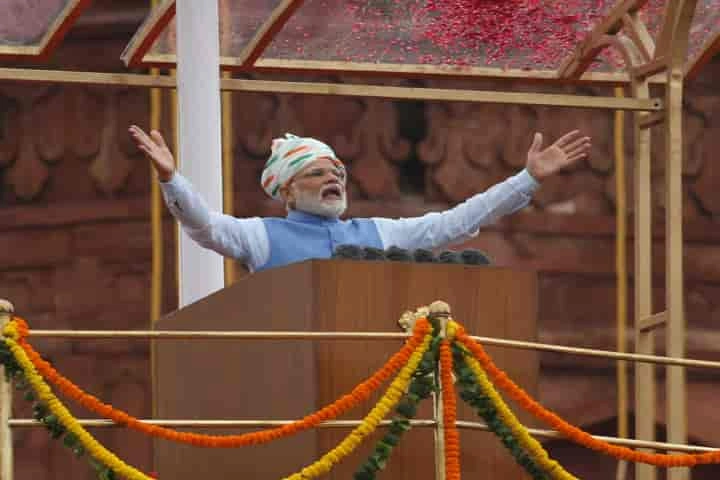
Prime Minister Narendra Modi’s address on 15th August — the last Independence Day speech before the general elections next year, will be scrutinised with a fine tooth comb. Modi, a powerful orator, is expected to outline India’s rise on the world stage, besides focusing on the developments at home which include infrastructure and manufacturing boost. The Prime Minister may also touch upon the G20 highlights under India’s presidency while once again laying the thrust on the country’s democratic framework.

This year’s celebrations will be high pitched as it will culminate the ‘Azadi Ka Amrit Mahotsav’ celebrations, which were launched by Modi from Sabarmati Ashram in Ahmedabad on March 12, 2021, an official statement said.

The Prime Minister will attempt to inject renewed vigour at a time when the focus is on ensuring that the country attains the status of “developed nation’ by 2047, sources said.

Modi, at different fora, has repeatedly highlighted that India is a vibrant democracy. “India is the mother of democracy,” is the line that has been promoted as part of the G20 deliberations.

Modi in his last year’s Independence Day address had underlined the need to maintain respect for women and boost “Nari Shakti” or woman power. He said that women’s participation and their role will form the pillar of India’s growth.

“Our Nari Shakti is being represented in all sectors- in police, villages etc. The more opportunities we give to our daughters, the more they will take us forward,” he said, adding that it is important to ensure that nothing lowers the dignity of women.

He had also voiced five pranas and pledges including de-colonising the mind to foster the rise of India as a developed nation by 2047–a template that had percolated in his subsequent speeches that included re-naming Raj Path to Kartavya Path and installation of the bust of Subhash Chandra Bose at India Gate in the capital.

The recent incidents in Manipur and Nuh on the outskirts of Gurugram have, however, become a cause for concern.

Last week, the Centre announced three new bills in a bid to overhaul existing criminal laws while upholding the sovereignty or unity and integrity of India. The three bills are aimed at repealing the sedition law and replacing the archaic Indian Penal Code (IPC), 1860; the Code of Criminal Procedure (CrPC), 1973 and the Indian Evidence Act, 1872. Under the new structure, the Centre aims to introduce maximum punishment for crimes such as mob lynching and rape of minors.

“When a group of five or more persons acting in concert commits murder on the ground of race, caste or community, sex, place of birth, language, personal belief or any other ground each member of such group shall be punished with death or with imprisonment for life or imprisonment for a term which shall not be less than seven years, and shall also be liable to fine,” it highlights.

Sources said that it is hard to predict what the Prime Minister may say, but Modi might throw more light on the new legal structure that is being proposed, especially at a time when the world focus has shifted to these incidents.

“The proposal to go in for a complete overhaul of the criminal laws is timely and it shows that the Centre is keen to take action,” one of them said.

In May, Modi delivered his 100th Mann ki Baat episode.

In his speeches, Modi with a unique communication style has been targeting the grassroots.

“The Prime Minister is known to pick up issues that are key for nation building. In his speeches, he speaks the language that connects with the masses,” Sajjan Kuma, political analyst and author told India Narrative.

Meanwhile Modi changed his social media accounts DP to the Tricolor.  He also urged every citizen to do the same in the spirit of the #HarGharTiranga.

The nation is celebrating Har Ghar Tiranga movement — between 13-15 August.

Manipur Unrest and Unfair Demonising of Assam Rifles

It’s distressing to hear that 40 Members of the Legislative Assembly [MLA] belonging to various political parties have sought replacement of Assam Rifles to assist Manipur police for restoring peace in violence hit Manipur by other “trustworthy central forces”. However, since this bizarre demand is clearly an attempt by some politicians to score brownie points, it doesn’t come as any big surprise.

Assam Rifles enjoys an unblemished 188 year old legacy of selfless service in protecting locals living in India’s troubled north east and that’s why this force is aptly referred to as ‘friends of the hill people’.  So, even though casting aspersions on the professional integrity of Assam Rifles borders on the blasphemous, it’s not for the first time that this force has become the target of political intrigue.

Those who have served with the Assam Rifles are sanguine that while locals have always reposed immense faith in this force because of its impartial dealings, it is seen as a ‘spoiler’ by certain groups and individuals with motivated agendas associated with illegal as well as anti-national activities and there’s no dearth of those who have an axe to grind with Assam Rifles.

A record seizure of drugs worth more than. Rs 1,610 crores by Assam Rifles in the last 12 months alone would have most certainly earned the ire of the drug mafia in the north east. Similarly, by providing accurate information regarding the influx of refugees from Myanmar, it has understandably upset human trafficking syndicates. Most importantly, relentless operations against terrorist groups as well as concerted action against well-entrenched gangs of extortionists have enraged inimical forces to no end. 

As these criminal lobbies have both the requisite money and muscle power, shaping public opinions to suit vested interests through inducement or intimidation isn’t very difficult.

It is clarified that there’s no intention to suggest or imply that the MLA’s who want that Assam Rifles be withdrawn from Manipur are in any way involved in or associated with illegal or anti-national activities. However, since politicians have to keep their constituencies in good humour, they at times have to accede and lend support to pressure groups and public sentiments, even when they know very well that the same are motivated or infructuous.

Anyone who has served in the Assam Rifles would recollect instances of local politicians confiding that while they firmly stood by this force one a given issue, political expediency compels them to side with their voters and raise their voice against the same. Nevertheless, MLAs levelling allegations that Assam Rifles has been discriminatory in its dealings with the Meitei vis-à-vis Kuki ethnic groups is a very grave issue that cannot be defended or summarily wished away.

Furthermore, with Manipur police filing a First Information Report [FIR] accusing Assam Rifles of allowing Kuki militants to “escape freely to a safe zone”, this issue assumes an exceptionally serious connotation as it implies organisational involvement of a Indian central armed police force in an anti-national act.

The media has quoted unnamed government sources confirming that the FIR lodged by Manipur police is likely to be withdrawn, but even if this happens, the damage caused to the reputation of Assam Rifles cannot be condoned.

In another development, 10 MLAs have submitted a memorandum requesting Manipur Chief Minister [CM] N Biren Singh not to withdraw Assam Rifles. Claiming that the Assam Rifles withdrawal demand had been made by some “biased” MLAs, the memorandum accused Manipur police of “lodging false and fabricated FIRs against the Assam Rifles.”

This memorandum goes on to state that “on behalf of all tribal communities, we the elected tribal representatives [MLAs] humbly pray to you not to remove the Assam Rifles from our state as it would harm and jeopardise our safety and security.”

While this earnest plea reflects public confidence in Assam Rifles, attempt by some to sully its image is something that can’t be allowed to go unquestioned and hence allegations of Assam Rifles displaying partiality towards a particular community, rightfully demands thorough investigation as it so that the record is set straight.

The first thing that needs to be understood is that Assam Rifles draws its manpower from all over India and as such, allegations regarding existence of an ethnic bias within this completely heterogeneous force are a bit too far-fetched. So, any apprehension of discrimination that exists within a particular community is largely illusory and due to prejudices that one develops due to disinformation spread by inimical elements.

Secondly, though a Central Armed Police Force administered by the Ministry of Home Affairs, Assam Rifles is entirely commanded by officers of the Indian Army on tenure based deputation. This ensures that the Indian army’s ethos of the nation coming first- always and every time, flourishes within the rank and file of Assam Rifles and effectively immunises this force from petty and disruptive influences of religion, caste and community.

Thirdly, though Assam Rifles battalions are stationed in India’s north east, they are not permanently based in a particular location. So, since Assam Rifles battalions move to a different location after completing the stipulated tenure at its current station [which could well be in another state], the inference that Assam Rifles battalions could develop special affinity towards a particular ethnic community on account of prolonged co-location, doesn’t hold water.

Fourthly, alongwith people from virtually every religion, caste and community of India, Assam Rifles also has a fair share of soldiers belonging to Meitei and Kuki communities and they, like all others, serve side by side and stay together through thick and thin. So, had there been even an iota of suspicion that Assam Rifles harbours bias against a specific ethnic group, then the soldiers of that particular community would have certainly objected and such remonstrations would definitely have found their way into social media.  

Lastly, besides providing security to both the Meitei and Kuki communities, Assam Rifles is also taking proactive actions to apprehend trouble makers and where necessary, even using force in the discharge of this duty. Yet, there hasn’t been even a single complaint regarding unwarranted or excessive use of force by any community and this fact in itself buttresses the “friends of the hill people” sobriquet bestowed on Assam Rifles.   

As regards the FIR lodged by Manipur Police against Assam Rifles, the less said, the better. Maintenance of law and order is the primary responsibility of state police, and Assam Rifles has been requisitioned by the civil administration in Manipur to help in restoring normalcy as the situation had gone beyond the control of the police. It goes to the credit of Assam Rifles that despite grave provocation and hostile attitude of Manipur Police, it has maintained its impeccable code of conduct and is carrying out its assigned duties with military aplomb.

Since both the Assam Rifles and Manipur police are working towards the same objective, the latter accusing the former for impeding its operation is regrettable. Manipur Police plan of action entailed breaching the inviolable sanctity of the established ‘buffer zone’, which if allowed could have snowballed into a major crisis by reigniting the wildfire of ethnic animosity.

Since Assam Rifles was acting strictly in accordance with the laid down orders and instructions, which Manipur police is well conversant with, its objection is inexplicable. Moreover, well-established protocols are already in place to resolve operational or functional differences between different government organisations that may arise while trying to restore law and order. Hence, choosing to file a FIR instead of seeking internal resolution of this issue is definitely distasteful.

Accordingly, the need for Manipur police to take the puerile step of lodging a FIR that is not only infructuous but also an insult to professional integrity of a reputed force which is acquitting itself creditably. So, this incident needs to be investigated and taken to its logical conclusion. Any attempt to water down this issue will set an unhealthy precedent and give inimical forces an opportunity to drive a wedge between the government forces and the people.

Tailpiece: The saving grace is that unlike politicians who are overly concerned about their vote bank and have no qualms turning into loose cannons, there’s no need for soldiers to indulge in theatrics or populism as they don’t have to stand in elections. Hence, irrespective of what comes its way, Assam Rifles will continue to implicitly follow the orders and directives of Dimapur based Spear Corps [which is overseeing the aid to civil authority operations in Manipur] to “Continue to be fair to all and Fear None” directive- both in letter and spirit!

Gwadar: Convoy of Chinese engineers attacked by BLA fidayeens

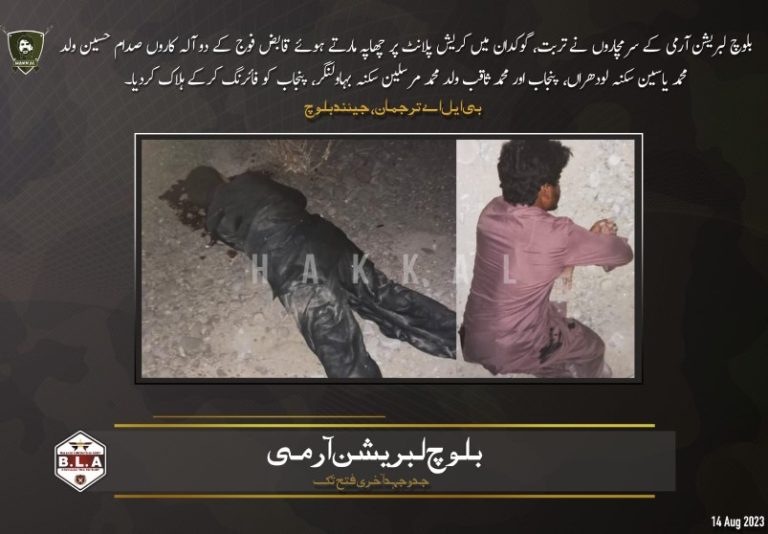
In a deadly attack on the convoy of Chinese engineers, BLA’s Majeed Brigade, a suicide squad, eliminated four Chinese nationals and nine Pakistan military personnel near Faqeer Colony in Gwadar. The attack was carried out by two Fidayeens of the Majeed Brigade, namely Naveed Baloch alias Aslam Baloch of Dasht Nigor and Maqbool Baloch alias Qayin Baloch of Geshkor Awaran.  The attack was intense and led to a two-hour-long armed engagement between the fidayeens and Pakistan military. During the whole operation, the city’s traffic was stopped and all the entries and exits of the city were also closed.
According to the information, the attack was carried out this morning when almost 23 Chinese engineers were on the move in the convoy. While the four of them have been killed, the number of casualties may eventually rise. In addition, nine Pakistan military personnel have also been killed in the attack, and many others have been severely injured. Explosions and gunfire were heard across the port city of Gwadar.

BLA has stated that the fidayeens, as they were groomed, carried out an exchange of fire till they could and then shot themselves with their last bullet. BLA has been actively involved in the resistance against the Pakistan Army for illegally occupying Balochistan and its exploitative policies. Chinese inclusion in the CPEC and its effect on Balochistan and Gwadar has also been a bone of contention between the Baloch and Pakistan. Due to the exploitative attitude towards Balochistan, Pakistan has reduced Balochistan to being a colony. In line with that, Majeed Brigade, that is responsible for the attacks has persistently targeted Chinese naionals along with Pakistan Army.