Home Blog Page 202

Gadar 2 : Old Wine in a New Bottle

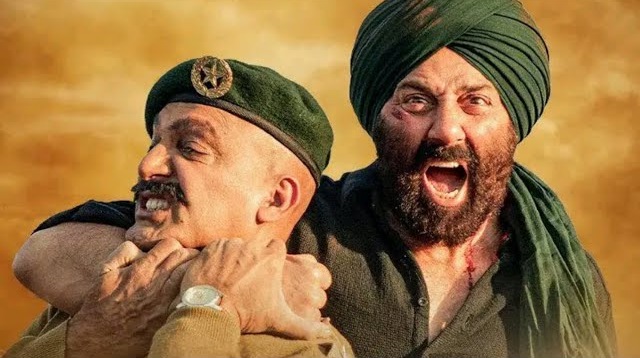
Almost 22 years after the original movie, “Gadar – Ek Prem Katha” was released in 2001, Gadar 2 released today, much to the delight of Sunny Deol and action movie fans in India. Anil Sharma and Sunny Deol had earlier stated that it took them a long time to make a sequel, as they had to make a movie that was relevant to today’s audiences. Have they done that in Gadar 2? Let’s find out!

What’s the story all about?

During the time of the 1971 war between India and Pakistan, Jeete (Utkarsh Sharma) gets abducted and tortured by Pakistani soldiers. His father, Tara Singh (Sunny Deol) sets on a journey to Pakistan to rescue his son from them. The movie is all about Tara Singh’s courage and prowess during this journey, and how he single-handedly brings his son back home.

In the 2001 movie, Tara Singh fought for his Pakistani wife, Sakeena (Ameesha Patel) with her father, Amrish Puri. In his movie, he fights against Paksitani Army General, Manish Wadhwa for his son, Jeete. The fights, Sunny Deol’s powerful, “dhai kilo ka haath” sequences, handpump scenes and his incessant snarling in Gadar 2 will definitely take you back to 2001!

However, the melodrama and action sequences that felt good in 2001 feel a bit outdated in 2023. Considering that we had to wait for 22 years for a sequel, it would have been better if the think tank of Anil Sharma and Sunny Deol had come up with a new concept for their movie.

The Verdict

Go for it only if you are an ardent Sunny Deol fan, or if you like his kind of action movies. Gadar 2, unfortunately, has nothing new to offer, as it is the same story churned out with a different set of villains. We give it a 3 out of 5, merely for the unparalleled screen presence of Sunny Deol.

Manzoor Pashteen reflects on August 8 Quetta tragedy

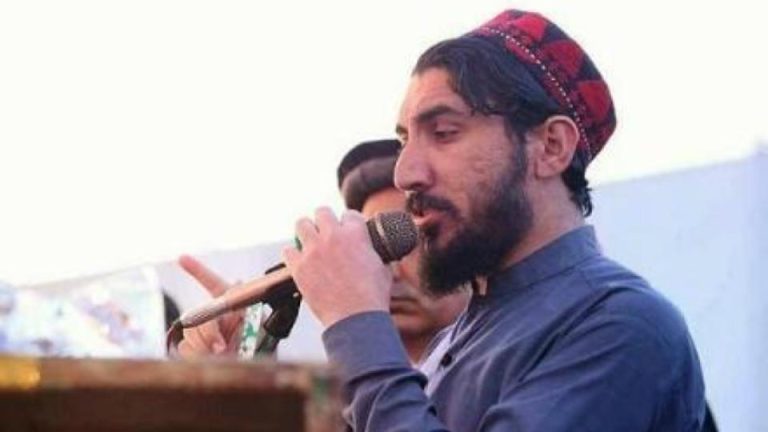
Manzoor Pashteen, a prominent advocate for justice and rights and PTM chief, has recently issued a statement shedding light on the tragic events of August 8, 2016. On that ill-fated day, an explosion rocked Quetta, claiming the lives of over 70 martyrs and leaving more than 130 individuals wounded. Pashteen’s words not only commemorate the lives lost but also ignite a conversation about the quest for justice that has remained unfulfilled.

In the years that have followed the heart-wrenching incident, the political landscape has undergone shifts with various parties forming governments, generals assuming leadership roles, and chief justices taking their place. However, despite these transitions, Pashteen points out that the families of the martyrs and the survivors of the blast are still awaiting justice.

Pashteen’s statement raises a vital question: In the midst of political changes and leadership rotations, where can the light of justice finally shine? His words resonate with the frustration felt by those seeking answers, revealing the ongoing pain of unresolved grievances.

The advocate’s message transcends mere reflection and propels a call to action. He underscores the pressing need to empower the masses and seek justice through organized collective efforts. Pashteen highlights that genuine protection and transformative change can only be realized through the joint strength of the people.

Pashteen emphasizes, “The path forward requires the establishment of strong public organizations in every village, tehsil, and district”. By cultivating these grassroots networks, Pashtin believes that both safeguarding and revolutionizing society can become achievable goals.

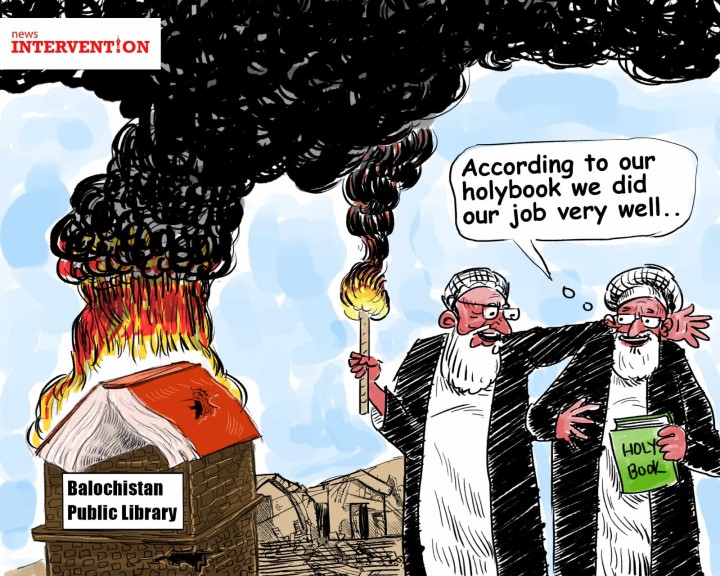
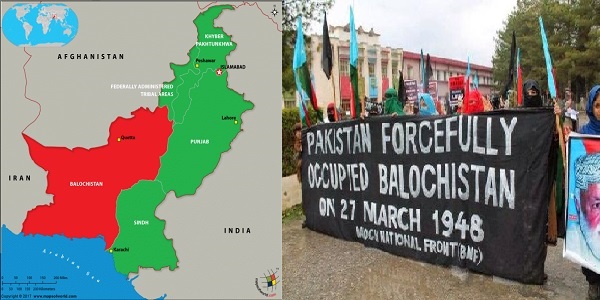
Following the illegal occupation of Balochistan in March 1948, Balochistan has been fighting the war of its existence. Be it the peaceful way of protests or the armed resistance, against the inhumane authoritarian quasi state of Pakistan, Balochs are fighting an all-front war.

As the human right abuses and exploitation of the Baloch resources are increasing with each passing day, there is also an inceasing voice from inside Balochistan demanding the forceful resistance against these atrocities. Unfortunately, one of the various reasons for such a voice is also the ignorance of international and multilateral human rights organizations. Inspired by their sinister interests, almost every organization has turned a blind eye towards the complete devastation of Balochistan.

OMG2 Review: Bold storytelling impresses viewers

The release of OMG2 was highly anticipated, especially after the CBFC cuts on the movie a few days ago. It was expected that the release might be delayed, but the makers went ahead with the original date after tweaking the storyline a bit to suit the specifications of the CBFC. Though it has been given an “A” rating in India, in countries like the UAE, the movie was released with a “12A” rating, allowing children above the age of 12 to watch the movie.

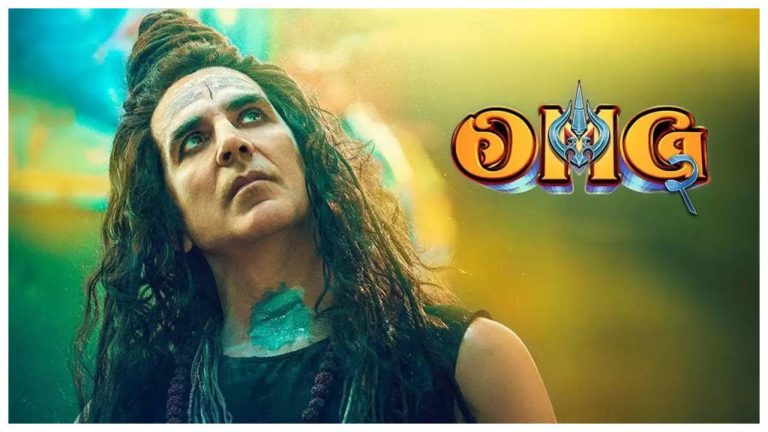
Directed by Amit Rai, OMG2 stars Akshay Kumar who plays the Messenger of God. The CBFC had asked the makers to change his role to that of a messenger instead of Mahadev, which was the original characterization of the actor. Pankaj Tripathi and Yami Gautam also feature in special roles in this movie.

Using a divine angle to focus on sex education in schools was always going to be a challenging topic, but Amit Rai shines in his storytelling. OMG2 hits the nail on its head without being too vulgar or crass about anything. Pankaj Tripathi is the actual hero of the story. His expressions, body language and command over the Hindi language steal the show completely, and it is not a mean feat considering he had Akshay Kumar next to him in most of the scenes!

What’s the story all about?

Sharan Mudgal (Pankaj Tripathi), a kind-hearted person, is a devotee of Lord Shiva. He lives a simple life and earns his livelihood by running a puja shop near a temple. His life changes one day when his son, Vivek (Aarush Verma) is admitted to the hospital. Sharan is on the verge of giving up on everything and fleeing from the place with his family when a Messenger of God (Akshay Kumar) interrupts him and urges him to fight for his son’s rights.

The Verdict

Amit Rai has taken a challenging yet sensitive subject in OMG2, but he has managed to do full justice to the script. Not once do we see any faltering from the storyline or crass language being used. Well, even if the storyline doesn’t interest you much, you can watch the movie just for the brilliance of Pankaj Tripathi and the divine swag of Akshay Kumar!

Echoes of Independence: Balochistan then and now

11th of August holds immense importance when it comes to Balochistan. On this day, Balochistan became free from British imperialism. However, after a short span of almost seven months, Pakistan invaded the sovereign country and illegally occupied it. Even organisations that champion human rights and uphold the concept of national sovereignty like the UN, turned a blind eye. Consequently, the Baloch are still struggling to get what they call, ‘the soul of a nation’, sovereignty.

Historical Roots Of Balochistan

The history of Balochistan as a community can be traced back to 15th century, when the Qambarani Baloch Surab and other Baloch tribes, founded a government by making Nagaar, an area in Sorab, as capital. This began the era of war in which Qambarani envisioned the unification of Baloch regions, and eventually succeeded in his attempt. A century later, Baloch invaded Kalat in 1530 under Mir Umar Mirwani. After the Kalat conquest, Mirwani received the status of King.

Mirwanis ruled Kalat for 136 years, before Kalat passed on to Mir Ahmad Khan I, another Qambarani Baloch community, in 1666. At that time, Shah Jahan was ruling the Mughal Empire and Kalat perceived a threat from Mughals, so Ahmad Khan made inexhaustive efforts to strengthen the military might of his empire. In that pursuit, Ahmad Khan fought various wars with Barozais, Jats and Mughals.

The later part of the Baloch history saw the reign of Abdullah Khan, who played a central role in making Greater Balochistan – a region comprising parts of Iran, Pakistan occupied Balochistan, Afghanistan, Sindh and Punjab – a reality.

Following Abdullah Khan, Balochistan saw some incompetent leaders until Naseer Khan Noori ascended the throne in 1749. Under the rule of Naseer Khan Noori, the Baloch dominion expanded to encompass various regions, including Bandar Abbas to the west, parts of Dera Ghazi Khan and Dera Ismail Khan to the east, Jalugir in the northern periphery near Kuchlak, Jacobabad in the southeast, and Sahil Makran to the south and west. He defeated Ahmad Shah Abdali in two battles.

Entry Of Britain

Balochistan thrived till the region was spotted by Britain. After almost 16 years of Naseer Khan Noori’s death Britishers focused on annexing Balochistan. In a first attempt towards Baloch annexation, the British used their most trusted tool of targeting the civilization. However,this was not easy as Balochistan was unified. They tried to dismantle this unity by sending Lieutenant Henry Pottinger, Captain Christie, Captain Grant and other such soldiers who had successfully led British military campaigns.

During the reign of Khan Mehrab Khan, the British sought to establish a route through Balochistan to access Afghanistan. They entered a treaty with Khan Mehrab Khan in 1838, allowing them passage. However, this move led to the British invading Afghanistan.

Unfortunately for the British, their caravans faced fierce attack by Murree warriors. This attack forced the British to retreat, and their losses in Balochistan contributed to their defeat in the first Afghan Anglo War of 1838.

The Baloch resistance compelled the British to rethink their strategy and consider the conquest of Kalat as a prerequisite for success in the Afghan war. Another driving force behind the British’s desire to conquer Kalat was the perceived threat from France, Germany, and Russia, who could potentially gain a foothold in Kalat and challenge British rule.

Consequently, in 1839, the British army, led by General Wilshire, launched an attack on the central city of Kalat. Despite the valiant efforts of Khan Mehrab Khan and his allies, the technologically superior British forces prevailed.

However, small battles between the British and Baloch still ensued. In 1840, Baloch finally succeeded in driving Britishers out of Kalat. But this success was short lived as in few months only, British regained control of Kalat by uniting with the Afghan forces. They appointed Col. Stacey as political agent in Kalat. During the meantime, various treaties were also signed between the British and Baloch, the prominent being the Non-Intervention Treaty of 1854.

British Entrenchment In Balochistan

Following the British recapture of Kalat, Balochistan witnessed sporadic uprisings. The Treaty of Mastung on July 13, 1876, significantly weakened Baloch independence, cementing British control through the Forward Policy.

This resulted in British supremacy over Balochistan, incorporating regions such as Sibi, Murree, Bugti, Khetran, and Quetta into British India on November 18, 1887, establishing British Balochistan as a distinct province.

The Forward Policy also triggered the initial partition of the Baloch state, leading to subsequent British engagement in Makran from 1890 onwards, involving British troops commanded by Major Mayer. As the 20th century progressed, the influence of political ideologies took root within Baloch society. In 1920, a clandestine group named “Young Baloch” was founded by Mir Abdul Aziz Kurd, marking a pivotal moment. This organization eventually evolved into a formal political party by 1931. Concurrently, Anjuman-e-Ittehad emerged as a significant Baloch entity, eventually transforming into the Kalat State National Party.

Balocistan started moving towards its Independence and along with that the vicious intentions of Jinnah also surfaced. First, Jinnah recognized Khan of Kalat as national ruler of Balochistan but from time-to-time, his statements opened up on his intentions. Like he asked Khan of Kalat to form a Muslim League in Balochistan and assured of unification of Muslim countries in a federation.

Deliberations Of Independence

Meanwhile, the deliberations were underway regarding the potential transfer of agreements between the British government and the Kalat government concerning the annexed regions to Pakistan. Article 7 of the British Government’s Freedom Act triggered an automatic termination of all treaties, mandating the restoration of the occupied territories to their original state.

On the 11th of August 1947, Balochistan gained its independence as a result of the signing of a standstill Agreement between Kalat and Pakistan, which was supervised by British authorities. Three months before attaining independence, an agreement was forged among the British, Pakistan, and Kalat. In this agreement, the Pakistani government recognized Kalat as an independent state, with the understanding that both Pakistan and Kalat would later collaborate to decide how to manage defense and other matters.

As Balochistan gained independence, it soon institutionalised bicameral legislature- Dar-ul-Umara and Dar-ul-Awam, the House of Lords and House of Commons. On the other hand, Pakistan launched an attack on Jammu and Kashmir and illegally occupied a part of its territory. This inspired Jinnah to also occupy Balocistan. He started mounting pressure on the Khan of Kalat to join the Islamic Republic of Pakistan. Khan dicided to refer the issue to the Parliament. To the shock for Pakistan, Kalat Parliament refused to join Pakistan. So, in March 1948, Pakistan Army moved in Turbat, Pasni and Jivani areas. The Khan of Kalat was later coerced to merge into Pakistan. This marked the end of Balochistan’s independence that lasted for merely 227 days.

Worst Phase Of Balochistan

Since then, Balochistan under Pakistan is going through its worst phase. With absolute suspension of human rights, resource exploitation, colonisation and extra-judicial treatments – enforced disappearances, Pakistan sponsored killings, Balochistan has been reduced to a failed state. The only development and infrastructure that is seen in Balochistan is just to use for the benefit of Pakistan and its collabotrators.

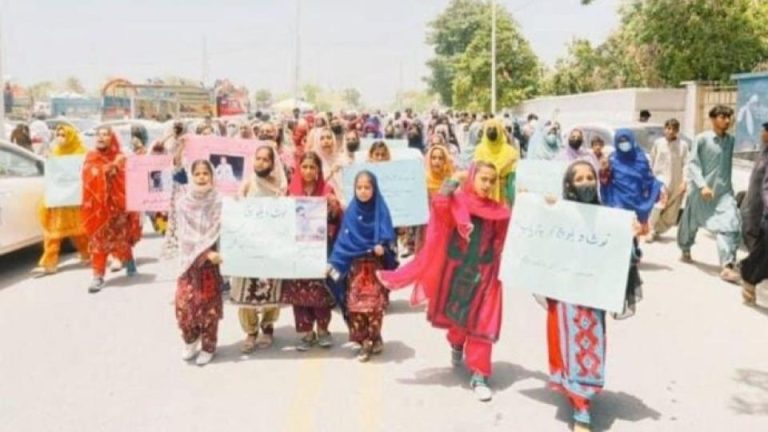
But it is not that Baloch, as a community are silent. Be it the armed struggle or the protests and demonstrations, Baloch are employing every method to push Pakistan out of their homeland. And so, to keep its occupation intact, Pakistan is making its policies more grave. Uncountable number of Balochs have been forcibly abducted and disappeared for more than decades.

Balochistan’s condition becomes apparent when considering that it carried out its inaugural nuclear test in 1998 within the vicinity of a densely populated area, specifically the Ras Koh Hills in the Chagai District of Balochistan.The worst part is that to keep the project secret, Pakistan didn’t even evacuate them before detonation. As a result, thousands of people suffered the adverse impact of the blast. Now the new generation of those affected are also facing the horrendous consequences.

Later in 2006, Dera Bugti was attacked by the Pak Army on the indication of the then dictator, Parvez Musharraf and Nawab Akbar Bugti was abducted. Till date, people do not know whether he is alive or dead, or if he is dead then where is his body?

So this is the human rights situation in Balochistan. With each passing year, Pakistan finds a new instrument to suppress the voice of Baloch people. One such instrument is Death Squad that works with full impunity on behalf of the Pakistan Army and ISI.

Despite such hopelessness, the determination of the Baloch community continues and they believe that one day their struggle will pay off and they will attain independence from their current coloniser, Pakistan.    

PM Modi to roll out road, rail projects worth Rs. 4,000 crore to spur growth in Madhya Pradesh tomorrow

Prime Minister Narendra Modi will visit Madhya Pradesh tomorrow to inaugurate and lay the foundation stone of highway and railway projects worth over Rs 4,000 crore in the state, according to a statement issued by his office.

The Prime Minister will dedicate to the nation the project marking the completion of the doubling of the Kota-Bina rail route. The project, which has been built at an estimated cost of more than Rs. 2,475 crores, passes through Kota and Baran District in Rajasthan, and Guna, Ashoknagar and Sagar District in Madhya Pradesh. The additional railway line will increase capacity for better mobility and will help improve train speed along the route.

He will also lay the foundation stone of two road projects at a cost of more than Rs. 1,580 crores. These include a four-laning road project connecting Morikori – Vidisha – Hinotiya and a road project that will connect Hinotiya to Mehluwa.

PM Modi will arrive in Madhya Pradesh’s Sagar district in the afternoon where he will perform Bhoomi Poojan at Sant Shiromani Gurudev Shri Ravidas ji Memorial Sthal. He will then participate in a public programme at Dhana where he will lay the foundation stone for Sant Shiromani Gurudev Shri Ravidas ji Memorial.

“Honouring prominent saints and social reformers has been a special hallmark of the work done by the Prime Minister. Driven by his vision, Sant Shiromani Gurudev Shri Ravidas ji Memorial will be constructed in an area of more than 11.25 acres and at a cost of more than Rs. 100 crores. The magnificent memorial will have an impressive art museum and gallery to showcase the life, philosophy and teachings of Sant Shiromani Gurudev Shri Ravidas ji. It will also have facilities for devotees visiting the memorial like Bhakt Niwas and Bhojanalay,” the statement said.

(This article was first published in India Narrative)

PM Modi exposes Congress lies in his reply to No Confidence Motion

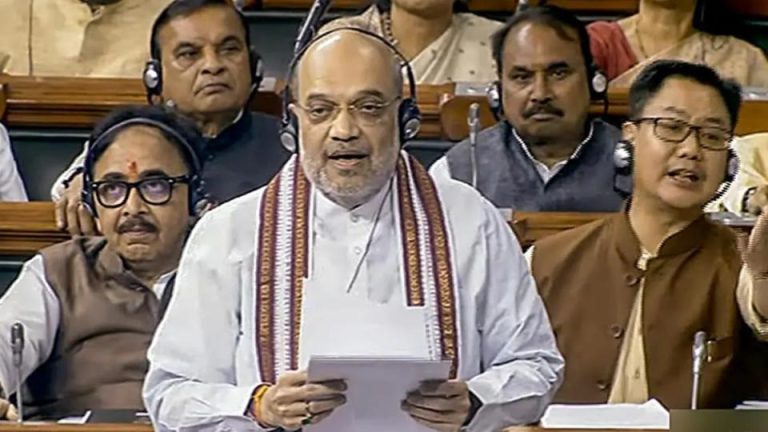
For the second time in nine years, the BJP ruled government under PM Modi is facing a no-confidence motion. Although, the fate of the motion was already known to everyone, the timing of its introduction was crucial, as the opposition boasted of a unification under I.N.D.I.A. The burning issue of Manipur has also been a challenge for the government. In all of this, the most awaited moment was the speech of Prime Minister Modi on the no-confidence motion, which rocked the Parliament house today.

On Manipur

During his entire speech, Prime Minister Modi took a dig at the Congress. He said that had the opposition really wanted to discuss Manipur, his government could have had a detailed discussion separately. Blaming erstwhile Congress governments for Manipur, PM Modi said, “Whose government was there in Manipur when everything used to happen according to the wishes of insurgent organisations? Whose government was there in Manipur when Mahatma Gandhi’s picture was not allowed in government offices, whose government was there in Manipur when the decision to not allow the national anthem in schools was taken? Their (opposition) pain is selective. They cannot think beyond politics . . .” He went on to say that Congress has never tried to understand the ethos of north-east India and that the region needs dedication and not just data.

Promise of Peace In Near Future

In line with the above issue, PM Modi promised peace in the near future. He said, “Efforts are underway by the Centre, state government to punish the accused in Manipur. I want to assure the people of the country that there will be peace in Manipur in the near future.”

Along with Manipur, PM Modi also raised questions on Congress & the unfortunate Air Force attack in Mizoram in 1956. He said, “On 5th March 1956, Congress carried out attacks through Air Force on the innocent people of Mizoram. The state still cannot forget that pain.”

While he was replying to the no-confidence motion, Sonia Gandhi and Rahul Gandhi left the house as opposition staged a walk out. To which, PM Modi replied that they want to speak but cannot listen. He went on to criticize the Congress by saying, “Nothing is Congress’ own, from its poll symbol to ideas, everything has been borrowed from someone else. Congress adopted a flag similar to the national tricolour to add credibility, they also ‘stole’ Gandhi surname for gains. Congress has snatched the rights of stalwarts like B.R. Ambedkar, Jagjivan Ram, Chandra Shekhar.”

Leader of Opposition

PM Modi also raised question on no speech of the Leader of Opposition. He said, “During this no-confidence motion, we saw something bizarre. The name of the Leader of Opposition was missing from the list of those who would speak during the no-trust motion.” Taking a jibe at Congress regarding this he said, “I don’t know what was the compulsion of Congress for sidelining Adhir Ranjan Chowdhury, maybe he received a call from Kolkatta”.

Prime Minister Narendra Modi also targeted Rahul Gandhi and said, “I can understand the troubles of Congress. For years, they have been launching a failed product. The launch fails every time. The result is that their hatred for voters has reached its peak. The launch fails and they harbour hatred for voters. But the PR team propagate ‘Mohabbat ki dukan’. That is why, people of the country are saying, ‘Ye hai loot ki dukan, jhooth ka bazaar’…” Also, he made an indirect attack on Rahul Gandhi by saying that some people want to tarnish our image at the global level but the world knows the truth and will not be misled.

He also spoke on the country’s development and said that proper planning and hardwork has taken the country to new heights and that government programmes like Swachh Bharat have helped the country immensely.He asked the opposition to bring no-confidence motion again in 2028 when India would be the third largest economy in the world.

Diplomatic Cipher raises questions about US-Pakistan relations

In a surprising turn of events, a US-based news organization has published what it claims to be the text of a diplomatic cipher sent to Islamabad last year by Pakistan’s former ambassador to the US, which former Prime Minister Imran Khan cited as evidence of a US conspiracy to remove his government. The alleged cipher, detailing a meeting between US State Department officials and Pakistani envoy Asad Majeed Khan, has raised eyebrows and questions about the dynamics of international relations.

The text of the purported cipher, published by The Intercept, recounts a conversation between Assistant Secretary of State for the Bureau of South and Central Asian Affairs Donald Lu and Asad Majeed Khan. While the authenticity of this cable remains unverified by independent sources, it has prompted widespread speculation and discussions.

Controversial Content

According to the published excerpts, the US expressed concern over Pakistan’s stance on the Ukraine crisis, specifically its seemingly “aggressively neutral position.” This stance raised questions in the minds of US officials, who suggested it did not appear as neutral as Pakistan claimed. However, the US State Department clarified that the content did not indicate a preference for any particular leader in Pakistan.

Imran Khan’s foreign policy decisions were a focal point of the alleged conversation, with specific reference to his position on the Ukraine war. The cable suggested that the US believed Khan’s visit to Russia was a pivotal factor in shaping their view. Furthermore, the cable implied that a successful vote of no confidence against Khan might lead to forgiveness from the US administration for the perceived transgressions.

These revelations have ignited a firestorm of debate within Pakistan’s political circles. While the Pakistani Foreign Office refused to comment on the alleged leaks, Information Minister Marriyum Aurangzeb and Planning Minister Ahsan Iqbal remained tight-lipped.

On the other side of the equation, the US State Department refrained from confirming the accuracy of the published cable. Nonetheless, they reiterated their stance that the US government does not interfere in internal decisions of other nations, including Pakistan.

Former Prime Minister Imran Khan had previously alluded to a US conspiracy to destabilize his government. While many dismissed this notion, the publication of the alleged diplomatic cipher has reignited debates surrounding Khan’s claims. Some experts, however, argue that the contents of the cable do not necessarily equate to a conspiracy.

A senior diplomat noted that the language used by the US official, specifically the phrase “all will be forgiven,” was inappropriate and unacceptable, even if there was no actual conspiracy. This sentiment has underscored the need for diplomatic decorum and sensitivity in international interactions.

The source of the leak remains a subject of speculation. The Intercept claimed to have received the document from an anonymous source in the Pakistani military, who distanced themselves from any ties to Imran Khan or his party. However, some observers have raised the possibility that the leak originated from within Imran Khan’s own political party, the PTI.

The timing of the document’s publication adds another layer of intrigue. Coming on the heels of Imran Khan’s imprisonment on graft charges, the document’s contents have led to renewed discussions about its authenticity and the motivations behind its release.

Sindhi students face brutal attack within University of Karachi campus

A group of assilants associated with Jamiyat-e-Talaba, a student organisation of banned Jamat-e-Islami stormed the University of Karachi campus, targeting Sindhi students. This incident is part of a series of attacks on Sindhi students at the university, causing serious concerns about their safety.

During the attack, a student named Shagird Sath suffered severe injuries. Additionally, the assailants erased Sindhi poetic lines from the walls, intensifying the gravity of the situation.

The government’s perceived inaction in response to these incidents, raises questions about its concerns for Sindhi community. Calls for accountability and justice are growing as demands for swift action against the attackers gain traction.

Also, it is not the first that the criminals of Jamiyat have targeted Sindhis in the University of Karachi. These type of attacks are guided by a mentality that considers every community and religion outside Islam as alien, having no human rights at all. The attack has once again highlighted the worsening situation of Sindhis and other minority communities in Pakistan

https://twitter.com/Mustafa3113/status/1689222833686085632?s=20

Another Ahmaddiya sect mosque vandalised in Pakistan

In a disturbing incident, the minarets of an Ahmadiyya mosque in Chak 168 Murad, Bahawalnagar, were desecrated during the night of August 6-7, 2023. This act of religious intolerance adds to a series of attacks against the marginalized Ahmadiyya community in Pakistan. The authorities’ lack of action and protection exacerbates the situation, leaving the Ahmadis vulnerable to such persecution.

The targeted desecration of minarets is a distressing trend that demands attention. In almost every instance, these attacks focus on minarets because radical Islamists consider them Islamic structures that can’t be used by Ahmadiyyas. This twisted belief serves as an alarming indicator of the extent to which religious intolerance and discrimination have taken root. The fact that such acts continue without a robust response from the authorities underscores the pressing need for comprehensive measures to ensure the safety and rights of all citizens, regardless of their religious beliefs.

The Pakistani legal framework that designates Ahmadis as non-Muslims, reinforced by controversial legislation introduced in 1974 and amended in 1984, compounds the issue further. This backdrop not only emboldens the assailants but also leads to authorities turning a blind eye to such acts, as the law itself promotes an environment of marginalization.

Jailer – The King is Back!

Superstar Rajini Kanth is back on the big screen, with a bang, much to the utter delight of his billions of fans across the globe. Today, his much-awaited film, Jailer, was released in multiplexes all over, and the reviews have been great so far. Early reviews state that this black comedy, action genre of film is one of the best works of the director, Nelson Dilipkumar, so far!

Over the last many years, Rajini’s movie releases were celebrated like a huge festival, not only in Tamil Nadu, but all over the world. People book their First Day First Show tickets in advance, get fully “Rajinified” on the day of release, perform milk abhishekas to their Thailaivar’s statue on the day of his movie’s release, and do everything they can to prove their fandom. Today has been no exception to this tradition.

Jailer has opened to a rousing reception across the world, and early morning reviewers have nothing but amazing things to say about the film, its story, Anirudh’s musical brilliance and the performance of the Superstar himself. Oh! What can we even say about the man’s style and charisma?

While Rajini’s movies have always been welcomed with open arms in many countries, his popularity in Asia, especially Japan, reached the pinnacle, when his movie, “Muthu” was released in 1995. Ever since, Rajini’s movie releases have been celebrated like huge festivals there.

To participate in the Rajini mania on Aug 10th, a Japanese couple traveled from Japan to see Jailer in packed theatres in Chennai. It is interesting to note that the husband, Yasuda Hidetoshi, was also the leader of the Rajinikanth Fan Club in Japan! Well, as long as the Superstar has such loyal fans, he is going to be the undisputed king of Tamil Cinema! Are you ready to get “Rajinified” too? Book your tickets at a theatre near you to watch the magic unfold right before your eyes!