Home Blog Page 203

North Korea: Kim Jong removes top General, heightens call for war preparations

In a recent development, North Korean leader Kim Jong Un has taken a significant step by dismissing his top general and initiating a reshuffle within the country’s military leadership. The move comes as Kim Jong Un instructs his armed forces to be ready for a potential conflict, according to reports from state media.

General Pak Su Il, who held the position of Chief of the General Staff, has been relieved of his duties. In his place, Vice Marshal Ri Yong Gil has been appointed to take on the crucial role, as stated by the Korean Central News Agency (KCNA), a state-run news outlet.

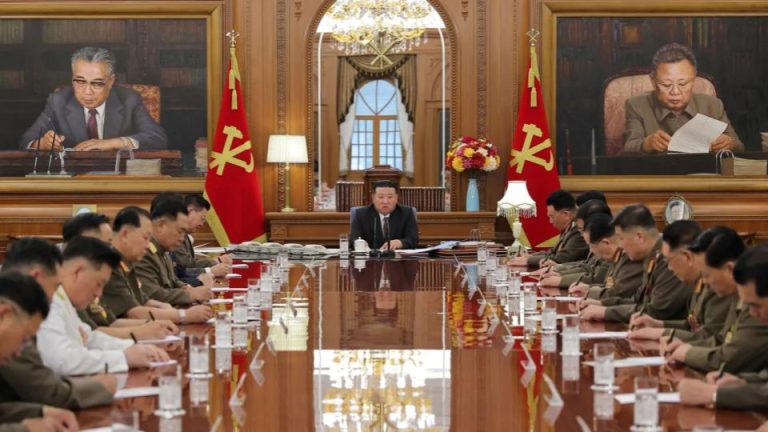
During a meeting of the Central Military Commission held on Wednesday, various changes were made to the leadership team, including the removal, transfer, and appointment of “leading commanding officers.” While specific details were not provided, this restructuring hints at significant shifts within North Korea’s military hierarchy.

This move follows a pattern of regular changes in North Korea’s military leadership. Some leaders resurface in different capacities after their removal, while others fade from public view entirely.

The new top general, Ri Yong Gil, has experienced a dynamic career trajectory. He ascended to his current position, the second-highest rank in the North Korean military hierarchy, as recently as December 31. This appointment reflects the complexity and fluctuations often seen in the country’s military leadership.

Analysts note that Ri Yong Gil has a longstanding history within North Korea’s military elite. He has weathered ups and downs throughout his career, including rumors of execution during a personnel reshuffle seven years ago.

The motive behind Kim Jong Un’s military reshuffle is open to interpretation. Cheong Seong-chang, a senior analyst at a private think tank near Seoul, suggests that the reasons might extend beyond punitive measures. Kim Jong Un’s history of promoting, demoting, and dismissing officials could reflect a method of holding them accountable rather than solely punishing them.

Leif-Eric Easley, a professor of international studies at Ewha Womans University in Seoul, speculates that Kim Jong Un’s motivations may include preventing the emergence of powerful figures below him. By frequently rotating leadership positions, Kim could be aiming to maintain his authority and avoid challenges to his rule.

The reshuffle announcement was tucked towards the end of the KCNA report, which primarily focused on the urgent need for military preparedness in light of the “grave political and military situation prevailing in the Korean Peninsula.”

While the report did not explicitly mention South Korea or the United States, it alluded to them indirectly, referring to “the chief culprits of deteriorated situation” on the peninsula. The meeting’s primary agenda was highlighted as “making full war preparations” in response to escalating tensions.

North Korea’s recent increase in military rhetoric, including threats to shoot down US reconnaissance planes and displays of advanced ballistic missile technology, has raised concerns internationally. The country’s saber-rattling includes testing a Hwasong-18 intercontinental ballistic missile with potential capability to strike the US mainland.

Against this backdrop of heightened tension, Kim Jong Un has directed war drills involving the deployment of North Korea’s latest weaponry. Meanwhile, South Korea has announced plans for a nationwide civil defense drill, aimed at preparing citizens for potential provocations from Pyongyang.

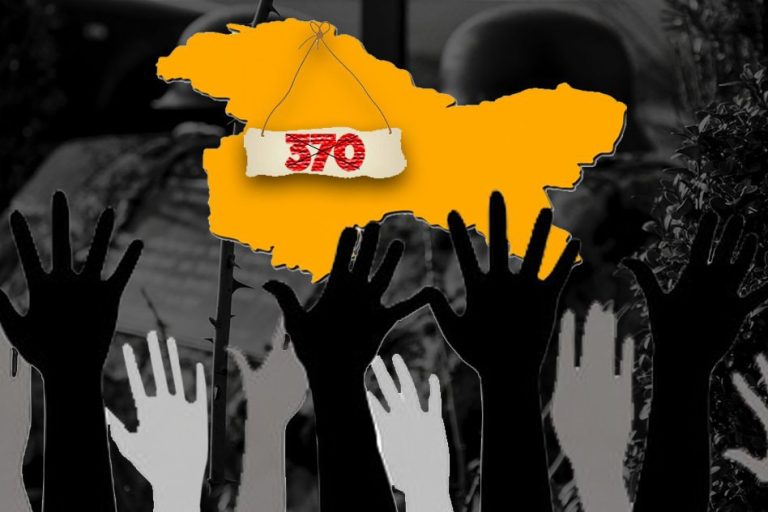
Why abrogation of Art 370 continues to irk Pakistan

0

Despite its claim to the contrary, it is apparent that Islamabad’s unending repertoire of allegations that people in Kashmir being denied their fundamental rights and being brutalised has failed to fool the international community. And with Pakistan’s Foreign Minister Bilawal Bhutto Zardari himself admitting that “Islamabad faces an uphill task to get the Kashmir issue into the centre of the agenda of the United Nations,” it’s clear that even Islamabad is well aware that its diplomatic offensive on Kashmir has been a monumental failure.

Furthermore, with the fourth anniversary of Article 370 abrogation passing off without any major untoward incident, it’s clear that Islamabad’s attempts to incite violence in Kashmir by provocatively referring to August 5 [the day Article 370 was repealed] as ‘Youm-e-Istehsal’ [Day of Exploitation] have failed. Similarly, its desperate endeavour to internationalise this issue through a briefing of foreign diplomats in Islamabad by the Pakistani Foreign Secretary [expectedly] failed to evoke any favourable response.

In its ‘Youm-e-Istehsal’ press release, Pakistan’s Ministry of Foreign Affairs mentioned that during his briefing to “Islamabad based diplomatic missions” the Foreign Secretary had “highlighted the legal, security and human rights dimensions of the Jammu and Kashmir dispute.” It also stated “special events to raise global awareness about the Indian oppression” in J&K were being organised by Pakistan’s diplomatic missions around the world.

That Islamabad’s much hyped worldwide campaign to resurrect the Kashmir issue by attacking New Delhi’s decision to abrogate Article 370 of the Indian constitution would end in a damp squib, was a foregone conclusion. This is primarily because like always, Islamabad based its anti-India tirade on patently concocted tales and not facts, and probably that’s the reason why New Delhi didn’t even bother to take any diplomatic actions to counter Islamabad’s Kashmir ‘offensive’.

Since Islamabad’s efforts to hard sell its false Kashmir narrative has once again found no takers, it’s abundantly clear that Pakistan’s self-professed “principled stand” on Kashmir as well its allegation of India being in “illegal occupation” of J&K is mere bombast. And Pakistan’s Foreign Minister should realise that this is the very reason why Pakistan has failed to “get the Kashmir issue into the centre of the agenda of the United Nations.”

Pakistan has been playing a double game in Kashmir for far too long and its people have become more discerning today and have become more aware of Islamabad’s perfidy. Kashmiri youth today want to know that if Pakistan’s stand on Kashmir is indeed “principled” and India is really in “illegal occupation” of J&K, then why the UN and  international community isn’t intervening?

They also want to know that when the UN has clearly ruled that Kashmir is a bilateral issue between India and Pakistan that requires being mutually resolved sans any third party involvement, why is Pakistan fooling everyone by repeatedly demanding UN intervention on this issue?  

The fact of the matter is that Islamabad has been exploiting the gullibility of Kashmiris all along and spreading falsehood through their proxies. Islamabad needs to tell the people of Kashmir that in case the instrument of accession signed by the Maharaja of J&K in favour of India was ‘illegal’, then why instead of launching a covert military campaign codenamed ‘Operation Gulmarg’ in the garb of a ‘tribal invasion’, why didn’t Pakistan take this issue to the International Court of Justice?

Pakistan’s attempt to surreptitiously seize J&K by force in 1947 is a clear indication that it knows very well that its Kashmir narrative is completely lacking in substance and hence would fail to yield any positive results. And the fact that the Pakistan Army again made a similar unsuccessful attempt in 1965 [Operation Gibraltar] endorses the fact that Pakistan is well aware that its claim over J&K lacks legitimacy.  

New Delhi’s decision of abrogating Article 370 sounded the death knell of Pakistan’s sterile Kashmir narrative. By mentioning factual details of Pakistan’s deceit due to which the UN charter on J&K was rendered redundant in its post-Article 370 abrogation press release of August 6, 2019, India’s Press Information Bureau [PIB] has made things even more embarrassing for Islamabad.

The PIB press release ibid states that “Speaking on the applicability of United Nations charter on India and Pakistan to J&K, Shri  [Amit] Shah [India’s Home Minister] said that under this [UN] charter, neither [of the] armed forces would violate the territorial integrity of [the] other country. [However], the day in 1965 Pakistan violated this provision [by launching Operation Gibraltar], the charter was violated. The question of a referendum ended with the Pakistani aggression. Hence, the Government of India has full rights to take any decision regarding its territorial integrity [Emphasis added].

The people of Kashmir are gradually realising that Pakistan is using them as cannon fodder in its proxy war against India, and this has been accepted by both Pakistan’s former Army chief General Pervez Musharraf as well United Jihad Council [UJC] chief Syed Salahuddin. [UJC is an amalgam of 13 terrorist groups fighting in Kashmir created by Pakistan Army’s spy agency Inter-Services Intelligence [ISI] to coordinate its ongoing proxy war against India].

Gen Musharraf’s disclosure that “Kashmiris who came to Pakistan received hero reception here” and that “We used to train them and support them [and] we considered them as mujahideen who will fight with the Indian Army” [Emphasis added], leaves no room for doubt that Kashmiri youth were indoctrinated by Rawalpindi to fight the Indian army and not for achieving ‘azadi’ [freedom] in J&K as claimed.

By admitting that “we are fighting Pakistan’s war in Kashmir,” [Emphasis added], the UJC chief too has clearly accepted that the role of the so called ‘mujahideen’ fighting in Kashmir is solely to further the Pakistan Army’s proxy war and has nothing to do with the so called ‘armed struggle’. Moreover, the very fact that while Salahuddin and the likes of him encourage young boys to pick up guns they ensure that his own sons don’t do so, says it all!

The Pakistan Army has failed to seize Kashmir by force twice and its attempt to alter the Line of Control [LoC] alignment in the Kargil Sector of J&K in 1999 ended in a massive fiasco that saw Rawalpindi shamefully disowning its own dead soldiers by refusing to accept their mortal remains. Pakistan’s diplomatic corps has fared no better and failed to garner international support for its uninspiring Kashmir narrative

By abrogating Article 370 on August 5, 2019, New Delhi has dealt the coup de grâce to Pakistan’s Kashmir story and besides Islamabad this decision also pulled the carpet right from under Rawalpindi’s feet. In a desperate bid to salvage the situation, the then Pakistan Army chief Gen Qamar Javed Bajwa went as far as admitting Rawalpindi’s role in orchestrating terrorism in J&K by saying, “Pakistan Army firmly stands by the Kashmiris in their just struggle to the very end [and] we are prepared and shall go to any extent to fulfil our obligations…” [Emphasis added].

So, while terrorism and public protests by the pro-Pakistan lobby in Kashmir may not have ended completely, they definitely have shown a significant decline, and hence it is but natural that August 5 will continue to haunt both Islamabad and Rawalpindi for times to come!

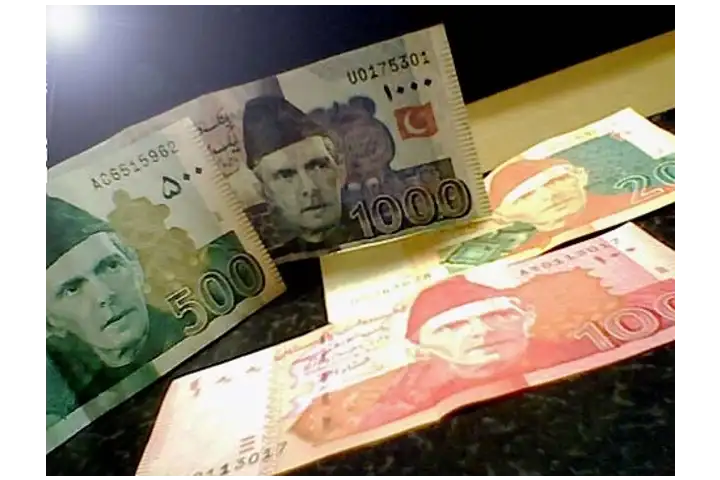
Will Pakistan follow India’s demonetisation example amid black money surge?

Amid multiple economic challenges, the steady increase in the physical money supply in Pakistan is starting to haunt the Shehbaz Sharif government. The excess cash circulation has fanned parallel economy as well as inflation.

While the issue of black money has been under discussion, no concrete step has been taken by the governments in power.

Interestingly, according to the Express Tribune, Pakistan’s local newspaper “the example of India’s demonetisation of high-value currency notes was cited.” “Although it initially posed challenges for the economy and daily wage earners, it ultimately kept inflation and interest rates in check while fostering economic growth,” the newspaper said.

Discussions have also been held on whether phasing out the (Pakistani) Rs 5000 notes would help in curbing hoarding of cash. However, the proposal has got little support from the authorities.

The (Pakistani) Rs 5000 is the highest denomination currency notes in the South Asian nation. Most reports have suggested that higher denomination currency notes is a driver for hoarding cash.

Cash circulation has significantly expanded in the last one year despite the economic crisis in the South Asian nation. Physical cash constitutes about 29 per cent of the total value of money in the system in Pakistan.

Pakistan’s black economy is estimated at about $341.5 billion. As per IPSOS, a market research firm, Pakistan shadow economy accounted for about 40 per cent of GDP. That apart, it also said that 6 per cent of Pakistan GDP is being stolen every year. Unfortunately, this means that a massive chunk of money is going unaccounted and not getting reflected in the government books at a time when Pakistan was firefighting for months to avert a sovereign default. This money, had it been channelled officially, would have made a difference to the cash staved country. Not only would this have boosted the ailing economy but also contribute in improving the social fabric as much of it could have been used for education, health and other social benefits.

“A culture of corruption has been allowed to bloom in Pakistan and that is no secret. Today it is part of the ecosystem,” an analyst dealing with Afghanistan-Pakistan region pointed out. Money laundering and tax evasion are rampant and the governments over the years have done little to tackle this problem.

Pakistan Observer added that the illegal activities are rampant as individuals and businesses know “that they can get away with it.”

Meanwhile, Pakistan’s annual inflation in July stood at 28.3 per cent. Between February and May, the inflation rate was above the 30 per cent mark.

Many fear that the inflation could once again start inching upward after the recent fuel price hike.

The economic crisis has hit the common citizens the most. Until Pakistan makes an honest attempt to cleanse the system, the country’s economy will continue to ail.

China’s export-led growth model in trouble amid tepid domestic demand

China’s exports drop of 14.5 per cent in July – the biggest since the outbreak of the Covid 19 pandemic, amid slowing demand from the West have had a severe impact on the country’s small and medium enterprises which have been a driver for growth.

The SMEs which make up for more than 95 per cent of all enterprises in the country are critical for employment generation.

Not only is this the biggest drop since 2020, it marks the third straight month of decline, giving rise to concerns for policymakers in Beijing. China’s imports have also been declining, In July, it contracted by 12.4 per cent. Analysts said that the trend may not reverse significantly with the demand in the west unlikely to gather steam anytime soon.

Interestingly, China’s imports from Russia too dropped in July. This is the first drop in imports from Russia since the Ukraine war started last year.

Unsurprisingly, China’s factory output remained in the red for the fourth straight month in July. For July the manufacturing purchasing managers’ index (PMI) — a key measure of factory output — stood at 49.3. Though it is an improvement over 49 in June, it reflects a contraction. Any reading below 50 is considered contraction.

Unlike India, which has also been focusing on boosting domestic demand, China’s thrust has been primarily on exports. Most studies have shown that India’s economy is poised to register a healthy growth and a lot is due to robust domestic demand.

The economic review released for June said that the Indian economy will grow on the strength of domestic demand and investment despite a rise in global uncertainties and moderation in global output.

A blog published by the Institute of Chinese Studies in 2020 noted that though many countries have followed the export-led path to growth in the past and have achieved rapid growth in GDP, the threat of facing a global demand crunch always looms large for these economies. During 2008-09 (global financial crisis) period, China faced the same situation- its export as a percentage to GDP fell to 24 per cent in 2009, it said.

A slow economic growth coinciding with negative inflation has fanned speculations that China is heading towards deflation.

News agency AFP said that China has slipped into deflation as consumer prices contracted last month for the first time in more than two years, official data showed Wednesday, as slowing domestic spending weighs on the country’s post-Covid economic recovery. China’s inflation based on the Consumer Price Index fell 0.3 in July after remaining flat in June.

(This article was first published in India Narrative)

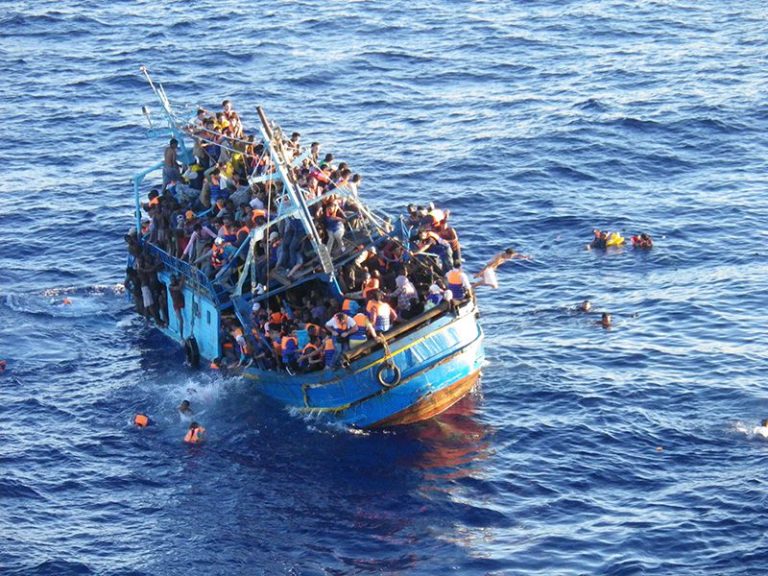
Illegal migrants’ boat sinks near Italy’s Lampedusa island,41 lives lost

A shipwreck off the Italian island of Lampedusa has claimed the lives of 41 migrants, as recounted by survivors. The ill-fated vessel, originating from Tunisia’s port city of Sfax, was carrying 45 individuals, including three children, on its perilous journey towards Italy. Shockingly, only 15 people were equipped with life vests, leaving many vulnerable to the unforgiving waters.

Survivors, hailing from the Ivory Coast and Guinea, shared their harrowing account after reaching Lampedusa. They detailed how their 7-meter-long boat set sail from Sfax, only to be swallowed by the sea hours later due to a fierce wave. They were eventually rescued by a cargo ship and later transferred to an Italian coast guard vessel.

Tragically, this incident adds to the distressing toll of lives lost in the central Mediterranean, surpassing 1,800 casualties this year alone. The treacherous route remains one of the most perilous for migrants seeking refuge in Europe.

As rescue efforts continue and as per Italy’s policy rescue ships need to be docked at more distant ports, limiting crucial patrols near frequent shipwreck zones. This tragedy serves as a somber reminder of the ongoing migrant crisis .

Pakistan’s textile industry waves goodbye to 7 million jobs

In a dire turn of events, Pakistan’s textile industry has witnessed a staggering loss of employment, with approximately 7 million individuals being laid off from both the textile and allied sectors. The crisis has been attributed to plummeting exports and a deepening economic turmoil that has sent shockwaves through the industry.

The unsettling revelation emerged during a press conference held on Monday by representatives of various textile associations. Expressing their concern over the mounting challenges faced by textile producers and exporters, they blamed the reason on the absence of a cohesive governmental policy to mitigate the crises afflicting the sector. The repercussions have been severe, with many businesses on the brink of closure and a significant number of units having already ceased operations. This dire situation has prompted several others to either reduce production or relocate overseas.

Sources present at the press conference highlighted a series of critical issues plaguing the textile industry. Foremost among these concerns is the acute shortage of essential raw materials and accessories, which has severely hindered production capabilities. Moreover, a concerning trend has emerged in the denial of letters of credit, even for amounts as meager as $5,000. This unexpected hurdle has caused disruptions to the flow of export orders, each valued at a substantial $500,000 per consignment. As a result, production schedules have been thrown into disarray, leading to prolonged delays in fulfilling orders and adversely impacting the industry’s credibility.

J&K police reopens 33 year old murder case of Justice Ganjoo, key in Maqbool Bhat’s death sentence

After nearly 33 years since the tragic killing of retired judge Neelkanth Ganjoo, the State Investigation Agency (SIA) in Jammu and Kashmir has reached out to the general public, seeking their assistance in unraveling the “larger criminal conspiracy” that lies behind the heinous act.

Neelkanth Ganjoo, a retired judge, met a tragic end when he was shot dead by terrorists in November 1989. His murder had a significant impact, as he had been involved in a high-profile case from the 1960s. He had sentenced Mohammad Maqbool Bhat, the founder of the Jammu Kashmir Liberation Front (JKLF), to death in connection with the murder of police officer Amar Chand. Ganjoo’s untimely demise marked a dark chapter and he was among the prominent Kashmiri Pandits who were targeted during that tumultuous period.

The SIA has taken a renewed interest in this case with the aim of uncovering the full extent of the criminal conspiracy that led to Ganjoo’s murder. In a recent communication, a spokesperson for the agency urged individuals who possess any knowledge, facts, or circumstances related to the murder to come forward and share their insights. The agency is particularly interested in information that may have a direct or indirect bearing on the investigation of this case.

The spokesperson emphasized that the identities of those providing information will be kept confidential and protected. Additionally, the agency has promised suitable rewards for any useful and relevant information that contributes to solving the mystery surrounding Neelkanth Ganjoo’s tragic death.

Urmila Raina, his daughter, welcomed the decision and said, “It has been 34 years. Everyone knows what happened. There is nothing we can tell them that they don’t already know. It is good that this case has been reopened. It should have been opened earlier, but better late than never. We hope that justice will be given to him. We are thankful to the government for reopening the case.”

For those who wish to contribute to the investigation, the agency has set up dedicated channels of communication. The renewed efforts by the State Investigation Agency reflect a commitment to seeking justice and bringing closure to a chapter of history that has left many questions unanswered.

Betrayed by Canadian college: Indian students battle crisis

The pressing issue of Indian students in Canada had often caught our eyes, but the recent unfolding regarding a Canadian College highlights a new problem faced by the Indian students who were waiting for the initiation of their education career in Canada. Recently, an unexpected decision by Scarborugh campus of Canada’s Northern College has thrown the future of many Indian students into disarray.

The session is anticipated to start in September and just one month to that, the college has cancelled the admission of various students, who had already booked accommodation and invested other expenses including flight tickets. The college has cited the overwhelming applications received as the reason for the cancellation.

What’s ahead?

According to report, Sunil of Jalandhar based immigration firm Pyramid e services said, “The college issued more offer letters than available seats under the assumption that not all students would receive embassy clearance and visas. However, the rejection rate turned out to be significantly lower this time, forcing the college to cancel admissions.” he said.

The college has also stated that it is looking forward to refund 100 per cent fees to the students.  Additionally, the college has offered the students to get their fees transferred to other college in case they get an admission.

Though the fee refund could reduce financial losses, but the extra expenses like accommodation and flights have been spent for nothing and are a huge burden now. Along with that, the academic year of the students also lies in doldrums. A student named Harmanpreet Singh, who got the admission in Northern College for two-year business diploma stated that he had already made all the arrangements including a non-refundable ticket worth Rs. 1.12 lakhs. There are many such students who have same concerns.

Rising Issues For International Students In Canada

Majority of students who are facing the issue belong to Punjab. Along with the students, the Sikh organisations have also raised concern over the issue.   It is worth mentioning that Canada is one of the most preferred destinations for Indian students aspiring for overseas education. Earlier the reports have also aroused which show that there is a scarcity of jobs, and the prices of rented accommodation has also skyrocketed. This all has been happening when the international students pay heavy amount as fees, which is almost five times more than what the local Canadians pay.

Evidently, the education system in Canada has failed to fulfil the aspirations of Indian students. What is even more disturbing is the silence of the authorities and the failure to address the rising issues among the Indian students and organisations.  

Conflict or prosperity? Unravelling the Manipur conundrum

It is now three months since violence erupted in the north-east state of Manipur over an inter-tribal clash between the Meitei and the Kuki tribes. The trigger was a “peace rally” on 3 May, 2023, called by the All Tribal Student Union Manipur (ATSUM), in protest against the order of Manipur High court granting Scheduled Tribe (ST) status to the Meitei community.

The so-called peace rally did not take long to convert into a violent disruption of peace and tranquillity in the state. The manner in which private houses, public property and even temples and churches were burnt gave a clear indication that both communities were ready for a face-off on declaration of the court verdict.

On the first day itself, violence, arson and mayhem quickly spread to several districts like Churachandpur, Imphal East, Imphal West, Bishnupur, Tengnoupal, and Kangpokpi. The majority Meitei community settlements in the foothills were attacked by the Kuki’s. The Meitei also retaliated in Imphal east and west where several Kuki houses were vandalized and destroyed by mobs.

It is evident from the unfolding of the events that this whole episode of violence was very well strategized and guided by some anti-national militant elements who were in touch with certain political organisations.

Militants who formed a part of the violent mobs had in their possession sophisticated weapons and ample quantities of ammunition. This indicates foreign involvement that needs serious investigation. The looting of police armouries that has happened on multiple occasions during this period of violence, the last reported incident having taken place as late as July 3, calls for an explanation by the state government.

The violence led to a considerable loss of life and displacement, it is estimated that nearly 150 people died within the first few days of the mayhem and about 60000 were displaced. The most gruesome report was of stripping of women and rape. Such incidents are completely against the culture of the tribal people  who traditionally maintain strict norms even in conflict, wherein, women and children are not harassed and religious institutions are not attacked. This adverse development needs to be taken very seriously indeed by the civil society and the political/religious leaders of the region.

It is to the credit of the Union Government that it responded immediately to quell the violence which was contained within a few days. On 4 May itself, Article 355 was invoked which empowered the Union Government to take necessary steps towards protecting the state against external aggression and internal disturbance. This was followed by a rapid deployment of the Army, the Assam Rifles, the Rapid Action Force, etc., to assist the local police in quelling violence. Curfew was imposed and strictly implemented. It is because of this quick action that the number of deaths and destruction remained in controllable limits.

To expedite the reconciliation approach the government has opened dialogue with all the stakeholders while also providing relief and rehabilitation to those affected by the violence. Civil society has come forward and is working with the state administration to usher peace.

The manner in which the unrest in Manipur is being politically exploited by certain parties of the opposition with the eye on the forthcoming parliamentary elections is derogatory. In a vibrant democracy, such incidents should generate a “whole of nation” approach towards bringing about a modicum of order. Politics can come in later. Instead of playing a positive role the opposition is bent upon putting all blame on the BJP government. The end result is that the more aggressive elements of the opposing groups in Manipur are gaining confidence and are becoming more belligerent. Those who are crying hoarse against what they project as inefficiency of the government in Manipur are unaware of the ground situation since they have not even once visited the disturbed areas.

However, in a democracy and a civilised society even one case of death or molestation cannot be accepted. The miscreants, who triggered the violence need to be punished as per the law of the country. Simultaneously, those who have lost their property should be adequately compensated and those who are displaced need to be re-established in their homes with assured security.

The government has successfully contained the law and order situation, but the reasons behind the conflict remain. This is not as much a conflict of religion as it is one of identity and economy. In Manipur, the Meitei tribe has a higher population than the combined population of 34 tribes including Naga and Kukis (who have ST status). Strangely, only 10% of the geographic area of the state and its resources are available to them. It is so because they do not have ST status in a situation where  a large part of the state’s territory is reserved for the ST (Kuki and Naga). This is a very untenable situation indeed.

The Meitei had the ST status  as per the census records of 1891, 1901 and 1931. But from 1951 onwards they were removed from the ST list of the Union Government based on a report by the then premier of Assam, Shri Gopinath Bardoloi and his associate J.J.M. Nichols Roy, a Christian minister and politician from what is now the state of Meghalaya, India.

The Meitei community feels that the ST status would help preserve and protect their ancestral land, tradition, culture, and language under Article 241(1) or 244(2) and 275(1) of the Constitution and safeguard them against illegal immigrants who are rapidly settling in the reserved forest areas. They are right in this assessment.

The Kuki’s,  on the other hand, feel that reservation of their lands is the only protection that they have in the face of the majority Meitei tribe who control the democratic politics of the state. The Kuki’s thus strongly support maintenance of the status quo.

As per the 1976 amendment to the Forest Act, forests fall under the state list, making the state government the sole owner and in charge of their protection and preservation. This state entitlement was put ablaze on 3 May 2023 by the Kuki tribal leaders who are against the state government’s intended survey of protected wetlands and forest reserves,

There is also strong resentment among the Kuki’s against the state government’s endeavour to provide alternatives to poppy plantations and thereby prevent illegal drug trafficking and narco-terrorism. The sentiment, however, is not all pervading since some from the Meitei are also involved in the drug trade and some from the Kuki are against it since it is ruining the new generations.

Whatever may be the sentiment, the government at the state as well as the centre is obliged to eradicate the poppy cultivation since it is proliferating drug abuse only in the affected region and across the country. It also makes the region a partner in the Golden Crescent drug network and allows entry of dubious foreign elements into the region which is a great security risk for the entire country.

The matter of illegal immigration also needs to be addressed with urgency. The state government has sought assistance from the Union Government to build border fencing and establish police stations along the India Myanmar border. The illegal immigrants obviously feel threatened and have joined up with the Kuki in the conflict. The Kuki have reciprocated by protesting against the NRC.

The conflict would be best resolved by strictly following the principles of justice, both natural and constitutional. Also, what is righteous should be accepted by all. As the High Court has delivered a judgement in favour of reinstating the ST status of the Meitei tribe it is incumbent upon all to respect the verdict or appeal against it in a higher court. Resorting to violence to get a drawback is not acceptable in a democracy.

The nation expects the governments to eradicate poppy cultivation in the region and stop the process of illegal immigration since these form a serious threat to national security. All voices being raised against such actions should be considered to be against national interest and dealt within the ambit of the law.  

The entire North-East of the country has a large land mass, less population and abundant natural resources. The region has been kept undeveloped due to certain political compulsions for almost six decades since independence . The period of the BJP led government in the centre (since 2014) has witnessed a total reversal in policy with all effort directed towards the development of the neglected region. This has resulted in fast track build up of infrastructure like roads and railway connectivity, airports, hospital, education institutions etc. The face of the region is changing for the better at a very fast pace. There is enough in the North-East, especially Manipur, for all inhabitants to lead a life of prosperity especially now when the region is witnessing fast development. But, for prosperity to gain roots, peace must prevail and for that old traditional rivalries must give way to trust, mutual accommodation and integration.  It is up to the people of the region to choose between prosperity and conflict.

Attack on Balochistan Public Library in Quetta

A group of radicalised individuals attacked the Balochistan Public Library, leaving few students injured.

As per reports, the Balochistan Public Library which is located in Faizabad Sariab area of Quetta was attacked by a group assailants. The perpetrators vandalised the library and targeted students, who were studying. In a unilateral torturous attack, many students were severely injured. Additionally, the assailants intimidated them to close the library.

The attack on library and the incompetence of the Police itself speaks volume about the role of Pakistan authorities to deal with this menace. Actually, Pakistan itself wants the instability to prevail in Balochistan, so that the education could not be spread. Since, the illegal occupation of Balochistan by the Pakistan Army in March 1948, Pakistan has not left a single opportunity to dismantle the peace and stability in the region. The attack on the library shows that Pakistan can not even tolerate the spread of education, simply because, the educated individual would question the authority of Islamabad regarding the occupation of Balochistan.