Home Blog Page 208

At least 44 dead, 200 injured in a blast in Khyber- Pakhtunkhwa

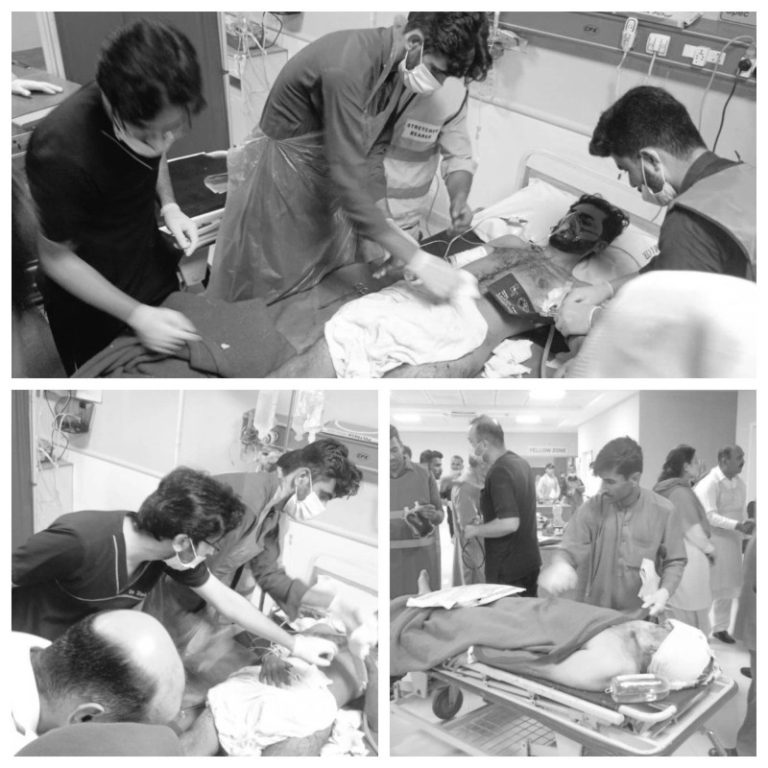
Almost 44 people have died and as many as 200 have been injured in a suicide attack at Jamiat Ulema-Islam-Fazl (JUI-F), Khyber Pakhtunkhwa.

As per reports, the sucide attack took place at around 4 p.m. in a political gathering of JUI-F in Bajaur’s Khar. There were almost 400 people present at the event during the blast. After the attack, the entire area was cordoned off. The Police has stated that injured have been shifted to a hospital in the nearby area,  while those who sustained serious injuries have been airlifted to Peshawar.

The local administration has stated that the death toll may rise as the number of severely injured people is high.

According to Dawn, a local JUI-F leader, Maulana Ziaullah Jan has died in the blast.As of now, no terrorist group has taken responsibility of the attack, however, it is highly anticipated that Islamic State is behind the attack,  as it has accused JUI-F of hypocrisy and had already targeted the group in the past.

Survivors recalled that after the blast the tent collapsed over the gathered people due to which it became more difficult to escape.

Muharram procession in Srinagar after 34 years: A ‘Win-Win’ situation for all

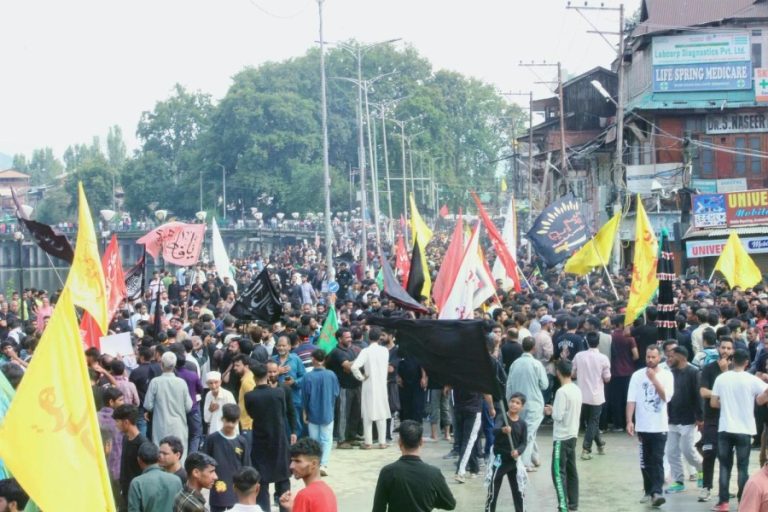
It’s after a more than three decade hiatus that Srinagar once again witnessed the traditional Alam Sharief procession that marks the occasion of 8th Muharram and the fact that this major event in which about 25,000 people participated went off peacefully makes it even more remarkable. This is indeed an extremely positive development and the credit for which goes to the UT administration, security forces, law enforcement agencies, and most of all, the people of Kashmir.

There can be no two views that consequent to Article 370 abrogation, Pakistan has gone on an overdrive to buttress its false narrative that there’s no normalcy in Kashmir and is leaving no stone unturned in orchestrating violence in Kashmir through its proxies. Hence, the UT administration deserves due appreciation for its momentous decision of allowing the Alam Sharief procession to proceed along the entire stretch of the five kilometre long traditional route.  

Needless to say, the UT administration’s decision to accord permission for this mammoth procession wouldn’t have been possible without sustained efforts of the security forces and law enforcing agencies that helped in creating a safe environment. At the same time, it would be wrong to assume that these agencies are alone responsible for the improved security conditions in Kashmir Valley, because things couldn’t be what they are without the wholehearted cooperation of locals who have outrightly rejected attempts by vested interests to incite violence.

While National Conference [NC] vice-president [VP] Omar Abdullah has welcomed this development, he has nevertheless called upon the administration to “take a few more right steps in the right direction to restore actual normalcy in J&K.” He has demanded that there should be no restrictions on Friday prayers at the Jama Masjid, Srinagar and offering Eid prayers at Eidgah and said that “restrictions on Mirwaiz Umar Farooq should also be lifted so that he can fulfil his religious obligations.” 

The NC VP’s suggestions are undoubtedly relevant. Having served as chief minister [CM] of J&K he’s well aware of the multi-faceted reasons that necessitate imposition of restrictions, both on prayers at Jamia Masjid as well as Mirwaiz Farooq. So, isn’t his simplistic view insinuating that these restrictions are purely the whims and fancies of the administration rather surprising?  Will the Abdullah scion care to explain as to why were restrictions imposed on offering prayers at Jamia Masjid and the reasons for placing Mirwaiz Farooq under house arrest when he was the CM of J&K?

The problem is that in order to serve their masters sitting across the Line of Control [LoC], the pro-Pakistan lobby in Kashmir has brazenly mixed religion with secessionist ideology and promotes mob violence including murderous assaults as a justified form of protests. To make matters worse, selective silence on such despicable acts by separatist leaders and religious preachers like the Mirwaiz gets interpreted as sanctified approval of violence.

I have no personal issues with Mirwaiz Farooq. And even though I univocally oppose his views on the Kashmir issue and his reluctance to condemn senseless violence by irate mobs, I still respect him. To my mind, he is perhaps the only separatist leader who has shown spine by publicly admitting way back in 2007 that “the dialogue process to resolve the Kashmir issue should be given a chance as efforts through military means have not achieved any results except creating more graveyards.”

However, Mirwaiz is also the same person who chose not to condemn or even condole the 2017 lynching of J&K Police officer Mohammed Ayub Pandit by an irate mob just outside Srinagar’s Jamia Masjid where he was presiding over Shab-e-Qadr prayers. Even though he was in no way involved, one had expected that following his religious calling, the Mirwaiz would most certainly condemn this cold blooded murder that took place on the auspicious ‘Night of Power’. Even if didn’t consider this appropriate, humanity demanded a word of condolence to the deceased officer’s family members.

Thanks to the unprincipled ploy of unscrupulous entities and people, Friday prayers in Srinagar’s Jamia Masjid have unfortunately become synonymous with spontaneous outbreak of violence. Those who complain that restriction on offering Friday prayers at Jamia Masjid infringes on their fundamental rights must not forget that the government is charged with the responsibility of maintaining law and order as well as ensuring safety of people and property [both public and private].  Hence, the administration is justified in imposing any restrictions as a precautionary measure to fulfil its constitutional responsibility.

While the decision to permit the Alam Sharief procession indicates the administration’s willingness to remove restrictions on religious events, the smooth conduct of this activity and the orderly manner it was conducted reflects reciprocation in the form of deep social responsibility displayed by the organisers and participants. While post Friday prayer protests achieve nothing, they tend to mislead the unversed into making the cardinal error of judgment by correlating Islam with violence, which is not at all desirable and urgently needs to be remedied.

And if influencers and religious heads can successfully convince the people to rightfully disassociate religion from politics, then why would the administration continue to impose restrictions on other religious events? Wouldn’t this be the ultimate ‘win-win’ situation for all?

As they say, it takes two to tango!  

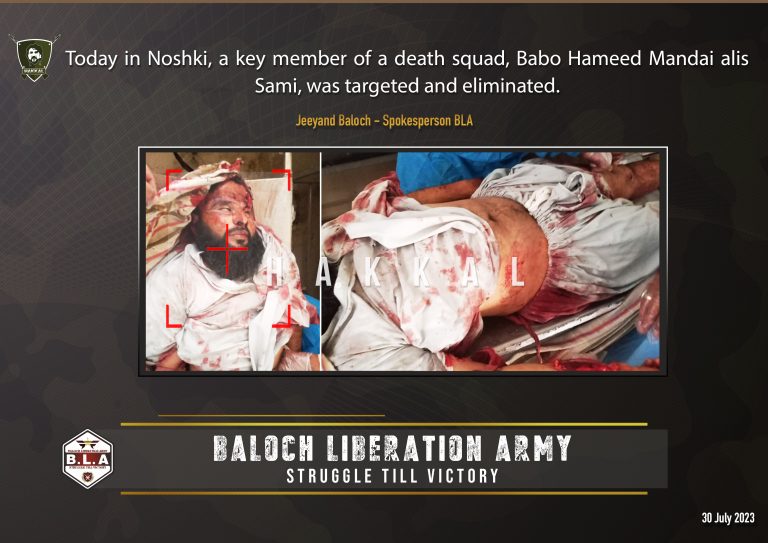
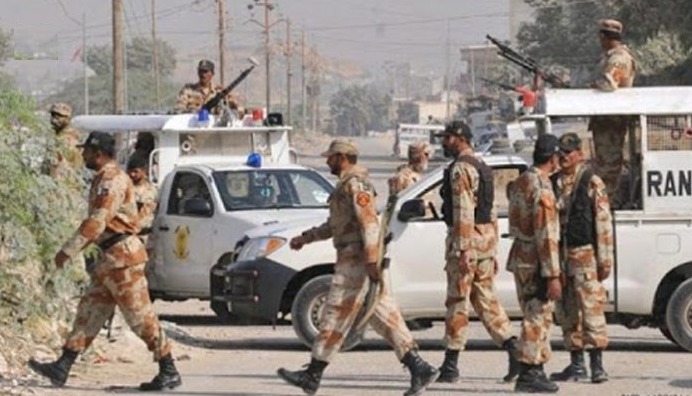
Pak Army abducts three more persons from Gwadar, Pak-occupied Balochistan

Tensions rise as reports of three more missing persons emerge from Gwadar, a coastal area in Pakistan-occupied-Balochistan, adding to the growing list of disappearances in the region. The individuals have been identified as Farooq, Altaf, and Kimber. Concerns have been raised about their safety and well-being since they were last seen being detained by security forces yesterday and have not been seen since.

The recent disappearances have only added fuel to the fire, as it comes on the heels of the detention of a Taliban member known as Jabbar, who was also taken into custody by the forces on the same day. A total of six people, including Jabbar and the three individuals mentioned earlier, were allegedly forcibly disappeared following their detention. While two of the detainees were released shortly after, Farooq, Altaf, Kimber, and Jabbar remain unaccounted for.

The practice of enforced disappearances has been a matter of concern in Balochistan for quite some time. Human rights organizations have repeatedly criticized such actions, calling them a violation of basic human rights and demanding transparency and accountability from the authorities. The families of the missing individuals are enduring agonizing uncertainty, seeking information about their loved ones’ whereabouts and well-being.

The situation in Gwadar has become increasingly volatile, drawing attention to the region’s security issues.

In light of these troubling developments, Pakistan Prime Minister Shehbaz Sharif visited Gwadar recently. While there has been no official statement released in connection with the disappearances, it is hoped that the high-level visit will prompt a thorough investigation into the matter.

Local communities and human rights activists are organizing protests and voicing their demands for justice and accountability. They are calling on the government to provide answers to the families of the missing individuals and to ensure that those responsible for any unlawful actions are brought to justice.

Following the illegal occupation of Balochistan in March 1948, Balochistan has been fighting the war of its existence. Be it the peaceful way of protests or the armed resistance, against the inhumane authoritarian quasi state of Pakistan, Balochs are fighting an all-front war. Inspired by their sinister interests, almost every organization has turned a blind eye towards the complete devastation of Balochistan.

Pak officer kills himself in Pakistan-occupied Balochistan

Tragedy struck the region of Bolan in Pakistan-occupied- Balochistan as reports emerged of a Pakistan Forces officer taking his own life by a self-inflicted gunshot wound. The incident occurred in the Mach area of Bolan, and the officer has been identified as Nadeem Bugti.

As of now, the motives behind the officer’s suicide remain unclear, and the authorities have not released any official statements or information regarding the incident.

Unfortunately, reports of suicide and absconding during duty by forces personnel have been sporadically reported in Pakistan-occupied- Balochistan. Just last month, news of an officer’s suicide surfaced from the Awaran district, and similar incidents have been reported in other areas, including Kech.

It is crucial for the authorities to address the mental health and well-being of the personnel stationed in these high-risk areas. The stress and pressure faced by officers can be immense, and support systems should be in place to provide assistance and counseling to those struggling with their mental health.

Following the illegal occupation of Balochistan in March 1948, Balochistan has been fighting the war of its existence. The incident in Bolan serves as a stark reminder of the challenges faced by both military personnel and the local population in region because of the Pakistan’s establishment and their forceful presence in the region.

Family of Pakistan’s civil judge tortures a minor girl

In a shocking and distressing incident, the Islamabad Police have filed a criminal case against Soumya, the wife of Civil Judge Asim Hafeez posted at Judicial Academy Islamabad, under Sections 502 and 342 of the Pakistan Penal Code (PPC). The charges relate to threats to kill and punishment of imprisonment, respectively.

The case came to light when a young girl was admitted to Lahore General Hospital in a critical condition, and her family alleged that she had been subjected to physical abuse at the hands of Judge Hafeez’s wife, Soumya.

Upon her arrival at the hospital, a 12-member medical board comprising senior doctors from various specialties was assembled to treat the severely malnourished and critically injured girl. Medical examinations revealed not only severe malnutrition but also complex brain injuries, a fractured arm, and a deep wound on her back.

The FIR was registered by the girl’s father, Manga Khan, who claimed that approximately seven months ago, he had sent his daughter to work as a domestic worker, earning a monthly salary of Rs 10,000, through an acquaintance named Chaudhry Mukhtar. The victim’s parents asserted that they had not seen their daughter in the last seven months and had only spoken to her on the phone a few times.

According to the FIR, Manga Khan visited the residence where his daughter worked after becoming suspicious. Upon hearing his daughter’s cries, he entered the room to find her in a severely injured state. He alleged that Soumya, the judge’s wife, had tortured his daughter mercilessly, leaving marks all over her body, including untreated wounds infested with maggots.

Judge Asim Hafeez addressed the media and claimed that the girl had consumed soil from the pots in the house, which led to her deteriorated skin condition. However, the girl’s family members assert that Soumya accused the girl of theft and attempted to kill the son of the homeowners by washing the stolen ornaments in the sewer.

The victim’s mother fervently pleaded for justice, expressing her desire to see the same commitment to justice that her husband demonstrates in court.

The Islamabad Police assured that appropriate action would be taken to apprehend the accused and that the case would be thoroughly investigated to ensure justice is served. Furthermore, it was stated that Judge Asim Hafeez himself would be questioned during the investigation regarding his knowledge of the alleged torture of the minor girl by his wife.

The case has elicited widespread shock and condemnation, and many are hoping for a swift and impartial resolution, ensuring that those responsible for the young girl’s suffering are brought to justice.

Two Baloch students forcibly disappeared by Pak Army recovered

Two Baloch students, Jawad son of Iqbal Sukna Sangani Sir from Turbat and Zaid son of Abdul Rasool Sukna Pasni from Gwadar, who were forcibly disappeared from a hostel by Pakistani forces on July 25, have been recovered in Islamabad.

The students were released last night, but no further details have been disclosed regarding their recovery. Forced disappearances of Baloch students have been a recurring concern in Pakistan, with previous cases reported from various cities. The incident has drawn attention to the growing issue of enforced disappearances in Pakistan-occupied-Balochistan.

In response to the rising number of missing persons, a rally and demonstration were organized by Voice for Baloch Missing Persons in Quetta to demand action from authorities.

Balochistan gained its Independence from the British on 11 August 1947, but this freedom was short-lived as Pakistan forcefully occupied the region on 27 March 1948. Since then, the Baloch people have faced mysterious abductions, mass murders, and mutilations. In response, Balochistan is engaged in a relentless struggle against the occupying Pakistan Forces. Be it the protests in Balochistan and Abroad or an armed struggle against an absolute abrogation of human rights and illegal occupancy, Balochistan is resisting the brutal Pakistan establishments. Frightened by the spirit of Balochistan, the state terrorists of Pakistan i.e., the Pak Army is practicing every illegal approach to somehow curb this resistance.

Pakistan’s looming financial crisis: Families struggle to make ends meet

Pakistan is facing tough times, and its people are feeling the pinch. As inflation continues to rise, the cost of living has soared, making it harder for families to cope. With dwindling foreign reserves, the situation has become precarious, raising concerns about the country’s future.

In February, food prices skyrocketed, with urban areas witnessing a tripled inflation rate of 41.9 percent, and rural regions facing 47 percent. Families are finding it increasingly difficult to put meals on the table.

To make matters worse, Pakistan’s foreign reserves have plummeted to just $4 billion, not enough to pay for essential imports for even a month. The burden of external debt, totaling $77.5 billion between April 2023 and June 2026, has put immense pressure on the economy, making it hard to recover.

Amidst these struggles, uncertainty looms due to the upcoming elections, adding to the people’s anxieties about the future of civilian rule.

As the country grapples with this financial crisis, Pakistani leaders face the daunting task of finding solutions to stabilize the economy and bring relief to families across the nation. The road ahead is challenging, and without the help of IMF bailout and Islamic nations, it doesn’t look like Pakistan will recover.

Gadar 2 Trailer – Is this the Prem Katha we were all waiting for?

When the trailer of  Gadar 2 was released on the 27th of July, it surely did bring back quite a few nostalgic moments for the people who loved the original movie, Gadar, which was released in 2001. In a recent radio interview, Sunny Deol, the movie’s lead actor, addressed the question of why the sequel was released after 22 long years.  He stated that the movie’s team (including himself and director Anil Sharma) had to brainstorm various ideas and choose the right story that befits a sequel to cater to the changing tastes of the audience. Has the movie’s trailer managed to deliver on these lines? Keep reading to find that out.

The Plot

While Gadar focused on the love story of Tara Singh (Sunny Deol) and Sakina (Ameesha Patel), Gadar 2 focuses on Tara Singh’s efforts to rescue his son, Jeete (Utkasrsh Sharma) from Pakistan. The film seems to be set in the times of the Indo-Pak War of 1971. A father travels all the way to Pakistan, and fights against all odds (and some stereotypical Pakistani officials!) to get his son back to India safely. Tara promises an action-packed war to save his county’s and family’s honor in this film. What we did and didn’t like about the trailer? Here we go:

What we liked

With Sunny Deol at the helm of the affairs, we did expect a lot of fiery dialogues packed with power and punches. And the trailer has delivered on that front! The action sequences involving Sunny Deol using hand pumps and sledgehammers may give you a thrill if you love some desi action moves. The unique love story presented here (that between a father and son) is sure to bring a tear or two to your eyes. There is an ample dose of patriotism thrown in through the dialogues of the movie here and there for you to celebrate the Indian in you.

What could have been better?

The locales add a lot of value to a movie. Many movies have thrived on the authenticity of the places where they were shot. Gadar 2, however, falls behind in this aspect! The scenes, where Sunny Deol is shown fighting against the Pakistani soldiers, are actually shot in Lucknow’s Aishbagh area. It would have been better if the makers had made this part less obvious, and shot in real locations in Pakistan, instead! We hope this cost-cutting effort from the makers wouldn’t affect the movie severely.

Bottom Line Does the movie stand by its promise of double the emotions and entertainment of its original version? Do the makers make up for the absurdity of the locations with the storyline of the movie? Does Ameesha Patel have a meaty role in her husband’s journey to Pakistan to save their son? Let’s wait for Aug 11 to watch the movie on the big screens to find out the answers to these questions.

UK lawyers allegedly ‘coaching’ Indian migrants as pro-Khalistanis

In a shocking revelation, nearly 40 law firms in the United Kingdom have come under scrutiny for allegedly “coaching” illegal Indian migrants to pose as pro-Khalistanis in order to seek asylum in the country. The suspicious operations of these law firms have drawn attention from UK authorities and triggered widespread concerns about the misuse of the asylum system.

The incident came to light when an undercover journalist from the Daily Mail visited several law firms, pretending to be an illegal Indian migrant who arrived in Britain via a small boat and was seeking employment opportunities. The journalist was met with disturbing suggestions from the lawyers, with most of them advising him to claim to be a farmer from Punjab and a supporter of the Khalistan movement.

According to the report, one lawyer even suggested that the journalist should falsely claim to have participated in the farmers’ protest and later joined the Khalistan separatist Amritpal Singh. The lawyer went on to advise him to fabricate threats to his life from Indian security forces as a result of these supposed actions. Another lawyer, charging a hefty sum of £10,000, allegedly encouraged the journalist to present himself as a pro-Khalistani, even though it may not be true, just to increase his chances of winning the asylum case.

The revelations have sparked outrage and concern among politicians and public figures. UK Prime Minister Rishi Sunak took to Twitter to express his frustration with the situation, stating, “This is what we’re up against. The Labour Party, a subset of lawyers, criminal gangs – they’re all on the same side, propping up a system of exploitation that profits from getting people to the UK illegally. I have a plan to stop it.”

Mr. Sunak further elaborated on his efforts to address immigration challenges and highlighted deals made with France and Albania to enhance patrols and facilitate deportations and deter illegal migrants.

The incident also raised alarms about the resurgence of the Khalistan movement, particularly in social media circles and certain countries such as Canada, the US, the UK, and Australia. US Congressman Raja Krishnamoorthi, of Indian-American descent, stressed that Khalistanis do not represent the broader sentiments of American Sikhs. He condemned the violence and intolerance propagated by this minority faction, emphasizing the need to maintain objective view in differentiating Sikhs from Khalistanis.

The rise in attacks on Indian missions across the world by pro-Khalistani elements has become a matter of concern. Such incidents, including a recent attack on the Indian High Commission in London, have heightened tensions and drawn attention to the potential dangers posed by Khalistani activists.

Authorities in the UK are now investigating the alleged asylum scam involving these law firms and aiming to take appropriate actions to prevent further abuse of the asylum system. The issue also serves as a reminder of the need for vigilance and thorough scrutiny in addressing complex immigration challenges while ensuring genuine asylum seekers find the protection they seek.