Home Blog Page 209

India and Brazil resist China’s push for rapid BRICS expansion

In the lead-up to the upcoming BRICS summit, Johannesburg, a fierce battle for the future of the bloc is unfolding as India and Brazil push back against China’s bid to rapidly expand the group of emerging markets.

The move is seen as an effort by China to bolster its political clout and counter the influence of the United States. However, officials from India and Brazil, who have knowledge of the matter, have expressed concerns over the potential transformation of BRICS into a Western bloc.

The preparatory talks for the summit, which includes Brazil, Russia, India, China, and South Africa, have witnessed repeated attempts by China to lobby for expansion. The discussions have also seen dozens of other nations vying for inclusion, raising alarms among Western countries about the group’s shifting dynamics and growing significance on the global stage.

Opposition Of India And Brazil

Reportedly, at the heart of the opposition lies Brazil’s reluctance to see BRICS become a confrontational body that challenges the G7. On the other hand, India is advocating for strict rules regarding the process of admitting new members, insisting on consensus among existing members before any formal expansion. India has always tried to make these inter-governmental platforms, a window for constructive cohesiveness. It doesn’t want the organisation to be reduced to merely a puppet against west.

The summit, scheduled for August 22-24, will be an opportunity for India and Brazil to explore the possibility of granting observer status to additional countries, rather than directly expanding the group’s membership. While South Africa is open to discussing various membership options, it has not expressed outright opposition to expansion. China, on the other hand, is unyielding in its bid to broaden the BRICS coalition and has repeatedly called for expansion during the preparatory meetings.

Last year, the BRICS leaders authorized the potential expansion of membership, which has led to the ongoing debate about its scope and implications. However, Russia, another member of BRICS, does not hold a firm position on the matter and is following the lead of other countries within the bloc. Draft rules for admission to BRICS have been developed in response to India’s opposition to China’s expansion efforts, indicating the seriousness of the internal struggle within the group.

Summit Amidst Geopolitical Turmoils

The guidelines are expected to be discussed and possibly adopted during the summit next month. The summit’s timing is also crucial, considering the heightened tensions between China and Western powers, with Russia’s President Vladimir Putin participating virtually to avoid an International Criminal Court arrest warrant issued by South Africa.

While BRICS members have refrained from blaming and sanctioning Russia over its actions in Ukraine, Western concerns persist about the group’s stance on geopolitical issues.

It remains to be seen how the internal dynamics within BRICS play out and whether China’s push for expansion will find support from other member nations. The summit in Johannesburg will be a decisive moment in shaping the bloc’s future trajectory and its role in the ever-evolving global landscape.

Triple murder in Assam; CM claims ‘Love Jihad’

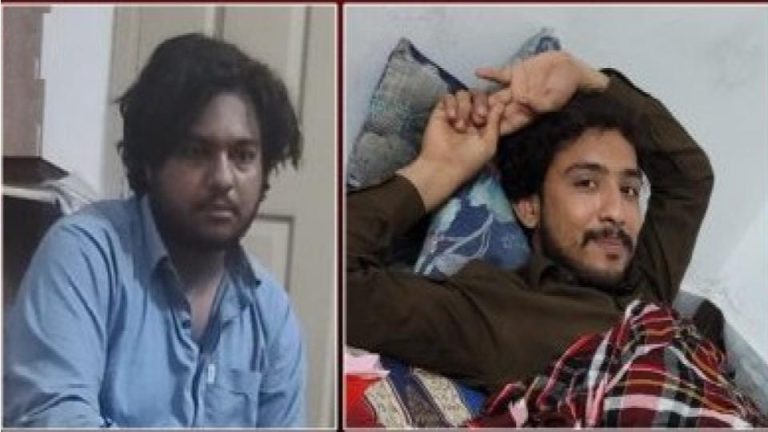
In a disturbing incident of triple murder, that signals towards Love Jihad, a 24-year women has been killed along with her parents. On Monday, Nazibur Rahman Bora (25), surrendered to the Golaghat Police in Assam along with a nine-month-old baby and confessed of killing Sanghamitra and her parents, Sanjeev and Jinu Ghosh. The Golaghat Police SP stated that they have arrested Nazibur while the child has been sent to a shelter home under the protection of Child Welfare Committee.

According to the Police, Sanghmitra became friend with Nazibur through Facebook in June 2020, during the covid lockdown. Further, in October, they left for Kolkata and married there. Her parents lodged an FIR against Nazibur under IPC’s Section 366- “Abducting a woman to forcefully compel her into marriage.” Although, she was brought back to Golaghat, the two had already registered a marriage in the court in Kolkata.

Later in 2021, Sanghmitra’s parents registered a theft report accusing her, following which, Sanghmitra was arrested and spent over a month in judicial custody. However, after getting the bail, she returned to her parents’ home. The Police elucidated that they both eloped again in January 2022, this time to Chennai. They returned to Golaghat in August. Sanghmitra started living in Nazibur’s home and had a son in November 2022.

Mazibur Started Torturing Sanghmitra

It was in March this year, that Sanghmitra accused Nazibur of torturing her and registered a complaint to the police. Police registered a case of attempt to murder and arrested Nazibur. He got released on bail after 28 days. Sanghmitra and Nazibur’s story is filled with cross cases against each other and their families. Once such case was registered by Nazibur’s brother against Sanghmitra, accusing her and her family of assaulting Nazibur.

After, Nazibur got bail, he tried to meet his son but Sanghmitra denied. Amidst the rising disputes, his whole social media love story culminated into the triple murder of Sanghmitra and her parents on July 24. While Nazibur is charged with murder and tresspassing, Assam CID has also roped in to probe the case.

Assam CM Claims It A Case Of ‘Love Jihad’

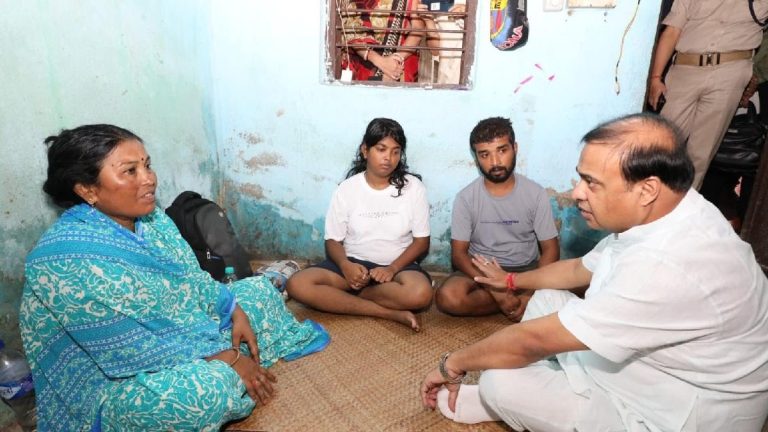
Surprisingly, the CM of Assam, Himanta Biswa Sarma visited the sister of Sanghmitra and claimes that the case is the outcome of love jihad. “The deceased family was Hindu and the accused belongs to the Muslim community. He first introduced himself with a Hindu name on Facebook. The woman learnt to use drugs when the couple had escaped to Kolkata,” Sarma said. He assured that the chargsheet will be filed in 15 days for the trial in the fast-track court.

He further added, “I am personally concerned about such a case in which religious identity is hidden on Facebook to influence a woman for marriage, and at last such a situation is created that she cannot return. Even if she returns, society will not accept her. “He also questioned the legitimacy of the marriage as it was not registered under the Special Marriage Act. Rather, it was registered by a Qazi. Although, the further investigation will unviel each aspect related to the case, it can not be ignored that Hindu girls are being targeted selectively across India in the act of love jihad.

Violence erupts in Moreh town of Manipur

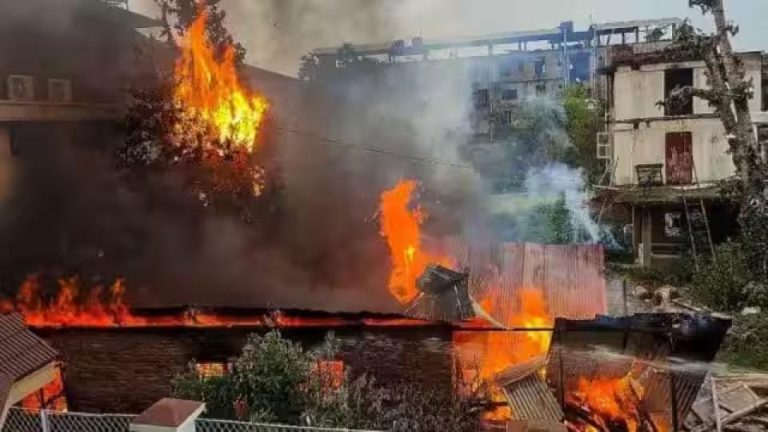
On Wednesday, a series of unsettling events unfolded in Moreh town, located on the Indo-Myanmar border in Manipur’s Tengnoupal district. A number of abandoned houses were set on fire, resulting in the destruction of property and causing distress to the already mixed population residing in the area. Security personnel were called in to bring the situation under control, eventually quelling the unrest by the afternoon.

The town of Moreh has been grappling with tensions and displacement issues, especially for the Meitei community, during the recent months of violence. These underlying tensions came to a head on Wednesday morning when a mob gathered in the town around 9:30 am. Over the next two hours, the mob targeted three different locations, setting houses and shops ablaze.

The mob primarily comprised people from the Kuki-Zomi community. Their intended targets were the abandoned houses belonging to Meitei people, whom they believed to be displaced from the area. However, their plans were thwarted when confronted by a patrol of the Assam Rifles.

The situation quickly escalated, leading to a confrontation between the mob and the security personnel. In a joint effort, the Assam Rifles, Border Security Force (BSF), and local police worked together to regain control of the situation. During the course of this confrontation, it was reported that both sides resorted to firing in the air to disperse the mob and restore calm.

As a result of the violence, approximately 15 to 16 houses were set ablaze, with significant damage also reported to the Forest Guest House in Moreh. Fortunately, there were no reported casualties in either of the incidents.

Prior to the unrest in Moreh, a separate incident occurred in Sapormeina, Kangpokpi district, where a mob set two buses used for transporting security forces personnel on fire. Nine individuals were subsequently arrested in connection with this incident. The situation in Moreh remains tense, and authorities are closely monitoring developments in the area.

BLA executes collaborators of occupying Pakistan Army

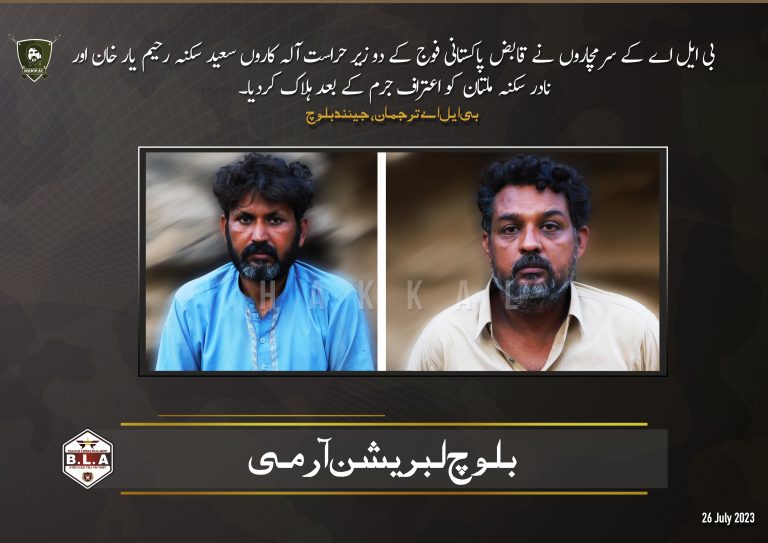
The Baloch Liberation Army (BLA) has executed two collaborators of the occupying Pakistan Army. The executed men, identified as Saeed and Muhammad Nader, were found guilty by the Baloch National Court and subsequently given the death penalty.

According to BLA spokesperson, freedom fighters apprehended Saeed during a checkpoint operation on Mangi Road in Herani, Rahim Yar Khan District, Punjab province, on June 26, 2023. He confessed to working as a carpenter in Quetta and Gwadar while providing covert assistance to the Pakistan military. Furthermore, he admitted to maintaining contacts with local mechanics in Harnai.

Besides, on July 4, the BLA intelligence agents took custody of another collaborator named, Muhammad Nader in the Zarghoon area of Quetta. During interrogation, Nader confessed that he was working for intelligence agencies affiliated with the occupying Pakistan government. His arrest took place while he was attempting to meet an unidentified individual in Zarghoon.

Following their confessions, the Baloch National Court sentenced both individuals to death. The BLA, asserting its determination to resist the occupying military, carried out the execution of the two collaborators.

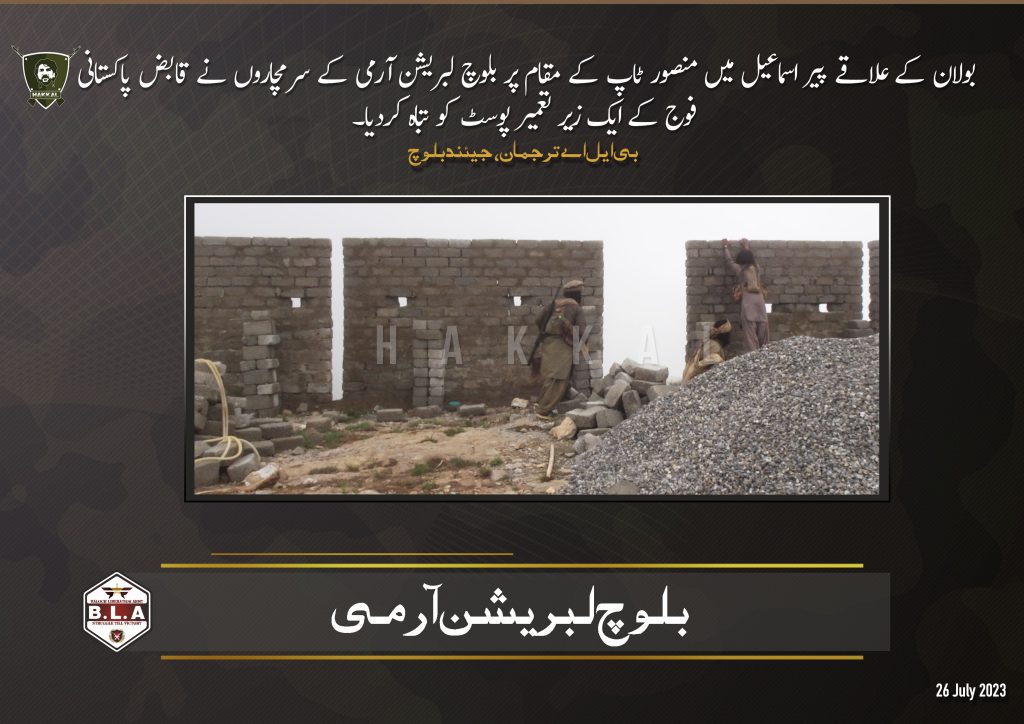
In a separate incident on the same day, BLA freedom fighters launched an attack on a secret military post situated in the Pir Ismail area of Bolan. The assault resulted in the destruction of the post of the occupying Pakistan Army inflicting heavy losses.

As usual, the BLA has vowed to continue attacking the occupying military and its allies. BLA has been fighting the armed liberation struggle since decades and has successfully posed resistance to the colonisation of Balochistan. Since March 1948, Balochistan is under the illegal occupation of Pakistan, which is exploiting each resource of thecountry while continuing to suppress the rightful owners of these resources, the Baloch Nationals.

in Balochistan

Revolutionary Students Front fights against harassment in Pakistani universities

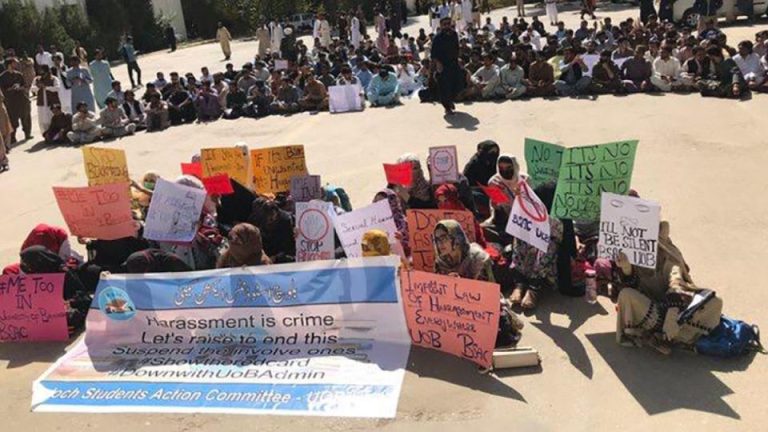
The Revolutionary Students Front (RSF) is demanding the involvement of student representatives in the investigation of the recent Islamia University incident, which has brought to light hundreds of cases of sexual exploitation and harassment of female students in Bahawalpur., Pakistan. The RSF also seeks the punishment of those responsible for these heinous acts.

In a statement released by the RSF, they express concern over the longstanding disempowerment of students in educational institutions and the deplorable consequences of the restrictive and competitive examination system. The incident at Islamia University is not an isolated case, as similar incidents are becoming increasingly common in universities across the country, shedding light on the ineffectiveness of the higher education administration.

The RSF blames the education system, especially the examination and grading system, grants power and authority to certain individuals, which they exploit to manipulate and impact the lives of students. They also reveal the existence of a drug network within educational institutions involving people from both the administrative and legal machinery. Heartbreaking incidents like these occur daily, leading to emotional and psychological trauma for the affected students.

Furthermore, religious fundamentalists leverage such events for their propaganda against women’s education, leading to some girls being expelled or barred from pursuing education by their own parents. The RSF points out that this is not the first time such a systematic network of harassment has been exposed, as a similar incident occurred at Balochistan University, but no proper action or accountability was taken.

The students in these institutions face humiliation and disgrace on a regular basis. The Higher Education Commission (HEC) has also become increasingly restrictive, banning recreational activities like celebrating Holi, which further stifles the educational environment, promotes regressive fundamentalism and is suffocating.

From university employees, management, and state officials to the highest echelons of power, the Revolutionary Students Front (RSF) alleges that certain individuals, including capitalists and political elites, are part of a brutal system that perpetuates systematic sexual exploitation and blackmail. The RSF emphasizes that the oppression and exploitation within this system have made the entire society sexually and psychologically sick.

The RSF further highlights the alarming cases of sexual abuse and exploitation involving ruling class members and state representatives. They assert that these incidents are sometimes linked to women’s veils and clothing, directly or indirectly conveying the message that women are not human beings but merely objects of desire, confined in a sheet and four walls. The RSF finds such reprehensible statements and actions deeply concerning and points out similar sentiments expressed by Imran Khan in the recent past.

On Saturday, police in Lahore and Bahawalpur made arrests at the Islamia University of Bahawalpur (IUB) on drug charges and discovered ‘objectionable’ content related to students and staff members. A special police report indicated the involvement of a “group of teachers” at the university in the drug trade and sexual exploitation of female students and teachers. The police intercepted the university’s transport in-charge and found meth in his possession.

Earlier, the university’s treasurer and security chief were also arrested on drug charges, with sexually explicit content found on the latter’s phone. The investigation revealed a network of students involved in drug peddling and links to organized ‘indecent’ parties on and off-campus. The university authorities refuted the charges and requested a high-level inquiry into the arrests. Additionally, multiple committees were formed to investigate the cases further.

In light of the recent incident at Islamia University Bahawalpur and other similar cases, the RSF presents a set of demands:

  1. Inclusion of elected student representatives in the investigation process.
  2. Abandonment of regressive tactics that focus on individuals’ private lives and instead prioritizing the social aspect of the crime.
  3. Transparent investigations with each stage’s report made accessible to the media.
  4. Public disclosure of investigation results and the overall report.
  5. Holding those responsible accountable and ensuring they face severe punishment.
  6. Formation of special committees in educational institutions to prevent harassment, with significant student participation.
  7. Lifting the ban on student unions and releasing a schedule for union elections to foster a transparent, healthy, and progressive education system, giving students a voice in decision-making at all levels.

The RSF is calling on the relevant authorities to take these demands seriously and work towards establishing a safer and more inclusive educational environment that protects the rights and dignity of all students.

Hindu girl child raped, stabbed and mutilated in Sindh

An innocent 6-year-old Hindu girl child has been stabbed to death, after being abducted and brutally raped by some radical Islamist pedophiles in Sindh.

Lakshmi Kolhi, the poor girl child was the daughter of Veerji Kolhi. As per reports, she was abducted by some unknown persons from Rajkohanni in Bondhari, Badin, Sindh. And now her family has found her mutilated body with multiple stabs. Many of her organs have also been found missing from her body.

The crime against Hindu women and girls is increasing day-by-day in Sindh. Shamefully, the only thing that is decreasing is the age of girls that are left unsecured for these monsters by Pakistan . Its hard to even imagine a day when the crime against the minor Hindu girls does not happen in Sindh. And the worst part is that the radical Islamists and their patrons are so well connected that even such inhumane, brutal and uncivilized acts are covered by the impotent Police of the quasi-state of Pakistan.

Pakistan, which is formed on the basis of religion, guarantees impunity for anyone that can perpetuate the most heinous crime against the religious minorities. Otherwise, what maybe the reason that such type of crimes are repeatedly committed, out of religious fanaticism? Apparently, Pakistan itself is extending support to such menace. Broadly speaking, it is much more than an ordinary brutal crime. The state’s support to such elements is guided by fundamentalism, which shuns to consider anyone as human who does not follow Islam. The act is a step towards an ethnic purge that is being carried out silently in a piecemeal manner.     

From Islamabad to Dera Bugti, Baloch students face ongoing threats from Paki Army

The Baloch Students Council in Islamabad has raised a serious concern about the safety and well-being of Baloch students across the country. In a recent incident, two Baloch students, Jawad Ould Iqbal and Zaid Ould Abdul Rasool, were forcibly arrested by Pakistan secret agencies and security forces in the early hours of the morning from different locations in Islamabad. This incident adds to the growing list of forced disappearances faced by Baloch students, highlighting the severity of the state oppression they are enduring.

Jawad Iqbal, a fifth-semester student in the Electronics Department at Quaid-e-Azam University, Islamabad, and Zaid, who recently completed his Intermediate education at Orbit College in Bara Kahoo, were preparing to pursue their higher education at Quaid-e-Azam University before their sudden abduction.

The spokesman of Baloch Students Council Islamabad expressed grave concerns, stating that Baloch students are not safe, whether in Islamabad or Dera Bugti. He highlighted the alarming trend of forced disappearances, noting that dozens of Baloch individuals have been reported missing from various regions, including Makran, Karachi, Dera Ghazi Khan, Shall, Awran, Dera Bugti, Mishke, and Islamabad, in the recent month of July alone.

Moreover, the plight of Baloch students extends beyond mere disappearances. Students in Punjab and federal educational institutions have faced harassment and profiling for an extended period. Many students receive threatening phone calls, and their families are often coerced into mentally harassing them. This pattern of targeted mistreatment perpetuates a hostile environment for Baloch students, where they endure planned torture within educational institutions.

The spokesman condemned the inaction of the authorities in addressing the legitimate concerns of Baloch students. Despite presenting their grievances before the Supreme Court, High Court, Federal Commission, media, and press clubs, the state’s oppressive tactics seem to persist unchecked. The recent disappearance of Jawad and Zaid underscores the lack of effective action taken to protect Baloch students from enforced disappearances and violence.

Earlier incidents of enforced disappearances, such as that of ARID University student Feroze Baloch, who remains missing, have only fueled the urgency of addressing this crisis. The Baloch Students Council is adamant about not remaining silent on the issue and has announced its intention to soon unveil a comprehensive action plan in response to the recent incident.

The Council urges all political parties, human rights organizations, and especially Baloch student organizations to join forces in raising their voices against the forced disappearances of Jawad, Zaid, Salim Baloch, and all other Baloch students.

It should be noted that Balochistan, gained its independence from the Britishers on August 11, 1947, faced a tragic turn of events when its freedom was abruptly cut short after a mere seven months. On March 27, 1948, Pakistan forcefully occupied Baloch land, marking the beginning of a tumultuous chapter in the history of the Baloch people. Since then, the Baloch community has endured a harrowing plight of mysterious abductions, mass murders, and mutilations. Despite facing intimidation and violence, the people of Balochistan stand firm in their quest for justice, liberty, and the restoration of their homeland.

Russia bans ‘Gender Changes’, challenges gender-affirmation

Russia’s President Vladimir Putin signed new legislation on Monday, officially outlawing gender-affirming procedures. The bill, approved unanimously by both houses of parliament, enacts a comprehensive ban on any medical interventions aimed at changing a person’s sex and prohibits changing gender markers in official documents and public records. Exceptions to the ban are limited to medical interventions for congenital anomalies only.

In addition to restricting gender-affirming care, the legislation also nullifies marriages in which one person has undergone gender transition and effectively bars transgender individuals from becoming foster or adoptive parents. 

The ban is part of the Kremlin’s ongoing campaign to protect what it perceives as Russia’s “traditional values”. Proponents of the legislation argue that it is necessary to safeguard the country from what they label as “Western anti-family ideology”, while some have characterized gender transitioning as “pure satanism”.

Last week, Italy followed a similar path to reaffirming its traditional family structure by making changes to birth certificates for children born to lesbian couples. In this move, the name of the non-biological mother was removed from the child’s birth certificate.

Despite the criticism from western media, this move is a welcome step. The issue of grooming gangs affecting the well-being and natural growth of children in various countries, including the United States and parts of Europe, is indeed concerning. It is essential to take action to counter harmful influences and ideologies that may forcefully and negatively impact children. 

BLF freedom fighter martyred in clashes with Pak Army

The Balochistan Liberation Front (BLF) issued a statement detailing the clashes that took place with Pakistani forces (Levies) on July 22. It stated that their leader, Dostin Mirwani, son of Riaz alias Merik, was martyred in the face off.

The statement warned of consequences for local agents supporting Pakistan forces. It underscored that all forces opposing the Baloch freedom struggle, including the police and Levies, would not be spared.

The clashes occurred on July 22 in the Malar area of Awaran, as Sarmachars were on a covert mission. They encountered local Levies forces, leading to a confrontation with the enemy Pakistan forces personnel. Dostin Baloch displayed immense bravery, repulsing the enemy forces, but tragically sacrificing his life. Fortunately, his comrades managed to escape unharmed.

Major Gwahram Baloch, the BLF spokesperson, stressed that the organization had consistently cautioned non-Pakistan Army forces in Occupied Balochistan against aiding the enemy’s Army. These individuals were directly involved in tracking and attacking Sarmachars. He emphasized that such elements would be treated as enemy forces.

BLF warned the informants

The BLF also issued a warning to individuals who were part of the enemy army and supported the occupation in the struggle for national liberation, stating that they would face consequences. Additionally, they pledged to take severe action against all elements involved in the Kolwa incident.

Recently, BLF targeted and eliminated informants of the Pakistan Army, who were complicit in undermining the Baloch cause. Additionally, yesterday a Pakistani agent, involved in persisting enforced disappearances, met a similar fate at the hands of the BLF in Gwadar. While Balochistan is suffering for more than 75 years now, it’s condition is worsening with each day ending. After March 1948, the Baloch people are living in an unending saga of pain and agony. The occupying Pakistan Army has further deteriorated the condition. Against such atrocities and in a wish to see the horizon of Independence one day, organisations like BLF are fighting a fierce battle.

China brutalizes religious event in Tibet; detains organizers

In a recent incident of religious repression, Chinese authorities abruptly halted a government-approved Tibetan religious event in eastern Tibet. They also detained its organizers, dispersed worshipers, and prematurely destroyed a sacred sand mandala. This comes as a second instance in this month of spiritual leaders being stopped from giving teachings on Kalachakra in Tibet. The crackdown has raised concerns among Tibetans and observers about the suppression of Tibetan Buddhism and its teachings by the Chinese government.

The First Incident: Gungthang Rinpoche’s Canceled Kalachakra Teaching
Earlier this month, the Chinese government canceled a Kalachakra teaching that was scheduled to be given by the 7th Gungthang Rinpoche Lobsang Jamyang Geleg Tenpe Khenchen in Tsoe, Gannan Tibetan Autonomous Prefecture. The Kalachakra is a sacred event in Tibetan Buddhism, and only a few qualified Tibetan Buddhist masters, including the Dalai Lama, have the authority to impart such teachings. Despite organizers obtaining permission in advance, the authorities cited the 70th anniversary of the instituting of Kanlho prefecture as the reason for the abrupt cancellation.

The Second Incident: Disruption of Kalachakra in Gumong
More recently, a significant religious gathering in Samey-shi Village, Gumong Town, Mongra County, Tsolho Tibet Autonomous Prefecture, was also interrupted by police intervention. His Eminence the 7th Athi Kalsang Tashi Gyatso, was to give teachings on Kalachakra, but forced to leave the ceremony. Tens of thousands of devotees had congregated for the event, which was expected to last until 23 July. The police actions not only dispersed the worshippers but also led to the premature destruction of the sand mandala, a central aspect of the Kalachakra teachings.

Chinese Suppression of Tibetan Lamaism

These incidents reflect ongoing efforts by the Chinese government to control and suppress Tibetan Lamaism and its religious teachers. In recent years, the authorities have imposed stricter regulations on religious teachers and demolished Tibetan religious sites, leading to deep anguish and emotional distress among the faithful.

The disruptions of the Kalachakra teachings have had far-reaching consequences for Tibetan devotees. For those who traveled from distant areas, including elderly farmers and nomads, the experience was even more disturbing. The cancellations have not only caused emotional distress but also resulted in financial losses. The tents and facilities set up for pilgrims were pulled down, and land leases could not be recovered.