Home Blog Page 215

Thailand’s future uncertain as Prime Minister nominee fails to secure votes

Thailand, a country suffering with a decade of military-backed dictatorship, was at a crossroads when the sole nominee for prime minister failed to gather enough votes to form a government. This result casts doubt on Thailand’s democratic future, especially given the enormous support progressive opposition parties gained in the last election. The rejection of the nomination illustrates the ongoing conflict between the ruling establishment and public aspirations.

A Shock Election Result

In a surprise turn of events, the newcomer party Move Forward won the elections, collecting the most seats and popular vote. The party capitalised on growing dissatisfaction with the country’s government by promising broad reforms in a variety of sectors, including the military, the economy, decentralisation of authority, and even monarchy reforms—an matter long considered taboo in Thai politics.

Despite significant public support, Move Forward’s leader, Pita Limjaroenrat, was unable to secure the necessary parliamentary votes. Pita earned 324 votes, falling short of the 376 needed for a majority in both the upper and lower houses of the National Assembly. As a result, the House Speaker declared that another round of voting would be held at a later date, extending the political uncertainty in Thailand.

Monarchy Reform

In Thailand, the question of royal reform remains highly sensitive. Section 112 of the Criminal Code makes criticism of the monarchy a crime punishable by up to 15 years in prison. Some senators and conservative parties refused to support Pita since his party intended to change or repeal this controversial law. Their approach demonstrates a deep commitment to preserving the monarchy and the status quo.

Despite the challenges that the progressive movement encountered, Move Forward’s policies received significant backing from the country’s disappointed youth. Frustrated by years of autocratic politics, a faltering economy, and a difficult job market, young Thais saw the party’s platform as a means of achieving a more democratic and inclusive future. The record attendance in the May election was a stark rebuke to Thailand’s military-backed establishment, which has ruled the country since 2014.

In Thai politics, the way to a more progressive and democratic time frame remains uncertain. A party or alliance must gain a majority of 376 seats in both the lower and upper houses of parliament to form a government. Even with a coalition of seven other opposition parties, Move Forward’s majority was insufficient to achieve this goal. The unelected 250-member Senate, appointed by the military, is critical. This, however, has proven to be a serious impediment in Pita’s quest for prime ministerial power.

Pita said on Twitter, “The voting is not for Pita, not for MFP, but it is for Thailand to move forward into normalcy of democratic system, just like any democratic countries in this world.”

The failure of Thailand’s single candidate for prime minister to obtain enough votes is a blow for the country’s democracy. The electoral success of the progressive movement is at stake, and the outcome may determine whether Thailand can evolve towards a more democratic and inclusive government.

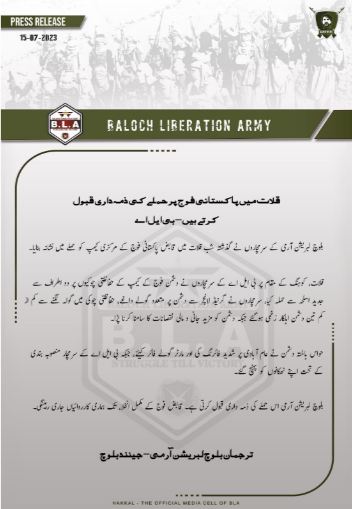
Pak Army raids villages in POB, abducts four Balochs in custody

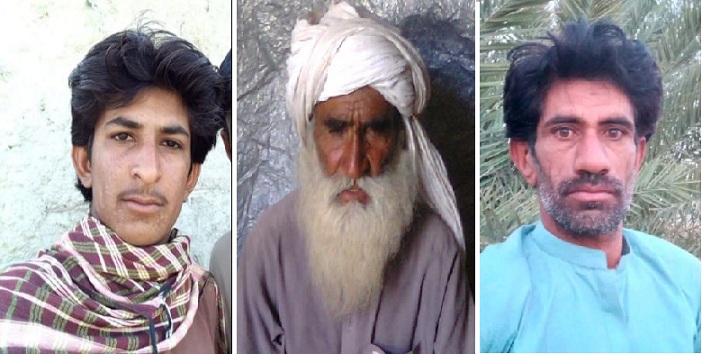
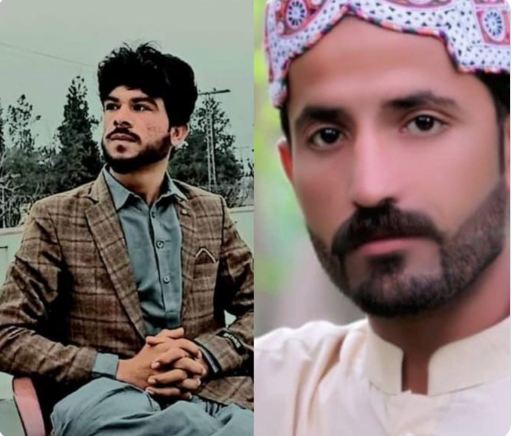
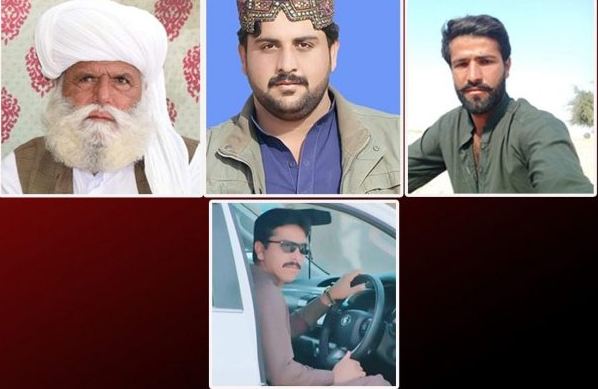
Four individuals, including two elderly persons, Ahmad Ali and his seventy-year-old father, Roshan Bugti, have been detained by the Pakistani forces and subsequently gone missing.

Sources say that last night at around 3 a.m., Pakistan Army conducted raids on various houses in the vicinity of Suai Airport Colony. In the house of Roshan Hotkani, the military personnel forcibly entered, subjected women and children to violence, and abducted Roshan Bugti and his son Ahmad Ali, who are both employed in the Levies.

Furthermore, from Roshan Bugti’s house, the forces took away two motorcycles, two valuable mobile phones, a licensed shotgun, and the jewelry of the women present in the house.

On the other hand, the Human Rights organization of the Baloch National Movement (BNM) called Pankh claims that on the 8th and 18th of June, the Pakistani forces took two individuals into custody from Suai, who are still missing. The missing individuals include Tariq, son of Saffar Khan Bugti, and Juma, son of Allahuddin Bugti, who were taken into custody on the 8th and 18th of June, respectively.Balochistan was declared an independent nation on 11 August 1947 by the British government and on 27 March 1948 it was occupied by Pakistan. Pakistan has always been an illegal occupant of Balochistan. And that is why it has always treated Balochistan as a colony. It exploited the Baloch land for its benefit on the cost of oppression of Baloch people. 

Radical Islamist Qari rapes a 12 year boy in Pakistani Madrasa

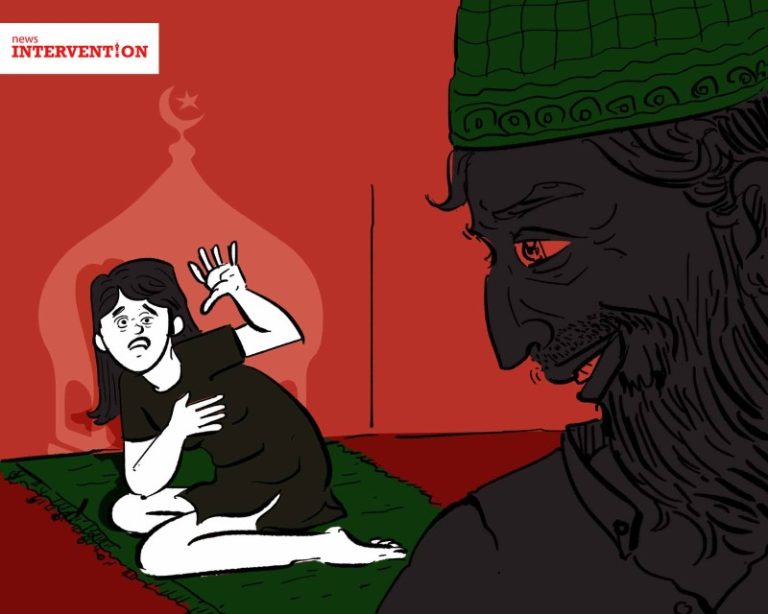
In a shocking incident, a 12-year-old boy was reportedly subjected to rape by Qari Tafil, an individual associated with a local madrasa in Bahaudin Mandi, Pakistan. The victim’s grandfather, Muhammad Azam, discovered the heinous act when he arrived at the mosque and witnessed the abuse. The incident has sparked outrage and led to the arrest of the accused.

According to reports, on 4 July, Muhammad Azam went to pick up his grandson, Bilal, who used to study Quran at memorization classes in the madrasa. Upon entering the mosque premises, Azam was horrified to witness Qari Tafil engaged in sexual abuse with his grandson. Reacting swiftly, Azam sent Bilal from the mosque and immediately filed a complaint with the local Phalia Police Station.

Unfortunately, Bilal revealed that, Qaiser Farooq, that this was not the first time he had been sexually abused by Tafil. The young boy claimed that he had been subjected to such acts on five previous occasions. These shocking revelations have raised serious concerns about the safety and well-being of children attending the madrasa.

Rapes By Qari In Madrasa Has Become A Common Occurrence In Pakistan

Qari Tafil, who had been serving as an imam and qari was responsible for leading prayers and teaching the Quran. He has been promptly removed from his position by the mosque administration following the filing of the police report.

Ghulam Rasool, the senior administrator of the mosque, expressed deep disappointment, stating that they were completely unaware of Tafil’s previous actions in other mosques. Rasool highlighted the urgent need for better communication and coordination among different mosques to prevent such incidents in the future.

The courageous step taken by Bilal and his family in reporting the abuse has led to the initiation of legal proceedings. An FIR has been registered against Qari Tafil. Subsequently, Tafil was arrested and is currently in the custody of the Phalia Police for further investigation.

In light of this distressing incident, Bilal has received medical assistance to address any physical and psychological trauma. The police have conducted a medical check-up, and the reports have been sent to France for further examination, ensuring a comprehensive investigation.

The case has brought attention to the overall safety and security of students attending madrasas. And this is not the first case in Pakistan, there are many more instances, when Qaris been found exploiting the children sexually. In Pakistan, these activities are more prevalent because madrasas enjoy a peculiar immunity across the country. This immunity empowers these pedophiles to pursue their malicious intentions without any fear. And hence, these cases are becoming a normal occurrence in Pakistan.

Foxconn-Vedanta deal collapse; disappointed Indians trace Indian semicon history

It would not be an exaggeration to compare the desperation for oil in 1970s to the desperation for semiconductor these days. Each country is eyeing to ace the domain of semiconductor fabrication. And its not happening out of the blues. Since years, various capable nations have been striving for fabrication dominance; however, post-Covid era has made the struggle more profound. Simply because of the triggered demand for electronic goods and disrupted global supply chains.  After the pandemic, countries realized the market vulnerability and decided to establish a robust fabrication ecosystem in their own country and India was no exception to them.

In fact, India being a large and young work force is one of the most suitable contenders for being the semicon hub. Additionally, the current government is steering India on the right path. But still, it seems that India has a long way to go for being one of the biggest semicon fabricating countries.

The biggest partnership for the establishment of FAB plant in India between the Taiwan based Foxconn and the Indian conglomerate Vedanta has collapsed. Apparently, both the companies lacked the Fab tech for which they tried to source another partner, possibly from the Europe, failing which the JV fell through.

However, both companies have made it clear that they will work separately in India. Foxconn has also clarified that it is not going to leave India rather would diversify its partners. But it is not a hidden fact that the Indian aspiration of semicon fabrication has received a huge setback. As a result, different types of reactions are coming from the people across India.  In one such reaction, a twitter user named “STAR Boy” wrote a thread on semiconductor story of India since 1960s.

He tweeted,” India missed the semiconductor bus in 1987 due to an incompetent govt. and today India is behind 12 generations in Global Semiconductor race.” Through his entire thread, he explains the events regarding the semiconductor-centric developments over the decades. So, let us trace the course of this history.

Tracing The Course Of History of Semiconductore In India

In 1958, eight individuals, also known as “traitorous eight” started Fairchild Semiconductor. This was the time when Integrated Circuits (IC) were newly invented. Fairchild Semiconductor was looking to establish its first semiconductor plant giving preference to India.  However, the heavy regulations, lethargic bureaucracy and a focus on production of low-end products became barriers and eventually the plant was installed in Malaysia. Later in 1962, India established Bharat Electronic Limited to manufacture electronic components in India including semiconductor. BEL started to manufacture silicon and germanium transistor. But unfortunately, this unit shut down because BEL failed to compete with the global standard.

In mid-1980s, BEL in partnership with IISc professor A.R. Vasudeva Murthy established Metkem Silicon Limited. But lack of govt. support and its failed promise of subsidy again shed waters on the larger aspirations.  In 1990s another high spirited man, E.S Ramamurthy tried to develop silicon with BHEL but witnessed same fate.

In 1964, Indian government established Electronic Commission in a bid to develop India’s electronic market as well as production. After that in late 1970s, the government of India initiated the Technology Policy Statement to promote the indigenous technology like semiconductors.

Biggest Hit To The Indian Semiconductor Dream

It was finally in 1983, when the government of India established the Semiconductor Complex Ltd. (SCL) in Mohali, Punjab to produce high quality semiconductor products for Indian market. Establishment of SCL was a significant step as it also focused on manufacturing microprocessors. Till late 1980s, SCL made a remarkable progress from 5-micron process technology to 0.8-micron process. But like any other industry it also faced the wrath of US-Japan trade war of 1980s, a similar hostility like today’s US-China.

After a year or so, the market started to get back to the tracks. However, 1989 brought the biggest setback for Indian semicon dream which threw India decades back. In 1989, a massive fire broke out in the SCL and whole setup got burnt. Interestingly, at this point of time, Indian semiconductor technology was near to the best and current players like China and Taiwan would not even have thought of manufacturing one.

To cope up with the loss, government established Centre for Electronics Design and Technology in Mohali in 1990. This was the most tragic incident with the massive ramifications. By the early 2000s, semiconductors were a $200 billion industry and India has a negligible share in it. The design and architecture was based in US while the manufacturing consolidated in the Eastern Asia.

The Predicament of 2005

In mid-2005, an MNC started its operation in Southern India and established a “class 100 clean room” for checking the impurities in the semiconductors. But again the policies and regulation proved to be the biggest roadblocks. The imported machinery remained stuck on the port for months. To the worse, forget about the concessions, heavy import duty was charged on the equipments. After having unyielding discussions with the government, the company decided to move outside India and to the surprise, the opportunity was grabbed by China with both hands. Seeing this horrific situation, another MNC gave up its plan to invest in India.  

In 2006, India declared its first semiconductor policy under the Manmohan Singh government and invited investment in 2011. But the past events deterred the MNCs tro invest heavily. The situation changed after 2014 and especially after the pandemic as stated above. Now, many big fishes in the pond are trying to invest in India.

India has already developed an assembly ecosystem and with foreign investment and technology transfer it is looking to expand to the fabrication.

Controversial law targets government employees’ protests in Pak-occupied Jammu & Kashmir

Muzaffarabad: An amendment ordinance has been issued under the signature of the President of Pakistan-occupied- Jammu and Kashmir to stop the protest of government employees. According to the ordinance, going on strike, inciting a strike or protest, locking the office, or delaying work will be punishable by dismissal. This Ordinance shall apply to registered and unregistered organisations and associations.

On Tuesday, the President signed the ‘Azad Jammu and Kashmir Employees Association (Registration and Regulation) Amendment Ordinance 2023’ sent by the government. This Ordinance has been issued to amend the Azad Jammu and Kashmir Employees Association (Registration and Regulation) Act, 2016.

According to the Ordinance, two sub-sections 3 and 4 have been added to Section 17 of the Act. Apart from this, sub-section 3 has also been added to Section 19.

As per the amendment, in sub-section 3 of Section 17, it is written that “Notwithstanding anything contained in any other law, misconduct or violation of government orders or instructions or obstructing the functioning of any department of government or other public servants Incitement to a strike, slackening, or marching in protest by any employee shall be considered rebellion and misconduct against the Government, as per Section 2(1) of the said Act and the Government Employees of Azad Jammu and Kashmir (Conduct) Rules, 1981. The accused shall be dismissed from the service by the competent authority.”

Sub-section 4 states that “Sub-sections 1, 2, and 3 above shall also apply to employees of self-organised associations that are not registered under this Act.”

According to the ordinance, sub-section 3 will be added after sub-section 2 of Section 19 of the Act, according to which the officer of the department can file a complaint against the organisation, official, or employee, who in this regard is the head of the department concerned. will be authorised by

It should be noted that in February 2016, the Employees Association (Registration and Regulation) Act 2016 was implemented, and all employee organisations were required to obtain registration under this Act within one month. Some employers’ organisations have obtained registration under the Act, while there are many organisations that have not obtained registration under the Act.

According to the above-mentioned act, employee organisations cannot hold any kind of strike, nor can they incite anyone to strike or protest; no organisational work or meeting can be held during office hours; and no employee can be forced to join the organisation. can be done. According to the Act, an organisational official cannot discuss employee problems directly with officers, block office telephones, electricity, or any other facilities, lock the office, talk loudly with an officer, Can’t be rude.

Organisations have the ability to make a written request regarding employee issues, which will be processed departmentally.

Under the said Act, officials of organisations from various departments were dismissed from their jobs in the past on complaints filed by the officers. However, after a long legal battle, those employees were reinstated.

However, now, by amending the Act, the Services Employees Association (Registration and Regulation) Act, 2016 has been declared final, abolishing all other laws and rights to the extent of employee organisations. The amendment clarifies that a strike, protest, disorderly conduct, obstruction of government, protest march, or incitement to protest shall be considered sedition against the government and misconduct notwithstanding the existence of any other law.

In other words, the constitutional right of all citizens to freedom of association, assembly, protest, and expression has been taken away to the extent of government employees.

Earlier in the Act, penalties such as strikes, protests, lockouts, and obstruction of work were prescribed as fines, withholding of salary, and disciplinary action.

The said ordinance has been rejected by political and social organisations, trade unions, and student organisations, who have termed it a black law. According to a press release issued by the Pakistan Trade Union Defence Campaign (PTUDC), this is an act of imposing dictatorship, restricting internationally recognised rights. In this region, the right to trade union was already taken away from the workers; now they are also banned from demanding rights through organisations.

In a press release issued by the spokesperson of the Jammu and Kashmir National Students Federation, it was said that seven years have passed since this black law came into effect. During these 7 years, no action was taken on the written requests made under this Act on the teachers’ demand for upgradation only. When the teachers were forced to take the path of protest, the government planned to fire the teachers’ leaders and impose a more stringent black law ordinance on all workers.

“We reject this law,” PTUDC’s press release said. Jammu and Kashmir and across Pakistan will struggle to protect and defend the rights of workers and demand that this black law be withdrawn immediately. This is a violation of basic human rights. Workers in this region should be given the right to form a trade union.

The press release of JKNSF said that trade unions and student unions are fundamental rights of workers and students that are being robbed by this ruling elite. Now unconstitutional and inhuman steps are being taken, like taking away basic human rights by imposing more black laws. These tactics of the rulers will not be accepted in any case. There will be a struggle against these black laws at all levels.

Clashes in Khyber-Pakhtunkhwa, death toll reaches 11

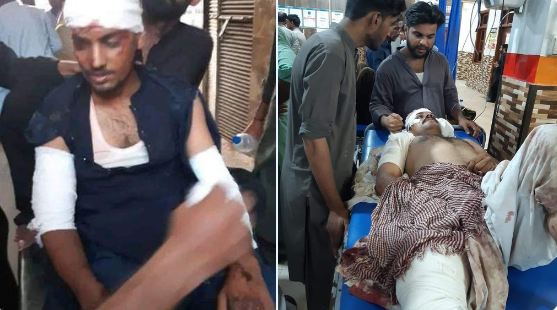
Two more people were killed on Tuesday in a fight between two tribes over a piece of land in the Kurram tribal district of Pakistan’s Khyber Pakhtunkhwa province, taking the total death toll to 11. So far, 67 people have been injured during the clashes.

According to ‘Dawn’, the clashes that started five days ago in the Bushehra Dandar area have spread to other areas, including Kharkle, Balash Khel, Piwar, Gedu, Trimengal, Kermanpada Chamkani, Maqbul, and Kunj Alizai.

In areas affected by road closures, people are facing constant shortages of food items, medicine, and fuel. Educational institutions are closed, and normal life is also affected.Protests have also been held in Islamabad, Karachi, Lahore, Peshawar, and other areas of the country against the tense situation in Kurram two days ago.

The Human Rights Commission of Pakistan has expressed concern over the deadly clashes. “There are alarming reports of increasing militancy, fueling local conflicts”, the statement said on Twitter.

The statement added that the government should immediately commit to resolving all communal differences peacefully and restoring law and order in the region. “We also remind the state that it committed to mainstreaming the newly merged districts in 2018 and securing the right to life and security of all citizens by providing access to health, education, and employment. But despite the allocation of funds, this commitment was not fulfilled”.

Apart from clashes between local tribes, there have been incidents of communal violence in Kurram district in the past, and some elements are still calling it a series of communal violence. However, Federal Minister Sajid Hussain Turi rejects these claims and says that these are only tribal conflicts that started over Shamilat, and there are no Shia or Sunni differences in them.

Apart from clashes between local tribes, there have been incidents of communal violence in Kurram district in the past, and some elements are still calling it a series of communal violence. However, Federal Minister Sajid Hussain Turi rejects these claims and says that these are only tribal conflicts that started over Shamilat, and there are no Shia or Sunni differences in them.

Local journalists said that four days ago in the Bushehra area of Upper Kurram, clashes between two tribes belonging to the Bangash tribe had started, which had been resolved with the efforts of the Jirga and the administration.

Local journalist Riyaz Chamkani said that after that, clashes started in Lower Kurram, where different tribes kept firing at each other and fighting.

After that, clashes between different tribes started in Central Kurram today, and reports of casualties have been received. The local people said that in some places the conditions are better, and in other places they are worse.

The local people said that since the year 2007, and now again this year, such fierce clashes are taking place, and so far the government has not been able to control the situation. Locals say that these clashes have created fear in the area as heavy gunfire is heard throughout the night.

The situation in Kurram district has been tense after the killing of eight people, including five teachers, in May this year. The incidents were reported that a teacher named Muhammad Sharif was killed by firing on a vehicle, after which messages were shared on social media that a Sunni teacher had been killed in a Shia-majority area, after which there were school staff, including teachers present in the staff room of the school, who were fired upon by unknown persons. After these incidents, the situation in the area became very tense, and schools, colleges, and business centres were closed.

France pioneering India’s UPI as a cutting-edge digital payment system

During Prime Minister Narendra Modi’s visit to France, bilateral negotiations between the two nations will focus on areas aside from defence collaboration, with a special emphasis on extending cooperation in areas such as the digital economy, manufacturing, and sustainable energy. Notably, the visit looks good for the Unified Payments Interface (UPI) as it strives to establish itself on the European stage.

The possibility of the implementation of UPI, India’s innovative digital payment technology, in France is a major highlight of the visit. UPI signed a significant deal with Singapore’s PayNow in 2023, allowing users from both countries to conduct smooth cross-border transactions. Building on this accomplishment, India’s NPCI (National Payments Corporation of India) and France’s Lyra have been working together for a year to introduce UPI to French shores. If all agreements are properly completed, France will be the first European country to implement UPI.

Prime Minister Modi intends to make the announcement from an iconic location in Paris, highlighting the significance of the occasion. The introduction of UPI in France represents a significant step forward in digital payments innovation, emphasising the usefulness and scalability of this technology on a worldwide scale. UPI’s track record of allowing secure and convenient digital transactions in India has brought it to the forefront of the financial technology sector.

PM Modi’s tour will also emphasise clean energy, building on his earlier inauguration of the International Solar Alliance in Paris in 2015, which currently has 100 member countries. This time, the focus will be on green hydrogen, renewables, batteries, and small modular reactors. Technical discussions on the 8000-page techno-commercial offer given by France in 2019 have progressed on the 1650×6 MW Jaitapur Nuclear Power Project. This bilateral sustainable energy endeavour is expected to come to fruition soon, making the project a reality.

Furthermore, France aggressively seeks technology transfer and is interested in diversifying manufacturing and sourcing by encouraging French companies to view India as a global supply chain centre alternative to China. France and India’s relationship extends to EXAScale computing as well, with France previously being India’s partner in supercomputing and shared technologies.

The visit of Prime Minister Modi to France reflects a broader determination to improve bilateral ties and explore new channels of collaboration beyond defence. The conversations and actions completed during the visit are expected to pave the path for more collaboration in digital innovation, sustainable energy, and manufacturing, thereby strengthening the two countries’ partnership.