Coco Lee’s tragic suicide triggers fresh discussion on mental health taboo in China
The recent death of Coco Lee, a critically acclaimed international singer and songwriter, has reignited discussions about mental health in China. Lee had been dealing with depression for years before dying by suicide at 48. Her death has prompted many fans and experts to call for greater awareness of mental health issues in the entertainment industry.
Lee’s death is not the first time that a celebrity’s suicide has raised awareness of mental health issues in the entertainment industry. In recent years, there have been a number of high-profile suicides by K-pop and J-pop idols, including Korean singer Choi Sung Bong, Jonghyun of SHINee, Sulli, and Hana Kimura of Terrace House. Recently, K-pop star, Haesoo, was found dead at her home. In May, K-pop star Moon Bin, member of the boy band Astro, passed away. These suicides have led to calls for greater mental health support for idols, who are often under intense pressure to succeed.
The entertainment industry can be a difficult place to work, especially for young people who are constantly under scrutiny from the public. The pressure to succeed can be overwhelming, and the lack of privacy can make it difficult to cope with stress. This can lead to mental health problems, such as depression, anxiety, and even suicidal thoughts.
The Case of Coco Lee
Coco Lee was a successful singer and songwriter who had a long and successful career. She was known for her bubbly personality and her positive energy. However, Lee was also struggling with depression. She had been open about her struggles with mental health in the past, and she had even written songs about it.
Lee’s death has shocked many people. Her fans are grieving her loss, and they are also calling for awareness of mental health issues.
one Weibo user with the username Mochuan wrote, “Everyone should cherish those in front of you who are always outgoing and bubbly because they may be internally experiencing hardship and pain. They may present their best and warmest side to everyone else while facing the dark abyss all alone.”
Following Lee’s death, the National Health Commission also released information about depression on WeChat, asking Chinese citizens to check their own mental health and identify signs of desperation.
Because mental illness has long been considered taboo in China, Coco’s supporters are encouraging people to talk about it and seek help if they are struggling.
The Chinese government, in recent years, has put emphasis on mental health due to widespread depression, anxiety, and other mental health issues that emerged during the coronavirus pandemic. Cities established hotlines and other services, and residents became more comfortable seeking help.
The death of Coco Lee is a tragedy, but it can also be a wake-up call for the entertainment industry. It is time for us to take mental health seriously and to provide support for those who are struggling.
Protest in Quetta against enforced disappearances of Balochs by Pak Army
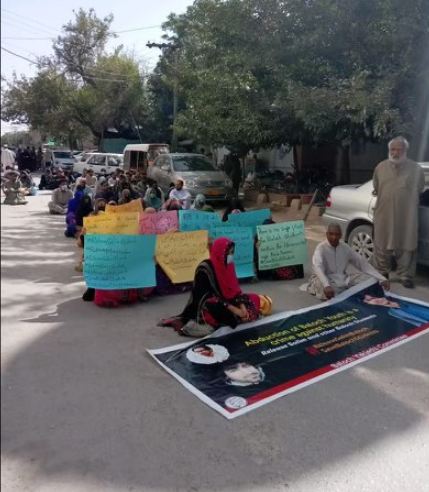
The Baloch Solidarity Committee organised a protest outside the Quetta Press Club against the rising cases of enforced disappearances including the recent one of Salim Baloch.
On 10 July, the protest was organized which was attended by the people of various Baloch organizations including the Voice for Baloch Missing Person (VBMP). In the protest, Chairman of VBMP, Nasrullah Baloch said that on the pretext of security, forces have been deployed across Balochistan who carry out profiling of the Baloch nationals. They harass them and forcibly abduct them from different educational institutions in Balochistan.
Citing the report of commission constituted by Islamabad High Court, he said that the report acknowledged 59 cases of enforced disappearances. Apart from that he stated that more than 166 cases have been reported to VBMP. Elucidating the relevance of such protest he told that if anyone faces oppression or any institution violates the human rights and the responsible authorities show pure ignorance, then civil society rises for the right of people. The organizations like VBMP among others, demonstrate their protest to take the exploitation and oppression under the notice of the adjudicating bodies and the government.
He demanded that if there is an accusation against the forcibly disappeared individual, he must be presented in front of the court. The protest highlights the extra-constitutional actions that are prevalent and have become a common routine in Balochistan. Pakistan is currently practicing the rule of jungles where no human rights are safe and abducting Balochs and torturing them.
Cheetah reintroduction program in India faces trouble
India’s efforts to reintroduce cheetahs to the country have been dealt a blow, with the death of a seventh cheetah in just a few months. The male cheetah, named Tejas, was one of 12 that were relocated from South Africa to Madhya Pradesh’s Kuno National Park earlier this year.
Sasha, a Namibian cheetah, died in March of kidney illness. Uday, a South African cheetah, died in April from heart failure. Daksha, a South African cheetah, died just weeks later following a violent encounter with male cheetahs during a mating attempt. In May, three of four pups born to a Namibian cheetah named Siyaya perished within a week of birth owing to heat, dehydration, and frailty. The fourth cub was rescued and sent to a local hospital for observation.
The deaths have raised concerns about the suitability of the habitat and management of the project. Some experts have also questioned whether there is enough prey in the national park for the cheetahs, especially given competition from other predators like leopards.
Despite the setbacks, Indian authorities remain optimistic about the program and believe that it will ultimately be successful. They point to the fact that cheetahs have been successfully reintroduced to other countries in the past, such as Iran and Namibia.
India plans to reintroduce 100 cheetahs from southern Africa over the next decade. However, the deaths of the cheetahs have cast a shadow over the project and raised questions about its future. It remains to be seen whether the program will be able to overcome these challenges and succeed in reintroducing cheetahs to India.
BLA carries out series of attacks on occupying Pak forces across Balochistan
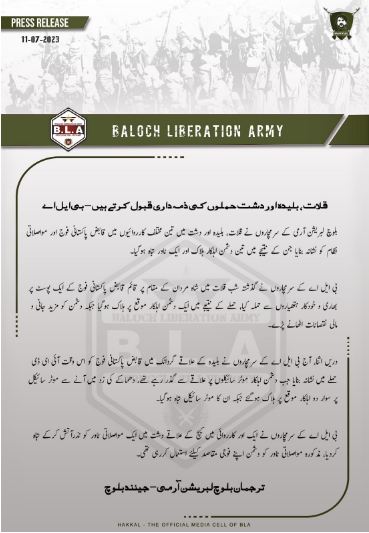
The Baloch Liberation Army (BLA) has carried out a series of attacks on the occupying Pakistan Army in Qalat, Buleda and Dasht regions.
On Monday, BLA Freedom Fighters launched an attack on a post of occupying Pakistan Force in Qalat. Consequently, one enemy personnel was eliminated, and heavy losses were incurred.
Again yesterday, BLA freedom fighters targeted motorcycle-borne personnel of occupying forces near Buleda. Utilizing an IED, the freedom fighters caused a powerful explosion, killing two enemy personnel and destroying their vehicles.
In a separate operation in Dasht area of Kech district,BLA destroyed a vital telecommunication tower used by the occupying forces for military purposes.
Balochistan was declared an independent nation on 11 August 1947 by the British government and on 27 March 1948 it was occupied by Pakistan. Pakistan has always been an illegal occupant of Balochistan. And that is why it has always treated Balochistan as a colony. It exploited the Baloch land for its benefit on the cost of oppression of Baloch people. BLA, being a nationalist army, has therefore, challenged the impunity of Pakistan and its ruler, the Pakistan Army. To that extent, the series of attacks evidently depict that with each passing day, the BLA is resisting the illegal occupation of the Baloch land and continued oppression by Pakistan more firmly and ferociously. In their statement, BLA have once again affirmed their commitment to resist the occupation of Baloch land until its liberation.
Celebrity concerts take center stage in inflation debate
Inflation continues to plague economies around the world, prompting economists to look for unexpected causes of rising prices for goods and services. In a surprise twist, music events have surfaced as a potential component in this alarming trend. As ticket costs for prominent performers like Beyoncé and Taylor Swift skyrocket, researchers are looking into the relationship between concert attendance and inflation.
While fans rush to stadiums to see their favourite singers perform, the financial consequences of these events extend far beyond the initial ticket purchase. According to Klaus Baader, global head economist at Societe Generale, the rising costs of live performances go beyond admission fees. In an interview with CNBC Make It, Baader noted, “One of the things that struck me is how enormously high prices for concerts, for gigs have become. It’s not just that the tickets become more expensive. It’s also that your beer or cider or your Coca-Cola or your hot dog at the venue has also gotten a lot more expensive.”
The ripple effect of these price hikes extends beyond concert venues and into other sectors as well. Travel and lodging prices have also risen, putting a huge burden on concert-goers’ finances. The relationship between music events and inflation was underlined by Filip Andersson, head of research for Sweden at Danske Bank, using Beyoncé’s recent tour stop in Stockholm as an example. The resulting rise in hotel prices during the event weeks had a significant impact on Sweden’s consumer price index, particularly in the Stockholm region, where hotels were allegedly completely booked.
While some economists are sceptical about the direct impact of certain concerts on inflation rates, they recognise the broader economic factors at play. Philip Shaw, chief economist at Investec, believes that concert costs in general have risen and are contributing to overall inflation. He emphasised that musicians’ revenue models have changed, with live performances replacing traditional album sales as the key source of income.
The post-pandemic era has seen an increase in demand for live entertainment, with fans keen to return to concerts after a long absence. According to Baader, this increasing demand, along with household savings accumulated during the pandemic, has allowed customers to pay higher ticket prices, pushing inflationary pressures even further.
While economists expect only a temporary impact on inflation levels, concert ticket prices are expected to remain high. According to Baader of Societe Generale, there will be “a lot of resilience in the prices of musical and other cultural events” due to higher disposable income and artists’ reliance on tours to generate revenue.
Although the influence of concerts on inflation may be brief, the economic consequences of attending these live events appear to be inescapable. As fans eagerly await the next tour of their favourite singers, they must be prepared to pay considerable sums not only for the tickets but also for the ancillary expenses that come with attending a concert.
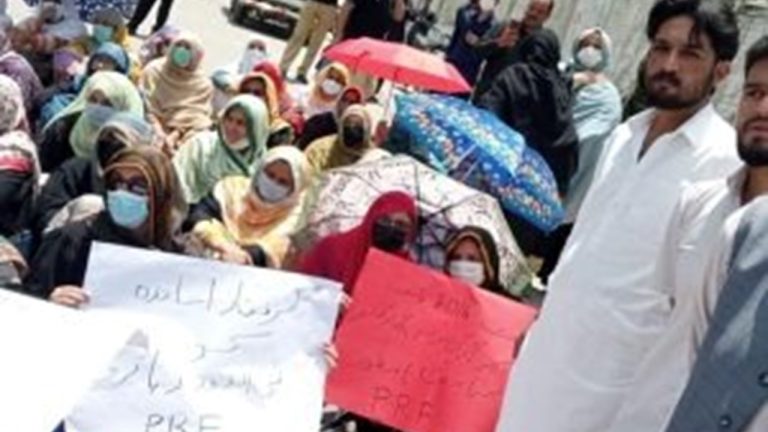
Teachers in POJK end strike as government responds to their demands
Rawalkot: The government of Pakistan-occupied Jammu and Kashmir has set up a committee of six ministers to accept the demands of the teachers. This committee will be empowered to implement their demands by negotiating with the teachers, the Secretary of Education will support the schools, and the government will implement the recommendations of the committee. Central President Tasif Shaheen announced the end of the long march in a video message while in custody.
Hundreds of male and female teachers were arrested by the government on Sunday and Monday in a widespread crackdown against the school teachers’ organization’s protest that had been going on for several days. On Monday, thousands of teachers held protest sit-ins and took out processions in various districts. Hundreds of teachers were arrested on Sunday and Monday in several cities including Bagh, Hajira, Abbaspur, Baloch, Sahansa, Rawalakot, and Dhirkot.
These teachers were protesting against the non-implementation of the scale upgradation demand approved 11 years ago. The teachers had announced a long protest march towards the capital Muzaffarabad on Monday. To stop the long march, the government canceled the registration of the school teachers organization. Efforts were made to prevent the movement of teachers by imposing Section 144 in all cities. Dismissal proceedings were begun under the Special Powers Act, suspending the President and Secretary General of the Teachers’ Organization. Apart from this, lists of more than 300 male and female teachers were compiled, and the process of dismissing them from their jobs was also started.
However, the teachers took to the streets on Monday to protest despite all state repression and restrictions. Political and social organizations, trade unions, and student organizations supported the teachers’ protest, while condemning the arrests and state repression.
The Pakistan Trade Union Defense Campaign (PTUDC), People’s Revolutionary Front (PRF), and Jammu and Kashmir National Students Federation (JKNSF) as well as unions of labor organizations in Pakistan, All Pakistan Employees, Pensioners Labor Movement supported the demands of the teachers, condemned the state crackdown against them, and expressed solidarity with the teachers.
Leaders of PTUDC, PRF, and JKNSF actively participated in the teachers’ protests and expressed their solidarity with the teachers and expressed their commitment to fight alongside them in this struggle.
Meanwhile, in order to break the protest, apart from arrests, the government put pressure on various teacher leaders and made them declare their detachment from the protest. In the past, officials of the Jamaat-e-Islami-backed Teachers Organization’s pen panel announced their withdrawal from the strike after conniving with the state. The protest was first restricted to Poonch division by arresting the leaders who did not end the protest and finally the central president announced the end of the protest in a short video message while in custody.
Later, after his release, he along with other teachers said in a video conference that a committee of ministers has been formed to accept their demands. All demands will be implemented after negotiations with them. An assurance has been given to restore the organization’s registration and release the captives.
However, on the other hand, the government has proposed further amendments in the Employees’ Association Regulation and Registration Act, 2016, and imposed stricter restrictions on employee protests. Now the employee will be dismissed from the job even for inciting protest. Recording the protest on social media will also lead to dismissal. Strikes, office lockouts, and protests will also lead to dismissal. The right to appeal against terminations will also be given departmentally.
Mamata’s trifecta – violence, vote bank and victory
According to the most recent State Election Commission update, the ruling TMC has won in 34,359 gram panchayat seats, besides leading in 752 seats, according to the SEC as of 8am on Wednesday.
Its nearest rival BJP has won 9,545 seats and is leading in 180 seats. In all elections are being held for 63,229 gram panchayat seats.
The CPI( M) has won 2,885 and is leading in 96 seats. The Congress won 2,498 seats and is leading in 72.
Following the State Election Commission’s declaration of voided polls for the West Bengal Assembly elections, repolling took held in 696 booths across 19 districts.
An impressive 69.85% voter turnout was registered until 5 p.m. Despite suspicions of ballot box tampering and earlier incidents of violence that resulted in 15 deaths, no major incidents were recorded during the repolling on Sunday evening.
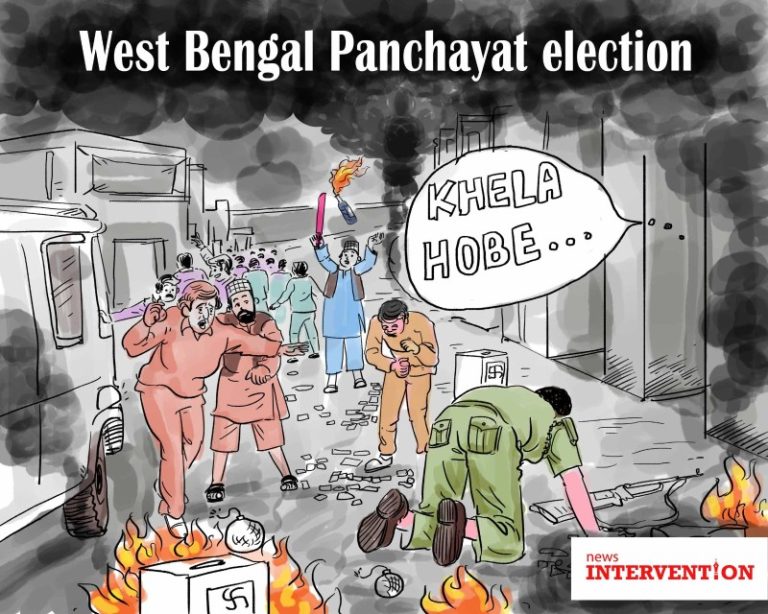
The counting of votes for West Bengal’s panchayat elections, which were marred by violence and allegations of rigging, has started. The State Election Commission (SEC) has ordered re-elections in 696 polling places in 19 districts where voting was declared unlawful due to suspicions of ballot box tampering and violence.
The BJP claims that at least 45 people were killed in the poll violence, while the TMC denies the allegations. The BJP has also claimed that its and other opposition parties’ counting agents are being barred from reaching the counting centres.
The SEC has stated that it is taking all necessary steps to guarantee that the counting process is fair and transparent. However, the violence and rigging claims have placed a cloud of suspicion over the panchayat elections.
Separately, Assam Chief Minister Himanta Biswa Sarma stated that around 100 persons from West Bengal have sought refuge in Assam as a result of the panchayat election violence. Sarma stated that the folks have been housed in a relief camp and that he will offer them with any humanitarian assistance they require.
The panchayat elections are viewed as a warm-up for the Lok Sabha elections in 2024. The outcomes of the panchayat elections will be closely followed to understand how they alter West Bengal’s political landscape.
Radical Islamists abduct another minor Hindu girl at gunpoint in Sindh
A 13-year-old Hindu girl has been abducted by six radical Islamists in Sindh. Sana Meghwar, daughter of Lakshmi and Prem Meghwar lived in Meghwar colony of Nazarpur area in Tando Ghulam Hyder, Sindh. The perpetrators broke into her house and forcibly abducted her on gun point. Her parents have registered a Police complaint but no action has been taken so far.
Enjoying absolute impunity under the patronage of Islamic Republic of Pakistan, some radical Islamists have continuously targeted Hindu minor girls. Unfortunately, in these cases the girls are forcefully converted to Islam and married to the abductors, sometimes thrice their age. They are forced to confess that they have converted by their own free will. The fake affidavits are presented in the court and the paralyzed justice system fails to provide justice. In a similar incident of abduction few days ago, the Hindu advocates threatened to move to India if this radical practice continues to hound minority Hindus. The basis behind these atrocities against Hindus and conversion of minor Hindu girls is the radical Islamic fundamentalism which professes to convert each and everyone.
Pak Army abducts another Baloch youth in Kech
Yet another Baloch youth has been forcefully abducted by occupying Pakistan personnel in Balochistan.
Around 2 a.m., the officials of the occupying Federal Corps detained a Baloch boy named Hikmat Ali from Tump area of Kech. Master Ali, father of 17-year-old Hikmat has told that his son has been taken to an unknown location by the FC. The information of his whereabouts have not been given to the family members. Even the basis of detention has also not been conveyed to the parents.