
Home Blog Page 217

Pakistanis accuse Ahmadiyyas of blasphemy for building mosque in Pakistan

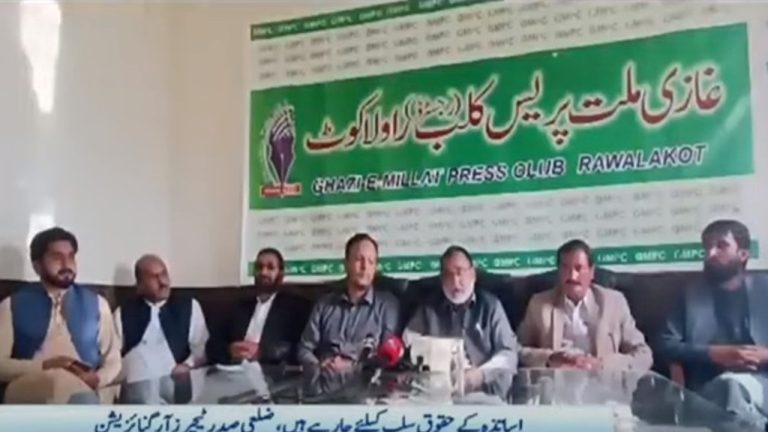
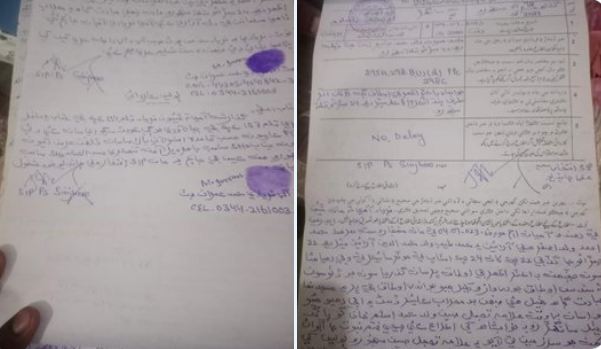
An FIR has been registered against the people of the Ahmadiyya community, accusing them of  blasphemy.

Recently, Ahmadiyyas built a mosque in the Sanghar district of Sindh. As per the Islamic tradition, they built domes and minarets for the mosques, which led to disappointment in a larger Muslim community that denies Ahmadiyyas being Muslims. They lodged an FIR against the Ahmadiyyas related to the mosque, accusing them of blasphemy. The persecution of Ahmadiyyas has been increasing across Pakistan every day.

It is worth mentioning that Pakistan is the only country that has declared Ahmadiyyas as non-Muslims. A law was enacted by the Pakistan parliament regarding this in 1974. A decade later, the then military ruler of Pakistan, Zia-Ul-Haq issued an ordinance called Ordinance XX, which forbids Ahmadis to call themselves Muslim or to pose as Muslims. This ordinance barred Ahmadis from professing and practicing Islam publicly. And by that rule, Ahmadis cannot call their worship place as Mosque.   

Twitter relocates Gilgit-Baltistan users to India,blocks Pakistan govt handle

Pakistan is again in the news! Not because of its crumbling economy, the prospect of civil war, or the politicians washing their dirty linen in public. This time, it’s because of Twitter.

Dawn reported that the platform has not only blocked access to the Pakistan government’s official handle for users in Pakistan-occupied- Gilgit-Baltistan, but has also changed the location of the region to Indian territory.

When users in Pakistan-occupied-Gilgit-Baltistan turn on the location feature on Twitter, their tweets are marked as originating from India’s Kashmir. Some users who tried to gain access to the Pakistan government’s account on Twitter reported seeing a message that said the account had been withheld in India due to a legal demand.

Twitter users reaction

Yasir Hussain, a resident of Rahimabad area of Gilgit, tweeted, “I am in Gilgit-Baltistan and Twitter can’t show tweets from [the] Government of Pakistan, saying that account has been withheld in India in response to a legal demand! Hello Twitter Support, I’m in Pakistan, why can’t I see tweets from various accounts I follow including the one mentioned?”

Hussain believes that India may have influenced Twitter to change the geo-tagging of Gilgit-Baltistan, and has called on Pakistani officials to take the matter seriously.

Another Twitter user from Gilgit-Baltistan, Karim Shah Nizari told Dawn, “The only option we are getting is Jammu and Kashmir.”

Pakistani officials have denied these claims. They called it, “baseless”, stating that, “There are no restrictions on the freedom of the internet, media and expression in the entire Gilgit Baltistan.”

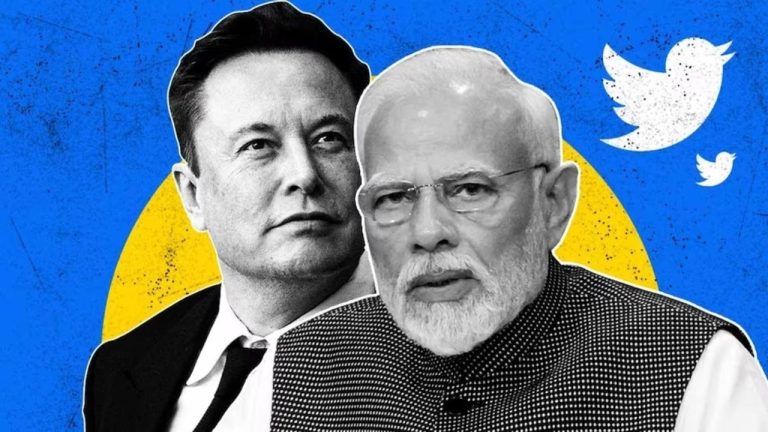
It looks like the recent meeting between Elon Musk and Indian Prime Minister Narendra Modi in the US might have prompted this move. Gilgit-Baltistan is an illegal occupation by the Pakistani government. Therefore, this move is not only significant but also legally valid.

Vehicle of Pak-occupied Balochistan’s Federal Minister attacked in Quetta

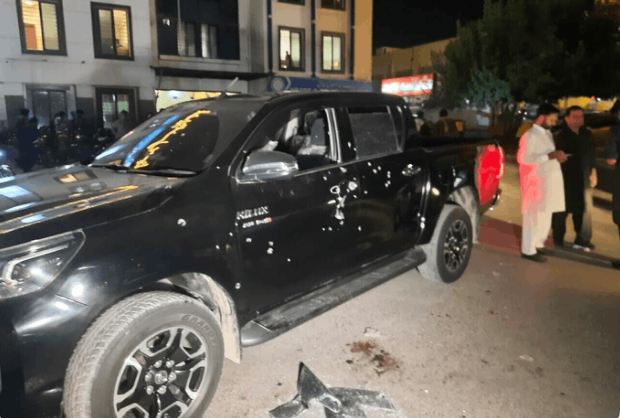
In an incident yesterday, unidentified gunmen shot two personnel of occupying Pak Levies force in Quetta, the capital city of Balochistan. The attack took place at Pishin stop, where the armed men targeted a Vigo vehicle, killing both occupants and injuring a passerby.

The victims have been identified as, Mohammad Yousuf, and Levies driver Ziauddin. The wounded passerby, a child, was promptly rushed to a nearby hospital for medical treatment. The number plate of the vehicle had “Minister” inscribed on it.

Notably, the targeted vehicle belonged to Muhammad Israr Tareen, a prominent leader of the Balochistan Awami Party (BAP) and the Federal Minister for Defence Production. The deceased individuals were employed as guards for the nephew of Federal Minister, Sardar Shahzad Tareen. The motive behind this fierce attack is yet to be determined, prompting an ongoing investigation by the local police and law enforcement agencies. However, the subversion of Baloch nationals by the state-sponsored machinery and the illegal occupation of Baloch land by Pakistan has caused resentment in the people of Balochistan. Consequently, the Baloch Liberation Army has initiated an arm struggle against the oppression and torture that Balochs face every day right from forced disappearances to illegal raids, Pak military operations in the region and they are active in the region.

China irked over Indian objection to the Belt & Road Initiative (BRI)

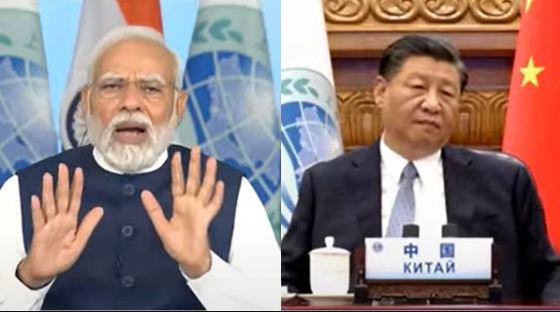
The Shanghai Cooperation Organisation (SCO) recently, concluded its 23rd summit under the presidency of India. The virtual summit dealt with various issues like terrorism and repercussions of the ongoing Russia-Ukraine war. However, soon after the summit, the strategic experts based in China have started to blow off the fuse.

Actually, in the New Delhi Declaration of the SCO summit, India once again refrained from signing a paragraph endorsing Chinese BRI project. Last year in Samarkand Declaration also India refused to sign the BRI endorsing paragraph. It is worth mentioning here that India is the only country in the SCO that has refused to endorse BRI (Belt Road Initiative).

China’s Actual Problem – India’s Objection To Bloc Politics

Following the SCO virtual summit, various Chinese strategic experts have now started targeting India for this particular blow to their nation’s hegemonic dream. But it is not the first time that voices of India’s oppositions have been raised in Beijing. After 12 years of its status as Observer country, in 2017, India finally became a member of the SCO. At that time also, India’s membership to the group was opposed by the Strategic affairs community of Chinese government, the reason being India’s closeness to the west especially NATO.  

As per a report by Indian Express, a Shanghai based Chinese scholar, Pa Guang recenty wrote an article in which he said, “Many scholars, including me, and former ambassadors and diplomats, opposed India’s entry into the SCO. But the government in Beijing made the decision.” He tries to explain how in 2005 Hu Jinato, the then President told Indian leaders that SCO would prove to be a new platform for solving Sino-India disputes and India used SCO for targeting China.

Well! First of all, the real problem for China has never been India’s closeness to western countries instead it is India’s belief in neutrality that is the real problem. China wanted India in SCO to make it a heavyweight counter bloc against US led West. But this Chinese intention got a serious blow by the more proactive Indian foreign policy that solely centered around its national interest.   

Some Chinese observers also believe that it was Moscow’s insistence that led to India’s accession into the group because Moscow wanted to curb Chinese dominance by keeping Beijing between Indian and Russian influence. Another reason for Russia’s insistence was to counter the Chinese lobbying for accession of Pakistan into SCO.

Lame Arguments and Naive Demands!

In a series of clamouring over Chinese disgrace on BRI, some Chinese scholars have even asked Beijing to introduce an “Exit Mechanism” to impose constrains on member country. In their argument, they cite PM Modi successful state visit to the US.  Clearly, this is a lame argument and a naïve demand.  China must understand that relation with US have nothing to do with the SCO. The only bone of contention in the SCO is Chinese efforts to sabotage the grouping for its own interest and jeopardizing potential of the group by making it an entirely anti-US bloc.

Regarding BRI, India’s stand is justified and balanced as China Pakistan Economic Corridor, a flagship project of the BRI passes through the Indian territory of Gilgit-Baltistan which is illegally occupied by Pakistan. So, by concluding a bilateral infrastructure project deal on the disputed territory, China has already jeopardized the legitimacy of its BRI project. In that case a sovereign country like India has full right to oppose such project on every platform possible. It is high time that instead of searching for the issues of conflict with India, China initiates a genuine approach of solving the hot issues  between both the countries starting with giving up on CPEC.

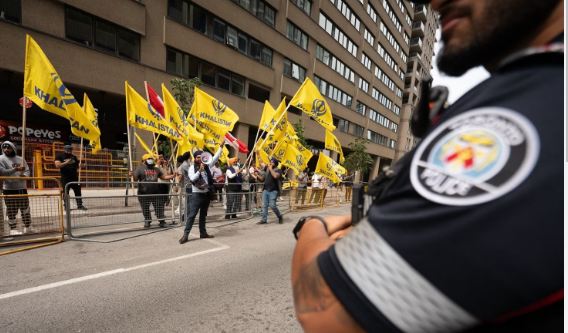
Khalistani terrorist sympathizers have a free run in Canada

Khalistani terrorist sympathizers attacked an Indian man in Vancouver during the infamous “Kill India” protest. While protesting, the Khalistani extremists burnt the Indian national flag. On being opposed by an Indian, the group of extremists beat the man. Surprisingly, the Police personnel stood watching like a mute spectators.

The incident comes in a backdrop of the ongoing radical protests by Khalistani elements in different parts of America and Europe. The protests were organized against the suspicious death of the Khalistani terrorist Hardeep Singh Nijjar. Nijjar was shot dead on June 8 by an unidentified man, in Surrey, Canada. Prior to the protest, infamous “Kill India” posters were circulated targeting India’s senior diplomats in Canada.

In a similar protest outside Indian Consulate in Toronto, pro-India rally countered the Khalistani protests. Toronto Police separated the two sides and erected barricades to restrain the protesters. Furthermore, a Khalistani extremist attempted to breach the barricading, to which, the police personnel pushed him back. Later, he was apprehended by the Police. During the three hour standoff, one more Khalistani protestor was arrested for assaulting the police officer.

Canada has always been a haven of anti-India Khalistani terrorists. On the name of sacrosanct freedom of speech, the India breaking forces have for long been facilitated by the Canadian government, which has become more firm under the Khalistani appeaser Trudeau government. Being ignorant of such disrespectful acts against a sovereign nation, Canada has once again proven that it has provided tacit support to the Khalistani terrorism.

Terrorism: India needs more efficient prosecution to secure conviction

0

The Ones Who Got Away

In November last year, a division bench of Calcutta High Court acquitted four Lashkar-e-Taiba [LeT] terrorists [including two Pakistani nationals] who had been awarded capital punishment by a sessions court under Section 121 of Indian Penal Code [waging war against Government of India]. While being a complete ignoramus when it comes to legal matters cautions me to steer clear away from commenting on Calcutta High Court’s judgment, one of inferences drawn by it is, to my mind, certainly contentious.  

According to media reports, one of the mitigating circumstances cited by Calcutta High Court [CHC] for releasing the four accused was that they were “not men who were in the higher echelons of the terrorist organisation” [Emphasis added] and noted that the quarto “are foot soldiers who were recruited through allurement or coercion for the activities of the organisation.” [Emphasis added].

While accepting that one of the accused [Pakistani national Mohammad Yunus] had voluntarily joined LeT terrorist group and was trained in use of arms, CHC opined that “He is presently more than 66 years old and there is little possibility of his reverting to the path of terrorism.”

The CHC also noted that the second Pakistani national [Mohammad Abdullah] was a teacher by profession and that “He did not receive any training in use of arms and expressed his mistake in joining the terrorist organisation [LeT].” CHC ordered release of accused Indian national Muzaffar Ahamedas he “was forcibly inducted into the terrorist organisation and given arms training.”

The ‘mitigating circumstances’ to release the four accused terrorists mentioned by CHC indicate that its judgment is based on the supposition that there is “little possibility” of terrorists who are in their mid-sixties, are repentant for being engaged in terrorism, have not received arms training or claim to have been “forcibly inducted” into terrorist organisations, “reverting to the path of terrorism.”

Though a logical inference, to extend the assumption that age or pangs of conscience could make highly indoctrinated terrorists return to the mainstream is being naïve. It’s only after apprehension that terrorists begin talking about how they were forced into joining terrorist groups and start expressing their disenchantment with terrorism. To put it bluntly, such hullabaloo is pure theatrics driven by survival instinct!

Empirical data indicates that the percentage of jailed terrorists who once again pick up the gun after their release [due to inducement or coercion] is inordinately high. Nor does age contribute towards the mainstreaming of terrorists. Hizbul Mujahideen [HM] founder and chief of Pakistan occupied Jammu & Kashmir [PoJK] based United Jihad Council [UJC] chief Syed Salahuddin who is 77 years old remains an active hard core and unrepentant terrorist.

Similarly, lack of arms training isn’t a mandatory prerequisite to join terrorist ranks. 75 year old LeT co-founder Hafiz Saeed has never received formalised arms training and yet he is one of world’s most wanted terrorists with a whopping USD10 million bounty. Lastly, those forcibly conscripted into terrorist groups can always break free by surrendering to the security forces and there have been several such instances. That’s why, whenever an apprehended terrorist claims that he wanted to surrender but couldn’t do so as his comrades always kept an eye on him, be rest assured that he’s lying through his teeth!

There must have been several other substantially sound legal reasons behind CHC’s judgment. However, since the media has only mentioned apparently frivolous mitigating factors like age of the accused, their forced recruitment by terrorists or personal remorse, it conveyed an impression to the public that the Indian judiciary is treating terrorists with kid gloves.

The Ones Who Didn’t

This is why even though coming after 27 years, the recent sentencing of four accused in the 1996 bomb blast incident in New Delhi’s crowded Lajpat Nagar market to life imprisonment without the possibility of parole by the Supreme Court [SC] has restored public faith in the judiciary. The SC has appropriately ruled that “Even though it is the rarest of the rare case, nonetheless considering several factors, we impose a sentence of imprisonment without remission extending to natural life.”

Furthermore, by observing that “The Trial Court awarded the sentence of death more than 13 years ago and the present accused acting at the behest of the principal conspirators are all mitigating circumstances in not awarding the sentence of death even though it falls within the category of rarest of rare cases,” the SC has demonstrated its non-partisan character.

And in stating that the SC needs to “be conscious of the fact that the bomb blast caused at the behest of the accused persons, resulted in the death of 13 persons and 38 persons suffered injuries” and sentencing the convicts to life imprisonment without parole, it has upheld the hallowed tenets of impartiality while delivering justice, both in letter and spirit.

Lessons from Lajpat Nagar Blast Case

The most important issue in the 190 page judgment on the Lajpat Nagar bomb blast is the SC’s incisive observations on the perfunctory manner in which such a serious case has been handled. Noting that “enough vigilance was not displayed by the investigating as well as the judicial authorities,” the SC has fittingly stated that “the delay, be it for whatever reason, attributable to the judge in charge or the prosecution, has certainly compromised national interests.”

It has also opined that “Expeditious trial of such cases is the need of the hour, especially when it concerns national security and the common man,” the SC has pointed out that the Lajpat Nagar blast case “has not been dealt with the required degree of promptitude and attention,” and this keen observation is applicable to almost all terrorism related cases and is one of the reasons for low conviction rate.

The SC has also mentioned that “To our great dismay, we are forced to observe that this [delay and apathy] may be due to the involvement of influential persons which is evident from the fact that out of several accused persons, only few have been put to trial” adding that “In our considered view, the matter ought to have been handled with urgency and sensitivity at all levels.”

It is yet to be seen whether the powers that be will agree with and accept the SC’s remarks to start processing terrorism related cases with the requisite urgency that they deserve. The anguish expressed by the country’s supreme judicial body is however shared by the security forces as they take humongous risks and make immense sacrifices while apprehending terrorists.

Words can’t describe the sorrow, rage and utter frustration that one undergoes on learning that terrorists with the blood of your comrades on their hands have been acquitted, simply because of a shoddy case put up by the prosecution. The kith and kin of those killed too feel cheated whenever terrorists are let off due to ‘technical’ reasons or avoidable procedural flaws during investigation.

It took New Delhi 30 years to book Jammu and Kashmir Liberation Front [JKLF] chief Yasin Malik for his role in the 1990 murder of four unarmed Indian Air Force officers. When finally produced before the court, Malik stated that “with seven [Indian] prime ministers, I have worked,” and his boast aptly exposes the abysmal state of affairs as far as dealing with terrorism related incidents is concerned.

Similarly, despite JKLF militant Farooq Ahmad Dar, alias Bitta Karate admitting on camera to the killing of more than 20 unarmed Kashmiri pandits, he was still released on ‘indefinite bail’ in 2006. While issuing his release order, the Terrorist and Disruptive Activities (Prevention) Act [TADA] judge Justice ND Wani had remarked, “The court is aware of the fact that the allegations against the accused are of serious nature and carry a punishment of death sentence or life imprisonment but the fact is that the prosecution has shown total disinterest in arguing the case.” [Emphasis added].

So, one only hopes that the Indian establishment gets its act together and ensures that the ends of justice are met by ensuring timely conviction of terrorists through proactive and efficient prosecution. 

Kindergarten stabbing claims six lives in China

Six lives were sadly cut short, including those of three innocent children, in a horrible stabbing incident at a kindergarten in China’s southeastern Guangdong province. As facts of the tragedy continue to emerge, the nation is in shock and sadness.

Local authorities in Lianjiang, the city where the kindergarten is located, have reported the arrest of a 25-year-old man called Wu. A teacher, two parents, and three little children were among those killed. The attack injured another individual, and authorities are investigating it as a “intentional assault.” However, the reason for the attack remains unclear.

The tragic event occurred on Monday morning at 07:40 local time, while parents were dropping off their children for summer classes. The attacker was caught at 8 a.m., just minutes after the attack, thanks to law enforcement’s quick response. The surrounding area has been shut off as the investigation progresses to aid in the collection of evidence.

The nation erupted with fury and grief as word of the catastrophe spread. Videos of the tragedy were widely distributed on Chinese social media, adding to the public’s despair.

Unfortunately, such attacks have grown all too common in China in recent years. Although firearms are prohibited in the country, knife assaults have developed as a disturbing trend. The BBC has documented at least 17 knife attacks in schools, colleges, and universities across the country since 2010. Ten similar events happened between 2018 and 2023 alone, underlining the critical need to address this serious issue.

Several similarities have been discovered by experts investigating these incidents. The vast majority of perpetrators are men with deep-seated grudges against society. Their motivations vary, but one prevalent view suggests that the COVID-19 epidemic and its aftermath may have led to the surge in such attacks. Prolonged lockdowns, job losses, unstable relationships, and financial failures may have worsened feelings of isolation.

Furthermore, the huge pressures and expectations placed on young males in Chinese society, as well as high levels of youth unemployment and growing wealth disparity, might all have a role. Experts feel that a sense of social deprivation, along with personal disappointments, can motivate people to use violence to vent their dissatisfaction with society.

Since 2010, Chinese authorities have adopted tougher security measures in and around educational institutions in reaction to these unfortunate instances. The Ministry of Public Security has urged for firm action to combat illegal activity and protect teachers and students. Furthermore, the Ministry of Education has enforced emergency evacuation drills to help prepare schools for unanticipated catastrophic events.

To prevent the possibility of copycat attacks, the Beijing government has limited the publication of detailed information about the recent kindergarten stabbing, fearing that it would motivate potential perpetrators. As the country mourns the loss of innocent lives, it is critical to address the underlying issues.

Protests in Quetta after a father and son were killed by firing

The increase in crime incidents in Quetta has citizens worried. Two people were killed in a recent shooting allegedly by Rahzani.

Balochistan’s largest city and capital is at the mercy of criminals. Citizens have lost their belongings and other possessions to thieves. In the past month, seven citizens have been killed in these incidents.

On Sunday, two citizens were killed for resisting during a motorcycle robbery on Qambarani Road in Quetta Sariab. Residents of Sariab Road have started protesting by burning tires.

The two people who were killed by firing were Abdul Kareem and Ijaz Ahmed. They were sitting on a motorcycle when they were attacked by the robbers.

The protesters say that the administration and the security authorities are showing incompetence in controlling the law-and-order situation in the city. The city is at the mercy of thieves. The protesters have demanded the Chief Minister to take notice of the incident.

According to the citizens, the incidents of crime in Quetta are increasing day by day. In the past month, seven people have been brutally killed. The lives and property of the residents of Quetta are no longer safe.

The protestors demand that the accused involved in the Qambarani Road incident should be arrested immediately, while the administration should take immediate steps to control the deteriorating situation in the city.

J&K police thwart Pak backed separatism revival plot in Srinagar

The unrelenting vigilance of the Jammu & Kashmir Police has foiled a revival plot of separatism in the valley. About 43 separatists, including some former terrorists of Jammu Kashmir Liberation Front (JKLF), were to meet in a hotel in Srinagar. The meeting was poised to discuss a plot for the revival of separatism and violence in the Kashmir Valley. The police having a solid intelligence broke into the meeting and arrested them on the spot. They were taken to the Kothi Bagh Police Station and questioned further.

After the conclusion of the raid, J&K Police tweeted, “a search was conducted on the basis of credible info about meeting of some ex-trts of JKLF & erstwhile separatists in a hotel in Srinagar. They were brought to Kothibagh PS for verification. Inquiry has started, prima facie it came out that they were planning to revive JKLF & hurriyat.”

Since the abrogation of Article 370 in August 2019, the government of India launched a massive crackdown on terrorism in the region and the terrorist organization working as a pawn of Pakistan. In these crackdown operations, various agencies including the NIA and local police arrested number of separatists and terrorists. This broke the backbone of extremism and terrorism prospered by the organizations like JKLF. As a result of which, Jammu & Kashmir got connected to mainstream development and growth. Now, this development and growth is stinging into the eyes of those who thrived on terror ridden Jammu & Kashmir. And so, this meeting was organized to revive JKLF and Hurriyat to destabilize J&K again.

But now the security forces and local police administration enjoy greater autonomy to deal with the menace of terrorism and separatism.

UK prepares to pull Pakistan’s chestnuts out of the fire

What isolated Pakistan from a larger political engagement in South Asian region was the anger of the US that it had helped Taliban to extirpate the elected government of Ashraf Ghani in Kabul and support the Taliban to regain control of its western neighbour.

The US and UK know it better than any other actor on the political chessboard of South Asia that in Pakistan real power rests with the Army. Why and how, are not intended to be discussed in this write-up. The focus is on the fact that both powers have been dealing with Pak Army’s higher echelons on different issues of national and international importance at different times.

The main reason for their deep interest in Pakistan Army has been their expectation that they could use Pakistan as bulwark against the ambitions of the Soviet Union. A cursory look at the triangular relation among India, Pakistan and the Anglo-American bloc ever since the creation of Pakistan up to 9/11 shows that the bloc has always been on the right side of Pakistan in any matter that involved India.

Pakistan’s isolation in the international arena surfaced when former US President charged Pakistan as the epicentre of international terrorism, and with that, he cancelled the annual aid which the US budgeted for support to Pakistan Army.  After 9/11 Pakistan began losing its clout with the western countries for its overt and covert use of terror as an instrument of state policy. It brought her closer to the lap of China, a new phenomenon in which Pakistan envisioned her redemption.

Towards the end of his tenure of service, General Qamar Bajwa had fully realized the negative impact of Pakistan’s isolation adversely affecting country’s defence capabilities. The need of the day was to mend the fence with the US.

But London adopted a pragmatic stance on Pakistan’s isolation. General Bajwa succeeded in prompting London to change Washington’s angry mood. Its backing enabled last year’s breakthrough visit by General Bajwa to Washington – the first by a Pakistani Army chief in three years – and an $450 million deal to repair Pakistan’s ageing fleet of F16 combat jets. The US and Pakistan had also begun engaging in counter-terrorism. (The Print of June 7, 2023)

After Pakistan’s new Army chief General Asim Munir, and Chairman Joint Chiefs of Staff, General Sahir Shamshad Mirza, made a five-day visit to the UK to attend an annual conference, the British army chief General Patrick Sanders reciprocated the visit last week leading a military delegation for “considering measures to enhance its intelligence and military cooperation with Pakistan.” 

The Print reported that General Sanders was told during his visit last week that assistance from the UK was needed to stabilize Pakistan and fight threats to the West from jihadist groups like the Islamic State. The UK believes the Pakistan Army is a necessary bulwark against Islamic State jihadists in Afghanistan. Earlier this year, leaked United States intelligence documents recorded that the Islamic State was engaged in nine plots against Western targets during the FIFA World Cup on Qatar.

The assessment said that “Islamic State has been developing a cost-effective model for external operations that relies on resources from outside Afghanistan, operatives in target countries, and extensive facilitation networks.”

An interesting revelation made by the sources of The Print is that London also pushed India to engage with Pakistan on Kashmir, saying it will help marginalise jihadists. Last year, Christian Turner, the UK’s High Commissioner in Pakistan, said in a closed-door meeting that General Bajwa was seeking the restoration of the scrapped Article 35-A of India’s Constitution, which gave the state of Jammu and Kashmir the right to designate “permanent residence” entitled to purchase land. General Bajwa claimed that he needed these political concessions to push back against pressure to escalate in Kashmir from hawks in the establishment —- among them, Imran.

We know that Pakistan Army has close connections with the UK from the day of its inception. We will come to that a bit later and presently; we would like to make a few observations on what The Print has reported. In the first place it is debateable whether the UK thinks that Pakistan Army could be a “bulwark against the ISIS”.  In the first place, there is schism in the Pak Army on terror as the instrument of state policy. Secondly, Pakistan has always said that the terrorists are non-state actors meaning the state has little or no control on them. This is far from truth. The terrorist organizations in Pakistan are the creation of ISI and Pak Army. Their activists are regularly guided by their mentors who are mostly retired Pak Army officers.

As far as the Pakistani Taliban are concerned, yes, they are bitter enemies of Pakistan Army and are fighting them. The TTP is actually a political movement for separation of the Pakhtunkhwa from Pakistan and recognition of the TTP as the managers of their cherished state. Pakistan Army, supported by the domestic elitist group are fighting the TTP, not the ordinary people of Pakistan. If UK thinks that Pakistan Army will fight against the Islamic State, it is their big mistake. Pakistan Army is adept in hunting with the hound and running with the hare. That is what it did in the case of Afghan Taliban.  The UK certainly wants to bolster Pak Army so that it works as bulwark against Russia if needed. This has always been the guiding objective of UK-Pakistan relations.

Pakistan Army’s relations with the UK have a long history beginning in 1950 — just three years after the creation of Pakistan — when Sandhurst first started to accept overseas cadets. Pakistan was allocated 39 per cent of funding from the 1959 Commonwealth Military Training Assistance Scheme. The UK wanted securing Pakistan’s cooperation in a West -led alliance against the Soviet Union together with countries like Iran and Turkey. Intelligence cooperation between the two deepened after 9/11, amidst revelation that large numbers of Pakistani-British jihadists were training in Pakistan.

In a Review of the British Government released in February last fears of a fresh wave of Islamist radicalism were voiced which cites “evidence of UK extremist group, as well as a Pakistani cleric with a UK following, calling for the use of violence.” The Review also pointed to “an element of crossover between those who seek to impose limits around blasphemy with those who voice incendiary rhetoric on Kashmir.”

It is surprising that the British government has come out with a Review that speaks of nefarious designs of UK-based jihadists to caution Islamabad and cooperate with it in taking preventive steps. But it did not think it had the duty of cautioning India about the hatching of Kashmir terrorism conspiracy by the British Kashmiris and Pakistanis based in Luton, Birmingham and other towns with a population of more than a million in UK. The kingpins of Kashmir terrorist movement were the British Kashmiris and Pakistanis like Amanullah Khan and his team.

General Sanders’ Pakistan visit comes at a time of intense tension between the Pakistan Army and former Prime Minister Imran Khan. Reports are that the Pak Army invited the owners of top editors of major domestic news outlets to Islamabad for a meeting where they were directed not to cover Imran’s statement. The BBC’s Caroline Davies reported that Pakistani media was instructed “not to mention or show Imran Khan, nor even on their ticker tape”.

Pakistan has been trying to come closer to Russia in the wake of polarisation of powers following the Ukrainian war. If the two countries are able to foster a lasting friendship, the Western powers are likely to lose their Asian “bulwark” against Russia. Hence, we find UK raising the bells of alarm and speaking about stabilising Pakistan against the threat from jihadists. The West including the UK was non-committal when India kept raising the issue of terrorism on world platforms ever since 1990,