Home Blog Page 218

Dr Sazawal’s expert views on PM’s recent visit to the US

By a happy coincidence, I grabbed the opportunity of listening attentively to an interview Dr Sazawal has given to the New Indian news channel recently. Given this in light of the Prime Minister’s recent visit to the US as a state guest, I ruminated over its significance.

Dr Vijay Sazawal, a nuclear scientist of Kashmir Valley origin but long settled in the US, enjoys prestigious status as a scientist. Additionally, he has been maintaining an interest in Indo-US relations, particularly in the areas of technology. He is gifted with a facile pen and his articles published in various US journals are held in high esteem by the specialist.

I have known him since my days at the John Knox Foyer in Geneva where he would be seen sometimes in connection with his professional engagements.  We have maintained our friendly relations over the last three decades. I have benefited from his deep knowledge of American society and its political nitty-gritty. He is a superb analyst of political events and personalities and I have great respect for his dispassionate views on some critical themes.

He was interviewed by Ms Arti Tiku, who has a place in the community of ace journalists in this country an eminent and is running her news channel.  Since both the speaker and the interviewer are known to me, they kindly permitted me to make a transcript of the interview and publish it for the information of a larger segment of readers with an interest in the entire gamut of the Indo-American relationship.

Both of them and this writer as well, are internally displaced persons from Kashmir Valley. Therefore, we are inclined to listen or read what outstanding commentators, formal and non-formal, say or think about the Kashmir issue. But alongside, we are equally interested in keeping abreast with political developments shaping in and around our country and the region, particularly at a time when we are passing through a crucial phase of history in which democracy is sharply challenged by authoritarianism. Some nations and people, influenced by a generation of social scientists with a definite ideology of curbing individual freedoms, are actively trying to change the established world order to their liking. A more disappointing phenomenon is that people from such politico-social groups as used to wear the laurel of giving India a secular democratic dispensation when India won freedom from colonial rule in 1947 are now engaged in castigating Indian democracy as ” dysfunctional and dead”.

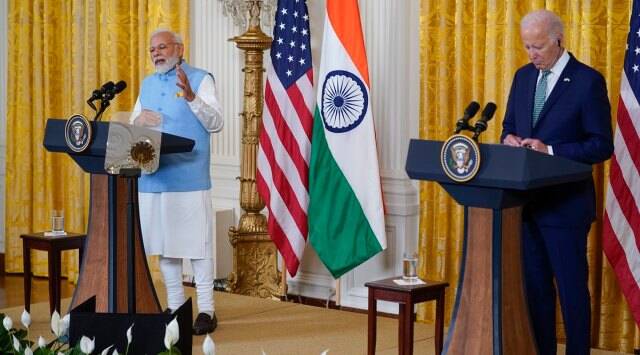
Recently, Indian Prime Minister, Narendra Modi was on a four-day formal visit to the US. He was given a grand reception in the US. Dr Sazawal’s interview is essentially based on his views on the Modi visit, but being as keen about American foreign policy as on Kashmir, he has tried to cover the entire gamut of American foreign policy theoretically as well as practically in his interview to the channel.

To the first question of how the Indian American diaspora looks at the visit of Modi, he was frank that the diaspora is very happy with the visit because it feels Modi has contributed to the prestige of the diaspora. The people of Indian origin, men and women, who settled in the US, feel that they have attained a status in and recognition within American society. Indians are already at prestigious resource centres and creamy layers like Silicon Valley, Microsoft etc., and those who aspire to a higher status feel that Midi’s visit brings new social space, meaning stature, to the NRIs. India has got new recognition with the diaspora indeed.

In reply to the question of reasons for the US recognition of India’s significance as well as the Democratic party in particular, giving space to India, Dr Sazawal went on to succinctly trace the evolution of the Indo-US relationship vis-a-vis Democrats as well as the Republicans. Being fully conversant with how the Clinton administration dealt with India, he referred to the era when Jaswant Singh, then Indian foreign minister opened a dialogue with the American Deputy Secretary of State, Strobe Talbot, and made clear to the Democrats that the level of cooperation had to go beyond simply “The Mango diplomacy” to a more substantive partnership involving a proper understanding of India’s position and fundamentals of her foreign policy. Dr Sazawal believed that the long-time conversations of those days could be considered the time when re-thinking of the US’ Indian policy and strategy had begun to take shape. He did not touch upon the Kargil war and Clinton’s untold disparagement of Pakistani ISI’s clandestine operations.

He explained the estrangement that took shape in bilateral relations after India successfully carried out the Pokhran nuclear test under the premiership of Vajpayee. Many pressures from the Clinton administration on this count have not been reported by the Indian and even American media.  Talks between Indian foreign minister Jaswant Singh and US Deputy Secretary of State extended over 14 meetings from June 1998 through September 2000, but Mr Talbot made it clear that a closer and more strategic partnership with India could not happen because India had refused to sign the NPT. Following Clinton, George Bush took over the US presidency and his advisors, primarily Ambassador Robert Blackwill and then national security advisor Dr Condoleezza Rice (subsequently the secretary of state) in the Bush regime wanted that relations between the US and India needed to be re-visited and positivity inducted into the entire gamut of the relationship. President Bush was informed that a strategic partnership between India and the US was not possible without the U.S. providing special exemption to India to circumvent restrictions on India imposed because she refused to sign the NPT. Consequently, India and the U.S. signed the nuclear deal which provided the gate to a broadening relationship with India.

Dr Sazawal asserted that the Democrats did not understand, and even today as well do not fully understand, the civilizational significance of India and the whole background of India not signing the NPT. He admitted that Clinton did all he could to make life in China comfortable. The US under Democrats defined China in terms of a strategic partner though today they see China as a competitor and an adversary.

Asked why Biden, a Democrat, had changed the policy of his predecessors and given an exciting reception to the Indian Prime Minister Modi, Dr Sazawal opined that the Democrat party is enmeshed in contradictions. Their leaders make contradictory statements. For example, recently when Blinken was on a visit to Beijing, he said Taiwan was not an independent state. This is a contradiction. Politicians in the US, the Democrats in particular, have only scant knowledge of Eastern civilizations. Democratic party-influenced institutions in the US have indeed been more anti-India.

In its dealings with China, the Biden administration has been blowing hot and cold together. There is an inability that marks the difference in treating different civilizations judicially. Replying to the question as to what is the real status of US-China relations and US-India relations; and how would one define the nature and scope of these relations in the context of the current geo-political scenario,  Dr Sazawal said that the nature of Sino-American relations today is not substantially different from what we had observed twenty years ago. China is intricately involved in the American trade and business areas and any decoupling will take its time.

However, Dr Sazawal was highly critical of American media saying it is extremely polarised. He even went to the length of saying that the Indian press was more transparent and more balanced in their reporting than the American press. He emphasized that owing to the limited outreach of the American press the American people remain distanced from the reality and facts, especially regarding eastern civilizations.

To a question on the reaction in America to the critical remarks of former President Obama, Dr Sazawal reacted diplomatically. Without either approving or disapproving the comment Obama, he sidetracked a direct answer and focused on the lack of knowledge of American leadership, especially of the Democrats, about the civilization and psyche of the easterners. Even the Republicans, too, lack adequate and on-the-ground information about what is happening around the world.

Finally, commenting on the extraordinary reception given to PM Modi at the White House and the excitement about it, Dr Sazawal gave very significant examples of General Ayub Khan and his daughter who were the state guests in 1961 and were shown far greater courtesy by the Americans during his formal visit. Similarly, the Venezuelan opposition (pro-American) leader was given a standing ovation by the US Congress at one time (recently) but today stands discarded by Americans for changing geo-political reasons.

Dr Sazawal has a very seasoned view and said that when the US finds its interests being endorsed by some top foreign leader, the White House will roll out the red carpet. There is nothing substantive in the extraordinary reception given to Modi and it should be taken without excitement and exaggeration.

In conclusion, Dr Sazawal’s interview gives us deep insight into the foreign policy formation in the US. He knows the ins and outs of the American mindset and the nuances of bi-party politics.

Violence grips West Bengal Panchayat elections

0

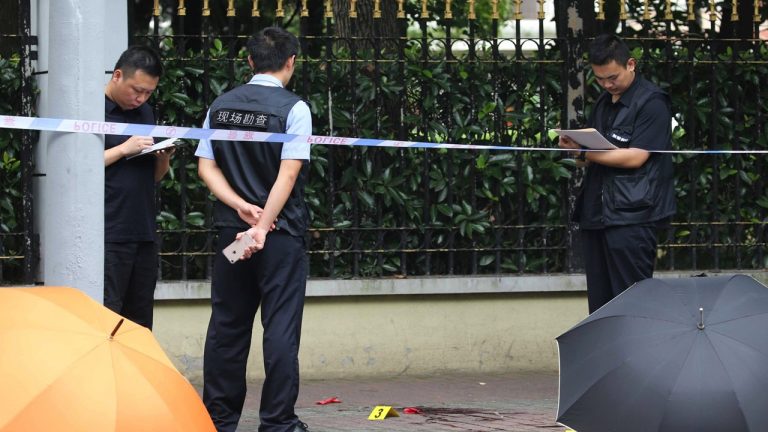
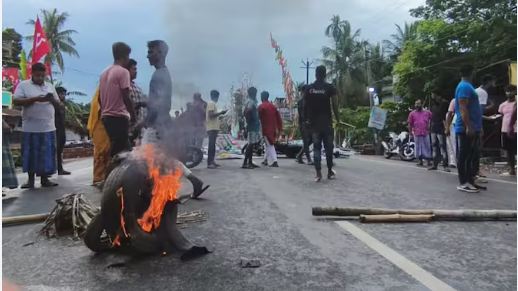
At least 10 people have been killed along with booths being vandalized in West Bengal amidst the polling for the Panchayat Elections today. Bengal has always been indulged in political violence that instigates after the announcement of elections and reaches its peak on the voting day. This year, Panchayat elections have become increasingly vulnerable to violence because of the upcoming Lok Sabha elections in 2024.

Since the announcement of elections on June 8, widespread violence has been reported across West Bengal. More than 20 people, including a teenager have been died in different incidents while more than dozen remain injured. Different areas such as Malda and Murshidabad have witnessed violence resulting in the deaths of six Trinamool Congress workers. Additionally, a BJP polling agent in Cooch Behar was also killed today. The ongoing violence during the polling has claimed the lives of one worker from CPI, one from ISF, and one from Congress..

A polling booth was vandalized and the ballot papers were set on fire in Cooch Behar. In another incident, the presiding officer was beaten and the ballot box was filled with water. Exercising absolute anarchy during the electoral process, a group of assailants, alleged to be TMC workers, barged into the house of an independent candidate. They beat the family with guns and shot his daughter, Chandana Singh on the forehead. Injured Chandan has been shifted to the Kolkata Medical College.

In North 24 Parganas, a supporter of another independent candidate was brutally beaten and his office was vandalized by the TMC workers on Friday. The person is in the hospital in critical condition. This sparked a brawl between the Police, Central Forces and the villagers.

The most disturbing report came from South 24 Parganas where two children succumbed to injuries after they picked up a live bomb by the road. The children mistook the crude bomb to be a ball which exploded when they touched it.

Start of the blame game

Yesterday, the Governor of Bengal CV Ananda Bose accused the State Election Commissioner of failing the people of Bengal.  While the polling and violence are occurring simultaneously, the blame game has begun started by the leaders of various parties. Opposition parties including Congress, BJP among others have blamed Mamta Banerjee led TMC of sabotaging the electoral process. Congress leader Adhir Ranjan Chowdhary has accused police administration of working as TMC agents. He said, “The police administration in Bengal is in cahoots with the ruling dispensation only to retain their hold on panchayat bodies.” BJP leader and Leader of Opposition in West Bengal Assembly, Suvendu Adhikari also targeted the alleged nexus of Police and TMC. He said, “This is not vote but loot…This is the collusion of TMC goons and police and that is why so many murders are happening.” On the other hand, TMC leaders have accused central forces of failing to protect the citizens.

It is worth mentioning here that various reports claim that central forces were not even deployed on many polling booths across West Bengal. SEC Rajiv Sinha has sought reports of the deployment of forces from the District Magistrates.  About 60,000 central forces were sent to Bengal for the Panchayat Elections. As of now, BJP has demanded the President’s rule in the state while Congress has requested High Court to declare Panchayat Elections as null and void.

Hindu minor boy raped and murdered in Sindh

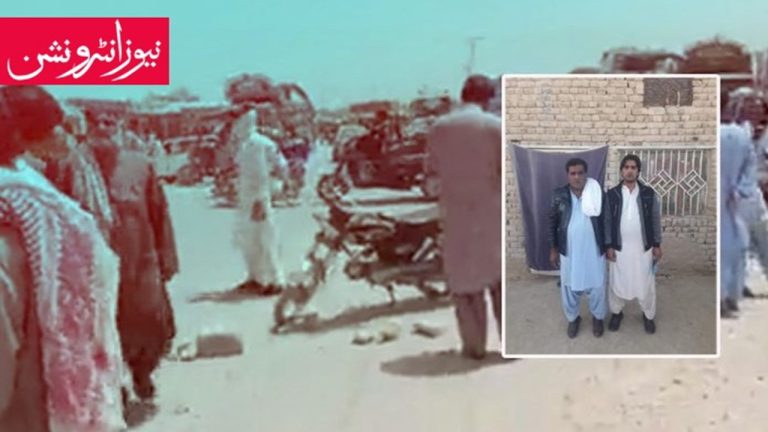
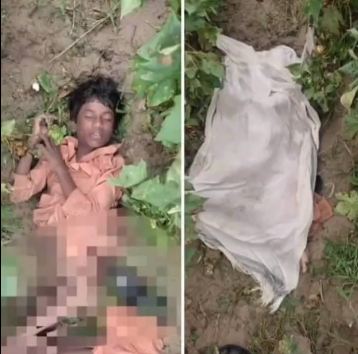
A Hindu minor boy has been sexually abused and brutally killed in Sindh.

As per reports, 12-year-old Parso Kolhi, son of Bhavo Kolhi, belonged to Ghugh Mori in Mirpur Khas, Sindh. On the night of July 6, unidentified criminals sodomized the poor boy and then killed him brutally. As of now, neither the police nor the government has taken cognizance of this heinous crime.

Crimes against Hindus and other minorities have persisted for a long time in Sindh. In fact, these incidents are increasing at a faster pace now. While the government has been completely negligent regarding such issues, Hindu minorities are forced to live under the terror imposed by a majority of Muslim radicals. As a result of this radical hatred against Hindus, minors, both girls and boys, as well as the earning individuals have become the most common targets.

Arrests made in the deadly Orissa triple train crash investigation

0

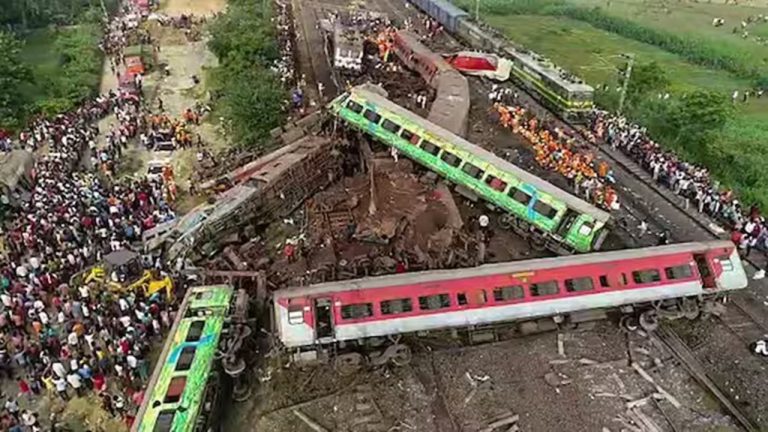
The Central Bureau of Investigation (CBI) has made significant progress in the investigation of the deadliest train crash case. The CBI arrested two senior section engineers (signal) and a technician on July 7. They are now facing charges under Indian Penal Code sections 304 and 201. These charges are for “their action which led to the incident”1,  however the precise nature of their involvement has not been revealed.

Surprisingly, the CBI’s accusations were not initially included in the Odisha police’s first information report (FIR). Following a month-long investigation, the CBI re-registered the case and added the charges. This unexpected twist highlights the grave nature of the suspect’s alleged actions.

Investigation

The Railways chose not to release the Commissioner of Railways Safety (CRS) probe report on the Balasore triple train tragedy in order to preserve the integrity of the CBI’s ongoing investigation. This measure was implemented to deter any possible effect or interference. Officials are keen to allow the CBI to undertake an unbiased investigation into the issue.

The three people arrested have been named as Arun Kumar Mahanta, a senior section engineer in Balasore, Mohammed Amir Khan, a senior section engineer in Soro, and technician Pappu Kumar, who worked in Balasore. Following the incident, the accused allegedly attempted to destroy evidence in order to evade being recognised for their role in the collision.

Investigation Findings

The arrest occurred shortly after the CRS presented the railway board with its report on the Balasore accident. According to the study, incorrect signalling caused by two previous repair failures played a significant role in the incident. The investigation found specific flaws in the signaling-circuit-alteration at the Bahanaga Bazaar railway station’s north signal cabin. In addition, inconsistencies in signalling work linked to the replacement of the electric lifting barrier at level crossing gate 94 were discovered.

After taking over the investigation, the CBI team went to the collision site with forensic experts to gather evidence. They took statements from key officials and studied the signalling system to see if there was any foul play, technological flaws, or human error involved in the incident. Previous investigations also pointed to a wire failure near the Bahanaga Bazaar train station that remained undetected by Signal and Telecom (S&T) personnel.

The inquiry team meticulously analysed the recorded data in the data logger device between 3 p.m. and 11:58 p.m. on June 2 to reconstruct the precise sequence of events throughout the investigation. Surprisingly, Mr. Mahanta allegedly noticed, when in the test room, around five hours after the accident, that the point indicator was still displaying normal, despite the evident damage to the point machines.

We will wait for more updates.

35 enforced disappearances and 9 extra-judicial killings in Balochistan in June – BNM

In line with the routine publication of monthly reports, Paank, the Human Rights Department of the Baloch National Movement (BNM) has released the June report on human rights violation against Balochistan by Pakistan.

The report highlights the oppression of Baloch individuals by Pakistan. As per the report, in June alone, Balochistan witnessed 35 cases of enforced disappearances on the hands of occupying Pakistan forces. Although, 12 missing individuals found their way back home, but only after enduring ruthless treatment, physical and mental tortures.

Carrying forward the heinous cycle of fake encounters and extra-judicial killings, Pakistan Army and other paramilitary forces killed as many as nine Baloch individuals in June. Along with that, the bodies of four previously disappeared individuals were found buried without even a proper investigation.

The perpetrated acts of human rights abuses by Pakistan occupying forces have raised serious concerns in Balochistan. The media blackouts and internet shutdowns have led many of these cases to remain unreported. Hence, Paank has been actively monitoring and reporting any act of human right abuse on the Baloch land by the occupying forces.

The Baloch nation had gained its independence from British colonial rule and was keenly maintaining the independence of their nation state at all costs until the Pakistan Army invaded and seized control of Kalat city, the capital of Kalat state on March 27, 1948 by use of brutal force. And since March 27, 1948 Balochistan continues to be under illegal occupation of Pakistan with enforced disappearances, torture and violation of human rights of the Balochs everyday

India’s economic stability shines bright despite external threats

In its annual review report released on Thursday, the Finance Ministry highlighted that the Indian economy is displaying a more durable growth trajectory than in the past. However, the report cautioned that several external factors pose a threat to India’s growth momentum.

The ministry emphasized the need to maintain vigilance and not become complacent, despite the positive economic outlook. It stated that India’s painstakingly achieved economic stability should not be diluted, as sustained growth is contingent upon continued efforts.

The report acknowledged that investments in supply-side infrastructure by the government have the potential to extend India’s economic growth for a longer period than seen in previous decades. However, it also highlighted external challenges that may hinder India’s growth in the ongoing fiscal year.

Factors such as geopolitical tensions, increased volatility in global financial systems, sharp price corrections in global stock markets, El Nino weather patterns, modest trade activity, and reduced foreign direct investment (FDI) inflows are expected to constrain India’s economic pace.

The Finance Ministry noted that until the first quarter of FY23, India benefited from favorable external demand. However, as central banks globally began tightening monetary policies to curb inflation, India’s merchandise exports were impacted. The report also acknowledged that India’s economy benefited from declining global commodity prices, which lowered import costs throughout FY23.

Despite facing unprecedented global challenges in recent years, coupled with domestic balance sheet troubles in banking and non-financial corporate sectors, the report commended India’s macroeconomic management. It credited the stellar macroeconomic management for enhancing India’s stability and enabling a quicker recovery compared to other nations.

The report highlighted the disciplined fiscal stance of the central government as a critical factor in India’s economic growth. The fiscal deficit (as a percentage of GDP) for the year ended lower than the previous year, demonstrating the government’s commitment to maintaining fiscal prudence.

The Finance Ministry pointed out that India’s domestic demand remains a strength for the economy. It stated that the momentum from the previous fiscal year has carried over into the current fiscal year, and rural demand is showing signs of recovery. Data indicates that FMCG volume sales in rural areas turned positive in the last quarter of the previous fiscal, indicating an upturn in rural demand.

Regarding public debt, the report noted that India’s debt burden stood at 50.6% of GDP at the end of Q3FY23. Although higher than the pre-pandemic level of 42.8% in FY20, it has reduced from its peak of 52.6% in Q1FY22. The report expressed confidence in India’s ability to manage its debt leverage as the economy continues to grow above pre-pandemic rates.

FDI flows to India were affected by inflationary pressures and tighter monetary policies abroad, leading to a 16% year-on-year decline in FY23, following a record high of $84.8 billion in FY22. The report emphasized the importance of closely monitoring FDI data and implementing measures to facilitate FDI inflows, including addressing infrastructure challenges, ensuring labor availability, and facilitating large-scale capacity creation.

India warns retaliatory trade barriers on Green Hydrogen Trade

While addressing the first International Conference on Green Hydrogen in New Delhi, Union Minister, R.K Singh warned of retaliatory trade barriers in case “certain countries” continue to put up trade barriers.

Giving an example of such untenable trade barriers he cited the condition of Green Hydrogen Purchase tender of Germany with the European Union. As per the condition, the maximum distance between the electrolyzers and and the source of generation of renewable energy should not be more than 500 KM. Reacting to the condition, he said,” Is there any logic here? We transport electricity for thousands of kms. We are setting up 13,000 MW of renewable energy capacity in Ladakh. And, we will be transferring that green electricity across our country.” It is worth mentioning that, last month, India had discussed these issues with Germany and called the conditions as “slightly restrictive.”

Thrashing upon their double standards on de-carbonization, Singh said,” If you talk about barriers, stop talking about going green.” Furthermore, he also said, “If you set up barriers then you are not helping the cause of the world to attain net zero.”  Union Minister also warned that if New Delhi presses retaliatory sanctions, many country will face barriers in entering the biggest market outside China.

India, a bright spot for green hydrogen

Clearly, India is making strides for being the global leader in green hydrogen production. As per Niti Aayog, it is difficult for India to compete with the countries in grey or blue hydrogen production. But having low Levelized Cost Of Electricity (LCOE) through wind and solar energy, India has the opportunity to produce cheaper hydrogen fuel. And so, the government allocated Rs. 19,744 crores for the National Green Hydrogen Mission in January. Even in April this year, government provisioned an incentive plan worth Rs 174.9 billion for the production of green hydrogen.

All these measures are taken by the government to meet the targeted production of 5 million tonnes of green hydrogen by 2030. But to make it happen, technical advancements are needed. Hence, India is urging investors to invest in India and become partner in production process.  As hydrogen is better known as a future fuel, it is way more environmental friendly than the EVs. So clearly, the efforts of the government are far reaching. Trade barriers like these will eventually deteriorate the global supply chains of green hydrogen.  

Students protest against the enforced disappearance of Salim Baloch by Pak Army

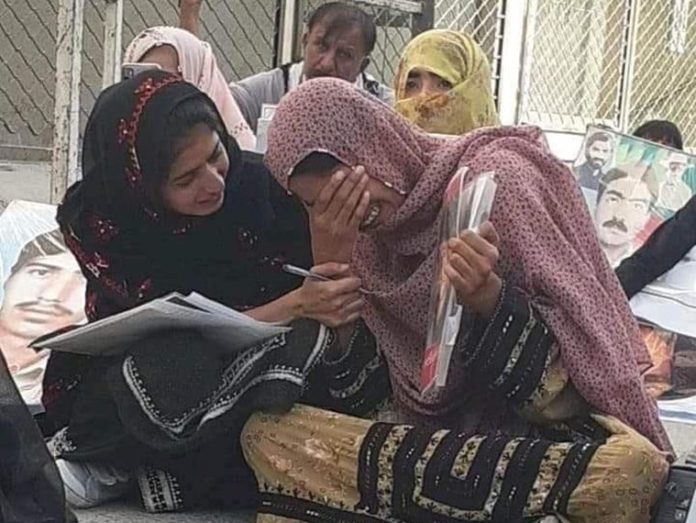
Baloch students in Turbat organized a protest rally against the enforced disappearance of Salim Baloch. The protest rally was organized from Degree College Turbat to Shaheed Fida Chowk. They also demanded the immediate release of Salim, shouting slogans “Justice delayed, Justice denied” and “We want Justice”.

Few days ago, Pak Army personnel entered his house in Absar area of Kech, Balochistan and took him away. They told the family that after questioning Salim would be released. It has been almost six days and still Salim’s whereabouts are unknown.  Salim Baloch is a Punjab University alumnus who was currently working as a daily wage employee in Municipal Corporation office in Turbat. Last year in April, his cousin Bibagar Baloch was also abducted by Pak forces. Bibagar was abducted from Salim’s room in the hostel of Punjab University. After which, Salim raised his voice against his abduction which resulted in his release.

During the protest rally, the demonstrators demanded the release of other missing Baloch youth including Feroz, Ikram and Mehraj. The Human Rights Commission of Pakistan (HRCP) has also urged the Pak Army to release Salim as he has no record of any involvement in militancy. Pakistan has specifically targeted either the Baloch freedom fighters or the students. Clearly, they are attempting to supress any potential voices that can question their oppressive controls and brutal actions over the people of Balochistan.  

Authors sue OpenAI, claiming copyright infringement by ChatGPT

Last week, two authors, Paul Tremblay and Mona Awad, filed a lawsuit against OpenAI, claiming that their copyrighted books were used without consent to train the company’s artificial intelligence chatbot, ChatGPT. The authors argue that ChatGPT generates “very accurate summaries” of their works, which they believe is only possible if the chatbot was trained on their books, thus violating copyright law.

OpenAI, the San Francisco-based research company behind ChatGPT, has not yet responded to CNBC’s request for comment. Similarly, the lawyers representing Tremblay and Awad have not provided an immediate response.

ChatGPT is an advanced text generation model that responds to written prompts in a highly creative and sophisticated manner, surpassing previous chatbot technologies developed in Silicon Valley. OpenAI, led by Sam Altman and supported by Microsoft, trained the chatbot on an extensive dataset, but the precise details of the training data have not been disclosed. OpenAI mentioned that the data included web content, archived books, and information from Wikipedia.

The lawsuit, filed in a San Francisco federal court, alleges that a significant portion of OpenAI’s training data consists of copyrighted materials, including books written by Tremblay and Awad. However, proving how and where ChatGPT acquired this information, as well as demonstrating financial damages suffered by the authors, may present a challenge.

The complaint includes exhibits of the summaries generated by ChatGPT, acknowledging that the chatbot occasionally makes mistakes. Nevertheless, Awad and Tremblay contend that the rest of the summaries accurately reflect their works, indicating that ChatGPT retained knowledge from their books within its training dataset.

The complaint further states that ChatGPT did not reproduce any of the copyright management information provided by the authors with their published works.

As the lawsuit unfolds, it remains to be seen how the court will evaluate the claims made by the authors and determine the implications for OpenAI’s use of copyrighted material in training its AI models.

Khalistani terrorist Pannu dies following a road accident in US

Gurupatwant Singh Pannu, an ISI breaded Khalistani terrorist has died in a road accident in USA. Reports claim that Pannu died in a road accident on Highway 101.

In the past 60 days, three prominent Khalistani terrorists namely, Hardeep Singh Nijjar, Avtar Singh Khanda and Paramjit Singh Panjwar died across different countries. While Nijjar and Panjwar were shot dead in Canada and Lahore respectively, Khanda died in London. Frightened by these deaths, Pannu went underground for almost three weeks. Since then he was untraceable until the news of his car accident surfaced on social media.  However, some Khalistani sympathizers have made counter claims suggesting that Pannu is still alive and safe. However, such claims find no solid basis so as to be believed.

Notably, Pannu was declared a terrorist by the Indian government in 2020, under Section 51A of Unlawful Activities Prevention Act (UAPA). He was the founder of Sikh For Justice (SFJ), a Khalistani organization that held a pro-Khalistan campaign of Referendum 2020. Pannu’s death is a big hit to the terror module that operated against India from the foreign soil especially, UK, US and Canada.