Home Blog Page 219

Japan’s plan to release radioactive wastewater raises alarms

In a controversial move approved by the United Nations’ nuclear watchdog, Japan is set to release treated radioactive water into the ocean, marking a significant step in the aftermath of the 2011 Fukushima nuclear meltdown. The decision comes after 12 years of planning and amid mounting pressure due to limited storage capacity for the contaminated material.

Rafael Grossi, chief of the International Atomic Energy Agency (IAEA), recently visited Fukushima to present the UN body’s safety review to Prime Minister Fumio Kishida. However, the UN’s approval has not assuaged the concerns of neighboring countries’ residents and local fishermen, who continue to experience the lingering effects of the 2011 disaster.

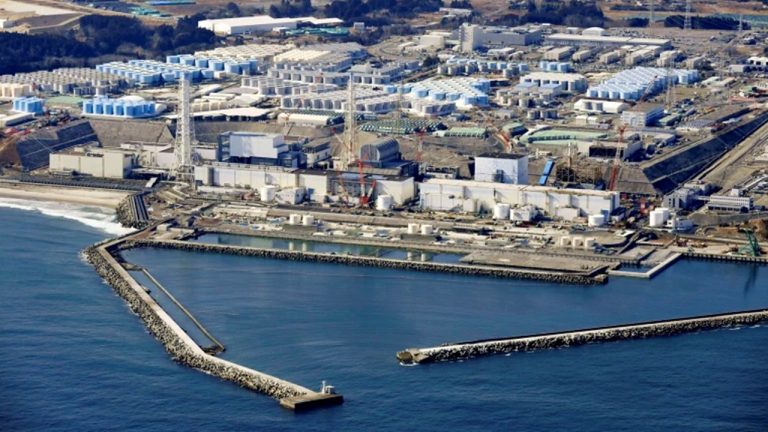
The Fukushima nuclear plant suffered damage to its power supply and cooling systems following the devastating earthquake and tsunami in 2011. As a result, water within the plant became contaminated with highly radioactive material. Since then, new water has been continuously pumped in to cool the fuel debris, leading to the accumulation of over 1.32 million metric tons of wastewater, stored in massive tanks by the state-owned electricity firm, Tokyo Electric Power Company (TEPCO).

With storage space rapidly diminishing, TEPCO and the Japanese government have argued that releasing the treated wastewater is the only viable option for decommissioning the plant safely. The wastewater contains some dangerous elements, but according to TEPCO, the majority of these can be removed. The main concern lies with the hydrogen isotope tritium, which cannot be eliminated with existing technology. However, authorities claim that the released water will be highly diluted and gradually released over several decades, ensuring that tritium concentrations remain within international safety and environmental standards.

While the IAEA report states that the impact of the released water would have a “negligible radiological impact on people and the environment,” experts remain divided on the potential risks. Critics argue that dilution might not sufficiently reduce the impact on marine life, as tritium and other pollutants can accumulate within the ecosystem. Concerns are amplified given the existing stress on the world’s oceans from climate change, ocean acidification, overfishing, and pollution.

International reactions to the plan have been mixed. The United States has supported Japan, citing transparency and adherence to nuclear safety standards. Taiwan has stated that the impact on its region will be minimal. However, neighboring countries like China and South Korea have expressed strong reservations, warning of unpredictable harm to the marine environment and human health. Skepticism remains among the public, with concerns leading to increased sales of seafood and sea salt in anticipation of potential impacts.

Three Pak Army personnel killed in a suicide attack in Waziristan

Three Pak Army personnel have been killed in a suicide attack in North Waziristan district of Khyber Pakhtunkhwa in Pakistan.

According to reports, on 5 July , a vehicle-borne suicide bomber detonated in general area of Miran Shah, North Waziristan. As a result, three Pakistan Army personnel were killed while three civilians sustained severe injuries. The three Army personnel killed were identified as Naib Subedar Sahib Khan of Mianwali, Naik Muhammad Ibrahim of Dera Ismail Khan and Sepoy Jehangir Khan of Mardan.   

Earlier in June, two Pakistan Army personnel were killed in an IED blast in North Waziristan. Clearly, Pakistan has long been a haven for notorious terrorists. In fact, Pakistan has always been their breeder and now the tables have turned!

Taliban’s salon ban further strangles women’s freedom in Afghanistan

In a distressing turn of events, the Taliban has imposed a ban on beauty salons in Afghanistan, adding to the growing list of restrictions on women’s freedoms since the militant group regained power in 2021. The move has sparked international outrage and raised concerns about the deteriorating situation for Afghan women under Taliban rule.

A spokesman for the Vice and Virtue Ministry announced that businesses had been given a one-month deadline to comply with the ban, starting from July 2, when they were first informed of the decision.

Since the Taliban’s takeover, discrimination against women has become increasingly alarming. Girls’ education has been curtailed, with schooling now only permitted up to the sixth grade. The closure of beauty salons further restricts women’s means of income, leaving them with limited professions such as doctors and nurses. However, the duration of such permissions is also uncertain.

UN experts have labeled this situation as “Gender Apartheid,” highlighting the systematic discrimination and oppression faced by Afghan women. The Taliban’s restrictions extend beyond salon closures, encompassing bans on women’s participation in classrooms, gyms, parks, and even employment with the United Nations. Women are now required to dress in a manner that obscures everything except their eyes and must be accompanied by a male relative for journeys exceeding 72 kilometers (48 miles).

Afghan women, who spoke anonymously due to safety concerns, expressed their shock and dismay at the decision. One woman stated, “The Taliban are taking away the most basic human rights from Afghan women. They are violating women’s rights and depriving them of serving other women. It seems the Taliban do not have any political plan other than focusing on women’s bodies.”

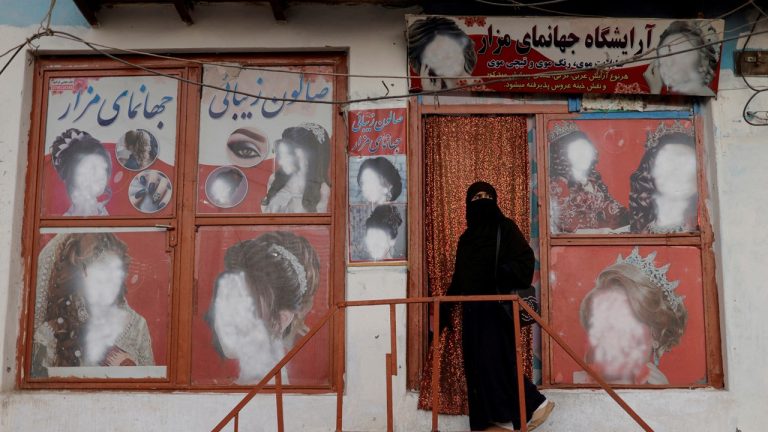
Beauty salons had managed to operate after the Taliban’s return to power two years ago, albeit with windows covered and images of women spray-painted to hide their faces. Afghan women, already grappling with limited freedoms, now face even greater challenges and uncertainties in their daily lives.

Love Jihad case sparks protest in Rajasthan

In a shocking incident in Bikaner’s Sridungargarh town, Rajasthan, a Muslim teacher from a private school brainwashed minor Hindu girl and eloped with her. The incident has led to protests by her parents along with various Hindu organizations. As of now, the case has been registered against the teacher and her two brothers named Nadeem and Javed, who are reported to have been involved in the crime.

Reports suggest that the girl studied in AG Mission School, where 25-year old Nida Bahlim was a teacher. Nida was relative of the school owner, Abdul Gafoor. According to parents, girl left her house on June 30 at 7:30 p.m. and never came back. Later, Police inquiry revealed Nida was also missing since the same day. The girl’s father told the Police that Nida was increasing closeness with his daughter since more than two months. He even accused school administration that they knew about his daughter’s disappearance for quite a long time and still kept quiet.

https://twitter.com/Manika_0315/status/1675451183526469632

Various Hindu organizations have called it a case of love jihad and protested outside the Police Station demanding the strict action against the accused. The Police have prima facie stated that the girl had eloped with the teacher of her own free will. However, as per the statement of parent and the modus operandi of Kerala love jihad scandals, brainwashing angle to the whole incident cannot be outright denied.

India takes a bold stand against China’s pet projects

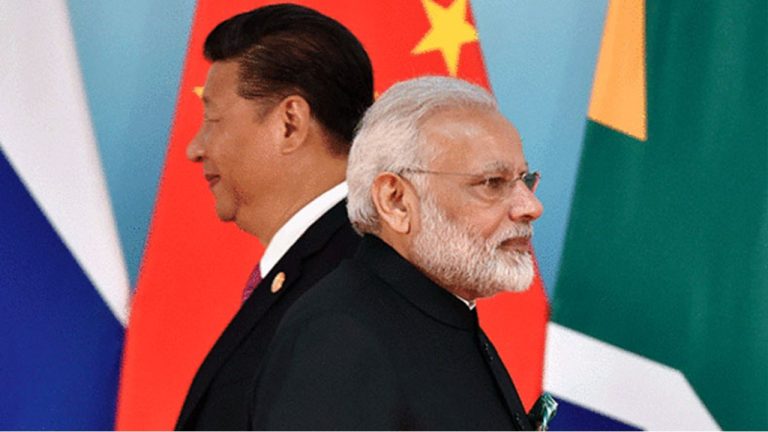
In a remarkable display of assertiveness, India has once again refused to bow down to China’s ambitious Belt and Road Initiative (BRI), signaling a dramatic shift in its attitude towards its neighboring giant. The latest New Delhi declaration, issued at the conclusion of the Shanghai Cooperation Organisation (SCO) leaders’ summit, clearly demonstrates India’s unwavering stance against China’s flagship project, led by President Xi Jinping.

In a witty move, India decided to break away from the pack and withheld its signature from the paragraph endorsing the BRI. This is not the first time India has taken such a step. Last year, during the Samarkand declaration, India also stood its ground and refused to sign off on the BRI paragraph. The message is clear: India is no longer mincing its words when it comes to China’s initiatives.

The New Delhi declaration, in its unambiguous language, states, “Reaffirming their support for China’s ‘Belt and Road Initiative’ (BRI) initiative… note the ongoing work… to jointly implement this project… .” However, conspicuously absent from the list of supporters is India, which has consistently opposed the BRI due to concerns over the China-Pakistan Economic Corridor’s impact on its territorial integrity and sovereignty.

India’s refusal to endorse the BRI is not the only instance where it has shown its confidence. In the fight against terrorism, the Delhi declaration mirrors its predecessor, the Samarkand declaration, with a twist. While retaining the essence, India cleverly swapped the word “ultranationalism” with “chauvinism” to make its own mark on the matter.

Furthermore, the New Delhi declaration boldly denounces interference in the internal affairs of states, using the phrase “mercenary goals” instead of the softer “deceptive purposes” employed in 2022. This linguistic adjustment sends a strong message that India will not tolerate any attempts to exploit terrorist, extremist, or radical groups for personal gain.

Consistency is key, and India maintains its strong commitment to combating terrorism, separatism, and extremism. It actively seeks to disrupt terror financing channels, suppress recruitment activities, counter radicalization, and eliminate terrorist safe havens. In pursuit of these goals, the Delhi declaration emphasizes the importance of developing a unified list of prohibited organizations across the SCO member states, based on consensus and within the framework of national laws.

While the New Delhi declaration avoids mentioning the Ukraine conflict, it does underline the fundamental principles of mutual respect for sovereignty, independence, and territorial integrity of states. It emphasizes the peaceful settlement of disagreements and disputes through dialogue and consultations, reinforcing India’s dedication to preserving harmonious international relations.

India takes a bold stand against China’s grand schemes and refused to sign on the dotted line. India’s unwavering resolve, showcased through the New Delhi declaration, reflects a newfound assertiveness that will undoubtedly shape its future interactions with China and its regional aspirations.

BLA attacks vehicle illegally transporting Balochistan’s resources

Freedom fighters of Baloch Liberation Army (BLA) have targeted a vehicle transporting resources of Balochistan and apprehended a suspicious individual.

On the night of June 3, freedom fighters of the BLA raided an area in Shaban near Quetta, Balochistan. During the raid, they arrested a suspicious man, hailing from Multan, Punjab for further investigation. Meanwhile, in Kalat, a trailer transporting the resources of Balochistan was also targeted by the BLA freedom fighters. According to a statement by BLA spokesperson Jeeyand Baloch, they had previously warned the owners of such vehicles multiple times to refrain from illegal transportation of Balochistan’s national resources, or face the consequences.

CGST Panchkula commemorates 6th GST Day at Gurugram

CGST Panchkula Zone and Excise and Taxation Department, Haryana commemorated the GST implementation anniversary on July 1 by organising an event at Apparel House, Gurugram. GST Day was celebrated on July 1 across the country to mark the 6th anniversary of GST implementation.

CGST’s Gurugram event was attended by the representatives of all the stakeholders and trade. They highlighted the challenges faced by the whole system during the initial phase of implementation and subsequent efforts made by the administrations and officers. Thanking the political establishments, the stakeholders praised its determination to implement new tax regime and being receptive to their suggestions. Along with the political establishments, the stakeholders also thanked the officials who strived to ease out technicalities and made the process of initial phase lucid. They elucidated that in mere six years the problems and challenges of the initial phases have been sorted and now GST is in its great phase as most of the issues of taxpayers have been completely resolved. They highlighted that the current tax regime of GST is the most successful model as compared to other federal tax structures across the world.

Special mention was made about the seamless efforts and coordination between state and central GST officers. It was also explained how the technical and legal procedures related to GST have now been simplified and streamlined for businesses. Dushyant Chutala, deputy CM of Haryana was the chief guest at this event. The deputy CM of Haryana thanked all the officers for their outstanding work due to which the tax administration has been simplified, modernised and is in harmony with the trade. It’s due to their hard work that the tax collection has been propelled to touch new benchmark, remarked Dushyant Chautala.

Several officers from the Central GST and Haryana State Excise and Taxation Department also participated in this event. Upender Gupta IRS, chief commissioner of CGST Panchkula Zone, Devinder Singh Kalyan IRS, principal secretary of excise & traxation, and Ashok Kumar Meena, IAS, excise and taxation commissioner of Haryana were present to extend a warm welcome to the chief guest, dignitaries, businesspersons, tax practitioners, and other stakeholders. As a token of appreciation for their exemplary service in GST administration, ten officers from CGST Panchkula Zone and 12 officers from the Excise & Taxation Department of Haryana were honored with commendation certificates.

Indian Consulate in San Francisco vandalized by Khalistani separatists

In a disturbing incident, the Indian consulate in San Francisco was allegedly vandalized by Khalistani separatists on Sunday, prompting a strong condemnation from the United States State Department. The act of vandalism was met with swift response from local authorities and drew attention to the ongoing concerns surrounding Khalistani extremist activities.

According to reports, the attempted arson and vandalism took place on Saturday, but the San Francisco Fire Department was able to quickly extinguish the fire at the consulate. Fortunately, there were no major damages or injuries reported. Local, state, and federal authorities were immediately notified of the incident.

US State Department spokesperson Matthew Miller expressed deep concern over the incident, stating, “The US strongly condemns the reported vandalism and attempted arson against the Indian Consulate in San Francisco on Saturday. Vandalism or violence against diplomatic facilities or foreign diplomats in the US is a criminal offense.”

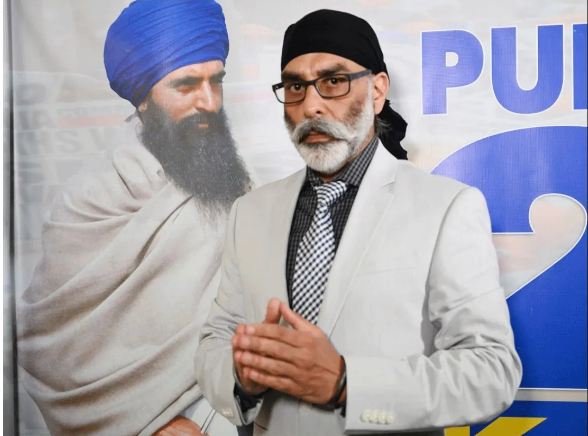
A video shared by San Francisco-based Diya TV showcased the consulate engulfed in flames, with the words “violence begets violence” overlaid on the footage. The video also displayed newspaper clippings reporting the recent death of Hardeep Singh Nijjar, a designated terrorist and leader of pro-Khalistan groups, who was shot dead in Canada the previous month.

Hardeep Singh Nijjar, a 46-year-old native of Jalandhar, had been accused of providing financial support to the Khalistan Tiger Force and the Canadian arm of Sikhs For Justice (SFJ), both known Khalistani outfits. He had affiliations with Babbar Khalsa International (BKI), one of the oldest Canada-based Khalistani terror groups.

Meanwhile, pro-Khalistan supporters in Canada have called for a “freedom rally,” accompanied by posters that contain threats towards India’s envoy in Ottawa and the Consul General in Toronto.

This event at the Indian consulate in San Francisco follows an earlier breach by Khalistani separatists who managed to infiltrate the premises and fly two flags displaying the Khalistan emblem. The frequency of such attacks highlights the continued threat presented by Khalistani extremist elements.

Speaking on the matter, External Affairs Minister S Jaishankar expressed his concerns over the radical and extremist ideology of Khalistanis, emphasizing that it is detrimental not only to India but also to partner countries such as the US, UK, Canada, and Australia. He urged these nations to deny space to Khalistani activities, stating that their ideologies are detrimental to bilateral relations.

The Indian government has announced its intention to raise the issue of pro-Khalistan posters being displayed at the rally in Canada, further underscoring the need to address and counter the influence of radical Khalistani elements.

Two Baloch youth forcefully abducted by Pakistan Army

Two more Baloch youth have been forcefully abducted by the Pakistan Army in Balochistan.

The Voice of Baloch Missing Persons (VBMP) received a complaint that two Baloch individuals have been forcibly abducted from Khuzdar in Balochistan. The individuals have been identified as Mohammad, son of Mehmood and Asim, son of Muhammad Azam. As per reports, both victims were taken into custody by the Pakistan Army on June 17. The victims were arrested from Karachi and were transferred to an unknown location. Even the basis and location of detention have not been provided to the family members.

The intensity of persecution against the Balochs is increasing day-by-day. In a similar incident last month, two other Balochs, one from Panjgur and the other from Dera Ghazi Khan, were detained. The basis for arrest and the location of their detention was also not disclosed to their family. Even after three weeks, their whereabouts are still not known. In fact, the occupying forces of Pakistan have been engaged in the illicit activities, like enforced abductions and extra-judicial killings to suppress the voice of independence. Despite atrocious and anarchical subversion the voice of free Balochistan has withstood the period of more than 75 years.