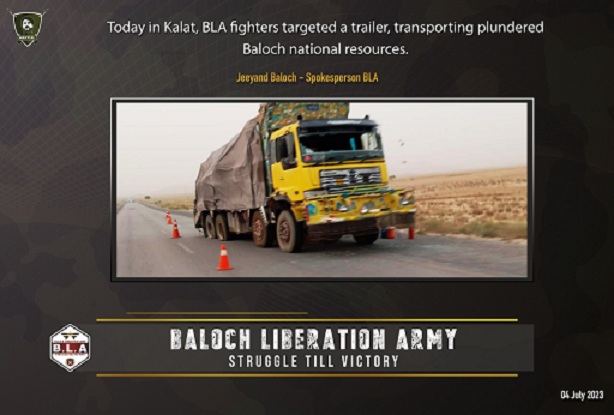
Freedom fighters of Baloch Liberation Army (BLA) have targeted a vehicle transporting resources of Balochistan and apprehended a suspicious individual.
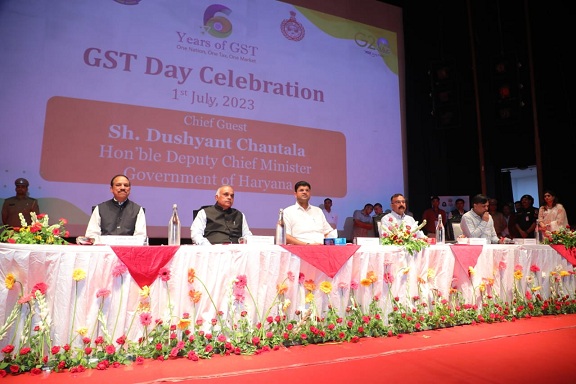
CGST Panchkula Zone and Excise and Taxation Department, Haryana commemorated the GST implementation anniversary on July 1 by organising an event at Apparel House, Gurugram. GST Day was celebrated on July 1 across the country to mark the 6th anniversary of GST implementation.
CGST’s Gurugram event was attended by the representatives of all the stakeholders and trade. They highlighted the challenges faced by the whole system during the initial phase of implementation and subsequent efforts made by the administrations and officers. Thanking the political establishments, the stakeholders praised its determination to implement new tax regime and being receptive to their suggestions. Along with the political establishments, the stakeholders also thanked the officials who strived to ease out technicalities and made the process of initial phase lucid. They elucidated that in mere six years the problems and challenges of the initial phases have been sorted and now GST is in its great phase as most of the issues of taxpayers have been completely resolved. They highlighted that the current tax regime of GST is the most successful model as compared to other federal tax structures across the world.
Special mention was made about the seamless efforts and coordination between state and central GST officers. It was also explained how the technical and legal procedures related to GST have now been simplified and streamlined for businesses. Dushyant Chutala, deputy CM of Haryana was the chief guest at this event. The deputy CM of Haryana thanked all the officers for their outstanding work due to which the tax administration has been simplified, modernised and is in harmony with the trade. It’s due to their hard work that the tax collection has been propelled to touch new benchmark, remarked Dushyant Chautala.
Several officers from the Central GST and Haryana State Excise and Taxation Department also participated in this event. Upender Gupta IRS, chief commissioner of CGST Panchkula Zone, Devinder Singh Kalyan IRS, principal secretary of excise & traxation, and Ashok Kumar Meena, IAS, excise and taxation commissioner of Haryana were present to extend a warm welcome to the chief guest, dignitaries, businesspersons, tax practitioners, and other stakeholders. As a token of appreciation for their exemplary service in GST administration, ten officers from CGST Panchkula Zone and 12 officers from the Excise & Taxation Department of Haryana were honored with commendation certificates.
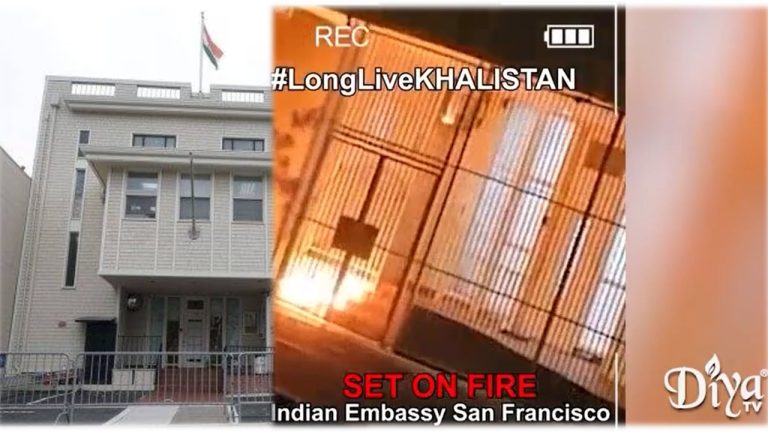
In a disturbing incident, the Indian consulate in San Francisco was allegedly vandalized by Khalistani separatists on Sunday, prompting a strong condemnation from the United States State Department. The act of vandalism was met with swift response from local authorities and drew attention to the ongoing concerns surrounding Khalistani extremist activities.
According to reports, the attempted arson and vandalism took place on Saturday, but the San Francisco Fire Department was able to quickly extinguish the fire at the consulate. Fortunately, there were no major damages or injuries reported. Local, state, and federal authorities were immediately notified of the incident.
US State Department spokesperson Matthew Miller expressed deep concern over the incident, stating, “The US strongly condemns the reported vandalism and attempted arson against the Indian Consulate in San Francisco on Saturday. Vandalism or violence against diplomatic facilities or foreign diplomats in the US is a criminal offense.”
A video shared by San Francisco-based Diya TV showcased the consulate engulfed in flames, with the words “violence begets violence” overlaid on the footage. The video also displayed newspaper clippings reporting the recent death of Hardeep Singh Nijjar, a designated terrorist and leader of pro-Khalistan groups, who was shot dead in Canada the previous month.
Hardeep Singh Nijjar, a 46-year-old native of Jalandhar, had been accused of providing financial support to the Khalistan Tiger Force and the Canadian arm of Sikhs For Justice (SFJ), both known Khalistani outfits. He had affiliations with Babbar Khalsa International (BKI), one of the oldest Canada-based Khalistani terror groups.
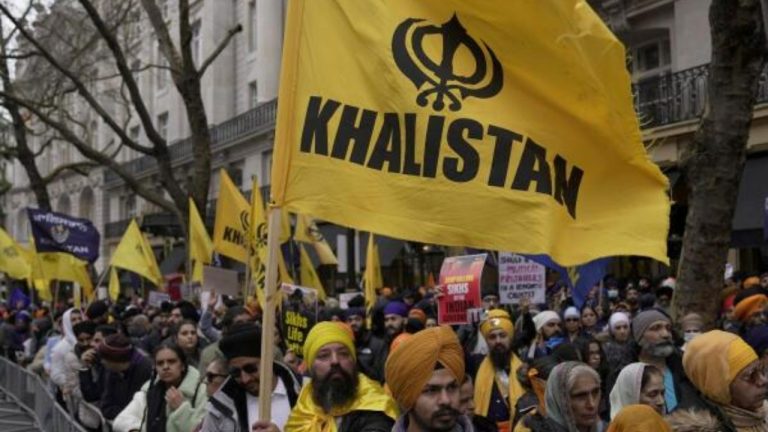
Meanwhile, pro-Khalistan supporters in Canada have called for a “freedom rally,” accompanied by posters that contain threats towards India’s envoy in Ottawa and the Consul General in Toronto.
This event at the Indian consulate in San Francisco follows an earlier breach by Khalistani separatists who managed to infiltrate the premises and fly two flags displaying the Khalistan emblem. The frequency of such attacks highlights the continued threat presented by Khalistani extremist elements.
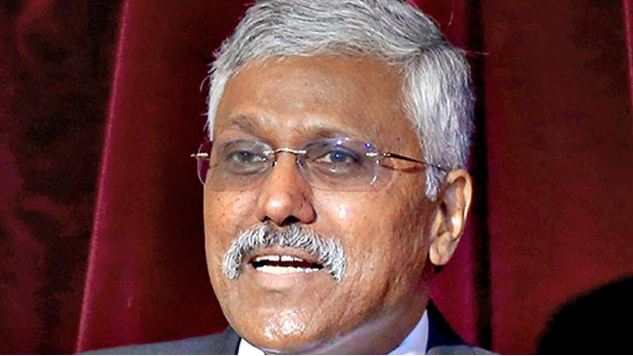
Speaking on the matter, External Affairs Minister S Jaishankar expressed his concerns over the radical and extremist ideology of Khalistanis, emphasizing that it is detrimental not only to India but also to partner countries such as the US, UK, Canada, and Australia. He urged these nations to deny space to Khalistani activities, stating that their ideologies are detrimental to bilateral relations.
The Indian government has announced its intention to raise the issue of pro-Khalistan posters being displayed at the rally in Canada, further underscoring the need to address and counter the influence of radical Khalistani elements.
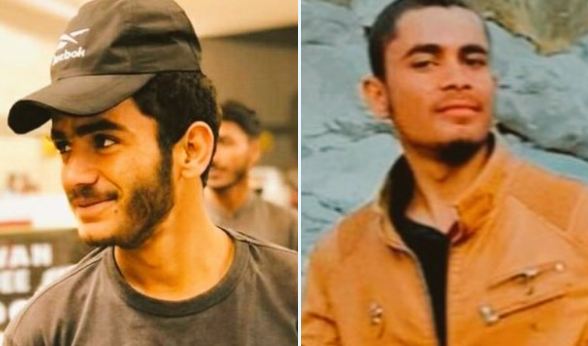
Two more Baloch youth have been forcefully abducted by the Pakistan Army in Balochistan.
The Voice of Baloch Missing Persons (VBMP) received a complaint that two Baloch individuals have been forcibly abducted from Khuzdar in Balochistan. The individuals have been identified as Mohammad, son of Mehmood and Asim, son of Muhammad Azam. As per reports, both victims were taken into custody by the Pakistan Army on June 17. The victims were arrested from Karachi and were transferred to an unknown location. Even the basis and location of detention have not been provided to the family members.
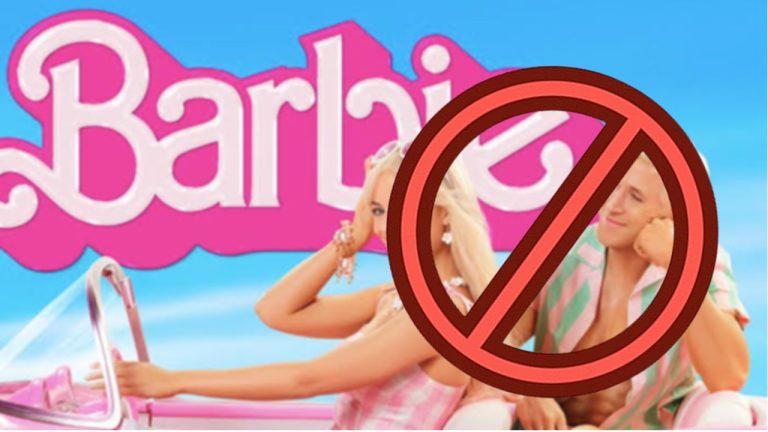
As anticipated, the Vietnamese government has reportedly banned the distribution of the “Barbie” movie due to a controversial map showing disputed Chinese territorial claims in the South China Sea. The decision, made by the National Film Evaluation Council, has generated intrigue and raised tensions between Vietnam and China.
According to state media outlets such as Vietnam Express, posters advertising the “Barbie” movie were swiftly removed from movie distributors’ websites following the government’s decision on Monday. The film, featuring Margot Robbie as Barbie and Ryan Gosling as Ken in director Greta Gerwig’s comedic take on their “perfect” world, was scheduled to open in Vietnamese theaters on July 21.
Reports quote Vi Kien Thanh, director general of the Vietnam Cinema Department, as stating that the ban was implemented due to a map displayed in the film showing China’s contentious “nine-dash line.” This line represents Beijing’s expansive territorial claims, encroaching into waters also claimed by Vietnam and neighboring countries.
The “nine-dash line” issue holds sensitive significance for China and its neighboring nations, often leading to tense standoffs in the disputed waters of the South China Sea. Chinese fishing boats and military vessels have been increasingly assertive in these areas, triggering concerns among ASEAN nations such as Indonesia, Vietnam, Malaysia, Brunei, and the Philippines.
When questioned about the matter, Chinese Foreign Ministry spokesperson Mao Ning reiterated China’s long-standing position on the South China Sea issue and urged against linking it to cultural or people-to-people exchanges. China has historically been sensitive about how its national image and border claims are depicted in entertainment and by businesses, often retaliating against companies that challenge its stance.
It is common for companies to acquiesce to Chinese complaints, fearing potential repercussions and exclusion from the lucrative Chinese market. Even Hollywood films have made adjustments to their content based on expected reactions from the ruling Communist Party and the highly nationalistic Chinese public.
Notably, when an international court ruled in 2016 that the “nine-dash line” had no legal basis and that the Philippines was entitled to an exclusive economic zone in the disputed area, China vehemently rejected the ruling.
Warner Bros. offices were closed for the July 4 holiday, preventing immediate comments on the situation. In a similar incident in 2019, Vietnam canceled showings of the film “Abominable” after audience complaints about a scene featuring the “nine-dash line.” The Philippines called for a boycott of all DreamWorks releases in protest, and Malaysia demanded the scene be removed from the movie.
As the ban on the “Barbie” movie sparks further controversy, it raises questions about the delicate balance between cultural expression, political sensitivities, and economic considerations in the region.
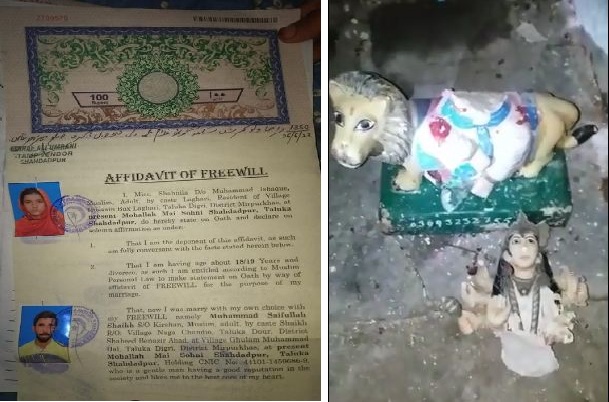
A locked house of a Hindu has been vandalised after being infiltrated in Sindh. The cattle and other belongings have been plundered while the temple was vandalised by a group of Muslims.
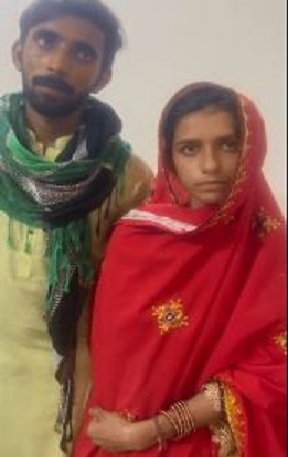
Recently, a Hindu boy named Raja Bheel eloped with a Muslim girl Shanila Laghari, which caused resentment in the Muslim community. The incident took place at Rasool Baksh Dal village in Digri Mirpurkhas, Sindh. Later, it was found out that both wanted to marry each other and, as a result, the boy converted to Islam. Both of them exercised their free will and got married. As it is well known that Pakistan’s governance and every administrative structure has always been oppressive towards Hindus and has always extended protection to oppressors. Inspired by this, the family of the girl along with the whole community broke into boy’s locked house. They vandalized the house, temple and took away all the belongings including cattle.
Affidavit of Free Will by girl for marriage, Broken temple at Raja Bheel’s home
India has voiced its apprehensions to Canadian authorities regarding the escalating threats posed to its officials in the country. Posters advertising a rally, specifically naming India’s High Commissioner in Ottawa and Consulate General in Toronto, have raised significant concerns.
The posters announce the upcoming Khalistan freedom rally scheduled for July 8, held in honor of Harjit Singh Nijjar, a pro-Khalistan priest who was found murdered in the parking lot of a gurdwara in Surrey, British Columbia on June 18.
India’s High Commissioner to Ottawa, Sanjay Kumar Verma, and Consulate General in Toronto, Apoorva Srivastava, are explicitly mentioned on the posters, accompanied by threats. In response to these alarming developments, Indian officials have informally communicated their concerns about the security of their officials and staff to Global Affairs Canada, the Royal Canadian Mounted Police (RCMP), and the Ottawa and Toronto police departments.
Once the long weekend for Canada Day concludes, the Indian authorities plan to formally communicate their heightened concerns to the relevant Canadian agencies. Expressing his viewpoint, High Commissioner Verma stated, “Under the guise of freedom of expression, they are attempting to cause harm to foreign envoys, which may not be the intention of Canadian law and constitution that provide such rights.” He further emphasized that every right comes with the obligation to maintain peace and harmony.
The murder of Nijjar, who headed the Guru Nanak Sikh Gurdwara Sahib and was associated with the separatist Sikhs for Justice (SFJ), has led to accusations from pro-Khalistan elements claiming Indian involvement in his killing. Gurpatwant Pannun, legal counsel for SFJ, described it as an “assassination.” However, the Integrated Homicide Investigation Team (IHIT), responsible for probing the case, has not attributed any motive thus far.
Indian law enforcement previously alleged that Nijjar was the head of the Khalistan Tiger Force and faced multiple terrorism-related charges. The National Investigation Agency (NIA) had announced a reward of ₹10 lakh for information leading to his capture. However, none of these charges were tested in Canadian courts, and SFJ maintains that it does not endorse violence.
While highlighting the receptive nature of Canadian authorities towards their concerns, an Indian official emphasized the close collaboration between the two countries in ensuring the security of diplomatic premises. It should be noted that on March 23, pro-Khalistan agitators breached the security perimeter of the Indian High Commission in Ottawa during a protest related to the search for Amritpal Singh, the chief of Waris Punjab de, who was then absconding. The NIA has named Singh’s brother-in-law as the main suspect in that incident, which is currently under investigation by the Ottawa Police.
As both India and Canada navigate these delicate circumstances, the need for heightened security measures and a proactive approach to ensuring the safety of diplomatic personnel has become paramount.
As stated by the Ministry, any development in Myanmar has a direct impact on India’s border region as India shares a 1,700 k.m. long and porous border with Myanmar. Therefore, “Peace and stability in Myanmar and well-being of its people, therefore, remain of utmost importance to India.” The statement clearly indicates towards the illegal migration in India which started after the coup d’état in Myanmar. It is worth noting that the visit comes at a time when Manipur, a border state, is under the clutches of violence. The conflict has been escalated by the claims on state resources by two communities, who are asserting their ethnic rights.
As per the report of Sub-Committee of Manipur Cabinet, more than two thousand illegal immigrants have migrated to India from Myanmar through 398 KM unfenced border. Since, the illegal migrants have cultural and linguistic similarities with the Kuki tribes; they get settled here very easily. Consequently, the demography of the state is changing which is affecting various sections of the population disadvantageously. The report acknowledges this fact and elucidates how this illegal immigration has contributed to drug trafficking and the initiation of the violence. Interestingly, India has always favoured a democratically elected government in Myanmar still it has maintained a delicately balanced relation with authoritarian Myanmar Junta.
Sorting Equations
Myanmar Junta is under the heavy influence of China which, in turn, looks at Myanmar as a territorial gateway to the Indian Ocean. Because of trade, naval interests and desperation of being an Asian hegemon, China has always eyed for a ground in the Indian Ocean Region (IOR). Certainly, this Chinese intention challenges and tries to hamper India’s interest in the subcontinent and IOR. This is evident by the militarization of the Coco Island in the northeastern Bay of Bengal. So, to counter Chinese influence, India is also bolstering ties with Myanmar through various measures, be it Act East Policy or the weapon supply. As per the global arms transfer report released by SIPRI, India is the third largest arms supplier to Myanmar after Russia and China. India accounts for over 14 per cent arms import of Myanmar during 2018-22.
India-Myanmar relations are, thus, a crucial aspect for peace and stability in the subcontinent. But as the political upheaval in Myanmar is pushing Manipur into violence, it has become even more important for India to take a firm stand against the illegal migration across the border. Eventually, with this visit by Defence Secretary, it seems that India has decided to manage both the internal and external matters simultaneously by going after the root cause of both.
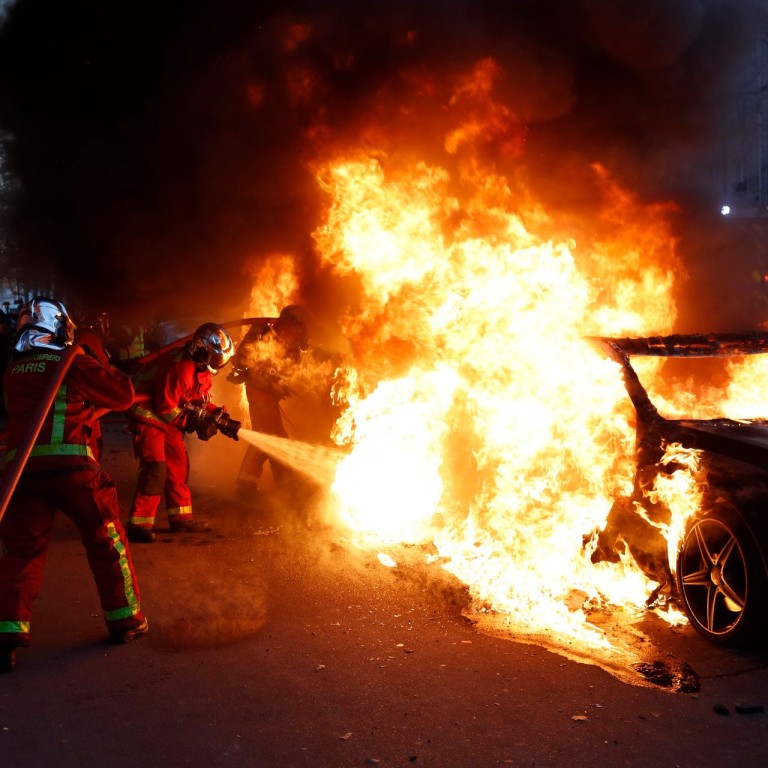
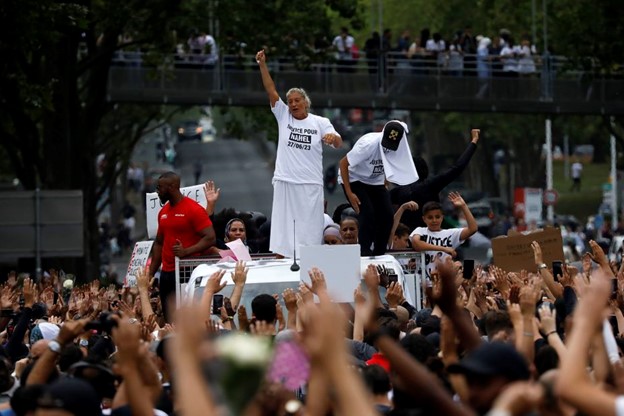
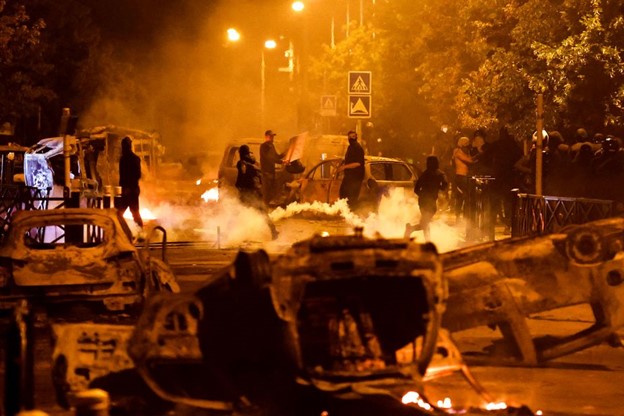
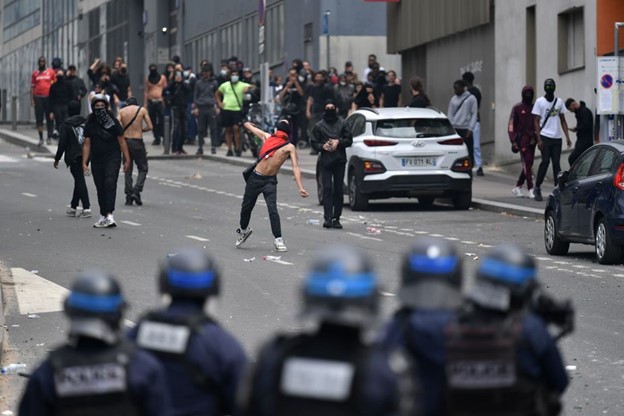
It has been four days since France was rocked by a wave of protests after a 17-year-old youth was shot by police near Paris on Tuesday. Scenes and images of protestors setting fires to vehicles, climbing onto buildings with smashed windows, and fierce clashes with riot police officers have been circulating widely.
These events have prompted the government to take major actions, including banning demonstrations in some cities and issuing travel warnings. This has reignited the debate on overpolicing in marginalized communities.
The dire situation has compelled French President Emmanuel Macron to hold an emergency meeting with ministers. He aims to avert the crisis and bridge divisions, working towards uniting the country.
The Spark:
On Tuesday morning, a tragic incident occurred where a police officer fatally shot Nahel, a 17-year-old Algerian Muslim, in Nanterre, a suburb of Paris. Nahel was driving a car with a Polish license plate in the bus lane when the police attempted to stop him. However, he did not agree, leading the police to perceive him as a potential threat, resulting in the use of lethal force.
Riots in France (Explained)
Tuesday morning, A 17 year old Algirian muslim Nahel was driving a car with Polland number in Bus lane at Nanterre (Suburb of Paris)
Police tried to stop him but he didn't stop. Police found him potential threat and shot (Video in last tweet)
The incident was captured on video by a passerby, which quickly went viral and sparked widespread protests. The Muslim community in France initiated the demonstrations, demanding justice for Nahel, but unfortunately, the protests escalated into violence.
Nanterre prosecutor Pascal Prache has stated that the officer fired out of fear that the boy might run someone over with the car. It is believed that the officer acted unlawfully by using his weapon. As a result, a formal investigation has been launched, and the officer has been placed in preliminary detention, facing charges of voluntary homicide.
But is this the whole truth?
This situation has been taken over by the Muslim extremists who are chanting ‘Allahu Akbar’ while burning and vandalizing shops, cars, and both public and private property. The focus on addressing racial bias has been overshadowed by the rampant looting and violence. It’s important to note that France is home to one of Europe’s largest Muslim populations, accounting for nearly 9% of the country’s total population. Many of them are immigrants from Middle East and North Africa who sought refuge in France.
One of the protestors made the following comment, “Allahu Akbar. We are not scared, we’re Muslims—proud Muslims. If they try to kill us, we will kill them back. We are allowed, it is written in the Quran.”
‘Allahu akbar. We are not scared, we’re Muslims—proud Muslims. If they try to kill us, we will kill them back. We are allowed, it is written in the Quran.’ Muslim extremists are part of the race riots in France, along with far-left extremists. https://t.co/gZVGotQb5l
It has been reported that some of the immigrants have played a significant role in the violence, allegedly including the burning down of the largest public library in Marseille.
There are differing perspectives on this issue. While the prevailing view emphasizes the long-standing issue of racism, there is another perspective, less known but plausible, suggesting that a certain community just need any excuse to engage in violence. An example of this is seen when similar levels of violence erupted across the country after France’s victory over Morocco in a World Cup soccer match.
Since then
The questions of police brutality and racism have been the major focal points of the incident. Protesters are seen carrying signs that read ‘the police kill,’ and in addition, numerous government buildings have been damaged. The escalation of violence is believed to be tapping into the existing racial bias within the country.
French officials have initiated a crackdown across France and its overseas territories to suppress the violence. Macron has deployed over 40,000 police officers to patrol the country, resulting in the arrest of more than 1,000 individuals. In Paris alone, 5,000 security personnel were deployed. So far, nearly 200 police officers have been injured.
French Interior Minister Gerard Darmanin has stated that officers have been granted powers to quell riots, make arrests, and ‘restore republican order.’
Macron has appealed to social media platforms for assistance, urging platforms like TikTok and Snapchat to remove the ‘most sensitive content’ and to identify users who exploit “social networks to call for disorder or to exacerbate violence.”
The widespread narrative
According to a 2017 study conducted by the independent human rights watchdog in France, Rights Defenders, it was found that young men perceived to be Black or Arab were 20 times more likely to be subjected to police stops compared to their counterparts. Organizations such as Amnesty International and the United Nations have also raised concerns about racial profiling and discriminatory behavior in France, but isn’t this too convenient?
Since the 2015 terrorist attacks of Charlie Hebdo, France has faced a series of extremist attacks perpetrated by Muslims extremists. These include incidents such as the October beheading of teacher Samuel Paty, the murder of three people at Notre Dame Basilica in Nice, in October 2019 the stabbing at the Paris police headquarters, and not to forget frequent and several lone wolf attacks. These events help explain why the police force in France remains on high alert.
There is no justification for the shooting of the teenager, which is undoubtedly a heinous crime. However, amidst the protests against police brutality and the call for addressing racism within institutions, it is important to acknowledge that individuals with the slogans of Allahu Akbar rioters are destroying France.
We use cookies on our website to give you the most relevant experience by remembering your preferences and repeat visits. By clicking “Accept All”, you consent to the use of ALL the cookies. However, you may visit "Cookie Settings" to provide a controlled consent.
This website uses cookies to improve your experience while you navigate through the website. Out of these, the cookies that are categorized as necessary are stored on your browser as they are essential for the working of basic functionalities of the website. We also use third-party cookies that help us analyze and understand how you use this website. These cookies will be stored in your browser only with your consent. You also have the option to opt-out of these cookies. But opting out of some of these cookies may affect your browsing experience.
Functional cookies help to perform certain functionalities like sharing the content of the website on social media platforms, collect feedbacks, and other third-party features.
Performance cookies are used to understand and analyze the key performance indexes of the website which helps in delivering a better user experience for the visitors.
Analytical cookies are used to understand how visitors interact with the website. These cookies help provide information on metrics the number of visitors, bounce rate, traffic source, etc.
Advertisement cookies are used to provide visitors with relevant ads and marketing campaigns. These cookies track visitors across websites and collect information to provide customized ads.
Necessary cookies are absolutely essential for the website to function properly. These cookies ensure basic functionalities and security features of the website, anonymously.
Cookie
Duration
Description
cookielawinfo-checkbox-analytics
11 months
This cookie is set by GDPR Cookie Consent plugin. The cookie is used to store the user consent for the cookies in the category "Analytics".
cookielawinfo-checkbox-functional
11 months
The cookie is set by GDPR cookie consent to record the user consent for the cookies in the category "Functional".
cookielawinfo-checkbox-necessary
11 months
This cookie is set by GDPR Cookie Consent plugin. The cookies is used to store the user consent for the cookies in the category "Necessary".
cookielawinfo-checkbox-others
11 months
This cookie is set by GDPR Cookie Consent plugin. The cookie is used to store the user consent for the cookies in the category "Other.
cookielawinfo-checkbox-performance
11 months
This cookie is set by GDPR Cookie Consent plugin. The cookie is used to store the user consent for the cookies in the category "Performance".
viewed_cookie_policy
11 months
The cookie is set by the GDPR Cookie Consent plugin and is used to store whether or not user has consented to the use of cookies. It does not store any personal data.