Home Blog Page 221

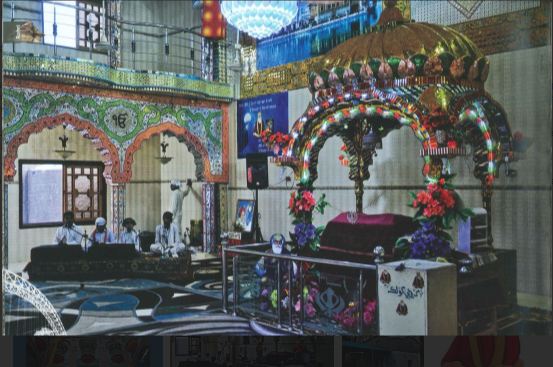
Radical Islamists targets Gurudwara and dishonours Gurugranth Sahib in Sindh

A Gurudwara in Sukkur, Sindh has become the new target of radical Islamists. While they commonly target Hindus and their daughters, this time they targeted a Gurudwara. They broke into the Gurudwara in order to disrupt the ongoing Kirtan. They resorted to coercion, and dishonoured the Gurugranth Sahib, a sacred scripture of Sikhism. The perpetrators also threatened the devotees and attempted to prevent religious events from taking place. In a video message, one of the devotees raised questions about the Pakistani constitution by quoting the ideas of Muhammad Ali Jinnah. He questioned whether this was the same Pakistan where Quaid-e-Azam had stated that everyone would be free to practice their religion.

Despite the threatening environment, authorities have not registered any complaint against the accused. In recent times, Sikhs have become increasingly susceptible to violent attacks throughout Pakistan. Just a couple of days ago, two Sikhs were shot within a 24-hour period in Khyber Pakhtunkhwa, resulting in one fatality. These events demonstrate the consistent threat of persecution faced by religious minorities in Pakistan.

China’s border villages and Tibet’s historical links with India: Perspectives, concerns, and cultural resilience

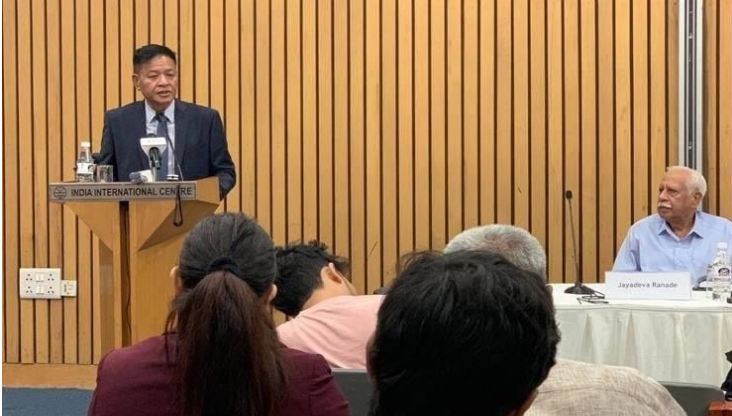
In a recent conference titled “China’s Tibet Policy Under Xi Jinping,” organized by the Centre for China Analysis and Strategy (CCAS), experts discussed China’s aggressive strategy along the borders with India. It was revealed that China is constructing approximately 400 villages near the Line of Actual Control (LAC) with India and is also building similar villages in the no man’s land at the Bhutanese border. These Chinese border villages, which combine civilian and military personnel, are seen as posing both security and cultural threats to India.

Jayadeva Ranade, President of CCAS, highlighted the concern that India’s border regions are gradually thinning out, providing an opportunity for China to encroach upon Indian territories in the future. Additionally, Tsewang Dorji, a Research Fellow with the Tibet Policy Institute (TPI), explained that these border villages serve as China’s “eyes and ears” as the Chinese border forces regularly interact with the local residents. Notably, the People’s Liberation Army (PLA) has been indoctrinating the villagers by stating that their predecessors guided the Chinese army during the 1962 war with India, emphasizing the importance of continued cooperation.

Chinese vision of unified nation, culture and language

One of the notable speakers at the conference was Penpa Tsering, President of the Central Tibetan Administration, who shed light on the potential impact of a peaceful resolution to the Tibetan issue on global politics. Tsering expressed concerns about Chinese President Xi Jinping’s vision of establishing a unified nation, culture, and language, potentially at the expense of other nationalities within China. He stressed that Tibetans have a deep-rooted historical and cultural connection with India, going back over 2,200 years.

Tsering elaborated on the historical ties between Tibet and India, highlighting that Tibet is an extension of Indian culture rather than Chinese culture. He emphasized the profound influence of Indian thought and teachings, particularly Buddhism, on Tibetan society. According to Tsering, Tibetans have been shaped by Indian philosophy, including principles of peace, non-violence, and compassion, which are also espoused by His Holiness the Dalai Lama.

Furthermore, Tsering underscored China’s ongoing efforts to sever the cultural and historical links between India and Tibet. Despite these attempts, the connection between Tibetans and India remains strong, with Tibetans considering India as their holy land. Tsering reiterated Tibet’s historical independence, pointing out that Tibet existed as a sovereign state alongside empires such as the Ming, Qing, and Manchu during various periods throughout history.

Addressing the environmental implications, Tsering emphasized the significant impact of China’s infrastructure development in Tibet. The construction of airports, roads, and railways not only brings more people into Tibet but also accelerates the retreat of glaciers, affecting downstream water flow. As Tibet serves as the water tower of Asia, the consequences of such developments extend to countries like Nepal, India, Bangladesh, Myanmar, and several Southeast Asian nations, potentially leading to future water and food security challenges.

China using AI for Tibetan surveillance

Tsering also highlighted China’s extensive use of artificial intelligence for surveillance in Tibet, creating an Orwellian system of control. Under this system, individuals and their families can be targeted based on the actions of a single visitor. Tsering urged the international community to recognize the strategic, environmental, cultural, and historical significance of Tibet. He emphasized that dealing with China solely through sanctions is insufficient, and instead, the world must stand up for the principles of freedom. Tsering proposed that a non-violent and middle-path approach could pave the way for resolving the Chinese-Tibetan conflict.

As tensions between China and India persist along their shared border, the concerns raised in the conference shed light on the potential ramifications for both regional security and cultural heritage. Recognizing the historical links and preserving the unique identity of Tibet is crucial for maintaining peace and fostering understanding in the region.

Putin endorses ‘Make in India’ success story

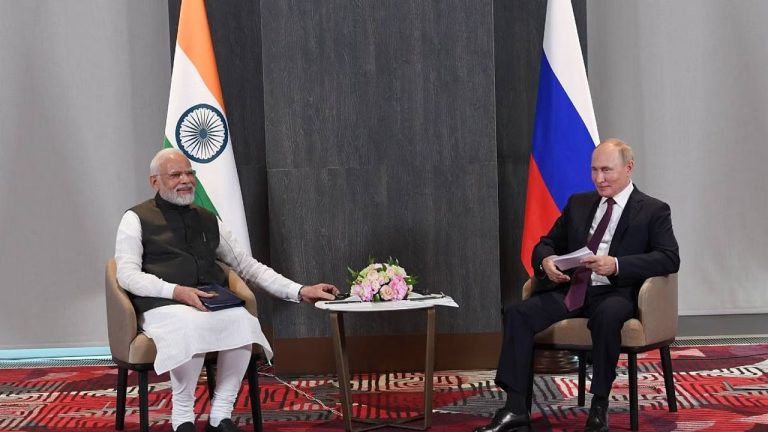
In a recent statement, Russian President Vladimir Putin acknowledged the positive impact of India’s ‘Make in India’ concept on the country’s economy. According to RT, Putin praised Prime Minister Narendra Modi for introducing the initiative, stating that it had a visible effect on India’s economic growth. The Russian President made these remarks during an event held in Moscow.

Putin said, “Our friends in India and Prime Minister Narendra Modi, a great friend of Russia, a few years ago presented a concept ‘Make in India’ and it had a very visible effect on the Indian economy.”

Drawing inspiration from India’s success, Putin urged his own country to promote domestic products and brands. RT reported that he highlighted India as an example to encourage similar efforts in Russia. This endorsement reflects the growing strength of the bilateral relationship between Russia and India.

Moreover, Russian Ambassador Denis Alipov emphasized the robustness of the “special Russia-India strategic partnership” during a state reception in New Delhi commemorating the National Day of the Russian Federation. Despite ongoing attempts to disrupt relations, Alipov affirmed that the partnership between the two nations continues to grow stronger than ever.

He added, “The indispensable truth however is- the special Russia-India strategic partnership has shown strength and we keep growing stronger than ever”.

The recognition from President Putin and the reaffirmation of the strong bilateral ties by Ambassador Alipov underscore the significance of the strategic partnership between Russia and India and its potential for further collaboration in various sectors.

Ahmadiyyas denied Eid celebrations and qurbani across Pakistan

The persecution and exclusion of Ahmadiyyas in Pakistan is an undeniable truth. Once again, this sect is facing threats from Islamic fanatics in the country. They have been barred from celebrating the Muslim festival of Eid-ul-Adha.

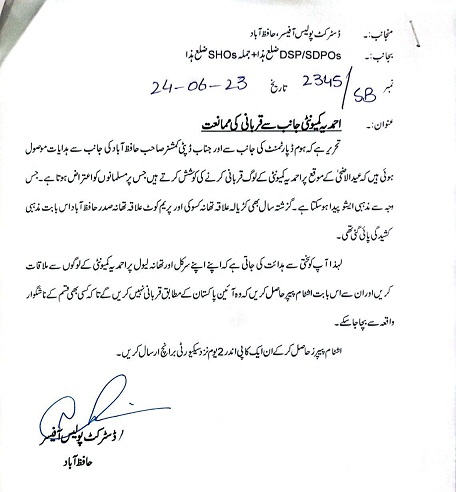
In a significant development, DSP of Hafizabad issued a legal notice on behalf of the Home Department and Deputy Commissioner. The notice orders all the police stations to ensure that no Ahmadiyya muslim performs the ritual sacrifice known as Qurbani. Furthermore, the notice demanded imprisonment for any Ahmadiyya individual found participating Qurbani. Similarly, the Lahore Bar Association and District Bar Association of Sargodha also issued notices restricting Ahmadiyyas from celebrating Eid and engaging in sacrificial offerings. These oppressive measures have also been enforced by the occupying forces in Pakistan occupied Jammu and Kashmir (POJK).

Basically, the distressing sequence of events attempts to justify that sacrifice is an integral part of Islam. And that Ahmadiyyas, being considered non-Muslims, are prohibited from performing sacrifices. This radicalization is thriving under the influence of extremism propagated by Pakistan. The sacrifices made by the Ahmadiyyas are deemed blasphemous, subjecting them to potential trials.

These occurrences vividly demonstrate the complete disregard for minority rights and the flagrant violation of human rights in Pakistan, an issue that the clerics and government of Pakistan openly endorse.

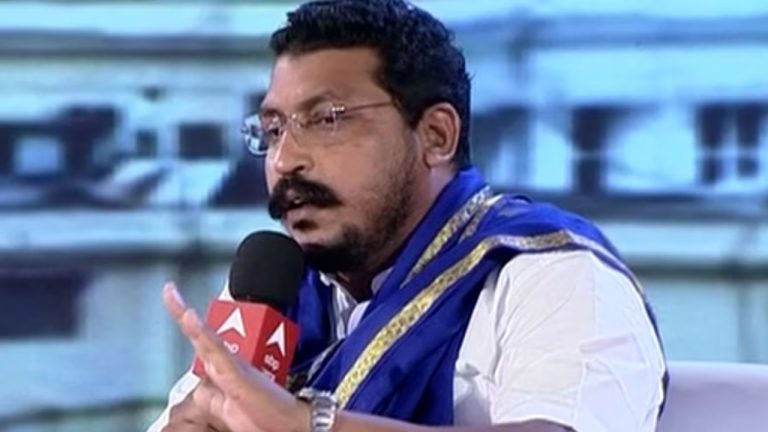
Bhim Army Chief Chandra Shekhar Azad suffers gunshot injury

In a shocking incident, Chandra Shekhar Azad, the prominent Dalit leader and Bhim Army chief, sustained injuries after unidentified assailants opened fire on his car in Deoband. The incident occurred when Azad was leaving after attending a ‘terhavin’ ritual at a supporter’s residence in Saharanpur district.

According to eyewitnesses, the assailants, traveling in a car with a Haryana registration number, targeted Azad’s SUV from the right side, firing multiple shots. Miraculously, Azad escaped with a graze to his abdomen and is currently in stable condition at a hospital, where he is receiving treatment.

In response to the attack, a massive operation has been launched by the police to apprehend the assailants. The district borders have been sealed, and authorities are coordinating with neighboring districts for assistance in tracking down the attackers.

The incident has sparked a political outcry, with the Samajwadi Party raising questions about the state government’s handling of law and order under BJP rule. Party president Akhilesh Yadav condemned the attack, highlighting concerns about the safety of public figures and the overall state of affairs in Uttar Pradesh.

As the investigation continues, a case under section 307 of IPC (Indian Penal Code) and violations of the SC/ST (Scheduled Castes and Scheduled Tribes) Act has been registered by the Uttar Pradesh police. The search for the assailants and their vehicle is ongoing, and reports of a recovered car with Haryana registration have emerged on social media.

Recalling the terrifying ordeal, Azad, from his hospital bed, stated that he and his companions identified the attackers, who fled towards Saharanpur. He expressed determination to assist in bringing them to justice.

“I don’t remember well but my people identified them. Their car went towards Saharanpur. We took a U-Turn. Five of us, including my younger brother, were in the car when the incident occurred,” said Azad. As quoted by ANI, Azad sends message to his friends, supporters and workers to maintain peace.

The incident has ignited concerns about the prevailing law and order situation in the state, prompting calls for swift action and stricter measures to ensure the safety of citizens and public figures alike. The police are diligently pursuing the investigation, aiming to provide justice and restore confidence in the security apparatus.

Two Balochs shot for a minor traffic violation in Sistan and Balochistan

A traffic police official in Sarbaz, Sistan and Balochistan, opened fire on a car, causing injuries to two Baloch individuals. The incident has sparked widespread outrage and led to clashes between the people and the police.

On 28 June, a traffic police official in Sarbaz, Sistan and Balochistan, fired shots at a car in response to a minor traffic rule violation. The reckless action resulted in the serious injury of two Baloch individuals, whose identities have not been disclosed.

Following the shooting, public resentment quickly escalated, leading to confrontations between angry locals and the police. The incident has exposed the community’s frustration with the perceived irresponsible and anarchic behavior of the police force.

The escalating tension reached its peak when the enraged crowd set a police car on fire as a sign of protest against the incident and their dissatisfaction with the authorities’ handling of the situation.

Why India needs to recalibrate the centre-states relationship and revisit the Constitution

Two successive stints of the NDA government at the centre have brought forth many discrepancies in our system of governance that must be addressed in the larger interests of a democratic dispensation. I would, in particular, refer to the nature and scope of centre-state relations outlined in the Constitution amended from time to time as per the administrative necessity.

The broad outlines of the relationship were drawn at a time when the euphoria of winning freedom from colonial rule was still at its height. The nationalist and patriotic character of the early years of independence could not anticipate the emergence of an exclusivist perception of the confederating states of the union. The towering personalities of the fathers of the Constitution were visionaries and futurists no doubt, but the vote bank syndrome had not been an overwhelming force from their viewpoint that would, one day, become strong enough to threaten the solidarity of the nation.

It is this syndrome that has given rise to various problems, political, juridical, financial and social in nature and content. The Constitution emphasizes removing the divisive forces hindering national integration such as regionalism, parochialism, communalism, casteism, race-ism etc. Alas! These very harmful forces have become the bane of Indian democracy because leaders with vested interests have made them the instruments of winning an assembly or parliamentary election.

Moreover, ambiguity in the jurisdiction of the powers of the Centre vis-a-vis those of the State has led to the ugly sight of defiance of the authority of the union by the governments of some of the states leading to confusion.

We do not rule out differences of opinion on various issues between the Centre and the State. But differences have to be resolved through dialogue. Even legal expertise would also become part of the dialogue.  But at the root lies the right intention, the general good of the people and the vital interests of the nation.

In this context, the case before us is of West Bengal under Mamata Banerji’s government.  She ousted the entrenched leftist government in Bengal after pandering to the Muslim vote. The Muslim population in West Bengal is 2.47 crore (27.01 per cent) of a total of 9.13 crore. They have a majority in 3 out of the 19 districts which are Murshidabad, Malda and Uttar Dinajpur. Muslim votes in 6 districts play a decider in the West Bengal Elections. The districts are Murshidabad, Malda, South 24-Parganas, North 24-Parganas, Birbhum and Uttar Dinajpur. In these six districts taken together, Muslims make up 42.04% of the population. Illegal Muslim migrants from East Bengal and Rohingyas from Myanmar have also contributed to the disturbing of demographic complexion of the state. As per available reports these people have been clandestinely issued residential documents by the TMC regime.

Out of 42 Lok Sabha seats for West Bengal, 18 went to BJP in the 2019 parliamentary election. In a house of 294 constituencies 42 have gone to Muslim candidates.

Keeping the above demographic complexion in sight, Mamata Banerji, motivated by vote bank presumption, pandered to fraternizing with the Muslim-dominated constituencies. The common formula for any Indian politician caring for personal power and influence and not necessarily driven by any strong urge for national interests is to underrate Hinduism and the Hindu community.  This gift of vote bank syndrome is the bane of India’s existing democratic arrangement.  Mumata learnt the trick from her forerunners like Lalu Prasad and Mulayam Singh. She went a step forward and adopted the policy of demoralizing Hindus in various ways like putting curbs on the performance of their age-old rituals on the occasion of different feasts. She dictated which Hindu festival would be celebrated and which will not. Contrarily, she provided out-of-way facilities and conveniences to the Muslims, attended their feasts, sanctioned scholarships and turned her face away whenever the members of the Muslim community behaved irrationally and even with a degree of anti-national activities and propaganda.

Emboldened by the state support that was quite visible, the miscreants and goons of her party (TMC) resorted to muscle power, particularly on the occasion of elections to civic bodies or state assemblies or the parliament. She let loose a reign of terror and intimidation. Perhaps caught in the web of unremitting rivalry with other stakeholders, Mamata seems to have lost control over her Frankenstein.

On noticing that violence, brutality and abuse of authority had become rampant for campaigning for the Panchayat elections scheduled for 8 July, a case was brought before the High Court which ordered that additional central security forces be deployed to ensure fair and impartial Panchayat election. The High Court ordered that additional forces be invited within 24 hours. The State Election Commission did not implement the court verdict. Hearing the contempt petitions filed by the BJP’s Suvendu Adhikari and Congress’ Adhir Ranjan Chaudhary against the inaction of the State and SEC in implementing the orders of the High Court, dated 13th June and 15th June, the High Court observed: “A division bench of Chief Justice Sivagnaman and Justice Uday Kumar took exception to SEC requisitioning only 22 companies of paramilitary forces as an as against 825 companies deployed in 2013. It orally remarked:

               “Very sorry state of affairs…you are a neutral body…you need not walk any dotted line…We reposed great faith in the SEC and that is why we said that the ultimate decision must lie with the SEC…it did not act based on our confidence…so another order had to be passed…The court shouldn’t lose faith in the system…but if ultimately people are starting to lose faith, then what is the purpose of conducting elections? Independence of the Commission should not be doubted…you have gone to the highest Court…now accept their judgement…if it is difficult for the Commissioner to take orders, he can step down…probably the Governor may appoint someone else…even earlier there was no representation from the Commission…if they are so busy they better wind up their business…if they are not in a position to, then leave it to us, we will handle.”

The strictures passed by the High Court Bench are perhaps the most scathing criticism of the West Bengal government’s conceit and wilful defiance in conducting the affairs of the state according to its will in total disregard of the law governing the fair and free election. It also shows the vanity with which the government is holding the court order. What is more, the State Election Commission, which is supposed to be impartial and non-partisan has behaved in a highly objectionable manner. The SEC is talking of a couple of sensitive constituencies whereas violence and brutalities have been widespread according to dependable sources.

The height of arrogance of the government is that not caring tuppence for the scathing verdict of the High Court, it and its SEC had the audacity of approaching the highest court of the country. The Supreme Court heaped on the State government and its SEC whatever humiliation was spared by the High Court and dismissed the case. Noting that the polls in the state were marred by violence, the top court said there was no need to interfere with the HC order. “ Holding elections cannot be a licence for violence, If persons are not able to file their nominations and if they are finished off while they are going to file, where is the free and fair election”, Justice Nagarathna observed.

Imagine, an elected government dares to disregard and trivialize the judiciary and even after being rebuked, pursues its self-seeking objective of disallowing free and fair elections to civic bodies, which is working against the interests of the state and the nation.  We have cited this instance with the specific purpose that the nation cannot afford such imprudent and silly governments to run the state.  How can the union government go on watching like a disinterested observer while the rights and lives of Indian citizens are gravely jeopardized just because an obtuse and imperceptive government has been put in place?

Abduction and forced conversion of another minor Hindu girl in Sindh

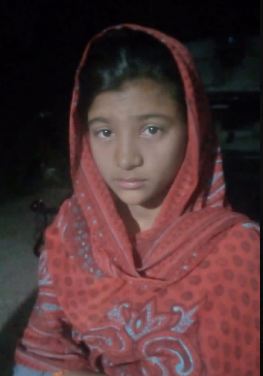
Another minor Hindu girl named, Roshni Sochi has been forcefully converted to Islam after being abducted. 12-year-old Roshni from Nawabshah, Sindh, was abducted approximately 17 days ago. The kidnappers, identified as Nizam Rind and Saddam, drugged the girl and kidnapped her. Subsequently, they forcefully converted her to Islam.

On 25 June, the court ordered to send her back to her parents. The parents have filed a case against the perpetrators. Meanwhile, speaking to the media, her advocate, Mahindar Lal, boldly elucidated that Hindus are living under a conspiracy in Pakistan. Advocate Mahindar Lal stated that if enforced abductions and conversions persist, Hindus will move to India to safeguard their honour as it was done in 1970s. The central leader of Hindu Panchayat, Advocate Lal Chand Lohani, also raised concerns about the enforced abduction and targeted conversions of minor Hindu girls. The cases of targeting minor Hindu girls has been a frequent crime in Sindh which is apparently a part of bigger conspiracy of cleansing the minority population.

Madras High Court challenges caste-based traditions for the appointment of temple priests

In a recent judgement that sparked heated debate, the Madras High Court challenged the age-old practise of assigning temple priests based on caste, instead calling for meritocracy in religious matters. While some see it as a step forward towards inclusivity, others contend that religious organisations should be separate and immune from judicial interference.

The ruling came in response to a writ petition filed by Muthu Subramania Gurukal, who challenged a job posting for the renowned position of Archagar/Sthanigar at Salem’s venerated Sri Sugavaneswarar Swamy Temple. Gurukal contended that appointments should strictly adhere to Agama principles, which control temple rites and emphasise inherited rights.

In an unexpected departure from traditional norms, Justice N Anand Venkatesh said explicitly in his decision that caste should not be used to decide eligibility to become a temple priest. He instead emphasised the need of extensive knowledge and experience in religious scriptures and rituals. The court argued that the core of religious service is its secular component, which distinguishes it from a broader range of religious beliefs.

The order said, “The apex court differentiated between the religious portion and the secular portion, and held that the religious service by an Archaka is the secular part of the religion and the performance of the religious service is an integral part of the religion. Therefore, the prescription provided by the Agamas gains significance only when it comes to the performance of the religious service. Ex consequenti, any person belonging to any caste or creed can be appointed as an Archaka provided he is well-versed and an accomplished person in the Agamas and rituals necessary to be performed in a temple.”

It further added, “…it is made abundantly clear that the pedigree based on caste will have no role to play in the appointment of Archaka if the person so selected otherwise satisfies the requirements.”

While supporters of equality and social progress praised the ruling, critics expressed alarm over the court’s participation in topics normally reserved for religious authorities. They claim that religious institutions, as separate entities with their own set of laws and customs, should be protected from outside intervention, including judicial inspection.

These critics contend that the autonomy of religious institutions must be preserved, as they form an integral part of cultural heritage and spiritual practices deeply rooted in history. They argue that the courts should respect the boundaries between state and religion, allowing religious bodies to function autonomously within the framework of their established traditions.

However, proponents of the court’s decision assert that ensuring merit-based appointments fosters a more inclusive and egalitarian society. They believe that dismantling the caste-based system in temple priest appointments paves the way for qualified individuals, irrespective of their social background, to contribute their expertise and enrich religious practices.

This ruling not only challenges the status quo but also brings to the forefront the ongoing debate on the extent of judicial intervention in religious matters. It underscores the need for a delicate balance between safeguarding the autonomy of religious institutions and upholding the principles of equality and fairness.

Protest erupts in POJK against killings by the Pak Army

People from Pakistan-occupied Jammu and Kashmir (POJK) protested against the Pakistan Army near the Line of Control (LOC). A couple of days ago, some civilians were shot in Tetrinote near the LOC. Establishments in POJK claimed that the Indian army fired upon the civilians from the other side. However, later findings exposed that the Pakistan Army had been responsible for their deaths, deliberately aiming to falsely accuse the Indian army.

Furthermore, videos circulating on social media clearly show that ambulance services were not provided to the victims. People were forced to carry the injured and deceased on their backs and shoulders.

Nevertheless, upon learning the truth, people began protesting against the Pakistan Army and the jihadists. They took to the streets, raising slogans like “Yeh jo dehshatgardi hai, iske peeche wardi hai” (Behind this terrorism, there is the Pakistan Army). Additionally, the protestors chanted slogans that labeled the Pakistan Army as murderers, cruel oppressors, killers of Kashmiris, and irrelevant

Qaatil Fauj-Qaatil Fauj- Pakistan ki Baatil Fauj,

Zaalim Fauj-Zaalim Fauj- Pakistan ki Qaatil Fauj,

Chor Fauj-Chor Fauj- Pakistan ki Qaatil Fauj,

Kashmiriyon ki Qaatil-Pakistan ki Baatil Fauj.”

The Pakistan Army has consistently employed despicable tactics to defame India, continually stooping to new lows. The people in POJK have now become vocal against Pakistan’s tactics and oppression, organizing protests and expressing their concerns over jihadi operatives in the region. It is worth noting that the Pak Army has recently reactivated jihadists in POJK, who are abducting Kashmiri youth for jihad.