Home Blog Page 223

Key takeaways from P.M. Modi’s visit to the USA

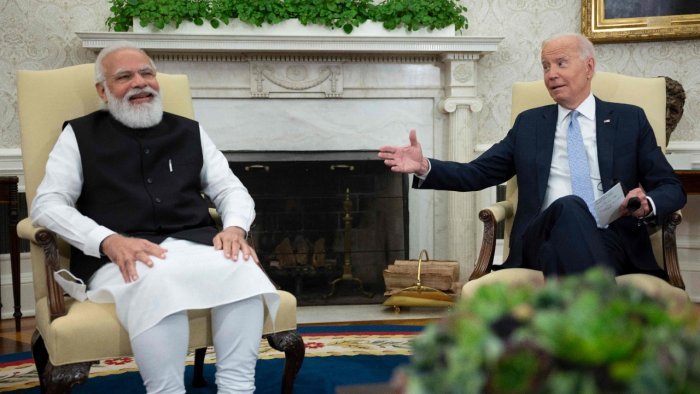
Prime Minister Narendra Modi is on a state visit to the USA. While his visit is nearing an end, here are some key takeaways from his visit.

Boosting Defence ties

A new agreement was declared between New Delhi and Washington, involving the co-production of F414 fighter jet engines in India by HAL and GE. Additionally, India will acquire 30 American Reaper drones of about $3 billion.

Space Tech

NASA and the Indian Space Research Organisation (ISRO) have mutually agreed to conduct a collaborative mission in the upcoming year to visit the International Space Station.

In addition to that, India has decided to join the Artemis Accords, an American-led effort to send humans to the Moon again by 2025, with the ultimate goal of expanding space exploration to Mars and beyond.

People-to-people connect

During PM Modi’s visit, the US offers benefits for Indians, including simplified visa renewal for skilled workers on H-1B visas within the country. Additionally, the US plans to open consulates in Bengaluru and Ahmedabad, fostering closer people-to-people connections.

Semiconductor push

Micron announced its plan to invest in Cabinet approved $2. 7 billion assembly and test plant in Gujrat. Micron will invest $825 million (around Rs 6,760 crore and the rest from the government in two phases.

Another Hindu minor girl raped and killed in Sindh

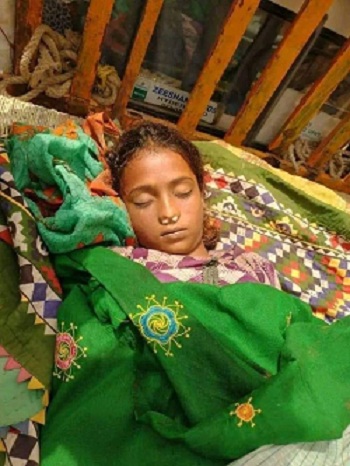
In a series of ongoing crimes against Hindus, a 13-year-old Hindu minor girl has been killed after being raped in Sindh.

The unfortunate incident happened at Qaim Babar village in Tando Muhammad Khan, Sindh. Nisha, daughter of Walji Kohli was raped and later killed. After she was killed, killers threw her body in front of her house. The crime has been carried out ruthlessly and is in line with the long persistent targeted crimes against the Hindu minor girls in Sindh backed by Pakistan Army.   

Mama Qadeer reiterates atrocities by Pak Army on Balochs in the Frankfurt Conference

Mama Qadeer Baloch, Vice Chairperson of the Voice of Baloch Missing Persons, virtually attended the Frankfurt Conference to address the pressing issues faced by Pak occupied Balochistan. The conference was organized by the Baloch Voice Association, based in Paris.

In his statement, Mama Qadeer emphasized that Balochistan has been illegally occupied by Pakistan since 1948, resulting in the killings and forced disappearances of thousands of Baloch people. He highlighted the significant rise in enforced disappearances since the year 2000. During the conference, Mama Qadeer’s assistant read his statement. The statement discussed the establishment of the Voice of Baloch Missing Persons (VBMP) in 2009 under Mama Qadeer’s leadership. The organization has actively worked to raise awareness about enforced disappearances and the mistreatment of Baloch individuals. VBMP has been holding a strike outside Karachi Press Club for 5,080 days, demanding the safe release of missing Baloch persons.

Unvieling the real face of Pakistan Army

The conference shed light on the barbaric tactics employed by the Pakistan Army under the pretext of counterterrorism. Mama Qadeer’s statement cited an incident from July 16, 2022, when 11 Baloch individuals were brutally killed by CTD. These individuals were later identified as missing persons who had been forcibly disappeared by the Pakistan Army.

Mama Qadeer also emphasized the brutal measures taken by Pakistan against the Baloch people. Alongside torture and abductions, Pakistani regime has also kept silent and ignored the protesting family members of missing persons. This is against the rights of detained and his family of being informed about the grounds of detention.

Highlighting the ruthlessness of the Pakistan Army, Mama Qadeer mentioned the recent case of Najma Baloch. Najma tragically took her own life after being harassed. Najma was coerced into becoming an informant and was forced to fulfill the sexual desires of Pak Army officials.

Mama Qadeer’s statement further revealed that, in addition to harassment, threats, and enforced disappearances, the bodies of forcefully disappeared individuals have been mutilated and used for experimentation. One particularly disturbing case emerged from Nishtar Hospital in Multan in October 2022, where over 500 bodies of missing persons had been used for experimentation.

Mama Qadeer called upon the European Union and other international organizations to raise their voices and play a crucial role in ensuring the safe recovery of forcibly disappeared Baloch individuals.

Pakistan-occupied Kashmir rises in protest against Pakistani misrule

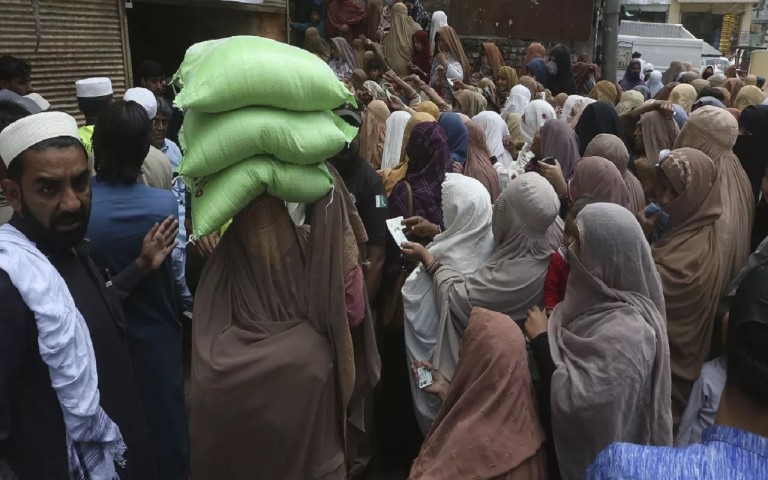
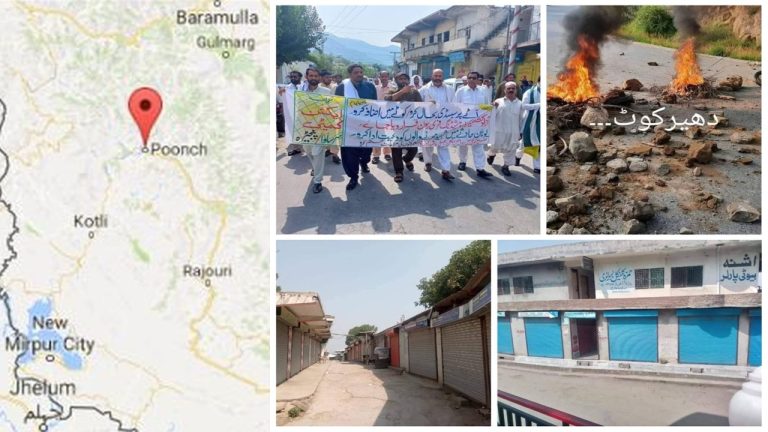
There was a widespread strike in the Poonch division of Pakistan-occupied Kashmir, resulting in the closure of markets, hotels, and transportation. The strike, which continues in Poonch, aims to address issues such as inflation, poverty, electricity, and flour scarcity.

The people of Pakistan-occupied Kashmir are demanding that the Government of Pakistan provide them with the same facilities and benefits as those provided by the Indian Government to the people of Jammu, Kashmir, Poonch, and Ladakh.

The residents of Pakistan-occupied Kashmir have been expressing their strong resentment towards Pakistan by persistently fighting for their rights over the past year. The protest enjoys support from various sectors, including businesses, social organizations, lawyers, students, and transporters. Currently, a complete strike is observed in all four districts of the Poonch division, while partial protests take place in Mirpur and Muzaffarabad divisions. If their demands are not addressed, the protest movement may expand further.

How Singapore’s economic challenges affect NRIs

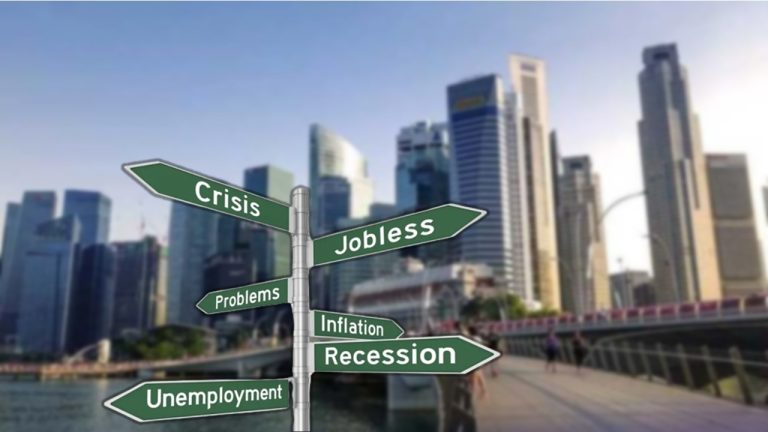
Singapore saw a string of poor economic statistics last week, raising fears of a future recession. For the seventh consecutive month, the country’s yearly exports fell, accompanied by slower employment growth, increasing retrenchments, and fewer job openings. These concerning tendencies have prompted questions regarding Singapore’s export-oriented economy and its resilience in the face of global challenges.

Decline in Non-Oil Domestic Exports (NODX)

Singapore’s non-oil domestic exports (NODX) fell 14.7 percent in May, following a 9.8 percent loss in April. The weakening of both electronics and non-electronics exports led to this reduction. Although exports to China and the United States improved slightly, the overall loss was mostly due to the slow markets of Hong Kong, Malaysia, and Taiwan. Notably, NODX to Singapore’s top ten markets fell last month, above economists’ forecasts of a 7.7 percent drop.

Risk of a Technical Recession

With Singapore’s economy dropping 0.4 percent quarter on quarter in the first quarter of the year, coupled with a downturn in global spending and rising interest rates, the probability of a technical recession has increased. Two consecutive quarters of economic downturn constitute a technical recession. Maybank analyst Chua Hak Bin voiced concern that Singapore’s worsening export slowdown shows few indications of turnaround, raising the possibility of a technical recession.

Labor Market Challenges

Singapore’s Ministry of Manpower (MOM) released its first-quarter labour market report for 2023, which highlighted an employment market that is cooling. Job openings fell to 99,600 from 126,000 in the same period the previous year. Furthermore, layoffs increased in the first quarter, with 3,820 employees losing their employment, up from 2,990 in Q4-2022. However, the total number of employed people in Singapore increased for the sixth straight quarter, mostly due to non-resident workers, including a sizable number of Indian workers in the construction and manufacturing industries.

The Role of Indian Workers in Singapore

Indian nationals have contributed significantly to the workforce in Singapore. Singapore’s population of 5.45 million comprised 300,000 ethnic Indians as of June 2021, accounting for around 7.5 percent of the overall population. According to data from the Ministry of External Affairs Consular Services, Indian nationals accounted for around 24 percent of non-residents in Singapore, or 350,000 people.

Any downturn in the job market may have an impact on the trend of Indians seeking career opportunities in Singapore. Indian talent is highly sought after internationally and frequently pursues opportunities abroad. In recent years, the proportion of Indian professionals in Singapore has doubled, reaching 25%, indicating their expanding presence in various kinds of industries.

Concerns

Singapore’s labour market outlook is deteriorating as a result of the tough external environment. Regional banking issues in the United States, China’s sluggish recovery, and the global semiconductor collapse have all led to a deterioration in business condition and employment growth. Given these circumstances, OCBC Bank senior economist Selena Ling stated that a softening labour market outlook is projected, and growth momentum is likely to decrease in the second half of 2023.

Despite the overall downturn, certain industries, such as information and communication technologies and financial services, may continue to experience churn and pockets of opportunity. In the midst of the hard economic situations, these regions may provide some hope.

As Singapore navigates these issues, governments and industry partners must put measures in place to reduce the effects and support long-term economic growth.

Calcutta High Court challenges State Election Commission, demands more forces in West Bengal

The Calcutta High Court, in a significant development, has asked the State Election Commission (SEC) to increase the number of central paramilitary personnel to be deployed to oversee the upcoming West Bengal Panchayat elections. The court made its judgement after determining that the previously proposed number of about 1,700 personnel was severely inadequate for the task at hand.

The panel, which included Chief Justice TS Sivagnanam and Justice Uday Kumar, also expressed its dissatisfaction with the SEC, proposing that the election commissioner resign if unable to comply with the court’s orders. The court emphasised that the SEC appeared to have purposefully ignored previous court rulings that had been upheld by the Supreme Court.

Chief Justice Sivagnanam questioned the SEC’s failure to make independent decisions, emphasising the significance of an independent and neutral SEC. The court emphasised the importance of maintaining people’s trust in the system and the purpose of holding elections.

The court urged the SEC in its decision to ensure that the number of personnel deployed exceeds the 82,000 central forces deployed during the 2013 West Bengal Panchayat elections. The court considered the increase in the number of districts from 17 to 22, which implied an increase in the number of voters between 2013 and 2023.

The court expressed concerns over the timing of police troops from five other states, which the SEC had asked for peacekeeping duties. The soldiers were only supposed to arrive in West Bengal on July 6, giving them little time to prepare for their tasks ahead of the July 8 elections.

The court emphasised the importance of a thorough deployment strategy, stating that forces from other states should be present throughout the election process, not simply on election day.

The court has set a 24-hour deadline for the SEC to reassess the circumstances and offer an honest evaluation. It warned of the repercussions of any attempt to undermine or render the court’s directions.

The order was issued in response to a contempt plea filed by Suvendhu Adhikari, the Leader of the Opposition and a BJP leader. Adhikari claimed that the SEC was deceiving the court by failing to follow its previous orders. He also expressed alarm over the growing number of people killed in poll-related violence, despite the court’s directives.

The SEC’s counsel told the court that they would follow any further instructions if the current arrangements were considered inadequate.

Another contempt petition challenging the recording of the voting process, submitted by an Indian National Congress (INC) leader, is set to be heard next Friday.

Hindu minor girl kidnapped and sold into marriage in Sindh

A distressing incident has come to light in Mithi Tharparkar, Sindh, where a 14-year-old Hindu girl and her mother were reportedly kidnapped. The father, Jewat Lohano, has claimed that Noorjahan Gahlaro, a woman from Umarkot, persuaded his wife to accompany her, but instead kidnapped both mother and daughter. Tragically, the minor girl was allegedly sold into marriage.

The abduction and forced marriage of minor Hindu girls in Sindh have sadly been persistent issues, exacerbated by the tacit support from authorities and the judiciary in Pakistan. However, the recent incident involving a woman selling a minor girl into marriage represents a new low in the ongoing oppression faced by Hindus in Sindh.

Over 2,000 illegal migrants settled in India since Myanmar coup

The Sub-committee of the Manipur Cabinet has revealed that 2,187 individuals from Myanmar, classified as illegal immigrants, have established settlements in 41 locations across four districts. The sub-committee, led by Letpao Haokip, the Minister of Tribal Affairs and Hill Development in its report stated that Tengnoupal had the highest number of 1,147 Myanmar nationals residing, followed by 881 in Chandel, 154 in Churachandpur, and five in Kamjong.

In March and April, the sub-committee, including state Ministers Awangbow Newmai and Thounaojam Basanta, visited the tribal-dominated districts. They met with the illegal immigrants, discussing providing humanitarian relief and shelters.

Prior to the outbreak of ethnic violence on May 3, the Manipur government had planned to identify and detain the Myanmar nationals who had sought asylum in the state.

Around 5,000 immigrants, including women and children, have fled from the conflict-ridden Myanmar since the coup by Myanmar Junta in February 2021.

Interestingly, the report is presented by CSC chaired by Letpao Haokip, who himself has aligned with the Kuki causes. He along with nine other tribal MLAs, has called for a separate administration in response to the ethnic violence that occurred on May 3. Among the ten MLAs, seven, including Haokip, belong to the BJP. Recently, Chief Minister N. Biren Singh attributed the ongoing unrest in the state to infiltrators from across the border and militants, emphasizing that it are not a conflict between two communities. Manipur shares a 398 km unfenced border with Myanmar.

Illegal immigration, a reality of decades

According to an official report, illegal immigrants’ identification created a panic among them. During the identification drive, it was observed that they not only have migrated to Manipur in large numbers but also have formed their own village. Concerned by this, government proposed building shelter homes for them. But the illegal immigrants strongly objected to it, contributing to the recent outbreak of violence, as mentioned in the report.

The report also highlights the impact of the Manipur government’s ‘War on Drugs’ campaign on the poppy cultivation and narcotics business run by Myanmar nationals in the state. Influential illegal poppy cultivators and drug lords from Myanmar, who have settled in Manipur, have fueled the recent violence.

Various Kuki Civil Society Organizations (CSOs) have accused the Manipur government of harassing Indian citizens under the pretext of identifying illegal immigrants. However, illegal immigration has been the reality of Manipur. Chins from Myanmar and Kukis belong to same Tibeto-Mongoloid race and hence have linguistic and cultural similarities. This makes it difficult to differentiate between them. Kukis have also been accused of supporting illegal immigration to change the demography of the region.

Joykishan Singh, JD(U)MLA of Manipur, had earlier stated in the Manipur Assembly that between 1971 to 2001, the population of the state grown by 153.3 per cent in the hill districts. However the rise per cent bounced to 250.9% between 2001 and 2011. The valley districts saw a population growth of 94.8% and 125.4% between the same periods respectively.

So far, the state has suffered alot by ethnic violence between the Meitei community, which is predominant in the valley, and the Kuki tribe, which is predominant in the hills. The violence has claimed the lives of over 120 people and left more than 400 injured, belonging to different communities.

The alarming trend of college shutdowns in America

In recent years, there has been a significant rise in college closures in the United States, notably among private nonprofit institutions. Tens of thousands of college students around the country have been impacted by these closures. From 2016 onwards, the closure and merger trends of private universities in the United States are influenced by prevalent issues such as financial challenges and enrolment fluctuations.

Trends in Closures and Mergers: 2016-2023
Data from different sources, including Higher Ed Dive, show that 91 U.S. private institutions shut down merged with other schools, or announced closing plans between 2016 and 2023. 54% of these closures or mergers occurred between 2016 and 2019, with the remaining 46% occurring after the Covid-19 epidemic erupted in 2020. According to this timeline, the issues experienced by private institutions were not primarily due to the epidemic, but had been building for several years prior.

Financial Struggles as a Leading Cause

Financial difficulties appeared as the leading cause of closure among private universities. Approximately 68% of the 91 closures were directly related to financial concerns. These institutions were hit with dwindling revenue streams, rising operational costs, and insufficient endowments. The lack of sustainable business models made it increasingly difficult for these colleges to operate and give a decent education to their students.

The Effect of the Covid-19 Pandemic on College Closures
The Covid-19 pandemic increased private colleges’ financial difficulties, serving as the final straw for many struggling institutions. Despite government rescue packages totaling roughly $14 billion, these funds fell short of satisfying the critical needs of institutions. Even with financial assistance, colleges found it difficult to negotiate the pandemic’s uncertainty, resulting to closures, layoffs, and harsh cost-cutting measures.

Example, the closure of Lincoln College in Illinois as a result of a ransomware attack, highlight the institutions’ vulnerability to unforeseen crises. And The King’s College implemented a cost-cutting strategy that included staff layoffs, the closure of the student union, and the selling of office space. The college also issued a serious warning to its students, recommending them to seek alternate educational opportunities.

Enrollment Cliff and Demographic Shifts

Another key reason contributing to college closures is the impending enrollment cliff, which will be characterised by a substantial reduction in the college-age population beginning in 2025. This demographic shift poses a significant challenge to smaller universities that rely significantly on a regular influx of students. Furthermore, changing demographics and evolving tastes among prospective students have resulted in heightened competition among colleges, with top-tier schools, such as Ivy Leagues and huge state institutions, gaining more applicants and earning larger endowments.

Re-enrollment and Degree Completion Rates

When an institution closes, it disrupts its students’ academic journey, leaving them with unclear prospects. Only 47% of students from shuttered institutions re-enroll in secondary programmes after the closure, and this re-enrollment is dominated by white women aged 18 to 24. However, the path to degree completion is laden with difficulties, since only around one-third of these re-enrolled students complete their degrees. Degree completion rates drop dramatically for those who re-enroll after a long break, with only 18% finishing their degrees after one year of re-enrollment.

Competitive Threats
When compared to prestigious Ivy League schools and significant state universities, smaller institutions confront considerable competitive obstacles. The latter institutions benefit from a better reputation, larger application pools, and larger endowments, making it difficult for smaller universities to attract students and get critical funding. Furthermore, the rise of test-optional programmes in college admissions has influenced candidate preferences. Colleges that made standardised tests optional saw an increase in applicants, exacerbating the difficulties encountered by schools that still need these tests.

The surge in college closures in the United States warrants a more in-depth investigation of the variables that contribute to these closures. Recognising these dynamics is critical for policymakers and educators as they work to address the consequences of college closures and support affected students and institutions. Allowing colleges and students the time to manage these obstacles is critical for mitigating the negative consequences of closures and facilitating effective transitions within the higher education environment.

Pakistan: 8-year-old child raped and murdered by Qari

An 8-year-old boy who was allegedly raped by a Qari in Raiwind area of ​​Lahore, Pakistan, died in the hospital after being in a life-and-death struggle for several days.

Qari had thrown the child from the roof to hide the crime.According to the police, the 8-year-old child was raped by Qari a few days ago and then thrown down from the upper floor.

The child was being treated in the Intensive Care Unit (ICU) of Children’s Hospital where he succumbed to his injuries. The police arrested the accused Qari and started the investigation and the accused Qari Rizwan has confessed to the crime.