Home Blog Page 23

Pakistan’s war on terror and General Munir’s blame game

The best part of being Pakistan’s Army chief is that while the lucky incumbent wields unlimited authority and power, he virtually has no accountability. Gen [later Field Marshal] Ayub Khan’s unprovoked aggression to annex J&K [Operation Gibraltar] in 1965 was a monumental failure that pushed the country into a full blown war with India that cost Pakistan dearly in terms of human lives and money, but no one ever questioned his ill-considered decision. 

In the summer of 1971, Gen Yahya Khan sought to use brute military force [Operation Searchlight] for suppressing a genuine nationwide peaceful public movement in erstwhile East Pakistan and the unspeakable atrocities committed by the Pakistan Army and its sponsored vigilante squads sowed the seeds of discontent and culminate in the creation of BanglaDesh.

In the late seventies, Gen Zia ul Haq made a Faustian bargain to pocket US aid by covertly supporting Uncle Sam’s proxy war against the then USSR in Afghanistan. Allowing unrestricted use of its soil for indoctrinating and training radicalised Islamists that it invited from across the globe, Rawalpindi turned the areas bordering Afghanistan into a veritable breeding ground for religious fundamentalism. Even today, the hapless people of Pakistan continue to pay for this unpardonable decision made more than four decades ago by Gen Zia. 

In 2004, Gen Pervez Musharraf brazenly compromised Pakistan’s sovereignty by allowing the US use of its airspace for drone strikes against terrorists. That more innocent civilians than terrorists were killed in the drone attacks that followed remains just a statistic.

The Army’s Blunders

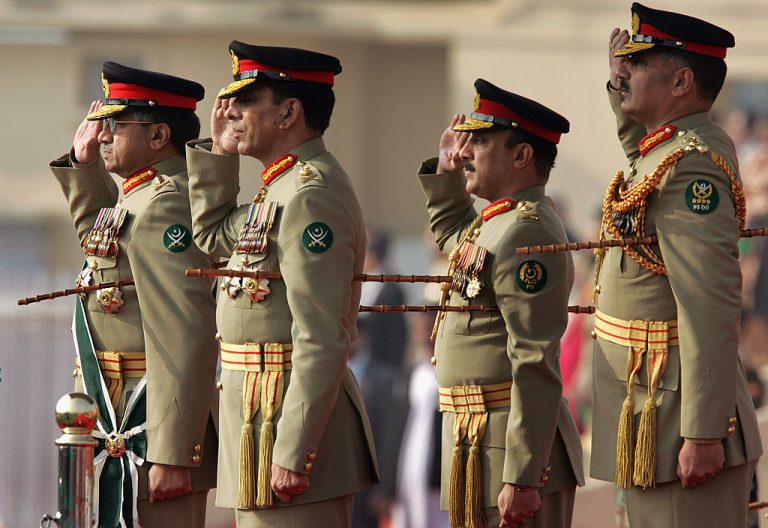
That no one in Pakistan has seriously sought an explanation for these humongous blunders or demanded accountability may surprise greenhorns but not Pakistan watchers who are well aware that questioning Rawalpindi is tantamount to sacrilege. In fact, by reiterating that “Any effort to weaken our armed forces is akin to weakening the state,” Gen Munir has once again made it clear that in Pakistan, the Army continues to reign supreme and remain a holy cow. 

Furthermore, upsetting Rawalpindi can prove dangerous and even prime ministers aren’t spared. Asking awkward questions or asserting constitutional rights can enrage Rawalpindi and the ‘delinquent’ could well become a victim of “judicial murder” [Like Zulfikar Alli Bhutto], get assassinated [Like Benazir Bhutto], face incarceration [Like Imran Khan], or even exile [like Nawaz Sharif]. Conversely, those who play ball with Rawalpindi may be lucky recipients of Rawalpindi’s largesse and end up as Pakistan’s “selected” Prime Minister like PTI chief Imran Khan or get rehabilitated à la PML [N] chief Nawaz Sharif.

Rawalpindi has a congenital affliction of passing the buck by placing the onus of adverse developments on others. Remember ex Pakistan President and former Army chief Gen Musharraf’s pompous claim that “Military rule [in Pakistan] has always brought the country back on track, whereas civilian governments have always derailed it.” And more recently, didn’t erstwhile Army chief Gen Qamar Javed Bajwa regale us with his “the fall of East Pakistan was not a military but a political failure” howler?

So, Gen Syed Asim Munir’s assertion that “Every day, we are addressing the shortcomings in governance through the sacrifices of our martyrs,” [Emphasis added], is along expected lines. While it’s no secret that the fissiparous forces within are hindering Pakistan’s progress and disturbing peace, to hold politicians solely responsible for the unstoppable scourge of terrorism is stretching things a bit too far. This serious insinuation also raises several questions.

Rawalpindi’s Grip

In December 2022, while refuting the then Interior Minister Rana Sanaullah’s claim that the parliament had authorised the military to hold talks with proscribed Tehreek-e-Taliban Pakistan [TTP] terrorist group, former Senate chairman and PPP leader Mian Raza Rabbanitold Dawn that “No permission was sought by the military from parliament for holding parleys with the TTP” [Emphasis added] and that the Army had merely informed the parliamentary committee on national security that negotiations with TTP were taking place. The moot point here is that when the National Assembly didn’t authorise these talks, is it the politicians or Rawalpindi that is responsible for cozying up to TTP, which has the blood of thousands of Pakistani soldiers and civilians on their hands?

Secondly, in August 2022, people of Khyber Pakhtunkhwa [KP] took to the streets protesting against TTP presence and this issue even came up for discussion in the National Assembly. The question for Rawalpindi is, why did Pakistan Army’s media wing Inter Services Public Relations [ISPR] outrightly deny this claim? Why did it state that “misperception about alleged presence of [a] large number of proscribed organisation TTP’s armed members in Swat Valley has been created on social media,” while adding that “After confirmation on ground, these reports have been found as grossly exaggerated and misleading.”

ISPR’s simultaneous assurance that “Presence of militants anywhere will not be tolerated and they will be dealt with full use of force, if required” would have been reassuring had the ISPR statement not gone on to say that “small number of armed men on few mountain-tops between Swat and Dir has been observed, located far away from population.” [Emphasis added]. The question Rawalpindi needs to answer is whether presence of armed men on Pakistani soil is acceptable to the Pakistan Army as long as they are in a “small number” and “located far away from population”?  

Similarly, even if Gen Munir’s unproven allegation about terrorist groups working “at the behest of hostile external powers” is true, can the Pakistan Army cite this as an excuse for its abject failure to curb terrorist activities? Is it not a fact that the Pakistani delegation involved in peace negotiations with TTP was led not by a politician or bureaucrat but a three-star General of the Pakistan Army who took decisions without even consulting the government?

Terrorism and Treachery

As such, Rawalpindi needs to explain why more than 100 TTP fighters convicted for perpetrating terrorist acts [including murder] of Pakistan Army personnel, members of other security forces and law enforcement agencies as well as civilians were unconditionally set free as a confidence building measure? Even if the government had approved this release, wasn’t it Rawalpindi’s constitutional responsibility towards the country and its citizens to nix this outrageous move to free remorseless killers held in Army custody?

With Rawalpindi deciding who to make Prime minister, for Gen Munir to blame “shortcomings in governance” for the sorry state of affairs in Pakistan is rather unfortunate. Passing the buck when faced with failure is the forte of politicians not soldiers. It would therefore do Gen Munir a lot of good to accord more attention to the Army’s primary role and take terrorism by its horns rather than remain over obsessed with issues like ‘digital terrorism’ and social media spreading “anarchy” in the country leading to “degradation of moral values.”

Gen Munir needs to realise that while waxing eloquent on Pakistan Army’s resolve to end terrorism may provide the terrorism-weary people of Pakistan temporary psychological relief, it’s walking this talk that matters- after all, isn’t proof of the pudding is the eating?

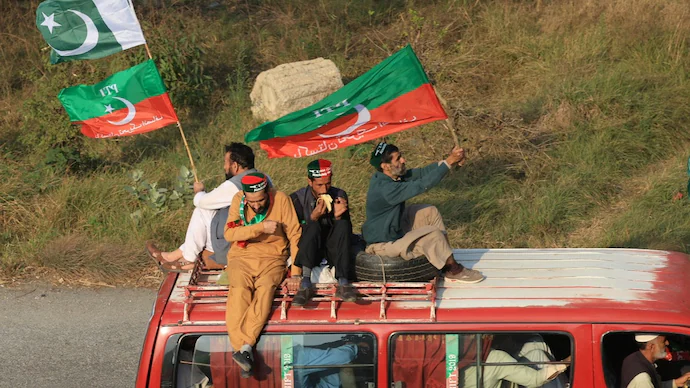
Imran Khan supporters clash with Pak Army in Islamabad; demand immediate release of Khan

Islamabad descended into chaos as protests led by supporters of jailed former Prime Minister Imran Khan escalated into violent clashes with security forces. Five security personnel were killed, including four rangers who were run over by protesters, while dozens, including police officers, sustained injuries. The unrest, which began on Sunday, continued through Tuesday.

The protest march, spearheaded by Khan’s wife, Bushra Bibi, began in Khyber Pakhtunkhwa on Sunday and reached Islamabad by Monday evening. Demonstrators vowed to advance to the high-security D-Chowk, situated near key government buildings, despite police barricades and warnings from authorities. Violent confrontations ensued as protesters removed roadblocks using heavy machinery, torched vehicles, and clashed with law enforcement.

One police officer was fatally shot, while 119 others were injured in Islamabad and across Punjab province. Two officers remain in critical condition. Protesters, in turn, alleged injuries among their ranks. The chaos extended to the Srinagar Highway, where miscreants ran their vehicle over security personnel, killing four rangers and injuring five others.

Pro-Imran Khan Protests

The occupied-government had earlier proposed a compromise, urging the Pakistan Tehreek-e-Insaf (PTI) leadership to hold their protest at an alternate location. However, Bushra Bibi rejected the offer, demanding that the march progress to D-Chowk as planned. Pakistan’s Interior Minister Mohsin Naqvi has since warned of severe consequences if protesters breach the high-security zone.

Imran Khan, who remains in Adiala Jail since his ousting through a no-confidence motion in 2022, has been a central figure in the ongoing political unrest. Facing over 200 cases, including convictions and ongoing trials, Khan has framed his legal battles as politically motivated. Despite his incarceration, Khan’s PTI party won the most seats in February’s general elections, contesting as independents after being denied an official election symbol.

The former premier has called for nationwide protests, denouncing the ruling Pakistan Muslim League-Nawaz (PML-N) and its allies for allegedly orchestrating a “stolen mandate”.

BLA attacks Pak Army in Kalat; kills ten Paki soldiers & injures many

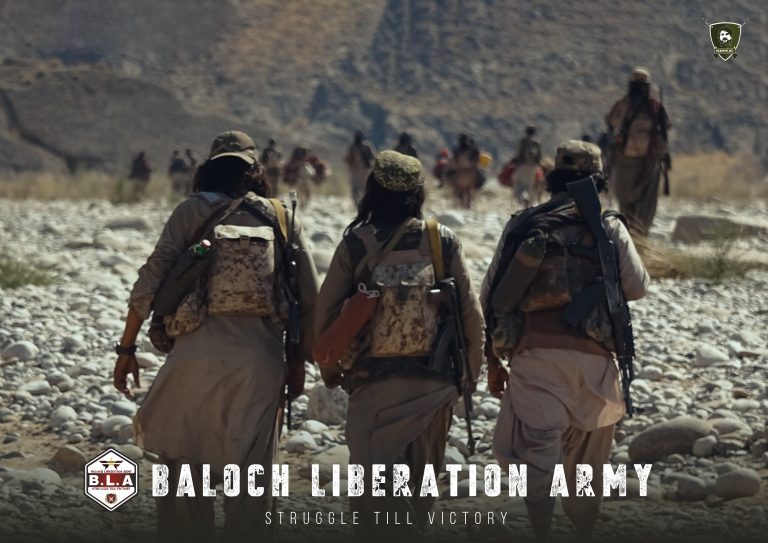
In a significant blow to the Pak military, the Baloch Liberation Army (BLA) has launched two devastating IED attacks in the Harboi region of Kalat, Pak-occupied-Balochistan, on Monday. According to a statement by the BLA’s spokesperson, Jeeyand Baloch, the attacks killed 10 Pak soldiers and injured six others, marking another chapter in the decades-long struggle of Baloch freedom fighters against Pakistan’s oppressive regime.

The attacks, meticulously planned by BLA fighters, targeted Pak troops stationed in the Harboi area as part of their mission to provide security for a military convoy advancing into the region. Baloch fidayeen had preemptively planted explosives in abandoned posts, waiting for the Army forces to gather. When 14 soldiers assembled at the post, the BLA triggered a remote-controlled explosion, killing nine soldiers instantly and wounding four others.

The spokesperson revealed that the bodies of the soldiers remained scattered at the site throughout the day. As evening fell, Pak military vehicles arrived to retrieve the casualties, only to face a second ambush. Another remote-controlled IED explosion struck the convoy, killing one more soldier, injuring two, and severely damaging a military vehicle.

BLA Hits

These attacks come amid increasing resistance from Baloch pro-independence groups against the Pak Army of perpetuating a brutal occupation of POB since 1948. The region has witnessed systematic oppression, including enforced disappearances, extrajudicial killings, and the marginalization of the Baloch community, as Islamabad seeks to exploit the area’s vast natural resources while silencing dissent.

The BLA, in its statement, reiterated its resolve to continue its operations until the complete withdrawal of the Pak military from POB. “Our fight will persist until the occupying forces are driven out of our homeland,” the spokesperson declared, underlining the growing resistance against Islamabad’s colonial policies.

This attack highlights the deepening crisis in POB, where the Pakistan Army, often inflicts war crimes, faces relentless opposition from local freedom fighters. Despite Pakistan’s attempts to curtail Baloch resistance, the actions of groups of the BLA reflect a broader movement against decades of exploitation and systemic violence.

Kyber-Pakhtunkhwa: Ceasefire ends deadly Shia-Sunni clashes in Kurram

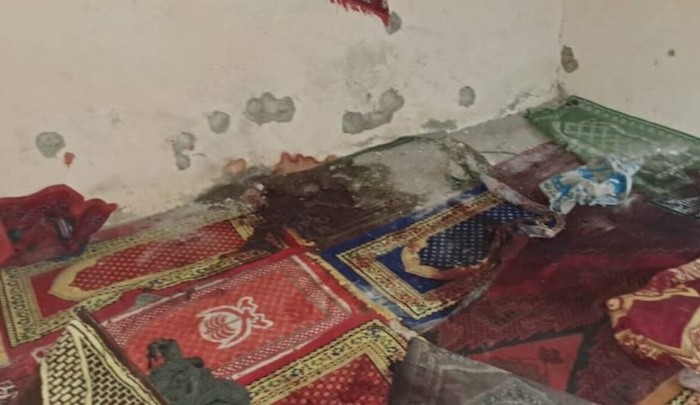
Shiite and Sunni Muslim tribes in Khyber Paskhtunkhwa’s volatile Kurram district have agreed to a fragile ceasefire following days of brutal sectarian violence that claimed over 80 lives, including women and children. The unrest was sparked by an ambush on a Shiite convoy last Thursday, where at least 42 people were killed, triggering a wave of retaliatory violence that engulfed the region.

The clashes, which unfolded in the province near the Afghan border, highlight the long-standing sectarian tensions in Pakistan, particularly in Kurram, a district with a significant Shiite population in an overwhelmingly Sunni-majority country. The region, historically plagued by sectarian violence and militant activity, has seen its residents caught in a deadly cycle of violence perpetuated by the Pak Army’s inability—or unwillingness—to curb the violence.

A spokesperson for the provincial government, Muhammad Ali Saif, confirmed on Sunday that a seven-day ceasefire had been brokered after extensive negotiations with elders from both communities. “The parties also agreed to exchange prisoners and return the bodies of the deceased,” Saif announced, revealing that women were among those being held as prisoners.

While the occupied-authority portrays this ceasefire as a success, it does nothing to address the root causes of the violence. Kurram’s sectarian strife has deep historical roots, further exacerbated by a longstanding land dispute that remains unresolved. Although the attack on the convoy initially appeared to be sectarian, it is believed that the violence was deliberately fueled by external actors, with the tacit approval of Punjabi Pak Army-backed elements seeking to destabilize the already vulnerable Shiite minority.

No group has claimed responsibility for Thursday’s ambush, but questions linger over the role of extremist networks that operate with near-impunity in Pakistan, often targeting Shiite Muslims. The Pak Army’s track record of failing to protect minorities, coupled with its complicity in fostering sectarian militancy, has turned Kurram into a powder keg of religious and ethnic tensions.

Adding to the crisis, over 300 families have reportedly fled the violence-ridden area in search of safety. Mobile networks remain suspended across the district, and the main highway is still blocked, cutting off the region from essential supplies and aid. The ceasefire, while a temporary relief, does little to assure the Shiite community of long-term security in an establishment that has repeatedly failed to deliver justice.

Quetta protests decade long abduction of Baloch student Nazeebullah Badini by Pak Army

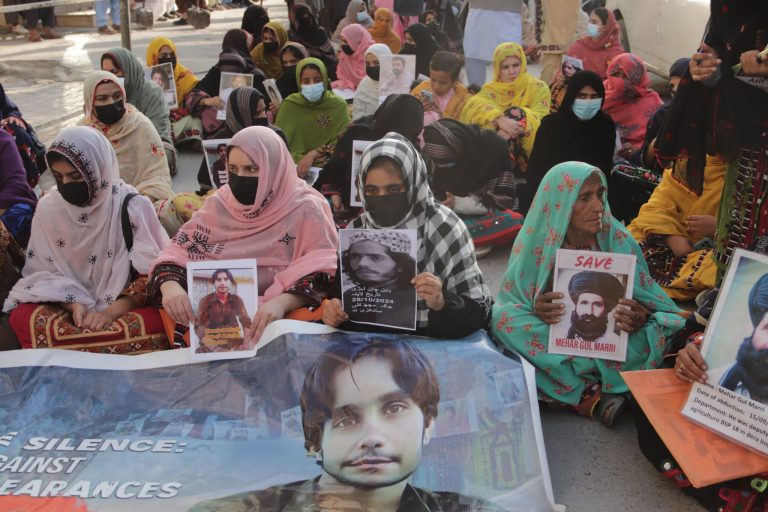
Marking a decade since the enforced disappearance of Nazeebullah Badini, a young Baloch student from Nushki, his family, along with Baloch political activists and students, staged a protest outside the Quetta Press Club. The demonstration echoed long-standing demands for justice, accountability, and an end to Pakistan’s systematic policy of enforced disappearances in Pak-occupied-Balochistan.

Protesters, including families of other missing persons such as Rashid Langov, carried photographs of their loved ones and banners calling for their immediate recovery. The participants decried the colonial and oppressive tactics employed by the Paki establishment, where abductions, extrajudicial killings, and suppression of dissent have become Pak Army policy.

According to Nazeebullah’s family, he was abducted on November 25, 2014, by Pak security forces in broad daylight from Chagai Stop, Nushki. At the time, Nazeebullah was a twelfth-grade student focused on his studies. His sister, Mahpara Baloch, criticized the Army’s blatant targeting of the Baloch youth, stating, “Nazeebullah is being punished for nothing more than being Baloch. He has been languishing in unknown prisons for ten years while the judiciary and state institutions remain complicit in their silence.”

She added, “We pursued every legal avenue, but the so-called justice system has failed us. If there are charges against Nazeebullah, let him be brought before the courts. But ten years have passed, and we have yet to receive even a semblance of justice.”

Quetta Protest

Speakers at the Quetta protest emphasized that enforced disappearances are part of Pakistan’s systematic suppression of Baloch voices, a practice ongoing for decades. Human rights organizations estimate that over 40,000 Baloch individuals—students, journalists, and political activists—have been forcibly disappeared. Many of their mutilated bodies have been recovered in infamously known as Pakistan’s “kill and dump” policy, while thousands remain missing.

The protestors lambasted the Pak Army for treating POB as a colonial outpost, exploiting its natural resources while silencing dissent through brute force. “Enforced disappearances are not isolated incidents; they are part of a calculated strategy to erase Baloch identity and crush resistance against the military occupation of Balochistan,” said one protester.

The protestors also highlighted the lack of action by the international community, which continues to turn a blind eye to Pakistan’s atrocities in POB. They urged global human rights organizations and world powers to hold Pakistan accountable for its grave human rights violations and to pressure the state into ending the cycle of oppression in POB.

Alongside the protest, a social media campaign is set to take place from 8 PM to midnight on X, amplifying the demand for justice for Nazeebullah Badini and the thousands of other forcibly disappeared individuals in POB.

For the people of POB, the issue of enforced disappearances is not just a human rights crisis but a reflection of decades of Army-led marginalization and violence aimed at extinguishing the Baloch struggle for self-determination. Ten years after Nazeebullah’s abduction, his family and thousands of others continue to fight for justice in a region abandoned by Pakistan’s institutions and neglected by the global community.

Bangladeshi Muslims continue to abduct and forcefully ‘marry’ Hindu girls

In yet another grim reminder of the deteriorating state of minority rights in Bangladesh, a 15-year-old Hindu girl, Swapna Rani Ghosh, from the Bagura district has been forcibly converted to Islam and married to a Muslim youth. This brazen act of coercion highlights the deepening crisis of religious persecution against the Hindu community in the country. Swapna’s family has alleged that her documents were deliberately forged to falsely show her as 18 years old, a tactic frequently employed to bypass legal scrutiny.

Adding insult to injury, Swapna, like countless other victims, appeared in a scripted video parroting statements prepared by Islamist Dawah groups to legitimize her conversion. Such videos, designed to silence opposition and justify the forced conversions, have become a chilling hallmark of the systematic targeting of Hindu girls in Bangladesh.

Reports of the militant organization Jamaat-e-Islami being involved in the forced conversion of Ritu Chakraborty, another minor Hindu girl, have further exposed the complicit silence of the Bangladeshi government. The growing influence of radical groups, coupled with the state’s indifference, has emboldened these elements to continue their campaign of erasure against Hindu minorities.

The issue goes beyond individual cases of forced conversions. Members of the Tripuri Hindu community, an indigenous group in Bangladesh, are facing relentless pressure to abandon their faith. Reports indicate that local figures, often backed by financial incentives and political protection, are actively working to convert members of this vulnerable community. Alongside religious persecution, Tripuri Hindus are battling issues like land-grabbing and cultural erosion, further marginalizing them in their ancestral homeland.

The Bangladeshi government’s inability—or unwillingness—to act has left the Hindu minority community in a perilous situation. Despite international outcry, Dhaka continues to ignore the rampant forced conversions, allowing Islamist groups to operate unchecked. This failure not only violates Bangladesh’s constitutional promise of religious freedom but also raises serious questions about the government’s commitment to safeguarding its minority citizens.

Pakistan: Shias torch markets in Kurram after Parachinar massacre

The Islamic Republic of Pakistan witnessed another devastating blow to peace as armed Shias torched a market in Bagan, Kurram District, in retaliation for the massacre of 110 Shia civilians by Sunnis. On the surface, the unrest appears to be fueled by Sunni-Shia sectarian divides or local land disputes, but the deeper and more sinister motives of the Punjabi Pak Army are becoming glaringly evident.

For centuries, Sunni and Shia Pashtuns have coexisted peacefully in Kurram, relying on their traditional jirga system to mediate disputes. However, in recent years, the region has been engulfed in cycles of orchestrated violence. The Pakistan Army, notorious for its colonial tactics, has deliberately stoked unrest to further its geopolitical and financial agenda. Kurram’s strategic location on the Afghanistan border makes it a prime target for military exploitation, and the Army’s endgame is to displace local Pashtuns through bloodshed and chaos to pave the way for its so-called “New Dollar War.”

Despite the Army’s machinations, the resilient Pashtun communities of Kurram have repeatedly demonstrated their commitment to peace. In October, Sunni and Shia youth gathered in a historic Pashtun National Court Jirga, rejecting sectarian hatred and reaffirming their centuries-old solidarity. They boldly called for the withdrawal of the Punjabi- Pakistan Army, demanding that lingering issues be resolved through their indigenous jirga system. The unity displayed by the Pashtun youth was a direct threat to the Army’s divide-and-conquer strategy.

Predictably, the Army responded in its typical fashion: by fueling fresh violence to derail these peace efforts. As plans for a Kurram Jirga gained momentum, violence erupted again, with armed groups unleashing terror at the Army’s behest. The timing and precision of these attacks leave little doubt about the Army’s role in perpetuating the bloodshed.

The tragedy in Kurram is not an isolated incident but part of a broader pattern of Paki establishment-sponsored oppression against the Pashtuns. From the massacres at Babara, Takkar, and Qissa Khwani to the Kharqamar killings and the Army Public School tragedy, the Pashtuns have long been the victims of Pakistan’s military aggression. The bloodshed in Kurram adds yet another chapter to this grim history of systemic oppression.

Kotli: POJK protests escalate against Pakistan’s draconian ordinance

The simmering outrage against the controversial Presidential Ordinance reached a boiling point in Kotli city of Pakistan-occupied Jammu & Kashmir (PoJK) on November 21. A peaceful protest led by students escalated into a violent confrontation when Pak police resorted to heavy-handed measures, including firing and shelling. Protesters retaliated, burning two police vehicles near the PWD guest house. The clashes left multiple citizens and police personnel injured.

The ordinance, widely condemned as a “black law,” seeks to suppress dissent and curtail the Kashmiri people’s right to protest. It imposes draconian penalties, including up to seven years of imprisonment, hefty fines, and immediate detention for participants in unauthorized demonstrations. Even recognized political parties and unions are required to secure prior approval from Deputy Commissioners (DCs) and submit detailed plans for gatherings, a move aimed at silencing dissent entirely.

The people of Kotli, however, have made their stance clear. Declaring they will defy any law imposed at the behest of the occupying forces, residents are determined to resist an unconstitutional assault on their freedoms. This defiance has sparked a wave of protests across the region, including Mirpur, Rawalakot, and Muzaffarabad, with the momentum steadily growing.

In Kotli, the occupied-state’s response has been particularly brutal. Tear gas was fired near schools during dismissal time, leaving women and children trapped in nearby shops and exacerbating public outrage. The Army-government’s use of force against peaceful protesters highlights its growing desperation to quell resistance in a region where Kashmiri voices are rising louder against repression.

The ordinance is yet another attempt by the Paki establishment to tighten its grip on PoJK, using authoritarian tactics to stifle any movement for autonomy or justice. The move is a direct attack on the region’s identity and fundamental rights, comparing it to other oppressive policies that have systematically disenfranchised the Kashmiri people under Paki establishment’s rule.

BLA launches coordinated attacks on Pak Army across POB

The Baloch Liberation Army (BLA) has launched a series of targeted attacks against the Pakistan Army and its collaborators in Noshki, Quetta, and Turbat. In a statement issued by BLA spokesperson Jeeyand Baloch, the group detailed three separate operations, which they assert were carried out in retaliation to the military’s ongoing aggression and human rights violations in Pak-occupied-Balochistan. The attacks reportedly resulted in the deaths of three individuals, including a state informant, and injuries to four Pak soldiers.

The first attack occurred on Thursday night in the Gorbarat area of Noshki, where BLA fighters ambushed Pak military personnel engaged in operations against local civilians. Using automatic weapons and grenade launchers, the fighters killed two soldiers on the spot and injured four others. The spokesperson said that the Pakistan Army was conducting a violent campaign of terror in Noshki since November 19, targeting civilian populations in Manjro, Mokhbili, Gorbarat, and surrounding areas. The military set homes ablaze and indiscriminately fired mortar shells and rockets, causing widespread destruction and displacement among the local population.

Jeeyand Baloch condemned these actions as part of a broader campaign by the Pakistan Army to suppress the Baloch people and seize control of their lands. He emphasized that the BLA remains resolute in its mission to protect the Baloch population and warned that any aggression would be met with fierce resistance.

BLA Hits Pak Army Posts

In a second operation, BLA fighters targeted and eliminated a state informant in Quetta. Nasibullah, also known as “Chhiya,” was shot dead in the Killi Beig area of Saryab Road. According to the BLA, Nasibullah had surrendered to the military alongside another collaborator, Habib Khan Marri, and subsequently worked as a key operative for the intelligence agencies. The spokesperson added that Nasibullah was instrumental in forming an informant network under the supervision of a Pakistan Army officer, Major Sher Jan. He was also accused of direct involvement in the abduction and extrajudicial killing of Zahoor Marri, a prominent Baloch activist whose mutilated body was found after his forced disappearance.

The BLA claimed to have seized Nasibullah’s mobile phone, uncovering critical information about the informant network operating under the Pakistan Army’s direction. The group stated that further operations against these collaborators are imminent.

Later the same night, the BLA attacked a military checkpoint on Airport Road in Turbat, using hand grenades to inflict casualties and damage on the Pak forces stationed there. The spokesperson said that this operation was a continuation of their efforts to disrupt the military’s oppressive control over Balochistan.

The BLA’s statement also highlighted the Pakistan Army’s long history of violence and exploitation in POB, as Paki establishment is committing war crimes and systematically suppressing Baloch voices. The group criticized the establishment for its colonial mindset, and as it plunders POB’s resources while silencing dissent through forced disappearances, extrajudicial killings, and the use of informants to target activists.

The statement concluded with a vow to intensify their resistance against the occupying forces, reiterating that the BLA would continue to target both the Pakistan Army and its collaborators as part of their struggle for Baloch liberation.

Bangladeshi muslims attack and harass Hindus during Rangpur rally

In a stark display of state-backed oppression, Hindu protesters in Bangladesh were met with brutal force and obstruction as they attempted to attend a rally in Rangpur organized by the Samilito Sanatani Jagran Manch. The rally, which sought to draw attention to the systematic persecution of Hindus under the authoritarian regime of Md Yunus, was aggressively disrupted by the police and radical Islamist groups.

Police forces reportedly stopped buses and cars carrying Hindu participants, preventing many from reaching the rally site. In numerous instances, protesters were subjected to physical violence, with some being beaten by law enforcement. A particularly heinous attack occurred when a Hindu man on his way to the protest was assaulted by members of the banned militant organization Jamaat-e-Islami, leaving him hospitalized with severe injuries.

The Hindu minority in Bangladesh has long endured systemic violence, but the events in Rangpur underscore the worsening conditions under the Yunus government. Despite the rally being a peaceful demonstration against extremist policies and the growing marginalization of minorities, the regime’s response was emblematic of its undemocratic and oppressive approach. The collaboration between state forces and Islamist extremists further highlights the precarious position of Hindus in the country.

Amid the violence, the resilience of the Hindu community shone through. Thousands braved the threats and repression to gather, voicing their demands for justice and safety.