Home Blog Page 231

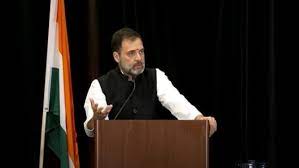
Rahul Gandhi chooses foreign land for his vicious attack on PM Modi

Rahul Gandhi has once again abandoned moral grounds to launch an attack on Prime Minister Modi from foreign soil.

Rahul Gandhi’s “Mohabbat ki Dukan”

During his six-day visit to the United States, Gandhi arrived in San Francisco on 30 May. In California, he met with the Indian diaspora and addressed an event titled “Mohabbat ki Dukan”.

In his address, Gandhi not only targeted the BJP and RSS but also resorted to mocking the Indian Prime Minister, labelling him a mediocre individual who believes he knows everything. He went so far as to claim that there are people in India who think they possess more knowledge than even God. Referring to Modi, Gandhi stated, “They could sit down with God and have a conversation, explaining to Him what is going on. And of course, our Prime Minister is one such specimen.” He also dismissed the installation of the Sengol in the new Parliament as a mere drama.

The event was actually organized by the Indian Overseas Congress USA, the foreign arm of the Indian National Congress. It is worth noting that the organization’s chairperson, Sam Pitroda, is known for making statements against Indian unity. Interestingly, every such politically motivated foreign visit by Gandhi is hosted by a group of Congress darbaris who seek to please their prince. These individuals create an echo chamber on foreign soil, allowing the Congress prince to deliver speeches and lectures against the country. This entire process is driven by a desire to counter Prime Minister Modi, who is treated with utmost respect.

Politically motivated visit targeting PM Modi

At present, Prime Minister Modi is receiving accolades globally. As a reformist and visionary leader, he has elevated the country to new heights, earning international recognition for himself and India. His recent visits to Australia and Papua New Guinea serve as testament to his achievements.

On the other hand, Rahul Gandhi remains a wasted leader, having been disqualified from Parliament due to a conviction in a defamation case. His sole objective seems to be maintaining relevance in politics. To this end, he frequently visits foreign countries and unleashes venomous attacks against the Prime Minister. In doing so, he demonstrates a disregard for the well-being of the nation and its values, as witnessed during his visit to the United Kingdom, where he criticized Indian democracy and called for intervention from the US and UK. In addition, Rahul Gandhi’s labelling of the Sengol installation as a drama speaks volumes about his lack of respect for the nation and the Parliament.

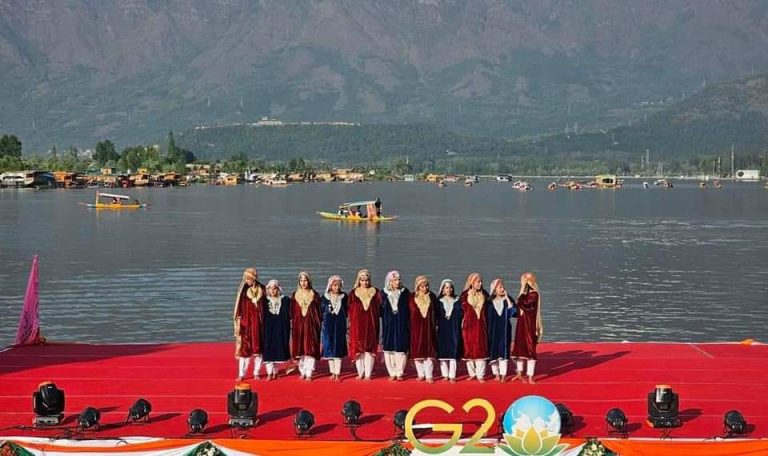
G20 Srinagar Meet: Pakistan’s envy, India’s joy

The one enduring thing about Pakistan’s never-ending diplomatic offensive on Kashmir that’s really perplexing is its incurable proclivity for adopting self-debilitating strategies. Though Pakistan benefited from New Delhi’s decision to take the issue of Pakistan’s attempt to seize Kashmir through its orchestrated ‘tribal invasion’ to the United Nations Security Council [UNSC] in terms of retaining areas of Kashmir that it had illegally occupied, thanks to a UNSC brokered ceasefire, UN resolutions never questioned J&K’s accession to India, a fact that Islamabad tries to hide through disinformation. 

Consequently, Pakistan’s attempts to garner international support for its assertion that J&K is ‘disputed territory’ have failed miserably due to its inability to furnish any credible argument in support of its ludicrous claim. To make matters worse for Islamabad, the hare-brained strategies adopted by its Foreign Office [FO] have repeatedly embarrassed Pakistan to a great extent, and its obtuse response to abrogation of Article 370 and 35A of the Indian constitution by New Delhi is a case in point.

It is universally accepted that the constitution of any country is an expression of its national identity and therefore it goes without saying that a country’s constitution is an embodiment of its sovereignty. As such, any additions, alterations or modifications in the same that are made through prescribed procedures by the legally constituted government are exclusively an internal matter of the concerned country and sole prerogative of its government. And even a lay person would tell you that Pakistan’s objection to abrogation of Article 370 and 35A by India is, to say the least, ridiculous.

So, it’s not at all surprising that the erudite Shah Mehmood Qureshi [who was Pakistan’s foreign minister when Article 370 was abrogated by India], admitted during a TV interview that revocation of Article 370 is an “internal matter of India and it meant nothing for Pakistan”. Even before the UNSC discussion on Kashmir took place, his message to Pakistanis and the pro-Pakistan lobby in Kashmir was-“Do not live in a fool’s paradise”, warning them that UNSC members “are not waiting for you with garlands in their hands.”

However, despite Qureshi’s accurate assessment, it’s surprising that Islamabad still chose to exercise the doomed option of alleging that what India had done is tantamount to a serious violation of UNSC resolutions that merited intervention and application of collective pressure by the international community to compel New Delhi to reverse its decision. With both UNSC and the international community rejecting Pakistan’s absurd allegations, Pakistan ended up with egg on its face.

Conversely, these actions once again ratified India’s stand that J&K is an integral part of India and governed by its constitution.  The refusal of UNSC and the international community to arbitrate endorsed India’s assertion that Kashmir is a bilateral issue which needs to be mutually resolved by India and Pakistan without any third party intervention. So, it’s amply clear that while Pakistan’s attempts to demonise India achieved precious little, it did buttress India’s principled stand on Kashmir.

That Pakistan’s diplomatic efforts to garner support for its Kashmir narrative has failed miserably is evident from the fact that even the vain Pakistani Foreign Minister Bilawal Bhutto Zardari was forced to admit that “Islamabad faces an uphill task to get the Kashmir issue into the centre of the agenda of the United Nations”. And while Islamabad may blame all and sundry for this humongous failure, the fact of the matter is that with Rawalpindi sponsoring terrorism in J&K through its spy agency ISI, no one wants to side with it.

Pakistan’s puerile response to New Delhi’s decision of holding the G20 Tourism Working Committee [TWG] in Srinagar is a clear indication that Islamabad has not learnt any lessons from its litany of failures on the Kashmir issue. Pakistan launched a vociferous campaign to dissuade G20 member states from attending this meeting using its hackneyed ‘disputed territory’ card which expectedly flopped.

Simultaneously, ISI directed its proxies to escalate violence levels to create an illusion of anarchy in Kashmir Valley hoping that this would discourage delegates from attending the G20 TWG meet. While Pakistan backed terrorists were able to attack an army vehicle in the Poonch area of J&K, the alertness and proactive action of security forces and intelligence agencies thwarted ISI’s nefarious design to create any further trouble.

Rattled by the lack of any positive response to his appeal asking G20 members to give the Srinagar meeting a miss, Bilawal did what can be called diplomatic hara-kiri. He issued an unconcealed [and crude] threat – “waqt par aisa jawab denge ki unko [India] yaad rahega” [at the appropriate time we will give such a response that India will remember it for times to come].

The comical part is that even after making a menacing statement that brazenly violates the tenets of civilised communication Islamabad still wonders why it is isolated on the Kashmir issue!

The G20 TWG meet [from May 22 to 24] went off peacefully and was a thundering success. While a handful of members did skip this event, with 59 foreign delegates attending the same, the absence of those who didn’t turn up wasn’t even noticed. And the irony is that though Pakistan’s closest allies Turkey and Saudi Arabia didn’t participate, both sent their private tourism sector officials to attend this event.

So, while G20 delegates were busy in the TWG meeting in Srinagar, all that a miffed Bilawal could do was to rush to Pakistan occupied Kashmir [PoK] on 23 May and hold a meeting to protest against this meeting. Even though the G20 TWG meet is done and dusted, for peeved Islamabad the show isn’t yet over. According to media reports, Pakistan’s chargé d’affaires has registered protests with the countries that attended the G20 TWG meet on the grounds that J&K is ‘disputed’.

One can only sympathise with Bilawal for his monumental failure to internationalise the Kashmir issue but he can take solace in the fact that all his predecessors have failed the Kashmir ‘test’. Lastly, a question for Pakistan’s foreign minister- how come holding a G20 meeting in J&K is not in order, but allowing China to undertake the $6.6 billion CPEC project across PoK is kosher? Bilawal, a friendly suggestion, wake up and smell the coffee!

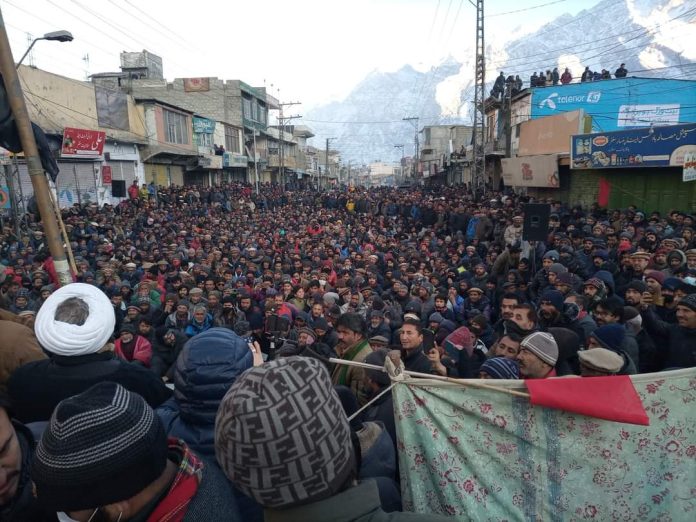
Protests banned in Pak-occupied Gilgit-Baltistan under the garb of tourism

The Home and Prison Department of Pak occupied Gilgit-Baltistan has issued an order banning any form of protest or demonstration for a period of three months.

In an oppressive order, Rana Muhammad Saleem Afzal, the Home Secretary of occupied Gilgit Baltistan, has prohibited protests, sit-ins, demonstrations and even gatherings in the region along the Karakoram Highway and other inter-district roads. The order claims that there is an expected increase in tourist influx, as witnessed last year, and there is a possibility of protests and sit-ins. Therefore, Section 144 (6) has been imposed in the region.

It is worth noting that the exploitative administration of Pakistan has caused unrest among the subjugated masses. As a result, occupied Gilgit-Baltistan has recently witnessed a series of protests. The last border village, Franu, experienced significant protests due to the deteriorating conditions in the region, while Indian border villages are developing at an unprecedented rate. Similarly, another protest demanding freedom was held against lawlessness and human rights abuses in the region.

These ongoing protests and demonstrations have shaken the shackles of tyranny. Hence, the aforementioned order is nothing but another authoritarian attempt to suppress the demands of the people of Gilgit-Baltistan.

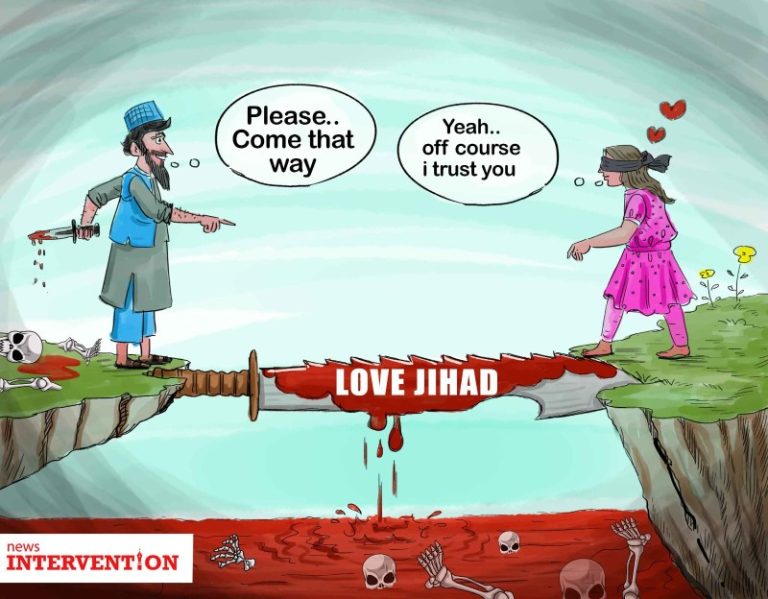
Love Jihad: India’s new epidemic

In a tragic case of Love Jihad, another Hindu minor girl named Sakshi (16) was ruthlessly butchered by her boyfriend in the Shahbad Dairy area in Delhi. While the incident is horrific, there are more such incidents happening frequently across India.

Debates around Love Jihad

Indian society, especially Hindus, has been witnessing the destructive impact on their civilization for centuries. With each passing time frame, these attacks have become increasingly aggressive and inhumane, ranging from historical state-sponsored exploitation and killings to the recent evil practice of ‘Love Jihad.’

While many so-called intelligentsia outright denounce it, they often fail to examine cases like that of poor Shraddha Walker, who was dismembered before being disposed of, or the recent case of Sakshi, who was brutally killed by her Muslim boyfriend wearing a kalava (a pious red thread tied around the right hand).

To analyze this phenomenon, it becomes necessary to review some recent cases from around India that may seem unrelated but are actually inspired by the same mentality, which believes in Jihad against Hindu girls.

Hindu minor girl trapped in Tamil Nadu

Reportedly, a 16-year-old Hindu girl from Trichy in Tamil Nadu was trapped by a 32-year-old man named Mubarak Ali. It began with missed calls, and the girl was further groomed. After she went missing on 1 May, her parents filed a police complaint, and she was rescued while boarding a train.

Mubarak Ali had promised to marry her and had taken her to Bangalore, where she was sexually abused. When Mubarak’s parents denied the marriage, he sent the girl to Niyaz and Saddam in Vellore, where she was raped multiple times before finally being rescued.

Kanpur train incident

In another incident, a Muslim man was caught beating a Hindu girl on a train near Kanpur. Upon investigation, the accused was identified as Javed Alam from Chappra, and the girl belonged to Siwan. Javed had abducted her and had taken her to Delhi, where she was assaulted, raped, impregnated, and forcibly converted to Islam.

Educated love Jihadis

Even educated professionals like doctors are involved in such illicit activities. A decade ago, Dr. Iqbal, disguised as a Hindu from Bareilly, married Nisha in Saharnpur. Shockingly, Iqbal was already married. After Nisha discovered the truth, she was pressurized to convert, and when she refused, she was brutally murdered by Iqbal and his friends in front of their daughters.

Assam to Madhya Pradesh

However, these incidents are not restricted to Uttar Pradesh or Tamil Nadu. Harej Ali from Assam trapped a Hindu girl through a fake Hindu account on Facebook. Later, he abducted the girl, took her to Bangalore, and raped her. After a few months, he took the girl to his home, where she was tortured and coerced to convert. The case came to light after she managed to escape and reach the police station.

In Madhya Pradesh as well, a man named Faizan trapped a Hindu girl under the pretext of marriage. Despite the false promise of marriage, the girl engaged in a physical relationship. However, Faizan later asked her to convert, to which she refused and registered a police complaint.

Love Jihad is an organised crime

The cases are increasingly becoming more prominent with the passage of time. In September 2022, a 13-year-old girl was abducted and raped by Babu Khan for three days. Following this, a Muslim man having nine children raped and forcibly converted a Hindu woman.

These incidents are not isolated; every day, a new case surfaces with even more intensity of hatred than the previous ones. While it may appear as random crimes, they are organized crimes following the same pattern.

Manipur’s melting pot : Ethnic clashes continue

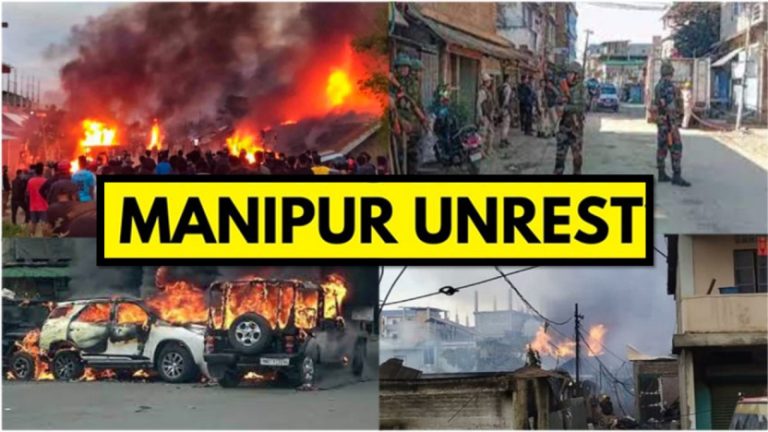
On 3 May 2023, a violent clash erupted between two ethnic communities, namely the Meitei and Kuki, in the northeastern state of Manipur. This eruption of violence was in protest of the order issued by the Manipur High Court, which directed the state government to include the Meitei community in the Scheduled Tribes list of the Constitution as a “tribe among tribes in Manipur”.

The Trigger

The violence began on 3 May after the All-Tribal Students Union Manipur (ATSUM) organized a solidarity march in all districts, opposing the above mentioned order of the Manipur High Court. As the violence escalated on 4 May, the Centre invoked Article 355 of the Constitution, which falls under emergency provisions. This article empowers the Centre to take necessary steps to protect a state against external aggression or internal disturbances. Reports of violence, arson, and mayhem have emerged from various districts in Manipur, including Churachandpur, Imphal East, Imphal West, Bishnupur, Tengnoupal, and Kangpokpi.

The violent clashes have resulted in numerous casualties, with over a dozen reported killed and hundreds wounded. More than 9,000 individuals from the Kuki and Meitei communities, as well as others, have been displaced. The destructive aftermath includes damage to buildings, homes, property, and vehicles. However, there is currently no official confirmation of the exact number of fatalities.

The Cause

To understand the underlying causes of the conflict, it is important to consider the ethnicity and geography of Manipur. The Meiteis, a Hindu community, dominate the valley region, while the Kukis, a Christian minority, reside in the hilly areas. The Kukis benefit from reservations as minority tribals, while Meiteis, despite comprising 64% of the state’s population, are restricted from purchasing land in notified hill areas, occupying only 10% of the state’s territory. The Meiteis’ potential inclusion in the Scheduled Tribes (ST) category, allowing them to buy land, has upset the tribals.

However, the immediate cause is intertwined with deeper grievances. The government’s crackdown on reserved and protected forests in the hills, along with the Kukis’ sense of persecution, plays a role. Chin people, an ethnic group from Myanmar, have sought refuge in India, including Manipur, due to violence and persecution. The government’s tough stance against these perceived illegal immigrants angers the Kukis, who share kinship with them.

The Chief Minister, representing the BJP, takes a strong stance against forest encroachment, particularly due to poppy cultivation. The government frames its actions as part of the larger fight against drugs but mistakenly applies the term “drug lords” to all Kuki people.

Another factor is the intense competition for land in Manipur. As tribal village populations grow, they encroach into nearby forest areas, which they consider their historical and ancestral right. This conflicts with the government’s perspective. Simultaneously, Meiteis living in the valleys are frustrated by their inability to settle or purchase land in the hills, while tribal communities can buy land in the valleys.

The lack of a clear policy for recognizing new villages and a transparent forest policy in Manipur contributes to resentment, even within the ruling party.

Continuing Violence

Disturbing reports of clashes between Christian tribals and Meiteis have emerged, depicting acts of arson, stone pelting, and the use of weapons. Video footage shows houses being set on fire and instances of people sustaining injuries. Shockingly, there are visuals of armed Christian tribals cheering on the violence. It is alleged that the violence was targeted at driving out Meiteis from Christian-majority areas. The violence, which lasted over a week, resulted in the tragic loss of more than 80 lives. Properties worth crores were destroyed, and tens of thousands of people were compelled to flee their homes.

Manipur’s Chief Minister, Biren Singh Singh, acknowledged that armed militants equipped with AK-47s, M-16 rifles, and sniper rifles had been firing at civilians. Security forces responded with counter-attacks, targeting these militants. According to the CM, in operations and encounters across the foothills of the Imphal Valley where the Kuki-Zomi and Meitei groups converge, 40 insurgents were reportedly killed, and several others were apprehended.

Renowned boxer MC Mary Kom, a resident of Manipur, has appealed to the central government for assistance, highlighting the alarming situation. She expressed deep concerns about the safety of her own house and the state as a whole, emphasizing that nobody feels secure. Mary Kom shared photographs of the violence and tagged Prime Minister Narendra Modi, Home Minister Amit Shah, and Defense Minister Rajnath Singh in her tweet, urgently seeking their intervention.

Steps Taken

In response to the outbreak of violence during a tribal agitation in Manipur, the army and Assam Rifles were deployed to restore control and maintain peace in the state. The Manipur government has decided to extend the suspension of internet services in the state until 31 May. Union Home Minister Amit Shah visited Manipur, where he engaged with various civil society groups representing the Meitei community in the capital city. It is reported that he will also travel to Churachandpur to meet with representatives of the Kuki community and visit hospitals to meet those injured in the recent clashes between the two communities.

Shah’s four-day visit to Manipur aims to assess the security situation in the state and facilitate dialogue between the warring Kukis and Meiteis to find a resolution to the ongoing turmoil that started on 3 May. During his visit, he held meetings with Manipur Chief Minister N Biren Singh, senior members of his Cabinet, and key security officials. He also met with Governor Anusuiya Uikey.

Efforts are being made to ensure the uninterrupted supply of essential items to Manipur with the assistance of the central government. Blockades by various Meitei and Kuki groups on national highways have severely disrupted the supply of food and fuel, leading to skyrocketing prices. Additionally, it has been decided that a compensation of Rs. 10 lakh will be provided to the families of the deceased, with contributions from both the state and the central government in a 50:50 ratio. There are also discussions about offering job opportunities to the kin of the deceased as part of the proposed measures.

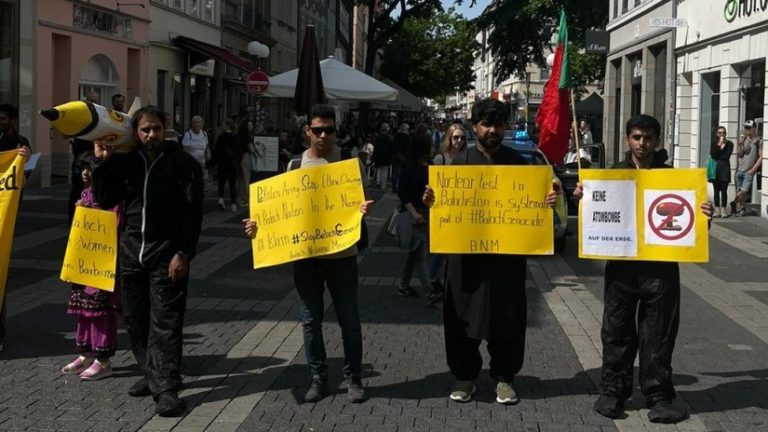
Baloch National Movement,Germany, protests against Pakistani nuclear explosions in Balochistan

Göttingen, Germany: The Baloch National Movement protested and rallied in Göttingen, Germany, against the nuclear tests that Pakistan conducted in Balochistan. The people of Balochistan marked 28 May as a Black Day. On that date in 1998, Pakistan detonated a nuclear device at Chaghai, Balochistan, causing severe consequences for the region. The nuclear radiation exposed the people of Balochistan to several chronic diseases. Many children were born with disabilities, and diseases such as cancer and skin disorders became more common in Balochistan.

Asghar Ali, the President of the BNM Germany, said the aftermath effect of these nuclear tests is staggering. After these nuclear tests, the Chagai area experienced radical change with drought becoming a regular event. Even today people in Chaghai suffer from skin diseases and inborn disabilities. Not only this ,livestock, the lifeline of Balochistan’s economy, has been affected immensely as there are reports of animals dying in thousands.

Ali exhorted that the International Atomic Energy Agency and other organisations should send a team and survey in Balochistan to assess the aftermath effect of the rapacious nuclear test of Pakistan in Balochistan.

Samul Baloch, the Vice President of the Baloch National Movement Germany Chapter, said, “Nuclear testing is a matter of great concern for the entire international community. It has far-reaching consequences, affecting not only the environment but also the lives of countless individuals. The Pakistan military’s nuclear weapons testing in Balochistan raises serious questions about the nation’s commitment to global disarmament efforts.”

She added, “Balochistan, a region already grappling with numerous socio-political challenges, is now burdened with nuclear testing sites. The consequences of these tests are not limited to the immediate surroundings but extend beyond borders, impacting neighbouring countries and the overall ecosystem. The potential hazards to human health, the environment, and the delicate balance of nature cannot be ignored.”

She expressed her concerns, “The nuclear testing in Balochistan by the Pakistan military is not just a local or regional concern; it is a global issue that demands our immediate attention. We must work together to promote transparency, accountability, and disarmament. Let us unite to create a safer and more peaceful world, free from the devastating consequences of nuclear testing.”

Shar Hasan, the joint secretary of the Baloch National Movement Germany Chapter, said, “Even today, the people of the world are oblivious to the ground reality of Balochistan. Pakistan has turned life into hell for the people of Balochistan by testing nuclear weapons in Balochistan. We call on the international community to take notice of the situation in Balochistan. International bodies, the United Nations and European Union, should keep a constant check on Pakistan. They should not support Pakistan financially or provide weapons to Pakistan.”

The people of Balochistan were in complete shock when Pakistan carried out its nasty nuclear bombs in Balochistan. The black mountain of Rasko turned white from the blasts. Nadeem Saleem Baloch, the former Joint Secretary of BNM-Germany, highlighted the aftermath and said that Pakistan carried out five nuclear blasts, four of which were 1 to 2 kilotons. The nuclear explosion of Rasko Mountain was 40 kilotons. He appealed to IAEA and world powers to send an independent team to Balochistan and assess the gravity of the aftermath effects.

Member of the Baloch National Movement, Shali Daad Baloch, said, “From 28 May 1998 till today, people of Balochistan are confronting fatal diseases and many people are getting affected. Livestock and agriculture have been completely destroyed. People are suffering from various skin diseases. Before these nuclear tests, people had enough means of livelihood, but the nuclear explosion deprived them of all means. It does not rain anymore in the area as it used to, and the areas have turned barren lands.”

She added, “Pakistan is a terrorist state, and lethal atomic bombs in its control are a looming threat to the world. The nuclear test in Chaghai turned the mountain of Ras Koh into a heap of nuclear waste and caused deadly diseases, which have spread rampantly. We request that Pakistan’s nuclear weapons be banned and sanctioned because Pakistan committed war crimes in Balochistan by testing an atomic bomb in Chaghai.”

Ahmed Baloch, a member of the Baloch National Movement, addressed the participants, “Ever since Pakistan deceitfully captured Balochistan in 1948, it has been unsuccessfully trying to suppress the Baloch people in one way or another. The people of Balochistan, who have been systematically going backwards for the last seven decades, live in the stone age. Countries choose uninhabited zones and take adequate checks and balances to prevent harm to their citizens. Pakistan did the opposite. In a carefully calculated move, the Pakistani establishment zeroed in on the Ras Koh Mountain range in Balochistan’s district Chaghai. Despite the passing of two decades since this catastrophic tragedy, the effects of radiation in Balochistan have yet to be studied.”

The Baloch National Movement has demanded for an external research team to go to Chaghai and conduct research on nuclear radiation. BNM opines that Pakistan should be harshly penalised for a reckless atomic test in Balochistan, which brought unending hazards for the people of Balochistan. Its dire consequences should be made public And strict measures should be taken to disarm Pakistan of nuclear weapons.

Hindu woman murdered while saving her daughter from being abducted in Sindh

In a horrific incident in Sindh, a woman named Zareena Bheel was brutally murdered by a group of abductors who broke into her house while attempting to abduct her daughter.

Yesterday, the accused individuals, namely Usman Lakho, Masu Lakho, and Riaz Bhutto, among others, forcefully entered Zareena’s house in Ghotki, Sindh. They wanted to shoot her son and abduct her daughter. During the assault, she tried to protect her family and she was fatally shot to death while two other minor children were injured.

Subsequently, it was discovered that her daughter had been harassed by the perpetrators, and her son had been stabbed the day before the incident. An FIR (First Information Report) has been registered, and two of the accused individuals named Usman and Masu have been arrested.

This incident is tragic and once again raises questions about the atrocities inflicted upon Hindus in Pakistan.

Muslim boyfriend Sahil Sarfaraz brutally murders 16 yr old Hindu girl in Delhi

0

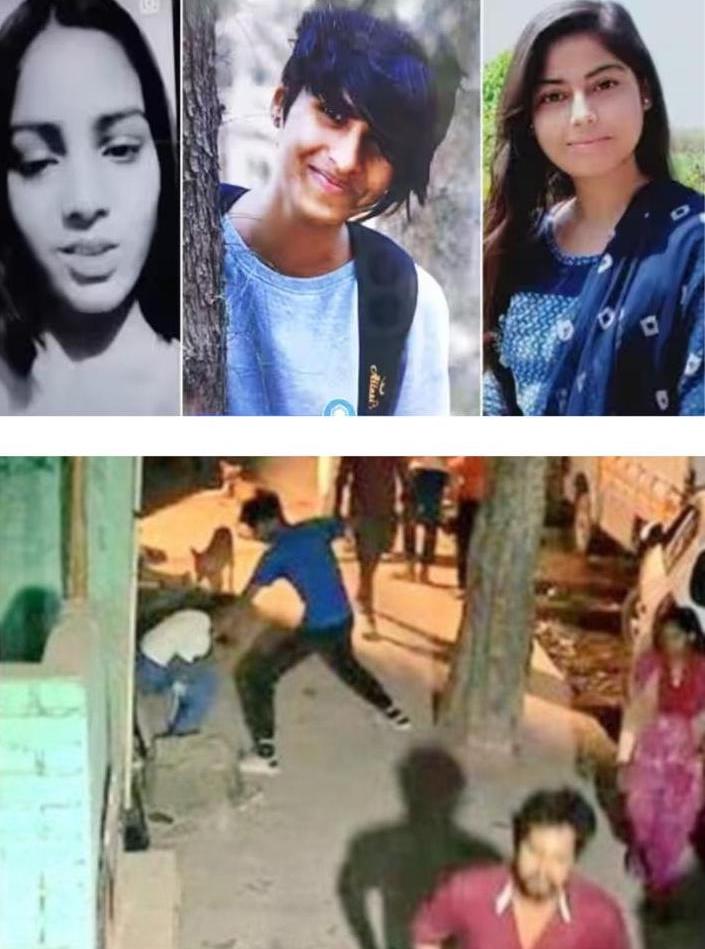
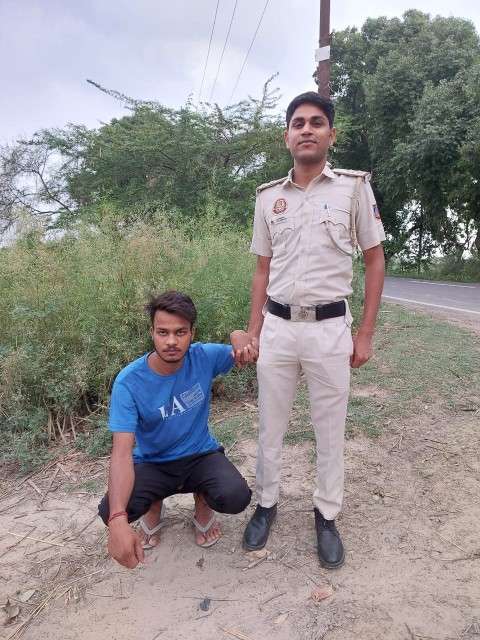
In a brutal and tragic incident, a 16 year old Hindu girl was stabbed more than 20 times and subsequently bludgeoned to death with a stone by her alleged boyfriend, Sahil Sarfaraz, in northwest Delhi’s Shahbad Dairy area. The Delhi Police revealed that Sahil, aged 20, had been in a relationship with the girl but took her life following a quarrel. The 16-year-old girl, named Sakshi, was en route to her friend’s son’s birthday celebration when she was intercepted by Sahil in an alley. There, he mercilessly stabbed her multiple times and subjected her to further assault with a stone.

Grim attack

The horrific attack was captured on CCTV, and the bone-chilling footage has been shared online. The video shows the young girl being pinned to a wall and repeatedly stabbed by a young male. Shockingly, as the murder unfolded, numerous people passed by mere inches from the attacker, yet no one intervened or uttered a word as the young girl’s body crumpled to the ground. The assailant continued his assault for over 90 seconds, kicking her body before eventually walking away.

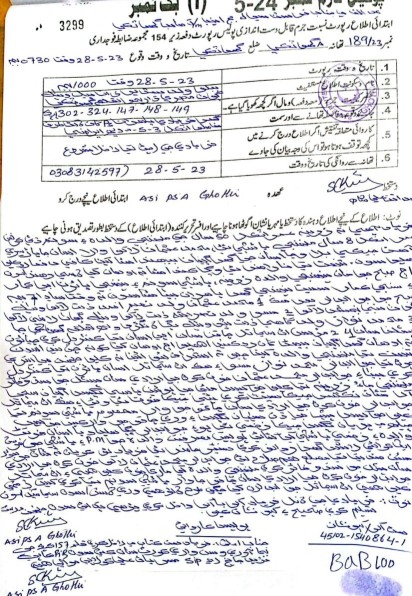
A case under Section 302 (murder) of the Indian Penal Code has been registered at the Shahbad Dairy Police Station in Delhi. The exact number of stab wounds and other medical details will be determined after a post-mortem examination. The accused was arrested from Bulandshahr in Uttar Pradesh hours after the gruesome crime.

Political Reaction

Similar to every crisis in Delhi, Chief Minister Arvind Kejriwal and members of the ruling Aam Aadmi Party chose to hit out at Lieutenant Governor VK Saxena rather than condemning the attack. Aam Aadmi Party (AAP) chose not to mention the Love Jihad angle even after this gruesome murder and played petty politics by continuing with its blame game.

Kejriwal tweeted: “A minor girl is brutally murdered openly in Delhi. This is very sad and unfortunate. The criminals have become fearless, there is no fear of the police. LG sir, law and order is your responsibility, do something. Safety of people of Delhi is paramount…”

Delhi minister Saurabh Bharadwaj also tweeted, declaring: “If LG saab is not doing his work then what is the responsibility? The law and order situation in Delhi has reached the lowest level. There is open bloodshed. Even today the incident of Shahabad is very shameful. LG saab has completely failed.”

Delhi Commission for Women chairperson Swati Maliwal said the city ‘has become extremely unsafe for women and girls’ and called on the centre to summon a high-level meeting between Shah, Saxena, Kejriwal and herself.

“16-year-old girl was stabbed 40-50 times and then was hit by a stone multiple times after which she died. All this has been captured on CCTV. Several people saw this but did not pay heed. Delhi has become extremely unsafe for women and girls. I appeal to the central govt to call a high-level meeting with union home minister, Delhi LG, DCW chief and Delhi CM,” she said.

Delhi, the capital of India, has always been the epicenter of protests and rallies, but in the last few decades, along with the political movements, Delhi has become the hub of crime against women. With each passing day, Delhi seems to be losing the human touch. More than the brutality of Sarfaraz, it was the neglectful attitude of the passersby, the residents of Delhi, that killed the innocent girl.

BLF attacks Pak Army checkpoint in Zamran, inflicts losses on Paki forces

BLF (Baloch Liberation Front) spokesperson Major Ghoram Baloch confirmed the attack on a Pakistani military checkpoint in Zamran

In a statement issued to the media, Major Ghoram Baloch, the spokesperson of the Balochistan Liberation Front (BLF), has stated that they carried out an attack on a military checkpoint in Zamran, inflicting damage on Pak forces.

He mentioned that on the evening of 28 May, at around 4 p.m., in the vicinity of Kech, rockets and heavy weapons were used to launch an assault on the Pakistani military checkpoint in the heart of Zamran, resulting in significant casualties and material losses of the enemy forces.Major Gohram stated that the BLF confirms this attack and emphasized that such actions will continue until the liberation of Balochistan is achieved.