The JKNSF (Jammu Kashmir National Students Federation) recently announced that “Poonch District Convention” will be held in Rawalakot on 10 June. On this occasion, a protest rally will be organized under the name “Youth Movement Against Inflation”, and a public meeting is to be held titled “Future of Oppressed Nationalities in Azad Kashmir”. The public meeting will feature young leaders addressing participants from Pak occupied Gilgit-Baltistan (POGB), and various districts of Pak occupied Jammu and Kashmir (POJK)
The preparations for the convention have officially begun. Efforts will be made to invite students and youth from all over Poonch district to attend the convention, along with regional committee meetings and activities. A membership drive will also be launched in educational institutions throughout Poonch district starting from Monday.
This decision was made during a meeting of the Poonch District session of the Jammu Kashmir National Students Federation. The session was chaired by President Khalil Babar. Numerous central leaders, district officials, and representatives from educational institutions across Poonch district attended the meeting.
In the meeting, a convention organizing committee was formed under the leadership of former Chairman of Poonch University, Majid Khan. This committee will oversee all aspects, including coordination, fundraising, and preparations for the convention. Apart from President Khalil Babar, the meeting was attended by Deputy Chief Organizer Arslan Shani, Majid Khan, Editor Azam Badar Rafiq, Chairman of Poonch University, Adil Farooq, General Secretary of Poonch University, Aliza Islam, central leader Beinish Kazim, Organizer of Poonch University, Abdul Wahab, Chairman of Postgraduate College Unit, Danish Fida, Organizer Hanan Babar, Chief Organizer Study Circle Dr. Saad-ul-Hassan, Chairman of Medical College Umeed Balochi, Central Committee Member Naqash Amin, Chairman of Degree College Hajira, Saifullah, Mansoor Majid, Tahir Ishaq, Danish Yaqoob, and other organizers who addressed the meeting.
While addressing the meeting, the organizers said that the Jammu Kashmir National Students Federation has always been committed to guiding the youth against injustice, coercion, inequality, class divisions, slavery, and exploitation in every era. Today, in the midst of the historical crisis of the capitalist system, hardworking individuals are suffering, who were predicted and warned by the JKNSF years ago. The capitalist system has become an obstacle to the progress of humanity. The destructive actions of this system can only be fought and defeated based on the principles of modern scientific socialism.
The organizers stated that the IMF and other imperial institutions, working as the agents of ruling classes, have started turning the poor masses into beggars by taking away their bread twice a day. Inflation is continuously increasing, and essential commodities have gone beyond the reach of the common people. The ruling classes, driven by their lust for power, have shifted the entire burden of the crisis onto the working masses. Government institutions are shamelessly exposing themselves in this situation. The rulers have no way out of this situation.
The organizers said that to defeat this system and bring it to an end, it is essential for the working class and youth to take their destiny into their own hands. This convention by the Jammu Kashmir National Students Federation will serve as a beacon of hope and a torchbearer for the youth. This struggle should continue until the elimination of this system and the achievement of a socialist future based on humanity
This article illustrates the background of Pakistan’s nuclear explosions and how those nuclear tests continue to bring misery for the Baloch. Background of Nuclear Explosions Reasons behind Pakistan’s five simultaneous nuclear explosions on May 28th, 1998 What are the miseries and agony of Baloch people? Why are the impact on the global community?
Historical Background of Pakistan’s Nuclear Program According to a report published in BBC, in 1954 a meeting took place between Prime minister of Pakistan Mr. M.A Bogara and American President of that time Mr. Eisenhower in White House. In this meeting, alongside declaration of its inclusion with United States project “Atom for Peace”, Pakistan also announced to establish an Atomic Energy Commission to make research and development in atomic energy sector.
It was the first step of Pakistan to get nuclear weapons and it proceeded to complete the project on May 28th 1998 leaving Baloch people in extreme misery and agony.
In the same year (1954), two very important military agreements “SEATO and CENTO” were signed amongst Pakistan and United states, by which United States will send weapons to Pakistan and in return Pakistan will allow United States to establish military bases in its state territory.
Astonishingly when in the 1960s India was engaged in the preparations for nuclear tests, Pakistan candidly declined its own nuclear program. This is utterly false. As was revealed later in another BBC Urdu report that explained how Pakistan was making steady progress in its Nuclear Program. However, a part of Pakistani establishment was not in the favor of Nuclear program because they were under pressure from United States.
There is no denying the fact that on open forums international organizations have always opposed nuclear tests, therefore it was not feasible for USA and Pakistan to make such an agreement openly. However, USA’s intentions clearly indicate that it had given assent for Pakistan’s nuclear program.
It is about those days when cold-war was at its zenith. World was divided into socialist and capitalist alliances. In 1955, Soviet Union and Afghanistan had a deal of mutual-coordination under which Soviet Union was to establish development projects in the Afghanistan. This move had become intolerable for USA. A hypothesis had become famous that Soviet Union wants access the hot waterways including Gwadar through Afghanistan. Capitalist states believed this notion and in order to restrict Soviet Union within Afghanistan they pushed cold war to its peak and Pakistan became a pawn in this design as Pakistani was available at very cheap rates!
India on the contrary is second largest market and population of the world. India, after gaining independence from British colonial rule, was seen not as a reliable buddy for the west due to its inclination towards social reforms and socialism. There was also an assumption that if India gains power in the region it may be able to realise its idea of “Akhand Bharat”—entire Indian subcontinent, and west will lose sentinel of its interests—Pakistan in the region. It is also possible that phratry of India with Soviet Union will harm western interests in the region. Here arises a question.
Despite this why did USA oppose the Nuclear Program of Pakistan? Actually, in those days, the relations between Pakistan and USA were quite tense. USA considered India to be a trustworthy ally as compared to Pakistan. Despite repeated requests from Pakistani regime USA did not help Pakistan in the 1965 and 1971 wars against India. When in 1968 France proffered Pakistan to set up atomic reprocessing plant, the then president of Pakistan Mr. Ayub Khan could not sustain American opposition and French offer proffer was wasted. It is said that French offered to set up atomic reprocessing plant in Pakistan as they felt Pakistan has reached quite close to the process.
When Bhutto regime began, he started working on Pakistan’s atomic program from the very beginning. He suspended the former team and summoned Dr. Abdul Qadeer Khan (an atomic scientist) who was in Holland. For financial assistance Mr. Bhutto made an emergency visit to Islamic countries and despite American pressure he inaugurated Pakistan’s Atomic Program. Mr. Bhutto could not complete the project as by that time Pakistan did not have enough quantity of enriched Uranium for the project.
When in 1977 Bhutto’s throne was overturned and military directly usurped the government, a new chapter of USA–Pakistan relationships was opened. ISI (Pakistan’s spy agency) and CIA (USA’s s spy agency) started training worldwide Islamic extremists in Pakistan and sending them into Afghanistan in the name of “Jihad”—the so-called struggle. And so the famous “Jihad” was fought against Afghanistan government and its ally Soviet Union. As long as Soviet soldiers existed in Afghanistan, Pakistan was the earnest and heartfelt ally of western block. It’s amazing that for the “democracy obsessed” west, military dictatorship in Pakistan was acceptable. During this time Pakistan speeded up its efforts to continue its Nuclear Program.
According to Dr. Abdul Qadeer Khan, Pakistan had acquired the capability to make a Nuclear Bomb by 1984. It was the time when Afghanistan due to Pakistan and USA’s intervention was on the wink of its destruction. By the annihilation of Afghanistan, the inveterate fantasy—the long-termed goal of USA and western block to constrain Soviet Union’s access to the hot waterways had been achieved. By now Pakistan was an efficient partner of USA to accomplish its regional interests, that’s why USA did not oppose nuclear program of Pakistan. Pakistan did not carry out its nuclear explosion tests those days as its traditional rival India was not taking any steps overtly in this regard, and Pakistan and USA were engaged in the war against Soviet Union. Pakistan and USA were afraid that if Pakistan carries out its nuclear tests then Soviet Union might attain more compassion from the international community. Therefore, Pakistan avoided nuclear tests at that time, and exactly 20 years later on May 28th 1998, Pakistan blew up the trumpet upon Baloch nation and carried out its nuclear tests in Chaghi district of occupied Balochistan.
Baloch leadership’s stance on Pakistan’s Nuclear Program
Responding to the question “Whether Pakistan’s Nuclear Program is compatible with global principles?” Mr. Khalil, former chairperson of Baloch National Movement (BNM) said: “Comprehensive Nuclear Test Ban Treaty (CTBT) which was established in 1996, is the largest organization regarding prevention of nuclear tests. It has an ambition to curb all sorts of atomic tests, but Pakistan did not sign this treaty. Second agreement is Non-Proliferation Treaty (NPT) that aims to denuclearize the entire world for global peace. Pakistan is not a participant of that too. Therefore, I infer that Nuclear Program of Pakistan and its explosions in Balochistan, are against global principles.”
In regards to global powers and organizations Mr. Khalil Baloch said, “I do not think without USA’s assent Pakistan could take such a gigantic step as Pakistan and USA in those days were on the same page and both were fighting against Soviet Union in Afghanistan. I think Pakistan had acquired atomic power capability by 1984 but due to fear of severe response from the Soviet Union, USA might have held up (Pakistan) from conducting nuclear explosions. Yes it’s important that Nuclear Supplier Group (NSG) did not consider Pakistan eligible for any kind of immunity and Pakistan could not acquire its membership till present day, and in 2015 Pakistan was notified on the request of Marshal Republic of Ireland.”
On the question that why Balochistan was chosen for Pakistan’s nuclear tests Mr Khalil Baloch said: “…there can be no second opinion that Balochistan mainland is of great importance for Pakistan. Pakistan has always plundered Balochistan and its resources and there is no significance of Baloch people for it… and Pakistan’s nuclear tests were aimed at destruction of the Baloch. As long as the sword of slavery hangs upon us, Pakistan’s never-ending oppression will continue.”
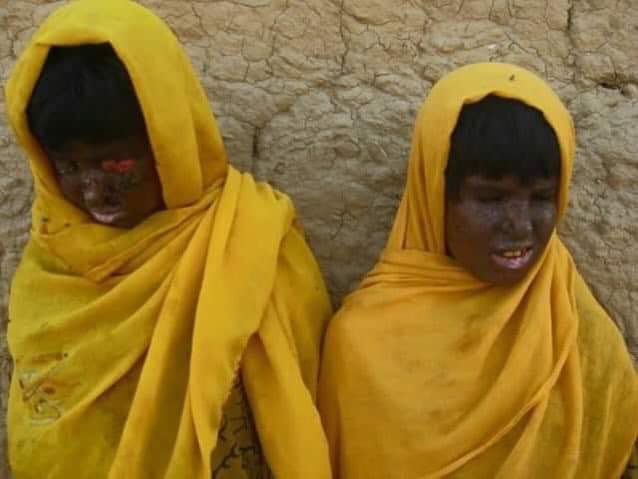
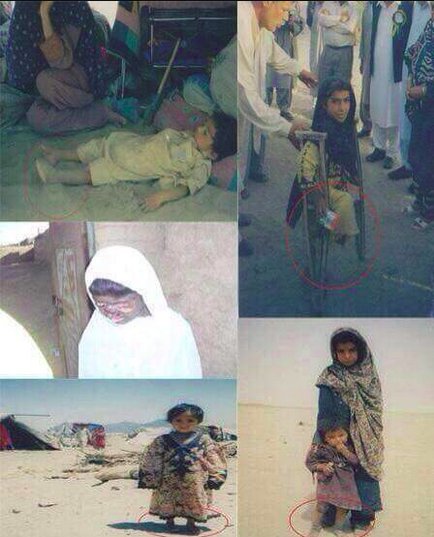
Former chairperson of Baloch Students Organization — BSO (AZAD) Mr. Bashir Zeb Baloch stated that “Pakistan’s Nuclear Program is contrarian to all global principles, rather it comes in the category of war crimes. Pakistan carried out its nuclear explosions in RASKOH, which lies between three major cities Kharan, Noushaki and Dalbandin, which severely damaged small towns and shattered villages. The inhabitants of these towns and villages are bearing the brunt of terrible ill effects till the present day. They are suffering from different infectious diseases and the children born here are palsied and disabled.”
Mr Bashir Zeb added that “Pakistan carried out it nuclear tests to blackmail the world including its conventional rival India. Mr. Bashir Zeb explained that Pakistan’s narrative that “…nuclear weapons of Pakistan can at any time go into the bloody hands of terrorists” is an open threat to the world that if world takes any tough step against Pakistan then these nuclear weapons can go into the bloody hands of extremists. It only indicates that Pakistan is openly threatening the world that in such case Pakistan will hand over its nuclear weapons to the terrorists. Pakistan has no such deeds which are not negatively affecting the world especially Asia. Pakistan has played a key role in proliferating nuclear weapons and Uranium enrichment in the entire region. Disclosures and confessions of Dr. Abdul Qadeer are clear validations in this regard.”
Pakistan’s nuclear tests on May 28, 1998 at Chagi, occupied Balochistan has created serious health problems for Baloch people.
Impacts on occupied Balochistan
Effects of atomic radiation are deadly and detrimental to human beings. In this regard a prominent member of World Health Organization (WHO) Dr. Paulo says “…butcher all the suspected animals that are affected by radiation. All the plants, herbs and all green stuff which have absorbed water, and fish of the area comes in the same category. To avoid the inclusion of radiated fish, fruits, vegetables, animal meat and milk from human diet radiation should be measured and a citadel should be set up around the entire area from where radiation is zero.” From this statement we can guestimate about how disastrous is nuclear radiation for living beings especially humans.
Dr. Paulo further says “…people who have been infected by radiation should remain under care of doctors for the next five to ten years and in some cases even longer than that.” (Dr. Paulo have compiled this information after a nuclear accident in a Japanese plant). Besides this, ailments include cancer, tumor, respiratory disease like asthma, birth of disabled children, miscarriages and infertility. If these ailments can wrap a developed country than how can an undeveloped country like Pakistan remain safe. Secondarily Pakistan’s behavior towards Balochistan has always been tyrannical and despotic therefore hope for any arrangements and preventive measurements from a master is rewardless. Pakistan has been giving us one-way trip to the shambles.
Zarumbish Literary Forum interviewed those unfortunate people who went through this fury. Please read their stories.
Muhammad Noor a resident of Chatar mountain range was forced to migrate from Raskoh Noushki. “…after the nuclear explosions, water streams which had been a source of income in the region for centuries was littered with blackish particles. And after drinking water from these brooks blood droplets started oozing out from our mouths and we started vomiting severely. We were forced to migrated from this region. Also, before these nuclear explosions our women never had to go to hospital for child birth but after these explosions several women lost their lives during pregnancy and child birth.”
Abdul Kadir is a resident ofMaldin Raskoh.According to him “..after explosions there was an abrupt increase in ophthalmological diseases, though there were no patients before explosions. Cataract and nyctalopia have become quite common and till present day several people remain afflicted of these eye diseases.”
Ismail Baloch a resident ofKharan city says “…ophthalmological ailments have become very severe. Thousands of patients have been forced to seek treatment in the eye clinics of the city. These rare ailments could not be imagined before.”
Kamal Baloch belongs to Kharan and a member of BNM says “though I was a small child at that time yet I cannot forget how my grandma got cataract and how her eyesight deteriorated and later she became blind.”
Another resident of Raskoh Ali Jan Siah Paddi narrates that “…after nuclear explosions human settlements around the area was uprooted as diseases spread amongst all. Our palm gardens dried up and within the next two years we were left only with the dry boughs of trees as legacies.”
Today every resident of Balochistan testifies that due to radiation induced famine their largest source of income, livestock, has been badly affected. People have started selling their cattle for pennies. Cattle of worth rupees five to six thousand were sold in hundred to two hundred rupees.
Ebrahim who is a resident of Chaghi says that “even if today one visits Kharan, Chaghi and especially Raskoh those disabled children who were born after Pakistan’s nuclear explosions can be found in a large number.” Another resident of Chaghi, Salam Baloch says that “…due to these nuclear explosions alongside many human settlements, our brooks and ponds dried up and a considerable population was forced to migrate from Chaghi and its surrounding areas. Earlier the underground water level was fifteen to twenty feet but at present it is more than hundred feet below the surface. Crop production has also drastically fallen due to ill effects of radiation. Mr. Salam further added that we are terribly affected by radiation and during the last three months more than 550 residents of Chaghi had to be operated in Quetta for appendicitis.”
Zafar Baloch is a political worker and belongs to Nall. “…earlier during famine many people migrated towards our region. But after the nuclear blasts when I went across the Nall canal I could see skeletons of sheep, goats and camel scattered all around. I asked a senior gentleman what was the matter. He responded that it is due to the dreadful famine caused by nuclear explosions.”
These are just a couple of comments of a few residents in the region.
If the global organizations dutifully focus on this horrible issue they can see for themselves that Pakistan’s nuclear radiation has affected occupied Balochistan more than any nuclear accident or testing of a nuclear weapon. Wherever an atomic explosion has been carried out or a nuclear accident has occurred, preventive measures have been taken to curb the deadly effects, but unfortunately in Balochistan, Pakistan did not take any corrective steps. The trumpet was blown and slogan of glorification– “Nara-e-Takbir” was raised in Balochistan. In finalizing this report, I reminisced these words of a priest be spoken in a Friday sermon—“Khutba-e-jummah” “this slogan is enough to understand that Balochistan was slaughtered as patsy.” These are the words of famous Baloch priest Maulana Abdul Aziz who was in those days the “Imam” in “Jam-e-ah Masjid” Irrigation Colony in Quetta.
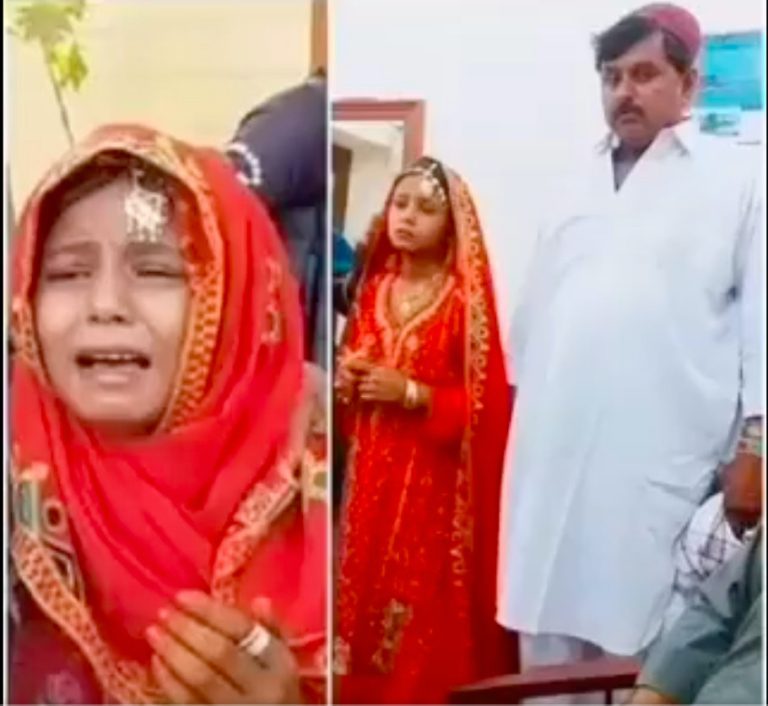
In a deeply disturbing incident, a 9-year-old Hindu girl has been subjected to a horrifying fate, having been forcefully married off to a 45-year-old Muslim man after being abducted.
The innocent girl, named Reshma, was forcibly taken by Wazir Hussain from Jacobabad, Sindh. He callously took her to a Sufi dargah where she was coerced into converting to Islam against her will, followed by an unconscionable marriage to him.
This heart-wrenching incident highlights the ongoing and alarming pattern of targeting Hindu minor girls in Pakistan, where they are subjected to the malicious business of forced conversions. Shockingly, even instances of pedophilia are supported by members of the Islamic clergy and, by extension, the authorities.
Tamil Nadu’s DMK government and its allies will boycott the inauguration of the new Parliament building, but a historic sceptre from the state will be installed in the building.
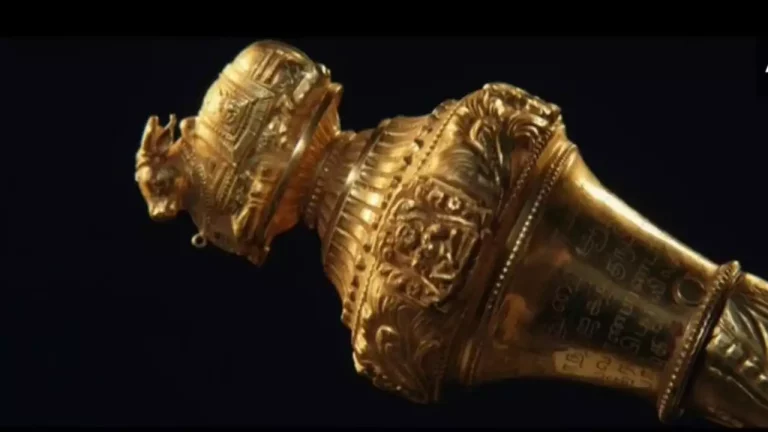
The sceptre, known as Sengol, was presented to India’s first prime minister, Jawaharlal Nehru, on 14 August 1947, by Lord Mountbatten, the last Viceroy of India. It is made of silver and gold, and is five feet in height. It has a ‘Nandi’ bull on top, symbolising justice.
The sceptre was commissioned by the Thiruvaduthurai Adheenam, a Saivaite Mutt which is over 500 years old. It was crafted by Chennai-based jewellers Vummidi Bangaru Chetty.
The sceptre was handed over to Nehru in a ceremony at his house. The ceremony was attended by Dr Rajendra Prasad, who would go on to become India’s first president, and many others.
The sceptre will be installed in the new Parliament building at a prominent position next to the Lok Sabha Speaker’s seat. It will be a reminder of India’s independence and its journey as a democracy. It is a symbol of hope and inspiration for the future.
The DMK government and its allies are boycotting the inauguration of the new Parliament building because they are unhappy with the way the BJP-led government is running the country. They are also unhappy with the way the BJP has been treating Tamil Nadu.
However, the DMK government has said that it respects the history and culture of Tamil Nadu. The government has also said that it is proud of the fact that the sceptre was presented to India’s first prime minister by a Tamil institution.
Here are some additional details about the Sengol:
The word “Sengol” is derived from the Tamil word “Semmai”, meaning “Righteousness”.
The sceptre was used in a ceremony during the Chola dynasty, in which the transfer of power from one king to the other was sanctified and blessed by high priests.
The newly crowned ruler would be given the Sengol with an order to rule his subjects fairly and justly.
The installation of the sceptre in the new Parliament building is a significant event that will remind the people of India of their independence and their journey as a democracy. It is a symbol of hope and inspiration for the future.
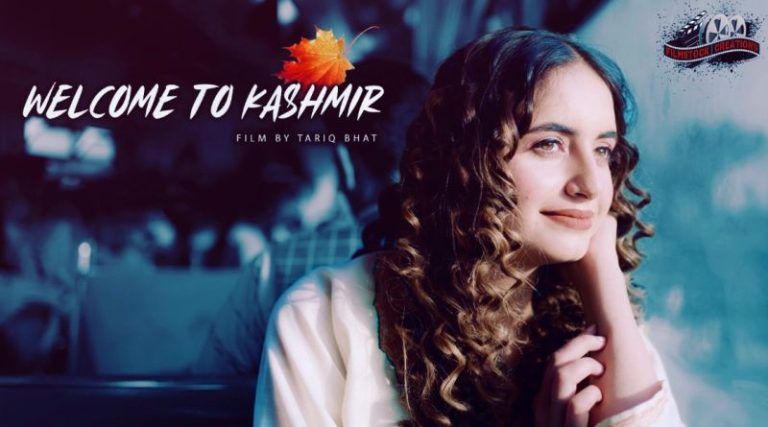
In a historic moment for the Kashmiri film industry, Director Tariq Bhat is set to release the much-anticipated Bollywood film “Welcome to Kashmir.” This film marks a significant milestone for the entire local film community, as it represents the first Hindi movie entirely made by Kashmiris, in Kashmir, for global audiences in last five decades.
“Welcome to Kashmir” boldly addresses pressing issues faced by the people of Kashmir, shedding light on topics such as youth drug addiction, women’s empowerment, and the authentic portrayal of the region and its police force.Led by Ahmad in the male lead role and Mateena Rajput as the female lead, the film’s trailer was unveiled on 6 May generating excitement among eager audiences.
The movie strives to challenge stereotypes and present a positive perspective of Kashmir that is often overlooked in mainstream cinema.
“Welcome to Kashmir” promises to be a cinematic masterpiece that celebrates the spirit, resilience, and untold stories of the people of Kashmir, paving the way for a new era of locally produced films that capture the heart and soul of the valley
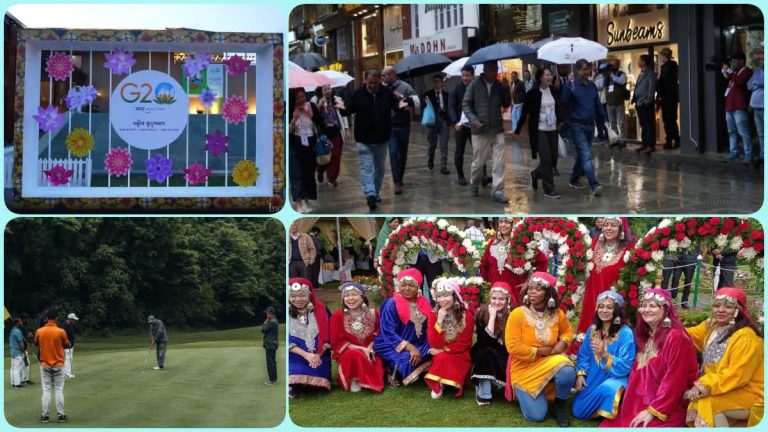
Despite China’s call for a boycott, claiming the location as disputed, most countries attended the event, rejecting Chinese propaganda. Lt. Gen. Manoj Sinha pitched J&K as a thriving tourist destination, highlighting its recent development.
Delegates had the opportunity to visit scenic sites such as Dal Lake, Mughal Garden, Pari Mehal, Nishat Garden, and Polo View Market, creating memorable experiences.
The Indian government and J&K administration made extensive arrangements to ensure the event’s success, maintaining regional security.
Union Minister Jitendra Singh expressed how the situation in Kashmir has changed. Earlier, whenever a significant event took place in Kashmir, Pakistan would issue strike calls. However, the situation has now changed, and there are no such disruptions. Kashmir, once plagued by terrorism, is now experiencing freedom and prosperity.G20 Sherpa Amitabh Kant proposed J&K as a promising location for the film industry, receiving positive feedback from the delegates.
“Pakistan should be bothered about where it will get food from for its people, rather than where India can host its G20 events”, says G20’s chief coordinator Harsh Vardhan Shringla in Srinagar on Tuesday. He further said “India has moved on and moved ahead and we are free to host any event in any part of India”.
On the concluding day, the Korean Ambassador to India praised the event’s success. Despite the determined efforts of the China-Pakistan nexus to undermine it. The seamless conclusion and fruitful discussions of the G20 Tourism Working Group meeting serve as a testament to the failure of their propaganda and the event’s triumph.
A disturbing trend has emerged where Islamist mobs indulge in violent attack on Hindu boys dating Muslim girls. Multiple videos have resurfaced where these violent individuals are seen harassing, abusing the Hindu men and even physically assaulting the Muslim girls.
Radical Islamists have termed this menace as the “Bhagwa Love Trap” to counter the several documented cases of “Love Jihad”. The baseless conspiracy theory of “Bhagwa Love Trap” says that Hindu outfits are allegedly training Hindu youth to lure Muslim women and convert them is taking the social media by storm. Islamist mobs are seen ambushing random Hindu boys Muslim girls, which would be followed by heated arguments, physical assault, and manhandling the inter-faith couples.
From social media conspiracy stemmed real-life violence
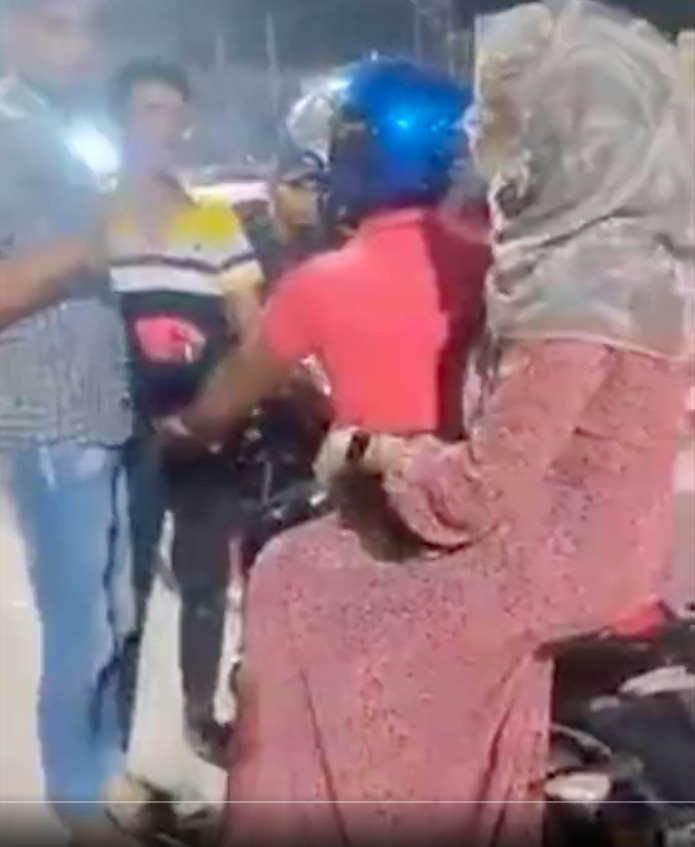
On May 15, 2023, a Hindu man in Patna, Bihar, faced verbal and physical abuse from a violent Muslim mob simply because he was friends with a Muslim girl. The mob intercepted them while they were on a bike and subjected them to verbal harassment. The Muslim girl was also targeted by the mob, who berated her and demanded that she leave the area and return home. Throughout the incident, the Hindu man bore the brunt of the mob’s abusive language and accusations.
*Abusive Content*
A Hijab wearing muslim girl was on a bike with a Hindu guy in Patna. Few people stopped them, abused and beaten the boy badly.
Goons shouted "Muslim ki Ladki ko ghumayega"
Girl kept saying he's classmate, she was told "Muslim ladki hoke kya kar rahin hain ye" pic.twitter.com/ndZ5SczIyN
A similar incident occurred on May 13, 2023, in Muzaffarnagar, Uttar Pradesh, where Islamists questioned the identity of a Hindu man and issued threats because he was seen roaming with a Muslim girl.
खुले आम जाट समाज के युवा को धमकाती मुग़लों की भीड़ ॥ मुज़फ़्फ़रनगर पुलिस से शिकायत के बाद भी नहीं ली जा रही एफ़आईआर ॥ आप सभी हिंदू भाइयों से आग्रह ॥ विडीओ इतना शेयर करें कि मुख्यमंत्री साहब संज्ञान ले सके ॥ जाट लड़के को जान से मारने की धमकियाँ दी जा रही हैं ॥ @myogiadityanath… pic.twitter.com/Wpfh5B4QOz
— THE JAT ASSOCIATION (@Jatassociation) May 15, 2023
These distressing incidents extend beyond Bihar and Uttar Pradesh. Numerous cases of harassment against Hindu men and their Muslim female friends, acquaintances, and colleagues have emerged from Madhya Pradesh, Gujarat, Rajasthan, Hyderabad, Ranchi, Maharashtra, etc. In most of these cases, girls wearing hijabs were coerced into contacting their parents, while Hindu men faced abuse and physical aggression.
‘Bhagwa love trap’ amplified
Sajjad Nomani, an ardent supporter of Asaduddin Owaisi and fanboy Taliban, is a prominent Islamic scholar and cleric who has optimally used his platform to add enough fuel to the fire. Leading the charge of this misleading campaign, he said, “8 lakh Muslim women have turned infidel and left Islam after meeting their Hindu partners. RSS has created a team of Hindu youths who are trained in Islamic teachings and Urdu. They are then instructed to lure Muslim women into a love trap.”
The cleric took up the opportunity to discourage girls’ education. He said, “We send our daughters to schools and colleges, but we do not know if they are learning science and math or vulgarity and apostasy there.”
Later, he bared his fundamentalist radical Islamist mindset and added, “I swear on Allah that it is better to keep your daughters uneducated and illiterate instead of sending them to such colleges.”
This back-up support has amplified an already deteriorating situation, where these Islamists think it’s okay to harass women and justify their action by punishing them for deviating from their faith. Statements like “Hath Laga Sakate hai, kyoki Aap kaum ka Nam Badnam kar rahi ho! (We can touch you how we want. This is because you are bringing shame to our community).” And, “Women like you bring a bad name to the Muslim community,” were heard in the videos.
These harassments are not limited to manhandling alone. Do you rememberNagaraju, who was stabbed to death because he married Syed Ashrin Sultana? Or Ankit Saxena, who was murdered for being in a relationship with a Muslim girl? These are the cases that show the conspiracy theory of the “Bhagwa love trap” is getting out of hand.There is an urgent need to take serious action on this moral policing.
Earlier on 30 April, same pattern was followed by the Pak Army to abduct another five Baloch nationals namely Bashir, Sulemani, Zia, Inam and Majid. The abductions by Pakistan Army have continued to threaten the voice of freedom of Balochistan.
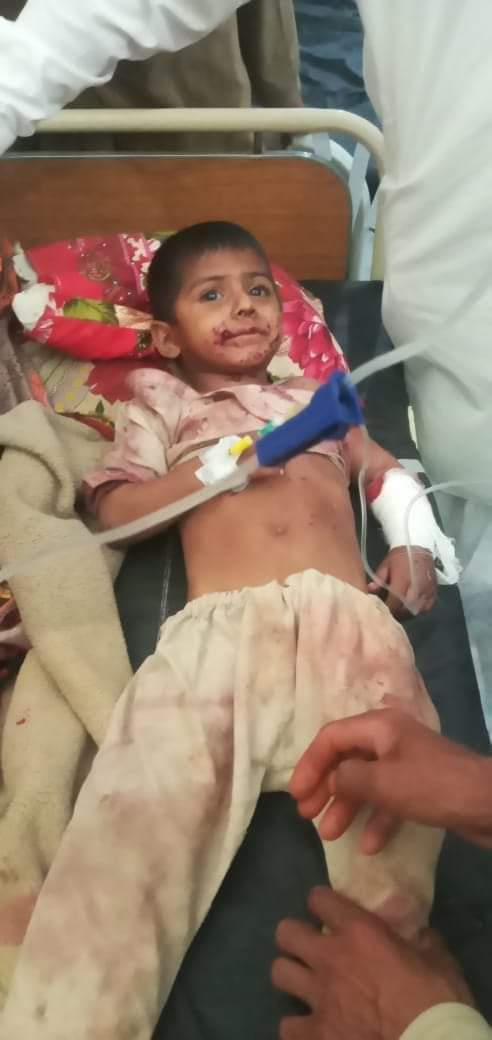
In a tragic incident in the Kadi Hyder area of Tank district, Khyber-Pakhtunkhwa the Pakistan Army carried out a brutal attack on the local Pashtun population. The assault resulted in numerous injuries and casualties, with many innocent children and women losing their lives.
One of the victims, Batin Khan Betni, suffered an unimaginable loss as his 12-year-old son was killed in the attack. His wife, son, and daughter-in-law sustained severe injuries and were urgently taken to the hospital for medical treatment.
Manzoor Pashtin, leader of Pashtun Tahafuz Movement (PTM), strongly refuted any association between Batin Khan or any of his family members with terrorism. He emphasized that the ongoing genocide of the Pashtuns is a stark reality disguised under the pretext of the state’s alleged counterterrorism efforts.
A heart-wrenching image captured at the hospital shows Muhammad’s father, Batin Khan, who was wounded due to the oppressive Pakistan Army’s gunfire in Kadi Hyder. The picture serves as a somber reminder of the devastating consequences inflicted upon innocent lives in the region.
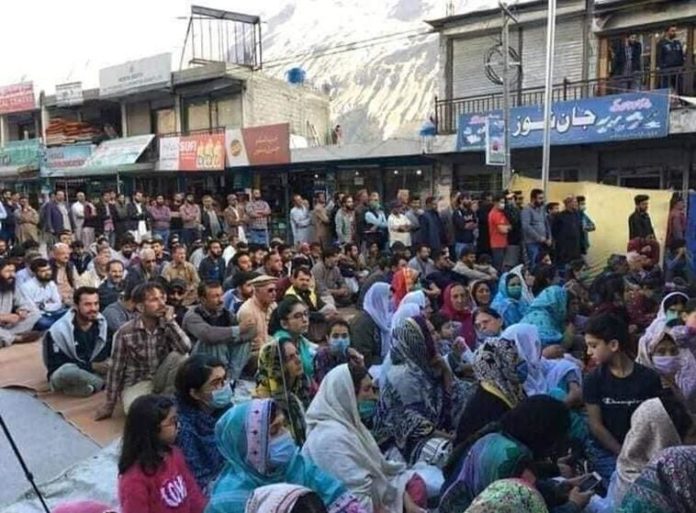
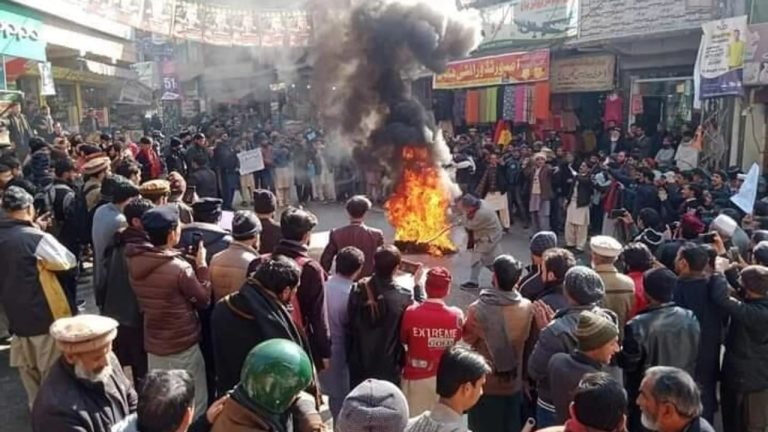
Occupied Gilgit-Baltistan is witnessing multiple protests demanding freedom from Pakistan. During one such protest on 18 May, Sheikh Mohammad Hassan Johary, one of the leaders of Gilgit-Baltistan, raised his voice for the region’s independence.
The protests gained momentum after the arrest of Imran Khan and subsequent subversion carried out against occupied Gilgit Baltistan. According to Johary, the Pakistan government and Army have violated human rights in Gilgit Baltistan. Even the Chief Minister of Gilgit Baltistan was placed under house arrest, causing setbacks in the region’s governance in recent days.
While addressing the rally, the fiery leader referred to Pakistan’s Interior Minister, Rana Sanaullah, as a terrorist. He further asserted that occupied Gilgit Baltistan is capable of forging its own path against a country that lacks law and justice.
Johary dared the Pakistan government and Army, openly saying that the people of Balochistan could consider removing Pakistan’s name from their identity cards.
Following a similar sentiment, another leader from Gilgit Baltistan and the occupied Kashmir Independence movement announced the termination of Gilgit Baltistan’s affiliation with Pakistan. In a video circulated on social media, he declared the creation of a force for Gilgit Baltistan and its ten districts.
The call for Gilgit-Baltistan’s independence from Pakistan is growing stronger with each passing day. The atrocities committed by Pakistan have made life unbearable for the people in the region, leading to an awakening and determination among the people of POGB.
We use cookies on our website to give you the most relevant experience by remembering your preferences and repeat visits. By clicking “Accept All”, you consent to the use of ALL the cookies. However, you may visit "Cookie Settings" to provide a controlled consent.
This website uses cookies to improve your experience while you navigate through the website. Out of these, the cookies that are categorized as necessary are stored on your browser as they are essential for the working of basic functionalities of the website. We also use third-party cookies that help us analyze and understand how you use this website. These cookies will be stored in your browser only with your consent. You also have the option to opt-out of these cookies. But opting out of some of these cookies may affect your browsing experience.
Functional cookies help to perform certain functionalities like sharing the content of the website on social media platforms, collect feedbacks, and other third-party features.
Performance cookies are used to understand and analyze the key performance indexes of the website which helps in delivering a better user experience for the visitors.
Analytical cookies are used to understand how visitors interact with the website. These cookies help provide information on metrics the number of visitors, bounce rate, traffic source, etc.
Advertisement cookies are used to provide visitors with relevant ads and marketing campaigns. These cookies track visitors across websites and collect information to provide customized ads.
Necessary cookies are absolutely essential for the website to function properly. These cookies ensure basic functionalities and security features of the website, anonymously.
Cookie
Duration
Description
cookielawinfo-checkbox-analytics
11 months
This cookie is set by GDPR Cookie Consent plugin. The cookie is used to store the user consent for the cookies in the category "Analytics".
cookielawinfo-checkbox-functional
11 months
The cookie is set by GDPR cookie consent to record the user consent for the cookies in the category "Functional".
cookielawinfo-checkbox-necessary
11 months
This cookie is set by GDPR Cookie Consent plugin. The cookies is used to store the user consent for the cookies in the category "Necessary".
cookielawinfo-checkbox-others
11 months
This cookie is set by GDPR Cookie Consent plugin. The cookie is used to store the user consent for the cookies in the category "Other.
cookielawinfo-checkbox-performance
11 months
This cookie is set by GDPR Cookie Consent plugin. The cookie is used to store the user consent for the cookies in the category "Performance".
viewed_cookie_policy
11 months
The cookie is set by the GDPR Cookie Consent plugin and is used to store whether or not user has consented to the use of cookies. It does not store any personal data.