Home Blog Page 233

Anti Pak Army riots:Rawalpindi appoints itself as judge, jury and executioner

In his farewell speech, outgoing Pakistan Army chief Gen Qamar Javed Bajwa admitted that the people of Pakistan had become critical of the Army and rightly reasoned that “The main reason for this is the involvement of the army in politics for the last 70 years, which is unconstitutional.” He then went on to say that the Pakistan Army had “after great deliberation, decided that it would never interfere in any political matter”, and even gave an assurance that “we are strictly adamant on this and will remain so.”

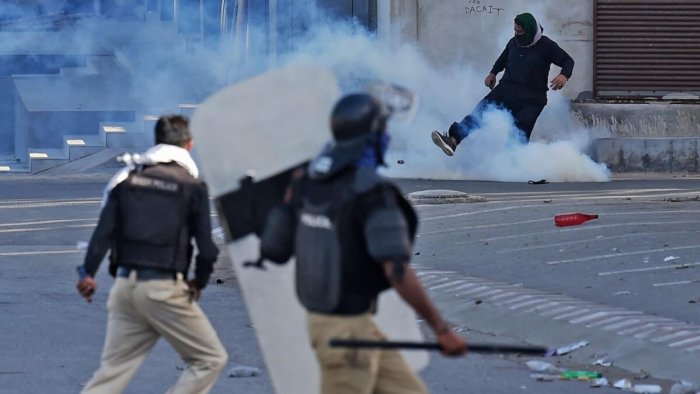
Few [if any] took Gen Bajwa’s pledge seriously and this pervasive scepticism was well founded because barely six months later, his successor Gen Asim Munir sent out a clear message that Rawalpindi would continue to be the dominant decision-making player in Pakistan. This indirect revelation came after the May 15 special corps commanders’ conference [CCC] that was hurriedly convened in the wake of widespread incidents of mobs attacking military installations, desecrating war memorials and ransacking the official residence of a three-star General in Lahore on May 9.

The statement issued by Pakistan Army’s media wing Inter Services Public Relations [ISPR] on conclusion of the CCC reads, “The Forum expressed firm resolve that those involved in these heinous crimes against the military installations and personal/ equipment will be brought to justice through trials under relevant laws of Pakistan including Pakistan Army Act and Official Secret Act . . .” [Emphasis added]. In short, the Army has [as always], without reference to the legislature and judiciary, decided on its own to try people accused of rioting and arson on May 9 in military courts!

The very next day after ISPR announced Rawalpindi’s unilateral decision to try the May 9 rioters and arsonists under Pakistan Army Act and Official Secret Act, the National Security Committee [NSC] hastily okayed the same despite legal experts voicing grave concerns regarding legitimacy of the same. Even as the clamour against trial of civilians by military courts gained momentum, the Cabinet headed by Prime Minister Shehbaz Sharif [expectedly] approved the NSC’s recommendation [which was what the Army had already decided].

This comes as no surprise as in Pakistan, it’s the military that both ‘proposes’ as well as ‘disposes’. This is amply evident from Deputy Regional Director for South Asia at Amnesty International [AI] Dinushika Dissanayake’s pointed statement that “It is alarming to note that the Pakistani Army has stated its intention to try civilians under military laws, possibly in military courtsTrying civilians in military courts is contrary to international law” [emphasis added].

 AI has genuine reasons to worry. Its statement reads, “Amnesty International has documented a catalogue of human rights violations stemming from trying civilians in military courts in Pakistan, including flagrant disregard for due process, lack of transparency, coerced confessions, and executions after grossly unfair trials”. This sentiment is also shared by the International Commission of Jurists [ICJ], a Geneva based international human rights non-governmental organisation founded in 1952, which has a standing group of 60 eminent jurists and rights activists.

In its 2016 Briefing Paper appropriately titled ‘Military Injustice in Pakistan’ ICJ notes that “In the 18 months since military courts were empowered to try terrorism-related offences, they have convicted at least 81 people, possibly including children, in opaque, secret proceedings [emphasis added]. The paper goes on to reveal that “At least 12 people have been hanged after trials that are grossly unfair: In all these cases, the government and military authorities have failed to make public information about the time and place of their trials; the specific charges and evidence against the convicts; as well as the judgments of military courts including the essential findings, legal reasoning, and evidence on which the convictions were based” [emphasis added].

ICJ has made several scathing observations on Pakistan’s military courts and for lack of space, only few are mentioned below:

·        “Military courts in Pakistan are not independent or impartial. Judges of military courts are military officers who are a part of the executive branch of the State and do not enjoy independence from the military hierarchy”.

·        The presiding officer and members of military courts “are not required to have judicial or legal training, or even a law degree, and do not enjoy any security of tenure, which are prerequisites of judicial competence and independence”.

·        “Critical decisions with respect to the constitution of courts martial, place of hearing, and final sentences are currently left in the hands of military officers [not judges], which further violates the fundamental requirements of independence of the judiciary”.

·        Under a 2015 law, “the [Pakistan] Army Act, allows judges of military courts to hold in camera trials, and keep the identities of individuals associated with the cases secret”.

·         “The secrecy that surrounds [Pakistani] military courts’ proceedings raises questions about these “confessions” and “admissions” made by the convicts, especially in light of the widespread torture and ill-treatment in detention in Pakistan, particularly those in custody of the military”.

Apologists may contend that criticism of Pakistan’s military courts by a host of international rights organisations is motivated, but this argument isn’t supported by the track record of these courts. In 2018, Dawn reported that Peshawar High Court [PHC] had set aside death sentences and life imprisonment terms awarded to 74 civilians by Pakistan military courts on the ground that “charges against the accused had not been proven beyond a shadow of a doubt,”  and this wasn’t the only such incident.

In June 2020, The Siasat Daily reported that PHC overturned the sentences of at least 200 people, convicted by military courts and ordered their release with immediate effect as the accused were sentenced on their confessional statements and were not given a fair trial. So, the chances that military courts will be able to fairly dispense justice in the May 9 incident trails are highly circumspect. That’s why even the Human Rights Commission of Pakistan has condemned this decision and opined that “While those responsible for arson and damaging public and private property during the recent protests should be held to account, they remain entitled to due process”.

With the PTI chief boldly taking on Rawalpindi by exposing the dirty games being played by Gen Munir and his ilk, the people of Pakistan have become far more discerning now. So, while no one can stop it from trying the May 9 rioters under the Pakistan Army Act, the Army must not forget that doing so would be at its own peril because people will no longer accept Rawalpindi playing the role of judge, jury and executioner, all rolled in one!

Pakistan Army backed terrorists bomb Pashtun girl schools in North Waziristan

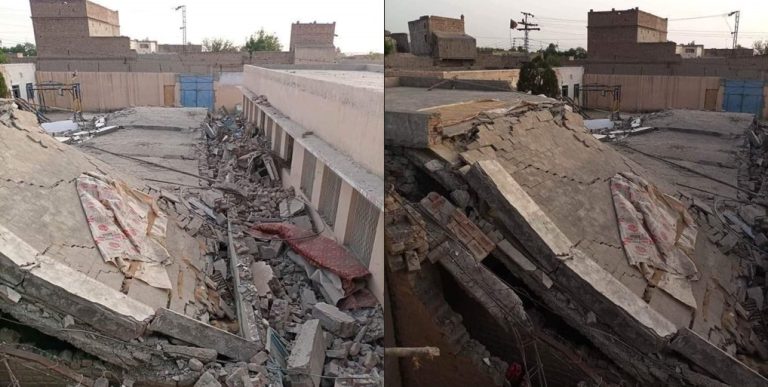
Unidentified terrorists bombed two girl schools in the Mir Ali tehsil of North Waziristan on Sunday night. Local Pashtuns around the schools said these “unidentified people” are actually terrorists who are aided and backed by Pakistan Army to carry out such terrorist activities in Pashtunistan.

“The Government Girls Middle School in Hasukhel and Girls Middle School in Musaqi, North Waziristan were bombed by Paki regime backed terrorists,” said a local Pashtun who lives in the Hasukhel village. Of late, Pashtuns have become quite assertive of their rights which is not liked by the Panjabi Generals of the Pakistan Army and so have created proxies to carry out their dirty job of bombing schools, killing and abducting local Pashtuns in order to make them carry out Rawalpindi’s diktats without questioning.

Canada ‘welcomes’ Indian students with no jobs, high food & accommodation costs

In recent times, a viral video originating from Kitchener, Ontario, has shed light on a concerning issue faced by international students in Canada. The footage showed long queues of Indian students and graduates at a part-time job fair, highlighting the escalating unemployment problem among this group. While this incident gained significant attention on social media, similar reports of job scarcity are emerging from various parts of the country. This serves as a wake-up call to the education system and Canadian colleges, which often downplay the employment challenges faced by international students, particularly those from India.

Sumit Baliyan, a student at a college in Hamilton, Ontario, expressed the distressing reality faced by international students in Canada. Balancing high tuition fees, which are over five times what local Canadian students pay, with the requirement to invest a minimum of $10,000 in a Guaranteed Investment Certificate, puts immense financial strain on these students. The promises of abundant job opportunities made by college representatives are often far from the truth, leaving international Indian students struggling to cover their expenses and support their families back home.

Baliyan, who arrived in Canada earlier this year, emphasized that the scarcity of jobs, combined with skyrocketing housing and food costs, has exacerbated the situation. Students find themselves caught in a vicious cycle as landlords arbitrarily increase rents, sometimes threatening eviction if the inflated amounts are not paid. The cost of accommodation has become exorbitant, with overcrowded residences charging steep prices, leaving some students with no choice but to turn to food banks for sustenance.

Critics frequently call into local talk radio shows, blaming the government for its failure to regulate post-secondary education and provide affordable accommodation options to international students. Despite the enormous contribution of international students to the Canadian economy, estimated at $25 billion annually, their concerns and well-being seem to be overlooked.

Canada’s current push to curb inflation through a mild recession coincides with a surge in the number of international students, further exacerbating the unemployment issue. The once-inspiring stories shared by Indian students about their experiences in Canada are now increasingly overshadowed by tales of hardship and disillusionment. The reality on the ground is far from what was promised, leaving students like Baliyan disillusioned and struggling to make ends meet.

American President Joe Biden inspired by PM Modi, wants autograph

In a surprising turn of events, US President Joe Biden recently found himself captivated by the immense popularity of India’s Prime Minister, Narendra Modi. Known for his big brotherly attitude and superiority complex, United States and its presidents are not often associated with feelings of insecurity. However, as the growing admiration for PM Modi became apparent, even the most powerful leaders sometimes feel a twinge of self-doubt.

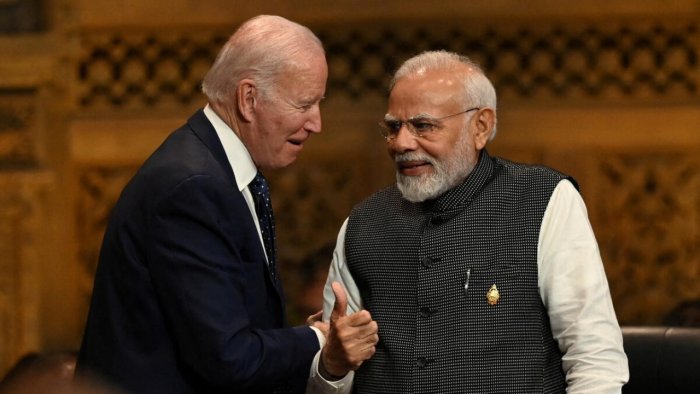
During the recent Quad meeting in Hiroshima, Biden seized an opportunity to engage in a candid conversation with Prime Minister Modi. Astonishingly, the US president confessed that he had been inundated with an overwhelming number of requests from prominent citizens eager to attend the Indian PM’s upcoming state visit to Washington DC. This influx of interest in Modi’s programs left Biden with a unique challenge he had not anticipated.

Even Australian Prime Minister Anthony Albanese, also present at the meeting, expressed his own struggles in managing the avalanche of requests to attend PM Modi’s events. Albanese mentioned how, despite having a capacity of 20,000 for a community reception in Sydney, he was still unable to accommodate all the enthusiastic invitees. This unusual predicament left both Biden and Albanese turning to Modi, seeking advice on how to handle their peculiar challenges.

Recalling the staggering reception PM Modi received during a victory lap at the Narendra Modi stadium, where over 90,000 people joyously welcomed him, Albanese couldn’t help but reminisce. It was during this moment that Biden couldn’t resist remarking to Modi, “I should take your autograph.”

The scene was set in March earlier this year, as Modi and Albanese attended an India-Australia test match at the iconic Gujarat stadium. Taking a lap of honor, they witnessed firsthand the extraordinary adoration bestowed upon the Indian Prime Minister. Little did they know that this experience would ignite a sense of awe and inspiration in the heart of President Biden himself.

As Biden grappled with the overwhelming popularity surrounding PM Modi, it was a humbling reminder that even the mightiest nations can find themselves marveling at the charisma and mass appeal of a leader from a distant land. This unexpected encounter showcased the vulnerability that lies beneath the surface of even the most confident individuals.

While the United States may be accustomed to wielding influence on the global stage, this encounter with Modi’s undeniable charm and the fervor of his supporters served as a powerful reminder that true leadership transcends borders. In that moment, President Biden recognized the impact and reach of Prime Minister Modi, and he couldn’t help but acknowledge his own insecurities.

So, as we witness this rare glimpse of vulnerability and admiration, it becomes evident that no matter how powerful a nation or its leaders may be, the allure of another’s success can occasionally stir feelings of insecurity. In this case, PM Modi’s growing popularity has humbled even the most influential figures, leaving them seeking his autograph and wondering what it is about him that captivates the hearts and minds of so many.

How fraudulent agents trap Punjab women and sell them in Oman

Punjab, a land known for its rich heritage and resilient spirit, bears witness to the silent struggles of its women. Behind the vibrant façade lies a darker reality, where the plight of NRI abandoned brides and the deceitful practices of fraud travel agents have cast a shadow over the lives of countless women in the region. This article aims to shed light on these pressing issues, bringing attention to the challenges faced by women in Punjab.

NRI Abandoned Brides
In the pursuit of love and a better life, many young women from Punjab tie the knot with Non-Resident Indians (NRIs). However, their dreams are often shattered when they become victims of abandonment.

NRI abandoned wives face a heart-wrenching reality as they step into foreign environments only to be abandoned and left to navigate unfamiliar territories on their own. These women often find themselves divorced without their knowledge or consent; thrown into a legal system they have no understanding of.

Shockingly, some husbands are discovered to be already married or living with another woman. Tragically, some wives never even get the chance to join their husbands abroad. In these cases, men deceive their wives, promising to bring them overseas after receiving dowry payments, only to vanish, leaving these vulnerable women stranded and abandoned.

The plight of NRI abandoned wives highlights the urgent need for stronger legal protections and support systems to ensure justice and assistance for those who find themselves in these dire circumstances.

Unveiling a New Wave of Inhumane Activity
In the dark underbelly of Punjab, a new form of exploitation has emerged, leaving vulnerable women at the mercy of deceitful travel agents.

Rani (name changed), a woman from Kapurthala, embarked on a journey to Oman in search of a better future for her family. Little did she know that her aspirations would be crushed by the heart-wrenching reality of exploitation and abuse. Promised a job as a caretaker in a hospital with a monthly salary, she entrusted her fate to her maternal aunt (maami), who was involved in the deceitful scheme.

Upon arriving in Muscat on a tourist visa, Rani’s passport and phone were seized, and she was locked up in a room. Shockingly, she discovered that she was not alone in her misery, as 35 other women from Punjab were also held captive. Instead of the promised job, they were coerced into engaging in immoral activities, subjected to physical abuse, and kept hungry for days as a means of control. Rani’s refusal to comply with these demands led to brutal beatings.

Rani’s case is not an isolated incident but rather a distressing reflection of a widespread problem. The travel agents involved in these heinous activities exploit the vulnerability of poor and uneducated women and openly perpetrate their crimes without fear of consequences. These agents, in collusion with counterparts in Oman, deceive women with false promises, charging exorbitant fees and selling them to locals in Oman for profit.

The victims, lacking education and awareness, often remain unaware of the risks associated with such ventures. Trapped in a foreign land with no support or means to escape, these women suffer immense physical and emotional trauma. Many are forced to endure unimaginable hardships, their dreams shattered and their lives in ruins.

The distressing accounts of Rani and the countless women trapped in the Gulf shine a light on the urgent need for action against these fraudulent travel agents. The Punjab government must take swift and decisive measures to curb this exploitation, including launching awareness campaigns, strengthening regulations, and holding the culprits accountable. It is crucial to provide support and assistance to the victims, ensuring their safe return to their families and work towards their rehabilitation.

This pervasive issue demands not only government intervention but also a collective effort from society to protect and empower the women of Punjab. The anguish faced by women in Punjab, whether as NRI abandoned brides or victims of fraudulent travel agents, is an urgent call for action. It is imperative for society, government, and law enforcement agencies to address these issues and provide support and protection to the affected women. By fostering a culture of empowerment, awareness, and accountability, Punjab can pave the way for a future where women are not left to suffer in silence. Together, we must strive for a Punjab where women are respected, protected, and given the opportunities they rightfully deserve.

Hindus being forcefully converted into Islam in Sindh

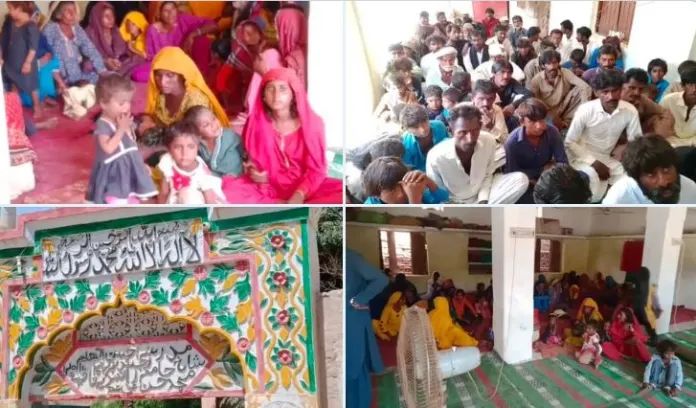
In a horrific incident, 162 Hindus, comprising of 10 families, have been forcibly converted to Islam at an event on 18th May in Sindh.

Preliminary reports suggest that these families were facing severe poverty and hunger issues. Their vulnerable condition was exploited by extremists engaged in illicit conversion practices.

The families were promised improved living conditions in exchange for converting to Islam. With no viable options and no justice from the system, the families were compelled to undergo conversion.

This is not an isolated incident of mass conversion. Just today, 61 Hindus have been forcefully converted to Islam in Sindh again. This month Sindh has witnessed three such mass conversion incidents.Earlier, 50 Hindus were also forcefully converted to Islam under supervision of the son of Religious Affairs Minister in Pakistan, Talha Mahmood. The deteriorating situation of Hindus and other minorities in Pakistan is an undeniable reality, as is the illegitimate and forced nature of their conversions.

BLA freedom fighters kill 3 Pakistani SSG commandos in Balochistan

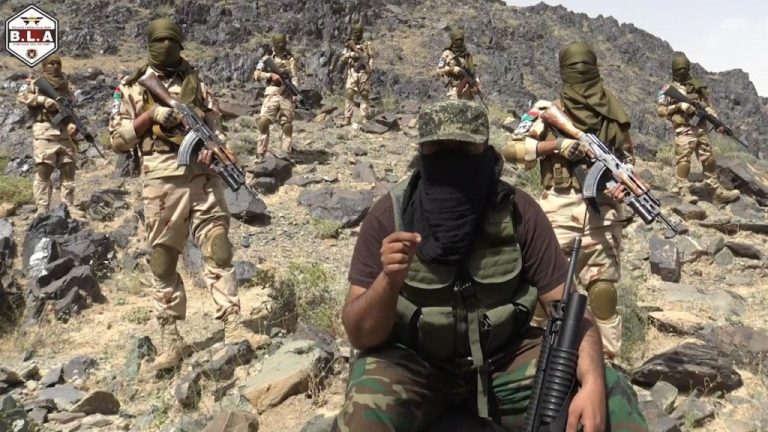
Freedom fighters of Baloch Liberation Army eliminated three commandos of Pakistani Special Services Group (SSG) in an attack in Bolan.

Since the past few days Pakistani forces had been advancing in Margat, Zarghoon and Bolan and over the weekend freedom fighters of BLA targeted these troops when they were sitting in a large group. What followed was a fierce attack and BLA fighters eliminated three SSG commandos and injured several more.

Spokesperson of BLA Jeeyand Baloch said that BLA will continue to target occupying forces until their full withdrawal from Balochistan.

BLA freedom fighters kill 9 Pak Army soldiers in occupied Balochistan

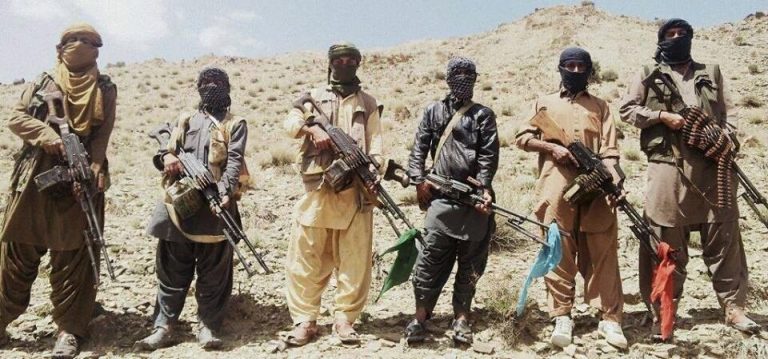
Baloch Liberation Army (BLA) sarmachaars (freedom fighters) killed nine Pakistan Army soldiers on Friday in two separate battles at Zarghoon and Margat in occupied Balochistan. Dozens of Pakistani soldiers were also injured and the Pak Army suffered heavy loss of arms and ammunition in the twin attacks by BLA fighters. Pakistan Army was aided by gunship helicopters and unmanned aerial vehicles during the battle with BLA at Zarghoon, Margat and other adjoining areas near Quetta. BLA freedom fighters retaliated bravely and killed four Pakistani soldiers at Margat and five Pakistani soldiers at Zarghoon.

In Zarghoon, Bolan and adjoining areas, few coal contractors and miners are working directly as collaborators of Pakistani forces. Pakistan Army is building outposts in these area for the security of these collaborators so that they can continue to loot resources of Balochistan. The Baloch freedom fighters oppose this naked loot of resources and are fighting for the independence of Balochistan from Pakistan’s illegal occupation.

“The elements working on payroll of Pakistani occupying military should realise that if this military cannot defend its own soldiers then how are they going to protect their facilitators? BLA has multiple times warned in past and we want to make it clear once more that anyone found working as an informant for the Pakistani military or if anyone engaged in providing supplies to the occupying forces then they will have to bear responsibility for their acts and the resulting consequences,” Jeeyand Baloch, spokesperson of BLA said in his statement.

Minorities live in fear as incidents of forced conversion rise in Pakistan

In a deeply alarming incident in Pithoro, Umarkot, Sindh, a Hindu girl named Hasena Oad was forcibly abducted at gunpoint by one Shokat Shar and four other individuals.The girl’s father promptly filed a complaint at the local police station against the five accused of the crime.

Fearing the long persisting target abduction and conversion of minor Hindu girls across Pakistan, girl’s father has raised concerns over her possible religious conversion to Islam and her marriage to the abductor Shokat Shar.

As usual, police has failed to track the whereabouts of Hasena till now. This distressing incident highlights the increasing prevalence of abductions targeting Hindu girls in the region.

Villagers save 10-year old girl by foiling child marriage in Bihar

In a remarkable display of vigilance, residents of a village in Bihar’s Purnia district successfully foiled an impending child marriage, rescuing a 10-year-old girl from a harrowing fate. The girl, who belonged to the village, was on the verge of being wedded against her will to, a 17-year-old boy who had been brought from Uttar Pradesh by her own brother-in-law.

Shockingly, the cost to terminate her childhood and force her into marriage had been set at mere Rs. 5000. All arrangements had been made, and the wedding was moments away from being solemnized.

However, thanks to the unwavering determination of the villagers, the Kailash Satyarthi Children’s Foundation (KSCF) team, local police, and child line authorities swiftly intervened. Acting promptly upon receiving the distress call, the collective effort halted the illegal marriage. The young girl was immediately provided refuge in a shelter home, ensuring her safety and protection.

This commendable act by the villagers unveiled a disturbing truth—her brother-in-law, a resident of Uttar Pradesh, had orchestrated the marriage. The villagers, appalled by this unjust act, united against it and promptly reported the matter to the KSCF’s Purnia team, as well as the police and child line helpline. These combined efforts effectively put an end to the heinous act and ensured the young girl’s well-being.