

A few days ago, another minor Hindu girl named Tooti Maheshwari was abducted from Gharibabad, Sindh. She has now been found converted and married to her abductor Fida Hussain Khaskheli.Pakistan’s forced abductions and conversions have been known to put minority women at risk. Young girls are abducted, converted into Islam and forced to marry or are kept as sex slaves or raped. The government has been unsuccessful to implement the Child Marriage Restraint Act 1929 and the Sindh Child Marriage Restraint Act 2013, which raised the legal minimum age of marriage to 18 in Sindh province. The victim girls are largely left in the custody of their kidnapper throughout the trial process, where they are forced to claim that the conversion or marriage was consensual.
Pakistan Army’s brutality on peak, claims lives of innocent Balochs
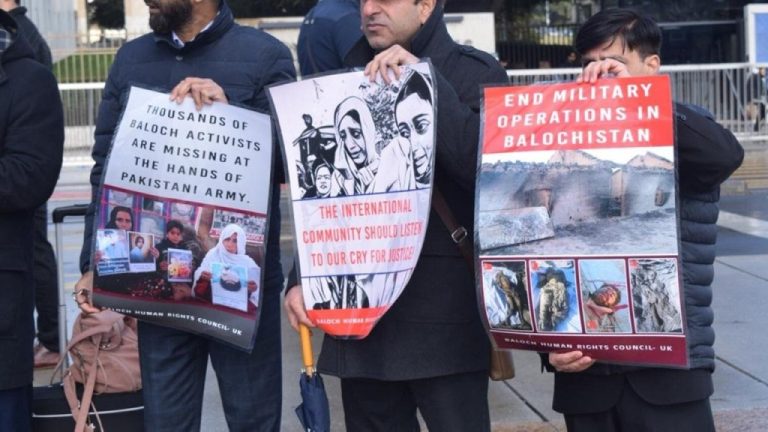
The sad state of affairs in Pak occupied Balochistan seems to be a never-ending process. Masses are suffering from the unrest and political instability caused by none other than the dictatorial-like rule of the Pakistan Army. As if the military intervention that’s causing the civil and political unrest was not enough, the Pakistan Army is now resorting to barbaric tactics to further the conflicts and abuse human rights. Recent incidents have brought to light several covert operations conducted by the Pakistan Army to coerce locals into recruitment, with the unfortunate consequence being instances where individuals, succumbing to blackmail by the Paki regime, have tragically taken their own lives.
Shadows of Sorrow
Najma, a school teacher and the daughter of Dilsard, tragically took her own life as she was unable to bear the relentless blackmail from a police officer associated with the Pakistan Army. Najma was from the village Zeak, Geeshkaur area of the Awaran district. She was subjected to constant pressure by Pakistan police officer Noor Bakhsh, who sought to coerce her into becoming an informant for secret agencies connected to the Pakistan Army.
Even though this news is extremely distressing and highlights the atrocities committed by the Pakistan Army, it is not an isolated event. Last year, the brutal systematic torture, forced disappearance, coercion and harassment has caused at least four individuals to take their own lives.
Chakar Majeed, a ninth-grade student, tragically ended his life on 10 March 2022. Prior to his suicide, he had experienced the harrowing ordeal of enforced disappearance at the hands of the Pakistan Army, who subjected him to relentless pressure to work as a spy for their operations.
Moheem, the son of Asumi, sadly took his own life on August 30, 2022. He had endured torture while forcibly disappeared by the Pakistan army. Despite being eventually released, the intense suffering inflicted upon him left deep psychological scars that ultimately led to his suicide.
Amirzadi, a resident of Kharan, tragically ended her life on November 10, 2022, as a result of the relentless army raids on her home. The continuous distress and anguish caused by these incursions became unbearable, leading to her desperate decision. Lutfullah Yelanzahi, her husband, also succumbed to the immense grief of losing his beloved wife and chose to end his own life.
These incidents are alarming. They highlight the plight of the Baloch people under the cold-blooded regime of Pakistan Army. BNM has denounced the events and urged the human rights authority to investigate and hold the Pakistan government accountable.
The brutality of the Pakistan Army appears to be escalating with each passing day. Their presence in influential positions of authority has resulted in the abuse of power and unwarranted interference in the lives of innocent individuals. This behavior has created an atmosphere of chaos within Baloch society. The deployment of the Pakistan Army in the Balochistan region has further exacerbated human rights violations, and the Pakistan government must take responsibility for this. Despite the prevailing unrest in Pakistan, it is crucial for the government to address the atrocities committed by the Pakistan Army. Thus, it is important that this unruly conduct be curbed before it spirals out of control and that the brutality of the Pak Army is exposed to the rest of the world.
Supreme Court allows Tamil Nadu’s bull-taming sport Jallikattu
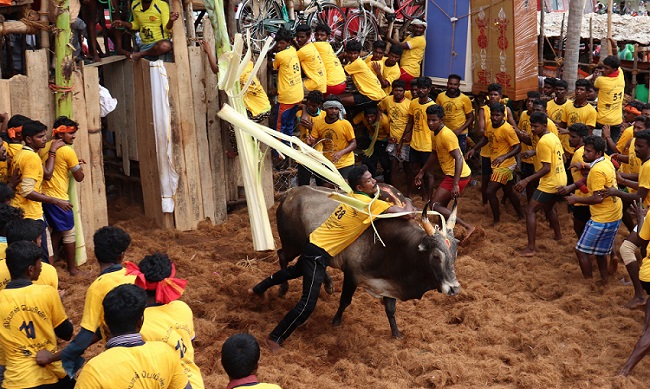
In a significant verdict, the Supreme Court of India has upheld the validity of the law passed by the Tamil Nadu government, allowing the continuation of Jallikattu, a traditional bull-taming sport. The five-judge Constitution bench, comprising Justice K M Joseph, Justice Ajay Rastogi, Justice Aniruddha Bose, Justice Hrishikesh Roy, and Justice CT Ravikumar, delivered the judgment, affirming the cultural and heritage significance of Jallikattu in the state.
Jallikattu, also known as “Eruthazhuvuthal,” is a centuries-old sport celebrated during the Tamil harvest festival, Pongal. Contestants engage in a competitive attempt to tame bulls, showcasing their skill and honoring bull owners who rear them for mating. However, legal battles surrounding animal rights emerged in the 1990s, leading to petitions against Jallikattu. In 2014, the Supreme Court banned the sport, citing cruelty concerns.
Key Points
- Jallikattu holds cultural and spiritual significance in Tamil Nadu and has been part of the state’s heritage for over 2,000 years. It serves as an event to honor bull owners and protect male animals used for breeding and plowing. The Animal Welfare Board of India and animal rights group PETA filed petitions against Jallikattu in the Supreme Court, leading to a ban on the sport in 2014. However, the Tamil Nadu government passed a law in 2009 to circumvent the ban. The Tamil Nadu government released an ordinance in 2017, amending the central Act, and allowing Jallikattu. This move faced opposition from animal rights organizations, including PETA, who argued that it was unconstitutional.
Supreme Court Verdict:
- Preservation of Cultural Heritage: The Constitution bench acknowledged the legislature’s view that Jallikattu is an integral part of Tamil Nadu’s cultural heritage and declared it as such in the preamble of the law. The court upheld the state’s law, respecting the legislature’s decision.
- Validity of State Laws: The bench confirmed the validity of laws passed by Tamil Nadu, Maharashtra, and Karnataka, allowing sports involving animals, including Jallikattu and bullock cart races. The court emphasized the importance of strictly implementing these laws to minimize cruelty to animals.
Tamil Nadu Law Minister, Thiru S Regupathy, hailed the Supreme Court’s judgment as historic and a legal victory for the state. He assured that the sport would be conducted without cruelty towards animals. Chief Minister M.K Stalin welcomed the verdict, highlighting the cultural and spiritual significance of Jallikattu.
With this ruling, Jallikattu will continue to be celebrated as an integral part of Tamil Nadu’s rich cultural heritage, ensuring the preservation of a centuries-old tradition that holds deep meaning for the people of the state.
Big win for India: US court orders extradition of 26/11 Mumbai terror attack accused
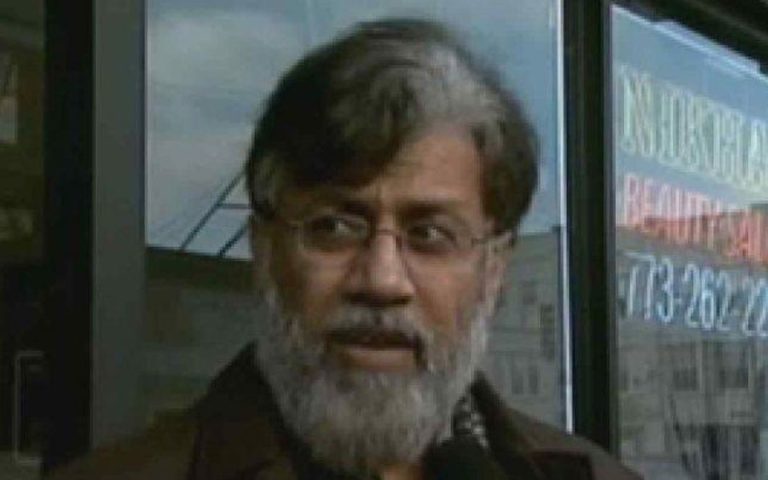
In a significant development preceding Prime Minister Narendra Modi’s upcoming state visit to the United States, a federal court in Washington DC has approved New Delhi’s request for the extradition of Tahawwur Hussain Rana, a Canadian businessman of Pakistani origin. Tahawwur Hussain Rana is wanted in India for his involvement in the 2008 Mumbai terror attacks. The court ruling, issued by United States Magistrate Judge Jacqueline Chooljian of the District Court of the Central District of California, confirms Rana’s extraditable under the existing extradition treaty between India and the US.
Recap of the 2008 Tragedy
The Mumbai terror attacks, which took place on November 26, 2008, shook India as 12 coordinated shooting and bombing assaults were carried out by members of Lashkar-e-Taiba (LeT) in various locations. The attacks spanned four days, resulting in the loss of 166 lives, including six Americans, and leaving over 300 individuals injured. The operation concluded on November 29 when India’s National Security Guards (NSG) conducted Operation Black Tornado eliminating the remaining terrorists. Of the ten attackers, nine were killed, while Ajmal Kasab, the sole captured assailant, was subsequently executed in 2012 after exhausting all legal avenues.
Tahawwur Hussain Rana, who is considered one of the plotters behind the 26/11 attacks, has expressed opposition to his extradition to India. However, the recent court order declared that Tahawwur Hussain Rana’s extradition cannot be certified unless there is a probable cause to believe that he committed the offenses for which extradition is being sought. The order extensively explains the court’s reasoning and states that there is sufficient probable cause to believe Tahawwur Hussain Rana is guilty of the charged offenses and should be extradited to India, as per the extradition treaty between the two countries.
India’s Request
India had initially filed a complaint on June 10, 2020, requesting Tahawwur Hussain Rana’s provisional arrest with the intention of pursuing extradition. The Biden administration has expressed support for and granted approval to Tahawwur Hussain Rana’s extradition to India. When questioned, a spokesperson from the State Department stated that the United States remains committed to combating terrorism globally and highly values its counterterrorism partnership with India. The spokesperson further reiterated the call for those involved in the 2008 Mumbai attacks to be brought to justice.
Throughout the court proceedings, US government attorneys contended that Tahawwur Hussain Rana was aware of his childhood friend David Coleman Headley’s association with LeT and had provided assistance and cover for Headley’s activities, thus supporting the terrorist organization and its affiliates. The government asserted that Tahawwur Hussain Rana was a conspirator and presented probable cause that he had committed acts of terrorism. Conversely, Tahawwur Hussain Rana’s legal representative opposed his extradition.
Jurisdiction and Extradition Treaty
The court ruling establishes that Tahawwur Hussain Rana’s extradition to India falls within the jurisdiction of the extradition treaty. India has issued an arrest warrant and filed charges against Tahawwur Hussain Rana, which the United States is proceeding with. The charges include conspiracy to wage war, murder, forgery for the purpose of cheating, use of forged documents or electronic records, and commission of a terrorist act. The judge concluded that these offenses qualify as extraditable crimes under the treaty and fall within India’s jurisdiction.
Tahawwur Hussain Rana’s Custody and Future Extradition Process
To certify Tahawwur Hussain Rana as extraditable, the court had to establish several factors, including jurisdiction over the proceedings, jurisdiction over the fugitive, the validity of the extradition treaty, the relevance of the crimes to the treaty, and the availability of competent legal evidence supporting Rana’s extraditability. The judge found that sufficient evidence had been presented to establish probable cause that Tahawwur Hussain Rana is the individual charged in India and sought for extradition. Accordingly, the court certified Tahawwur Hussain Rana’s extraditability to the United States Secretary of State.
Consequently, Tahawwur Hussain Rana will remain in the custody of the United States Marshal until a final decision regarding his extradition and surrender to India is made by the Secretary of State. The extradition and subsequent trial in India will be carried out in accordance with Title 18, United States Code, section 3186 and the extradition treaty between India and the United States.
Yasin Malik’s desperate attempt to stay relevant on Kashmir
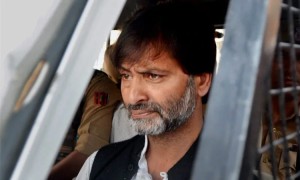
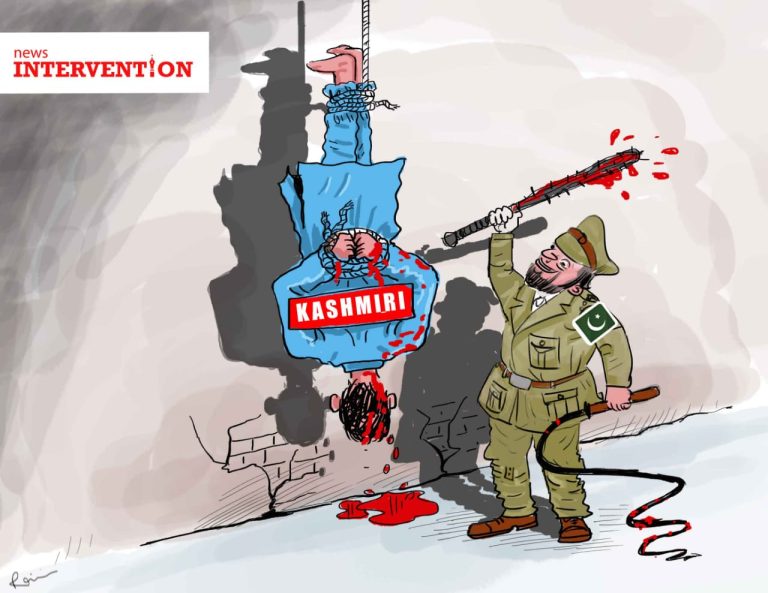
Once an icon of the so called ‘armed struggle’ in Kashmir who has had one-on-one meetings with the President of Pakistan and both the prime ministers of India and Pakistan as well as several other world leaders, Jammu and Kashmir Liberation Front [JKLF] chairman Yasin Malik has today been relegated to a political non-entity. So, one can well understand his utter frustration and intense desire to somehow regain relevance in Kashmir politics.
That’s why his latest antic of despatching “a detailed letter to the heads of G20 member states that expressed people’s concern over Indian hidden anti-State agenda in hosting their officials meeting on May 22 and 23 in disputed State of Jammu Kashmir” [sic] comes as no big surprise. That the G20 members have taken no cognisance of the same too doesn’t come as a shocker-simply because Malik has no standing that entitles him to express the “people’s concern” on New Delhi’s decision to host a G20 meeting in Srinagar.
That Malik has always been publicity-hungry is evident from his puerile attempts to grab attention. Readers would recall that during his 2002 interview on BBC HARDtalk with Tim Sebastian, he had laughingly not only admitted but also tried to justify killing four unarmed Indian Air Force officers in Kashmir. In 2013, Malik went all the way to Tamil Nadu to attend a function organised by LTTE sympathisers on the eve of LTTE founder Velupillai Prabhakaran’s death anniversary and supported creation of ‘Tamil Elam’ [independent state for Tamils].
Besides his proclivity for publicity, the JKLF chairman is also a wily opportunist player who knows how to turn a threat into an opportunity. On his release from detention in 1994, Malik made headlines by declaring that he had eschewed violence and that JKLF would henceforth only use peaceful means to pursue its separatist agenda. This path-breaking decision won him accolades, and with many likening him to Mahatma Gandhi, Malik became an international celebrity.
The real reason why Malik chose to end the so called ‘armed struggle’ was less to do with lofty ideals and dictated more by compulsion. It was the Pak Army’s spy agency Inter-Services Intelligence [ISI] had created JKLF with the sole purpose of waging a proxy war in J&K, and provided it with the necessary wherewithal in terms of weapons, training and funds for this purpose.
However, due to lack of confidence in JKLF, the ISI created Hizbul Mujahideen [HM] and stopped patronising JKLF and with no support forthcoming from ISI, JKLF’s military capability was practically reduced to zero. Facing an existential threat, Malik adroitly presented himself to the world in the new avatar of a peacenik and thereby ensured his relevance in Kashmir’s separatist polity.
However, with the passage of time Malik’s opportunism and duplicity became apparent to the people of Kashmir. While vehemently accusing the security forces for excesses, this self-professed Gandhian and apostle of peace never even cared to condemn atrocities committed by terrorists against the hapless locals. And most shocking was Malik’s stoic silence on the killing of respected separatist leaders by Hizbul Mujahideen terrorists.
In 2011, JKLF organised a seminar on ‘Role of Intellectuals in the Kashmir Movement’ to commemorate the death anniversary of Prof. Abdul Ahad Wani. An academic and JKLF ideologue, Wani was assassinated in 1993 while he was on his way to the university, and the separatist lobby accused security forces and intelligence for this cold blooded murder.
Speaking at this seminar, senior Hurriyat leader Prof Abdul Gani Bhat stunned the audience by revealing that “[Abdul Gani] Lone sahib, Mirwaiz [Mohammad] Farooq, and Professor [Abdul Ahad] Wani were not killed by the Army or the police. They were targeted by our own people. The story is a long one, but we have to tell the truth.” Bhat went on to say “Wherever we found an intellectual, we ended up killing him. Let us ask ourselves: was Prof Wani a martyr of brilliance or a martyr of rivalry?”
While separatist leader Abdul Gani Lone’s son Sajjad Lone fully endorsed Prof Bhat’s revelation and went on record to condemn the killing of his father and others by terrorists, despite the fact that Prof Wani was a prominent JKLF leader respected for his commitment and integrity, Malik didn’t even utter a single word of condemnation against the murderers of his compatriot. Was this due to fear of retribution from the HM or to stay in the good books of ISI?
In 2013, Malik made yet another attempt to gain ISI’s sympathy by going on a token hunger strike in Islamabad to protest against the execution of Afzal Guru for his role in the 2001 attack on the Indian Parliament that resulted in nine fatalities and left 18 injured. However, instead of being impressed the ISI outwitted him by sending Hafiz Saeed, co-founder of Lashkar-e-Taiba terrorist group to share the dais with the JKLF chairman and left him red-faced.
So, while Malik may not be ready to accept it, the harsh reality is that though he was instrumental in initiating Pakistan’s proxy war in J&K, he ceased to be of any interest to ISI in the early nineties itself. Accordingly, rather than sulk and try to re-launch himself in the avatar of a separatist leader of consequence, the JKLF chief should be grateful to the weak governments at the centre, who tolerated his nonsense for a bit too long!
Hindu family in Sindh disappeared overnight, converted to Islam later

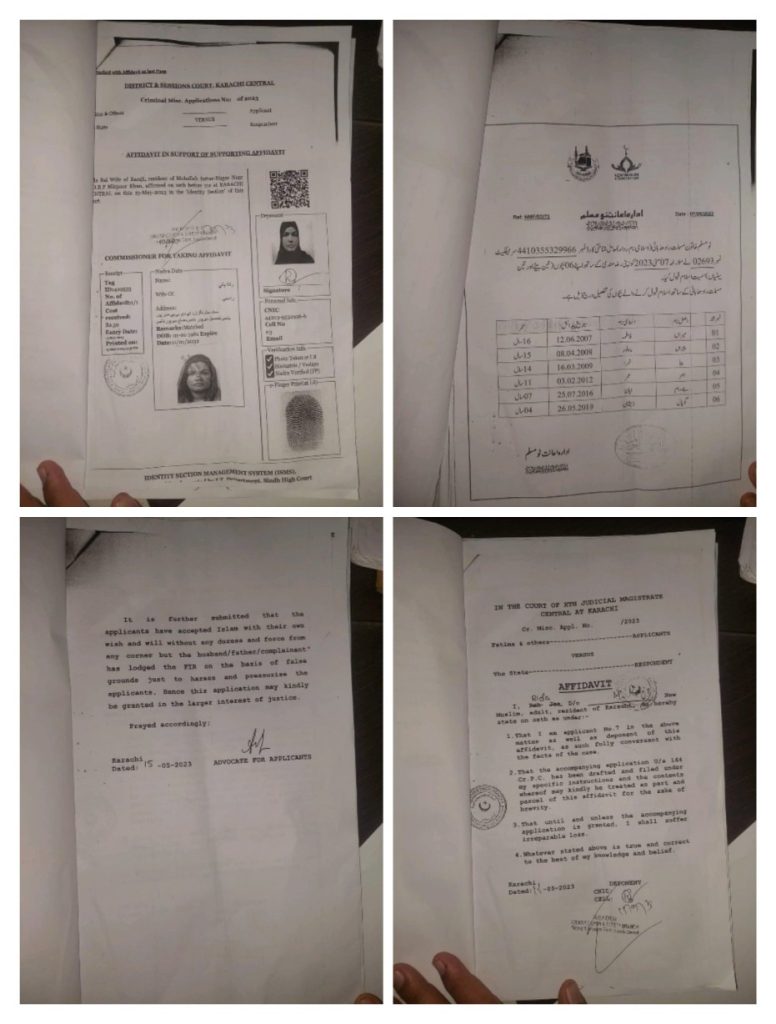
In a series of enforced disappearances, a Hindu family was abducted from Karachi and forcibly converted to Islam after a week.On May 7, the entire family of Ramji Meghwar, hailing from Mirpur Khas in Sindh, went missing. The family had relocated to Karachi in search of better work opportunities.After finding no evidence of their presence, Ramji Meghwar reported the matter to the local police, who took no action. After nearly a week, Ramji Meghwar’s wife and their children were discovered to have been converted to Islam against their will.
Forced conversions have long been a persistent issue in Pakistan, but this incident represents an even more brutal case where an entire family was abducted overnight and coerced into converting to Islam. The majority of such cases are reported in Sindh, posing a significant threat to the Hindu community in Pakistan.
Protests in Gilgit-Baltistan against illegal occupation of Pakistan
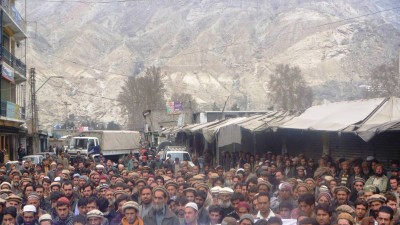
Massive protest has erupted for the very first time in Franu, the last border village of Pakistan-Occupied Gilgit-Baltistan (POGB).The local residents of Franu have decided to protest after witnessing myriad developments taking place till the last border village in India’s Jammu & Kashmir and Ladakh juxtaposed the grim situation in Pak occupied areas. Since the economic status of Thang village in India’s Turtuk has improved drastically in last few years, locals in Gilgit-Baltistan are launching campaign against Paki regime for their basic rights and to end illegal occupation. People of Gilgit-Baltistan have warned that if their demands are not met then they will take the protest to the border.
Pakistan on the Boil: Who’s to Blame?
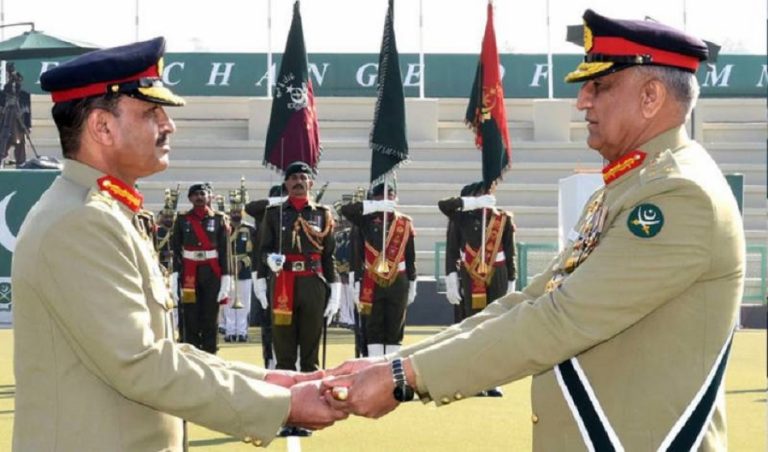
Though Rawalpindi’s highhandedness and brazen exercise of extra-constitutional powers is a routine matter, domestic criticism of its meddling in Pakistani politics has burgeoned exponentially over the last few years. Yet, instead of reading the writing on the wall, introspecting and taking corrective measures to bridge the military-civilian chasm, Pakistan’s military leadership has been dismissing growing public resentment by portraying it as motivated attempts by vested interests and a foreign conspiracy.
While addressing a presser in June 2018, the then Director General [DG] of Pakistan Army’s media wing Inter Services Public Relations [ISPR] Maj Gen Asif Ghafoor flashed the slide of a social media account [without disclosing the account holder’s identity] to show the audience of how it was linked to several other accounts and was being extensively used for tweeting against the Pakistan’s armed forces. Then, to drive home the point, DGISPR disclosed that “We have the capability to monitor social media as to who is doing what”!
In a curious development, there was a discernable upsurge in the number of incidents of journalists being abducted, roughed up and after being warned to cease reporting against the army, released. Despite the judiciary pulling up law enforcement agencies for failing to stop the unending spate of such abductions, the perpetrators were never apprehended. And though the reasons for the same are obvious and need no elaboration, but brief details of just two incidents would be enough for the uninitiated to get the drift.
Just hours after the DGISPR’s June 2018 press conference, British-Pakistani journalist Gul Bukhari was abducted while she was travelling in car driven by her driver through Lahore cantonment. Heavily guarded to prevent any ingress or egress of terrorists and teeming with multiple mobile ‘quick reaction teams’, Lahore cantonment is a virtual fortress and hence, definitely the wrong place to waylay a car and abduct its occupant.
Hence, the chances of some undesirable elements gaining access into Lahore cantonment, abducting Bukhari and whisking her away to an undisclosed location despite an extensive network of check posts and array of CCTVs is well-nigh impossible. Moreover, undertaking the perilous task of abducting a journalist from within an army cantonment, taking her to an unknown destination just to threaten her to avoid reporting against the army’s wrongdoings and then releasing her unconditionally, doesn’t make any sense!
Being based in the UK, Bukhari had no known enemies in Pakistan. However, as she was critical of the Pakistan Army’s cavalier ways and had exposed Rawalpindi’s dubious role in politics and its efforts to manipulate elections. So logically speaking, it’s only Rawalpindi that could possibly harbour a grudge against Bukhari and orchestrate such a precarious abduction within Lahore cantonment premises and she herself firmly believes that her abduction was meant to serve as a message that “nobody is untouchable, no one is immune”!
Just two years later, another Pakistani journalist and You Tuber named Matiullah Jan was kidnapped in broad daylight from outside a school located in Islamabad’s posh G-6Sector. This brazen abduction which was captured in the school’s CCTV showed a group of at least 10 men [both in civil clothes as well as in black uniforms worn by Pakistan’s anti-terror squad] forcibly shoving Jan into a sedan and driving away. Like Bukhari, Jan too had a history of riling the establishment, particularly the military and its notorious spy agency, Inter-Services Intelligence [ISI].
In 2018, he was designated “anti-state” by Rawalpindi for condemning its crackdown on media outlets as “a systematic attempt by the military and its intelligence agency to assert control with a facade of a democratically elected government.” Jan’s abduction came shortly before he was due to appear in court on contempt charges for having tweeted Islamabad High Court judge Shaukat Aziz Siddiqui’s controversial speech that exposed ISI’s complicity in manipulating the judicial process by ‘fixing benches’ and that “control” of judiciary by the army.
So, when a member of the PTI led government under Rawalpindi’s ‘selected’ Prime Minister Imran Khan introduced a bill in 2020 seeking an amendment in Pakistan Penal Code [PPC] to criminalise criticism of the armed forces, it became apparent that Rawalpindi’s strong arm tactics to intimidate the media into submitting to its unreasonable demands had failed and it desperately required a legal shield to muzzle dissent and thereby save its rapidly plummeting image.
This amendment (in the form of an insertion of a new section 500A in Pakistan Penal Code, Act XLV of 1860) is titled “Intentionally Ridiculing of the Armed Force’s etc.” It states “Whosoever intentionally ridicules, brings into disrepute or defames the Armed Forces of Pakistan or a member thereof, he shall be guilty of an offence punishable with imprisonment for a term which may extend to two years, or with fine which may extend to five hundred thousand rupees, or with both.”
While mischievous posts made with insidious intent need to be forcefully discouraged, a blanket ban on posts critical of the Pakistan Army is totally uncalled for. A review of posts with negative contents against the Pakistan Army reveals that a majority of them relate to Rawalpindi’s meddling in politics and this fact has been acknowledged by former army chief Gen Qamar Javed Bajwa himself. In his farewell speech, Gen Bajwa admitted that the people of Pakistan were critical of the army and accurately opined that “The main reason for this is the involvement of the army in politics for the last 70 years, which is unconstitutional.”
The recent decision to arrest Imran Khan while he was inside Islamabad High Court [IHC] in connection with the hearing of another case may not necessarily have been taken by the army. Yet, by violating protocol and using Rangers (who operate under instructions of the army) instead of the police to execute the arrest warrant, the impression that went out was that the army was behind Imran Khan’s unjustified arrest. Gen Bajwa’s ongoing post-retirement verbal spat with Khan also further strengthened the belief that Rawalpindi was baying for the PTI chief’s blood.
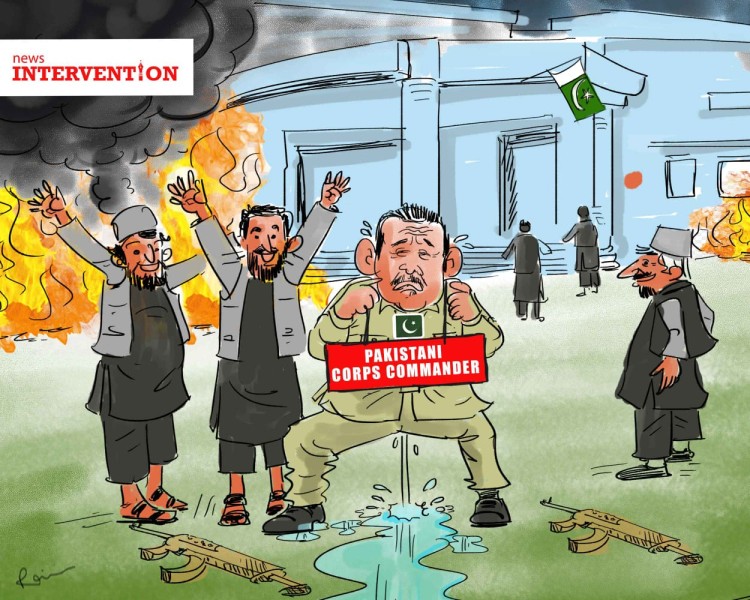
The widespread incidents of irate mobs targeting military installations and assets as well as the house of a three-star General in Lahore cannot be condoned. However, at the same time, Rawalpindi too needs to accept that its endless meddling in Pakistan’s politics, which has angered and alienated the masses, too played a major role in precipitating the current crisis.
On the professional front, public frustration arising out of Pakistan Army’s serious failings ranging from its inability to get the Afghan Taliban, its long time protégé, to stop patronising Tehreek-e-Taliban Pakistan [TTP] terrorist group to its failure in evicting TTP from Khyber-Pakhtunkhwa has naturally found vent on social media. Similarly, enforced disappearances during the course of Pakistan Army’s counter-terrorist operations are a matter of serious concern for activists and civil society, making it an issue of intense debate on social media.
So, while the PPC may have criminalised criticism of Pakistan’s armed forces, it has done precious little to assuage the unprecedented public resentment against the army. Therefore, instead of trying to blame all and sundry for the unprecedented public outrage against the Pakistan Army, it would do Rawalpindi a lot of good to first clean up its own house.
And here, living-up Gen Bajwa’s assertion that the Pakistan Army had “after great deliberation, decided that it would never interfere in any political matter,” and honouring his reassurance that “I assure you we are strictly adamant on this and will remain so,” could well serve as the most effective ‘mantra’ for redeeming Rawalpindi’s sullied image!