Home Blog Page 253

Who could’ve planned Imran Khan’s assassination

Spontaneous or premeditated?
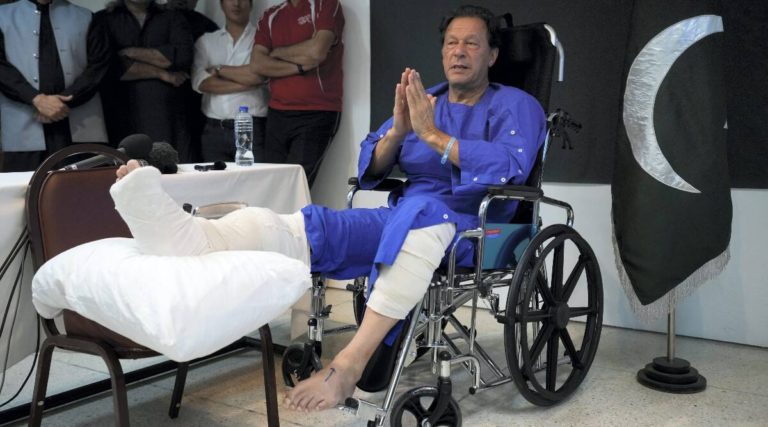
With contradictory claims being made by the assailant responsible for the murderous attack on former Pakistan Prime Minster Imran Khan, and what his own party members are saying, the ‘who and why’ behind this shooting is certainly bound to create much debate. If what the alleged shooter is stating in a video leaked by the police is to be believed, then it’s clearly a personal and individual act. However, if one goes by what senior Pakistan Tehreek-i-Insaf [PTI] leader Fawad Chaudhry is claiming then it is “a planned assassination attempt.”

Questionable motives
In what appears to be confessional video recorded by law enforcing agencies after his apprehension, the assailant says, “I wanted to eliminate him because he [Imran Khan] was misleading the people. I tried to shoot him and nobody else….” While what he has said may well be true, certain issues related to this incident do cast a shadow of doubt.

One, attempting to close-in and assassinate an eminent personality in broad daylight and that too when he’s surrounded by several security personnel and a sea of supporters, making a getaway is near impossible. Accordingly, anyone embarking on such a suicidal mission would have reconcile with the fact that he could be either shot by the security detail or even lynched by the irate crowd. This requires extraordinary motivation.

Two, there’s no doubt that radical political, ideological or religious beliefs can cause momentary loss of rationality and make one act in a bizarre manner. However, in the video, the assailant has specifically said that I acted alone, nobody else is involved.” This claim as well as his “misleading the people” reasoning for the attack doesn’t sound very convincing, especially since misleading people is a common trait in all politicians, that all of us have learned to live with.

Similarly, PTI’s claim of it being “a planned assassination attempt” too is hard to believe for a host of reasons. Senior PTI members Asad Umar and Mian Aslam Iqbal have stated that “He [Imran Khan] believes there are three people on whose behest this was done – Shehbaz Sharif, Rana Sanaullah and Maj Gen Faisal [Naseer].” This allegation has substance, especially since the ISI has long been suspected of orchestrating targeted extra-judicial killings.

Having mastered the art of covering its tracks, the ISI has never been indicted on this account. So, seeing the clumsy manner in which the ‘hitman’ went about trying to kill Khan and allowed himself to be apprehended lacks the characteristic finesse of ISI’s covert operations. So, ISI’s involvement in this assassination attempt appears unlikely.

One or more attackers?
As per media reports, only one assailant armed with a pistol was involved in the assassination bid. According to media reports, he had emptied a complete magazine and besides Khan sustaining “multiple bullet injuries” in his leg, the attacker managed to kill one person and injure another 14. He was in the process of replacing the empty magazine when he was apprehended.

Even a pistol with a high-capacity magazine can house a maximum of 14 bullets. Since the attacker had fired only a magazine which caused a total of 16 fatal and non-fatal casualties, it emerges that not only every bullet fired by him hit someone, but at least two bullets had injured more than one person. Though theoretically possible, such accuracy with a pistol in a melee is well nigh very difficult to achieve.

PTI leader Chaudhary has however alleged that “It was not 9MM [pistol], it was a burst from [an] automatic weapon,” and speaking to Bol TV, PTI leader Imran Ismail said that the attacker who fired at Khan was wielding an AK 47. Surprisingly, there has been no subsequent mention of an AK 47 rifle being used in the assassination bid, but since its magazine holds 30 bullets, there being 16 casualties lends weight to the claim of an AK 47 being used. So, could it be that besides the apprehended pistol wielding man, there was another assassin with an AK 47, who managed to escape? Could the man apprehended be a gullible person intentionally planted to act as a decoy?

Who benefits?
Since Khan has been critical of both the government and Pakistan Army, the finger of suspicion does point at them. However, both know that any attempt to physically harm Khan would be tantamount to making him a ‘martyr’ and only further enhance the PTI chief’s popularity. So, who would really benefit from a murderous attack on Khan?

For one, it could be PTI itself as an assassination attempt would earn it public sympathy as well as further demonise the government and Rawalpindi. However, since it involved putting the PTI chief’s life in danger, using this perilous ploy merely to earn goodwill and put down the PML-N government and the Pakistan Army doesn’t make any sense. Yet, let’s not forget that when it comes to politics, anything is possible.

Next, we have the political parties. There’s no doubt that Khan has emerged as the ‘hero’ of the masses and the opposition knows that he can effectively use agitation as a tool for arm-twisting Rawalpindi into agreeing to his demand for early elections. Should this happen, then Khan’s electoral victory is assured, yet while opposition parties would theoretically have an interest in his extinction, the humongous negative backlash would act as a deterrent. Conversely, with the ‘desperate times call for desperate measures’ approach being the hallmark of politicians, for them to play with fire is no big deal!

Lastly, we come to Rawalpindi and ISI. Beleaguered by public anger against its highhandedness and exercising power without responsibility, Pakistan Army has everything to lose by orchestrating the assassination of Imran Khan. So, it’s unlikely that the assassination could have been explicitly ‘sanctioned’ by it. However, it’s no secret that under the veneer of professional integrity and unity, the Pakistan Army is plagued by internal divisions driven by the lust for power and commercial interests.

So, could it be possible that Khan’s unconcealed preferences for some Generals as well as disdain for others may have been perceived by some ‘power centre’ as a threat to its fiefdom? Accordingly, could such a rogue group within ISI have considered it expedient to remove Khan from the scene to preserve its turf? Though this course of action would have its adverse implications at the national level, it wouldn’t directly impact the perpetrators and hence has a reasonable degree of plausibility.

But there is one thing about this option that somehow doesn’t gel. If some coterie within the ISI is involved, then why did it employ a greenhorn for this ‘hit’ in the first place and arm him with just a pistol, which is a weapon that can only fire single shots and not an AK rifle which can fire rapid bursts? Secondly, why didn’t the masterminds incorporate a backup plan of silencing the assassin to avoid his apprehension and subsequently spilling the beans.

Or was it just meant to be a mafia-type warning for Khan?     

BLM condemns military aggression in Bolan

The spokesperson of the Baloch National Movement condemned the military aggression in different areas of Bolan and said that Pakistan was taking the Baloch genocide to a new level. The killing of people had been continuing unabatedly in the length and breadth of Balochistan. Human rights were brazenly flaunted in those military operations.

The spokesperson confirmed that dozens of men, women and children had been detained and forcibly disappeared in an ongoing military operation in Bolan.

Zargul Marri, Hanifa Marri, Dur Khatun Marri, Mahsu Samalani, Gul Bibi Samalani, Samu Samalani, Zarbakht Samalani, Bani Samalani, Sameeda Samalani, Farida Samalani, Raji Samalani had for four years been forcibly disappeared. Rakhia Samalani’s wife Mhana Samalani and their Son Kalim Samalani were among those who had been forcibly disappeared in the recent operation.

He said that “During this military aggression, the mutilated body of ‘Mohammed Ghaus Marri’ was found at Saffari near Sangan on November 4, who had been forcibly missing and was in the custody of the Pakistan army since September last year (2021).”  

He said that the Bolan operation is part of the ongoing collective punishment against the Baloch nation. Pakistan army has turned the Baloch homeland into a Nazi-style concentration camp and is clearly violating the laws of war. In the ongoing operations, women and children are being brutalized collectively. Prior to the Bolan operation, the Ghichk area of Panjgur was completely converted into a concentration camp by the Pakistan Army where it has been made mandatory to take permission from the army for normal transportation and by limiting the ration of the residents, they had been banned from buying more than the prescribed limit.

The spokesperson said that collective punishment shows the failure and cowardice of Pakistan against Baloch Freedom fighters and that whenever the Pakistan army is defeated on every front, it takes revenge from the unarmed people.

Pak’s brutal operations continue across Balochistan: Mama Qadeer

It has been 4811 days since the hunger strike camp of Voice for Baloch Missing Persons in front of Quetta Press Club, the capital of occupied Balochistan. The camp recently was visited by political and social workers Noor Ahmed Deepal, Aziz Ahmed and Deen Muhammad Baloch who expressed their solidarity with the families of the missing Baloch persons.

On this occasion, VBMP Vice Chairman Mama Qadeer Baloch said that the brutality of the state in Balochistan is continuing with all its horror. The bloody military operation in Bolan since October 29, 2022 has been going on where many Baloch women and children have been illegally detained and forcibly disappeared. Mama Qadeer further said that Baloch youths are martyred in torture cell of the state institution and their dead bodies are thrown away and are easily called fake encounter. The peaceful politics of real nationalism in Balochistan are also restricted by the state. Balochs  are picked up and forcibly disappeared or killed for being vociferous.

He further said that the illegal detention of Baloch women, girls and children in Bolan has been for more than 48 hours but there is no news of them till now.  Similarly, in Sangan the bloody operation continued for the sixth day, where many houses have also been burnt, people’s property and livestock have been damaged while transportation is completely banned, land communication has been cut off from the area where the army has brutally attacked. He said that people’s lives have been made impossible, the Pakistani army has crossed all limits of cruelty this time with the help of gunship helicopters and drones.

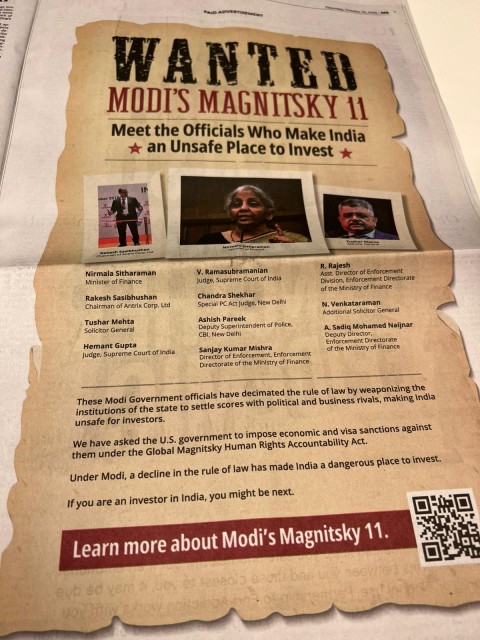
Advertisements like ‘Modi’s Magnitsky 11’ is cheap ploy to derail rising India

0

A recently published advertisement titled ‘Modi’s Magnitsky 11′ in the Wall Street Journal shows 11 officials, which include people such as Finance Minister Nirmala Sitharaman, Solicitor General Tushar Mehta, Supreme Court of India’s Judge V. Ramasubraimanian to name a few. This advertisement demands to implement sanctions on these 11 officials under the Magnitsky Human Rights Accountability Act, which will freeze the assets of these officials and block them from entering the United States. This advertisement results from a petition filed to the U.S. Department of State and Treasury. The petition has been filed by a US-based organisation named ‘Frontiers of Freedom’, which claims to be working to protect the rights and freedoms of individuals. 

The interesting fact to note here is that one of the key funders of this organisation is Mr. Ramachandran Viswanathan (an American Citizen), Co-founder and CEO of Devas Multimedia Pvt Ltd. India has been looking for this man for questioning and arrest under the Mutual Legal Assistance Treaty in Criminal Matters between U.S. and India. An agreement was signed between Devas Multimedia Pvt Ltd and Antrix on Agreement for the Lease of Space Segment Capacity on ISRO/Antrix S-band spacecraft, which was cancelled by the Indian government, post which Devas’ lawyers have been seizing foreign assets owned by ISRO. Ramachandran Viswanathan has been declared a “fugitive offender”. The E.D. (Enforcement Directorate) has also moved a court application under India’s Fugitive Economic Offenders Act, 2018 to declare him an economic offender.

As the Indian government and agencies have been tightening the noose, Ramachandran Viswanathan has used his clout to tarnish India’s image abroad. In the petition, it has been said that “The actions of autocratic Indian regime led by Prime Minister Modi are an assault on Mr Viswanathan and the rule of law and the rights and freedoms granted to every American.” The statement in the petition clearly shows that the organisation’s motive is to portray India as a state where the law of the land works not as per its constitution but is used to settle scores with the political and business rivals of the current regime.

The text and timing and the people targeted in the petition clearly show four things. Firstly, this petition aims to portray India’s law and order as discriminatory against those who value and fight for personal freedom and liberty. Secondly, its objective is to hurt India’s economy in a big way.

Suppose the finance minister of the world’s fifth largest economy is sanctioned under U.S. law. In that case, that will drive away potential investors from India, who at present see India as a promised land whose GDP growth rate ranges between 6.7 per cent to 7.7 per cent for the financial year 2023-24.

Thirdly, by having the name of a Supreme Court judge, the petitioner’s objective is to show to the world, especially foreign businesses planning to enter India, that the Indian judiciary is no longer independent and is now hand-in-glove with the ruling regime. This will create fear in the minds of foreign companies who see India as a just state where their investment and interest will be protected by law and order. Fourthly, through this advertisement, Frontiers of Freedom wants to put pressure on the Indian government through the U.S. administration so that it can strike a deal to save its pivotal funder, Ramachandran Viswanathan. Lastly, the timing of the advertisement. With the policymakers and media houses of the West putting pressure on India to side with the Western narrative in the Ukraine-Russia conflict and India choosing to follow its strategic autonomy in pursuing its foreign policy has not been received well. This advertisement is another tactic to pressure India to toe the western line. 

India is an emerging world power in various geopolitics, economy, defence, and health sectors, which have started to cause headaches for some people across the globe. Institutions such as the International Monetary Fund (IMF) and World Bank viewing India as one of the few bright spots of the world’s economy– which is set to slip into recession, is troubling certain sections of the world who still view India as a third-world country. The current mala fide attack by Western led organisations is nothing new. These western based think tanks and institutes who think of themselves as the custodians of the world’s morals and freedom have been attacking India’s image by lowering her ranking under their indicators. Some examples of this have been lowering India’s rank at 142 under World Press Freedom Index. Another Freedom House report (a US-based non-profit) downgraded India to ‘partly free’ and called it an ‘Electoral Autocracy’.

Propaganda advertisements like these cannot deter India’s growth and progress story. Today, India is a place of hope and is set to become the world’s workshop. The growing investments across sectors and rising GDP growth are a testament to India’s current promising political, economic and law and order situation.

Military ‘Establishment’ strikes back in Pakistan

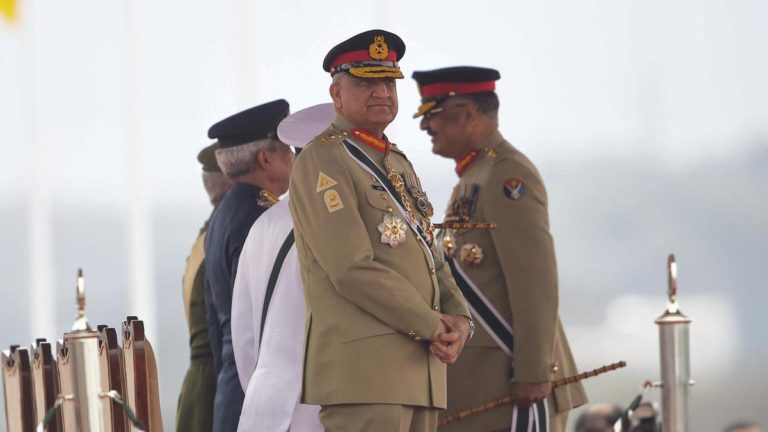
With Pakistan Army Chief Gen Qamar Javed Bajwa telling those who attended lunch at the Pakistan Embassy in Washington that he would step down after completion of his second three-year term and that Rawalpindi has distanced itself from politics, two already well-established facts have further been endorsed. One, as regards granting extension to the army chief it’s not the Prime Minister of Pakistan but the army chief himself who decides the length of his own tenure. Two, the Pakistan army has been an active [and unquestionably the most influential] player in the country’s politics.    

No wonder the word ‘establishment’ in Pakistan is both an accepted and popular synonym for the armed forces, as they are the ones who actually call the shots in the country.Also, the Director General [DG] of Pakistan army’s media wing Inter Services Public Relations [ISPR] Maj Gen Babar Iftikhar declaring that Pakistan army would remain “neutral” during the crisis that led to a no confidence motion being moved against Imran Khan’s government, he has unwittingly admitted that Rawalpindi is indeed very much into influencing Pakistani politics.

Even the international community recognises Pakistan military’s dominance over all other organs of state and that’s why when its army chief goes abroad, he’s treated more like a head of state than a military official. Readers may recall that when the then Pakistan Prime Minister Imran Khan and army chief Gen Qamar Javed Bajwa visited Washington in 2019, the customary state protocol of US officials receiving a visiting Prime Minister wasn’t observed and a miffed Khan had to be content being received by his own foreign minister, Shah Mehmood Qureshi, and Pak envoy to the US.

On the other hand, General Qamar Javed Bajwa, was not only received by Chairman Joint Chief of Staff General Joseph F. Dunford, but was even presented guard of honour with a 21-gun salute. Similarly, his recent five-day US trip may have come at fag end of his tenure, but it’s most certainly not a farewell visit. Infact, a majority of analysts view it as a part of the ongoing efforts from both sides to reset US-Pak ties. Furthermore, with Pakistan army’s Chief of General Staff Lt Gen Azhar Abbas [who is likely to be the next army chief] in tow, speculation is rife that Gen Bajwa is attempting to reassure Washington of Rawalpindi’s continuing cooperation, notwithstanding anti-US sentiments being fanned at home by former Prime Minister Imran Khan and his ilk.

Gen Bajwa may wax eloquent on the army’s duty to “respect the democratic institutions.” However, he’s in no mood to give any space to those exercising their fundamental democratic right of expression, especially when it exposes Rawalpindi’s continuing interference in the functioning of other state institutions. So, when Senator Azam Khan Swati tweeted “Mr Bajwa congratulations to you and few with you. Your plan is really working and all criminals are getting free at cost of this country”, and added that “with these thugs getting free you have legitimised corruption”, the former state minister should have known that he was treading on thin ice.

Expectedly, the Pakistani ‘establishment’ wasted no time to hit back. Swati was promptly arrested by Federal Investigation Agency [FIA], which lodged a menacingly worded First Information Report [FIR] claiming that the PTI Senator’s tweet was “a calculated attempt to create hatred in the minds of people and Army Personnel/s against COAS and Pakistan Army and also created distrust towards the Judicial System.” Terming it an “intimidating tweet”, the FIA went on to allege that Swati “has attempted to provoke the general public and personnel/s of armed forces by trying to create a feeling of ill-will among pillars of the State.”

It’s inconceivable that a mere allegation can “create hatred in the minds of people and army personnel against COAS and Pakistan Army”, and “distrust towards the judicial system” as well as “provoke the general public and personnel of armed forces by trying to create a feeling of ill-will among pillars of the State”. On the other hand, Swati’s claim that he was arrested not for breaking the law or violating the constitution, but “for taking the name of Gen Bajwa” and of being “unclothed and physically tortured by agencies” while in custody is more compelling as it certainly gives one a sense of déjà vu.

While the FIA may find Swati’s tweet subversive, let’s not forget that this is not for the first time that allegations of Pakistan army arm-twisting the judiciary and other pillars of democracy have surfaced. During a talk show on Dunya News in 2016, former army chief Gen Pervez Musharraf himself admitted that “Once he [the then army chief Gen Raheel Sharif] got the government to relieve the pressure that they were exerting, the courts gave their judgement and allowed me to go abroad for treatment.” Doesn’t this revelation clearly indicate that the military in Pakistan has the ability to impose its will on the government and change judgments of the judiciary?

In 2018, while addressing Rawalpindi Bar Association, sitting Islamabad High Court judge Justice Shaukat Siddiqui made some scathing remarks against the army. He admitted that “Today the judiciary [in Pakistan] and media have come in the control of ‘Bandookwala’ [gunmen; here a euphemism for the army]. Judiciary is not independent. Even the media is getting directions from the military. The media is not speaking the truth because it is under pressure and has its interests”. Not only this, he went on to reveal that “In different cases, the ISI forms benches of its choice to get desired results”. 

On comparative analysis, Swati’s tweet pales in front of Gen Musharraf and Justice Siddiqui’s incriminating remarks about Pakistan army’s effective muzzling of the media and interference with the functioning of judiciary. Surprisingly, while Swati was arrested, Justice Siddiqui was merely dismissed by the President of Pakistan for “misconduct”. As for Gen Musharraf, no cognisance was ever taken for his remark of how intervention of the then army chief enabled him to leave the country despite a court order to the contrary.

So, despite the fact that it brazenly acknowledges that Rawalpindi enjoys extra constitutional powers and is a law unto itself, Gen Musharraf hasn’t been touched because being an erstwhile member of the military fraternity, he remains part and parcel of the Pakistani ‘establishment’ and hence enjoys absolute immunity!

Swati should have realised that he’s no Musharraf and hence must face the consequences for casting aspersions against the emperor sitting in Rawalpindi, which being nothing short of sacrilege merits exemplary punishment for ‘traitors’ like him that begins with the customary practice of being “unclothed and physically tortured by agencies”!

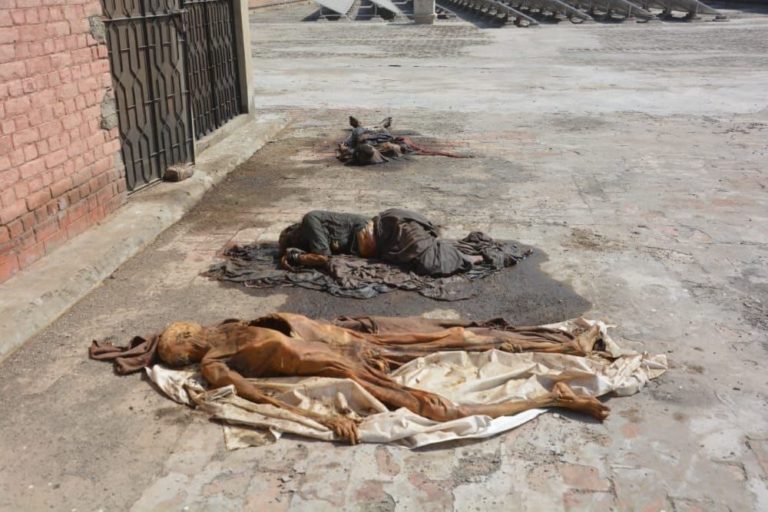
Conduct DNA tests to identify 500 Multan dead bodies: Sindhi leaders

Sindhi leaders in a joint statement demanded that the United Nations conduct DNA testing on the more than 500 human corpses found at the Nishtar Hospital Multan in order to conclusively identify the victims and hand over the bodies to their respective families. Jeay Sindh Freedom Movement (JSFM) central chairman Sohail Abro, vice chairman Zubair Sindhi, general secretary Ghulam Hussain Shabrani, Amar Azadi, Sudhu Sindhi, Hafeez Deshi and Parh Sindhu in their joint press statement said that they suspect these bodies are of the thousands of political activists who were forcibly abducted from Sindh and Balochistan.

Pakistan’s 70-year history has been witness to continuous human rights abuses and extrajudicial killing of political activists by Pakistan’s rougue intelligence agencies ISI, Military Intelligence and Intelligence Bureau of Pakistan under direct orders from the Pakistan Army.

Sindhi leaders further stated that the recently found dead bodies prove that Pakistan is not an Islamic Republic country, but a graveyard of human beings, where the state institutions massacre humanity instead of protecting the people. “..from 1971 till date the military operation in Sindh and Balochistan is a proof of this,” said the statement.

“We appeal to the United Nations to take notice against the forced disappearances of political activists of Sindh and Balochistan, and to conduct DNA tests on the recently found bodies. Subsequently a case should be registered against the terrorist state of Pakistan in the international court of justice for war crimes and human rights abuses.”

“We appeal to the European union, Indian government and all permanent members of UNSC (UN Security Council) that an enquiry should be conducted in the international court of justice for the violation of human rights, the massacre of humanity, and the violation of international norms,” reads the joint statement of Sindhi leaders.

Resurgence of terrorism in Pakistan

That Pakistan army chief General Qamar Javed Bajwa’s recent announcement that “resurgence of terrorism will not be tolerated in the country”, would not enthuse the terrorism scarred and violence weary people of Pakistan was expected. However, this is not because of public apathy or cynicism but due to Rawalpindi’s own fault, in that, it has consistently been deceiving its own people by making false claims to conceal its own professional failings.

Though Islamabad has always blamed India for anything and everything going wrong in the country, the Pakistan army generally refrained from making direct accusations against New Delhi or its spy agency Research and Analysis Wing [RAW]. However, this wasn’t because armies consider levelling baseless allegations unsoldierly, but since doing so would be tantamount to accepting that its arch-enemy had got the better of Pakistan’s spy agency Inter-Services Intelligence [ISI].

Things however changed in 2015 when during his visit to Quetta the then Pakistan army chief Gen Raheel Sharif had [without taking any names], had warned “foreign governments and intelligence agencies” not to fuel insurgency in Balochis­tan. Just a month later, the statement issued on conclusion of the Corps Commanders’ Conference by Pakistan army’s media wing Inter Services Public Relations [ISPR] mentioned that “The Conference also took serious notice of RAW’s involvement in whipping up terrorism in Pakistan.”

This statement came as a big surprise. In his report on this development, Dawn Foreign Affairs/National Security Correspondent Baqir Sajjad Syed mentioned that “RAW has quite often been blamed by law-enforcement agencies for being involved in subversive activities in Pakistan, but it’s unusual for a corps commanders’ conference to directly point fingers at the hostile intelligence outfit.” [Emphasis added]. Whereas New Delhi rightly ignored Gen Sharif’s incredulous accusation, Pakistan army however found a handy whipping boy in RAW, and it has never looked back since.

Readers would recall that before Taliban seized power in Afghanistan, ISPR kept claiming that RAW and its Afghan counterpart National Directorate of Security [NDS] were jointly sponsoring Tehreek-e-Taliban Pakistan [TTP] terrorist group as well as various freedom fighter outfits in Balochistan. However, while the international community wasn’t impressed by ISPR’s incredulous claim, many Pakistanis actually believed that TTP and Baloch freedom fighters were Indian proxies, and this is exactly what Rawalpindi wanted.

So, once Taliban overran Kabul, people in Pakistan expected that with New Delhi out of the scene, both TTP and Balochi freedom fighter groups would simply wither away due to lack of sustenance and safe sanctuaries. However, Taliban’s takeover of Kabul marked an unprecedented spike in TTP attacks against Pakistani security forces. This unexpected turn of events demolished two myths propagated by Pakistan army; one, that without help from India, TTP was a mere pushover, and two, Pakistan army was capable of decimating this terrorist outfit.

This became all the more evident when instead of fighting TTP, the Pakistan army unconditionally accepted the ceasefire declared by TTP and agreed to negotiate with this terrorist group, despite the fact that it had perpetrated the 2014 Army School Peshawar massacre in which nearly 150 persons [mostly school children] lost their lives. Rawalpindi even accepted TTP’s unreasonable precondition of releasing TTP terrorists jailed for their complicity in killing Pakistani security forces personnel and civilians. So, how can one expect the people of Pakistan to take Gen Bajwa’s words of not tolerating “resurgence of terrorism”?

Some may argue that the decision to enter into a ceasefire with TTP, release its convicted fighters and negotiate peace with this terrorist group would have taken by the legislature and so pillorying the army for the same is unfair. While this argument may appear convincing, readers may recall that while speaking on the floor of the National Assembly in June, PML-N Senator Irfan Siddiqui admitted that lawmakers were unaware when the negotiations [with TTP] began, and between whom they were taking place. This proves beyond any doubt that the Pakistan army is the sole architect and executor of this ignoble deal!

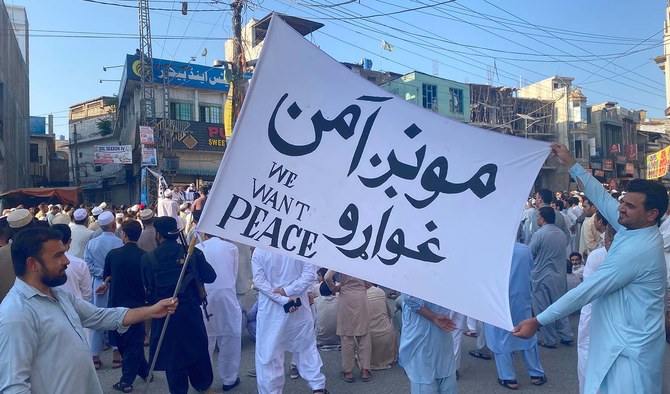
Pakistan army maintains that it has broken the backbone of terrorism, but ground situation doesn’t support this view. Massive ongoing public protests by locals against TTP’s re-emergence in Khyber Pakhtunkhwa continue to rock the province making light of Gen Bajwa’s remark that “resurgence of terrorism will not be tolerated in the country.” Just the other day, Mingora, Haripur and Battagram districts of KP witnessed massive anti TTP protests. Sparked by the killing of a school bus van driver in Swat valley, protesters were demanding action to evict TTP terrorists from KP, and the angst of the local leaders was palpable.

While addressing protesters, Jamaat-i-Islami Senator Mushtaq Ahmad Khan lamented that “… despite a massive defence budget, the state has completely failed to ensure peace here.” Pashtun Tahaffuz Movement chief Manzoor Pashteen was more forthright and said it was ironic that despite the presence of security forces and cantonments, TTP had still managed to enter Swat and the vicious cycle of targeted killings and fake encounters had resumed.

National Democratic Movement chairman and National Assembly member Mohsin Dawar told Al Jazeera that “If Pakistan’s political and military leadership does not sit together to resolve this menace, I fear that in the coming days the situation will be out of control.” He hit the nail on the head by saying, “It is questionable that in the blink of an eye the situation turned chaotic, the Taliban [TTP] returned and started sabotaging peace”!

Of course, the TTP didn’t resurface in KP overnight. Way back in August, people in KP started complaining about targeted killing and intimidation of locals by TTP cadres and being a serious security related issue with national ramifications, this problem was highlighted up by the media. During the same month, TTP released a video with visuals of a Pakistan army officer and a Deputy Superintendent of Police apprehended by this terrorist group in KP province. Abduction of an army officer and police official leaves no doubt that TTP is freely operating in KP with unbridled impunity.

Yet, rather than taking the bull by the horns and using force to evict TTP terrorists from KP, Pakistan army chose to play down TTP presence in this region.  Infact, ISPR rejected these reports terming them “grossly exaggerated and misleading”. However, to play-safe and avoid embarrassment, ISPR cunningly conceded that “Presence of a small number of armed men on a few mountain tops between Swat and Dir has been observed, located far away from population.”

While presence of TTP terrorists on mountain tops “far away from population” may not perturb Pakistan army, the terrorised people of KP are up in arms and have taken to the streets to protest against the large-scale presence of TTP terrorists in the region. However, since Pakistan army hasn’t taken any concerted action against TTP in this area as yet, it appears that Gen Bajwa doesn’t perceive the burgeoning congregation of TTP terrorists in KP as “resurgence of terrorism”.

Baloch freedom fighters establish a checkpost on a busy road in Balochistan and abduct a serving Lt Col. Then they accost two Frontier Corps Personnel and shoot down an army helicopter sent to retrieve them. TTP terrorists blockade the arterial road connecting KP with Gilgit-Baltistan and take a senior Pakistan Tehreek-e-Insaf [PTI] Party minister and two foreign tourists accompanying him hostage. Don’t these incidents clearly indicate the “resurgence of terrorism” in Pakistan?

After the murder of the school bus driver by TTP terrorists in Swat, Human Rights Commission of Pakistan [HRCP] has rightly lashed out at the army, observing that “Swat’s residents are right to hold the security forces responsible for failing to enforce the writ of the state.” Furthermore, in an obvious reference to aforesaid ISPR claim that reports regarding the large-scale presence of TTP in KP were exaggerated, HRCP has rightly noted that “It was callous and short-sighted to have downplayed the threat from militants given residents’ growing protests and calls for security.”

The ball is thus fairly and squarely in Rawalpindi’s court. Whether the Pakistan army will walk its talk by using force to bring TTP down on its knees, or merely engage in rhetoric and blame all and sundry for this sorry state of affairs, however remains a million-dollar question! 

Why every doctor must have a strong digital presence

1

No offence meant to doctors in my social circle, ‘eyesight & vision aren’t the same’. You guys are great doctors, but bad at spotting the world change around you.

Before I present my arguments, let’s consider these facts.

1.        Almost 1/5th of all Google searches is about health and wellness

2.        Almost half of all urban visitors’ research about the doctor before they visit clinics

3.        9/10 doctors have a social media presence and hardly 15% have websites.

Though healthcare practitioners are amongst the most educated, forward-thinking group in India; they also are self-confessed ignorant about digital evolution and marketing. Agreed, regulation didn’t permit them for long, but then times have changed. We are in 2022.

Let’s look at the 10 key reasons why health care professionals must have a very strong digital presence.

1.        Preventive health is focus – Doctors aren’t just SOS help anymore, they’re part of the community and their opinion and outlook on healthcare and wellness is sought after. People expect doctors to keep the community updated on advancements in preventive health and wellness. A good doctor heals, not just cures!

2.        Your prospective customers are looking for you – Your professional website is not a lighthouse, but the landing lights. Invite the web visitors in. Urban India interacts digitally with multiple service providers every day and health is top priority. Consumers have a habit of window-shopping before choosing the best. Be seen when they’re looking for you.

3.        Google – It’s a predictive world – Remember, ‘If the mountain doesn’t go to Muhammed, then Muhammed must come to the mountain’. Google maps is the trusted source for directions. Allow Google to point out your premises to your community. No consumer ever forgets a good experience.

4.        Independent practitioner vs corporate hospitals – Except the size of the building and the price of the tools, there isn’t much to differentiate between knowledge. If they can brand and market themselves, why can’t you? After all, the consumer is walking in to meet a doctor, not a building.

5.        The 5 k.m. rule – The sphere of influence & catchment area of any independent doctor or polyclinic is within a 5 k.m. radius. Let the corporate hospitals take care of medical tourism and corporate marketing; Doctors just need to stay in touch with the communities and institutions in the 5 k.m. radius.

Let fellow docs discover you – The days ahead are of professional networking and consortiums. Multi-specialty doctors would come together with a common objective of serving a geographic community within shared facilities. Rationalization of cost and maximization of productivity need to be practiced even in small format polyclinics and healthcare facilities.

6.        Organize yourself – Traditional tools of manual records and telephonic reminders would soon be phased out with increased penetration of smart phones. Data would become the new currency and don’t throw yours away. Large aggregators and apps exploit this vulnerability. Once you establish your digital presence, you could upgrade gradually. Aversion to technology adoption only increases your manpower and management cost. Why say no to incremental business?

7.        Personal branding – ‘Jungle mein mor naacha kisne dekha’

Most doctors I know do charity camps and checkups. Instead of social media pages, how about posting pics of your good deeds on your own webpages and allow people to become followers? Followers wait for the next professional update and add more followers.

8.        Unique content is valued – Your expertise is invaluable; your experience worth sharing with patients, other doctors, healthcare industry colleagues and public at large. Put out those videos and FAQs out on your website. Build engagement and loyalty with prospective customers & visitors. Be seen and heard as a thought leader; Why talk to a small group in a CME?

Let’s admit, many a CMEs have degenerated into social networking between select doctors and Pharma companies. There are serious knowledge seekers who want to join your high table. Don’t they deserve your voice? The content you post would be the differentiator.

9.        Show your true self ~There’s a softer human side to every hard nosed professional. Not everyone reads medical journals, but everyone wants to know what you think. Your customers deserve to know who they’re meeting and what you stand for. You cannot let go your knowledge go waste; share your experiences.

10.      Pyramid exists in healthcare too – The term ‘jhola chhaap’ is an oft repeated snigger amongst doctors, but not spoken about openly. Recognize that they’re an important cog in the last mile delivery of healthcare at super low cost. Your empathetic web presence can attract them to form the layer below you, in your catchment radius. Draft them in! Allow them to absorb your wisdom.

–      Google doesn’t write medical journals and articles; it merely propagates using algorithm. Let search engines find your content on your own websites, not some other aggregator platform. That era is over. Be a proud doctor, not a UID in an aggregator platform.

–      Distribute downloadable charts, instructions, posters etc. Your website can be the warehouse for any proprietary information

–      A doctor in Dibrugarh can share experiences with doctors in Delhi, Chennai can talk to Chandigarh. That’s the power of Digital reach.

–      If you upgrade to a more data driven approach, you will ensure a much richer patient experience through better care and paperless records.

–      Allow yourself to be discovered. Be investment ready!

 Above all, you’re in the private space. Entrepreneurship is the key word today and your name on the digital landscape matters!

Rohini – The ‘unsmart’ sub-city of Delhi

The growth of internet heralded a lot of changes in the mid 90s, including opening up the possibilities of ‘smart cities’. Many countries adopted it for their urban planning, especially in the capitals.

Delhi, the capital of India didn’t trigger any such pathbreaking ideas into the Masterplan 2021.

‘Smart cities’ mean different things to different countries. While the West might talk of sustainability, security, data driven approach, etc., whereas the thrust in the Indian context should’ve been sanitation, infrastructure, supply of modern work and living spaces and quality governance.

The Indian smart city mission was launched in 2015 and to a large extent, it has remained on paper as far as Delhi is concerned. The vision was to achieve a high degree of collaboration between the stakeholders, MPD2021 got mired in the politics and caused billions of dollar worth losses to the investors and landowners.

Forget about greenfield developments in the 5 new zones of Delhi, sub cities like Rohini were allowed to mushroom as an aggregation of residential plots converted to unauthorized commercial streets. Though the prices have increased, it no longer affords wide open streets and quality of life.

Rohini had all the plus points to evolve as a planned sub city; the first metro line, connected by motorable roads to other CBD areas, social and physical infra and products at all price points. Not to mention social harmony and homogeneity of occupants.

During the same reckoning period, both DDA & private developers of Gurgaon had access to large land tracts. Private developers in Gurugram developed multiple commercial hubs like Cyber City, Golf course road, Extension, Sohna road, etc., delivering more than a few million sq.ft.

It isn’t surprising that Gurugram is home to more than 250 of Fortune 500 companies. The differentiator was ‘Vision’; which Delhi lacked.

Not all is lost. Delhi need not be a lifelong laggard. It can surge ahead by offering prime well-connected properties to the Private sector to develop modern commercial hubs. Not that DDA does not have access to large land parcels in Delhi or that there isn’t enough Private sector Institutional interest. All that Delhi Masterplan & DDA lack is predictability and single window clearance. Rohini is a clear example of this.

On the one hand, DDA might be sitting on more than 500 Ha of zoned commercial land parcels worth a couple of billion dollars, on the other hand there are scores of new unauthorized colonies mushrooming around business hubs for want of an integrated facility. Why can’t these land parcels be developed by the private sector on the lines of Global city, Whitefield, BKC or even Cyber hub? Why doesn’t DDA sell these land parcels to be developed as modern integrated commercial hubs while DDA plays the role of a facilitator?

There is a clear business opportunity too. DDA land parcels in Rohini are bang in the middle of a developed city, whereas new supply of large developable land in NCR are at least 50 k.m. away from Lutyens Delhi. Gurugram offers land near Manesar and  Sohna, YEIDA in Greater Noida, Sonepat has no such large development, Faridabad is re-developing older industrial districts, etc.

Here is Rohini which doesn’t need greenfield development. Even the metro corridor is scheduled to be extended from Rithala to Narela-Bawana. That would cut across these prospective business districts. Importantly, Rohini integrated development can create social infrastructure simultaneously. To support the prospective movement of large corporates to this area, Grade A housing, schools, hospitals, shopping and recreation, etc., can be executed while the commercial campuses evolve.

Don’t forget, large swathes of private development of premium development can take place across the UER-2, under zone N. 10 villages under green belt GDA policy are a mere 5-7 k.m. away. Additionally, DSIIDC has more than 1100 acres of land in the vicinity in Kanjhawla & Ranikhera, which also are reserved for development of ‘Knowledge based Industrial Parks’.

This time next year, UER-2 would be operational. Gurgaon would be a mere 35 minutes’ drive from Rohini, airport about 25-30 mins. Multiple cabs and private transport can save millions of trips a year driving across Delhi to reach Gurugram.

Not to mention the millions of dollar addition to the states GDP as well as to the dipping coffers of DDA. That’s prudent business which we hope DDA opts for.

As the old adage says, “You can actually take the business house to the employee instead of ferrying them long distance to the work-place.”

Islamists abduct yet another Hindu girl in Sindh

On 11 Oct , a 15 year old Sindhi Hindu girl was abducted from Hyderabad in Sindh. Her parents complained that she was on her way back home and was forcefully abducted by men in a white car at Fateh Chowk area of Hyderabad. The accused is Shaman Magsi,who is reported to have been harassing her for quite sometime.An FIR has been lodged with the police and SSP Hyderabad but so far no action has been taken. Series of kidnappings of Sindhi Hindu girls are on the rise in the area. The incident has sparked off ire ire among the Sindhis.

Copy of the FIR (Photo: News Intervention)

Pakistan’s forced abductions and conversions have been known to put minority women at risk. Young girls are abducted, converted into Islam and forced to marry or are kept as sex slaves or raped. The government has been unsuccessful to implement the Child Marriage Restraint Act 1929 and the Sindh Child Marriage Restraint Act 2013, which raised the legal minimum age of marriage to 18 in Sindh province. The victim girls are largely left in the custody of their kidnapper throughout the trial process, where they are forced to claim that the conversion or marriage was consensual.